Melipramin®
Ukraine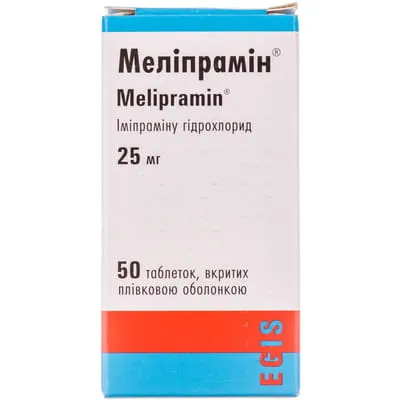
Table of Contents
INSTRUCTIONS for medical use of the medicinal product MELIPRAMIN® (Melipramin®)
Composition:
Active substance: imipramine;
One film-coated tablet contains 25 mg of imipramine hydrochloride;
Excipients: magnesium stearate, crospovidone, talc, povidone, lactose monohydrate, hypromellose, iron oxides (E 172), dimethicone.
Pharmaceutical form. Film-coated tablets.
Main physicochemical properties: red-brown, round, biconvex, film-coated tablets with a matte surface, free from mechanical impurities and spots, odorless or nearly odorless. Minor surface irregularities on film-coated tablets are permissible.
Pharmacotherapeutic group. Psychoanaleptics. Antidepressants. Non-selective inhibitors of monoamine reuptake. ATC Code N06A A02.
Pharmacological properties.
Pharmacodynamics.
The mechanism of the therapeutic action of imipramine is not fully understood. Imipramine, a dibenzazepine derivative, is a tricyclic antidepressant. It inhibits the reuptake of norepinephrine and serotonin at synapses of neurons releasing these neurotransmitters upon stimulation, thereby facilitating noradrenergic and serotonergic transmission. Imipramine also exerts inhibitory effects on muscarinic and H1-histaminergic receptors, producing anticholinergic and moderate sedative effects. The antidepressant effect of the drug develops gradually: the optimal therapeutic effect is generally achieved after 2–4 (sometimes 6–8) weeks of treatment.
Pharmacokinetics.
After oral administration, the drug is well absorbed from the gastrointestinal tract. Food intake does not affect drug absorption.
The drug undergoes extensive first-pass metabolism in the liver: its main pharmacologically active metabolite, desipramine (desmethyl-imipramine), is formed via demethylation. Plasma concentrations of imipramine and desipramine vary widely. After 10 days of treatment with imipramine at a dose of 50 mg three times daily, the steady-state plasma concentration of imipramine ranged from 33 to 85 ng/mL, and desipramine concentrations ranged from 43 to 109 ng/mL. Due to reduced metabolism, plasma drug concentrations are generally higher in elderly patients than in younger individuals.
The apparent volume of distribution of imipramine is 10–20 L/kg.
Both active compounds are highly bound to plasma proteins (imipramine: 60–96%; desipramine: 73–92%).
Imipramine is excreted primarily in urine (about 80%) and feces (approximately 20%) mainly as inactive metabolites. Renal and fecal excretion of unchanged imipramine and its active metabolite desipramine amounts to 5–6% of the administered dose. After a single dose, the elimination half-life of imipramine is approximately 19 hours, ranging between 9 and 28 hours, and may be significantly prolonged in elderly individuals and in cases of overdose.
Imipramine crosses the placental barrier and is excreted into breast milk.
Clinical characteristics.
Indications.
- Depression of any type (with or without anxiety): major depression, depressive phase of bipolar disorders, atypical depression, depressive states and dysthymia.
- Panic disorders.
- Nocturnal enuresis (in children aged 6 years and older; as temporary adjunctive therapy provided organic causes of the disorder have been excluded).
Contraindications.
- Hypersensitivity to the active substance or any of the excipients, or to other tricyclic antidepressants of the dibenzazepine group, or to any of the excipients (see section "Composition").
- Therapy with monoamine oxidase inhibitors (MAOIs) (including moclobemide) (see section "Interaction with other medicinal products and other forms of interaction").
- Recent myocardial infarction. Conduction disturbances. Cardiac arrhythmia.
- Manic episode.
- Severe renal or hepatic impairment.
- Urinary retention.
- Narrow-angle glaucoma.
- Porphyria.
- Age under 6 years.
Interaction with other medicinal products and other forms of interaction.
MAO inhibitors. Combination of this medicinal product with monoamine oxidase inhibitors (MAOIs) should be avoided, as their synergistic effects on central and peripheral noradrenergic activity may be enhanced to a toxic level (hypertensive crisis, hyperpyrexia, myoclonus, agitation, seizures, delirium, coma). For safety reasons, imipramine therapy should not be initiated earlier than 3 weeks after discontinuation of MAOIs (with the exception of moclobemide, a reversible MAOI, after which a 24-hour interval is sufficient). A three-week interval should also be observed when switching from imipramine therapy to MAOIs. Initiation of treatment with either an MAOI or Melipramin® should begin with low doses, gradually increased with close monitoring of clinical effects.
Hepatic enzyme inhibitors. Concomitant use of inhibitors of cytochrome P450-2D6 with imipramine may lead to reduced metabolism of the latter and, consequently, increased plasma concentration. This category includes medicinal products that are not metabolized by CYP2D6 (e.g., cimetidine, methylphenidate), as well as those that are substrates of this enzyme (e.g., other antidepressants, phenothiazines, class 1C antiarrhythmics (propafenone, flecainide)). Although with varying potency, all SSRIs are inhibitors of CYP2D6. Therefore, caution is advised when combining imipramine with these agents, as well as when switching from an SSRI to imipramine (or vice versa), particularly when fluoxetine is involved (due to its long elimination half-life). Tricyclic antidepressants may increase plasma concentrations of antipsychotic agents (due to competition at the level of hepatic enzymes).
Oral contraceptives, estrogens. In women taking oral contraceptives or estrogen-containing preparations concomitantly with tricyclic antidepressants, reduced antidepressant efficacy and development of toxic effects of antidepressants have been observed. Therefore, concomitant use of these agents requires caution, and in case of toxic effects, the dose of either agent should be reduced.
Hepatic enzyme inducers (alcohol, nicotine, meprobamate, barbiturates, antiepileptic agents, etc.) enhance imipramine metabolism, reduce its plasma levels, and diminish its antidepressant effect.
Anticholinergic agents (e.g., phenothiazines, antiparkinsonian agents, antihistamines, atropine, biperiden), when used in combination with imipramine, enhance its antimuscarinic and adverse effects (e.g., paralytic ileus). Therefore, combination with these agents requires careful patient monitoring and cautious dose adjustment.
CNS depressants. Concomitant use of imipramine with central nervous system depressants (e.g., opioids, benzodiazepines, barbiturates, general anesthetics) and alcohol markedly enhances the effects and adverse reactions of these agents.
Antipsychotics may increase plasma levels of tricyclic antidepressants, thereby enhancing their effects and adverse reactions. Dose reduction may be necessary. Concomitant use with thioridazine may provoke severe arrhythmia.
Thyroid hormones may enhance the antidepressant effect of imipramine as well as its cardiac adverse effects; therefore, combined use of these medicinal products requires particular caution.
Adrenergic neuron blockers. Imipramine may reduce the antihypertensive effects of adrenergic neuron blockers (guanethidine, betanidine, reserpine, clonidine, methyldopa). Therefore, patients requiring concomitant antihypertensive therapy should be prescribed antihypertensive agents of different classes (diuretics, vasodilators, or β-blockers).
Sympathomimetics. Imipramine enhances cardiovascular effects of sympathomimetics (particularly epinephrine, norepinephrine, isoprenaline, ephedrine, phenylephrine).
Phenytoin. Imipramine reduces the anticonvulsant effect of phenytoin.
Quinidine. To avoid development of conduction disturbances and arrhythmia, tricyclic antidepressants should not be used concomitantly with quinidine-type antiarrhythmic agents.
Oral anticoagulants. Tricyclic antidepressants inhibit the metabolism of oral anticoagulants, thereby prolonging their half-life. This increases the risk of bleeding; therefore, particular caution is recommended during concomitant use, along with monitoring of prothrombin levels.
Antidiabetic agents. Blood glucose levels may change during imipramine therapy; therefore, monitoring of glucose levels is recommended at the beginning and end of treatment, as well as when the dose is changed.
Alprazolam and disulfiram. Dose reduction of imipramine may be necessary when used concomitantly with alprazolam or disulfiram.
Beta-blockers. Plasma concentrations of imipramine may be increased by agents such as labetalol and propranolol. The clinical significance of these interactions is uncertain.
Diuretics. Concomitant use of tricyclic antidepressants and diuretics may increase the risk of postural hypotension.
Alpha2-adrenergic agonists. Concomitant use of apraclonidine or brimonidine should be avoided.
Antiviral agents. Medicinal products such as ritonavir may increase plasma concentrations of antidepressants.
Calcium channel blockers. Plasma levels of imipramine may be increased by calcium channel blockers such as diltiazem and verapamil.
Nitrates. Reduced salivary secretion may decrease the effectiveness of sublingual nitrate preparations.
Dopaminergic medicinal products: CNS toxicity may be enhanced when tricyclic antidepressants are used concomitantly with dopaminergic agents such as selegiline and entacapone.
Appetite suppressants with central action. Concomitant use is not recommended due to increased risk of CNS toxicity.
Antineoplastic agents. Concomitant use with altretamine should be avoided due to the risk of severe postural hypotension.
Tricyclic antidepressants may also interact with the following drug classes:
Analgesics. Possible increased risk of adverse effects (nefopam), seizures (tramadol), sedation (opioid analgesics), or ventricular arrhythmia.
Antiarrhythmics. Increased risk of ventricular arrhythmias when used concomitantly with drugs that prolong the QT interval.
Myorelaxants. Enhanced myorelaxant effect of baclofen.
Melipramin® should be used with caution when administered concomitantly with other medicinal products:
Buprenorphine. Increased risk of serotonin syndrome, a potentially life-threatening condition (see section "Special precautions for use").
Special precautions for use.
Suicide/suicidal thoughts or worsening of clinical condition
Depression is associated with an increased risk of suicidal thoughts, self-harm, and suicide (suicide-related events). This risk persists until significant remission occurs. Since clinical improvement may not occur during the first few weeks of therapy, patients should be closely monitored until improvement occurs. Clinical experience shows that the risk of suicide may increase in the early stages of recovery.
Other psychiatric disorders for which Melipramin® is prescribed may also be associated with an increased risk of suicide-related events. Moreover, these disorders may coexist with major depressive disorder. Therefore, the same safety precautions should be taken when treating patients with other psychiatric disorders as are taken in the treatment of patients with major depressive disorder.
Patients with a history of suicide-related events or those who had significant suicidal ideation prior to starting therapy are more likely to experience suicidal thoughts or suicide attempts during treatment and should be closely monitored. A meta-analysis of placebo-controlled clinical trials of antidepressants in adult patients with psychiatric disorders showed an increased risk of suicidal behavior with antidepressants compared to placebo in patients under 25 years of age.
Throughout the entire course of treatment, particularly in the early stages and after dosage adjustments, close monitoring of patients is required, especially those belonging to high-risk groups. Patients, as well as caregivers, should be warned to monitor for any worsening of clinical condition, signs of suicidal behavior or suicidal ideation, as well as unusual changes in behavior, and to seek immediate medical help if such symptoms occur.
Therapeutic effect may not be achieved earlier than 2–4 weeks after the start of treatment. This delayed onset of therapeutic effect, typical also for other antidepressants, implies that patients' suicidal motivations do not disappear immediately, and they require close medical supervision until significant improvement is achieved.
The maintenance dose should be taken for at least 6 months. The dose of imipramine should be gradually reduced, as abrupt discontinuation may lead to withdrawal symptoms (nausea, headache, malaise, restlessness, anxiety, sleep disturbances, arrhythmia, extrapyramidal symptoms), especially in children.
In children receiving imipramine for nocturnal enuresis, behavioral disturbances may occur.
If imipramine is administered during the depressive phase of bipolar disorder, it may trigger mania. It should not be used during manic episodes.
Like other tricyclic antidepressants, imipramine lowers the seizure threshold; therefore, patients with epilepsy, or with a history of epilepsy or spasmophilia, require careful medical monitoring and adequate anticonvulsant therapy (see section "Interaction with other medicinal products and other forms of interaction"). The occurrence of seizures is dose-dependent.
Melipramin® increases the risk of adverse events during electroconvulsive therapy and is therefore not recommended for use during this type of treatment.
Anxiety may increase in patients with panic disorder during the first days of therapy with tricyclic antidepressants, as a paradoxical reaction. Increased anxiety usually resolves spontaneously within 1–2 weeks, but if necessary, it can be treated with benzodiazepine derivatives (see section "Dosage and administration").
In patients with psychosis, increased restlessness, anxiety, and agitation may occur at the beginning of treatment with tricyclic antidepressants.
Due to its anticholinergic effects, careful medical monitoring is required in patients with glaucoma, benign prostatic hyperplasia, or severe constipation, as imipramine may exacerbate these symptoms.
Reduced tear secretion and accumulation of mucus secretions may lead to corneal epithelial damage in patients wearing contact lenses.
Imipramine should be used with caution in patients with ischemic heart disease, hepatic or renal impairment, and diabetes mellitus (due to changes in blood glucose levels).
Particular caution is required when treating patients with adrenal gland tumors (pheochromocytoma or neuroblastoma), as imipramine may provoke a hypertensive crisis.
Careful medical monitoring is required when administering the drug to patients with hyperthyroidism or those taking thyroid medications, due to an increased risk of cardiac side effects.
Due to the potential increased risk of arrhythmia and arterial hypotension under general anesthesia, it is important to inform anesthesiologists about the patient's use of imipramine prior to surgery.
In isolated cases, therapy with imipramine has been associated with eosinophilia, leukopenia, agranulocytosis, thrombocytopenia, and purpura; therefore, regular blood tests should be performed in patients taking this medication.
Hyponatremia (usually in elderly patients) has been associated with all types of antidepressants and should be considered in any patient who develops symptoms such as drowsiness, confusion, or seizures.
During prolonged therapy with tricyclic antidepressants, an increased incidence of dental caries has been observed; therefore, patients taking imipramine require regular dental examinations.
Side effects may be more pronounced in elderly and younger patients; therefore, lower doses are recommended, especially at the beginning of treatment (see section "Dosage and administration").
Imipramine causes photosensitivity; therefore, patients should avoid exposure to intense sunlight during treatment.
In susceptible individuals or certain elderly patients, imipramine may cause an anticholinergic (delirious) psychosyndrome, which resolves within several days after discontinuation of therapy.
Since lactose monohydrate is an ingredient of Melipramin® tablets, this medicinal product should not be administered to patients with rare hereditary problems of galactose intolerance, total lactase deficiency, or glucose-galactose malabsorption.
Alcoholic beverages are contraindicated during imipramine therapy.
Before starting treatment and at regular intervals during therapy, the following parameters are recommended for monitoring:
- Blood pressure (especially in patients with unstable circulation or arterial hypotension);
- Liver function (especially in patients with liver disease);
- Differential blood count (urgently in case of fever or sore throat, as these may be signs of leukopenia or agranulocytosis; otherwise, at the beginning and regularly during treatment);
- ECG (in elderly patients and those with cardiovascular disorders).
Serotonin syndrome
Concomitant use of Melipramin® and buprenorphine may lead to serotonin syndrome, a potentially life-threatening condition (see section "Interaction with other medicinal products and other forms of interaction").
If concomitant treatment with other serotonergic agents is clinically justified, careful monitoring of the patient is recommended, especially at the beginning of treatment and during dose escalation.
Symptoms of serotonin syndrome may include mental status changes, autonomic instability, neuromuscular disturbances, and/or gastrointestinal symptoms.
In case of suspected serotonin syndrome, consideration should be given to dose reduction or discontinuation of therapy, depending on the severity of symptoms.
Use during pregnancy or breastfeeding.
Pregnancy
Since in some cases a possible link has been established between the use of tricyclic antidepressants and the occurrence of fetal developmental abnormalities, the use of these drugs during pregnancy is contraindicated.
Period of breastfeeding
Imipramine passes into breast milk; therefore, the use of this medicinal product during breastfeeding is contraindicated.
Ability to influence reaction speed when driving or operating machinery.
The use of Melipramin® may increase the risk of accidents (due to blurred vision, drowsiness, and other CNS-related symptoms); therefore, at the beginning of therapy, patients should refrain from driving and from performing tasks associated with a high risk of accidents. Subsequently, the degree and duration of restrictions should be determined individually by the physician in each specific case. Patients should be warned that alcohol or certain other medicinal products may potentiate these effects (see section "Interaction with other medicinal products and other forms of interaction").
Method of Administration and Dosage
The daily dose and dosing regimen should be individually determined based on the nature and severity of the disease. As with other antidepressants, the desired therapeutic effect may require 2 to 4 weeks (in some cases, 6–8 weeks). Treatment should begin with low doses, gradually increasing them until the minimum effective and maintenance dose is reached.
Dosage titration in elderly patients and children should be performed with particular caution.
Depression
Outpatients aged 18–60 years
The usual initial dose for these patients is 25 mg once to three times daily, gradually increasing to 150–200 mg/day by the end of the first week of treatment. The usual maintenance dose is 50–100 mg/day.
Inpatients aged 18–60 years
For inpatients (especially in severe cases), the initial dose is 75 mg/day, gradually increasing by 25 mg/day up to 200 mg/day, or (in exceptional cases) up to 300 mg/day.
Patients aged 60 years and older
Treatment in these patients should begin with the lowest possible dose. The initial dose should then be gradually increased to 50–75 mg/day. The optimal dose should preferably be achieved within 10 days and maintained throughout the course of therapy.
Panic Disorders
In patients with this type of disorder, treatment should begin with the lowest possible dose. Transient worsening of anxiety at the beginning of antidepressant therapy may be managed or prevented with benzodiazepines; the dose of benzodiazepines should be gradually tapered to zero as anxiety symptoms subside. The dose of Melipramine**®** should be gradually increased to 75–100 mg/day (in exceptional cases, up to 200 mg/day). The minimum duration of treatment is 6 months. At the end of the treatment course, the dose of Melipramine**®** should be gradually reduced.
Children
The drug may be used only in children aged 6 years and older, and only as a temporary adjunctive therapy for nocturnal enuresis, provided organic causes of this condition have been excluded.
Recommended doses:
- children aged 6–8 years (body weight 20–25 kg): 25 mg/day;
- children aged 9–12 years (body weight 25–35 kg): 25–50 mg/day;
- children aged 12 years and older (body weight over 35 kg): 50–75 mg/day.
Children under 6 years
Melipramine**®** is contraindicated in children under 6 years of age (see section "Contraindications").
Use of doses higher than recommended may be justified only if an adequate response to treatment has not been achieved after one week of therapy with a lower dose.
In children, the daily dose should not exceed 2.5 mg/kg body weight.
It is recommended to use the lowest dose within the indicated range. The daily dose should preferably be taken once daily, after a meal, before bedtime. If nocturnal enuresis occurs early in the night, the daily dose should be divided into two doses – one during the day and one before bedtime.
The duration of treatment in children should not exceed 3 months.
Depending on the therapeutic effect achieved, the maintenance dose may be reduced. Discontinuation of the drug should be carried out by gradually reducing the dose. In case of relapse, treatment should not be resumed until a full physical examination has been performed.
Overdose
Symptoms
Central nervous system: dizziness, drowsiness, stupor, coma, ataxia, restlessness, agitation, hyperreflexia, muscle rigidity, athetoid and choreiform movements, seizures.
Cardiovascular system: hypotension, tachycardia, arrhythmia, conduction disturbances, shock, cardiac failure; very rarely – cardiac arrest.
Other symptoms: respiratory depression, cyanosis, vomiting, hyperthermia, sweating, mydriasis, oliguria or anuria.
Symptoms usually appear within 4 hours after ingestion and reach maximum severity within 24 hours. Due to delayed absorption (enhanced anticholinergic effect in overdose), prolonged elimination half-life, and enterohepatic recirculation of the drug, the patient may remain at risk for 4–6 days.
Treatment
Patients suspected of imipramine overdose must be hospitalized and kept under close medical supervision for at least 72 hours. There is no specific antidote; therefore, treatment is primarily symptomatic. Because the anticholinergic effect of the drug may delay gastric emptying (for 12 hours or longer), the stomach should be emptied as soon as possible (gastric lavage or induction of emesis if the patient is fully conscious), and activated charcoal should be administered. Continuous monitoring of cardiovascular status, blood gases, and electrolytes is essential. Symptomatic treatment may include anticonvulsant therapy (intravenous diazepam, phenytoin, phenobarbital, inhalational anesthetic + muscle relaxant), artificial ventilation, administration of a cardiac stimulant, plasma expander, dopamine or dobutamine via intravenous infusion; in exceptional cases, resuscitation may be required. Hemodialysis or peritoneal dialysis is ineffective due to low plasma concentrations of imipramine. Forced diuresis is also ineffective due to the high volume of distribution. Since physostigmine has been reported to cause severe bradycardia, asystole, and epileptic seizures, its use is not recommended in cases of imipramine overdose.
Adverse reactions.
The undesirable effects of the medicinal product listed below do not necessarily occur in every patient. Some adverse effects are dose-dependent and disappear upon dose reduction or resolve spontaneously during treatment. An additional difficulty is that some adverse effects are difficult to distinguish from symptoms of depression (e.g., fatigue, sleep disturbances, agitation, anxiety, dry mouth).
In the event of serious neurological or psychiatric adverse effects, imipramine administration should be discontinued.
Elderly patients are particularly sensitive to anticholinergic, neurological, psychiatric, or cardiovascular adverse effects of this drug. Their ability to metabolize and eliminate medicinal products may be reduced, leading to a risk of increased plasma concentrations.
The frequency of adverse events observed during imipramine use is classified by system organ classes and presented below as: very common (≥ 1/10); common (≥1/100 to < 1/10); uncommon (≥ 1/1,000 to < 1/100); rare (≥ 1/10,000 to < 1/1,000); very rare (< 1/10,000), frequency not known (frequency cannot be estimated from available data).
Within each frequency group, adverse effects are listed in order of decreasing severity.
Blood and lymphatic system disorders
Rare: agranulocytosis, leukopenia, thrombocytopenia and purpura, eosinophilia.
Immune system disorders
Rare: systemic anaphylactic reactions, including hypotension, allergic alveolitis (pneumonitis) with or without eosinophilia.
Endocrine disorders
Rare: breast enlargement, galactorrhea, SIADH (syndrome of inappropriate antidiuretic hormone secretion), increased or decreased blood glucose levels.
Metabolism and nutrition disorders
Very common: weight gain.
Common: anorexia.
Rare: weight loss.
Psychiatric disorders
Common: delirium (especially in geriatric patients and those with Parkinson's disease), disorientation and hallucinations, mood swings from depression to hypomania or mania, agitation, restlessness, increased anxiety, fatigue, somnolence, sleep disturbances, libido and potency disorders.
Uncommon: activation of psychotic symptoms.
Rare: aggression.
Frequency not known: Paranoid delusions may be exacerbated during treatment with tricyclic antidepressants. This is more frequently observed in elderly patients or those receiving high doses.
Cases of suicidal thoughts and suicidal behavior have been reported during therapy with imipramine or at the beginning of treatment after discontinuation (see section "Special precautions").
Nervous system disorders
Very common: tremor.
Common: paraesthesia, headache, dizziness.
Uncommon: epileptic seizures.
Rare: extrapyramidal symptoms, ataxia, myoclonus, speech disorders, EEG changes.
Eye disorders
Very common: accommodation disorders, blurred vision.
Rare: glaucoma, mydriasis.
Ear and labyrinth disorders
Frequency not known: tinnitus.
Cardiac disorders
Very common: sinus tachycardia, clinically irrelevant ECG changes (T and ST changes) in patients with normal cardiac status.
Common: arrhythmias, conduction disturbances (QRS complex widening and PR interval prolongation, bundle branch block, palpitations).
Rare: cardiac decompensation.
Vascular disorders
Very common: postural hypotension, flushing.
Rare: increased blood pressure, peripheral vasospastic reactions.
Gastrointestinal disorders
Very common: constipation, dry mouth.
Common: vomiting, nausea.
Rare: paralytic ileus, abdominal disturbances, stomatitis, tongue disorders.
Hepatobiliary disorders
Rare: hepatitis with or without jaundice, liver function abnormalities.
Skin and subcutaneous tissue disorders
Very common: sweating.
Common: allergic skin reactions (skin rash, urticaria).
Rare: edema (localized or generalized), photosensitivity, pruritus, petechiae, hair loss.
Renal and urinary disorders
Common: urinary disturbances.
General disorders and administration site conditions
Rare: hyperpyrexia, weakness.
Investigations
Common: increased transaminases.
Other effects: Although this does not indicate dependence, withdrawal symptoms may occur following abrupt discontinuation of therapy and include nausea, vomiting, abdominal pain, diarrhea, headache, insomnia, nervousness, anxiety, irritability, and increased sweating (see section "Special precautions").
Cases of respiratory depression, agitation, and withdrawal symptoms have been reported in newborns whose mothers took imipramine during the third trimester of pregnancy.
Class effects
Epidemiological studies, primarily conducted in patients aged 50 years and older, suggest an increased risk of bone fractures in patients taking selective serotonin reuptake inhibitors (SSRIs) and tricyclic antidepressants (TCAs). The mechanism leading to this risk is unknown.
Hyponatremia (usually in elderly individuals) has been observed with the use of all types of antidepressants (see section "Special precautions").
Reporting of suspected adverse reactions
Reporting suspected adverse reactions after medicinal product authorization is of great importance. It allows continued monitoring of the benefit-risk balance of the medicinal product. Healthcare and pharmaceutical professionals, as well as patients or their legal representatives, should report all suspected adverse reactions and lack of efficacy through the Automated Information System for Pharmacovigilance at the following link: https://aisf.dec.gov.ua.
Shelf life. 3 years.
Storage conditions. Store at temperatures not exceeding 25 °C in the original packaging, in a place inaccessible to children.
Packaging. 50 film-coated tablets in a brown glass bottle with a polyethylene cap, in a cardboard box.
Prescription status. Prescription only.
Manufacturer. Egis Pharmaceuticals Ltd., Hungary.
Address.
1165 Budapest, Bekássy Street 118-120, Hungary.
9900 Kermend, Matyas kiraly Street 65, Hungary.