Mebikar ic
Ukraine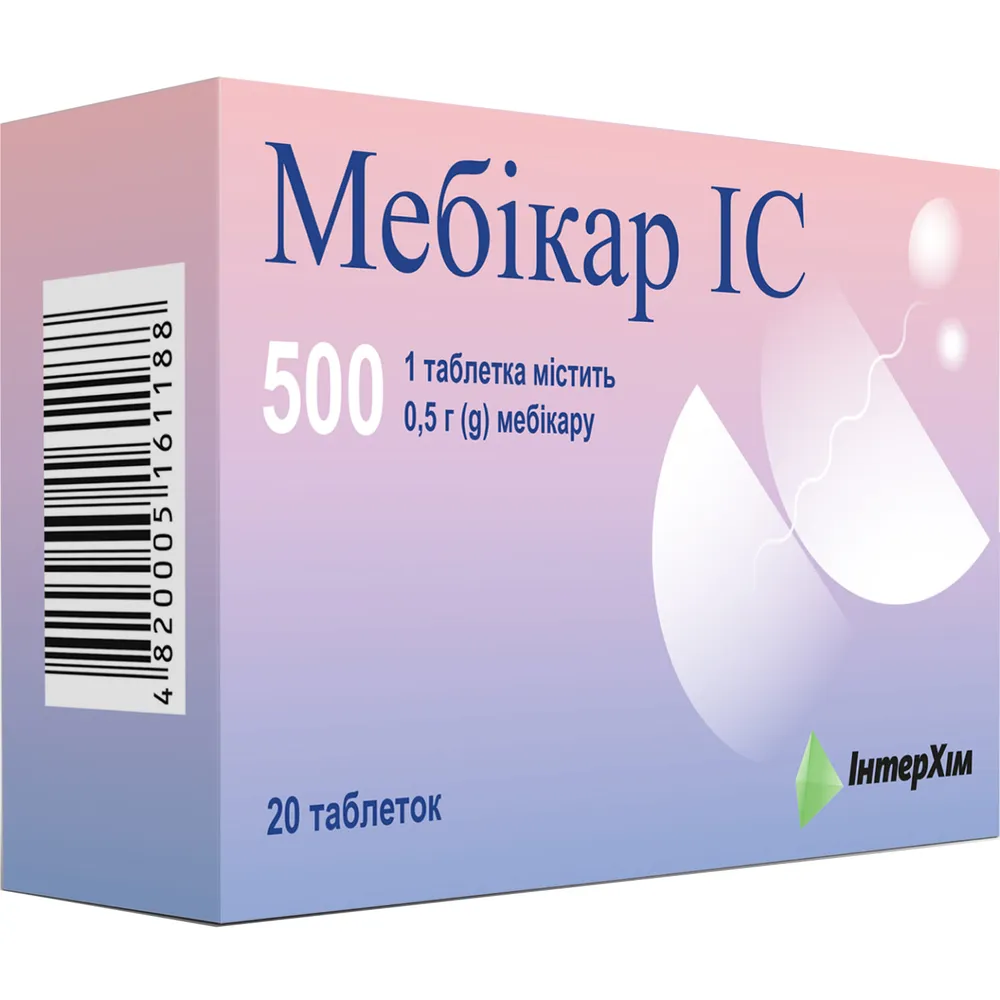
Table of Contents
INSTRUCTIONS FOR MEDICAL USE OF THE MEDICINAL PRODUCT MEBICAR IS
Composition:
Active substance: teglicoluril;
One tablet contains teglicoluril 300 mg (0.3 g);
Excipients: methylcellulose, calcium stearate.
Pharmaceutical form. Tablets.
Main physicochemical properties: white-colored tablets, flat cylindrical shape, beveled edges; the enterprise trademark is imprinted on one surface of the tablet, a line is present on the other surface.
Pharmacotherapeutic group.
Psychostimulants, drugs used in attention deficit hyperactivity disorder (ADHD), and nootropic agents. Other psychostimulant and nootropic agents. Teglicoluril.
ATC code N06B X21.
Pharmacological Properties
Pharmacodynamics
The active ingredient of the medicinal product, temazepine, is chemically similar to natural body metabolites: the temazepine molecule consists of two methylated fragments of urea incorporated into a bicyclic structure.
Mebechar IS affects the activity of limbic-reticular complex structures, particularly the emotiogenic zones of the hypothalamus, and also influences all four main neurotransmitter systems—GABAergic, cholinergic, serotonergic, and adrenergic—promoting their balance and integration, without exerting peripheral adrenonegative effects. Mebechar IS exhibits antagonistic activity against excitation of adrenergic and glutamatergic systems and enhances inhibitory serotonergic and GABAergic mechanisms in the brain. The drug's neurotransmitter profile includes a dopamine-positive component.
The medicinal product possesses normasthenic properties.
Mebechar IS has moderate tranquilizing (anxiolytic) activity, reducing or eliminating feelings of restlessness, anxiety, fear, emotional tension, and irritability. The anxiolytic effect of the drug is not accompanied by myorelaxation or impaired motor coordination. The drug does not reduce mental or physical performance, thus it can be used during working hours or while studying. For this reason, Mebechar IS is classified as a daytime tranquilizer. The drug does not exhibit hypnotic effects but enhances the action of hypnotics and improves sleep when disturbed.
In addition to its anxiolytic effect, the drug exerts nootropic activity. Mebechar IS improves cognitive functions, increases attention and mental performance, without stimulating symptoms of productive psychopathological disorders such as delusions or pathological emotional activity.
The drug reduces the severity of adverse effects (emotional blunting, hypersedation, muscle weakness) caused by neuroleptics and benzodiazepine tranquilizers.
The drug has anti-alcohol properties. In patients with alcoholism, one of the reasons for increased alcohol craving is a reduced level of endogenous ethyl alcohol in blood plasma. Mebechar IS, by increasing the level of endogenous ethyl alcohol (to a greater extent than other tranquilizers), reduces the craving for alcohol.
Mebechar IS alleviates nicotine withdrawal symptoms.
The drug does not produce elevated mood or feelings of euphoria.
Pharmacokinetics
Following oral administration, bioavailability is 77–80%; up to 40% of temazepine binds to erythrocytes; the remaining 60% remains unbound to blood proteins and circulates freely in blood plasma, allowing temazepine to distribute freely throughout the body and cross membranes without hindrance. The volume of distribution is 0.9 L/kg. Maximum plasma concentration of temazepine is reached within 30 minutes, with high levels maintained for 3–4 hours, followed by a gradual decline. Temazepine is completely eliminated from the body: 55–70% of the administered dose is excreted in urine, the remainder in feces, unchanged, within 24 hours. Temazepine does not accumulate in the body and is not subject to biochemical transformation.
Clinical characteristics.
Indications.
The medicinal product is intended for use in adults.
Neuroses and neurosis-like conditions accompanied by feelings of anxiety and fear, emotional lability, and restlessness.
Cardialgia of various origins (not associated with ischemic heart disease).
To improve tolerance of neuroleptics and tranquilizers.
Used as part of combination therapy for nicotine dependence as an agent reducing smoking craving.
Contraindications.
Hypersensitivity to temgicoluril or to any of the excipients of the medicinal product.
Interaction with other medicinal products and other forms of interaction.
Mebicar IS can be combined with neuroleptics, tranquilizers (benzodiazepines), hypnotics, antidepressants, and psychostimulants.
Special precautions for use.
Dependence, development of addiction, and withdrawal syndrome have not been established with the use of temgikoluril.
The medicinal product should be used with caution in patients with arterial hypotension and impaired liver or kidney function.
There have been isolated reports of acute hypersensitivity reactions.
Use during pregnancy or breastfeeding.
Temgikoluril penetrates well into all tissues and body fluids.
There is insufficient data regarding the safety of temgikoluril use during pregnancy and breastfeeding; therefore, the drug is not recommended for administration to pregnant or breastfeeding women.
Ability to influence reaction rate while driving or operating machinery.
Caution should be exercised when driving or operating machinery, as the use of temgikoluril may cause a decrease in arterial pressure and weakness.
Method of Administration and Dosage
The medicinal product should be taken orally, independently of food intake. Dosage depends on individual patient characteristics and the therapeutic objective of the medicinal product.
The usual dose for adults is 300–600 mg 2–3 times daily. The dose may be increased if necessary. The maximum single dose is 3 g; the maximum daily dose is 10 g. The duration of treatment ranges from several days to 2–3 months.
In complex therapy of nicotine dependence, the medicinal product should be administered at a daily dose of 600–900 mg for 5–6 weeks.
For elderly patients and patients with hepatic insufficiency, dose reduction is not required.
In patients with renal insufficiency, dose adjustment has not been studied. The medicinal product should be administered with caution in such patients.
If one or several doses have been missed, continue treatment according to the previously prescribed regimen.
Children
The medicinal product is not intended for use in children.
Overdose
The medicinal product has low toxicity. In case of significant overdose, adverse effects may be intensified (including allergic reactions, dyspeptic disorders, weakness, transient decrease in blood pressure and body temperature).
Treatment: gastric lavage and standard detoxification procedures should be performed, along with symptomatic therapy.
No specific antidote is known.
Side effects
Mebikar IS, like other medicinal products, may cause side effects, although they do not occur in all patients.
Side effects associated with the use of the medicinal product are classified by organ systems and frequency. Frequency is defined as follows: very common (≥ 1/10), common (≥ 1/100 to < 1/10), uncommon (≥ 1/1,000 to < 1/100), rare (≥ 1/10,000 to < 1/1,000), very rare (< 1/10,000), frequency not known (cannot be estimated from available data).
Nervous system disorders: rare – dizziness.
Cardiovascular system disorders: rare – decreased arterial pressure.
Gastrointestinal disorders: rare – dyspeptic disorders (including nausea, vomiting, diarrhea). In such cases, the dose of the medicinal product should be reduced.
Respiratory system disorders: rare – bronchospasm.
Skin and subcutaneous tissue disorders: rare – allergic reactions (including skin rash, pruritus, urticaria, angioneurotic edema). If an allergic reaction occurs, administration of the medicinal product should be discontinued.
General disorders: rare – decreased body temperature, weakness. In case of decreased arterial pressure and/or body temperature (body temperature may decrease by 1–1.5 °C), administration of the medicinal product need not be discontinued. Arterial pressure and body temperature normalize after completion of the treatment course.
Reporting suspected adverse reactions
Reporting of suspected adverse reactions after medicinal product registration is important. It allows continuous monitoring of the benefit-risk balance of the medicinal product. Medical and pharmaceutical professionals, as well as patients or their legal representatives, are encouraged to report all suspected adverse reactions and lack of efficacy via the Automated Pharmacovigilance Information System at the following link: https://aisf.dec.gov.ua.
Shelf life. 4 years.
Storage conditions.
Store in the original packaging at a temperature not exceeding 25 °C.
Keep out of reach of children.
Packaging.
10 tablets per blister; 2 blisters per carton.
Prescription status. Prescription-only.
Manufacturer.
Limited liability company "INTERSIM".
Manufacturer's address and location of its business activities.
40-A, 21st km of Starokyivska Road, Odesa, 65025, Ukraine.