Quadavit®
Ukraine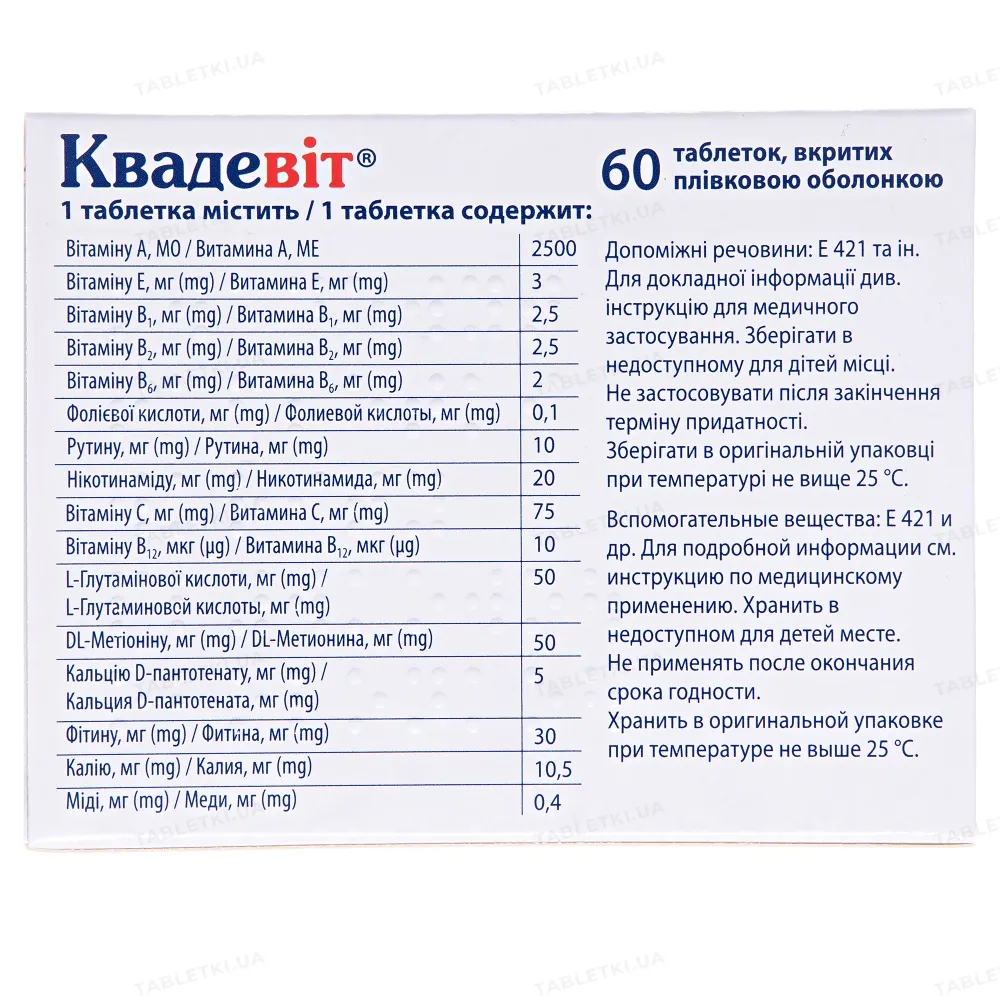
Table of Contents
INSTRUCTIONS FOR MEDICAL USE OF THE MEDICINAL PRODUCT (Quadevit)
Composition:
Active substances:
1 tablet | contains: | amount:|
| vitamin A |
|
| vitamin E |
|
| vitamin B1 |
|
| vitamin B2 |
|
| vitamin B6 |
|
| folic acid |
|
| rutin |
|
| nicotinamide |
|
| vitamin C |
|
| vitamin B12 |
|
| L-glutamic acid |
|
| DL-methionine |
|
| calcium D-pantothenate |
|
| phytin |
|
| potassium |
|
| copper |
|
Excipients: sodium croscarmellose, mannitol (E 421), magnesium stearate;
Coating: Opadry AMB II White film-coating mixture: partially hydrolyzed polyvinyl alcohol, talc, titanium dioxide (E 171), glycerol monocaprylocaprate, sodium lauryl sulfate; Opadry II Yellow film-coating mixture: polydextrose, talc, quinoline yellow aluminum lake (E 104), hypromellose, maltodextrin, medium-chain triglycerides, titanium dioxide (E 171).
Pharmaceutical form. Film-coated tablets.
Main physicochemical properties: yellow, round, biconvex film-coated tablets. Have a characteristic odor.
Pharmacotherapeutic group. Multivitamins with additional additives. ATC code A11A B.
Pharmacological Properties
Pharmacodynamics
Vitamin A (retinyl acetate) plays a key role in the synthesis of enzyme proteins and structural components of tissues, is essential for the formation of epithelial cells, bones, and rhodopsin synthesis, supports division of immunocompetent cells, normal immunoglobulin synthesis, and other factors protecting against infections.
Vitamin E (α-tocopheryl acetate) is a physiological antioxidant that protects cell membranes from damage, stimulates heme synthesis and production of many proteins.
Vitamin B1 (thiamine hydrochloride) is an important coenzyme in carbohydrate metabolism and participates in nervous system function.
Vitamin B2 (riboflavin) is a component of flavin coenzymes – flavin mononucleotide (FMN) and flavin adenine dinucleotide (FAD) – which participate in redox reactions and act as catalysts in cellular respiration processes.
Vitamin B6 (pyridoxine hydrochloride) plays an important role in amino acid, neurotransmitter, and hemoglobin metabolism.
Vitamin B12 (cyanocobalamin) is a growth factor necessary for normal hematopoiesis and erythrocyte maturation; it participates in the synthesis of amino acids, nucleic acids, and myelin.
Nicotinamide is a component of the co-factors NAD(H) and NADP(H), part of the glucose tolerance factor; it participates in tissue respiration, carbohydrate, and lipid metabolism.
Folic acid is necessary for normal formation of blood cells; together with vitamin B12, it stimulates erythropoiesis and participates in the synthesis of amino acids and nucleic acids, as well as in choline metabolism.
Vitamin C (ascorbic acid) participates in redox processes, is essential for growth and formation of bones, skin, teeth, and capillary endothelium, and for normal functioning of the nervous and immune systems.
Rutin reduces capillary permeability and fragility, participates in redox processes, and inhibits hyaluronidase activity.
Calcium D-pantothenate is a component of coenzyme A, necessary for normal functioning of the tricarboxylic acid cycle, adenosine triphosphate (ATP) synthesis, hormone and antibody production, acetylcholine synthesis, and intestinal absorption of potassium ions, glucose, and vitamin E.
Copper is an essential trace element that actively participates in iron metabolism, hemoglobin synthesis, reticulocyte maturation, and anabolic processes.
Potassium participates in electrolyte metabolism and nerve impulse conduction.
Phytin is a complex organic phosphorus compound containing a mixture of calcium and magnesium salts of inositol phosphoric acids; it stimulates hematopoiesis, enhances bone tissue growth and development, and improves nervous system function.
Glutamic acid participates in metabolic processes, promotes detoxification and excretion of ammonia, and stimulates excitation transmission in synapses of the central nervous system.
Methionine is an essential amino acid necessary for growth and nitrogen balance in the body; it participates in transmethylation and transsulfuration processes and prevents fatty infiltration of liver cells.
Vitamins and trace elements in the medicinal product are present in physiological, balanced doses corresponding to the human body's requirements.
Pharmacokinetics
The pharmacokinetics of the medicinal product have not been studied.
Clinical characteristics.
Indications.
The medicinal product is indicated as a prophylactic and therapeutic agent:
- under mental and physical stress;
- in vitamin deficiency and increased body requirements for vitamins and trace elements due to unbalanced nutrition, adherence to special diets, or gastrointestinal disorders;
- during convalescence after severe illnesses, surgeries, injuries, and stressful conditions;
- to enhance general body resistance and prevent infectious diseases during epidemics (such as influenza);
- to stimulate healing of wounds and burns;
- to reduce toxicity and minimize adverse effects during and after antibiotic therapy and chemotherapy;
- in complex treatment of atherosclerosis, cerebral circulation disorders, and cardiovascular insufficiency.
Contraindications.
Hypersensitivity to components of the medicinal product, severe renal function impairment, gout, hyperuricemia, nephrolithiasis, erythremia, erythrocytosis, thromboembolism, active pulmonary tuberculosis, fructose intolerance, thrombophlebitis, hypervitaminosis A and E, disorders of iron or copper metabolism, thyrotoxicosis, chronic glomerulonephritis, chronic heart failure, history of sarcoidosis, active peptic ulcer of the stomach and duodenum.
Interaction with other medicinal products and other types of interactions.
The medicinal product is not recommended to be taken together with other multivitamins, as it may lead to their overdose in the body.
Vitamins A and E mutually enhance each other's effects and act as synergists. Retinol reduces the anti-inflammatory effect of glucocorticoids. Concomitant use with nitrates and cholestyramine is not recommended, as they impair retinol absorption.
Vitamin A should not be administered with retinoids, as their combination is toxic.
Medicinal products containing iron suppress the action of vitamin E. Vitamin E should not be used together with iron preparations, silver, alkaline agents (sodium bicarbonate, trisamin, etc.), or indirect-acting anticoagulants (dicoumarol, neodicoumarol, etc.). Alpha-tocopherol acetate enhances the effect of steroid and non-steroidal anti-inflammatory drugs (sodium diclofenac, ibuprofen, prednisolone, etc.).
Vitamin C enhances the effect of sulfonamides (increasing the risk of crystalluria), penicillin, increases iron absorption, and reduces the effectiveness of heparin and indirect anticoagulants. Absorption of vitamin C is reduced when used concomitantly with oral contraceptives.
Vitamin B6 reduces the effect of levodopa and prevents or diminishes toxic manifestations observed during isoniazid and other anti-tuberculosis drug therapy.
Thiamine, by affecting polarization processes at neuromuscular synapses, may reduce curare-like effects.
PAS (para-aminosalicylic acid), cimetidine, calcium preparations, and alcohol reduce vitamin B12 absorption.
Folic acid reduces plasma concentrations of phenytoin; with other antiepileptic drugs, mutual reduction of clinical efficacy is possible.
Riboflavin is incompatible with streptomycin and reduces the effectiveness of antibacterial agents (oxytetracycline, doxycycline, erythromycin, tetracycline, and lincomycin).
Tricyclic antidepressants, imipramine, and amitriptyline inhibit riboflavin metabolism, especially in cardiac tissues.
Special precautions.
When using the medicinal product, it is necessary to adhere strictly to the recommended dosage and duration of treatment.
If there is no therapeutic effect or if adverse reactions occur, consult a physician for advice regarding further use of the medicinal product.
Discoloration of urine to a yellow color may occur, which is a completely harmless symptom and is due to the presence of riboflavin in the medicinal product.
The medicinal product should be prescribed with caution in patients with severe liver damage, peptic ulcer of the stomach and duodenum, nephritis, chronic pancreatitis, cholelithiasis, cardiac decompensation, ischemic heart disease, diabetes mellitus, patients with tumors (except in cases associated with megaloblastic anemia), and urolithiasis.
When using Quadevit®, as with other multivitamin preparations, a complete protein-rich diet is required, which promotes better absorption and metabolism of vitamins, especially water-soluble ones.
Quadevit® should not be prescribed together with other vitamins or medicinal products containing trace elements due to the risk of their overdose.
Use during pregnancy or breastfeeding.
During pregnancy or breastfeeding, the medicinal product should be taken only upon physician's recommendation.
The dose of vitamin A should not exceed 5,000 IU for pregnant women and women planning pregnancy.
High doses of retinol (over 10,000 IU) should not be taken by women during breastfeeding due to the risk of developing hypervitaminosis A in infants.
Ability to influence reaction rate when driving or operating machinery.
There is no data available regarding the influence of the medicinal product on the ability to drive a vehicle or operate complex machinery.
Dosage and Administration
The medicinal product is taken orally after meals.
For prophylaxis, Quadevit® is prescribed to adults and children aged 14 years and older at a dose of 1 tablet per day; for elderly individuals, 1 tablet twice daily. The duration of prophylactic treatment is 1–2 months.
For therapeutic purposes, the recommended dose is 1 tablet three times daily. The treatment course lasts 3–4 weeks. Repeat courses should be administered after a 3-month interval.
During pregnancy and breastfeeding, the medicinal product should be used only as prescribed by a physician. In the first trimester, the dose should not exceed 1 tablet per day; during the second and third trimesters, not more than 2 tablets per day. During breastfeeding, for prophylactic purposes, 1 tablet per day is recommended; for therapeutic purposes, 1 tablet twice daily.
Children. This medicinal product is not intended for use in children under 14 years of age.
Overdose.
Cases of overdose with Quadevit® have not been reported.
In case of overdose, allergic reactions (itching, skin hyperemia, skin rashes) and dyspeptic symptoms (nausea, vomiting, diarrhea, epigastric pain), changes in skin and hair, liver function disturbances, headache, drowsiness, lethargy, facial hyperemia, and irritability may occur.
Treatment: discontinue the drug; symptomatic therapy.
Adverse Reactions.
When used as recommended, the medicinal product is well tolerated and rarely causes adverse effects, which are usually related to individual intolerance to one of the components of the medicinal product.
Immune system disorders: allergic reactions are possible in individuals with increased sensitivity, including anaphylactic shock, angioneurotic edema, hyperthermia; bronchospasm in individuals with hypersensitivity to vitamins A, C, and the B group.
Skin and subcutaneous tissue disorders: rash, urticaria, pruritus, skin redness.
Gastrointestinal disorders: dyspeptic disorders, nausea, vomiting, diarrhea, epigastric pain, belching, constipation, increased gastric juice secretion.
Nervous system disorders: headache, dizziness, increased excitability, drowsiness.
Other: yellow discoloration of urine, sweating, visual disturbances.
With prolonged use of the medicinal product in high doses, the following are possible: irritation of the gastrointestinal mucosa, arrhythmias, paresthesia, hyperuricemia, transient increase in aspartate aminotransferase, lactate dehydrogenase, and alkaline phosphatase activity, decreased glucose tolerance, hyperglycemia, impaired kidney function, dryness and cracking of palms and soles, hair loss, seborrheic eruptions.
Shelf life. 2 years.
Storage conditions.
Store in the original packaging at a temperature not exceeding 25°C.
Keep out of reach of children.
Packaging.
10 tablets in a blister; 3 blisters per pack.
15 tablets in a blister; 4 blisters per pack.
15 tablets in a blister; 6 blisters per pack.
Supply category. Over-the-counter.
Manufacturer: JSC "KYIV VITAMIN PLANT".
Manufacturer's address and location of business activity:
38 Kopilivska Street, Kyiv, 04073, Ukraine.
Website: www.vitamin.com.ua.
I N S T R U C T I O N
on medical use of the medicinal product
KVADEVIT
(Quadevit)
Composition:
active substances:
1 tablet contains:
| vitamin A |
|
| vitamin E |
|
| vitamin B1 |
|
| vitamin B2 |
|
| vitamin B6 |
|
| folic acid |
|
| rutin |
|
| nicotinamide |
|
| vitamin C |
|
| vitamin B12 |
|
| L-glutamic acid |
|
| DL-methionine |
|
| calcium D-pantothenate |
|
| phytin |
|
| potassium |
|
| copper |
|
excipients: sodium croscarmellose, mannitol (E 421), magnesium stearate;
coating: film coating mixture Opadry AMB II White: polyvinyl alcohol partially hydrolyzed, talc, titanium dioxide (E 171), glycerol monocaprylocaprate, sodium lauryl sulfate; film coating mixture Opadry II Yellow: polydextrose, talc, quinoline yellow aluminum lake (E 104), hypromellose, maltodextrin, medium-chain triglycerides, titanium dioxide (E 171).
Dosage form. Film-coated tablets.
Main physicochemical properties: yellow, round, biconvex film-coated tablets with characteristic odor.
Pharmacotherapeutic group. Multivitamin preparations with additional components. ATC code A11AB.
Pharmacological properties.
Pharmacodynamics.
Vitamin A (retinyl acetate) plays a key role in the synthesis of enzyme proteins and structural tissue components, is essential for epithelial cell and bone formation, and rhodopsin synthesis. It supports division of immunocompetent cells, normal immunoglobulin synthesis, and other factors protecting against infections.
Vitamin E (α-tocopheryl acetate) is a physiological antioxidant protecting cell membranes from damage, stimulates heme and numerous protein synthesis.
Vitamin B1 (thiamine hydrochloride) is an important coenzyme in carbohydrate metabolism and participates in nervous system function.
Vitamin B2 (riboflavin) is a component of flavin coenzymes – flavin mononucleotide (FMN) and flavin adenine dinucleotide (FAD), which participate in redox reactions and act as catalysts in cellular respiration.
Vitamin B6 (pyridoxine hydrochloride) plays an important role in amino acid, neurotransmitter, and hemoglobin metabolism.
Vitamin B12 (cyanocobalamin) is a growth factor necessary for normal hematopoiesis and erythrocyte maturation. It participates in amino acid and nucleic acid synthesis, and in myelin formation.
Nicotinamide is a component of the co-factors NAD(H) and NADP(H), part of the glucose tolerance factor, and participates in tissue respiration, carbohydrate and lipid metabolism.
Folic acid is necessary for normal blood cell formation. Together with vitamin B12, it stimulates erythropoiesis and participates in amino acid and nucleic acid synthesis, and choline metabolism.
Vitamin C (ascorbic acid) participates in redox processes, is essential for growth and formation of bones, skin, teeth, capillary endothelium, and for normal functioning of the nervous and immune systems.
Rutin reduces capillary permeability and fragility, participates in redox processes, and inhibits hyaluronidase activity.
Calcium D-pantothenate is a component of coenzyme A, necessary for normal tricarboxylic acid cycle function, adenosine triphosphate (ATP) synthesis, hormone and antibody production, acetylcholine synthesis, and intestinal absorption of potassium ions, glucose, and vitamin E.
Copper is an essential trace element actively involved in iron metabolism, hemoglobin synthesis, reticulocyte maturation, and anabolic processes.
Potassium participates in electrolyte metabolism and nerve impulse conduction.
Phytin is a complex organic phosphorus compound containing calcium and magnesium salts of inositol phosphoric acids; stimulates hematopoiesis, enhances bone growth and development, and improves nervous system function.
Glutamic acid participates in metabolic processes, promotes detoxification and excretion of ammonia, and stimulates excitation transmission in synapses of the central nervous system.
Methionine is an essential amino acid necessary for body growth and nitrogen balance. It participates in transmethylation and transsulfuration processes and prevents fatty infiltration of liver cells.
Vitamins and trace elements in this medicinal product are present in physiological, balanced doses corresponding to human body requirements.
Pharmacokinetics.
The pharmacokinetics of the medicinal product have not been studied.
Clinical characteristics.
Indications.
The medicinal product is indicated as a prophylactic and therapeutic agent:
- under mental and physical stress;
- in hypovitaminosis and increased body demand for vitamins and trace elements due to unbalanced nutrition, special diets, or gastrointestinal disorders;
- during recovery after severe illnesses, surgeries, injuries, and stressful conditions;
- to enhance general body resistance and prevent infectious diseases during epidemics (e.g., influenza);
- to stimulate wound and burn healing;
- to reduce toxicity and minimize adverse effects during antibiotic therapy, and during and after chemotherapy;
- in complex treatment of atherosclerosis, cerebral circulation disorders, and cardiovascular insufficiency.
Contraindications.
Hypersensitivity to the components of the medicinal product, severe renal function impairment, gout, hyperuricemia, nephrolithiasis, erythremia, erythrocytosis, thromboembolism, active pulmonary tuberculosis, fructose intolerance, thrombophlebitis, hypervitaminosis A and E, disturbances in iron or copper metabolism, thyrotoxicosis, chronic glomerulonephritis, chronic heart failure, history of sarcoidosis, active peptic ulcer of the stomach and duodenum.
Interaction with other medicinal products and other forms of interaction.
The medicinal product should not be taken simultaneously with other multivitamins due to the risk of overdose.
Vitamins A and E mutually enhance each other's effects and act synergistically. Retinol reduces the anti-inflammatory effect of glucocorticoids. Concurrent use with nitrates and cholestyramine is not recommended, as they impair retinol absorption.
Vitamin A should not be administered with retinoids, as their combination is toxic.
Medicinal products containing iron reduce the effect of vitamin E. Vitamin E should not be used together with iron or silver preparations, alkaline agents (sodium bicarbonate, trisamin, etc.), or indirect-acting anticoagulants (dicoumarol, neodicoumarol, etc.). Alpha-tocopheryl acetate enhances the effect of steroid and non-steroidal anti-inflammatory drugs (sodium diclofenac, ibuprofen, prednisolone, etc.).
Vitamin C enhances the effect of sulfonamides (increasing the risk of crystalluria), penicillin, increases iron absorption, but reduces the effectiveness of heparin and indirect anticoagulants. Absorption of vitamin C is reduced when taken concurrently with oral contraceptives.
Vitamin B6 reduces the effect of levodopa and protects against or diminishes toxic manifestations associated with isoniazid and other antituberculosis drugs.
Thiamine, by affecting polarization processes at neuromuscular junctions, may reduce curare-like effects.
PAS (para-aminosalicylic acid), cimetidine, calcium preparations, and alcohol reduce vitamin B12 absorption.
Folic acid reduces plasma concentrations of phenytoin; possible mutual reduction in clinical efficacy with other antiepileptic drugs.
Riboflavin is incompatible with streptomycin and reduces the effectiveness of antibacterial agents (oxytetracycline, doxycycline, erythromycin, tetracycline, and lincomycin).
Tricyclic antidepressants, imipramine, and amitriptyline inhibit riboflavin metabolism, especially in cardiac tissue.
Special precautions.
When using the medicinal product, dosage and treatment duration must be strictly observed.
If no therapeutic effect occurs or adverse reactions develop, consult a physician regarding further use.
Yellow discoloration of urine may occur, which is a completely safe symptom caused by the presence of riboflavin in the medicinal product.
The medicinal product should be used with caution in patients with severe liver disease, peptic ulcer of the stomach and duodenum, nephritis, chronic pancreatitis, cholelithiasis, decompensated cardiac function, ischemic heart disease, diabetes mellitus, patients with tumors (except in cases associated with megaloblastic anemia), and urolithiasis.
When taking Kvadevit or other multivitamin preparations, a complete protein diet is necessary to enhance the absorption and metabolism of vitamins, especially water-soluble ones.
Kvadevit should not be co-administered with other vitamins or medicinal products containing trace elements due to the risk of overdose.
Use during pregnancy or breastfeeding.
During pregnancy or breastfeeding, the medicinal product should be taken only upon physician's recommendation.
Vitamin A dosage should not exceed 5,000 IU for pregnant women and women planning pregnancy.
Large doses of retinol (over 10,000 IU) should not be taken by women during breastfeeding due to the risk of developing hypervitaminosis A in infants.
Ability to affect reaction rate when driving or operating machinery.
There is no data on the effect of the medicinal product on the ability to drive or operate machinery.
Administration and dosage.
The medicinal product is taken orally after meals.
For prophylactic purposes, Kvadevit is administered to adults and children over 14 years of age at 1 tablet daily; for elderly patients – 1 tablet twice daily. Prophylactic course duration: 1–2 months.
For therapeutic purposes, 1 tablet three times daily is recommended. Treatment course: 3–4 weeks. Repeat courses should be initiated after a 3-month interval.
During pregnancy and breastfeeding, the medicinal product should be used only as prescribed by a physician. In the 1st trimester – not more than 1 tablet daily; in the 2nd and 3rd trimesters – not more than 2 tablets daily. During breastfeeding, for prophylaxis – 1 tablet daily; for treatment – 1 tablet twice daily.
Children. This dosage form is not intended for children under 14 years of age.
Overdose.
No cases of Kvadevit overdose have been reported.
Overdose may cause allergic reactions (itching, skin hyperemia, rashes) and dyspeptic symptoms (nausea, vomiting, diarrhea, epigastric pain), skin and hair changes, liver function disturbances, headache, drowsiness, lethargy, facial hyperemia, and irritability.
Treatment: discontinue the medicinal product; symptomatic therapy.
Adverse reactions.
The medicinal product is well tolerated at recommended doses and rarely causes adverse effects, which are usually related to individual intolerance to one of its components.
Immune system disorders: allergic reactions including anaphylactic shock, angioedema, hyperthermia; bronchospasm in individuals hypersensitive to vitamins A, C, and B complex.
Skin and subcutaneous tissue disorders: rash, urticaria, itching, skin redness.
Gastrointestinal disorders: dyspepsia, nausea, vomiting, diarrhea, epigastric pain, belching, constipation, increased gastric juice secretion.
Nervous system disorders: headache, dizziness, increased excitability, drowsiness.
Other: yellow discoloration of urine, sweating, visual disturbances.
With prolonged use in high doses: irritation of the gastrointestinal mucosa, arrhythmias, paresthesia, hyperuricemia, transient increase in aspartate aminotransferase, lactate dehydrogenase, and alkaline phosphatase activity, reduced glucose tolerance, hyperglycemia, impaired kidney function, dryness and cracking of palms and soles, hair loss, seborrheic eruptions.
Shelf life. 2 years.
Storage conditions.
Store in original packaging at a temperature not exceeding 25 °C.
Keep out of reach of children.
Packaging.
10 tablets in a blister; 3 blisters per pack.
15 tablets in a blister; 4 blisters per pack.
15 tablets in a blister; 6 blisters per pack.
Prescription status. Over-the-counter.
Manufacturer. JSC "KYIV VITAMIN PLANT".
Manufacturer’s location and address of operations.
38 Kopilovska Street, Kyiv, 04073, Ukraine.
Web-site: www.vitamin.com.ua.