Xenical®
Ukraine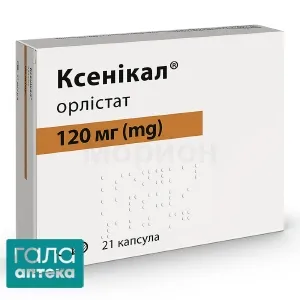
Table of Contents
INSTRUCTIONS FOR MEDICAL USE OF THE MEDICINAL PRODUCT KSENICAL® (XENICAL®)
Composition:
Active substance: 1 capsule contains 120 mg of orlistat;
Excipients: microcrystalline cellulose, sodium starch glycolate (type A), sodium lauryl sulfate, povidone, talc;
Shell: indigocarmine (E 132), titanium dioxide (E 171), gelatin, food inks (black iron oxide, concentrated ammonia solution, potassium hydroxide, shellac, propylene glycol).
Medicinal form. Capsules.
Main physicochemical properties: hard gelatin capsules, opaque, turquoise in color, with "XENICAL 120" printed on the body. The capsule contents are white or almost white granules.
Pharmacotherapeutic group. Agents with peripheral mechanism of action used in obesity.
ATC code A08AB01.
Pharmacological Properties.
Pharmacodynamics.
Orlistat is a potent and specific inhibitor of gastrointestinal lipases with prolonged action. Its therapeutic effect occurs in the lumen of the stomach and small intestine and involves the formation of covalent bonds with the active serine site of gastric and pancreatic lipase. The inactivated enzyme thereby loses its ability to hydrolyze dietary fats administered in the form of triglycerides and to affect free fatty acids and monoglycerides, which are absorbed.
In two-year and four-year clinical studies, orlistat and placebo groups were both treated with a hypocaloric diet.
An analysis of pooled data from five two-year studies evaluating orlistat in combination with a hypocaloric diet showed that after 12 weeks of treatment, 37% of patients receiving orlistat and 19% of patients receiving placebo demonstrated a reduction in body weight of at least 5% compared to baseline. Among these individuals, 49% of patients treated with orlistat and 40% of patients receiving placebo continued to lose body weight of ≥10% compared to baseline during the first year of treatment. Conversely, among patients who did not achieve a 5% reduction in body weight after 12 weeks of treatment, only 5% of those receiving orlistat and 2% of those receiving placebo continued to lose body weight of ≥10% compared to baseline during the first year of treatment. Overall, after one year of treatment, the percentage of patients taking orlistat at a dose of 120 mg who lost 10% or more of body weight was 20% in the orlistat group compared to 8% in the placebo group. The mean difference in body weight loss between patients receiving the drug and those receiving placebo was 3.2 kg.
Results from the 4-year clinical study "XENDOS" showed that after 12 weeks of treatment, 60% of patients receiving orlistat and 35% of patients receiving placebo demonstrated a body weight reduction of at least 5% compared to baseline. Among these individuals, 62% of patients treated with orlistat and 52% of patients receiving placebo continued to lose body weight of ≥10% compared to baseline during the first year of treatment. Conversely, among patients who did not achieve a 5% reduction in body weight after 12 weeks of treatment, only 5% of those receiving orlistat and 4% of those receiving placebo continued to lose body weight of ≥10% compared to baseline during the first year of treatment. After one year of treatment, 41% of patients treated with orlistat and 21% of patients receiving placebo lost body weight of ≥10%, with a mean difference between the two groups of 4.4 kg. After four years of treatment, 21% of patients treated with orlistat and 10% of patients receiving placebo lost body weight of ≥10%, with a mean difference between the groups of 2.7 kg.
In the "XENDOS" study, the proportion of patients receiving orlistat or placebo who lost body weight of at least 5% after 12 weeks of treatment or 10% during the first year of treatment was higher than in the five two-year studies. The reason for this difference is that the five two-year studies included a four-week diet and pre-treatment period with placebo, during which patients lost an average of 2.6 kg before the start of the main treatment course.
The results of the four-year clinical study also suggest that weight loss with orlistat treatment during the study slowed the development of type 2 diabetes (cumulative incidence of type 2 diabetes: 3.4% in the orlistat group compared to 5.4% in the placebo group). The majority of diabetes cases occurred in the subgroup of patients with impaired glucose tolerance before the start of treatment, which accounted for 21% of all randomized patients. It is unknown whether these results will have a positive impact on clinical outcomes in the long term.
Based on four one-year studies in obese patients with type 2 diabetes inadequately controlled by antidiabetic agents, the percentage of responders (body weight loss ≥10 kg) was 11.3% in the orlistat group and 4.5% in the placebo group. In the orlistat group, the mean difference in body weight loss compared to the placebo group ranged from 1.83 to 3.06 kg, and the mean difference in HbA1c reduction compared to the placebo group ranged from 0.18 to 0.55%. It was not demonstrated that the HbA1c-lowering effect was independent of weight loss.
In a multicenter (USA, Canada), double-blind, placebo-controlled, parallel-group study, 539 obese adolescents were randomized to receive either orlistat 120 mg (n = 357) or placebo (n = 182) three times daily for 52 weeks as an adjunct to a hypocaloric diet and exercise. Both groups received multivitamin supplements. The primary endpoint was change in body mass index (BMI) at the end of the study compared to baseline.
Results were significantly better in the orlistat group (BMI difference of 0.86 kg/m² in favor of orlistat). After one year of treatment, 9.5% of patients treated with orlistat compared to 3.3% of patients receiving placebo lost body weight of ≥10%, with a mean difference between the two groups of 2.6 kg. The greater difference in weight loss between the study groups was attributed to the subgroup of patients who lost ≥5% body weight within 12 weeks of orlistat treatment, representing 19% of the initial study cohort. Adverse effects were generally similar to those observed in adults. However, a higher number of bone fractures was observed (6% compared to 2.8% in the orlistat and placebo groups, respectively).
Pharmacokinetics.
Absorption.
Studies in volunteers with normal body weight and obese individuals showed that the effect on the level of drug absorption is minimal. Eight hours after oral administration, unchanged orlistat was not detectable in plasma, indicating that its concentration is below 5 ng/mL. After administration of therapeutic doses, unchanged orlistat was detected in plasma only sporadically, with extremely low concentrations (<10 ng/mL, or 0.02 µmol). There was no evidence of accumulation, confirming minimal absorption of the drug.
Distribution.
The volume of distribution cannot be determined because the drug is very poorly absorbed and lacks systemic pharmacokinetics that can be measured. In vitro, orlistat is more than 99% bound to plasma proteins (mainly lipoproteins and albumin). Minimal amounts of orlistat may penetrate into erythrocytes.
Metabolism.
Based on data from animal experiments, orlistat metabolism occurs primarily in the walls of the gastrointestinal tract. Approximately 42% of the minimal fraction of the drug that undergoes systemic absorption in obese patients consists of two main metabolites – M1 and M3.
Molecules M1 and M3 have an open β-lactone ring and very weakly inhibit lipase (1000 and 2500 times less, respectively, than orlistat). Given their low inhibitory activity and low plasma concentrations (mean 26 ng/mL and 108 ng/mL, respectively) after administration of therapeutic doses, these metabolites are considered pharmacologically inactive.
Elimination.
The main route of elimination is excretion of the unabsorbed drug in feces. Approximately 97% of the administered dose was excreted in feces, of which 83% was unchanged orlistat.
Cumulative renal excretion of all substances structurally related to orlistat accounted for less than 2% of the administered dose. The time to complete elimination of the drug from the body (via feces and urine) is 3–5 days. The elimination pathways of orlistat in volunteers with normal and increased body weight were found to be identical. Both orlistat and its metabolites M1 and M3 may undergo biliary excretion.
Clinical characteristics.
Indications.
Treatment in combination with a mildly hypocaloric diet in patients with obesity with a body mass index (BMI) ≥ 30 kg/m² or in patients with excess body weight (BMI ≥ 28 kg/m²), including those with obesity-related risk factors.
Orlistat treatment should be discontinued after 12 weeks if there is no weight reduction of at least 5% compared to initial body weight.
Contraindications.
Chronic malabsorption syndrome, cholestasis, hypersensitivity to the active substance or to any of the other components of the medicinal product, breastfeeding period.
Interaction with other medicinal products and other forms of interaction.
Cyclosporine.
When Xenical**®** and cyclosporine are taken concomitantly, reduced plasma concentrations of cyclosporine have been observed. This may lead to reduced immunosuppressive efficacy of cyclosporine. Therefore, concomitant administration with cyclosporine is not recommended (see section "Special precautions for use"). However, if concomitant use of orlistat and cyclosporine cannot be avoided, more frequent monitoring of cyclosporine plasma concentrations is recommended after initiation and discontinuation of orlistat in patients receiving cyclosporine. Cyclosporine plasma concentrations should be monitored until they stabilize.
Acarbose.
In the absence of pharmacokinetic interaction studies, concomitant use of orlistat and acarbose should be avoided.
Oral anticoagulants.
When taken concomitantly with Xenical**®**, warfarin or other oral anticoagulants require monitoring of the international normalized ratio (INR).
Fat-soluble vitamins.
Reduced absorption of fat-soluble vitamins A, D, E, and K has been observed when taken concomitantly with Xenical**®. In the majority of patients participating in clinical studies of orlistat treatment lasting up to 4 full years, levels of vitamins A, D, E, K, and beta-carotene remained within the normal range. To ensure adequate nutrition, patients on a weight-control diet should be advised to consume plenty of fruits and vegetables and to take multivitamin supplements. If multivitamins are recommended, they should be taken at least 2 hours after taking Xenical®** or before bedtime.
Amiodarone.
A single case of slight reduction in amiodarone plasma levels has been observed with concomitant use of Xenical**®** and amiodarone in a limited number of healthy volunteers. The clinical significance of this effect in patients receiving amiodarone is unclear, but in some cases it may be clinically relevant. In patients receiving both orlistat and amiodarone, enhanced clinical and ECG monitoring is recommended.
Seizures have been reported with concomitant use of orlistat and antiepileptic agents (valproate, lamotrigine). A causal relationship has not been established, but patients should be monitored for possible changes in frequency and/or severity of seizures.
Hypothyroidism and/or reduced control of hypothyroidism may rarely occur. The mechanism of this effect has not been proven, but possible reduced absorption of iodine salts and/or levothyroxine is conceivable (see section "Special precautions for use").
There have been isolated reports of reduced efficacy of antiretroviral drugs in HIV-infected patients, antidepressants, antipsychotics (including lithium), and benzodiazepines, coinciding with the initiation of orlistat therapy in patients with previously well-controlled conditions. Therefore, all potential consequences should be carefully evaluated in such patients before initiating orlistat treatment.
Absence of interaction.
No interactions were observed in pharmacokinetic studies with amitriptyline, atorvastatin, biguanides, fibrates, fluoxetine, pravastatin, losartan, phentermine, digoxin, phenytoin, nifedipine GITS (gastrointestinal therapeutic system), slow-release nifedipine, sibutramine, and alcohol. The absence of these interactions has been demonstrated in dedicated drug interaction studies.
No interaction between oral contraceptives and orlistat has been demonstrated in dedicated interaction studies. However, orlistat may indirectly reduce the availability of oral contraceptives, which may lead in some cases to unintended pregnancy. Additional contraceptive methods are recommended in the case of severe diarrhea.
Special precautions.
Orlistat treatment may potentially reduce the absorption of fat-soluble vitamins (A, D, E, and K). In most patients receiving treatment in long-term studies lasting up to four years, levels of vitamins A, D, E, and K and beta-carotene remained within normal ranges. To ensure adequate nutrition, the use of multivitamin supplements should be considered.
In clinical trials, weight loss with Xenical**®** was less pronounced in patients with type 2 diabetes than in patients without diabetes. Monitoring of antidiabetic medication is necessary during orlistat use.
Concomitant administration with cyclosporine is not recommended (see section "Interaction with other medicinal products and other forms of interaction").
Patients should be advised to follow dietary recommendations.
The likelihood of gastrointestinal adverse reactions may increase if Xenical**®** is used with a high-fat diet (e.g., in a 2000 kcal/day diet, over 30% of calories from fat, equivalent to approximately 67 g of fat). Daily fat intake should be distributed over three main meals.
Cases of rectal bleeding have been reported during use of Xenical**®**. Further investigation is recommended if severe and/or persistent symptoms occur.
An additional contraceptive method is recommended to prevent reduced efficacy of oral contraceptives that may occur in case of severe diarrhea.
Coagulation parameters should be monitored in patients receiving concomitant oral anticoagulants (see section "Interaction with other medicinal products and other forms of interaction").
Orlistat use may be associated with hyperoxaluria and oxalate nephropathy, sometimes leading to renal failure. This risk is increased in patients with chronic kidney disease and/or reduced fluid volume.
Hypothyroidism and/or worsening of hypothyroidism control may rarely occur. The mechanism of this effect has not been fully established, but it may involve reduced absorption of iodine salts and/or levothyroxine (see section "Interaction with other medicinal products and other forms of interaction").
In patients with epilepsy, orlistat may disrupt anticonvulsant therapy due to reduced absorption of antiepileptic drugs, potentially leading to seizures (see section "Interaction with other medicinal products and other forms of interaction").
Orlistat use may potentially reduce absorption of antiretroviral agents in HIV-infected patients and negatively affect the efficacy of antiretroviral therapy in these patients (see section "Interaction with other medicinal products and other forms of interaction").
Use during pregnancy or breastfeeding.
There are no clinical data on the use of orlistat in pregnant women.
Animal studies have not shown any direct or indirect adverse effects on pregnancy, embryonic/fetal development, parturition, or postnatal development. However, in the absence of clinical data, Xenical**®** should not be administered to pregnant women.
Excretion of orlistat in human breast milk has not been studied; therefore, it is contraindicated during breastfeeding.
Effect on ability to drive and use machines.
No effect.
Method of administration and dosage.
The recommended dose of Xenical® for adults is 1 capsule of 120 mg with water, taken immediately before each main meal. The capsule may also be taken during or up to 1 hour after a meal. If a meal is missed or contains no fat, the dose of Xenical® may also be omitted.
Patients should follow a balanced, moderately low-calorie diet, with approximately 30% of calories derived from fats. A diet rich in fruits and vegetables is recommended. Daily intake of fats, proteins, and carbohydrates should be distributed over three main meals.
Increasing the dose of Xenical® beyond the recommended dose (120 mg three times daily) does not result in enhanced therapeutic effect. Administration of orlistat is associated with increased fecal fat excretion within 24–48 hours after dosing. Within 48–72 hours after discontinuation of treatment, fecal fat excretion usually returns to the level observed prior to treatment with Xenical®.
The effect of Xenical® has not been studied in patients with impaired kidney and/or liver function, in children, or in elderly patients.
Children.
Clinical studies of Xenical® in children have not been conducted. There are no established indications for the use of Xenical® in pediatric patients.
Overdose.
In clinical studies, single doses of orlistat up to 800 mg or multiple doses of 400 mg three times daily for 15 days in healthy subjects and obese patients were not associated with significant adverse events. Additionally, obese patients have been treated with orlistat 240 mg three times daily for 6 months.
During post-marketing surveillance, most cases of orlistat overdose were either asymptomatic or associated with adverse events consistent with those observed at therapeutic doses.
In cases of significant overdose, patients should be monitored for 24 hours. Based on studies in volunteers and animals, any systemic effects related to the lipase-inhibiting properties of orlistat are expected to resolve rapidly.
Adverse Reactions.
Clinical Trials.
Adverse effects of Xenical® are mostly related to the gastrointestinal tract and are associated with the pharmacological action of the drug, which prevents the absorption of dietary fats. Their frequency increases with higher fat content in the diet. Patients should be advised about the possibility of gastrointestinal effects and the best ways to manage them, such as careful monitoring of their diet, particularly regarding the percentage of fat intake. A low-fat diet reduces the likelihood of gastrointestinal adverse events and may help patients control and regulate fat intake.
These gastrointestinal adverse reactions are generally mild and transient. They typically occur at the beginning of treatment (within the first 3 months), and most patients experience only one episode. The incidence of adverse reactions decreases with continued treatment with orlistat.
The following frequency categories are used to describe adverse reactions: very common (≥1/10), common (≥1/100 to <1/10), uncommon (≥1/1,000 to <1/100), rare (≥1/10,000 to <1/1,000), and very rare (<1/10,000), including isolated cases. Within each category, adverse reactions are listed in order of decreasing severity.
Below are the adverse reactions (first year of study) that occurred with a frequency >2% and at least 1% higher than with placebo, observed during 1- and 2-year clinical trials.
Nervous system disorders: very common – headache.
Respiratory, thoracic and mediastinal disorders: very common – upper respiratory tract infections; common – lower respiratory tract infections.
Gastrointestinal disorders: very common – abdominal pain/discomfort, oily rectal discharge, flatus with discharge, urgent need for defecation, steatorrhea, flatulence, oily stools, fecal incontinence, increased defecation frequency; common – rectal pain/discomfort, soft stools, fecal incontinence, bloating*, dental disorders, gingival disorders.
Renal and urinary disorders: common – urinary tract infections.
Metabolism and nutrition disorders: very common – hypoglycemia*.
Infections and infestations: very common – influenza.
General disorders and administration site conditions: common – weakness.
Reproductive system and breast disorders: common – dysmenorrhea.
Psychiatric disorders: common – anxiety.
*Only specific adverse reactions occurring with a frequency >2% and at least 1% higher than with placebo in patients with obesity and type 2 diabetes.
In 4-year clinical trials, the overall pattern of adverse event distribution was similar to that reported in 1- and 2-year trials. The overall incidence of gastrointestinal adverse events observed during the first year decreased each year over the 4-year period.
Post-marketing experience (based on spontaneous reports, frequency unknown).
Investigations: increased liver transaminase and alkaline phosphatase activity. When orlistat is co-administered with anticoagulants, cases of decreased prothrombin, increased international normalized ratio (INR), and anticoagulant treatment imbalance have been reported, leading to changes in hemostasis parameters.
Gastrointestinal disorders: rectal bleeding, diverticulitis, pancreatitis.
Skin and subcutaneous tissue disorders: bullous eruptions.
Immune system disorders: hypersensitivity reactions, including pruritus, rash, urticaria, angioedema, bronchospasm, and anaphylaxis.
Hepatobiliary disorders: cholelithiasis, hepatitis, which may be severe. Isolated cases of fatal outcomes or cases requiring liver transplantation have been reported.
Renal and urinary disorders: hyperoxaluria, oxalate nephropathy, which may lead to impaired kidney function.
Seizures have been reported in patients receiving orlistat concomitantly with antiepileptic drugs (see section "Interaction with other medicinal products and other forms of interaction").
Reporting of suspected adverse reactions.
Reporting suspected adverse reactions after drug authorization is important. It allows continued monitoring of the benefit-risk balance of the medicinal product. Healthcare professionals, pharmacists, patients, or their legal representatives should report all suspected adverse reactions and lack of efficacy via the automated pharmacovigilance information system at: https://aisf.dec.gov.ua/.
Shelf life. 2 years.
Storage conditions.
Keep out of reach of children. Store at temperatures not exceeding 25°C in the original packaging to protect from moisture and light.
Packaging.
Blister pack made of PVC/PE/PVdC/aluminum foil or PVC/PVdC/aluminum foil.
21 capsules per blister.
1 blister (21 capsules) or 2 blisters (42 capsules) or 4 blisters (84 capsules) per cardboard box.
Prescription status.
Prescription only.
Manufacturer.
CHEPLAPHARM Arzneimittel GmbH, Germany.
CHEPLAPHARM Arzneimittel GmbH, Germany.
Manufacturer's address and place of business.
Ziegelhof 23-24, Greifswald, Mecklenburg-Vorpommern, 17489, Germany
Ziegelhof 23-24, Greifswald, Mecklenburg-Vorpommern, 17489, Germany