Coriol®
Ukraine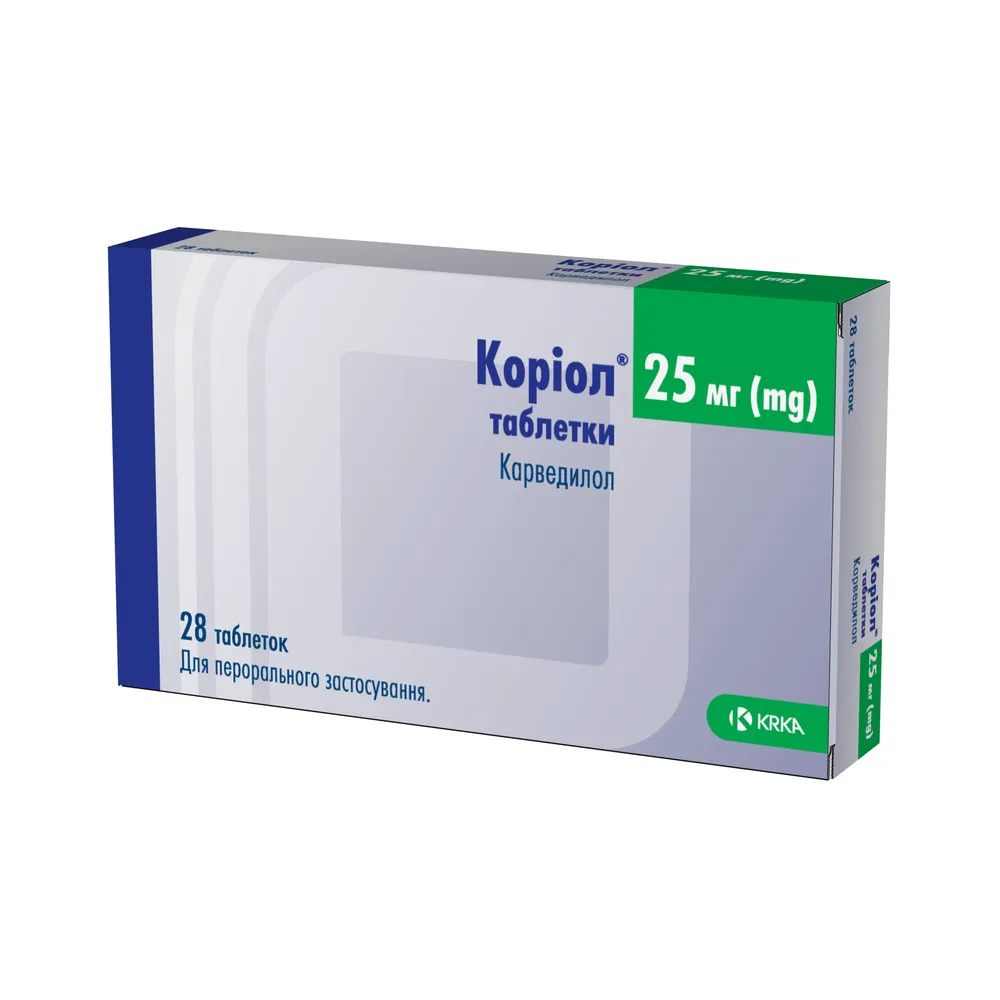
Table of Contents
INSTRUCTIONS FOR MEDICAL USE OF THE MEDICINAL PRODUCT Coriol® (Coryol®)
Composition:
Active substance: carvedilol;
1 tablet contains 12.5 or 25 mg of carvedilol;
Excipients: sucrose, lactose monohydrate, povidone K25, colloidal anhydrous silicon dioxide, crospovidone, magnesium stearate.
Pharmaceutical form. Tablets.
Main physico-chemical properties:
12.5 mg tablets: oval, slightly biconvex, white tablets with a score line on one side and the marking "S3" on the other side;
25 mg tablets: round, slightly biconvex, white tablets with beveled edges and a score line on one side.
Pharmacotherapeutic group. α- and β-adrenoreceptor blockers.
ATC code C07AG02.
Pharmacological properties.
Pharmacodynamics.
Mechanism of action.
Carvedilol is a non-selective beta-blocker with vasodilating properties. It also possesses antioxidant and antiproliferative properties.
Pharmacodynamic effects.
The active ingredient, carvedilol, is a racemate; its enantiomers differ in their effects and metabolism. The S(–)-enantiomer exhibits activity directed at blocking both alpha1- and beta-adrenergic receptors, whereas the R(+)-enantiomer shows only alpha1-adrenergic receptor-blocking activity. Due to its cardioselective blockade of beta-adrenergic receptors, carvedilol reduces arterial blood pressure, heart rate, and cardiac output. Carvedilol decreases pulmonary artery pressure and right atrial pressure. By blocking alpha1-adrenergic receptors, it induces peripheral vasodilation and reduces systemic vascular resistance. These effects reduce myocardial workload and help prevent the development of angina. In patients with heart failure, this leads to an increased left ventricular ejection fraction and reduction in disease symptoms. Similar effects have been observed in patients with left ventricular dysfunction.
Carvedilol does not exhibit intrinsic sympathomimetic activity, and like propranolol, it has membrane-stabilizing properties. Plasma renin activity is reduced, and fluid retention occurs infrequently. Certain characteristics of traditional beta-blockers do not appear to be present with vasodilating beta-blockers such as carvedilol.
Clinical efficacy and safety.
Clinical studies have shown that the balance of vasodilation and beta-blockade provided by carvedilol results in the following effects.
Hypertension. The effect on arterial blood pressure and heart rate is most pronounced 1–2 hours after administration.
In patients with arterial hypertension and healthy kidneys, carvedilol reduces renal vascular resistance. There are no significant changes in glomerular filtration rate, renal blood flow, or electrolyte excretion.
Carvedilol has been shown to maintain stroke volume and reduce total peripheral resistance without impairing blood flow to individual organs and vascular beds, such as the kidneys, skeletal muscles, forearm, legs, skin, brain, or carotid artery. The frequency of cold extremities and early fatigue during physical activity is reduced.
Hypertensive patients with renal impairment. Several open-label studies have demonstrated that carvedilol is effective in patients with renal hypertension, chronic kidney disease, those on hemodialysis, or after kidney transplantation. Carvedilol causes a gradual reduction in blood pressure during dialysis and on non-dialysis days, and the blood pressure-lowering effects are comparable to those observed in patients with normal renal function.
Stable angina. In patients with stable angina, carvedilol has demonstrated anti-ischemic (improved total exercise time, time to 1 mm ST-segment depression, and time to onset of angina) and antianginal properties, which are maintained during long-term treatment. Acute hemodynamic studies have shown that carvedilol significantly reduces myocardial oxygen demand and excessive sympathetic activity, as well as reduces preload (pulmonary artery pressure and pulmonary capillary wedge pressure) and afterload (total peripheral resistance) on the myocardium, resulting in improved systolic and diastolic function of the left ventricle without significant changes in cardiac output.
Carvedilol has no adverse effects on metabolic risk factors for ischemic heart disease. It does not affect normal serum lipid levels, and in patients with hypertensive disease and dyslipidemia, a favorable effect on serum lipids has been observed after 6 months of oral therapy.
In two studies, carvedilol at a dose of 25 mg twice daily was compared with other antianginal drugs of proven efficacy in patients with chronic stable angina pectoris. The dosing regimens selected are widely used in clinical practice. Both trials had a parallel-group, double-blind, controlled design. The primary endpoint was total exercise time (TET).
| Report No. |
Control (dose) |
Number of patients carvedilol / comparator drug |
Treatment duration |
| 060 |
Verapamil (120 mg three times daily) |
126/122 |
12 weeks |
| 061 |
Isosorbide dinitrate (40 mg twice daily) |
93/94 |
12 weeks |
The results of both studies clearly demonstrated that there was no significant difference in exercise duration at trough plasma levels after 12 weeks of therapy. However, hazard ratios derived from the Cox proportional hazards model showed a trend in favor of carvedilol, indicating that on average carvedilol was 114% as effective as verapamil (90% CI [confidence interval]: 85–152%) and 134% as effective as isosorbide dinitrate (90% CI: 96–185%). This also applied to the time to onset of angina and ST-segment depression. Increase in exercise duration was approximately 50 seconds in all groups; improvement in time to onset of angina and ST-segment depression was about 30 seconds, which is clinically meaningful.
In study 060, 48-hour Holter monitoring showed a reduction in the number and duration of ST-segment depressions (silent myocardial ischemia) in both treatment groups. Carvedilol also reduced premature atrial and ventricular contractions, as well as couplets and runs.
Chronic heart failure. Carvedilol significantly reduces mortality and hospitalization rates and improves symptoms and left ventricular function in patients with ischemic or non-ischemic chronic heart failure. The effect of carvedilol is dose-dependent.
Patients with chronic heart failure and renal impairment. Carvedilol reduces morbidity and mortality in dialysis patients with dilated cardiomyopathy, as well as all-cause mortality, cardiovascular mortality, and mortality due to heart failure or the need for first hospitalization in patients with heart failure and mild to moderate chronic kidney disease not requiring dialysis. A meta-analysis of placebo-controlled clinical trials involving a large number of patients (>4000) with mild to moderate chronic kidney disease supports carvedilol treatment in patients with left ventricular dysfunction, with or without symptomatic heart failure, to reduce the risk of fatal outcomes and heart failure-related events.
Pediatric patients. The safety and efficacy of carvedilol in children and adolescents have not been established due to limited number and extent of studies. Available studies have focused on the treatment of pediatric heart failure, which differs from adult disease in characteristics and etiology. Due to the small number of participants compared to adult studies and the lack of an optimal dosing regimen for children and adolescents, available data are insufficient to establish the pediatric safety profile of carvedilol.
Pharmacokinetics.
Absorption.
Carvedilol is rapidly and almost completely absorbed after oral administration. It is almost entirely bound to plasma proteins. The volume of distribution is approximately 2 L/kg. Plasma concentration is proportional to the administered dose.
Due to extensive first-pass metabolism in the liver (primarily by hepatic enzymes CYP2D6 and CYP2C9), the bioavailability of carvedilol is only about 30%. Three active metabolites are formed, which exhibit beta-blocking activity; one of them (4’-hydroxyphenyl derivative) has 13 times greater beta-blocking activity than carvedilol. Compared to carvedilol, the active metabolites have weak vasodilatory activity. Metabolism is stereoselective; therefore, plasma levels of R(+)-carvedilol are 2–3 times higher than those of S(–)-carvedilol. Plasma levels of active metabolites are approximately 10 times lower than those of carvedilol. The elimination half-life varies widely: 5–9 hours for R(+)-carvedilol and 7–11 hours for S(–)-carvedilol.
In elderly patients, plasma levels of carvedilol are increased by approximately 50%.
In patients with liver cirrhosis, the bioavailability of carvedilol is increased fourfold, and peak plasma concentration is five times higher than in healthy individuals. In patients with impaired liver function, bioavailability increases to 80% due to reduced first-pass metabolism. Since carvedilol is primarily excreted in feces, significant accumulation in patients with renal impairment is unlikely.
The presence of food in the stomach slows the rate of absorption of the drug, but does not affect its bioavailability.
Distribution.
Carvedilol is highly lipophilic, with plasma protein binding of about 95%. The volume of distribution ranges from 1.5 to 2 L/kg and increases in patients with liver cirrhosis.
Biotransformation.
In humans, carvedilol is extensively metabolized in the liver by oxidation and conjugation into various metabolites, which are primarily excreted in bile. Enterohepatic recirculation of the parent compound has been demonstrated in animals.
Demethylation and hydroxylation on the phenolic ring produce three metabolites with beta-adrenoceptor blocking activity.
Preclinical studies indicate that the 4'-hydroxyphenol metabolite is approximately 13 times more potent for beta-blockade than carvedilol. Compared to carvedilol, the three active metabolites exhibit weak vasodilatory activity. In humans, the concentration of the three active metabolites is approximately 10 times lower than that of the parent compound. Two of the hydroxycarbazole metabolites of carvedilol are extremely potent antioxidants, with activity in this regard 30–80 times greater than that of carvedilol.
Pharmacokinetic studies in humans have shown that the oxidative metabolism of carvedilol is stereoselective. Based on in vitro studies, it is assumed that different isoenzymes of cytochrome P450 may be involved in oxidation and hydroxylation processes, particularly CYP2D6, CYP3A4, CYP2E1, CYP2C9, and CYP1A2.
Studies involving healthy volunteers and patients have shown that the R-enantiomer is primarily metabolized by CYP2D6. The S-enantiomer is mainly metabolized by CYP2D6 and CYP2C9.
Genetic polymorphism.
Results of clinical pharmacokinetic studies in humans have shown that CYP2D6 plays an important role in the metabolism of R- and S-carvedilol. As a result, plasma concentrations of R- and S-carvedilol are increased in CYP2D6 poor metabolizers. The importance of the CYP2D6 genotype in the pharmacokinetics of R- and S-carvedilol has been confirmed in population pharmacokinetic studies, although other studies have not confirmed this observation. It has been concluded that the genetic polymorphism of CYP2D6 may have limited clinical significance.
Elimination.
After a single oral dose of 50 mg carvedilol, approximately 60% is secreted into bile and excreted in feces as metabolites within 11 days. After a single oral dose, only about 16% is excreted in urine as carvedilol or its metabolites. Excretion of unchanged drug in urine is less than 2%. After intravenous infusion of 12.5 mg to healthy volunteers, the plasma clearance of carvedilol reaches approximately 600 mL/min, and the elimination half-life is about 2.5 hours. The elimination half-life of the 50 mg capsule observed in the same individuals was 6.5 hours, which actually corresponded to the half-life from the capsule. After oral administration, the total systemic clearance of S-carvedilol is approximately twice that of R-carvedilol.
Special patient groups.
Elderly. Age does not have a statistically significant effect on the pharmacokinetics of carvedilol in patients with arterial hypertension.
Pediatric patients. Studies in pediatrics have shown that clearance, corrected for body weight, is significantly higher in children compared to adults.
Hepatic impairment. In a study involving patients with liver cirrhosis, the bioavailability of carvedilol was four times higher, peak plasma concentration was five times higher, and volume of distribution was three times higher than in healthy volunteers.
Renal impairment. Since carvedilol is primarily excreted in feces, significant accumulation in patients with renal impairment is unlikely.
In patients with arterial hypertension and renal impairment, the area under the concentration-time curve, elimination half-life, and peak plasma concentration are not significantly altered. Renal excretion of unchanged drug is reduced in patients with renal impairment; however, changes in pharmacokinetic parameters are moderate.
Carvedilol is not removed during dialysis, as it does not cross the dialysis membrane, likely due to its high degree of plasma protein binding.
Heart failure. In a study involving 24 Japanese patients with heart failure, the clearance of R- and S-carvedilol was significantly lower than previously estimated in healthy volunteers. These results suggest that the pharmacokinetics of R- and S-carvedilol are significantly altered in heart failure in Japanese patients.
Preclinical safety data.
No special hazard for humans was identified based on standard pharmacological safety, repeated-dose toxicity, genotoxicity, and carcinogenic potential studies.
Impairment of fertility. When high doses of carvedilol were administered to pregnant rats (≥200 mg/kg—at least 100 times the maximum daily human dose), adverse effects on pregnancy and fertility were observed (poor mating, fewer corpora lutea, and fewer implants).
Teratogenicity. Animal studies do not indicate teratogenic effects of carvedilol.
Embryotoxicity (increased post-implantation mortality) was observed, but there were no malformations in rats and rabbits at doses of 200 mg/kg and 75 mg/kg, respectively (38–100 times the maximum daily human dose). The relevance of these findings to humans is unknown. Furthermore, animal studies have shown that carvedilol crosses the placental barrier; therefore, potential consequences of alpha- and beta-blockade in the fetus and newborn should also be considered (see section "Use in pregnancy or breastfeeding").
Thus, effects observed in preclinical studies occurred only at exposures significantly exceeding the maximum human exposure, suggesting limited relevance for clinical use (see section "Use in pregnancy or breastfeeding").
Clinical characteristics.
Indications.
- Essential hypertension (both as monotherapy and as part of combination therapy).
- Chronic stable angina.
- Moderate to severe chronic heart failure, as adjunctive therapy.
Contraindications.
- Hypersensitivity to the active substance or to any of the excipients of the medicinal product;
- Decompensated heart failure – heart failure class IV according to the NYHA (New York Heart Association) classification, requiring intravenous administration of inotropic agents;
- Unstable heart failure;
- Second- or third-degree atrioventricular block (except when a permanent pacemaker is implanted);
- Concomitant intravenous administration of verapamil, diltiazem, or other antiarrhythmic agents (particularly class I antiarrhythmics);
- Severe bradycardia (heart rate < 50 beats/min);
- Severe arterial hypotension (systolic blood pressure below 85 mm Hg);
- Cardiogenic shock;
- Sinus node dysfunction (including sinoatrial block);
- Decompensated heart failure requiring intravenous administration of positive inotropic and/or diuretic agents;
- Cor pulmonale, pulmonary hypertension;
- Bronchial asthma or obstructive respiratory diseases associated with bronchospasm;
- Pheochromocytoma (unless adequately controlled with alpha-blockers);
- Prinzmetal’s angina;
- Severe hepatic impairment;
- Concomitant use of monoamine oxidase inhibitors (MAOIs) (except MAO-B inhibitors);
- Galactose intolerance, lactase deficiency, or glucose-galactose malabsorption;
- Metabolic acidosis;
- Pregnancy and lactation, pediatric age.
Interaction with other medicinal products and other forms of interaction.
Pharmacokinetic interactions.
Effect of carvedilol on the pharmacokinetics of other drugs
Carvedilol is an inhibitor of P-glycoprotein; therefore, the bioavailability of drugs transported by P-glycoprotein may be increased when administered concomitantly with carvedilol. In addition, the bioavailability of carvedilol may be altered by inducers or inhibitors of P-glycoprotein.
Digoxin: increased digoxin exposure (by nearly 20%) was observed in some studies involving healthy volunteers and patients with heart failure. A significantly greater effect was observed in male patients compared to female patients. Therefore, monitoring of digoxin levels is recommended during initiation, dose adjustment, or discontinuation of carvedilol (see section "Special precautions for use"). Carvedilol did not affect intravenously administered digoxin.
Cyclosporine and tacrolimus: Two studies in patients with renal and cardiac transplantation receiving oral cyclosporine showed increased plasma cyclosporine concentrations after initiation of carvedilol therapy. Carvedilol appears to increase the effect of oral cyclosporine by approximately 10–20%. To maintain therapeutic cyclosporine levels, cyclosporine dosage had to be reduced on average by 10–20%. The mechanism of interaction is unknown but may involve inhibition of intestinal P-glycoprotein by carvedilol. Due to considerable interindividual variability in required dose adjustments, careful monitoring of cyclosporine concentrations is recommended after initiation of carvedilol therapy, with appropriate adjustment of cyclosporine dosage. No interaction with carvedilol is expected when cyclosporine is administered intravenously.
Furthermore, evidence suggests that CYP3A4 is involved in the metabolism of carvedilol. Since tacrolimus is a substrate of both P-glycoprotein and CYP3A4, carvedilol may also affect its pharmacokinetics via these interaction mechanisms.
Effect of other drugs on the pharmacokinetics of carvedilol
Inhibitors and inducers of CYP2D6 and CYP2C9 may stereoselectively alter systemic and/or presystemic metabolism of carvedilol, leading to increased or decreased plasma concentrations of R- and S-carvedilol. Some examples of such effects observed in patients or healthy subjects are listed below.
Rifampicin. In a study involving 12 healthy volunteers, the effect of carvedilol decreased by approximately 60% during concomitant administration with rifampicin, and a reduction in the effect of carvedilol on systolic blood pressure was also observed. The mechanism of interaction is unknown but may involve induction of intestinal P-glycoprotein by rifampicin. Close monitoring of beta-blockade activity is advisable in patients receiving carvedilol and rifampicin concomitantly.
Amiodarone. In vitro studies using human liver microsomes showed that amiodarone and desethylamiodarone inhibit the oxidation of R- and S-carvedilol. The lowest concentration of R- and S-enantiomers of carvedilol increased significantly by 2.2-fold in patients with heart failure receiving carvedilol and amiodarone concomitantly, compared to patients receiving carvedilol monotherapy. The effect on S-carvedilol was attributed to desethylamiodarone, a metabolite of amiodarone, which is a potent inhibitor of CYP2C9. Monitoring of beta-blockade activity is recommended in patients receiving a combination of carvedilol and amiodarone.
Fluoxetine and paroxetine.
In a randomized crossover study in 10 patients with heart failure, concomitant administration of fluoxetine, a potent CYP2D6 inhibitor, resulted in stereoselective inhibition of carvedilol metabolism, increasing the mean AUC of the R(+) enantiomer by 77% and a non-statistically significant increase in the AUC of the S(–) enantiomer by 35% compared to placebo. However, no differences in adverse events, blood pressure, or heart rate were observed between treatment groups. The effect of a single dose of paroxetine, a potent CYP2D6 inhibitor, on the pharmacokinetics of carvedilol was studied in 12 healthy subjects after a single oral dose. Despite a significant increase in exposure to R- and S-carvedilol, no clinical effects were observed in these healthy subjects.
Alcohol. Alcohol consumption has an acute hypotensive effect, which may potentiate the blood pressure-lowering effect of carvedilol. Since carvedilol is soluble in ethanol, the presence of alcohol may affect the rate and/or extent of intestinal absorption of carvedilol. Additionally, carvedilol is partially metabolized by CYP2E1, an enzyme known to be induced and inhibited by alcohol.
Grapefruit juice. Consumption of a single 300 mL dose of grapefruit juice results in a 1.2-fold increase in the AUC of carvedilol compared to water. Although the clinical significance is unclear, patients should avoid concomitant intake of grapefruit juice, at least until a stable dose-response relationship has been established.
Pharmacodynamic interactions.
Insulin or oral hypoglycemic agents: Medicinal products with beta-blocking properties may enhance the blood glucose-lowering effect of insulin and oral hypoglycemic agents. Symptoms of hypoglycemia may be masked or attenuated (particularly tachycardia). Therefore, regular monitoring of blood glucose levels is recommended for patients receiving insulin or oral hypoglycemic agents.
Agents reducing catecholamines: Close monitoring for signs of hypotension and/or severe bradycardia is required in patients receiving both beta-blocking agents and drugs that reduce catecholamine levels (e.g., reserpine and monoamine oxidase inhibitors).
Digoxin.
Concomitant use of beta-adrenergic blockers and digoxin may lead to additive prolongation of atrioventricular conduction time.
Non-dihydropyridine calcium channel blockers or other antiarrhythmic agents.
Combination with carvedilol may increase the risk of atrioventricular conduction disturbances (see "Special precautions for use"). Isolated cases of conduction disturbances (rarely with hemodynamic impairment) have been observed during concomitant use of carvedilol and diltiazem. As with other beta-blocking agents, if carvedilol is to be administered orally together with non-dihydropyridine calcium channel blockers such as verapamil or diltiazem, amiodarone, or other antiarrhythmics, ECG and blood pressure monitoring are recommended.
Clonidine: Concomitant use of clonidine with beta-blocking agents may enhance the effects of lowering blood pressure and heart rate. When discontinuing combined therapy with beta-blocking agents and clonidine, the beta-blocking agent should be discontinued first. After several days, clonidine therapy may then be discontinued gradually by tapering the dose.
Antihypertensive agents.
Like other beta-blocking agents, carvedilol may enhance the effect of other concurrently administered antihypertensive drugs (e.g., beta1-receptor antagonists) or may lead to arterial hypotension related to their adverse effect profile.
Anesthetics: Extreme caution is required during anesthesia due to synergistic negative inotropic and hypotensive effects of carvedilol and anesthetics (see section "Special precautions for use").
Nonsteroidal anti-inflammatory drugs (NSAIDs), estrogens, and corticosteroids.
Concomitant use of NSAIDs, estrogens, or corticosteroids with beta-adrenergic blockers may lead to increased blood pressure, worsening of blood pressure control, and fluid and sodium retention.
Beta-agonist bronchodilators.
Non-cardioselective beta-blockers antagonize the effects of beta-agonist bronchodilators; therefore, such patients require careful monitoring.
Special precautions for use.
Chronic heart failure with congestion.
In patients with congestive heart failure, worsening of heart failure or fluid retention may occur during up-titration of carvedilol dose. If such symptoms occur, diuretic dose should be increased and the carvedilol dose should not be escalated until clinical stability is restored. Occasionally, it may be necessary to reduce the carvedilol dose or temporarily discontinue treatment. Such episodes do not preclude subsequent successful dose titration of carvedilol.
Carvedilol should be used with caution in combination with cardiac glycosides, as both drugs slow AV conduction.
Renal dysfunction in congestive heart failure.
In patients with heart failure and low blood pressure (systolic < 100 mm Hg), ischemic heart disease or systemic atherosclerosis, and/or underlying renal impairment, worsening of renal function has been observed during carvedilol treatment; this effect is generally reversible.
Left ventricular dysfunction after acute myocardial infarction.
Before initiating carvedilol therapy, the patient must be clinically stable and have received ACE inhibitor therapy for at least 48 hours prior to starting carvedilol. The ACE inhibitor dose should have been stable for at least 24 hours.
Chronic obstructive pulmonary disease.
Carvedilol may be used in patients with chronic obstructive pulmonary disease with a bronchospastic component who are not receiving oral or inhaled medication, only if the potential benefit outweighs the potential risk.
In patients with a tendency toward bronchospasm, respiratory arrest may occur due to possible increased resistance. Close monitoring is required during initiation and dose titration of carvedilol. The carvedilol dose should be reduced if any signs of bronchospasm occur during treatment.
Diabetes mellitus.
Caution should be exercised when using carvedilol in patients with diabetes mellitus, as it may impair glucose control or mask or blunt early signs of acute hypoglycemia. Alternatives to beta-blockers are generally preferred in insulin-dependent patients. Therefore, regular monitoring of blood glucose levels is recommended at the start of carvedilol therapy or during dose titration, with appropriate adjustment of hypoglycemic therapy (see "Interaction with other medicinal products and other forms of interaction").
Peripheral vascular disease and Raynaud's syndrome.
Carvedilol should be used cautiously in patients with peripheral vascular disease and Raynaud's syndrome, as beta-blockers may exacerbate symptoms of these conditions. However, since carvedilol also possesses alpha-blocking properties, this effect is largely counterbalanced.
Thyrotoxicosis.
Carvedilol, like other beta-blocking agents, may mask symptoms of thyrotoxicosis.
Bradycardia.
If bradycardia develops (heart rate < 55 beats/min), the carvedilol dose should be reduced.
Hypersensitivity reactions.
Carvedilol should be administered with caution to patients with a history of severe hypersensitivity reactions and those undergoing desensitization therapy, as beta-blockers may increase reactivity during allergy testing, enhance sensitivity to allergens, and increase the severity of anaphylactic reactions.
Anaphylactic reaction risk.
Patients with a history of severe anaphylactic reactions to various allergens may be more susceptible to recurrent episodes (accidental, diagnostic, or therapeutic) while taking beta-blockers. Such patients may not respond to usual doses of epinephrine used to treat allergic reactions.
Severe skin adverse reactions.
Very rare cases of severe skin adverse reactions, such as toxic epidermal necrolysis and Stevens-Johnson syndrome, have been reported during carvedilol treatment (see "Adverse reactions"). Patients who develop severe skin adverse reactions should discontinue carvedilol; carvedilol should be permanently discontinued.
Psoriasis.
Carvedilol should be prescribed to patients with a history of psoriasis associated with beta-blocker therapy only after careful consideration of the benefit-risk ratio.
Carvedilol should be administered with caution to patients with a history of severe hypersensitivity reactions and those requiring desensitization, as beta-adrenoblockers may increase sensitivity to allergens and the severity of anaphylactic reactions. The drug should also be used cautiously in patients with psoriasis, as it may exacerbate skin reactions.
Interaction with other medicinal products.
There are several important pharmacokinetic and pharmacodynamic interactions with other medicinal products (e.g., digoxin, cyclosporine, rifampicin, anesthetics, antiarrhythmic agents (see section "Interaction with other medicinal products and other forms of interaction")).
Beta-blockers reduce the risk of arrhythmias during anesthesia, but may also increase the risk of arterial hypotension; therefore, certain anesthetics should be used cautiously.
When carvedilol is used concomitantly with calcium channel blockers such as verapamil or diltiazem, or with other antiarrhythmic agents, particularly amiodarone, blood pressure and ECG parameters should be monitored, and concomitant intravenous administration should be avoided.
Concomitant use of debrisoquine.
Patients who are poor metabolizers of debrisoquine require caution at the start of treatment.
Pheochromocytoma.
Patients with pheochromocytoma should receive an alpha-blocker prior to any beta-blocker. Although carvedilol has both alpha- and beta-blocking pharmacological activity, there is no clinical experience with carvedilol in this condition. Therefore, caution is advised when prescribing carvedilol to patients suspected of having pheochromocytoma.
Prinzmetal's angina.
In patients with Prinzmetal's angina, non-selective beta-adrenoblockers may provoke chest pain (the alpha1-adrenoblocking effect of carvedilol may prevent this, but there is insufficient clinical experience with carvedilol in Prinzmetal's angina).
Contact lenses: Patients wearing contact lenses should be warned about the possibility of reduced tear production.
Withdrawal syndrome.
As with other beta-adrenoblockers, carvedilol therapy should not be abruptly discontinued, especially in patients with ischemic heart disease. Carvedilol therapy should be tapered gradually over a two-week period.
Important information on excipients.
The medicinal product contains sucrose and lactose. Koriol® should not be administered to patients with the following disorders: fructose intolerance, lactase deficiency, galactosemia, glucose-galactose malabsorption syndrome, or sucrase-isomaltase deficiency.
Use during pregnancy or breastfeeding.
Pregnancy
Clinical data on the effects of carvedilol during pregnancy are insufficient. Animal studies have shown effects on embryonic/fetal development, parturition, reproductive function, and postnatal development.
The potential risk to humans remains unknown.
Koriol® is contraindicated during pregnancy.
Beta-blockers reduce placental perfusion, which may lead to intrauterine fetal death and premature delivery. In addition, adverse effects (particularly hypoglycemia and bradycardia) may occur in the fetus and newborn. There is an increased risk of cardiac and pulmonary complications in newborns during the postnatal period. Animal studies have not demonstrated evidence of teratogenicity with carvedilol.
Breastfeeding
Animal studies have shown that carvedilol and/or its metabolites are excreted in rat milk.
Excretion of carvedilol in human breast milk has not been established. However, most beta-blockers, particularly lipophilic compounds, cross into human breast milk to varying degrees. Breastfeeding is contraindicated.
Effect on ability to drive or operate machinery.
At the beginning of Koriol® treatment, patients may experience dizziness and increased fatigue, which may indicate the development of postural hypotension and loss of consciousness. Therefore, patients should refrain from driving or operating potentially hazardous machinery.
Method of Administration and Dosage
Tablets should be taken with sufficient fluid. To slow absorption and prevent orthostatic effects, Coriol® should be taken after meals. The dose should be individually adjusted. Treatment should be initiated at low doses — 3.125 mg (half of a 6.25 mg tablet), gradually increasing until the optimal clinical effect is achieved. After administration of the first dose and after each dose increase, blood pressure in the standing position should be measured in the patient one hour after administration to rule out possible arterial hypotension.
Treatment with Coriol® should be discontinued gradually by reducing the dose over 1–2 weeks.
This is particularly important for patients with concomitant ischemic heart disease (see section "Special Precautions").
If treatment has been interrupted for more than 1 week, reinitiation should begin with the lowest dose.
Dosage Special Instructions
Like other beta-blockers, and especially in coronary patients, discontinuation of carvedilol should be done gradually with weekly dose reductions. This is particularly important in patients with concomitant ischemic heart disease (see section "Special Precautions").
Essential Hypertension
The initial dose of Coriol® is 12.5 mg in the morning after breakfast or 6.25 mg twice daily (morning and evening). After 7–14 days, or even after 2 days of treatment, the dose should be increased to 25 mg in the morning or to 12.5 mg twice daily. After 14 days of treatment, the dose may be increased again to 25 mg twice daily.
The maximum dose of Coriol® for the treatment of arterial hypertension is 25 mg twice daily.
The recommended initial dose of Coriol® for the treatment of arterial hypertension in patients with heart failure is 3.125 mg* twice daily.
Chronic Stable Angina
The initial dose of Coriol® is 12.5 mg twice daily after meals. After 2 days of treatment, the dose should be increased to 25 mg twice daily.
The maximum dose of Coriol® for the treatment of chronic angina is 25 mg twice daily.
The recommended initial dose of Coriol® for the treatment of angina in patients with heart failure is 3.125 mg* twice daily.
Chronic Heart Failure
Coriol® is recommended for the treatment of stable mild, moderate, or severe chronic heart failure as an adjunct to standard therapy, such as diuretics, ACE inhibitors, or digitalis preparations. Coriol® may also be used in patients who are intolerant to ACE inhibitors. Coriol® may be prescribed only after stabilization of the doses of diuretics, ACE inhibitors, and digitalis (if used). The dose should be individually adjusted. Careful medical monitoring is required for the first 2–3 hours after initial administration or after dose increase to assess drug tolerance. If the patient develops bradycardia with a heart rate below 55 beats per minute, the dose of Coriol® should be reduced. If symptoms of arterial hypotension occur, first consider reducing the dose of diuretic or ACE inhibitor; if these measures are insufficient, reduce the dose of Coriol®.
Transient worsening of heart failure may occur at the beginning of Coriol® treatment or after dose increase. In such cases, the diuretic dose should be increased. Sometimes it may be necessary to temporarily reduce or even discontinue Coriol®. After clinical stabilization, treatment with Coriol® may be resumed or the dose increased.
The initial dose is 3.125 mg* twice daily. If the patient tolerates this dose well, it may be gradually increased (every 2 weeks) to reach the optimal dose. Subsequent doses are 6.25 mg twice daily, then 12.5 mg twice daily, and 25 mg twice daily. The patient should take the highest dose that is well tolerated. The maximum recommended dose is 25 mg twice daily for all patients with severe congestive heart failure and for patients with mild to moderate congestive heart failure and body weight less than 85 kg. For patients with congestive heart failure and body weight over 85 kg, the dose may be cautiously increased to 50 mg twice daily.
Before each dose increase, the patient's condition should be evaluated for signs of worsening heart failure or vasodilation.
Elderly Patients
Dose adjustment is not required.
Patients with Hepatic Impairment
Coriol® is not recommended for patients with severe hepatic impairment.
Patients with Renal Impairment
Based on pharmacokinetic data and clinical trial results in patients with renal dysfunction (including renal impairment), no dose adjustment is expected to be necessary in moderate to severe renal impairment (see sections "Special Precautions" and "Pharmacokinetics").
* When a 3.125 mg dose is required, other carvedilol formulations with appropriate dosage forms and strengths should be prescribed.
Children
Safety and efficacy of Coriol® in children have not been established; therefore, use in children is contraindicated.
Overdose.
Symptoms: severe reduction in arterial pressure (AP), bradycardia, heart failure, cardiogenic shock, sinus arrest, and cardiac arrest; respiratory disturbances, bronchospasm, vomiting, confusion, and generalized seizures may also occur.
Treatment: in addition to general supportive measures, monitoring and correction of vital parameters are required, if necessary in an intensive care unit. The following measures may be taken:
- place the patient in a supine position;
- in case of severe bradycardia — administer atropine 0.5–2 mg intravenously;
- to support cardiovascular function — administer glucagon 1–10 mg intravenously as a bolus, followed by 2–5 mg/hour as a continuous infusion;
- sympathomimetics (dobutamine, isoprenaline, orciprenaline, or adrenaline) in various doses depending on body weight and therapeutic response.
If positive inotropic agents are required, phosphodiesterase inhibitors should be administered. If arterial hypotension predominates in the clinical picture of overdose, administer noradrenaline; it should be given under continuous hemodynamic monitoring.
For treatment-resistant bradycardia, temporary cardiac pacing is indicated.
For bronchospasm, administer beta-adrenergic agonists as an aerosol (intravenous administration if ineffective) or intravenous aminophylline. For seizures, administer diazepam or clonazepam slowly intravenously.
Since severe overdose with shock symptoms may prolong the elimination half-life of the drug from tissue depots, supportive therapy should be continued for a prolonged period. The duration of supportive detoxification therapy depends on the severity of overdose and should continue until the patient's condition stabilizes.
Carvedilol cannot be removed by dialysis.
In cases of severe overdose with cardiogenic shock, supportive treatment should be continued for a sufficiently long time, as elimination or redistribution of carvedilol may be slower than usual.
Adverse Reactions
The risk of most adverse reactions associated with carvedilol is similar across all indications. Exceptions are described below ("Description of certain adverse reactions").
The following are adverse effects of carvedilol identified during clinical trials, post-marketing safety studies, or based on spontaneous reports.
The frequency of adverse reactions is categorized as follows:
very common ≥ 1/10, common ≥ 1/100 to < 1/10, uncommon ≥ 1/1000 to < 1/100, rare ≥ 1/10000 to < 1/1000, very rare < 1/10000.
Infections and infestations:
common – bronchitis, pneumonia, upper respiratory tract infections, urinary tract infections.
Blood and lymphatic system disorders:
common – anaemia;
rare – thrombocytopenia;
very rare – leukopenia.
Immune system disorders:
very rare – hypersensitivity (allergic reaction).
Metabolic and nutritional disorders:
common – weight gain, hypercholesterolemia, impaired blood glucose control (hyperglycemia, hypoglycemia) in patients with pre-existing diabetes.
Psychiatric disorders:
common – depression, depressed mood;
uncommon – sleep disorders.
Central nervous system disorders:
very common – headache, dizziness;
common – fatigue, syncope;
uncommon – paraesthesia.
Eye disorders:
common – visual disturbances, decreased lacrimation (dry eyes), eye irritation.
Cardiac disorders:
very common – heart failure;
common – bradycardia, oedema, hypervolaemia, fluid retention;
uncommon – atrioventricular block, angina pectoris.
Vascular disorders:
very common – arterial hypotension;
common – orthostatic hypotension, peripheral circulation disorders (cold extremities, peripheral vascular disease, worsening of intermittent claudication, and Raynaud's syndrome).
Respiratory, thoracic and mediastinal disorders:
common – dyspnoea, pulmonary oedema, asthma in susceptible patients;
rare – nasal congestion, influenza-like symptoms.
Gastrointestinal disorders:
common – nausea, diarrhoea, vomiting, dyspepsia, abdominal pain;
uncommon – constipation;
rare – dry mouth.
Hepatobiliary disorders:
very rare – increased alanine aminotransferase (ALT), aspartate aminotransferase (AST), and gamma-glutamyl transferase (GGT).
Skin disorders:
uncommon – skin reactions (e.g., allergic exanthema, dermatitis, increased sweating, urticaria, pruritus, psoriasis-like and lichen planus-like skin lesions), alopecia.
Musculoskeletal and connective tissue disorders:
common – limb pain.
Renal and urinary disorders:
common – renal failure and impaired renal function in patients with diffuse vascular disease and/or underlying renal insufficiency;
rare – urinary disorders;
very rare – urinary incontinence in women.
Reproductive system and breast disorders:
uncommon – erectile dysfunction.
General disorders and administration site conditions:
very common – asthenia (fatigue);
common – oedema, pain.
Description of certain adverse reactions.
Except for dizziness, visual disturbances, and bradycardia, none of the adverse effects listed above are dose-dependent.
Dizziness, syncope, headache, and asthenia are usually mild and occur more frequently at the beginning of treatment.
In patients with congestive heart failure, worsening of heart failure and fluid retention may occur during dose escalation of carvedilol by titration (see section "Dosage and administration").
Heart failure as an adverse reaction was very commonly observed in patients receiving placebo (14.5%) and carvedilol (15.4%), as well as in patients with left ventricular dysfunction after acute myocardial infarction.
Reversible worsening of renal function has been observed during carvedilol therapy in patients with chronic heart failure, low blood pressure, ischaemic heart disease, diffuse vascular disease, and/or underlying renal insufficiency (see section "Special precautions for use").
Since these events were observed in a population of uncertain size, it is not always possible to reliably estimate their frequency or establish a causal relationship with carvedilol use.
Metabolism and nutrition disorders. Beta-adrenergic receptor blockers may unmask latent diabetes, exacerbate diabetes, and impair blood glucose regulation.
Psychiatric disorders. Carvedilol may cause hallucinations.
Cardiac disorders. Sinus node arrest may occur in susceptible patients (e.g., elderly patients, patients with bradycardia, sinus node dysfunction, or atrioventricular block).
Skin and subcutaneous tissue disorders. Severe skin adverse reactions (toxic epidermal necrolysis, Stevens-Johnson syndrome) (see section "Special precautions for use").
Hyperhidrosis.
Renal and urinary disorders. Carvedilol may cause urinary incontinence in women, which resolves after discontinuation of the drug.
Other possible adverse effects include dyskinesia, hypoesthesia, allergic rash, appearance or worsening of psoriatic plaques, psoriatic process, hypervolaemia, abnormal creatinine and urea levels, decreased prothrombin levels, and such reactions as acute liver failure and impaired liver function in patients with generalized atherosclerosis.
Reporting suspected adverse reactions.
Reporting of suspected adverse reactions after medicine authorization is important. It allows continuous monitoring of the benefit-risk balance of the medicine. Healthcare professionals, pharmacists, patients, and their legal representatives should report all suspected adverse reactions and lack of efficacy via the Automated Pharmacovigilance Information System at: https://aisf.dec.gov.ua.
Shelf life. 5 years.
Storage conditions.
Store at temperatures not exceeding 30°C. Keep out of reach and sight of children.
Packaging.
12.5 mg tablets: 7 tablets in a blister; 4 blisters in a cardboard box; 10 tablets in a blister; 3 blisters in a cardboard box.
25 mg tablets: 7 tablets in a blister; 4 blisters in a cardboard box; 14 tablets in a blister; 2 blisters in a cardboard box; 10 tablets in a blister; 3 blisters in a cardboard box.
Prescription status. Prescription only.
Manufacturer. KRKA, d.d., Novo mesto, Slovenia.
Manufacturer's address.
Šmarješka cesta 6, 8501 Novo mesto, Slovenia.