Clonidine is
Ukraine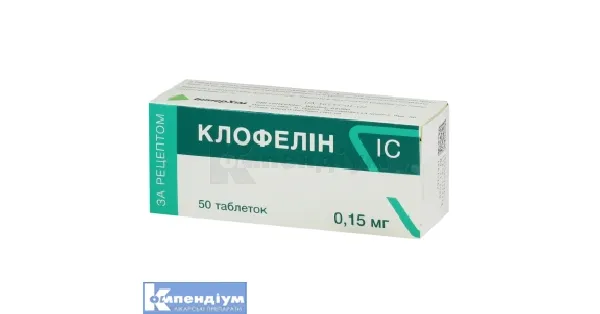
Table of Contents
INSTRUCTIONS FOR MEDICAL USE OF THE MEDICINAL PRODUCT CLOPHELINE IS
Composition:
Active substance: clonidine hydrochloride;
1 tablet contains 0.1 mg, or 0.15 mg, or 0.3 mg of clonidine hydrochloride;
Excipients: lactose monohydrate, corn starch, povidone, calcium hydrogen phosphate dihydrate, pregelatinized starch, colloidal anhydrous silicon dioxide, magnesium stearate.
Pharmaceutical form. Tablets.
Main physicochemical properties: white or almost white tablets, flat cylindrical shape with beveled edges; the company trademark is imprinted on one side of the tablet, a division line on the other side.
Pharmacotherapeutic group.
Antihypertensive agents. Antiadrenergic agents with central mechanism of action. Imidazoline receptor agonists. Clonidine.
ATC Code C02AC01.
Pharmacological Properties.
Pharmacodynamics.
Clonidine hydrochloride is an imidazoline derivative and a centrally acting α2-adrenergic agonist that primarily stimulates postsynaptic α2-adrenergic receptors located in the central nervous system. This leads to a reduction in sympathetic nervous system tone. As a result, plasma noradrenaline concentration decreases. Clonidine does not affect catecholamine synthesis but inhibits the release of noradrenaline from nerve endings via a negative feedback mechanism upon stimulation of α2-adrenergic receptors. In addition to its central action, clonidine may act as an agonist at peripheral postsynaptic α1-adrenergic vascular receptors, which in some cases may manifest as a slight increase in arterial blood pressure at the beginning of treatment. However, since the central effect is much more pronounced than the peripheral one, it masks the peripheral vasoconstrictive effects of clonidine during prolonged therapy. Clonidine enhances vagal reflexes that reduce heart rate. Stimulation of inhibitory neurons leads to suppression of the vasomotor center and gradual reduction in peripheral sympathetic nervous system tone. An intact efferent sympathetic pathway is essential for this effect. As a result, arterial blood pressure and peripheral vascular resistance decrease, along with reductions in heart rate and cardiac output.
After oral administration, the antihypertensive effect of clonidine develops within approximately 30–60 minutes.
Renal vascular resistance decreases, while glomerular filtration rate remains unchanged despite the reduction in pressure.
Cerebral blood flow is almost unaffected.
Long-term clonidine therapy leads to reduced therapeutic response to administered vasoactive substances.
Clonidine reduces intraocular pressure, exerts sedative and analgesic effects, and diminishes symptoms of opioid and alcohol withdrawal as well as feelings of unfounded fear.
The efficacy of clonidine in treating arterial hypertension has been studied in 5 clinical trials involving children. The data obtained confirmed that clonidine exerts antihypertensive effects on both systolic and diastolic blood pressure. However, due to limited data and methodological shortcomings, a definitive conclusion regarding the use of clonidine in children with arterial hypertension cannot be made.
The efficacy of clonidine has also been investigated in several clinical studies involving children with attention deficit hyperactivity disorder (ADHD), Tourette syndrome, and stuttering. Efficacy in treating these conditions/disorders has not been demonstrated.
Two small studies on the efficacy of clonidine in treating migraine in children were also conducted, neither of which demonstrated effectiveness of clonidine.
The most commonly reported adverse effects in pediatric studies were somnolence, dry mouth, headache, dizziness, and insomnia. These adverse effects may significantly impact children's daily behavior.
Overall, the safety and efficacy of clonidine use in children have not been established (see section "Children").
Pharmacokinetics.
Absorption and Distribution
Pharmacokinetic parameters of clonidine change proportionally with dose in the range of 0.075–0.3 mg; linearity of clonidine pharmacokinetics at doses outside this range has not been fully demonstrated. After oral administration, clonidine is well absorbed from the gastrointestinal tract and undergoes minimal presystemic metabolism. Maximum plasma concentration is reached within 1–3 hours after oral intake. Plasma protein binding is 30–40%.
Clonidine rapidly and extensively distributes into tissues and crosses the blood-brain and placental barriers. Clonidine passes into human breast milk. However, there is insufficient information regarding its effects on newborns.
Metabolism and Elimination
The elimination half-life ranges from 5 to 25.5 hours and may extend up to 41 hours in cases of severe renal impairment. Approximately 70% of the administered dose is excreted in urine, primarily as unchanged clonidine (40–60% of the administered dose). About 20% of the administered dose is excreted in feces. The main metabolite, p-hydroxycyonidine, is pharmacologically inactive. Food intake or racial background does not influence the pharmacokinetic parameters of clonidine. The antihypertensive effect is achieved at plasma clonidine concentrations between 0.2 ng/mL and 2.0 ng/mL in patients with normal renal function. The antihypertensive effect is weakened or reduced at plasma concentrations exceeding 2.0 ng/mL.
Clinical characteristics.
Indications.
Arterial hypertension (essential or secondary) as part of combination therapy (except for arterial hypertension caused by pheochromocytoma).
Contraindications.
Hypersensitivity to clonidine or to any of the excipients.
Severe bradyarrhythmia due to sick sinus syndrome or second- or third-degree atrioventricular block.
Depression.
Galactose intolerance, lactase deficiency, or glucose-galactose malabsorption syndrome.
Breastfeeding period.
Interaction with other medicinal products and other forms of interaction.
The antihypertensive effect of clonidine may be enhanced when used concomitantly with other antihypertensive agents such as diuretics, vasodilators, β-adrenoblockers, calcium antagonists, and angiotensin-converting enzyme (ACE) inhibitors; however, the effect of α1-adrenoblockers is unpredictable. When used concomitantly with atenolol or propranolol, an additive antihypertensive effect, sedation, and dry mouth may develop.
Antihistamines may enhance the antihypertensive effect of clonidine.
Medicinal products that increase blood pressure or cause sodium (Na+) and water retention, such as nonsteroidal anti-inflammatory drugs (NSAIDs), may reduce the antihypertensive effect of clonidine.
Medicinal products with α2-adrenergic blocking properties, such as mirtazapine, phentolamine, tolazoline, may dose-dependently counteract the effects of clonidine mediated via α2-adrenergic receptors.
Concomitant use of tricyclic antidepressants or neuroleptics with α-adrenergic blocking properties may lead to attenuation or neutralization of the antihypertensive effect of clonidine and may cause or exacerbate disturbances in orthostatic blood pressure regulation.
Corticosteroids, estrogens, anorexigenic agents (except fenfluramine), and sympathomimetics may reduce the antihypertensive effect of clonidine.
Concomitant use with hypnotics, sedatives, and alcohol may enhance or cause unpredictable changes in the effects of these medicinal products or alcohol.
Concomitant use of medicinal products with negative chronotropic or dromotropic effects, such as β-adrenoblockers, cardiac glycosides, or calcium channel blockers, may cause or exacerbate bradycardia and lead to slowed conduction of nerve impulses through the heart's conduction system (atrioventricular block). Cases of severe bradycardia have been reported with concomitant use of clonidine and diltiazem, requiring hospitalization and cardiac pacing.
Concomitant use of β-adrenoblockers may provoke or exacerbate peripheral vascular disturbances. The risk of withdrawal syndrome is increased when clonidine is used concomitantly with β-adrenoblockers.
Observations in patients with alcoholic delirium suggest that high intravenous doses of clonidine may enhance the arrhythmogenic effect (prolongation of the QT interval, ventricular fibrillation) of high intravenous doses of haloperidol. However, a causal relationship and clinical significance for antihypertensive therapy have not been established.
Children
Serious adverse reactions, including fatal outcomes, have been reported with unregulated use of clonidine together with methylphenidate in children with ADHD.
Cases of acute delirium have been reported with concomitant use of fluphenazine and clonidine. Symptoms resolved upon discontinuation of clonidine and reappeared upon reinitiation.
Clonidine may reduce the effectiveness of levodopa and piribedil in patients with Parkinson's disease.
Clonidine may increase cyclosporine concentration and blood glucose levels by reducing insulin secretion, which should be considered when used concomitantly with insulin.
Oral hormonal contraceptives may enhance the sedative effect of clonidine.
Special precautions for use.
When prescribing the medicinal product, careful monitoring of patients is required in the following conditions:
- ischemic heart disease, particularly during the first month after myocardial infarction;
- severe heart failure (NYHA functional class IV, according to the New York Heart Association classification of chronic heart failure);
- cerebrovascular or coronary insufficiency;
- chronic progressive arterial occlusive disease, Raynaud's syndrome, thromboangiitis obliterans;
- progressive renal failure;
- constipation;
- polyneuropathy.
Clonidine should be used with caution in patients with mild or moderate bradyarrhythmia, such as sinus bradycardia.
During clonidine therapy, heart rate should not be allowed to fall below 56 beats per minute.
Patients with a history of depression should be under close supervision during prolonged clonidine therapy, as new episodes of depression have been reported during treatment with oral clonidine preparations.
The medicinal product Clophelin IS should be prescribed with caution to patients with diabetes mellitus, as clonidine may reduce insulin secretion and mask symptoms of hypoglycemia.
Clonidine is ineffective in the treatment of arterial hypertension caused by pheochromocytoma.
Clonidine intake may provoke an acute attack of porphyria and is considered hazardous for patients with porphyria.
Clonidine should be prescribed with caution to elderly patients.
Clonidine and its metabolites are primarily eliminated via urine. The dose of clonidine should be adjusted according to the degree of renal impairment and individual response to antihypertensive therapy, which demonstrates high variability in patients with renal insufficiency (see section "Dosage and administration"); careful monitoring of patients in this group is required. Since only a small amount of clonidine is removed during routine hemodialysis, there is no need for additional clonidine dosing after hemodialysis.
After abrupt discontinuation of clonidine therapy, particularly following prolonged use and high-dose regimens, acute withdrawal syndrome has been observed, clinically manifested by severe, potentially life-threatening elevation of blood pressure and palpitations, as well as arrhythmia, restlessness, nervousness, agitation, tremor, headache, and/or nausea. Excessive increase in blood pressure due to clonidine withdrawal (rebound hypertension) can be controlled by intravenous administration of phentolamine or tolazoline.
To prevent withdrawal syndrome, clonidine should not be prescribed to patients who are unable to ensure regular dosing.
Clonidine discontinuation should be performed only gradually over 1–2 weeks, taking into account concomitant therapy with other medicinal products. Withdrawal syndrome may develop 18–72 hours after the last dose of clonidine. If withdrawal syndrome occurs, clonidine intake should be resumed as soon as possible, followed by gradual tapering and replacement with other antihypertensive agents. Cases of hypertensive encephalopathy, cerebrovascular events, and fatal outcomes have been reported after abrupt discontinuation of clonidine. The likelihood of such a reaction upon clonidine discontinuation increases with high-dose regimens or concomitant therapy with β-blockers; therefore, special caution is recommended in such cases.
If discontinuation of combined therapy with clonidine and β-blockers is necessary, the β-blocker should be discontinued first to prevent sympathetic hyperactivity, followed by gradual discontinuation of clonidine, especially if it was administered in high doses. Clonidine administration should not be stopped earlier than several days after β-blocker discontinuation.
Patients should be informed that clonidine therapy must not be discontinued without consulting a physician!
Clonidine use may lead to reduced and suppressed salivation, promoting the development of dental caries, periodontitis, and oral candidiasis.
Patients wearing contact lenses should be informed that during clonidine therapy, a rare decrease in tear production may occur.
Patients should be warned that the sedative effect of clonidine may be enhanced when used concomitantly with barbiturates or other sedative medicinal products (see section "Interaction with other medicinal products and other forms of interaction").
Alcoholic beverages are contraindicated during clonidine treatment.
Transient elevation of growth hormone concentration may occur.
A false-positive Coombs test result is possible.
Regular monitoring of blood pressure is recommended during clonidine therapy. Caution is advised during prolonged physical exertion, especially in the upright position and in hot weather, due to the risk of orthostatic blood pressure regulation disorders.
Lactose intolerance
The medicinal product contains lactose; therefore, it should not be administered to patients with rare hereditary problems of galactose intolerance, lactase deficiency, or glucose-galactose malabsorption.
Children
The efficacy and safety of clonidine in children have not been adequately established in randomized controlled trials; therefore, clonidine is not recommended for use in this age group.
Serious adverse reactions, including fatal cases, have been reported with unregulated use of clonidine combined with methylphenidate in children with ADHD. Therefore, the use of clonidine in this combination is not recommended.
Use during pregnancy or breastfeeding.
Pregnancy
There is insufficient data on the use of clonidine in pregnant women. The medicinal product Clophelin IS may be used during pregnancy only under strict medical indications when the expected benefit to the mother outweighs the potential risk to the fetus. Careful monitoring of the mother and fetus is required.
Clonidine crosses the placental barrier. Fetal bradycardia may occur. Transient elevation of blood pressure has been observed in newborns immediately after birth in isolated cases.
There is insufficient data on the long-term consequences of prenatal exposure to clonidine. Animal studies have not revealed direct or indirect reproductive toxicity effects of clonidine.
Breastfeeding
Clonidine passes into human breast milk. There is insufficient data on the effects of clonidine on newborns.
The use of the medicinal product during breastfeeding is contraindicated.
Fertility
Clinical studies on the effect of clonidine on human fertility have not been conducted.
Animal studies have not revealed direct or indirect toxic effects on fertility.
Ability to influence reaction speed when driving or operating machinery.
Studies on the effect of clonidine on the ability to drive or operate machinery have not been conducted. However, patients should be informed that adverse reactions such as dizziness, sedation, and accommodation disorders may occur during clonidine therapy. Therefore, caution is required when driving vehicles, operating machinery, or performing tasks without secure hand and foot support. If such adverse reactions occur, patients should avoid potentially hazardous activities such as driving vehicles, operating machinery, or working without secure support.
Method of Administration and Dosage
The medicinal product should be administered orally. The tablets should be swallowed whole with a small amount of liquid, regardless of food intake.
The dosage of the medicinal product is individually prescribed by a physician for each patient. Therapy should be initiated with low doses. The medicinal product should be used at the prescribed doses with regular monitoring of arterial blood pressure.
The duration of therapy is determined individually by the physician depending on the course of the disease, the clinical effect achieved, and the tolerability of the medicinal product.
Adults
For mild or moderate forms of arterial hypertension, the initial daily dose is usually 0.05–0.1 mg three times a day (for 0.1 mg tablets) or 0.075–0.15 mg twice a day (for 0.15 mg and 0.3 mg tablets). Any necessary dose increase should be gradual, with intervals of 2–4 weeks. The usual daily dose of the medicinal product ranges from 0.15 mg to 0.6 mg. If necessary, the dose may be gradually increased to the maximum dose of 0.3 mg three times a day. The daily dose should not exceed 0.9 mg.
In severe forms of arterial hypertension, exceptionally high doses of 1.2–1.8 mg or more may be required.
Elderly Patients
Elderly patients should begin treatment with the lowest possible dose. There is limited detailed information regarding the use of clonidine in this population. Clinical studies involving elderly patients have not reported any adverse reactions specific to this age group.
Patients with Renal Impairment
The use of clonidine in patients with renal impairment requires special caution and frequent monitoring of arterial blood pressure.
Clonidine doses should be adjusted based on the severity of renal function impairment and the individual response to antihypertensive therapy, which may show high variability in patients with renal impairment (see section "Special Warnings and Precautions for Use").
For patients in the pre-dialysis stage of renal failure, the usual daily dose of the medicinal product is 0.3 mg.
Patients undergoing dialysis do not require additional doses of the medicinal product, as only a small amount of clonidine is removed during hemodialysis (see section "Special Warnings and Precautions for Use").
Clonidine may be added to an existing antihypertensive regimen if blood pressure control has not been achieved. Adding clonidine to the primary antihypertensive treatment regimen allows for a reduction in the doses of other antihypertensive agents, thereby improving their tolerability. When introducing clonidine into the treatment regimen, the doses of the primary antihypertensive agents should be gradually reduced.
Patients undergoing anesthesia should continue to receive clonidine orally or intravenously (according to individual circumstances) before, during, and after anesthesia.
The antihypertensive effect of the medicinal product Clophelin IS can be supported non-pharmacologically by restricting salt intake and reducing body weight in cases of excess.
If discontinuation of clonidine therapy is necessary, the dose should be gradually reduced over 1–2 weeks, taking into account concomitant therapy with other medicinal products.
Abrupt discontinuation of clonidine therapy, especially after prolonged use and high-dose regimens, may lead to acute withdrawal syndrome, clinically manifested by severe, potentially life-threatening elevation of arterial blood pressure and palpitations (see sections "Special Warnings and Precautions for Use" and "Adverse Reactions").
When discontinuing combination therapy with β-adrenoblockers, to avoid life-threatening adverse effects (sympathetic hyperactivity), the β-adrenoblocker should first be discontinued gradually by slowly tapering the dose, followed by gradual discontinuation of clonidine over several subsequent days (see section "Special Warnings and Precautions for Use").
Clonidine is ineffective in the treatment of arterial hypertension caused by pheochromocytoma.
Children
There is insufficient scientific data on the use of clonidine in children under 18 years of age. Therefore, the use of the medicinal product in the pediatric population is not recommended.
Overdose
Symptoms
Symptoms of intoxication are related to generalized suppression of the sympathetic nervous system. Symptoms of clonidine overdose may include headache, restlessness, nervousness, tremor, dizziness, vestibular disturbances, sedative effect up to drowsiness, somnolence, and disturbances of consciousness up to coma, decreased or absent reflexes, miosis, nausea, vomiting, dry mouth (xerostomia), hypotension, respiratory depression with brief episodes of apnea, impaired orthostatic blood pressure responses, sharp drop in arterial blood pressure, bradycardia, widened QRS complex, slowed atrioventricular conduction, early repolarization syndrome, cardiac arrhythmia (atrioventricular block), collapse, hypothermia, pallor of the skin, and marked lethargy. Rarely, and after ingestion of high doses, paradoxical arterial hypertension may occur due to stimulation of peripheral α1-adrenoceptors. Transient arterial hypertension may be observed when the total clonidine dose exceeds 10 mg.
Treatment: measures to rapidly eliminate clonidine from the body (induction of emesis, gastric lavage, administration of activated charcoal); placing the patient in a supine position; monitoring of vital functions (if necessary – artificial ventilation, external cardiac pacing, intravenous administration of sympathomimetics and/or plasma substitutes); in case of bradycardia – subcutaneous or intravenous administration of atropine under electrocardiographic (ECG) monitoring; in case of arterial hypotension – intravenous administration of physiological saline and/or inotropic sympathomimetic agents; in case of bradycardia and arterial hypotension – administration of dopamine under ECG monitoring.
Antidote. There is no specific antidote for clonidine overdose. The use of α-adrenoblockers (tolazoline, phentolamine) as a specific antidote is considered controversial, but it will not lead to worsening of the patient's condition.
Naloxone may be effective in the management of clonidine-induced respiratory depression as part of comprehensive therapy.
Hemodialysis is possible, but its efficacy is limited because clonidine is poorly dialyzable.
Stimulation of diuresis is not recommended due to the risk of exacerbating arterial hypotension.
The use of α-adrenoblockers may be required to manage severe persistent arterial hypertension.
Adverse Reactions
Most adverse reactions are mild and their clinical manifestations usually diminish during treatment.
The adverse reactions listed below are classified by system organ class and frequency. Reactions are categorized by frequency as follows: very common (≥ 1/10), common (≥ 1/100 to < 1/10), uncommon (≥ 1/1,000 to < 1/100), rare (≥ 1/10,000 to < 1/1,000), very rare (< 1/10,000), frequency not known (cannot be estimated from available data).
Psychiatric disorders: common – depression, sleep disturbances; uncommon – delirium, hallucinations, nightmares; frequency not known – confusion.
Nervous system disorders: very common – dizziness, sedation; common – headache; uncommon – paresthesia.
Eye disorders: rare – decreased tear production; frequency not known – accommodation disorder.
Skin and subcutaneous tissue disorders: uncommon – rash, pruritus, urticaria; rare – alopecia.
Renal and urinary disorders: frequency not known – urinary retention, decreased urine output (due to reduced renal perfusion).
Reproductive system and breast disorders: common – erectile dysfunction; rare – gynecomastia; frequency not known – decreased libido.
Cardiac disorders: very common – orthostatic hypotension; uncommon – sinus bradycardia, Raynaud's syndrome; rare – atrioventricular block; frequency not known – bradyarrhythmia, worsening of pre-existing heart failure; increase in blood pressure at the beginning of treatment.
Gastrointestinal disorders: very common – dry mouth; common – constipation, nausea, vomiting, salivary gland pain; rare – colonic pseudo-obstruction.
Respiratory, thoracic and mediastinal disorders: rare – nasal mucosa dryness.
General disorders and administration site conditions: common – increased fatigue; uncommon – malaise.
Investigations: rare – increased blood glucose levels; frequency not known – abnormal liver function test results, false-positive Coombs test, weight loss.
Cases of fluid retention have been reported at the beginning of treatment with oral clonidine formulations. This phenomenon is usually transient and can be managed by adding diuretics to the treatment regimen.
Two cases of hepatitis have been reported.
Reporting of suspected adverse reactions
Healthcare and pharmaceutical professionals, as well as patients or their legal representatives, are requested to report all suspected adverse reactions and lack of therapeutic effect via the Automated Pharmacovigilance Information System at https://aisf.dec.gov.ua to ensure monitoring of the benefit-risk balance of the medicinal product.
Shelf life
2 years (for 0.1 mg and 0.3 mg dosage strengths).
3 years (for 0.15 mg dosage strength).
Storage conditions
Store in the original packaging at a temperature not exceeding 25 °C.
Keep out of reach and sight of children.
Packaging
10 tablets in a blister; 3 blisters in a carton (for 0.1 mg and 0.3 mg dosage strengths).
10 tablets in a blister; 3 or 5 blisters in a carton (for 0.15 mg dosage strength).
Prescription status
Prescription only.
Manufacturer
Limited liability company "INTERKHIM".
Manufacturer's address and place of business
40-A, 21st km of Staryokyivska Road, Odesa, 65025, Ukraine.