Chondra-sila® warming
Ukraine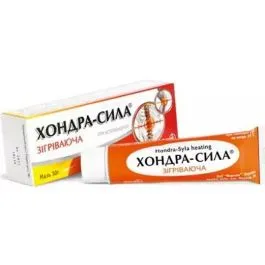
Table of Contents
INSTRUCTION FOR MEDICAL USE OF THE MEDICINAL PRODUCT HONDRA-SYLA® HEATING
Composition:
Active substances: chondroitin sulfate, menthol;
1 g of the ointment contains: sodium chondroitin sulfate calculated to 100 % substance – 50 mg, levomenthol – 70 mg;
Excipients: dimethyl sulfoxide, lanolin, white soft paraffin, purified water.
Pharmaceutical form. Ointment.
Main physicochemical properties: ointment of pale yellow to yellow color with a characteristic smell of menthol. A greenish tint is permissible.
Pharmacotherapeutic group. Non-steroidal anti-inflammatory and antirheumatic agents.
ATC code M01A X.
Pharmacological Properties.
Pharmacodynamics.
Chondroitin sulfate exerts chondroprotective, chondrostimulatory, regenerative, anti-inflammatory, and analgesic effects. It improves phosphorus-calcium metabolism in cartilage tissue, inhibits enzymes that disrupt the structure and function of articular cartilage, and suppresses degenerative processes in cartilage tissue. It stimulates the synthesis of glycosaminoglycans, normalizes the metabolism of hyaline cartilage tissue, and promotes the regeneration of cartilage surfaces and the joint capsule. When applied topically, the drug slows the progression of osteoarthritis and reduces inflammation and pain in affected joints.
Menthol exhibits local irritant, analgesic, counterirritant, antiseptic, and soothing effects. The effect is primarily due to reflex reactions associated with stimulation of sensory nerve endings: stimulation of skin receptors promotes the formation and release of endogenous biologically active substances (enkephalins, endorphins, peptides, kinins), which participate in the regulation of pain sensations, vascular permeability, and other processes underlying analgesic and counterirritant actions. The irritant (counterirritant) effect contributes to a reduction in pain sensations. The effect of menthol develops rapidly and is accompanied by a sensation of warmth. Cutaneous-visceral reflexes improve tissue trophism (according to innervation zones).
Pharmacokinetics.
The pharmacokinetics of chondroitin sulfate following topical application have not been studied.
Following topical application of the drug, maximum plasma concentration is reached within 3–4 hours, and maximum concentration in synovial fluid is achieved within 4–5 hours after administration. Bioavailability is 13%. The drug is excreted by the kidneys within 24 hours.
Clinical characteristics.
Indications.
Degenerative-dystrophic joint and spinal disorders (predominantly localized forms): osteoarthritis, osteochondrosis.
Contraindications.
Individual hypersensitivity to the components of the drug. Thrombophlebitis, tendency to bleeding, acute inflammatory processes in the area where the drug is applied.
Special precautions.
When rubbed into the skin, it causes a slight sensation of cold, followed by warmth, mild burning, and tingling.
The drug should be applied only to intact skin areas; care must be taken to avoid contact of the drug with open wounds, eyes, and mucous membranes.
Interaction with other medicinal products and other forms of interaction.
Topical application of the drug has not been shown to interact with other medicinal products.
Special precautions for use
The product contains dimethyl sulfoxide, which may cause skin irritation.
The product contains lanolin, which may cause local skin reactions (e.g. contact dermatitis).
Use during pregnancy or breastfeeding
The safety and efficacy of the product during pregnancy or breastfeeding have not been established. Therefore, the product should be used only if, in the opinion of the physician, the benefit outweighs the potential risk.
Ability to influence reaction rate when driving or operating machinery
No effect.
Method of administration and dosage.
The drug is intended for topical use. Apply the ointment 2–3 times daily as a thin layer to the affected area of skin, gently rubbing in until completely absorbed. After application, to enhance the effect, a dry warming dressing may be applied.
The duration of treatment is determined individually, depending on the efficacy and tolerability of the therapy, and usually lasts 2–3 weeks. If necessary, the course may be repeated.
Children.
The drug should not be used in pediatric patients due to insufficient clinical experience.
Overdose.
Cases of overdose have not been reported. Hypersensitivity reactions are possible, requiring discontinuation of the drug and administration of symptomatic therapy.
Adverse reactions.
Skin allergic reactions: itching, hyperemia, burning, rash, which may occur at the application site. Allergic reactions, including skin swelling, are possible.
If any adverse events occur, discontinue use of the product, wash off any residue from the skin, and consult a physician.
Shelf life. 2 years.
Do not use the product after the expiry date stated on the packaging.
Storage conditions. Store in the original packaging at a temperature not exceeding 25 °C.
Keep out of reach of children.
Packaging. 30 g in a tube. 1 tube per carton.
Availability classification. Over-the-counter.
Manufacturer. JSC "Farmak".
Manufacturer’s location and address of business activity.
Kyrylivska St., 74, Kyiv, 04080, Ukraine.
INSTRUCTIONS
for medical use of medicinal product
CHONDRA-SILA WARMING
(HONDRA-SYLA HEATING)
Composition:
Active substances: chondroitin sulfate, menthol;
1 g of ointment contains: sodium chondroitin sulfate, recalculated to 100 % substance – 50 mg, levomenthol – 70 mg;
Excipients: dimethyl sulfoxide, lanolin, white soft paraffin, purified water.
Pharmaceutical form. Ointment.
Main physicochemical properties: ointment ranging from pale yellow to yellow with a characteristic menthol odor. A greenish tint is permissible.
Pharmacotherapeutic group. Non-steroidal anti-inflammatory and antirheumatic agents. ATC code M01AX.
Pharmacological properties.
Pharmacodynamics.
Chondroitin sulfate exerts chondroprotective, chondrostimulating, regenerative, anti-inflammatory, and analgesic effects. It improves phosphorus-calcium metabolism in cartilage tissue, inhibits enzymes that disrupt the structure and function of articular cartilage, and slows down degenerative processes in cartilage tissue. It stimulates the synthesis of glycosaminoglycans, normalizes the metabolism of hyaline cartilage tissue, and promotes regeneration of cartilage surfaces and the joint capsule. When applied topically, the product slows the progression of osteoarthritis, reduces inflammation and pain in affected joints.
Menthol exerts local irritant, analgesic, counterirritant, antiseptic, and calming effects. The effect is mainly due to reflex reactions associated with irritation of sensory nerve endings: stimulation of skin receptors promotes the formation and release of endogenous biologically active substances (enkephalins, endorphins, peptides, kinins), which participate in regulating pain sensations, vascular permeability, and other processes underlying analgesic and counterirritant effects. The irritant (counterirritant) effect helps reduce pain sensations. The effect of menthol develops rapidly and is accompanied by a sensation of warmth. Cutaneo-visceral reflexes improve tissue trophism (corresponding to innervation zones).
Pharmacokinetics.
The pharmacokinetics of chondroitin sulfate following topical application has not been studied.
After topical application, maximum plasma concentration is reached within 3–4 hours, and maximum concentration in synovial fluid is reached within 4–5 hours after application. Bioavailability is 13%. The product is excreted by the kidneys within 24 hours.
Clinical characteristics.
Indications.
Degenerative-dystrophic diseases of joints and spine (mainly localized forms): osteoarthritis, osteochondrosis.
Contraindications.
Hypersensitivity to the components of the medicinal product. Thrombophlebitis, tendency to bleeding, acute inflammatory processes at the site of application.
Special precautions.
When rubbed into the skin, the product may cause a slight sensation of cold, followed by warmth, mild burning, and tingling.
The product should be applied only to intact skin areas. Avoid contact with open wounds, eyes, and mucous membranes.
Interaction with other medicinal products and other forms of interaction.
No interactions with other medicinal products have been established during topical application.
Special instructions.
The product contains dimethyl sulfoxide, which may cause skin irritation.
The product contains lanolin, which may lead to local skin reactions (e.g., contact dermatitis).
Use during pregnancy or breastfeeding.
Safety and efficacy of the product during pregnancy or breastfeeding have not been established; therefore, it should be used only if, in the physician’s opinion, the benefit outweighs the potential risk.
Effect on ability to drive or operate machinery.
No effect.
Method of administration and dosage.
The product is for external use. Apply ointment 2–3 times daily in a thin layer to the skin over the affected area, gently rubbing in until fully absorbed. After application, to enhance the effect, a dry warming dressing may be applied.
Treatment duration is determined individually depending on therapeutic efficacy and tolerability, and generally lasts 2–3 weeks. If necessary, the course may be repeated.
Children.
The product should not be used in children due to insufficient clinical experience.
Overdose.
Cases of overdose have not been reported. Hypersensitivity reactions are possible, which require discontinuation of the product and symptomatic treatment.
Adverse reactions.
Skin allergic reactions: itching, hyperemia, burning, rash, which may occur at the application site. Allergic reactions, including skin swelling, are possible.
If any adverse events occur, discontinue use of the product, wash off any residue from the skin, and consult a physician.
Shelf life. 2 years.
Do not use the product after the expiry date stated on the packaging.
Storage conditions. Store in the original packaging at a temperature not exceeding 25 °C.
Keep out of reach of children.
Packaging. 30 g in a tube. 1 tube per carton.
Availability classification. Over-the-counter.
Manufacturer. JSC "Farmak".
Manufacturer’s location and address of business activity.
Kyrylivska St., 74, Kyiv, 04080, Ukraine.