Capevista
Ukraine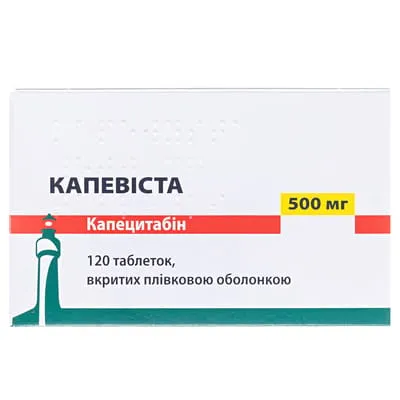
Table of Contents
INSTRUCTIONS FOR MEDICAL USE OF THE MEDICINAL PRODUCT KAPEVISTA (CAPEVISTA)
Composition:
Active substance: capecitabine;
One film-coated tablet contains 150 mg or 500 mg of capecitabine;
Excipients: sodium croscarmellose, microcrystalline cellulose PH 101, microcrystalline cellulose PH 200, hypromellose 5cP, colloidal anhydrous silicon dioxide (E 551), magnesium stearate (E 470b);
Coating composition: hypromellose 5cP, titanium dioxide (E 171), talc (E 553b), macrogol 400, iron oxide red (E 172), iron oxide yellow (E 172).
Pharmaceutical form. Film-coated tablets.
Main physicochemical properties: film-coated tablets, oval-shaped, light peach-colored, with "150" engraved on one side. Approximate dimensions: 11.4 mm × 5.9 mm;
film-coated tablets, elongated shape, peach-colored, with "500" engraved on one side. Approximate dimensions: 17.1 mm × 8.1 mm.
Pharmacotherapeutic group. Antineoplastic agents. Antimetabolites. Pyrimidine analogues. ATC code L01B C06.
Pharmacological Properties
Pharmacodynamics
Capecitabine is a non-cytotoxic fluoropyrimidine carbamate and an oral prodrug of the cytotoxic agent 5-fluorouracil (5-FU). Capecitabine is activated through a multi-enzyme process. The final conversion to 5-FU occurs under the action of thymidine phosphorylase in tumor tissue as well as in healthy tissues of the body, although generally at low levels. In human cancer xenograft models, capecitabine demonstrated a synergistic effect when combined with docetaxel, which may be related to docetaxel-induced upregulation of thymidine phosphorylase activity. Evidence suggests that the anabolic metabolism of 5-FU inhibits the methylation reaction of deoxyuridylic acid to thymidylic acid, thereby interfering with deoxyribonucleic acid (DNA) synthesis. Incorporation of 5-FU also suppresses RNA and protein synthesis. Since DNA and RNA are essential for cell division and growth, 5-FU can cause thymidine deficiency, leading to unbalanced growth and cell death. Effects on DNA and RNA are more pronounced in cells with higher proliferative activity and increased 5-FU metabolism.
Pharmacokinetics
The pharmacokinetics of capecitabine have been characterized over a dose range of 502–3514 mg/m²/day. Pharmacokinetic parameters for capecitabine, 5'-deoxy-5-fluorocytidine (5'-DFCR), and 5'-deoxy-5-fluorouridine (5'-DFUR) on Day 1 and Day 14 were similar. On Day 14, the AUC of 5-FU was 30–35% higher. Dose reduction of capecitabine resulted in a greater-than-proportional decrease in 5-FU exposure due to the non-linear pharmacokinetics of the active metabolite.
Absorption
After oral administration, capecitabine is rapidly and completely absorbed and subsequently undergoes biotransformation into the metabolites 5'-deoxy-5-fluorocytidine (5'-DFCR) and 5'-DFUR. Food intake reduces the rate of absorption of capecitabine but has no significant effect on the area under the concentration-time curve (AUC) of 5'-DFUR or the subsequent metabolite 5-FU. When administered at a dose of 1250 mg/m² after food intake on Day 14, the maximum concentrations (Cmax) of capecitabine, 5'-DFCR, 5'-DFUR, 5-FU, and FBAL were 4.67, 3.05, 12.1, 0.95, and 5.46 µg/mL, respectively. The time to reach maximum concentration (Tmax) was 1.50, 2.00, 2.00, 2.00, and 3.34 hours, and AUC values were 7.75, 7.24, 24.6, 2.03, and 36.3 µg×h/mL, respectively.
Distribution
In vitro human plasma studies have shown that the protein binding (primarily to albumin) of capecitabine, 5'-DFCR, 5'-DFUR, and 5-FU is 54%, 10%, 62%, and 10%, respectively.
Metabolism
Capecitabine is metabolized in the liver by carboxylesterase to the metabolite 5'-DFCR, which is then converted to 5'-DFUR by cytidine deaminase, an enzyme primarily located in the liver and tumor tissues. Further catalytic activation of 5'-DFUR occurs via thymidine phosphorylase. The enzymes involved in this catalytic activation are present in both tumor and normal tissues, although generally at lower levels. The subsequent enzymatic biotransformation of capecitabine to 5-FU results in higher concentrations in tumor tissues. In colorectal tumors, a significant portion of 5-FU localizes in tumor stromal cells. After oral administration of capecitabine to patients with colorectal cancer, the ratio of 5-FU concentration in colorectal tumors to that in adjacent normal tissues was 3.2 (range: 0.9–8.0). The ratio of 5-FU concentration in tumor tissue to plasma concentration was 21.4 (range: 3.9–59.9, N=8), whereas the ratio of 5-FU concentration in healthy tissue to plasma concentration was 8.9 (range: 3.0–25.8, N=8). Thymidine phosphorylase activity was measured to be four times higher in primary colorectal tumors compared to adjacent normal tissues. Immunohistochemical studies indicate that most thymidine phosphorylase is localized in tumor stromal cells.
5-FU is then catabolized by dihydropyrimidine dehydrogenase (DPD) to form dihydro-5-fluorouracil (FUH2), a less toxic metabolite. Dihydropyrimidinase cleaves the pyrimidine ring to form 5-fluoro-ureidopropionic acid (FUPA). The final reaction is the cleavage of FUPA by β-ureidopropionase to α-fluoro-β-alanine (FBAL), which is excreted in urine. DPD activity is the rate-limiting step in this process. DPD deficiency may lead to increased toxicity of capecitabine.
Excretion
The elimination half-life (T1/2) of capecitabine, 5'-DFCR, 5'-DFUR, 5-FU, and FBAL is 0.85, 1.11, 0.66, 0.76, and 3.23 hours, respectively. Capecitabine and its metabolites are primarily excreted in urine. Renal excretion accounts for 95.5% of elimination, and fecal excretion accounts for 2.6%. The main urinary metabolite is FBAL, representing 57% of the administered dose. Approximately 3% of the administered dose is excreted unchanged in urine.
Combination Therapy
No effect of capecitabine on the pharmacokinetics of docetaxel and paclitaxel (Cmax and AUC), or of docetaxel and paclitaxel on the pharmacokinetics of capecitabine and 5'-DFUR, has been observed.
Pharmacokinetics in Special Clinical Populations
A population pharmacokinetic analysis was performed in 505 patients with colorectal cancer treated with capecitabine at a dose of 1250 mg/m² twice daily. Gender, presence or absence of liver metastases at baseline, Karnofsky performance status, total bilirubin concentration, serum albumin, ALT, and AST activity had no significant effect on the pharmacokinetics of 5'-DFUR, 5-FU, or FBAL.
Patients with hepatic metastases. Pharmacokinetic data from patients with mild to moderate hepatic impairment due to metastases suggest that the bioavailability of capecitabine and exposure to 5-FU may be increased compared to patients without hepatic dysfunction. Pharmacokinetic data in patients with severe hepatic impairment are lacking.
Patients with renal impairment. In oncology patients with varying degrees (mild to severe) of renal impairment, the pharmacokinetics of unchanged drug and 5-FU are independent of creatinine clearance (CrCl). However, CrCl affects the AUC of 5'-DFUR (35% increase in AUC with a 50% reduction in CrCl) and FBAL (114% increase in AUC with a 50% reduction in CrCl). FBAL is a metabolite without antiproliferative activity.
Elderly patients. Based on population pharmacokinetic analysis including patients across a wide age range (27–86 years), of whom 234 (46%) were aged 65 years or older, age does not affect the pharmacokinetics of 5'-DFUR and 5-FU. However, AUC of FBAL increases with age (a 20% increase in age was associated with a 15% increase in FBAL AUC), likely due to age-related changes in renal function.
Ethnic factors. After oral administration of 825 mg/m² capecitabine twice daily for 14 days in Japanese patients (N=18), Cmax of capecitabine was 36% lower and AUC was 24% lower compared to Caucasian patients (N=22). Similarly, for FBAL, Japanese patients had a 25% lower Cmax and 34% lower AUC compared to Caucasian patients. The clinical significance of this difference is unknown. No substantial differences in exposure to other metabolites (5'-DFCR, 5'-DFUR, and 5-FU) were observed.
Clinical characteristics.
Indications.
Colorectal cancer:
- Adjuvant treatment of stage III colon cancer (Dukes' stage C) following surgical resection;
- Metastatic colorectal cancer.
Gastric cancer:
- First-line treatment of advanced gastric cancer, in combination with platinum-based agents.
Breast cancer:
- Locally advanced or metastatic breast cancer, in combination with docetaxel after failure of prior chemotherapy containing anthracyclines;
- Locally advanced or metastatic breast cancer, as monotherapy after failure of prior chemotherapy containing taxanes and anthracyclines, or when there is a contraindication to anthracycline therapy.
Contraindications.
Severe, including unexpected, reactions to prior fluoropyrimidine therapy. Hypersensitivity to capecitabine or to any component of the product, or to fluorouracil. Known complete deficiency of dihydropyrimidine dehydrogenase (DPD) (see section "Special precautions for use").
Pregnancy or breastfeeding.
Severe leukopenia, neutropenia, or thrombocytopenia.
Severe hepatic dysfunction.
Severe renal impairment (creatinine clearance < 30 mL/min).
Recent or concomitant treatment with brivudine (see sections "Special precautions for use" and "Interaction with other medicinal products and other forms of interaction" regarding interactions with other medicinal products).
Contraindications to any medicinal product used in combination.
Special safety precautions.
Disposal of unused and expired medicinal product: Environmental contamination should be minimized. The medicinal product must not be disposed of via wastewater or household waste. Disposal should be carried out via a dedicated "waste collection system" if available.
Interaction with other medicinal products and other forms of interaction.
Interaction studies have been conducted only in adult patients.
Interaction with other medicinal products.
Brivudine.
A clinically significant interaction between brivudine and fluoropyrimidines (e.g., capecitabine, 5-fluorouracil, tegafur) has been described, due to inhibition of dihydropyrimidine dehydrogenase by brivudine. This interaction, which increases fluoropyrimidine toxicity, may potentially lead to fatal outcomes. Therefore, brivudine must not be administered concurrently with capecitabine (see sections "Contraindications" and "Special precautions for use"). A waiting period of at least 4 weeks must elapse between the end of brivudine treatment and the start of capecitabine therapy. Brivudine treatment may be initiated 24 hours after the last dose of capecitabine.
Cytochrome P450 2C9 substrates.
Interaction studies between capecitabine and other drugs metabolized by the CYP2C9 isoenzyme of the cytochrome P450 system, except warfarin, have not been conducted. Caution is advised when co-administering capecitabine with such drugs (e.g., phenytoin).
Coumarin anticoagulants.
Capecitabine enhances the effects of indirect anticoagulants (warfarin and phenprocoumon), which may lead to coagulation abnormalities and bleeding, occurring several days or months after initiation of capecitabine therapy, and in some cases up to 1 month after discontinuation of capecitabine. In a clinical pharmacokinetic interaction study, single-dose administration of S-warfarin 20 mg during treatment with KAPEVISTA resulted in a 57% increase in warfarin AUC and a 91% increase in INR. Since R-warfarin metabolism was unaffected, this indicates that capecitabine inhibits the CYP2C9 isoenzyme and does not affect CYP1A2 or CYP3A4 isoenzymes. Patients receiving capecitabine concomitantly with oral coumarin anticoagulants should be closely monitored for coagulation parameters (international normalized ratio or prothrombin time), and anticoagulant dosage should be adjusted accordingly.
Phenytoin.
Cases of increased plasma phenytoin concentrations, accompanied by symptoms of phenytoin toxicity, have been reported when KAPEVISTA and phenytoin were co-administered. Regular monitoring of plasma phenytoin concentrations is recommended in patients receiving capecitabine concomitantly with phenytoin.
Folinic acid/folic acid.
Folinic acid does not significantly affect the pharmacokinetics of capecitabine or its metabolites. However, folinic acid affects the pharmacodynamics of KAPEVISTA, potentially increasing capecitabine toxicity: the maximum tolerated dose of capecitabine in monotherapy intermittent dosing regimen is 3000 mg/m²/day, whereas in combination with folinic acid (30 mg orally twice daily), it is only 2000 mg/m²/day. Increased toxicity may occur when switching from 5-FU/LV to capecitabine regimens. This may also occur when folic acid is administered to correct folic acid deficiency due to the similarity between folinic and folic acid.
Antacids.
The effect of antacids containing aluminum and magnesium hydroxide on the pharmacokinetics of capecitabine has been studied. Such antacids slightly increase plasma concentrations of capecitabine and one of its metabolites (5'-DFCR), but do not affect the three main metabolites (5'-DFUR, 5-FU, and FBAL) of capecitabine.
Allopurinol.
An interaction between allopurinol and 5-fluorouracil has been observed, potentially reducing the efficacy of 5-fluorouracil. Therefore, concomitant administration of capecitabine and allopurinol should be avoided.
Interferon alpha.
The maximum tolerated dose of KAPEVISTA is 2000 mg/m²/day when administered in combination with interferon alfa-2a (3 million IU/m²/day), compared to 3000 mg/m²/day when capecitabine is used as monotherapy.
Radiation therapy.
The maximum tolerated dose of capecitabine in monotherapy intermittent dosing regimen is 3000 mg/m²/day, whereas in combination with radiotherapy for rectal cancer, it is 2000 mg/m²/day, either continuously or in a daily 6-week course administered Monday through Friday.
Oxaliplatin.
When capecitabine is co-administered with oxaliplatin, with or without bevacizumab, no clinically significant differences in exposure to capecitabine or its metabolites, free platinum, or total platinum have been observed.
Bevacizumab.
Bevacizumab has no clinically significant effect on the pharmacokinetic parameters of capecitabine and its metabolites in the presence of oxaliplatin.
Medicinal product – food interaction.
Since safety and efficacy data are based on administration of capecitabine with food, KAPEVISTA is recommended to be taken with food. Administration of KAPEVISTA with food results in a slower absorption rate of capecitabine.
Special precautions for use.
Toxic effects dependent on dose
Toxic effects dependent on dose are manifested as diarrhea, abdominal pain, nausea, stomatitis, and hand-foot syndrome (hand-foot skin reactions, hand-foot erythrodysesthesia). Most adverse reactions are reversible and do not require complete discontinuation of the drug, although dose adjustment or temporary interruption of treatment may be necessary.
Diarrhea
Patients with severe diarrhea should be closely monitored and rehydrated, with electrolyte replacement if dehydration occurs. Standard anti-diarrheal agents (e.g., loperamide) may be prescribed. Grade II diarrhea according to the National Cancer Institute of Canada criteria (NCIC CTCAE, version 2) is defined as an increase in bowel movements to 4–6 times per day or nocturnal defecation; Grade III diarrhea is defined as an increase in bowel movements to 7–9 times per day, fecal incontinence, or malabsorption. Grade IV diarrhea is defined as an increase in bowel movements ≥10 times per day, or massive diarrhea with blood, or the need for parenteral fluid administration. If necessary, the dose of the drug should be reduced (see section "Dosage and administration").
Dehydration
Dehydration should be prevented and corrected if it occurs. Dehydration may rapidly develop in patients with anorexia, asthenia, nausea, vomiting, or diarrhea. Dehydration may lead to acute renal failure, especially in patients with pre-existing renal impairment or when capecitabine is administered concomitantly with drugs known to have nephrotoxic effects. Acute renal failure due to dehydration may be potentially fatal. In case of Grade II (or higher) dehydration, capecitabine therapy should be immediately discontinued and dehydration corrected. Resumption of treatment is possible after adequate correction of dehydration and management/control of precipitating causes (see section "Dosage and administration"). Dose adjustment should be considered if precipitating adverse events occur.
Hand-Foot Syndrome
Hand-foot syndrome, also known as hand-foot skin reactions, hand-foot erythrodysesthesia, or chemotherapy-induced palmar-plantar erythema, is characterized as follows: Grade I hand-foot syndrome does not interfere with the patient's daily activities and manifests as numbness, paresthesia, dysesthesia, tingling, painless swelling or redness of palms and/or soles, or discomfort. Grade II hand-foot syndrome is characterized by painful redness and swelling of hands and/or soles; discomfort caused by these symptoms interferes with the patient's daily activities.
Grade III hand-foot syndrome is defined as moist desquamation, ulceration, blister formation, and acute pain in palms and/or soles, and/or severe discomfort preventing the patient from working or performing daily activities. Persistent or severe hand-foot syndrome (Grade 2 or higher) may eventually lead to loss of fingerprint patterns, potentially affecting patient identification. In case of Grade II or III hand-foot syndrome, capecitabine intake should be discontinued until symptoms resolve or decrease to Grade I; upon recurrence of Grade III syndrome, the dose of capecitabine should be reduced. The use of vitamin B6 (pyridoxine) for symptomatic or secondary prophylactic treatment of hand-foot syndrome is not recommended in patients receiving concomitant capecitabine and cisplatin, as published data suggest this may reduce the efficacy of cisplatin. Some data indicate that dexpanthenol is effective in preventing hand-foot syndrome in patients receiving capecitabine.
Cardiotoxicity
The spectrum of cardiotoxicity associated with capecitabine treatment is similar to that observed with other fluoropyrimidines and includes myocardial infarction, angina pectoris, arrhythmias, cardiogenic shock, sudden fatal outcome, cardiac arrest, heart failure, and ECG changes (including very rare cases of QT interval prolongation). These adverse effects are more commonly observed in patients with ischemic heart disease. Cases of cardiac arrhythmias (including ventricular fibrillation, torsades de pointes, bradycardia), angina pectoris, myocardial infarction, heart failure, and cardiomyopathy have been reported during capecitabine treatment. Caution should be exercised when administering capecitabine to patients with clinically significant heart disease, arrhythmias, or angina.
Hypo- or hypercalcemia
Hypo- or hypercalcemia have been reported during capecitabine treatment.
Diseases of the central or peripheral nervous system
Caution should be exercised when administering the medicinal product KAPEVISTA to patients with diseases of the central or peripheral nervous system, such as brain metastases or neuropathy.
Diabetes mellitus or electrolyte imbalances
Caution should be exercised when administering KAPEVISTA to patients with diabetes mellitus or electrolyte imbalances, as capecitabine use may exacerbate the course of these conditions.
Anticoagulants – coumarin derivatives
In a drug interaction study with single-dose warfarin, a significant increase in the mean area under the concentration-time curve (AUC) of S-warfarin by 57% was observed, indicating a potential interaction, likely due to inhibition of cytochrome P450 isoenzyme 2C9 by capecitabine. In patients receiving concomitant capecitabine and oral anticoagulants (coumarin derivatives), careful monitoring of coagulation parameters (international normalized ratio or prothrombin time) and dose adjustment of the anticoagulant are required.
Bromovinyluracil (Brivudin)
Brivudin must not be administered concurrently with capecitabine. Fatal cases have been reported following this drug interaction. A waiting period of at least 4 weeks should elapse between the end of brivudin treatment and the initiation of capecitabine therapy. Brivudin treatment may be initiated 24 hours after the last dose of capecitabine (see sections "Contraindications" and "Interaction with other medicinal products and other forms of interaction").
In case of accidental brivudin intake by patients receiving capecitabine treatment, effective measures should be taken to reduce capecitabine toxicity. Immediate hospitalization is recommended. All necessary measures should be initiated to prevent systemic infections and dehydration.
Hepatic impairment
Due to the lack of safety and efficacy data in patients with hepatic impairment, the use of capecitabine should be carefully monitored in patients with mild to moderate hepatic impairment, regardless of the presence or absence of liver metastases. If hyperbilirubinemia exceeding the upper limit of normal by more than 3 times or an increase in hepatic aminotransferase activity (ALT, AST) by more than 2.5 times the upper limit of normal occurs during capecitabine treatment, the drug should be discontinued. Capecitabine monotherapy may be resumed when bilirubin levels and hepatic transaminase activities decrease below the specified thresholds.
Renal impairment
The incidence of Grade III and IV adverse reactions is increased in patients with moderate renal impairment (creatinine clearance 30–50 mL/min) compared to the general patient population.
Deficiency of dihydropyrimidine dehydrogenase (DPD)
DPD activity is a rate-limiting factor in the catabolism of 5-fluorouracil (see section "Pharmacological properties"). Therefore, patients with DPD deficiency have an increased risk of fluoropyrimidine-associated toxicity, manifesting as stomatitis, diarrhea, mucositis, neutropenia, and neurotoxicity. DPD deficiency-related toxicity typically occurs during the first treatment cycle or after dose escalation.
Complete DPD deficiency
Complete DPD deficiency is a rare condition (0.01–0.5% of Caucasian individuals). Patients with complete DPD deficiency are at high risk of life-threatening, including fatal, toxicity and must not receive capecitabine (see section "Contraindications").
Partial DPD deficiency
Partial DPD deficiency is estimated to occur in 3–9% of the Caucasian population. Patients with partial DPD deficiency have an increased risk of severe and potentially life-threatening toxicity. To reduce this toxicity, consideration should be given to reducing the initial dose. DPD deficiency should be considered alongside other routine parameters when deciding on dose reduction. Dose reduction may affect treatment efficacy. In the absence of severe toxicity, subsequent doses may be increased under close monitoring.
Testing for DPD deficiency
Before initiating capecitabine treatment, phenotypic and/or genotypic testing is recommended, despite uncertainties regarding optimal pre-treatment testing methods. Relevant clinical guidelines should be considered.
Genotypic characterization of DPD deficiency
Testing for rare DPYD gene mutations prior to treatment may identify patients with DPD deficiency.
Four DPYD variants – c.1905+1G > A [also known as DPYD*2A], c.1679T > G [DPYD*13], c.2846A > T, and c.1236G > A/HapB3 – may cause complete absence or reduced enzymatic activity of DPD. Other rare variants may also be associated with an increased risk of severe, including life-threatening, toxicity. Certain homozygous or combined heterozygous mutations in the DPYD gene locus (e.g., combinations of the four variants with at least one allele c.1905+1G > A or c.1679T > G) are known to cause complete or near-complete absence of DPD enzymatic activity. Patients with certain heterozygous DPYD variants (particularly c.1905+1G > A, c.1679T > G, c.2846A > T, and c.1236G > A/HapB3) have an increased risk of severe toxicity during fluoropyrimidine treatment.
In Caucasian patients, the frequency of the heterozygous genotype c.1905+1G > A in the DPYD gene is approximately 1%, c.2846A > T – 1.1%, c.1236G > A/HapB3 – 2.6–6.3%, and c.1679T > G – 0.07 to 0.1%.
Data on the frequency of the four DPYD variants in populations other than Caucasian are limited. Currently, the four DPYD variants (c.1905+1G > A, c.1679T > G, c.2846A > T, and c.1236G > A/HapB3) are considered practically absent in patients of African (American) or Asian origin.
Phenotypic characterization of DPD deficiency
For phenotypic characterization of DPD deficiency, measurement of endogenous DPD substrate uracil levels in blood plasma before treatment is recommended.
Elevated pre-treatment uracil concentrations are associated with an increased risk of toxicity. Despite uncertainty regarding threshold values indicating complete or partial DPD deficiency, a plasma uracil level ≥16 ng/mL and <150 ng/mL should be considered indicative of partial DPD deficiency and associated with an increased risk of fluoropyrimidine toxicity. A plasma uracil level ≥150 ng/mL should be considered indicative of complete DPD deficiency and associated with a risk of life-threatening, including fatal, fluoropyrimidine toxicity.
Renal impairment is associated with increased blood uracil levels, which may lead to a false diagnosis of DPD deficiency and, consequently, to underdosing of capecitabine.
Ophthalmological complications
Patients should be carefully monitored for ophthalmological complications such as keratitis or corneal disorders, especially in those with a history of ocular disorders. Treatment of visual disturbances should be initiated if clinically indicated.
Severe skin reactions
The use of KAPEVISTA may cause severe skin reactions such as Stevens-Johnson syndrome and toxic epidermal necrolysis. Capecitabine should be permanently discontinued in patients who develop severe skin reactions during treatment.
KAPEVISTA tablets should not be crushed or split. Adverse reactions may occur in patients or caregivers upon contact with crushed or split KAPEVISTA tablets (see section "Adverse reactions").
Pancreatitis
Cases of pancreatitis following capecitabine administration have been reported in the literature.
Use during pregnancy or breastfeeding
Women of reproductive potential/contraception in men and women
Women of reproductive potential should be advised to avoid pregnancy during capecitabine treatment. If pregnancy occurs during treatment, the patient should be informed of the potential adverse effects on the fetus. Effective contraceptive methods should be used during treatment and for 6 months after the last dose of capecitabine. Based on genotoxicity study results, male patients with partners of reproductive potential should use effective contraceptive methods during treatment and for 3 months after the last dose of capecitabine.
Pregnancy
The use of capecitabine in pregnant women has not been studied, but it can be assumed that the use of KAPEVISTA may be harmful to the fetus when administered during pregnancy. In reproductive toxicity studies in animals, capecitabine caused embryolethality and teratogenicity, which are expected effects of fluoropyrimidine derivatives. KAPEVISTA must not be used during pregnancy.
Breastfeeding
It is unknown whether capecitabine passes into human breast milk. Studies on the effect of capecitabine on lactation or the presence of capecitabine in human breast milk have not been conducted. Significant amounts of capecitabine and its metabolites have been detected in the milk of lactating mice. Because the potential harm to breastfed infants is unknown, breastfeeding should be discontinued during capecitabine treatment and for 2 weeks after the last dose.
Fertility
There are no data on the effect of capecitabine on fertility. In the pivotal studies of KAPEVISTA, only women of reproductive age and men who agreed to use acceptable methods of birth control to prevent pregnancy during the study and for a specified period thereafter were included. Effects on fertility were observed in animal studies.
Ability to affect reaction speed when driving or operating machinery
The drug has a minor or moderate effect on the ability to drive or operate machinery. The medicinal product KAPEVISTA may cause dizziness, weakness, and nausea.
Administration and Dosage.
The medicinal product CAPEVISTA may only be prescribed by a qualified physician experienced in the use of antineoplastic agents. Careful monitoring during the first treatment cycle is recommended for all patients. Treatment should be discontinued in case of disease progression or development of unacceptable toxicity. CAPEVISTA tablets should be taken orally whole, no later than 30 minutes after a meal, with water. CAPEVISTA tablets must not be crushed or split.
Special precautions for disposal and other handling of the medicinal product
Safe handling procedures for cytotoxic medicinal products should be followed.
Monotherapy.
Colorectal cancer and breast cancer.
The recommended initial daily dose of CAPEVISTA as adjuvant therapy is 2500 mg/m² body surface area. It should be administered in 3-week cycles: daily for 2 weeks followed by a 1-week treatment-free interval. The total daily dose of capecitabine should be divided into two doses (1250 mg/m² body surface area in the morning and evening). The recommended total duration of adjuvant therapy in patients with stage III colorectal cancer is 6 months.
Combination therapy.
Breast cancer.
In combination with docetaxel, the recommended initial dose for the treatment of metastatic breast cancer is 1250 mg/m² twice daily for 2 weeks followed by a 1-week break (in combination with docetaxel 75 mg/m² once every 3 weeks as intravenous infusion). Premedication with oral corticosteroids, such as dexamethasone, should be administered prior to docetaxel administration, according to the docetaxel product instructions, for patients receiving the combination of capecitabine plus docetaxel.
Colorectal cancer, colorectal carcinoma, gastric cancer.
In combination regimens, the initial dose of capecitabine should be reduced to 800–1000 mg/m² twice daily for 2 weeks followed by a 1-week break, or to 625 mg/m² twice daily for continuous administration. When combined with irinotecan (200 mg/m² on day 1), the recommended initial dose is 800 mg/m² twice daily for 2 weeks followed by a 1-week break. The addition of bevacizumab to the combination regimen does not affect the initial dose of capecitabine.
Antiemetics and premedication to ensure adequate hydration should be administered to patients receiving capecitabine in combination with cisplatin or oxaliplatin, prior to cisplatin administration, in accordance with the product instructions for cisplatin and oxaliplatin. The recommended total duration of adjuvant therapy in patients with stage III colorectal cancer is 6 months. The dose of CAPEVISTA should be calculated based on body surface area. Tables 1 and 2 provide calculations for standard and reduced initial doses (see "Dose Modification During Treatment") of CAPEVISTA at 1250 mg/m² or 1000 mg/m².
Calculation of standard and reduced initial doses of the medicinal product CAPEVISTA at 1250 mg/m² according to body surface area
Table 1
| Dose 1250 mg/m² (twice daily) |
|||||
| Body surface area, m² |
Full dose 1250 mg/m² |
Number of 150 mg and/or 500 mg tablets per dose (morning and evening) |
Reduced dose (75 %) 950 mg/m² |
Reduced dose (50 %) 625 mg/m² |
|
| Dose per administration, mg |
150 mg |
500 mg |
Dose per administration, mg |
Dose per administration, mg |
|
| ≤ 1.26 |
1500 |
- |
3 |
1150 |
800 |
| 1.27–1.38 |
1650 |
1 |
3 |
1300 |
800 |
| 1.39–1.52 |
1800 |
2 |
3 |
1450 |
950 |
| 1.53–1.66 |
2000 |
- |
4 |
1500 |
1000 |
| 1.67–1.78 |
2150 |
1 |
4 |
1650 |
1000 |
| 1.79–1.92 |
2300 |
2 |
4 |
1800 |
1150 |
| 1.93–2.06 |
2500 |
- |
5 |
1950 |
1300 |
| 2.07–2.18 |
2650 |
1 |
5 |
2000 |
1300 |
| ≥ 2.19 |
2800 |
2 |
5 |
2150 |
1450 |
Calculation of the standard and reduced initial dose of the medicinal product KAPEVISTA 1000 mg/m² depending on the body surface area
Table 2
| Body surface area, m2 |
Dose 1000 mg/m2 (twice daily) |
||||
| Full dose 1000 mg/m2 |
Number of 150 mg and/or 500 mg tablets per dose (morning and evening) |
Reduced dose (75 %) 750 mg/m2 |
Reduced dose (50 %) 500 mg/m2 |
||
| Dose per administration, mg |
150 mg |
500 mg |
Dose per administration, mg |
Dose per administration, mg |
|
| ≤ 1.26 |
1150 |
1 |
2 |
800 |
600 |
| 1.27–1.38 |
1300 |
2 |
2 |
1000 |
600 |
| 1.39–1.52 |
1450 |
3 |
2 |
1100 |
750 |
| 1.53–1.66 |
1600 |
4 |
2 |
1200 |
800 |
| 1.67–1.78 |
1750 |
5 |
2 |
1300 |
800 |
| 1.79–1.92 |
1800 |
2 |
3 |
1400 |
900 |
| 1.93–2.06 |
2000 |
- |
4 |
1500 |
1000 |
| 2.07–2.18 |
2150 |
1 |
4 |
1600 |
1050 |
| ≥ 2.19 |
2300 |
2 |
4 |
1750 |
1100 |
Dose adjustment during treatment.
General recommendations.
Toxicities associated with capecitabine can be managed by symptomatic treatment and/or dose modification of the medicinal product CAPEVISTA (by interrupting treatment or reducing the dose). If the dose has been reduced, it should not be increased again. Treatment may be continued at the same dose without interruption or dose reduction in the case of toxicities that, in the physician's opinion, are unlikely to be serious or life-threatening, such as alopecia, taste alterations, or nail changes.
Patients receiving CAPEVISTA should be advised to discontinue treatment in the event of developing moderate or severe toxic reactions. If several doses of capecitabine have been missed due to toxicities, these missed doses should not be made up.
Hematological toxicity.
Capecitabine therapy should not be initiated in patients with baseline neutrophil counts < 1.5 × 10⁹/L and/or platelet counts < 100 × 10⁹/L. Treatment should be suspended if, during treatment and based on unscheduled laboratory tests, neutrophil counts drop below 1.0 × 10⁹/L or platelet counts fall below 75 × 10⁹/L.
Below are recommendations for dose modification in the event of toxicities according to the toxicity grading criteria developed by the Canadian National Cancer Institute (NCIC CTCAE, version 1).
Dose reduction scheme for the medicinal product CAPEVISTA (three-week cycle or continuous treatment).
Table 3
| Toxicity grade* |
Dose modification during treatment course |
Dose adjustment for next cycle (% of initial dose) |
| Grade I |
No dose adjustment required |
No dose adjustment required |
| Grade II |
||
|
Discontinue treatment until toxicity signs resolve to grade 0–1 |
100 % |
|
75 % |
|
|
50 % |
|
|
Discontinue drug |
do not use |
| Grade III |
||
|
Discontinue treatment until toxicity signs resolve to grade 0–1 |
75 % |
|
50 % |
|
|
Discontinue drug |
do not use |
| Grade IV |
||
|
Discontinue drug or, if continuation is in the patient's best interest, discontinue treatment until toxicity signs resolve to grade 0–1 |
50 % |
|
Discontinue drug |
do not use |
* according to the Common Toxicity Criteria (version 1) of the National Cancer Institute of Canada's Clinical Trials Group (NCIC CTG) or the National Cancer Institute's Common Terminology Criteria for Adverse Events (CTCAE), version 4.0. Information on hand-foot syndrome and hyperbilirubinemia is provided in the section "Special Instructions".
Dosage modification in the event of toxicity during a three-week cycle of capecitabine in combination with other medicinal products.
Dosage modification in the event of toxicity during a three-week cycle of capecitabine in combination with other medicinal products must be performed according to Table 3 for capecitabine and in accordance with the instructions for medical use of the other medicinal products. At the beginning of treatment, if delay of therapy with KAPEVISTA or another medicinal product is required, administration of all other components should also be delayed until the time when all components of the regimen can be resumed. If toxicities occur during treatment that, in the physician’s opinion, are not related to capecitabine, KAPEVISTA therapy should be continued, and dosage adjustments of other medicinal products in the regimen should be made according to their respective instructions for medical use.
If discontinuation of other medicinal products in the treatment regimen is necessary, capecitabine may be continued upon achieving the required conditions for re-initiating KAPEVISTA therapy.
These recommendations apply to all indications and all patient groups. Dosage modification in the event of toxicity during continuous administration of capecitabine in combination with other medicinal products.
Dosage modification in the event of toxicity during continuous administration of capecitabine in combination with other medicinal products must be performed according to Table 3 for capecitabine and in accordance with the instructions for medical use of the other medicinal products.
Dosage adjustments in special situations.
Patients with hepatic impairment.
There are insufficient data on safety and efficacy in patients with hepatic impairment to provide dosage adjustment recommendations. There is no information available on hepatic impairment due to cirrhosis or hepatitis.
Patients with renal impairment.
Capecitabine is contraindicated in patients with severe renal impairment (creatinine clearance below 30 mL/min by Cockcroft-Gault at baseline). The incidence of grade 3 or 4 adverse reactions is increased in patients with moderate renal impairment (creatinine clearance 30–50 mL/min at baseline) compared to the general population. For patients with baseline moderate renal insufficiency, it is recommended to reduce the initial dose to 75% of the standard dose (1250 mg/m²). For patients with baseline moderate renal insufficiency, a reduction from an initial dose of 1000 mg/m² is not required. Patients with mild renal impairment (creatinine clearance 51–80 mL/min) do not require initial dose adjustment. Close monitoring is recommended, and treatment should be interrupted immediately if grade 2, 3, or 4 adverse events occur, followed by dose adjustment according to Table 3. If creatinine clearance decreases to below 30 mL/min, capecitabine therapy should be discontinued. Dosage adjustment recommendations for moderate renal impairment are the same for both monotherapy and combination therapy with capecitabine.
Elderly patients.
Initial dose adjustment is not required for capecitabine monotherapy. However, treatment-related grade 3 and 4 adverse reactions occurred more frequently in patients aged ≥ 60 years compared to younger patients.
When capecitabine is used in combination with other medicinal products in elderly patients (≥ 65 years), a higher incidence of grade 3 and 4 toxicities leading to treatment discontinuation has been observed compared to younger patients. Close monitoring of patients aged ≥ 60 years is recommended.
When treating with KAPEVISTA in combination with docetaxel, an increased incidence of grade 3 and 4 toxicities has been observed in patients over 60 years of age. For patients in this age group receiving combination therapy with capecitabine and docetaxel, it is recommended to reduce the initial dose of KAPEVISTA to 75% (950 mg/m² twice daily). If no toxicities occur during treatment with the reduced initial dose of capecitabine in combination with docetaxel in patients aged ≥ 60 years, the capecitabine dose may be gradually increased to 1250 mg/m² twice daily.
Children.
The safety and efficacy of capecitabine in children have not been established.
Overdose.
Symptoms. Symptoms of acute overdose include nausea, vomiting, diarrhea, mucositis, gastrointestinal irritation and bleeding, as well as bone marrow suppression.
Treatment. Management should include standard therapeutic and supportive measures aimed at correcting clinical manifestations and preventing possible complications.
Adverse Reactions.
Safety Profile Summary.
The overall safety profile is based on data from more than 3000 patients who received capecitabine treatment as monotherapy or in combination with various chemotherapy regimens for different indications. The safety profile of capecitabine monotherapy in metastatic breast cancer, metastatic colorectal cancer, and adjuvant treatment of colon cancer is comparable. The most frequent and/or clinically significant treatment-related adverse reactions were gastrointestinal reactions (diarrhea, nausea, vomiting, abdominal pain, stomatitis), hand-foot syndrome (hand-foot erythrodysesthesia), weakness, asthenia, anorexia, cardiotoxicity, progression of renal function impairment in patients with renal insufficiency, and thrombosis/embolism. Adverse reactions considered by the investigator as possibly, probably, or remotely related to the use of CAPEVISTA were obtained from clinical studies of capecitabine monotherapy and from clinical studies of capecitabine used in combination with various chemotherapy regimens for different indications.
The following categories are used to describe the frequency of adverse reactions: very common (≥ 1/10), common (≥ 1/100 to < 1/10), uncommon (≥ 1/1000 to < 1/100), rare (≥ 1/10000 to < 1/1000), very rare (< 1/10000). Within each frequency group, adverse reactions are listed in order of decreasing severity.
Monotherapy with capecitabine.
Below are the adverse reactions associated with capecitabine monotherapy, based on a pooled safety analysis from three pivotal studies involving 1900 patients (M66001, SO14695, and SO14796). Adverse reactions are categorized by frequency according to the overall incidence in the pooled analysis.
Infections and infestations: common – herpes (viral infection), nasopharyngitis, lower respiratory tract infections; uncommon – sepsis, urinary tract infections, cellulitis, tonsillitis, pharyngitis, oral candidiasis, influenza, gastroenteritis, fungal infection, infection, dental abscess.
Benign, malignant and unspecified neoplasms (including cysts and polyps): uncommon – lipoma.
Blood and lymphatic system disorders: common – anemia, neutropenia; uncommon – febrile neutropenia, pancytopenia, granulocytopenia, thrombocytopenia, leukopenia, hemolytic anemia, increased international normalized ratio (INR)/prolonged prothrombin time.
Immune system disorders: uncommon – hypersensitivity reactions, rare – angioneurotic edema.
Metabolism and nutrition disorders: very common – anorexia; common – dehydration, weight decreased; uncommon – diabetes mellitus, hypokalemia, appetite disorders, undernutrition, hypertriglyceridemia.
Psychiatric disorders: common – insomnia, depression; uncommon – confusion, acute anxiety with panic reaction, depressive mood, decreased libido.
Nervous system disorders: common – headache, drowsiness, dizziness, paraesthesia, taste alteration; uncommon – aphasia, memory impairment, ataxia, syncope, sensory disturbances, peripheral neuropathy; very rare – toxic leukoencephalopathy.
Eye disorders: common – lacrimation, conjunctivitis, eye irritation; uncommon – visual acuity reduced, diplopia; rare – lacrimal duct stenosis, corneal function disorder, keratitis, punctate keratitis.
Ear and labyrinth disorders: uncommon – vertigo, ear pain.
Cardiac disorders: uncommon – unstable angina pectoris, angina pectoris, myocardial ischemia/infarction, atrial fibrillation, arrhythmia, tachycardia, sinus tachycardia, palpitations; rare – ventricular fibrillation, QT interval prolongation, torsades de pointes ventricular tachycardia, bradycardia, vasospasm.
Vascular disorders: common – thrombophlebitis; uncommon – deep vein thrombosis, arterial hypertension, petechiae, arterial hypotension, flushing, peripheral cold sensation.
Respiratory, thoracic and mediastinal disorders: common – dyspnea, epistaxis, cough, rhinorrhea; uncommon – pulmonary embolism, pneumothorax, hemoptysis, asthma, exertional dyspnea.
Gastrointestinal disorders: very common – diarrhea, vomiting, nausea, stomatitis, abdominal pain; common – gastrointestinal hemorrhage, constipation, upper abdominal pain, dyspepsia, flatulence, dry mouth; uncommon – intestinal obstruction, ascites, enteritis, gastritis, dysphagia, lower abdominal pain, esophagitis, abdominal discomfort, gastroesophageal reflux disease, colitis, fecal blood.
Hepatobiliary disorders: common – hyperbilirubinemia, abnormal liver function tests; uncommon – jaundice; rare – liver failure and cholestatic hepatitis.
Skin and subcutaneous tissue disorders: very common – hand-foot erythrodysesthesia syndrome (based on post-marketing experience, persistent or severe hand-foot erythrodysesthesia may eventually lead to loss of fingerprint patterns (see section "Special Warnings and Precautions for Use"); common – rash, alopecia, erythema, dry skin, pruritus, skin hyperpigmentation, macular rash, skin desquamation, dermatitis, pigmentation disorders, nail disorders; uncommon – blistering and ulceration of the skin, rash, urticaria, photosensitivity reactions, erythema of palms, facial edema, purpura, reversible radiation recall syndrome; rare – cutaneous lupus erythematosus; very rare – severe skin reactions such as Stevens-Johnson syndrome and toxic epidermal necrolysis.
Musculoskeletal and connective tissue disorders: common – limb pain, back pain, arthralgia; uncommon – joint swelling, bone pain, facial pain, musculoskeletal rigidity, muscle weakness.
Renal and urinary disorders: uncommon – hydronephrosis, urinary incontinence, hematuria, nocturia, increased blood creatinine.
Reproductive system and breast disorders: uncommon – vaginal bleeding.
General disorders: very common – weakness, asthenia; common – hyperthermia, peripheral edema, malaise, chest pain; uncommon – edema, fever, influenza-like symptoms, chills, increased body temperature.
In this context, "common adverse reactions" in the "Monotherapy with capecitabine" section refer to severe adverse reactions and/or life-threatening adverse reactions (grade 3–4), or medically significant adverse reactions.
Combination therapy.
Below are adverse reactions observed during the use of capecitabine in combination with various chemotherapy regimens for different indications, based on safety data from more than 3000 patients, in addition to those already reported during monotherapy and/or observed with higher frequency in any of the main clinical trials. Some adverse reactions are commonly observed with chemotherapy (e.g., peripheral sensory neuropathy with docetaxel or oxaliplatin, hypersensitivity reactions with bevacizumab). However, an exacerbation of these adverse reactions with CAPEVISTA cannot be excluded.
Infections and infestations: common – herpes zoster, urinary tract infections, oral candidiasis, upper respiratory tract infections, rhinitis, influenza, infections*, oral herpes.
Blood and lymphatic system disorders: very common – neutropenia*, leukopenia*, neutropenic fever*, thrombocytopenia*, anemia*; common – bone marrow suppression, febrile neutropenia*.
Immune system disorders: common – hypersensitivity reactions.
Metabolism and nutrition disorders: very common – decreased appetite; common – hypokalemia, hyponatremia, hypomagnesemia, hypocalcemia, hyperglycemia.
Psychiatric disorders: common – sleep disorders, restlessness.
Nervous system disorders: very common – paraesthesia and dysaesthesia, peripheral neuropathy, peripheral sensory neuropathy, taste alteration, headache; common – neurotoxicity, tremor, neuralgia, hypersensitivity reactions, hypoesthesia.
Eye disorders: very common – lacrimation; common – visual disturbance, dry eyes, eye pain, blurred vision.
Ear and labyrinth disorders: common – tinnitus, hearing loss.
Cardiac disorders: common – atrial fibrillation, myocardial ischemia/infarction.
Vascular disorders: very common – lower limb edema, arterial hypertension, thrombosis/embolism*; common – flushing, arterial hypotension, hypertensive crisis, hyperemia, phlebitis.
Respiratory, thoracic and mediastinal disorders: very common – angina, pharyngeal dysaesthesia; common – hiccup, pharyngolaryngeal pain, dysphonia.
Gastrointestinal disorders: very common – constipation, dyspepsia; common – upper gastrointestinal hemorrhage, oral mucosal ulceration, gastritis, abdominal distension, gastroesophageal reflux disease, mouth pain, dysphagia, rectal bleeding, lower abdominal pain, oral dysaesthesia, oral paraesthesia, oral hypoesthesia, abdominal discomfort.
Hepatobiliary disorders: common – abnormal liver function tests.
Skin and subcutaneous tissue disorders: very common – alopecia, nail disorders; common – hyperhidrosis, erythematous rash, urticaria, night sweats.
Musculoskeletal and connective tissue disorders: very common – arthralgia, myalgia, limb pain; common – jaw pain, muscle spasms, trismus, muscle weakness.
Renal and urinary disorders: common – hematuria, proteinuria, decreased renal creatinine clearance, dysuria; rare – acute renal failure due to dehydration (see section "Special Warnings and Precautions for Use").
General disorders: very common – increased body temperature, weakness, drowsiness*, heat sensitivity; common – mucosal inflammation, limb pain, pain, chills, chest pain, influenza-like symptoms, fever*, infusion reactions, injection site reactions, infusion site pain, injection site pain.
Injury, poisoning and procedural complications: common – contusion.
*Frequency includes all grades of severity except for adverse reactions marked with "*", which include only grade 3–4 adverse reactions.
Specific Adverse Reactions.
Hand-Foot Syndrome.
With capecitabine administered at a dose of 1250 mg/m² twice daily for 2 weeks followed by a 1-week break, hand-foot syndrome of all grades of severity was reported in 53–60% of patients in monotherapy trials (adjuvant treatment of colon cancer, treatment of metastatic colorectal cancer, treatment of breast cancer) and in 63% of patients with metastatic breast cancer in the capecitabine/docetaxel treatment group. With capecitabine administered at a dose of 1000 mg/m² twice daily for 2 weeks followed by a 1-week break, hand-foot syndrome of all grades of severity was observed in 22–30% of patients receiving combination therapy with capecitabine.
A meta-analysis of data from over 4700 patients in 14 clinical trials showed that hand-foot syndrome of all grades of severity occurred in 43% (2066) of patients receiving capecitabine as monotherapy or in combination with various chemotherapy regimens for different indications (colon cancer, colorectal cancer, gastric cancer, breast cancer), with a median onset of 239 days after initiation of capecitabine treatment (95% CI 201–288). The following covariates were statistically significantly associated with an increased risk of developing hand-foot syndrome across all studied combinations: higher initial dose of capecitabine (in grams), lower cumulative dose of capecitabine (0.1*kg), higher relative dose intensity in the first 6 weeks of treatment, longer duration of treatment (weeks), older patient age (per 10-year increase), female sex, and good baseline performance status (0 vs ≥1).
Diarrhea.
Diarrhea during capecitabine therapy was observed in nearly 50% of patients. According to a meta-analysis of data from more than 4700 patients in 14 clinical trials, the following covariates were statistically significantly associated with an increased risk of developing diarrhea across all studied combinations: higher initial dose of capecitabine (in grams), longer duration of treatment (weeks), older patient age (per 10-year increase), female sex. The following covariates were statistically significantly associated with a decreased risk of diarrhea: higher cumulative dose of capecitabine (0.1*kg) and higher relative dose intensity in the first 6 weeks of treatment.
Cardiotoxicity.
In addition to the listed cardiac adverse reactions, the following adverse reactions occurred with a frequency of less than 0.1% during capecitabine monotherapy, based on a pooled safety analysis from 949 patients enrolled in 7 clinical trials (2 Phase III and 5 Phase II trials in metastatic colorectal cancer and metastatic breast cancer): cardiomyopathy, heart failure, ventricular extrasystoles, sudden death.
Encephalopathy.
In addition to the listed adverse reactions, capecitabine monotherapy, based on a pooled safety analysis from 7 clinical trials, was associated with encephalopathy occurring at a frequency of less than 0.1%.
Exposure to crushed or split capecitabine tablets.
Following exposure to crushed or split capecitabine tablets, the following adverse reactions have been reported: eye irritation, eye swelling, skin rash, headache, paraesthesia, diarrhea, nausea, stomach irritation, and vomiting.
Adverse Reactions in Special Patient Populations.
Elderly patients. In patients aged ≥60 years receiving capecitabine monotherapy or combination therapy with capecitabine and docetaxel, there was an increased risk of grade 3 and 4 adverse reactions and serious treatment-related adverse reactions compared to patients aged <60 years. A higher proportion of patients aged ≥60 years receiving combination therapy with capecitabine and docetaxel discontinued treatment earlier due to adverse reactions compared to patients aged <60 years. A meta-analysis of data from more than 4700 patients in 14 clinical trials demonstrated that, across all combination studies, increasing age (per 10-year increase) was statistically significantly associated with an increased risk of hand-foot syndrome and diarrhea, and a decreased risk of neutropenia.
Sex.
A meta-analysis of data from over 4700 patients in 14 clinical trials, combining data from all studies, demonstrated that female sex was statistically significantly associated with an increased risk of developing hand-foot syndrome and diarrhea, and a decreased risk of developing neutropenia.
Patients with impaired renal function.
In patients with pre-existing renal impairment receiving capecitabine monotherapy (for colorectal cancer), the frequency of treatment-related grade 3 and 4 adverse reactions was higher compared to patients with normal renal function (36% in patients without renal impairment (N=268), 41% in patients with mild renal impairment (N=257), and 54% in patients with moderate renal impairment (N=59)). In patients with moderate renal impairment, dose reductions were required more frequently (44%) compared to 33% and 32% in patients without renal impairment and with mild renal impairment, respectively, and premature discontinuation of treatment was more common (21% during the first two cycles) compared to 5% and 8% in patients without renal impairment and with mild renal impairment, respectively.
Reporting of Suspected Adverse Reactions.
Reporting suspected adverse reactions after authorization of the medicinal product is important. It allows continuous monitoring of the benefit-risk balance of the medicinal product. Healthcare professionals, pharmacists, and patients or their legal representatives should report all suspected adverse reactions and lack of efficacy via the Automated Pharmacovigilance Information System at the following link: https://aisf.dec.gov.ua
Shelf life.
3 years.
Storage conditions.
Store at temperatures not exceeding 30°C, in a place inaccessible to children.
Packaging.
10 tablets per blister; 6 blisters (for 150 mg dosage) or 12 blisters (for 500 mg dosage) per cardboard carton.
Prescription status.
Prescription only.
Manufacturer.
Remedica Limited
Manufacturer's address and location of operations.
Acharnon Street, Limassol Industrial Estate, Limassol, 3056, Cyprus.