Potassium iodide
Ukraine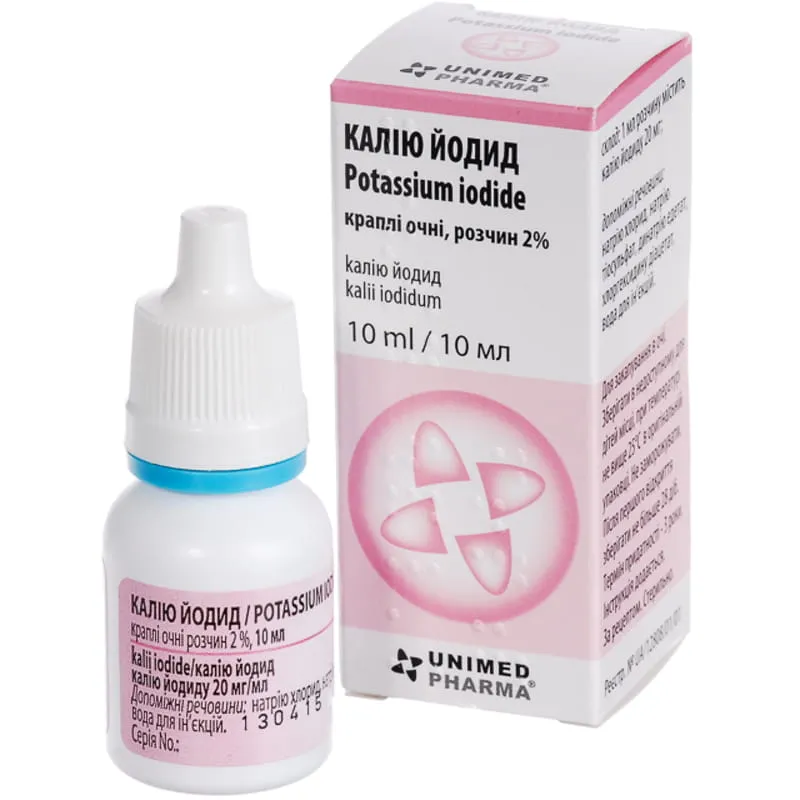
Table of Contents
INSTRUCTIONS FOR MEDICAL USE OF THE MEDICINAL PRODUCT Potassium Iodide
Composition:
Active substance: potassium iodide;
1 ml of solution contains potassium iodide 20 mg;
Excipients: sodium chloride, sodium thiosulfate, disodium edetate, chlorhexidine diacetate, purified water.
Pharmaceutical form. Eye drops.
Main physicochemical characteristics: clear colorless liquid.
Pharmacotherapeutic group. Medicinal products used in ophthalmology. Potassium iodide. ATC code S01X A04.
Pharmacological Properties
Pharmacodynamics
2% potassium iodide is an ophthalmological anti-sclerotic and resorptive medicinal agent. The active ingredient of iodine drops is iodine, present in microdoses. Due to this, the preparation activates metabolic processes and affects protein and lipid metabolism, thereby increasing blood lipoprotein levels and fibrinolytic activity. Iodide ions increase the dispersion of colloids, leading to reduced blood viscosity. Decreased colloidal dispersion correlates with signs of aging and atherosclerosis. These effects, combined with extensive clinical experience in using iodine in medical practice, indicate that iodine salts prevent the development of atherosclerotic processes or reduce their intensity. The action of iodide ions on colloids is associated with vasodilation, resulting in improved tissue perfusion.
The use of ophthalmic drops containing iodine represents a unique treatment approach when direct action at the site of disease is not possible or when the affected area is inaccessible. Iodine compounds exert a direct effect on the resorption process, particularly in recently diagnosed cases. In the case of developed senile cataract, it is unlikely to completely halt the process; however, the progression of cataract (its growth and reduction in visual acuity) can be slowed by using iodides.
Pharmacokinetics
After instillation into the conjunctival sac, iodides penetrate into ocular structures; however, detailed information on the distribution of iodides within ocular tissues is lacking. When administered into the conjunctival sac, a portion of iodides is absorbed into the systemic circulation. They reach the nasal cavity via the nasolacrimal duct and are absorbed into the systemic circulation through the nasal mucosa.
Iodine is very slowly eliminated from the body. Potassium iodide (an inorganic ionic compound) is not metabolized. The respective ions (K+, I-) are excreted by the kidneys.
Clinical characteristics.
Indications. Supporting resorption processes in the eyes, particularly in the presence of inflammatory exudates, hemorrhage, and vitreous body opacities of various etiologies (age, high arterial pressure, diabetes mellitus), in myopic and atherosclerotic changes of retinal and choroidal vessels, retinal degenerative processes, early-stage cataracts, optic nerve atrophy (due to syphilis), as well as an adjunctive treatment agent in the therapy of fungal conjunctivitis and keratitis.
Contraindications. Hypersensitivity to the active substance or to other components of the drug.
Chronic facial pyoderma, hemorrhagic diathesis, and thyroid gland dysfunction.
Interaction with other medicinal products and other forms of interaction. Since a certain portion of iodine and iodides, after local administration into the conjunctival sac, is absorbed into the systemic circulation through the nasal mucosa (they reach the nose via the nasolacrimal duct), possible interactions with other medicinal products used by the patient should be taken into account.
Prolonged use may affect laboratory measurements of protein-bound iodine in blood serum or interfere with test results using radioactive iodine performed in thyroid disorders.
Special precautions.
In fungal diseases of the anterior segment of the eye, specific targeted therapy should be applied (iodine treatment is only an adjunctive therapy).
Patients should not wear soft contact lenses during use of the medicinal product. Also, during treatment, patients should not use rigid contact lenses, or at least must always remove them before applying the medicinal product and reinsert them no sooner than 20 minutes after instillation of the drops.
Use during pregnancy or breastfeeding. Contraindicated.
Ability to affect reaction speed when driving or operating machinery. There is no information regarding negative effects of the drug on the ability to perform activities requiring high attention (driving vehicles or operating machinery, working at heights). However, blurred vision may occur immediately after instillation of the medicinal product; therefore, it is recommended to perform such activities no sooner than 15 minutes after drug application.
Dosage and Administration.
Route of administration: ophthalmic use.
Recommended dosage for adults (including elderly patients) and children.
The dosage and duration of treatment should be determined by a physician. The usual dose is 1-2 drops administered 2-4 times daily into the lower conjunctival sac of the eye.
As with any ophthalmic solution, when using 2% potassium iodide, it is recommended to gently press on the lacrimal sac located at the inner corner of the eye to reduce potential systemic absorption, and release it one minute after instillation of the drops. This should be done immediately after instillation of each drop.
Contact lenses should be removed prior to administration of the eye drops and may be reinserted 20 minutes after administration.
If a patient is using more than one ophthalmic topical agent, an interval of at least 5 minutes should be maintained between the use of different products.
Children. This product must not be used in newborns.
Overdose. No cases of overdose have been observed when recommended doses are used. In case of accidental ingestion of the medicinal product by a child, symptomatic treatment should be administered.
Side effects.
The drug is usually well tolerated.
Thyroid disorders may be associated with negative effects on its function. Immediately after administration, a mild burning sensation may occur. Iodine is excreted from the body very slowly; therefore, prolonged and uncontrolled use (in excessive doses) may cause so-called iodism in sensitive patients. Symptoms of iodism include irritation and hyperemia of the conjunctiva, increased lacrimation, eyelid edema (angioneurotic edema), and swelling of the lacrimal gland. Skin manifestations may include erythema, acne, dermatitis, and purpura.
Immune system side effects: hypersensitivity reactions, including rash and itching.
Shelf life. 2 years.
The shelf life of the solution after opening the bottle is 28 days.
Storage conditions.
Store in the original packaging at a temperature not exceeding 25 °C.
Keep out of reach of children.
Packaging. 5 ml or 10 ml in a bottle with a dropper cap in a box.
Prescription status. Prescription only.
Manufacturer.
Limited Liability Company "Research Plant "GNCLS".
Limited Liability Company "FARMEX GROUP".
Manufacturer's name and address of business location.
Ukraine, 61057, Kharkiv region, city of Kharkiv, Vorobiova Street, building 8.
(Limited Liability Company "Research Plant "GNCLS")
Ukraine, 08301, Kyiv region, city of Boryspil, Shevchenka Street, building 100.
(Limited Liability Company "FARMEX GROUP")