Kadsila®
Ukraine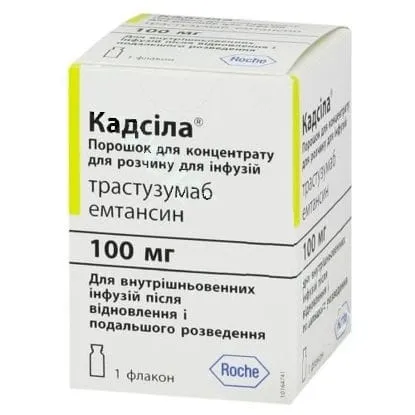
Table of Contents
INSTRUCTIONS FOR MEDICAL USE OF THE MEDICINAL PRODUCT Kadcyla®
Composition:
Active substance: trastuzumab emtansine;
One vial contains 100 mg or 160 mg trastuzumab emtansine for preparation of 5 ml or 8 ml concentrate for infusion solution with trastuzumab emtansine concentration of 20 mg/ml;
Excipients: sucrose, sodium hydroxide, succinic acid, polysorbate 20.
Pharmaceutical form. Powder for concentrate for solution for infusion.
Main physicochemical properties: lyophilized cake of white to almost white color.
Pharmacotherapeutic group.
Antineoplastic agents. Monoclonal antibodies and antibody-drug conjugates. HER2 (human epidermal growth factor receptor 2) inhibitors.
ATC code L01F D03.
Pharmacological Properties
Pharmacodynamics
Mechanism of Action
Kadcyla®, trastuzumab emtansine, is an antibody-drug conjugate in which the antibody component is trastuzumab—a humanized monoclonal IgG1 antibody directed against the human epidermal growth factor receptor 2 (HER2)—covalently linked to the microtubule inhibitor DM1 (a maytansinoid derivative) via a stable thioether linker MCC (4-[N-maleimidomethyl]cyclohexane-1-carboxylate). Emtansine refers to the MCC-DM1 complex. On average, 3.5 molecules of DM1 are conjugated per molecule of trastuzumab. Trastuzumab emtansine specifically binds to HER2.
Conjugation of DM1 to trastuzumab provides selective delivery of the cytotoxic agent to HER2-overexpressing tumor cells, thereby increasing intracellular delivery of DM1 directly into malignant cells. After binding to HER2, trastuzumab emtansine undergoes receptor-mediated internalization followed by lysosomal degradation, resulting in the release of DM1-containing cytotoxic catabolites (primarily Lys-MCC-DM1).
Kadcyla® combines the mechanisms of action of trastuzumab and DM1:
- Trastuzumab emtansine, like trastuzumab, binds to domain IV of the extracellular domain (ECD) of HER2, as well as to Fcγ receptors and complement C1q. Additionally, Kadcyla®, similar to trastuzumab, inhibits shedding of the HER2 ECD, inhibits signaling through the phosphatidylinositol-3-kinase (PI3-K)-dependent pathway, and mediates antibody-dependent cell-mediated cytotoxicity (ADCC) in human breast cancer cells that overexpress HER2.
- DM1, the cytotoxic component of Kadcyla®, binds to tubulin. By inhibiting tubulin polymerization, DM1 and trastuzumab emtansine arrest cells in the G2/M phase of the cell cycle, leading to cell death via apoptosis. In vitro cytotoxicity assays have shown that the activity of DM1 is 20–200 times higher than that of taxanes and vinca alkaloids.
- The MCC linker is designed to limit systemic release and enhance targeted delivery of DM1, as evidenced by the detection of very low levels of free DM1 in plasma.
Pharmacokinetics
Population pharmacokinetic analysis showed no difference in trastuzumab emtansine exposure based on disease status (adjuvant therapy vs. metastatic disease therapy).
Absorption
Trastuzumab emtansine is administered intravenously. Other routes of administration have not been studied.
Distribution
In patients enrolled in studies TDM4370g/BO21977 and BO29738 receiving Kadcyla® at a dose of 3.6 mg/kg intravenously every 3 weeks, the mean maximum serum concentration (Cmax) of trastuzumab emtansine during cycle 1 was 83.4 (±16.5) µg/mL and 72.6 (±24.3) µg/mL, respectively. Based on population pharmacokinetic analysis, the central volume of distribution of trastuzumab emtansine after intravenous administration was 3.13 L, which is close to the plasma volume.
Metabolism
Trastuzumab emtansine is expected to undergo deconjugation and catabolism via proteolysis in cellular lysosomes. In vitro metabolism studies in human liver microsomes indicate that DM1, a component of trastuzumab emtansine, is metabolized primarily by CYP3A4 and to a lesser extent by CYP3A5. DM1 does not inhibit major CYP450 enzymes in vitro. Catabolites, including Lys-MCC-DM1, MCC-DM1, and DM1, are detected at low levels in human plasma. In vitro, DM1 is a substrate of P-glycoprotein.
Elimination
Based on population pharmacokinetic (PK) analysis, after intravenous administration of Kadcyla® to patients with HER2-positive metastatic breast cancer, the clearance of Kadcyla® was 0.68 L/day, and the elimination half-life (t1/2) was approximately 4 days. No accumulation of Kadcyla® was observed after repeated dosing as intravenous infusions every 3 weeks.
Population PK analysis identified body weight, albumin level, sum of the longest diameters of target lesions as defined by Response Evaluation Criteria in Solid Tumors (RECIST), extracellular domain of HER2, baseline trastuzumab concentration, and aspartate aminotransferase (AST) level as statistically significant covariates for the pharmacokinetic parameters of trastuzumab emtansine. However, the magnitude of the effect of these covariates on trastuzumab emtansine exposure suggests that they are unlikely to have a clinically significant impact on Kadcyla® exposure. Furthermore, results of multivariate analysis indicated that the impact of covariates (i.e., renal function, race, and age) on the overall pharmacokinetics of trastuzumab and DM1 was limited and not clinically significant. Preclinical studies demonstrated that catabolites of trastuzumab emtansine, including DM1, Lys-MCC-DM1, and MCC-DM1, are primarily excreted via bile with minimal urinary excretion.
Linearity/Non-linearity
Kadcyla® administered intravenously every 3 weeks demonstrated dose-proportional pharmacokinetics in the dose range of 2.4 to 4.8 mg/kg; patients receiving doses below or equal to 1.2 mg/kg had faster clearance.
Pharmacokinetics in Specific Patient Populations
Use in Elderly Patients
Population pharmacokinetic analysis of Kadcyla® showed that patient age does not affect the pharmacokinetics of the drug. No significant differences were observed in the pharmacokinetics of Kadcyla® among patients aged <65 years (n=577), 65–75 years (n=78), and >75 years (n=16).
Renal Impairment
No formal pharmacokinetic study in patients with impaired renal function has been conducted. Population pharmacokinetic analysis of Kadcyla® showed that creatinine clearance does not affect the pharmacokinetics of the drug. The pharmacokinetics of Kadcyla® in patients with mild (creatinine clearance 60–89 mL/min, n=254) or moderate (creatinine clearance 30–59 mL/min, n=53) renal impairment were similar to those observed in patients with normal renal function (creatinine clearance ≥90 mL/min, n=361). Pharmacokinetic data in patients with severe renal impairment (creatinine clearance 15–29 mL/min) are limited (n=1), and therefore no dosage recommendations can be made.
Hepatic Impairment
The liver is the primary organ for detoxification of DM1 and DM1-containing catabolites. The pharmacokinetics of trastuzumab emtansine and DM1-containing catabolites were evaluated after administration of 3.6 mg/kg trastuzumab emtansine to patients with metastatic HER2-positive breast cancer and normal liver function (n=10), mild (Child-Pugh class A; n=10), or moderate (Child-Pugh class B; n=8) hepatic impairment.
Plasma concentrations of DM1 and DM1-containing catabolites (Lys-MCC-DM1 and MCC-DM1) were low and comparable in patients with and without hepatic impairment.
Systemic exposure (AUC) of trastuzumab emtansine in cycle 1 was approximately 38% and 67% lower in patients with mild or moderate hepatic impairment, respectively, compared to patients with normal liver function. Exposure (AUC) of trastuzumab emtansine in cycle 3 after repeated dosing in patients with mild or moderate hepatic dysfunction was within the range observed in patients with normal liver function.
A formal pharmacokinetic study has not been conducted, and pharmacokinetic data have not been collected in patients with severe hepatic impairment (Child-Pugh class C).
Other Specific Patient Populations
Population pharmacokinetic analysis of Kadcyla® showed that patient race does not appear to affect the pharmacokinetics of the drug. Since the majority of patients in the clinical trials of Kadcyla® were female, the effect of sex on the pharmacokinetics of Kadcyla® has not been formally evaluated.
Clinical characteristics.
Indications.
Early breast cancer (EBC)
Kadcyla® is indicated as monotherapy for adjuvant treatment of adult patients with HER2-positive early breast cancer with residual invasive disease in the breast and/or lymph nodes following neoadjuvant therapy with taxane-based and HER2-targeted therapy.
Metastatic breast cancer (MBC)
Kadcyla® is indicated for the treatment of HER2-positive, unresectable locally advanced or metastatic breast cancer as monotherapy following prior chemotherapy regimens that included trastuzumab and a taxane (administered separately or in combination), or in patients with disease recurrence during or within 6 months after completion of adjuvant therapy that included trastuzumab and a taxane (administered separately or in combination).
Contraindications.
Hypersensitivity to the active substance or to any of the excipients of the medicinal product.
Interaction with other medicinal products and other forms of interaction.
No formal studies of interactions between Kadcyla® and other medicinal products have been conducted in humans. In vitro studies in human liver microsomes indicate that DM1, the cytotoxic component of trastuzumab emtansine, is metabolized primarily by CYP3A4 and to a lesser extent by CYP3A5. Concomitant use of Kadcyla® with strong CYP3A4 inhibitors (e.g., ketoconazole, itraconazole, clarithromycin, atazanavir, indinavir, nefazodone, nelfinavir, ritonavir, saquinavir, telithromycin, and voriconazole) should be avoided due to the potential for increased DM1 exposure and toxicity. Therefore, alternative medicinal products with no or minimal CYP3A4 inhibitory potential should be considered. If concomitant use of strong CYP3A4 inhibitors cannot be avoided, treatment with trastuzumab emtansine should be considered for delay until the strong CYP3A4 inhibitors are cleared from systemic circulation (approximately 3 elimination half-lives of the inhibitors). If concomitant administration of a strong CYP3A4 inhibitor with trastuzumab emtansine cannot be delayed, patients should be closely monitored for adverse reactions.
Special precautions for use.
To improve traceability of biological medicinal products, the trade name and batch number of the administered product (Kadcyla®) should be clearly documented in the patient's medical records.
To prevent medication errors, it is important to check the labels on the vials to ensure that the medicinal product being prepared and administered is Kadcyla® (trastuzumab emtansine) and not another medicinal product containing trastuzumab (e.g. trastuzumab or trastuzumab deruxtecan).
Thrombocytopenia
Thrombocytopenia or decreased platelet count has been frequently reported with trastuzumab emtansine. Thrombocytopenia was the most common adverse reaction leading to treatment discontinuation, dose reduction, and treatment interruption (see section "Adverse reactions"). During clinical trials, the frequency and severity of thrombocytopenia were higher in patients of Mongoloid race (see section "Adverse reactions").
Platelet counts should be monitored before administration of each dose of trastuzumab emtansine. Patients with thrombocytopenia (≤ 100,000/mm³) and patients receiving anticoagulant therapy (e.g. warfarin, heparin, low molecular weight heparin) should be closely monitored during treatment with trastuzumab emtansine. The use of trastuzumab emtansine has not been studied in patients with platelet counts ≤ 100,000/mm³ prior to initiation of treatment. Trastuzumab emtansine should not be administered if platelet counts decrease to grade 3 or higher (< 50,000/mm³) until platelet counts recover to grade 1 (≥ 75,000/mm³) (see section "Dosage and administration").
Bleeding
Hemorrhagic events, including those involving the central nervous, respiratory, and gastrointestinal systems, have been reported during treatment with trastuzumab emtansine. Some of these cases were fatal. In some observed cases, patients had thrombocytopenia or were receiving anticoagulant or antiplatelet therapy; in other cases, no additional risk factors were known. If concomitant use of such medicinal products is medically necessary, it should be performed with caution, and consideration should be given to the need for additional monitoring.
Hepatotoxicity
Hepatotoxicity has been observed during clinical trials with trastuzumab emtansine, predominantly as asymptomatic elevations in serum transaminases (transaminitis grade 1–4) (see section "Adverse reactions"). Transaminase elevations were usually transient, with maximum increases on day 8 after drug administration and subsequent decreases to grade 1 or lower by the start of the next cycle. A cumulative effect on transaminase levels was also observed (the number of patients with abnormal ALT/AST levels of grade 1–2 increased in subsequent cycles).
In most patients with elevated transaminases, levels returned to grade 1 or normal within 30 days after the last dose of trastuzumab emtansine (see section "Adverse reactions").
Serious liver and biliary tract disorders, including nodular regenerative hyperplasia of the liver, have been observed in patients receiving trastuzumab emtansine, sometimes resulting in fatal outcomes due to drug-induced liver injury. These outcomes may have been influenced by pre-existing comorbidities and/or concomitant use of medicinal products with known hepatotoxic potential.
Liver function should be monitored prior to initiation of treatment and before each dose. Patients with elevated baseline ALT levels (e.g. due to liver metastases) may be more susceptible to liver injury, with an increased risk of grade 3–5 hepatic adverse reactions or elevated liver function test parameters. Recommendations for dose reduction or permanent discontinuation of the drug in case of elevated transaminases and total serum bilirubin are provided in section "Dosage and administration".
Nodular regenerative hyperplasia (NRH) of the liver has been identified on liver biopsy in patients treated with trastuzumab emtansine. NRH is a rare liver disorder characterized by widespread benign transformation of hepatic parenchyma into small regenerative nodules; NRH may lead to the development of portal hypertension without liver cirrhosis. The diagnosis of NRH can only be confirmed by histopathological examination. The possibility of NRH development should be considered in all patients with clinical signs of portal hypertension and/or with structures characteristic of liver cirrhosis observed on computed tomography (CT) of the liver, but with normal transaminase levels and absence of other signs of liver cirrhosis. After diagnosis of NRH, treatment with trastuzumab emtansine must be permanently discontinued.
The use of trastuzumab emtansine has not been studied in patients with serum transaminases > 2.5 × ULN or total bilirubin > 1.5 × ULN prior to initiation of treatment. Treatment must be permanently discontinued if serum transaminases increase to > 3 × ULN and total bilirubin to > 2 × ULN. Treatment of patients with hepatic impairment should be performed with caution (see sections "Dosage and administration" and "Pharmacokinetics").
Neurotoxicity
Peripheral neuropathy, mostly grade 1, primarily presenting as sensory neuropathy, has been reported in clinical trials of trastuzumab emtansine. Patients with metastatic breast cancer and peripheral neuropathy ≥ grade 3, and patients with early breast cancer and peripheral neuropathy ≥ grade 2 were excluded from clinical trials.
Treatment with trastuzumab emtansine should be temporarily discontinued in patients who develop peripheral neuropathy of grade 3 or 4 until symptoms resolve or improve to ≤ grade 2. Patients should be clinically monitored regularly for signs/symptoms of neurotoxicity.
Left ventricular dysfunction
Patients receiving treatment with trastuzumab emtansine are at increased risk of developing left ventricular dysfunction. In patients treated with trastuzumab emtansine, left ventricular ejection fraction (LVEF) was < 40%, indicating a potential risk of symptomatic congestive heart failure (CHF) (see section "Adverse reactions"). Risk factors for cardiac events, common and identified during adjuvant trastuzumab therapy trials in breast cancer, include: patient age over 50 years, low baseline LVEF (< 55%), low LVEF before or after paclitaxel administration in the adjuvant setting, prior or concomitant use of antihypertensive medicinal products, prior anthracycline therapy, and high body mass index (> 25 kg/m²).
Standard cardiac function assessments (echocardiography or radionuclide ventriculography (MUGA)) should be performed prior to initiation of treatment and at regular intervals during treatment (e.g. every three months). In case of left ventricular dysfunction, administration of the drug should be delayed or treatment discontinued as needed (see section "Dosage and administration").
In clinical trials, patients had baseline LVEF ≥ 50%. Patients with a history of congestive heart failure, serious cardiac arrhythmias requiring treatment, myocardial infarction within 6 months prior to randomization, or current dyspnea at rest due to progressive malignancy were excluded from clinical trials.
In an observational study (BO39807), patients with metastatic breast cancer and baseline left ventricular ejection fraction (LVEF) of 40–49% experienced cases of LVEF decrease > 10% from baseline and/or congestive heart failure under real-world clinical practice conditions. The decision to use trastuzumab emtansine in patients with metastatic breast cancer and low LVEF should be made only after careful benefit-risk assessment, and cardiac function should be closely monitored in such patients (see section "Adverse reactions").
Pulmonary toxicity
Cases of interstitial lung disease (ILD), including pneumonitis, have been reported during clinical trials of Kadcyla®, sometimes leading to acute respiratory distress syndrome or fatal outcomes (see section "Adverse reactions"). Symptoms include dyspnea, cough, fatigue, and lung infiltrates.
Permanent discontinuation of Kadcyla® is recommended in patients diagnosed with interstitial lung disease or pneumonitis, except for radiation pneumonitis during adjuvant therapy, where trastuzumab emtansine should be permanently discontinued in case of pneumonitis ≥ grade 3 or grade 2 without response to standard treatment (see section "Dosage and administration").
Patients with dyspnea at rest due to complications from progressive malignancy, comorbidities, or those receiving concomitant radiotherapy to the lung area may have an increased risk of developing pulmonary adverse events.
Infusion reactions
Treatment with Kadcyla® has not been studied in patients in whom trastuzumab was permanently discontinued due to infusion reactions; treatment with Kadcyla® is not recommended for such patients. Patients should be closely monitored for infusion reactions, especially during the first infusion.
During clinical trials of Kadcyla®, infusion reactions were reported, characterized by one or more of the following symptoms: flushing, chills, hyperthermia, dyspnea, hypotension, wheezing, bronchospasm, and tachycardia. Overall, these symptoms were generally not severe (see section "Adverse reactions"). In most patients, these reactions resolved within several hours to one day after infusion was stopped. Treatment with Kadcyla® should be interrupted in patients with severe infusion reactions. The decision to reinitiate treatment should be based on clinical assessment of the severity of the reaction. Treatment with Kadcyla® should be permanently discontinued in case of life-threatening infusion reactions (see section "Dosage and administration").
Hypersensitivity reactions
Treatment with trastuzumab emtansine has not been studied in patients in whom trastuzumab treatment was permanently discontinued due to hypersensitivity reactions; treatment with trastuzumab emtansine is not recommended for such patients.
Patients should be closely monitored for hypersensitivity and allergic reactions, which may present with the same manifestations as infusion reactions. Serious anaphylactic reactions have been observed during clinical trials of Kadcyla®. Medicinal products for immediate management of such reactions and emergency equipment should be readily available. True hypersensitivity reactions (severity increases with subsequent infusions) require permanent discontinuation of trastuzumab emtansine.
Injection site reactions
Extravasation of trastuzumab emtansine during intravenous injection may cause local pain. In rare cases, severe tissue damage and epidermal necrosis may occur. In case of extravasation, infusion should be immediately stopped and the patient should be regularly examined, as necrosis may develop days/weeks after infusion.
Excipients with known effect
The product contains less than 1 mmol sodium (23 mg)/dose, i.e. essentially "sodium-free".
The product contains 1.1 mg of polysorbate 20 in each 100 mg vial and 1.7 mg of polysorbate 20 in each 160 mg vial. Polysorbates may cause allergic reactions.
Use during pregnancy or breastfeeding.
Contraception in men and women
Women of childbearing potential should use effective contraception during treatment with Kadcyla® and for at least 7 months after the end of treatment. Male patients and their partners should also use effective contraception.
There are no data on the use of Kadcyla® in pregnant women. Trastuzumab, a component of Kadcyla®, may harm the fetus or cause fetal death when administered to a pregnant woman. In the post-marketing period, cases of oligohydramnios, some associated with fatal pulmonary hypoplasia, have been reported in pregnant women receiving trastuzumab. Animal studies with a closely related chemical compound from the same maytansinoid class as DM1 suggest that DM1, the microtubule-inhibiting cytotoxic component of Kadcyla®, is likely teratogenic and potentially embryotoxic.
Use of Kadcyla® during pregnancy is not recommended. Women should be informed of the potential harm of the drug to the fetus. Women who become pregnant should contact their physician immediately. Careful monitoring by a multidisciplinary team of physicians is recommended if a pregnant woman receives treatment with Kadcyla®.
It is unknown whether Kadcyla® is excreted in human milk. Since many medicinal products are excreted in breast milk and due to the potential for serious adverse reactions in breastfed infants, women should discontinue breastfeeding before starting treatment with Kadcyla®. Women may resume breastfeeding 7 months after completion of treatment.
Reproductive toxicity and delayed toxicity studies have not been conducted for trastuzumab emtansine.
Ability to influence the ability to drive and use machines.
Trastuzumab emtansine has negligible influence on the ability to drive and use machines. However, known adverse reactions such as fatigue, headache, dizziness, and blurred vision may affect the ability to drive and use machines. Patients who experience infusion reactions (flushing, chills, fever, dyspnea, hypotension, wheezing, bronchospasm, and tachycardia) should be advised to refrain from driving and operating machinery until these symptoms subside.
Administration and Dosage
Treatment with Kadcyla® as an intravenous infusion should only be administered under the supervision of a healthcare professional (trained to manage allergic/anaphylactic infusion reactions and equipped to immediately initiate all necessary emergency interventions) experienced in the treatment of oncology patients (see section "Special Warnings and Precautions").
Patients receiving Kadcyla® must have a tumor with HER2-positive status, as determined by immunohistochemical analysis (IHC) with a score of 3+ or a ratio ≥ 2.0 as assessed by in situ hybridization (ISH) or fluorescence in situ hybridization (FISH) using a validated method.
To prevent medication errors, it is essential to verify vial labels to confirm that the prepared and administered medicinal product is Kadcyla® (trastuzumab emtansine) and not another medicinal product containing trastuzumab (e.g., trastuzumab or trastuzumab deruxtecan).
Kadcyla® must be reconstituted and diluted by a healthcare professional and administered as an intravenous infusion. The drug must not be administered as an intravenous bolus or by rapid intravenous injection.
The recommended dose of Kadcyla® is 3.6 mg/kg as an intravenous infusion every 3 weeks (21-day cycle).
The first dose should be administered as a 90-minute intravenous infusion. Patients must be monitored during the infusion and for at least 90 minutes after completion of the initial dose for signs of fever, chills, or other infusion-related reactions. Close observation for possible subcutaneous infiltration at the infusion site is required during administration. Post-marketing cases of delayed epidermal injury or necrosis have been reported following extravasation (see sections "Special Warnings and Precautions" and "Adverse Reactions").
If prior infusions were well tolerated, subsequent doses of Kadcyla® may be administered as a 30-minute infusion; patients must be monitored during the infusion and for at least 30 minutes afterward.
The infusion rate of Kadcyla® should be slowed or the infusion interrupted if the patient develops symptoms related to the infusion (see sections "Special Warnings and Precautions" and "Adverse Reactions"). Administration of Kadcyla® must be discontinued in the event of life-threatening infusion reactions.
Duration of Treatment
Early Breast Cancer (EBC)
Patients should receive a total of 14 treatment cycles unless disease progression or unacceptable toxicity occurs.
Metastatic Breast Cancer (MBC)
Patients should continue treatment until disease progression or development of unacceptable toxicity.
Dose Modifications
Management of symptomatic adverse reactions may require temporary interruption of dosing, dose reduction, or permanent discontinuation of Kadcyla® according to the recommendations outlined in Tables 1–2.
The dose of Kadcyla® should not be re-escalated after dose reduction.
Table 1
Dose Reduction Scheme
| Dose reduction of the drug (initial dose 3.6 mg/kg) |
Dose administered |
| First dose reduction |
3 mg/kg |
| Second dose reduction |
2.4 mg/kg |
| Requirements for further dose reduction |
Discontinuation of treatment |
Table 2
Recommendations for dose adjustment of the drug
| Dose modifications for patients with early breast cancer |
||
| Adverse reaction |
Severity |
Treatment modification |
| Thrombocytopenia |
Grade 2–3 on the day of planned drug administration (from 25,000 to < 75,000/mm³) |
Withhold trastuzumab emtansine until platelet count recovers to ≤ Grade 1 (≥ 75,000/mm³), then administer the drug at the same dose. If two dose delays are required due to thrombocytopenia, consider dose reduction by one level. |
| Grade 4 at any time (< 25,000/mm³) |
Withhold trastuzumab emtansine until platelet count recovers to ≤ Grade 1 (≥ 75,000/mm³), then reduce dose by one level. |
|
| Elevated alanine aminotransferase (ALT) |
Grade 2–3 (from > 3.0 to ≤ 20× ULN on the day of planned drug administration) |
Withhold trastuzumab emtansine until ALT levels decrease to ≤ Grade 1, then reduce dose by one level. |
| Grade 4 (from > 20× ULN at any time) |
Discontinue trastuzumab emtansine treatment permanently. |
|
| Elevated aspartate aminotransferase (AST) |
Grade 2 (from > 3.0 to ≤ 5 × ULN on the day of planned drug administration) |
Withhold trastuzumab emtansine until AST levels decrease to ≤ Grade 1, then administer at the same dose. |
| Grade 3 (from > 5 to ≤ 20 × ULN on the day of planned drug administration) |
Withhold trastuzumab emtansine until AST levels decrease to ≤ Grade 1, then reduce dose by one level. |
|
| Grade 4 (> 20 × ULN at any time) |
Discontinue trastuzumab emtansine treatment permanently. |
|
| Hyperbilirubinemia |
Total bilirubin from > 1.0 to ≤ 2.0 × ULN on the day of planned drug administration |
Withhold trastuzumab emtansine until total bilirubin decreases to ≤ 1.0 × ULN, then reduce dose by one level. |
| Total bilirubin > 2 × ULN at any time |
Discontinue trastuzumab emtansine treatment permanently. |
|
| Drug-induced liver injury (DILI) |
Serum transaminase levels > 3 × ULN and concurrent total bilirubin > 2 × ULN |
Permanently discontinue trastuzumab emtansine unless there is another likely cause for elevated liver enzymes and bilirubin, such as liver metastases or concomitant use of other medications. |
| Nodular regenerative hyperplasia (NRH) |
All grades |
Permanently discontinue trastuzumab emtansine treatment. |
| Peripheral neuropathy |
Grade 3–4 |
Discontinue trastuzumab emtansine until severity of adverse reaction decreases to ≤ Grade 2. |
| Left ventricular dysfunction |
LVEF < 45% |
Do not administer trastuzumab emtansine. Repeat LVEF assessment within 3 weeks. If LVEF < 45% is confirmed, discontinue trastuzumab emtansine. |
| LVEF from 45% to < 50% and a decline from baseline of ≥ 10%* |
Do not administer trastuzumab emtansine. Repeat LVEF assessment within 3 weeks. If LVEF remains < 50% and decline from baseline remains ≥ 10%, discontinue trastuzumab emtansine. |
|
| LVEF from 45% to < 50% and a decline from baseline < 10%* |
Continue trastuzumab emtansine treatment. Repeat LVEF assessment within 3 weeks. |
|
| LVEF ≥ 50% |
Continue trastuzumab emtansine treatment. |
|
| Heart failure |
Symptomatic CHF, NYHA Class 3–4 or heart failure Grade 3–4, or Grade 2 heart failure with LVEF < 45% |
Discontinue trastuzumab emtansine treatment. |
| Lung toxicity |
Interstitial lung disease (ILD) or pneumonitis |
Permanently discontinue trastuzumab emtansine treatment. |
| Radiation-induced pneumonitis |
Grade 2 |
Discontinue trastuzumab emtansine if pneumonitis does not resolve with standard treatment. |
| Grade 3–4 |
Discontinue trastuzumab emtansine treatment. |
|
| Dose modifications for patients with metastatic breast cancer |
||
| Adverse reaction |
Severity |
Treatment modification |
| Thrombocytopenia |
Grade 3 (from 25,000 to < 50,000/mm³) |
Withhold trastuzumab emtansine until platelet count recovers to ≤ Grade 1 (≥ 75,000/mm³), then administer at the same dose. |
| Grade 4 (< 25,000/mm³) |
Withhold trastuzumab emtansine until platelet count recovers to ≤ Grade 1 (≥ 75,000/mm³), then reduce dose by one level. |
|
| Elevated transaminases (AST/ALT) |
Grade 2 (from > 2.5 to ≤ 5× ULN) |
Administer drug at the same dose. |
| Grade 3 (from > 5 to ≤ 20 × ULN) |
Withhold trastuzumab emtansine until AST/ALT levels decrease to ≤ Grade 2, then reduce dose by one level. |
|
| Grade 4 (> 20 × ULN) |
Discontinue trastuzumab emtansine treatment permanently. |
|
| Hyperbilirubinemia |
Grade 2 (from > 1.5 to ≤ 3 × ULN) |
Withhold trastuzumab emtansine until total bilirubin decreases to ≤ Grade 1, then administer at the same dose. |
| Grade 3 (from > 3 to ≤ 10 × ULN) |
Withhold trastuzumab emtansine until total bilirubin decreases to ≤ Grade 1, then reduce dose by one level. |
|
| Grade 4 (> 10 × ULN) |
Discontinue trastuzumab emtansine treatment permanently. |
|
| Drug-induced liver injury (DILI) |
Serum transaminase levels > 3 × ULN and concurrent total bilirubin > 2 × ULN |
Permanently discontinue trastuzumab emtansine unless there is another likely cause for elevated liver enzymes and bilirubin, such as liver metastases or concomitant use of other medications. |
| Nodular regenerative hyperplasia (NRH) |
All grades |
Permanently discontinue trastuzumab emtansine treatment. |
| Left ventricular dysfunction |
Symptomatic CHF |
Discontinue trastuzumab emtansine treatment. |
| LVEF <40% |
Do not administer trastuzumab emtansine. Repeat LVEF assessment within 3 weeks. If LVEF <40% is confirmed, discontinue trastuzumab emtansine. |
|
| LVEF from 40% to < 45% and a decline from baseline of ≥ 10% |
Do not administer trastuzumab emtansine. Repeat LVEF assessment within 3 weeks. If LVEF does not recover to within < 10% of baseline, discontinue trastuzumab emtansine. |
|
| LVEF from 40% to < 45% and a decline from baseline of < 10% |
Continue trastuzumab emtansine treatment. Repeat LVEF assessment within 3 weeks. |
|
| LVEF > 45% |
Continue trastuzumab emtansine treatment. |
|
| Peripheral neuropathy |
Grade 3–4 |
Discontinue trastuzumab emtansine until severity of adverse reaction decreases to ≤ Grade 2. |
| Lung toxicity |
Interstitial lung disease (ILD) or pneumonitis |
Permanently discontinue trastuzumab emtansine treatment. |
ALT − alanine aminotransferase; AST − aspartate aminotransferase, CHF − congestive heart failure, LVEF − left ventricular ejection fraction, LVSD − left ventricular systolic dysfunction, TBILI − total bilirubin, ULN − upper limit of normal.
*Prior to initiation of trastuzumab emtansine treatment.
Dose delay or missed dose
If a scheduled dose is missed, it should be administered as soon as possible; do not wait until the next scheduled cycle. Dosing schedules should be adjusted to maintain a 3-week interval between doses. The next dose should be administered according to the dosing recommendations provided above.
Peripheral neuropathy
In patients who develop grade 3 or 4 peripheral neuropathy, temporary discontinuation of Kadcyla® is recommended until neuropathy resolves to ≤ grade 2. Upon resumption of treatment, dose reduction may be considered (see Table 1).
Special patient populations
Elderly patients
Dose adjustment of Kadcyla® is not required for patients aged ≥ 65 years. There are insufficient data to establish the safety and efficacy of the drug in patients aged ≥ 75 years. However, subgroup analysis of 345 patients aged ≥ 65 years in study MO28231 showed a trend toward increased frequency of adverse events of grade 3, 4, and 5 severity, serious adverse events, and adverse events leading to temporary interruption or permanent discontinuation of treatment, although with a similar frequency of treatment-related grade 3 and higher adverse events.
Results of population pharmacokinetic analysis indicate that patient age does not have a clinically significant effect on the pharmacokinetics of trastuzumab emtansine (see section "Pharmacokinetics").
Renal impairment
Dose adjustment is not required when administering Kadcyla® at the initial dose in patients with mild or moderate renal impairment (see section "Pharmacokinetics"). The potential need for dose adjustment in patients with severe renal impairment cannot be determined due to insufficient data. Therefore, patients with severe renal impairment should be closely monitored.
Hepatic impairment
No initial dose adjustment is required in patients with mild or moderate hepatic impairment. Trastuzumab emtansine has not been studied in patients with severe hepatic impairment. Treatment of patients with hepatic impairment should be conducted with caution due to the known hepatotoxicity observed with trastuzumab emtansine (see section "Special precautions for use").
Children
The safety and efficacy of Kadcyla® in children (under 18 years of age) have not been established.
Special instructions for use
Appropriate aseptic techniques should be used when handling the medicinal product. Appropriate procedures must be followed when preparing chemotherapeutic agents.
The reconstituted solution of Kadcyla® should be diluted in infusion bags made of polyvinyl chloride-free and latex-free polyolefin.
If 0.9% (9 mg/mL) sodium chloride solution for infusion is used for administration, a polyethersulfone (PES) filter with a pore size of 0.20 or 0.22 microns must be used.
To prevent medication errors, it is essential to check the vial labels to ensure that the medicinal product prepared and administered is Kadcyla® (trastuzumab emtansine) and not another medicinal product containing trastuzumab (e.g., trastuzumab or trastuzumab deruxtecan).
Reconstitution instructions
- Using a sterile syringe, slowly inject 5 mL of sterile water for injection into the vial containing 100 mg of trastuzumab emtansine.
- Using a sterile syringe, slowly inject 8 mL of sterile water for injection into the vial containing 160 mg of trastuzumab emtansine.
- Gently swirl the vial to mix the contents until complete dissolution. DO NOT SHAKE!
The reconstituted solution should be visually inspected for particulate matter and discoloration prior to use. The reconstituted solution should be free of visible particles and may be clear or slightly opalescent. The color of the reconstituted solution should range from colorless to light brown. Do not use the reconstituted solution if it contains visible particles, appears cloudy, or has changed color.
Instructions for dilution
Determine the required volume based on the dose of 3.6 mg trastuzumab emtansine/kg body weight (for dose reduction regimen, see above):
Volume (mL) = total dose to be administered (body weight (kg) × dose of drug (mg/kg))
20 mg/mL (concentration of reconstituted solution)
Withdraw the appropriate volume from the vial and add it to an infusion bag containing 250 mL of either 0.45% (4.5 mg/mL) sodium chloride solution for infusion or 0.9% (9 mg/mL) sodium chloride solution for infusion. Do not use glucose (5%) solution (see section "Incompatibilities"). The 0.45% sodium chloride solution may be used without a polyethersulfone (PES) filter with a pore size of 0.20 or 0.22 microns. If 0.9% sodium chloride solution is used for infusion, a polyethersulfone (PES) filter with a pore size of 0.20 or 0.22 microns must be used. The prepared infusion solution should be used immediately. Do not freeze or shake the infusion solution during storage.
The reconstituted product contains no preservatives and is intended for single use only. Any unused portions must be discarded.
Any unused medicinal product or waste material should be disposed of in accordance with local requirements.
Stability of the reconstituted solution
The reconstituted solution is physically and chemically stable for 24 hours at 2 to 8°C. From a microbiological standpoint, the product should be used immediately. If not used immediately, vials containing the reconstituted solution may be stored for up to 24 hours at 2 to 8°C, provided that reconstitution was performed under controlled and aseptic validated conditions. After 24 hours of storage, any unused trastuzumab emtansine must be discarded.
Stability of the ready-to-use (diluted) infusion solution
The reconstituted solution of Kadcyla®, diluted in an infusion bag containing 0.9% (9 mg/mL) sodium chloride solution for infusion or 0.45% (4.5 mg/mL) sodium chloride solution for infusion, is stable for 24 hours at 2 to 8°C, provided that preparation was performed under controlled and validated conditions. Particulates may be observed during storage when diluted in 0.9% sodium chloride solution.
Children.
The safety and efficacy of Kadcyla® in children have not been established.
Overdose.
There is no known antidote for trastuzumab emtansine. The patient should be closely monitored for symptoms of adverse reactions in case of overdose, and appropriate symptomatic treatment should be initiated. Most reported cases of overdose during treatment with trastuzumab emtansine were associated with thrombocytopenia. One fatal case has been reported in which a patient incorrectly received trastuzumab emtansine at a dose of 6 mg/kg and died approximately 3 weeks after the overdose; a causal relationship between death and administration of Kadcyla® has not been established.
Adverse Reactions
Summary of Safety Profile
The safety of Kadcyla® was evaluated in clinical trials involving 2611 patients with breast cancer, showing that:
- The most common serious adverse reactions (> 0.5% of patients) were: hemorrhage, hyperthermia, thrombocytopenia, dyspnea, abdominal pain, musculoskeletal pain, and vomiting;
- The most common adverse reactions (≥ 25%) with trastuzumab emtansine were: nausea, fatigue, musculoskeletal pain, hemorrhage, headache, increased transaminase levels, thrombocytopenia, and peripheral neuropathy. Most adverse reactions were of Grade 1 or 2 severity.
- The most common adverse reactions of ≥ Grade 3 severity (> 2%) according to the National Cancer Institute Common Terminology Criteria for Adverse Events (NCI-CTCAE) were: thrombocytopenia, increased transaminase levels, anemia, neutropenia, fatigue, and hypokalemia.
The following categories are used to describe the frequency of adverse reactions: very common (≥1/10), common (≥1/100 to <1/10), uncommon (≥1/1000 to <1/100), rare (≥1/10,000 to <1/1000), very rare (<1/10,000), and frequency not known (cannot be estimated from available data). Within each category, adverse reactions are listed in order of decreasing severity. Adverse reactions are described according to NCI-CTCAE criteria.
The data below are pooled from the overall treatment period in metastatic breast cancer studies (N=1871; mean number of treatment cycles with trastuzumab emtansine – 10) and the early breast cancer study (KATHERINE) (N=740; mean number of treatment cycles with trastuzumab emtansine – 14).
Infections and infestations: very common – urinary tract infections.
Blood and lymphatic system disorders: very common – thrombocytopenia, anemia; common – neutropenia, leukopenia.
Immune system disorders: very common – hypersensitivity to the drug.
Metabolism and nutrition disorders: common – hypokalemia.
Psychiatric disorders: very common – insomnia.
Nervous system disorders: very common – peripheral neuropathy, headache; common – dysgeusia, memory impairment, dizziness.
Eye disorders: common – dry eyes, conjunctivitis, blurred vision, increased lacrimation.
Cardiac disorders: common – left ventricular dysfunction.
Vascular disorders: very common – hemorrhage; common – arterial hypertension.
Respiratory, thoracic and mediastinal disorders: very common – epistaxis, cough, dyspnea; uncommon – pneumonitis.
Gastrointestinal disorders: very common – stomatitis, diarrhea, vomiting, nausea, constipation, dry mouth, abdominal pain; common – dyspepsia, gingival bleeding.
Hepatobiliary disorders: very common – increased transaminase levels; common – increased blood alkaline phosphatase, increased blood bilirubin levels; uncommon – hepatotoxicity, nodular regenerative hyperplasia, portal hypertension; rare – liver failure.
Skin and subcutaneous tissue disorders: common – rash, pruritus, alopecia, nail disorders, palmar-plantar erythrodysesthesia syndrome, urticaria.
Musculoskeletal and connective tissue disorders: very common – musculoskeletal pain, arthralgia, myalgia.
General disorders and administration site conditions: very common – fatigue, pyrexia, asthenia; common – chills, peripheral edema; uncommon – injection site extravasation.
Injury, poisoning and procedural complications: common – infusion-related reactions; uncommon – pulmonary pneumonitis.
Description of Selected Adverse Reactions
Thrombocytopenia
In clinical trials of trastuzumab emtansine in patients with metastatic breast cancer, thrombocytopenia, or decreased platelet count, was reported in 24.9% of patients and was the most common adverse reaction leading to treatment discontinuation (2.6%). Thrombocytopenia was reported in 28.6% of patients receiving trastuzumab emtansine in clinical trials of early breast cancer. Thrombocytopenia was the most frequent adverse reaction of all grades and of Grade ≥3, as well as the most common adverse reaction leading to treatment discontinuation (4.2%), treatment interruption, and dose reduction. Most patients experienced Grade 1 or 2 thrombocytopenia (≥50,000/mm³), with the nadir observed on Day 8; platelet counts generally recovered to Grade 0 or 1 (≥75,000/mm³) by the time of the next scheduled dose. During clinical trials, the incidence and severity of thrombocytopenia were higher in patients of Mongoloid race. Regardless of race, the incidence of Grade 3 or 4 thrombocytopenia (<50,000/mm³) was 8.7% in patients with metastatic breast cancer receiving trastuzumab emtansine and 5.7% in patients with early breast cancer. Dose modification recommendations for thrombocytopenia are provided in the sections “Dosage and Administration” and “Special Warnings and Precautions”.
Bleeding
During clinical trials of trastuzumab emtansine, hemorrhagic events were reported in 34.8% of patients with metastatic breast cancer, with the incidence of severe bleeding (≥ Grade 3) being 2.2%. Hemorrhagic events in patients with early breast cancer were reported in 29.2% of patients, with the incidence of severe bleeding (≥ Grade 3) being 0.4%, including one Grade 5 event. In some of these cases, patients had thrombocytopenia or were receiving anticoagulant or antiplatelet therapy; in others, no additional risk factors were known. Fatal bleeding events have been reported in patients with metastatic and early breast cancer.
Increased Transaminase Levels
During clinical trials, elevated serum transaminase levels (Grade 1–4) were observed during treatment with Kadcyla® (see section “Special Warnings and Precautions”). Increases in transaminase levels were generally transient. A cumulative effect of Kadcyla® on transaminase levels was also observed, with overall recovery to baseline levels after treatment discontinuation. Elevated transaminase levels were reported in 24.2% of patients during clinical trials; Grade 3 or 4 elevations in AST and ALT were observed in 4.2% and 2.7% of patients with metastatic breast cancer, respectively, and typically occurred early in treatment cycles (1–6). Elevated transaminase levels were reported in 32.6% of patients with early breast cancer. Grade 3 and 4 elevations in transaminase levels were reported in 1.6% of patients with early breast cancer. Hepatic events ≥ Grade 3 were generally not associated with worse clinical outcomes; follow-up evaluations showed a trend toward improvement, allowing patients to continue in the study and receive the investigational drug at the same or reduced dose. No association was observed between trastuzumab emtansine exposure (AUC), maximum serum concentration (Cmax), total trastuzumab emtansine exposure (AUC), or Cmax of DM1 and elevated transaminase levels. Dose modification recommendations for elevated transaminase levels are provided in the sections “Dosage and Administration” and “Special Warnings and Precautions”.
Left Ventricular Dysfunction
In clinical trials during treatment with trastuzumab emtansine, left ventricular dysfunction was reported in 2.2% of patients with metastatic breast cancer. Most cases of reduced left ventricular ejection fraction were asymptomatic and of Grade 1 or 2 severity. Grade 3 or 4 reductions in left ventricular ejection fraction were observed in 0.4% of patients. In an observational study (BO39807), approximately 22% (7 of 32) of patients with metastatic breast cancer who had a baseline left ventricular ejection fraction (LVEF) of 40–49% and initiated treatment with trastuzumab emtansine experienced a decline in LVEF >10% from baseline and/or congestive heart failure; most of these patients had other cardiovascular risk factors. Left ventricular dysfunction occurred in 3.0% of patients with early breast cancer, with Grade 3 severity in 0.5% of patients, and no higher-grade events. Information on dose modification in case of LVEF reduction is provided in Table 2 in the section “Dosage and Administration” and in the section “Special Warnings and Precautions”.
Peripheral Neuropathy
During clinical trials of trastuzumab emtansine, cases of peripheral neuropathy were recorded, primarily Grade 1, mostly presenting as sensory neuropathy. In patients with metastatic breast cancer, the overall incidence of peripheral neuropathy was 29.0%, with ≥ Grade 2 in 8.6%. In patients with early breast cancer, the overall incidence was 32.0%, with ≥ Grade 2 in 10.1%.
Infusion-Related Reactions
Infusion-related reactions are characterized by one or more of the following symptoms: flushing, chills, hyperthermia, dyspnea, hypotension, wheezing, bronchospasm, and tachycardia. During clinical trials of trastuzumab emtansine, infusion-related reactions were reported in 4% of patients with metastatic breast cancer, including 6 cases of Grade 3 severity. No Grade 4 infusion-related reactions were reported. Infusion-related reactions were reported in 1.6% of patients with early breast cancer, with no events of Grade 3 or 4 severity. In most patients, these reactions resolved within several hours to one day after infusion discontinuation. No dose relationship was observed during clinical trials. Dose modification recommendations for infusion-related reactions are provided in the sections “Dosage and Administration” and “Special Warnings and Precautions”.
Hypersensitivity Reactions
Hypersensitivity reactions were reported in 2.6% of patients with metastatic breast cancer during clinical trials. Hypersensitivity reactions were reported in 2.7% of patients with MBC, Grade 3 in 0.4% of patients, with no higher-grade events. One case of Grade 3 hypersensitivity reaction and one case of Grade 4 hypersensitivity reaction were reported. Overall, most hypersensitivity reactions were mild to moderate in severity and resolved with treatment. Dose modification recommendations for hypersensitivity reactions are provided in the sections “Dosage and Administration” and “Special Warnings and Precautions”.
Immunogenicity
Like all therapeutic proteins, trastuzumab emtansine has the potential to elicit an immune response. Overall, 1243 patients in seven clinical trials were tested at various time points for the development of anti-therapeutic antibodies (ATA) in response to trastuzumab emtansine. Positive antibody responses to trastuzumab emtansine were detected in 5.1% of patients (64 out of 1243) at one or more time points after drug administration. In Phase I and II trials, anti-trastuzumab emtansine antibodies were detected in 6.4% (24/376) of patients. In the EMILIA study (TDM4370g/BO21977), anti-trastuzumab emtansine antibodies were detected in 5.2% (24/466) of patients, with neutralizing antibodies detected in 13 patients. In the KATHERINE study (BO27938), anti-trastuzumab emtansine antibodies were detected in 4.0% (16/401) of patients, with neutralizing antibodies detected in 5 patients. Due to the low incidence of drug antibody development, the impact of these antibodies on the pharmacokinetics, pharmacodynamics, safety, and/or efficacy of trastuzumab emtansine is unknown.
Extravasation
Reactions secondary to extravasation were observed during clinical trials of trastuzumab emtansine. These reactions were generally mild or moderate in severity and included erythema, pain, skin irritation, pain, or swelling at the infusion site. Such reactions were more commonly observed within 24 hours after infusion. Post-marketing experience has reported cases of epidermal injury or necrosis following extravasation occurring days/weeks after infusion. Currently, there is no specific treatment for extravasation caused by trastuzumab emtansine (see section “Special Warnings and Precautions”).
Laboratory Abnormalities
Tables 3 and 4 provide information on laboratory abnormalities observed in patients receiving Kadcyla® in the clinical study TDM4370g/BO21977/EMILIA and the study BO27938/KATHERINE.
Table 3
Laboratory Abnormalities Observed in Patients Enrolled in Study TDM4370g/BO21977/EMILIA
| Parameters |
Trastuzumab emtansine (N=490) |
||
| All grades % |
Grade 3 % |
Grade 4 % |
|
| Hepatic parameters |
|||
| Increased bilirubin levels |
21 |
< 1 |
0 |
| Increased AST levels |
98 |
8 |
< 1 |
| Increased ALT levels |
82 |
5 |
< 1 |
| Hematological parameters |
|||
| Decreased platelet count |
85 |
14 |
3 |
| Decreased hemoglobin levels |
63 |
5 |
1 |
| Decreased neutrophil count |
41 |
4 |
< 1 |
| Potassium |
|||
| Decreased potassium levels |
35 |
3 |
< 1 |
Table 4
Laboratory test abnormalities observed in patients participating in the BO27938/KATHERINE study
| Parameters |
Trastuzumab emtansine (N=740) |
||
| All grades (%) |
Grade 3 (%) |
Grade 4 (%) |
|
| Hepatic parameters |
|||
| Increased bilirubin levels |
11 |
<1 |
0 |
| Increased AST levels |
79 |
<1 |
0 |
| Increased ALT levels |
55 |
<1 |
0 |
| Hematological parameters |
|||
| Decreased platelet count |
51 |
4 |
2 |
| Decreased hemoglobin levels |
31 |
1 |
0 |
| Decreased neutrophil count |
24 |
1 |
0 |
| Potassium |
|||
| Decreased potassium levels |
26 |
2 |
<1 |
Shelf life.
4 years.
Storage conditions.
Keep out of reach of children. Store at 2 to 8 °C. Do not freeze the reconstituted solution or the infusion solution.
Incompatibilities.
Glucose solution (5%) should not be used, as it causes protein aggregation.
Trastuzumab emtansine should not be mixed or diluted with other medicinal products except as specified in the section "Special instructions for use".
Packaging.
A 15 ml vial (for the 100 mg dose) or a 20 ml vial (for the 160 mg dose) made of colorless glass, hydrolytic class 1 according to the European Pharmacopoeia, sealed with a laminated rubber stopper and crimped with an aluminum cap, provided with an opening plastic disc. Packaged in cardboard boxes containing 1 vial.
Prescription status.
Prescription only.
Manufacturer.
F. Hoffmann-La Roche Ltd
Manufacturer's location and address of its place of business.
Wurmisweg, 4303 Kaiseraugst, Switzerland