Infors
Ukraine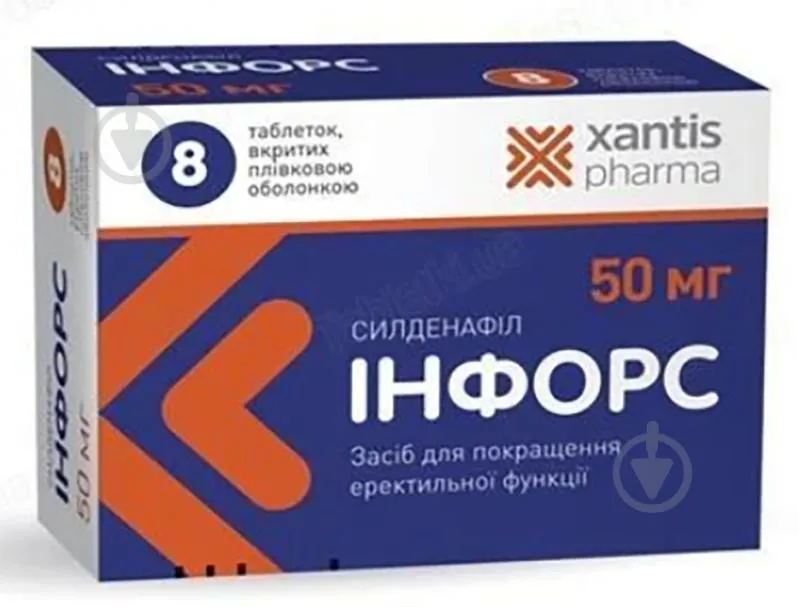
Table of Contents
INSTRUCTIONS FOR MEDICAL USE OF THE MEDICINAL PRODUCT INFORS (ENFORCE)
Composition:
Active substance: sildenafil;
One film-coated tablet contains sildenafil citrate 70.24 mg, equivalent to sildenafil 50 mg;
One film-coated tablet contains sildenafil citrate 140.48 mg, equivalent to sildenafil 100 mg;
Excipients: microcrystalline cellulose, anhydrous calcium hydrogen phosphate, povidone, sodium croscarmellose, magnesium stearate, "Opadry Blue 03A205003" [hypromellose, microcrystalline cellulose, polyethylene glycol stearate, titanium dioxide (E 171), brilliant blue (E 133)], polyethylene glycol.
Pharmaceutical form. Film-coated tablets.
Main physicochemical properties: blue-colored, oval, biconvex tablets with a score line on both sides. The tablet can be divided into two equal doses.
Pharmacotherapeutic group. Agents used in erectile dysfunction. Sildenafil. ATC code G04BE03.
Pharmacological properties.
Pharmacodynamics.
Mechanism of action. Sildenafil is an oral medication used for the treatment of erectile dysfunction in men. During sexual stimulation, the drug restores impaired erectile function by enhancing blood flow to the penis.
The physiological mechanism leading to erection involves the release of nitric oxide (NO) in the corpus cavernosum during sexual stimulation. Released nitric oxide activates the enzyme guanylate cyclase, which stimulates an increase in the level of cyclic guanosine monophosphate (cGMP), resulting in relaxation of the smooth muscle of the corpus cavernosum and promoting blood inflow.
Sildenafil is a potent and selective inhibitor of cGMP-specific phosphodiesterase type 5 (PDE5) in the corpus cavernosum, where PDE5 is responsible for cGMP breakdown. The effects of sildenafil on erection are peripheral. Sildenafil does not exert a direct relaxing effect on isolated human corpus cavernosum, but it strongly potentiates the relaxing effect of NO on this tissue. When the NO/cGMP metabolic pathway is activated during sexual stimulation, sildenafil's inhibition of PDE5 leads to increased cGMP levels in the corpus cavernosum. Thus, for sildenafil to produce the desired pharmacological effect, sexual stimulation is required.
Effect on pharmacodynamics. In vitro studies have demonstrated that sildenafil is selective for PDE5, which actively participates in the erectile process. The effect of sildenafil on PDE5 is more potent than its effect on other known phosphodiesterases. This effect is 10 times more potent than its effect on PDE6, which is involved in phototransduction processes in the retina. At maximum recommended doses, sildenafil's selectivity for PDE5 is 80 times greater than its selectivity for PDE1, 700 times greater than for PDE2, PDE3, PDE4, PDE7, PDE8, PDE9, PDE10, and PDE11. Specifically, sildenafil's selectivity for PDE5 is 4000 times greater than its selectivity for PDE3—an isoform of cAMP-specific phosphodiesterase involved in regulating cardiac contractility.
Pharmacokinetics.
Absorption. Sildenafil is rapidly absorbed. Maximum plasma concentrations are reached within 30–120 minutes (median 60 minutes) after oral administration on an empty stomach. The mean absolute bioavailability after oral administration is 41% (ranging from 25 to 63%). Within the recommended dose range (25 to 100 mg), AUC and Cmax values of sildenafil increase proportionally with dose.
When sildenafil is taken with food, the extent of absorption is reduced, with a mean delay in Tmax to 60 minutes and a mean reduction in Cmax by 29%.
Distribution. The mean volume of distribution at steady state (Vd) is 105 liters, indicating distribution of the drug into body tissues. After a single 100 mg oral dose of sildenafil, the mean peak total plasma concentration of sildenafil is approximately 440 ng/mL (coefficient of variation 40%). Since binding of sildenafil and its major N-desmethyl metabolite to plasma proteins reaches 96%, the mean peak plasma concentration of free sildenafil reaches 18 ng/mL (38 nmol). The degree of plasma protein binding is independent of total sildenafil concentrations.
In healthy volunteers who received a single 100 mg dose of sildenafil, less than 0.0002% (mean 188 ng) of the administered dose was detected in semen after 90 minutes.
Biotransformation. Sildenafil metabolism is primarily mediated by hepatic microsomal isoenzymes CYP3A4 (major pathway) and CYP2C9 (minor pathway). The major circulating metabolite is formed via N-demethylation of sildenafil. The metabolite's selectivity for PDE5 is comparable to that of sildenafil, and its activity against PDE5 is approximately 50% of the parent compound. Plasma concentrations of this metabolite are approximately 40% of sildenafil plasma concentrations. The N-desmethyl metabolite undergoes further metabolism, and its elimination half-life is approximately 4 hours.
Elimination. Total clearance of sildenafil is 41 L/h, resulting in an elimination half-life of 3–5 hours. Following both oral and intravenous administration, excretion of sildenafil metabolites occurs primarily in feces (approximately 80% of the orally administered dose) and to a lesser extent in urine (approximately 13% of the orally administered dose).
Pharmacokinetics in special patient populations.
Elderly patients. In healthy elderly volunteers (aged 65 years and older), reduced clearance of sildenafil was observed, leading to approximately 90% higher plasma concentrations of sildenafil and its active N-desmethyl metabolite compared to younger healthy volunteers (aged 18–45 years). Due to age-related differences in plasma protein binding, the corresponding increase in free sildenafil plasma concentration was approximately 40%.
Renal impairment. In volunteers with mild to moderate renal impairment (creatinine clearance 30–80 mL/min), the pharmacokinetics of sildenafil remained unchanged after a single 50 mg oral dose. Mean AUC and Cmax of the N-desmethyl metabolite increased by up to 126% and 73%, respectively, compared to values in age-matched volunteers without renal impairment. However, due to high individual variability, these differences were not statistically significant. In volunteers with severe renal impairment (creatinine clearance below 30 mL/min), sildenafil clearance was reduced, resulting in mean increases in AUC and Cmax by 100% and 88%, respectively, compared to age-matched volunteers without renal impairment. Additionally, AUC and Cmax values of the N-desmethyl metabolite were significantly increased by 200% and 79%, respectively.
Hepatic impairment. In volunteers with mild to moderate hepatic cirrhosis (Child–Pugh classes A and B), sildenafil clearance was reduced, leading to increases in AUC (84%) and Cmax (47%) compared to age-matched volunteers without hepatic impairment. The pharmacokinetics of sildenafil in patients with severe hepatic impairment have not been studied.
Clinical characteristics.
Indications.
The medication is recommended for use in men with erectile dysfunction, defined as the inability to achieve or maintain an erection sufficient for successful sexual intercourse.
For the medication to be effective, sexual stimulation is required.
Contraindications.
Hypersensitivity to sildenafil or to any of the excipients of the medication. Concomitant use with nitric oxide donors (such as amyl nitrite) or nitrates in any form is contraindicated, as it is known that sildenafil affects the nitric oxide-cyclic guanosine monophosphate (cGMP) metabolic pathway and potentiates the hypotensive effect of nitrates.
Conditions in which sexual activity is inadvisable (severe cardiovascular disorders such as unstable angina or severe heart failure).
The medication is contraindicated in patients who have lost vision in one eye due to non-arteritic anterior ischemic optic neuropathy, regardless of whether this condition was associated with prior use of PDE5 inhibitors or not.
The safety of sildenafil has not been studied in patient subgroups with conditions such as severe hepatic impairment, arterial hypotension (blood pressure below 90/50 mm Hg), recent stroke or myocardial infarction, and known hereditary degenerative retinal diseases such as retinitis pigmentosa (a small number of such patients have genetic disorders of retinal phosphodiesterases).
Concomitant use of PDE5 inhibitors (including sildenafil) with guanylate cyclase stimulators such as riociguat is contraindicated, as it may lead to symptomatic hypotension (see section "Interaction with other medicinal products and other types of interactions").
Interaction with other medicinal products and other types of interactions.
Effects of other medicinal products on sildenafil.
In vitro studies. Sildenafil metabolism is primarily mediated by cytochrome P450 (CYP) isoform 3A4 (main pathway) and isoform 2C9 (minor pathway). Therefore, inhibitors of these isoenzymes may reduce sildenafil clearance, while inducers of these isoenzymes may increase sildenafil clearance.
In vivo studies. Population pharmacokinetic analysis of clinical trial data demonstrated reduced clearance of sildenafil when co-administered with CYP3A4 inhibitors (such as ketoconazole, erythromycin, cimetidine). Although increased incidence of adverse events was not observed when sildenafil was used concomitantly with CYP3A4 inhibitors, consideration should be given to initiating sildenafil therapy at a dose of 25 mg.
Concomitant administration of the HIV protease inhibitor ritonavir, a very potent inhibitor of P450, at steady-state concentration (500 mg once daily) and sildenafil (single dose of 100 mg) resulted in a 300% increase (4-fold) in sildenafil Cmax and a 1000% increase (11-fold) in plasma AUC of sildenafil. After 24 hours, plasma levels of sildenafil were still approximately 200 ng/mL compared to approximately 5 ng/mL typical after sildenafil alone, reflecting the significant impact of ritonavir on a broad range of P450 substrates. Sildenafil does not affect the pharmacokinetics of ritonavir. Given these pharmacokinetic data, concomitant use of sildenafil and ritonavir is not recommended (see section "Special precautions"); the dose of sildenafil must not exceed 25 mg within 48 hours.
Concomitant administration of the HIV protease inhibitor saquinavir, a CYP3A4 inhibitor, at a dose providing steady-state concentration (1200 mg three times daily) and sildenafil (single dose of 100 mg) resulted in a 140% increase in sildenafil Cmax and a 210% increase in systemic exposure (AUC) of sildenafil. No effect of sildenafil on the pharmacokinetics of saquinavir was observed (see section "Dosage and administration"). More potent CYP3A4 inhibitors such as ketoconazole and itraconazole are expected to have a more pronounced effect.
Administration of sildenafil (100 mg single dose) and erythromycin, a moderate CYP3A4 inhibitor, at steady state (500 mg twice daily for 5 days) resulted in an 182% increase in systemic exposure to sildenafil (AUC). In healthy male volunteers, azithromycin (500 mg daily for 3 days) did not affect AUC, Cmax, Tmax, elimination rate constant, or subsequent half-life of sildenafil or its major circulating metabolite. Cimetidine (a cytochrome P450 inhibitor and non-specific CYP3A4 inhibitor) at a dose of 800 mg, when co-administered with sildenafil 50 mg in healthy volunteers, increased plasma concentrations of sildenafil by 56%.
Grapefruit juice is a weak inhibitor of intestinal CYP3A4 and may cause a moderate increase in plasma levels of sildenafil.
Single administration of antacids (magnesium hydroxide/aluminum hydroxide) did not affect the bioavailability of sildenafil.
Although specific interaction studies with all medicinal products have not been conducted, population pharmacokinetic analysis data indicate that the pharmacokinetics of sildenafil were not altered when co-administered with medicinal products belonging to the CYP2C9 inhibitor group (tolbutamide, warfarin, phenytoin), CYP2D6 inhibitors (such as selective serotonin reuptake inhibitors (SSRIs), tricyclic antidepressants), thiazide and thiazide-like diuretics, loop and potassium-sparing diuretics, angiotensin-converting enzyme (ACE) inhibitors, calcium channel blockers, β-adrenergic receptor antagonists, or CYP450 metabolism inducers (such as rifampicin, barbiturates).
Concomitant administration of the endothelin antagonist bosentan (a moderate inducer of CYP3A4, CYP2C9, and possibly CYP2C19) at steady state (125 mg twice daily) and sildenafil at steady state (80 mg three times daily) resulted in a 62.6% and 55.4% reduction in AUC and Cmax of sildenafil, respectively. Therefore, concomitant use of potent CYP3A4 inducers such as rifampicin may lead to a more pronounced decrease in plasma concentration of sildenafil.
Nicorandil is a hybrid of a calcium channel activator and a nitrate. The nitrate component implies a potential for serious interaction with sildenafil.
Effects of sildenafil on other medicinal products.
In vitro studies. Sildenafil is a weak inhibitor of cytochrome P450 isoforms 1A2, 2C9, 2C19, 2D6, 2E1, and 3A4 (IC50 > 150 µmol). Since peak plasma concentrations of sildenafil are approximately 1 µmol, the impact of the drug on the clearance of substrates of these isoenzymes is unlikely.
There are no data on interactions between sildenafil and non-specific phosphodiesterase inhibitors such as theophylline and dipyridamole.
In vivo studies. It is known that sildenafil affects the nitric oxide-cyclic guanosine monophosphate (cGMP) metabolic pathway. It has been established that sildenafil potentiates the hypotensive effect of nitrates; therefore, its concomitant use with nitric oxide donors or nitrates in any form is contraindicated (see section "Contraindications").
Riociguat. Preclinical studies have demonstrated an additive systemic effect of lowering blood pressure when PDE5 inhibitors are used concomitantly with riociguat. Clinical studies have shown that riociguat enhances the hypotensive effect of PDE5 inhibitors. In patients participating in the study, no positive clinical effect was observed with concomitant use of PDE5 inhibitors and riociguat. Concomitant use of riociguat with PDE5 inhibitors (including sildenafil) is contraindicated (see section "Contraindications").
Concomitant use of sildenafil and α-adrenergic receptor blockers may lead to symptomatic arterial hypotension in some susceptible patients. Such reactions most commonly occurred within 4 hours after sildenafil administration (see sections "Dosage and administration" and "Special precautions"). In studies specifically investigating drug interactions, the α-adrenergic receptor blocker doxazosin (4 mg and 8 mg) and sildenafil (25 mg, 50 mg, and 100 mg) were administered concomitantly to patients with benign prostatic hyperplasia whose condition had been stabilized on doxazosin. In these populations, mean additional reductions in supine blood pressure were 7/7 mm Hg, 9/5 mm Hg, and 8/4 mm Hg, and mean reductions in standing blood pressure were 6/6 mm Hg, 11/4 mm Hg, and 4/5 mm Hg, respectively. Cases of symptomatic orthostatic hypotension have been reported with concomitant use of sildenafil and doxazosin in patients whose condition had been stabilized on doxazosin. These reports described dizziness and pre-syncope, but no syncope.
No significant interactions were observed with concomitant administration of sildenafil (50 mg) and tolbutamide (250 mg) or warfarin (40 mg), both metabolized by CYP2C9.
Sildenafil (50 mg) did not prolong bleeding time induced by acetylsalicylic acid (150 mg).
Sildenafil (50 mg) did not potentiate the hypotensive effect of alcohol in healthy volunteers at mean peak blood ethanol levels of 80 mg/dL.
In patients taking sildenafil, no differences in adverse effect profile were observed compared to placebo when concomitantly using classes of antihypertensive medications such as diuretics, β-adrenergic receptor blockers, ACE inhibitors, angiotensin II antagonists, antihypertensive agents (vasodilators and centrally acting), adrenergic neuron blockers, calcium channel blockers, and α-adrenergic receptor blockers. In a specific interaction study with concomitant administration of sildenafil (100 mg) and amlodipine in patients with arterial hypertension, an additional reduction in supine systolic blood pressure of 8 mm Hg was observed. The corresponding reduction in diastolic blood pressure was 7 mm Hg. These additional reductions in blood pressure were comparable in magnitude to those observed with sildenafil alone in healthy volunteers (see section "Pharmacological properties").
Sildenafil at a dose of 100 mg did not affect the pharmacokinetic parameters of HIV protease inhibitors saquinavir and ritonavir, which are CYP3A4 substrates.
In healthy male volunteers, administration of sildenafil at steady state (80 mg three times daily) increased AUC and Cmax of bosentan (125 mg twice daily) by 49.8% and 42%, respectively.
Single-dose administration of sildenafil with sacubitril/valsartan at steady state in patients with arterial hypertension was associated with a greater reduction in blood pressure compared to sacubitril/valsartan alone. Therefore, sildenafil should be initiated with caution in patients receiving sacubitril/valsartan.
Special precautions for use.
Before initiating therapy, a medical history should be obtained and a physical examination performed to diagnose erectile dysfunction and determine its possible causes.
Cardiovascular risk factors. Since sexual activity carries a certain cardiovascular risk, prior to initiating any treatment for erectile dysfunction, the physician should assess the patient's cardiovascular status. Sildenafil has vasodilatory effects, manifested by mild and transient reduction in blood pressure (see section "Pharmacodynamics"). Before prescribing sildenafil, the physician must carefully consider whether this effect could adversely affect patients with certain underlying diseases, especially in combination with sexual activity. Patients particularly sensitive to vasodilators include those with left ventricular outflow tract obstruction (e.g., aortic stenosis, hypertrophic obstructive cardiomyopathy) or patients with the rare multisystem atrophy syndrome, one of the manifestations of which is severe autonomic nervous system dysfunction in blood pressure regulation.
The drug potentiates the hypotensive effect of nitrates (see section "Contraindications").
During the post-marketing period, serious adverse cardiovascular events have been reported, including myocardial infarction, unstable angina, sudden cardiac death, ventricular arrhythmia, cerebrovascular hemorrhage, transient ischemic attack, arterial hypertension, and arterial hypotension, which temporally coincided with sildenafil use. In most patients, cardiovascular risk factors were present. Many of these adverse reactions occurred during or immediately after sexual intercourse, and only a few occurred shortly after sildenafil administration without sexual activity. Therefore, it is not possible to determine whether the development of such adverse reactions is directly related to risk factors or whether their occurrence is due to other factors.
Priapism. Medications for the treatment of erectile dysfunction, including sildenafil, should be administered with caution in patients with anatomical penile deformities (such as angulation, cavernosal fibrosis, or Peyronie's disease) or in patients with conditions predisposing to priapism (such as sickle cell anemia, multiple myeloma, or leukemia).
Since sildenafil became available on the market, cases of prolonged erection and priapism have been reported. If an erection lasts longer than 4 hours, patients should seek immediate medical help. Without prompt treatment, priapism may lead to penile tissue damage and permanent loss of potency.
Concomitant use with other PDE5 inhibitors or other medications for erectile dysfunction. The safety and efficacy of concomitant use of sildenafil with other PDE5 inhibitors or with other medications for pulmonary arterial hypertension containing sildenafil, or with other medications for erectile dysfunction have not been studied. Therefore, the use of such combinations is not recommended.
Effect on vision. Spontaneous reports of visual disturbances associated with the use of sildenafil and other PDE5 inhibitors have been received (see section "Adverse reactions"). Spontaneous reports and results from observational studies have documented cases of non-arteritic anterior ischemic optic neuropathy, a rare condition, associated with the use of sildenafil and other PDE5 inhibitors (see section "Adverse reactions"). Patients should be advised that if sudden visual impairment occurs, sildenafil use should be discontinued and immediate medical advice sought (see section "Contraindications").
Concomitant use with ritonavir. Concomitant use of sildenafil and ritonavir is not recommended (see section "Interaction with other medicinal products and other forms of interaction").
Concomitant use with α-adrenoreceptor blockers. Sildenafil should be used with caution in patients taking α-adrenoreceptor blockers, as this combination may lead to symptomatic arterial hypotension in some susceptible patients. Symptomatic arterial hypotension usually occurs within 4 hours after sildenafil administration. To minimize the risk of postural hypotension in patients taking α-adrenoreceptor blockers, their condition should be stabilized with α-adrenoreceptor blockers before initiating sildenafil therapy. Additionally, consideration should be given to starting with a 25 mg dose (see section "Method of administration and dosage"). Patients should also be informed about appropriate actions to take if symptoms of orthostatic hypotension occur.
Effect on bleeding. In vitro studies on human platelets have demonstrated that sildenafil potentiates the anti-aggregatory effects of sodium nitroprusside. There is no information available on the safety of sildenafil use in patients with coagulation disorders or acute peptic ulcer. Therefore, sildenafil use in these patient groups should only be considered after careful assessment of the benefit-risk ratio.
Administration of a 100 mg dose to healthy volunteers did not show any effect on sperm morphology or motility (see section "Pharmacodynamics").
Excipients. This medicinal product contains less than 1 mmol (23 mg)/dose of sodium, i.e., essentially sodium-free.
Hearing loss. Physicians should advise patients to discontinue use of PDE5 inhibitors, including the drug Infors, and seek immediate medical help in case of sudden decrease or loss of hearing. These events, which may also be accompanied by tinnitus and dizziness, have been reported in temporal association with the use of PDE5 inhibitors, including this drug. It is not possible to determine whether these events are directly related to PDE5 inhibitor use or to other factors.
Concomitant use with antihypertensive agents. The drug exerts systemic vasodilatory effects and may further reduce blood pressure in patients taking antihypertensive medications. In a specific drug interaction study, concomitant oral administration of amlodipine (5 mg or 10 mg) and sildenafil (100 mg) resulted in an average additional reduction in systolic pressure of 8 mm Hg and diastolic pressure of 7 mm Hg.
Sexually transmitted diseases. The use of sildenafil does not protect against sexually transmitted diseases. Patients should be instructed on necessary preventive measures to protect against sexually transmitted diseases, including human immunodeficiency virus.
Use during pregnancy or breastfeeding.
The drug is not intended for use in women.
Ability to affect reaction speed when driving or operating machinery.
The medicinal product may have a minor effect on the ability to drive or operate machinery. Since dizziness and visual disturbances have been reported during clinical trials with sildenafil, patients should determine their individual response to the drug before driving a vehicle or operating machinery.
Dosage and Administration
The medication should be administered orally.
Adults. The recommended dose is 50 mg, taken approximately 1 hour before sexual activity, as needed. Depending on efficacy and tolerability, the dose may be increased to 100 mg or decreased to 25 mg. The maximum recommended dose is 100 mg. The maximum recommended dosing frequency is once daily. When taken with food, the onset of action may be delayed compared to administration on an empty stomach.
Elderly patients. Dose adjustment in elderly patients (≥ 65 years of age) is not required.
Patients with renal impairment. For patients with mild to moderate renal impairment (creatinine clearance 30–80 mL/min), the recommended dose is the same as stated above for adults.
In patients with severe renal impairment (creatinine clearance < 30 mL/min), sildenafil clearance is reduced; therefore, a starting dose of 25 mg should be considered. Depending on efficacy and tolerability, the dose may be gradually increased to 50 mg and then to 100 mg, if necessary.
Patients with hepatic impairment. In patients with hepatic impairment (e.g., cirrhosis), sildenafil clearance is reduced; therefore, a starting dose of 25 mg should be considered. Depending on efficacy and tolerability, the dose may be gradually increased to 50 mg and then to 100 mg, if necessary.
Patients taking other medications. If patients are concurrently using CYP3A4 inhibitors (see section "Interaction with Other Medicinal Products and Other Forms of Interaction"), a starting dose of 25 mg should be considered (except for ritonavir, which is not recommended to be used concomitantly with sildenafil; see section "Special Warnings and Precautions for Use").
To minimize the risk of postural hypotension in patients taking α-adrenoreceptor blockers, their condition should be stabilized on α-blockers prior to initiating sildenafil therapy. Additionally, consideration should be given to using a starting dose of 25 mg (see sections "Special Warnings and Precautions for Use" and "Interaction with Other Medicinal Products and Other Forms of Interaction").
Children.
The medication is not indicated for use in individuals under 18 years of age.
Overdose.
When single doses of sildenafil up to 800 mg were administered, adverse reactions were similar to those observed at lower doses but occurred more frequently and were more severe. Administration of sildenafil at a dose of 200 mg did not increase efficacy but led to an increased incidence of adverse reactions (headache, flushing, dizziness, dyspepsia, nasal congestion, visual disturbances).
In case of overdose, standard supportive measures should be implemented as required. Enhanced elimination of sildenafil by hemodialysis is unlikely due to the high degree of plasma protein binding and the absence of urinary excretion of sildenafil.
Adverse Reactions
The most commonly reported adverse reactions were headache, flushing, dyspepsia, nasal congestion, back pain, dizziness, nausea, hot flushes, visual disturbances, cyanopsia, and blurred vision.
All clinically significant adverse reactions observed during clinical trials more frequently than with placebo are listed below by system organ class and frequency: very common (≥ 1/10), common (≥ 1/100 to < 1/10), uncommon (≥ 1/1,000 to < 1/100), and rare (≥ 1/10,000 to < 1/1,000). Adverse reactions are presented in decreasing order of frequency within each frequency category.
Infections and infestations.
Uncommon: Rhinitis.
Immune system disorders.
Uncommon: Hypersensitivity.
Nervous system disorders.
Very common: Headache.
Common: Dizziness.
Uncommon: Somnolence, hypoesthesia.
Rare: Stroke, transient ischaemic attack, seizures*, seizure recurrence*, syncope.
Eye disorders.
Common: Colour vision disorders**, visual disturbances, blurred vision.
Uncommon: Tear disorders***, eye pain, photophobia, photopsia, eye hyperaemia, bright vision, conjunctivitis, abnormal sensation in eyes, eye irritation, eyelid oedema, scleral discolouration, conjunctival hyperaemia, eye swelling, eye discomfort, iris disorders, mydriasis, halos around lights, vitreous floaters, corneal opacity.
Rare: Non-arteritic anterior ischaemic optic neuropathy*, retinal vessel occlusion*, retinal haemorrhage, arteriosclerotic retinopathy, retinal disorders, glaucoma, visual field defects, diplopia, reduced visual acuity, myopia, asthenopia, vitreous opacity, cataract, corneal disorders, dry eye, eye pruritus, lacrimation disorders, retinal detachment, macular oedema, retinal vascular disorders, vitreous haemorrhage.
Ear and labyrinth disorders.
Uncommon: Vertigo, tinnitus.
Rare: Hearing loss.
Cardiac disorders.
Uncommon: Tachycardia, palpitations.
Rare: Sudden cardiac death*, myocardial infarction, ventricular arrhythmia*, atrial fibrillation, unstable angina.
Vascular disorders.
Common: Facial flushing, hot flushes.
Uncommon: Hypertension/hypotension.
Respiratory, thoracic and mediastinal disorders.
Common: Nasal congestion.
Uncommon: Epistaxis, nasal sinus congestion.
Rare: Throat tightness, nasal mucosal oedema, dry nose.
Gastrointestinal disorders.
Common: Nausea, dyspepsia.
Uncommon: Gastro-oesophageal reflux disease, vomiting, upper abdominal pain, dry mouth.
Rare: Oral hypoesthesia.
Skin and subcutaneous tissue disorders.
Uncommon: Rash.
Rare: Stevens-Johnson syndrome*, toxic epidermal necrolysis*.
Musculoskeletal and connective tissue disorders.
Uncommon: Myalgia, limb pain.
Renal and urinary disorders.
Uncommon: Haematuria.
Reproductive system and breast disorders.
Rare: Penile haemorrhage, priapism*, haemospermia, prolonged erection.
General disorders and administration site conditions.
Uncommon: Chest pain, fatigue, feeling of warmth.
Rare: Irritation.
Investigations.
Uncommon: Increased heart rate.
* Reported only during post-marketing experience.
** Colour vision disorders: chloropsia, chromatopsia, cyanopsia, erythropsia, xanthopsia.
*** Tear disorders: dry eyes, abnormal tear production, increased lacrimation.
The following events were observed in < 2% of patients; a causal relationship has not been established. Reports included events with a probable relationship to sildenafil use. Events not listed were mild and reports were too imprecise to be meaningful.
General: Facial oedema, photosensitivity reactions, shock, asthenia, pain, sudden fall, abdominal pain, sudden injury.
Cardiovascular system: Angina pectoris, AV block, migraine, postural hypotension, myocardial ischaemia, cerebral vessel thrombosis, cardiac arrest, ECG abnormalities, cardiomyopathy.
Gastrointestinal system: Glossitis, colitis, dysphagia, gastritis, gastroenteritis, oesophagitis, stomatitis, abnormal liver function tests, rectal bleeding, gingivitis.
Blood and lymphatic system: Anaemia, leucopenia.
Metabolism and nutrition: Thirst, oedema, gout, unstable diabetes, hyperglycaemia, hypoglycaemia, peripheral oedema, hyperuricaemia, hypernatraemia.
Musculoskeletal system: Arthritis, arthrosis, tendon rupture, tenosynovitis, bone pain, myasthenia, synovitis.
Nervous system: Ataxia, neuralgia, neuropathy, paraesthesia, tremor, vertigo, depression, insomnia, abnormal dreams, decreased reflexes.
Respiratory system: Asthma, dyspnoea, laryngitis, pharyngitis, sinusitis, bronchitis, increased salivation, increased cough.
Skin: Urticaria, herpes, pruritus, sweating, skin ulcers, contact dermatitis, exfoliative dermatitis.
Specific senses: Sudden decrease or loss of hearing, ear pain, eye haemorrhage, cataract, dry eyes.
Genitourinary system: Cystitis, nocturia, increased urinary frequency, gynaecomastia, urinary incontinence, ejaculation disorders, genital swelling, anorgasmia.
Post-marketing experience. The following adverse reactions have been identified during post-approval use of sildenafil. Because these reports are voluntary and from a population of uncertain size, it is not always possible to reliably estimate their frequency or establish a causal relationship to drug exposure. These events are reported due to their seriousness, frequency of reporting, lack of clear alternative cause, or a combination of these factors.
Cardiovascular and cerebrovascular events. Serious cardiovascular, cerebrovascular, and vascular events have been reported, including cerebral haemorrhage, subarachnoid haemorrhage, intracerebral haemorrhage, and pulmonary haemorrhage, occurring in temporal association with sildenafil use. Most patients had underlying cardiovascular risk factors. Many of these events occurred during or immediately after sexual activity, and several occurred shortly after sildenafil use without sexual activity. Others occurred within hours or days after sildenafil use and sexual activity. It is not possible to determine whether these events are directly related to sildenafil use, sexual activity, underlying risk factors, a combination of these, or other factors.
Blood and lymphatic system disorders: Vaso-occlusive crisis. In a small, prematurely terminated study of sildenafil use in patients with pulmonary arterial hypertension secondary to sickle cell anaemia, vaso-occlusive crises requiring hospitalization were reported more frequently with sildenafil than with placebo. The clinical significance of this finding for patients using sildenafil for erectile dysfunction is unknown.
Nervous system disorders: Anxiety, transient global amnesia.
Specific senses.
Ear disorders: Post-marketing cases of sudden decrease or loss of hearing, occurring in temporal association with sildenafil use, have been reported. In some cases, medical conditions and other factors that may have contributed to hearing loss were reported. Follow-up medical information is generally lacking. It is not possible to determine whether these events are directly related to sildenafil use, underlying risk factors for hearing loss, a combination of these, or other factors.
Eye disorders: Temporary vision loss, eye redness, eye burning, increased intraocular pressure, retinal oedema, retinal vascular disorders or haemorrhage, vitreous detachment.
Rare post-marketing cases of non-arteritic anterior ischaemic optic neuropathy (NAION), a cause of decreased vision including permanent vision loss, have been reported in temporal association with PDE5 inhibitors, including sildenafil. Many patients had underlying anatomical or vascular risk factors for NAION, including: small cup-to-disc ratio (crowded optic disc), age ≥50 years, hypertension, coronary artery disease, hyperlipidaemia, and smoking. It is not possible to determine whether these events are directly related to PDE5 inhibitor use, underlying anatomical or vascular risk factors, a combination of these, or other factors.
Reporting suspected adverse reactions. Reporting suspected adverse reactions after medicine authorization is important. It allows continued monitoring of the benefit-risk balance of the medicine. Healthcare professionals should report any suspected adverse reactions in accordance with national reporting requirements.
Shelf life.
For 50 mg tablets – 3 years.
For 100 mg tablets – 5 years.
Storage conditions.
Store in the original packaging, protected from light, at a temperature not exceeding 30 °C. Keep out of reach of children.
Packaging.
1 tablet in a blister, 1 blister in a cardboard box;
4 or 10 tablets in a blister, 1 blister in a cardboard box;
4 or 10 tablets in a blister, 2 blisters in a cardboard box;
4 tablets in a blister, 3 blisters in a cardboard box;
4 tablets in a blister, 5 blisters in a cardboard box.
Prescription status.
Prescription only.
Manufacturer.
Saneca Pharmaceuticals AT.
Manufacturer's address and location of operations.
Nitrianska 100, 920 27 Golgotovce, Slovak Republic.