Indovenol
Ukraine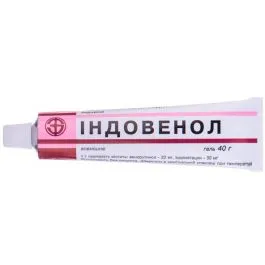
Table of Contents
INSTRUCTIONS FOR MEDICAL USE OF THE MEDICINAL PRODUCT INDIVENOL (Indovenol)
Composition:
Active substances: venorutinol, indometacin;
1 g of the preparation contains 20 mg of venorutinol and 30 mg of indometacin;
Excipients: ethanol 96%, propylene glycol, dimethyl sulfoxide, carbomer, polyethylene glycol 400.
Pharmaceutical form. Gel.
Main physicochemical properties: yellow gel of homogeneous consistency, with a specific odor.
Pharmacotherapeutic group. Angioprotectors. Capillary-stabilizing agents. Rutoside, combinations. ATC Code C05CA51.
Pharmacological properties.
Pharmacodynamics.
The pharmacological properties of Indovenol are determined by the active ingredients in the formulation – venorutinol and indometacin.
Venorutinol is a bioflavonoid with vitamin P activity, exhibiting pronounced angioprotective, venotonic, anti-inflammatory, anti-edematous, and antioxidant effects. It reduces capillary permeability and fragility, enhances their elasticity, resilience, and resistance to traumatic injury, and decreases exudative inflammation in the vascular wall. Thus, it promotes normalization of microcirculation, improves tissue trophism, and reduces venous and perivenous stasis.
Indometacin belongs to the group of nonsteroidal anti-inflammatory drugs (NSAIDs). When applied topically, it exerts pronounced anti-inflammatory, analgesic, anti-edematous, and anti-aggregatory effects, mediated by inhibition of prostaglandin synthesis and other inflammatory mediators.
The gel base of the preparation facilitates rapid and maximal release of the active ingredients, enabling the achievement of necessary therapeutic concentrations in inflamed tissues and synovial fluid.
Indometacin is 90 % bound to plasma proteins. Metabolism occurs in the liver via O-demethylation and N-deacetylation into inactive compounds. It is excreted 60 % in urine and 30 % in feces. Indometacin penetrates into breast milk.
Pharmacokinetics.
Not studied.
Clinical Characteristics
Indications
For local treatment:
- Trophic disorders associated with chronic venous insufficiency;
- Varicose veins accompanied by pain and edema;
- Musculoskeletal disorders (bursitis, tendovaginitis, myositis, synovitis);
- Traumatic hematomas.
Contraindications
- Hypersensitivity to indometacin, to other nonsteroidal anti-inflammatory drugs (NSAIDs), to venorutinol, or to any component of the drug;
- Hypersensitivity to aspirin or other NSAIDs manifested clinically by asthma attacks, urticaria, or allergic rhinitis.
Interaction with other medicinal products and other forms of interaction
The likelihood of interactions with other medicinal products when using Indovenol is minimal. NSAIDs may interact with antihypertensive drugs by reducing blood pressure; however, this risk is extremely low with topical application. Nevertheless, the following interactions cannot be excluded when using doses exceeding the recommended ones for prolonged periods:
- with anticoagulants and antiplatelet agents – increased risk of bleeding;
- Indovenol may reduce the effectiveness of antihypertensive therapy by decreasing the efficacy of β-blockers, angiotensin-converting enzyme (ACE) inhibitors, loop diuretics, thiazide diuretics, and potassium-sparing diuretics;
- with other nonsteroidal anti-inflammatory drugs (including selective cyclooxygenase-2 (COX-2) inhibitors), glucocorticoids, and alcohol – increased risk of adverse reactions, enhanced ulcerogenic effect;
- with digoxin and lithium-containing preparations – may increase plasma concentrations of these drugs;
- may reduce tubular secretion of methotrexate, thereby increasing its toxicity;
- with probenecid – possible reduction of probenecid's uricosuric effect and delayed elimination of indometacin from the body;
- sulfinpyrazone may delay the elimination of indometacin from the body;
- undesirable combination with myelosuppressive agents, antineoplastic drugs, antidiabetic agents, cephalosporins, and valproic acid preparations;
- with aliskiren – possible hyperglycemia;
- enhances the effect of ascorbic acid on vascular wall structure and permeability;
- with sulindac-containing preparations may cause peripheral neuropathy.
Special precautions for use.
The gel is intended for topical use only; apply only to intact skin.
Do not apply to open wounds, infected skin areas (including those with purulent processes), and take care to avoid contact with eyes and mucous membranes. The gel may be applied under occlusive dressings. To prevent unwanted effects, the medicinal product Indovenol should be applied only to skin that has been cleaned of other medicinal products, cosmetics, and dirt. After applying the gel, exposure of the treated skin areas to sunlight should be avoided.
Patients with chronic venous insufficiency are recommended to use the product both at early and late stages of the disease (this reduces the sensation of heaviness in the legs, decreases lower limb edema, and improves trophism).
Prolonged use of the product is not recommended in patients with severe renal function impairment.
Do not exceed the recommended dose.
Since the product contains a non-steroidal anti-inflammatory drug (NSAID), it should be used with particular caution in patients with allergic disorders or reactions, hepatic or renal dysfunction, and when applied to large skin areas.
Occasionally, NSAID use may lead to gastrointestinal tract injury; worsening of cardiac function in patients with cardiovascular insufficiency; and impairment of liver and kidney function.
Due to the possibility of prolonged use of doses exceeding the recommended amount, the product should be used cautiously in patients with: erosive and ulcerative gastrointestinal lesions, as well as conditions associated with gastrointestinal bleeding (including hemorrhoidal bleeding); chronic gastritis, enterocolitis; coagulation disorders of various etiologies; and severe heart failure.
Although systemic absorption after topical application to the skin is minimal, treatment with the gel in patients with active gastric or duodenal ulcers, or with a history of kidney disease or heart failure, should only be conducted after consultation with a physician.
If treatment lasts longer than 10 days, leukocyte count and platelet levels should be monitored.
Treatment with the product should be carried out with special caution and only after consultation with a physician in patients with hypersensitivity to food products or medications, or with allergic disorders such as hay fever, bronchial asthma, or nasal polyps.
Cross-sensitivity to other NSAIDs may occur; therefore, such patients may also exhibit hypersensitivity to indometacin.
If the gel gets into the eyes, they should be rinsed thoroughly with water. In case of accidental ingestion of a large amount of gel, induce vomiting and seek immediate medical attention.
If disease symptoms do not begin to subside, or if the patient's condition worsens, or if skin rashes appear after topical application, treatment should be discontinued immediately and medical advice should be sought.
The medicinal product contains propylene glycol and dimethyl sulfoxide, which may cause skin irritation.
Use during pregnancy or breastfeeding.
The product should not be used during pregnancy or breastfeeding.
Ability to affect reaction rate when driving or operating machinery.
Indovenol does not affect the reaction speed when driving vehicles or operating potentially hazardous machinery.
Method of Administration and Dosage
Apply externally only! Apply 0.5–1 g of Indovenol (a gel strip 2.5–5 cm long) evenly as a thin layer to the skin and gently rub in for 1–2 minutes. After application, hands must be washed (except when the application is performed on the hands). Repeat the procedure 2–3 times daily. The total daily dose for adults and children aged 14 years and older should not exceed 5 g of gel.
The duration of Indovenol treatment is determined by the physician depending on the patient's condition. The treatment course should not exceed 10 days.
Children
Indovenol must not be used in children under 14 years of age.
Overdose
Cases of overdose have not been reported. However, due to the possibility of prolonged use of doses exceeding the recommended amount, application over large skin areas, or concomitant use of other indomethacin-containing products, the adverse reactions described may occur. Any remaining gel should be removed or washed off the skin. Symptomatic therapy should be administered if necessary.
During prolonged treatment (more than 10 days), monitoring for possible systemic effects is required: hepatotoxicity, severe headache, hemorrhages, as well as laboratory blood tests (monitoring of leukocyte formula and platelet count).
In case of accidental oral ingestion, burning of the oral mucosa, salivation, nausea, and vomiting may occur. Management in case of oral ingestion: rinse mouth and stomach; symptomatic treatment if necessary.
If the gel comes into contact with the eyes, mucous membranes, or open wounds, local irritation may occur: lacrimation, redness, burning, pain. In such cases, the affected areas must be thoroughly rinsed with a large amount of distilled water or 0.9% sodium chloride solution until irritation diminishes or ceases.
Side effects
In individual cases, local hypersensitivity reactions (allergic reactions) are possible, including hyperemia, itching, urticaria, eczema, angioneurotic edema, rashes (including vesicular), skin irritation, dermatitis (including contact dermatitis), sensation of warmth at the application site, burning, local swelling, peeling, dry skin; occasionally, development of small pustules, vesicles, or blisters.
Very rarely, with prolonged use over large areas of skin, systemic adverse reactions may occur:
Gastrointestinal tract: nausea, vomiting, stomach pain, increased levels of liver enzymes; loss of appetite, diarrhea, pain, hemorrhages, ulcers;
Urinary system: edema, disturbances in urination, hematuria, changes in color or odor of urine;
Central nervous system: dizziness, headache, memory impairment, hearing and vision disturbances, confusion, depression, speech disorders;
Immune system: allergic rhinitis, Quincke's edema, urticaria, anaphylaxis, asthmatic attack;
Other: muscle weakness, myalgia, jaundice, changes in laboratory parameters of peripheral blood, increased blood pressure, dryness and redness of eyes.
The product contains propylene glycol and dimethyl sulfoxide, which may cause skin irritation.
Usually, these symptoms resolve spontaneously after discontinuation of the product.
In case of any adverse reactions, it is essential to consult a physician regarding further use of the product.
Shelf life. 3 years.
Storage conditions. In the original packaging at a temperature not exceeding 25 °C. Do not freeze. Keep out of reach of children.
Packaging. 40 g in a tube in a carton.
Dispensing category. Over-the-counter.
Manufacturer. Public joint-stock company "Scientific and Production Center "Borshchahivskiy Chemical and Pharmaceutical Plant".
Manufacturer's address and place of business. 17, Miru Street, Kyiv, 03134, Ukraine.