Ibuprofen-zdorov'ya ultracap
Ukraine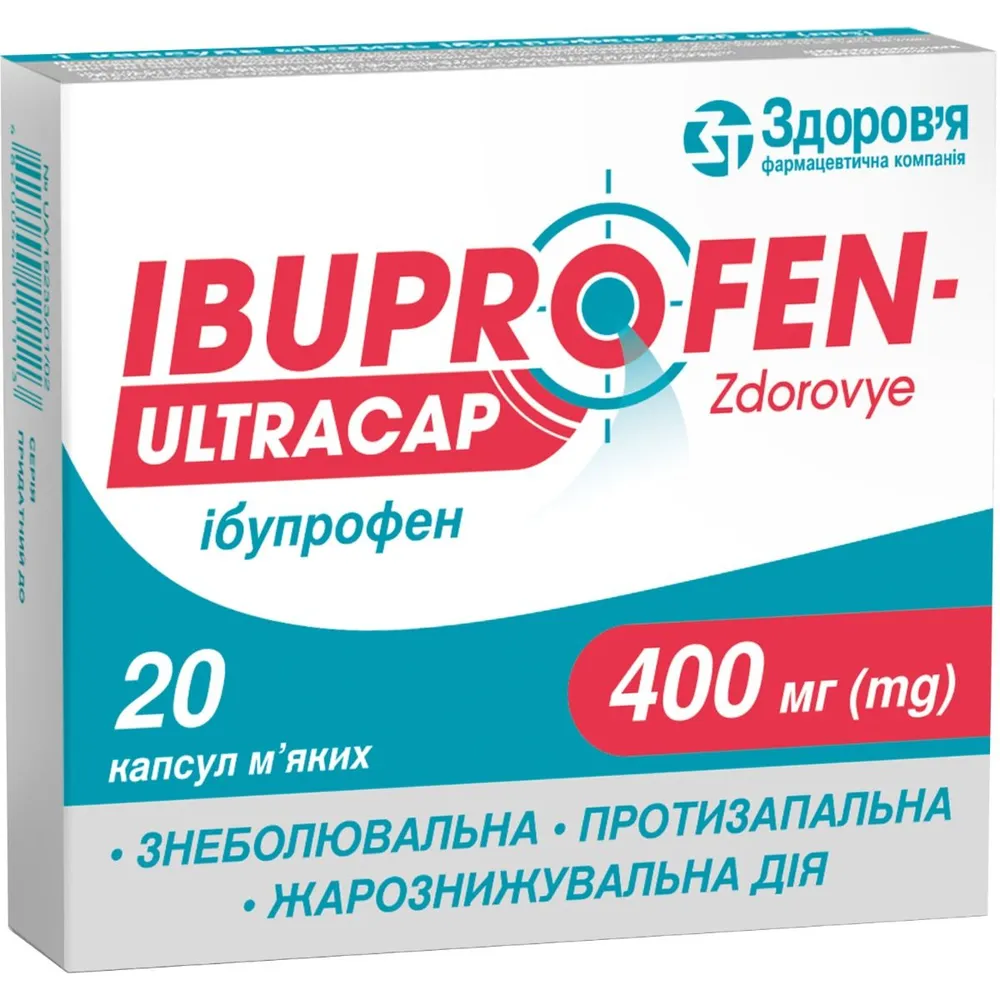
Table of Contents
INSTRUCTION FOR MEDICAL USE OF THE MEDICINAL PRODUCT IBUPROFEN-ZDOROV'YA ULTRACAP (IBUPROFEN-ZDOROVYE ULTRACAP)
Composition:
Active substance: ibuprofen;
1 soft capsule contains ibuprofen, calculated as 100% substance, 200 mg or 400 mg;
Excipients: potassium hydroxide; purified water; polyethylene glycol 600; capsule shell containing: gelatin; sorbitol liquid, partially dehydrated; glycerin; methylparaben (E 218); propylparaben (E 216); Ponceau 4R (E 124).
Pharmaceutical form. Soft capsules.
Main physicochemical properties: oval, transparent soft gelatin capsules ranging in color from light red to dark red, containing a viscous solution.
Pharmacotherapeutic group. Non-steroidal anti-inflammatory and anti-rheumatic drugs. Propionic acid derivatives. ATC code M01AE01.
Pharmacological properties.
Pharmacodynamics.
Ibuprofen is a derivative of phenylpropionic acid that has analgesic, anti-inflammatory, and antipyretic effects. Experimental data indicate that ibuprofen may inhibit the effect of low-dose acetylsalicylic acid on platelet aggregation when administered concomitantly. Some pharmacodynamic studies have shown that the effect of a single dose of acetylsalicylic acid on thromboxane formation or platelet aggregation was attenuated when ibuprofen 400 mg was administered immediately or within 30 minutes after immediate-release acetylsalicylic acid (81 mg). Although there is uncertainty regarding the extrapolation of these data to clinical situations, it cannot be excluded that regular long-term use of ibuprofen may reduce the cardioprotective effect of low-dose acetylsalicylic acid. With occasional use of ibuprofen, such a clinically significant effect is considered unlikely (see section "Interaction with other medicinal products and other forms of interaction").
Pharmacokinetics.
Following oral administration, reconstituted ibuprofen (soft capsule) is rapidly absorbed when taken on an empty stomach. Cmax values are reached within approximately 35 minutes, compared to conventional tablets (about 90 minutes), meaning the active ingredient is absorbed more than twice as fast as with conventional ibuprofen tablets. When taken with food, peak levels occur within 1–2 hours. Analgesic effect lasts up to 8 hours. These values were obtained solely from pharmacokinetic studies. Protein binding of ibuprofen to plasma proteins is approximately 99%. Within the first 24 hours after oral administration, 75–85% of ibuprofen is excreted in urine (primarily as two inactive metabolites), while the remainder is excreted via the intestine following biliary excretion. The drug is completely eliminated within 24 hours. The elimination half-life of ibuprofen is approximately 2 hours.
In limited studies, ibuprofen has been detected in breast milk at very low concentrations.
In randomized, double-blind clinical trials, soft capsules of ibuprofen at a dose of 400 mg demonstrated a faster onset of pain relief for episodic tension headache and, overall, greater efficacy for dental pain compared to a single dose of 2×500 mg paracetamol.
In a randomized, double-blind, 6-hour parallel-group clinical study involving 59 patients with moderate to severe postoperative pain who received ibuprofen in soft capsule form at a dose of 400 mg, 98% of patients experienced significant analgesic effect, with first signs observed within 10.2 (9.0–13.8) minutes.
Clinical characteristics.
Indications.
The medicinal product has analgesic and anti-inflammatory effects and is recommended for the relief of mild to moderate acute pain associated with dysmenorrhea, back pain, muscle pain, headache, migraine, and toothache, as well as for reduction of fever and for alleviation of symptoms of cold and influenza.
The medicinal product is recommended for adults, adolescents, and children aged 12 years and older.
Contraindications.
- Hypersensitivity to the active substance or to any of the excipients.
- Hypersensitivity to acetylsalicylic acid or to other nonsteroidal anti-inflammatory drugs (NSAIDs).
- History of bronchospasm, asthma, cold symptoms, or urticaria following the administration of other NSAIDs.
- Active or history of peptic ulcer disease or gastrointestinal bleeding, inflammatory bowel disease, gastrointestinal hemorrhage, cerebrovascular hemorrhage, or other active bleeding; hematological disorders.
- Severe hepatic impairment, severe renal impairment, or severe heart failure (NYHA class IV).
- Immediately before or after coronary artery bypass graft (CABG) surgery.
- Third trimester of pregnancy.
- Age under 12 years.
Interaction with other medicinal products and other forms of interactions.
Concomitant use of acetylsalicylic acid and other NSAIDs (including ibuprofen) is generally not recommended, as it may increase the risk of adverse reactions.
Experimental data indicate that ibuprofen may competitively inhibit the effect of low-dose acetylsalicylic acid on platelet aggregation when administered concomitantly. Although uncertainty exists regarding extrapolation of these data to the clinical setting, it cannot be excluded that regular long-term use of ibuprofen may reduce the cardioprotective effect of low-dose acetylsalicylic acid. Such a clinically significant effect is considered unlikely with occasional, non-systematic use of ibuprofen (see section "Pharmacodynamics").
NSAIDs may enhance the effects of sulfonamides and anticoagulants and reduce the effects of antihypertensive agents, furosemide, thiazide diuretics, and ß-blockers.
Ibuprofen enhances the hyperkalemic effect of potassium salts, other nonsteroidal NSAIDs, heparins (low-molecular-weight heparins or unfractionated heparins), cyclosporine, tacrolimus, and trimethoprim.
NSAIDs may reduce the efficacy of diuretics and other antihypertensive drugs. In some patients with impaired renal function (e.g., dehydrated patients or elderly patients with renal impairment), concomitant use of cyclooxygenase inhibitors with ACE inhibitors, beta-blockers, or angiotensin II receptor antagonists may lead to further deterioration of renal function, including acute renal failure, which is usually reversible. Therefore, such combinations should be used with caution, especially in elderly patients. Patients should be adequately hydrated, and renal function should be monitored after initiation of combined therapy and periodically thereafter.
Elevated serum lithium levels following ibuprofen administration are clinically significant.
Ibuprofen may increase digoxin serum concentration. Therefore, digoxin levels should be monitored in patients with impaired renal function or congestive heart failure.
Ibuprofen may increase the concentration of pharmacologically active free phenytoin in plasma. Therefore, patients receiving long-term ibuprofen therapy should be monitored.
Concomitant use of ibuprofen with medium or high doses of methotrexate may lead to severe and potentially fatal methotrexate toxicity. The risk of toxicity with this combination is increased in patients with renal impairment, even when methotrexate is administered at low doses (≤ 20 mg/week).
Some antacids may increase the absorption of ibuprofen. However, this is of clinical significance only during long-term ibuprofen use.
When anticoagulants are used, it should be noted that long-term use of ibuprofen may increase the risk of bleeding.
Concomitant use with corticosteroids and other NSAIDs increases the possibility of gastrointestinal disorders and bleeding.
Ibuprofen should be used with caution in combination with selective serotonin reuptake inhibitors (SSRIs), as there is an increased risk of gastrointestinal bleeding.
The possibility of reduced efficacy of intrauterine contraceptives is widely discussed.
Special precautions for use.
Do not use in combination with other analgesics, for example, NSAIDs.
Use with caution in patients with bronchial asthma or allergic diseases, including in their history. In such patients, the drug may cause bronchospasm. The drug should not be used if other NSAIDs have caused bronchospasm. Ibuprofen may cause severe allergic reactions (e.g., skin redness, rash, blisters), especially in patients with hypersensitivity to acetylsalicylic acid.
To minimize the risk of adverse effects, the lowest effective dose should be used for the shortest duration necessary to control disease symptoms (see below gastrointestinal and cardiovascular risks).
The drug should be used with caution in patients with kidney or heart disease, cirrhosis, or other liver damage, as renal function may deteriorate. The drug should be administered at the lowest effective dose, and renal function should be monitored.
The drug should be used only after careful benefit-risk assessment in patients with systemic lupus erythematosus or other autoimmune diseases due to the risk of aseptic meningitis or renal failure.
Ibuprofen may reduce fever and inflammation, thereby diminishing their diagnostic value as symptoms of another underlying disease.
Some data suggest that drugs inhibiting cyclooxygenase, and thus prostaglandin synthesis, may negatively affect female fertility; therefore, they are not recommended for women wishing to become pregnant. This effect is reversible and disappears after discontinuation of treatment.
Masking of infection symptoms.
NSAIDs may mask symptoms of infectious diseases and fever, potentially delaying the initiation of appropriate treatment and thereby complicating the course of the disease. This has been observed in community-acquired bacterial pneumonia and bacterial complications of varicella. When NSAIDs are used for fever or pain relief during infection, monitoring for infectious disease is recommended. In outpatient settings, patients should consult a physician if symptoms persist or worsen.
Gastrointestinal effects.
Older adults: adverse reactions associated with NSAIDs, particularly gastrointestinal bleeding and perforation, may occur more frequently in older adults and may be fatal (see section "Dosage and administration").
Gastrointestinal bleeding, ulcers, or perforation, which may be fatal, can occur at any time during treatment with any NSAID, with or without warning symptoms, and with or without a history of serious gastrointestinal disorders. The risk of gastrointestinal bleeding, ulceration, or perforation increases with higher NSAID doses, in patients with a history of peptic ulcer disease, especially if complicated by bleeding or perforation (see section "Contraindications"), and in older adults. In such patients, treatment should be initiated at the lowest possible dose. These patients, as well as those requiring concomitant use of low-dose acetylsalicylic acid or other drugs that may increase gastrointestinal risk, should be considered for combination therapy with protective agents (e.g., misoprostol or proton pump inhibitors) (see below and section "Interaction with other medicinal products and other forms of interaction"). Patients with a history of gastrointestinal toxicity, particularly older adults, should be advised to report any unusual gastrointestinal symptoms (especially gastrointestinal bleeding), particularly at the beginning of treatment.
Caution should be exercised when treating patients who are concurrently using drugs that may increase the risk of ulceration or bleeding, such as oral corticosteroids, anticoagulants (e.g., warfarin), selective serotonin reuptake inhibitors, or antiplatelet agents (e.g., acetylsalicylic acid) (see section "Interaction with other medicinal products and other forms of interaction").
If gastrointestinal bleeding or ulceration occurs in patients receiving ibuprofen, treatment should be discontinued immediately.
In dehydrated adolescents, there is a risk of kidney damage.
Effects on the cardiovascular and cerebrovascular system.
Clinical studies have shown that some NSAIDs (including ibuprofen) may slightly increase the risk of arterial thrombotic events (e.g., myocardial infarction, stroke), particularly at higher doses (2400 mg daily) and over prolonged periods. Overall, epidemiological studies have shown that ibuprofen at low doses (e.g., ≤1200 mg daily) is not associated with an increased risk of arterial thrombotic events.
Ibuprofen should be used in patients with uncontrolled arterial hypertension, congestive heart failure (NYHA class II–III), ischemic heart disease, peripheral arterial disease, and/or cerebrovascular disease only after careful clinical evaluation and high doses (2400 mg daily) should be avoided.
Clinical evaluation should also be carefully performed before initiating long-term treatment in patients with risk factors for cardiovascular complications (e.g., arterial hypertension, hyperlipidemia, diabetes, smoking), especially if high doses of ibuprofen (2400 mg daily) are required.
Cases of Kounis syndrome have been reported in patients receiving ibuprofen treatment. Kounis syndrome manifests as cardiovascular symptoms related to coronary artery spasm due to an allergic or hypersensitivity reaction, potentially leading to myocardial infarction.
Serious skin adverse reactions (SSARs).
SSARs, including exfoliative dermatitis, erythema multiforme, Stevens-Johnson syndrome, toxic epidermal necrolysis, drug reaction with eosinophilia and systemic symptoms (DRESS syndrome), and acute generalized exanthematous pustulosis, which may be life-threatening or fatal, have been reported with ibuprofen use (see section "Adverse reactions"). Most such reactions occurred within the first month.
If signs or symptoms suggestive of these reactions occur, ibuprofen should be discontinued immediately, and alternative treatment should be considered (if necessary).
The medicinal product contains methylparaben (E 218) and propylparaben (E 216), which may cause allergic reactions (possibly delayed).
The medicinal product contains Ponceau 4R (E 124), which may cause allergic reactions.
The medicinal product contains sorbitol. If the patient has been diagnosed with intolerance to certain sugars, consultation with a physician is recommended before taking this medicinal product.
Use during pregnancy or breastfeeding.
Pregnancy.
Inhibition of prostaglandin synthesis may adversely affect pregnancy and/or embryonic/fetal development. Based on epidemiological data, use of prostaglandin synthesis inhibitors in early pregnancy is associated with an increased risk of preterm birth and congenital heart defects and heart failure. The absolute risk of cardiovascular malformations increased from less than 1% to approximately 1.5%. The risk is considered to increase with higher doses and longer duration of therapy.
Animal studies have shown that prostaglandin synthesis inhibitors increase pre- and post-implantation loss and embryonic/fetal mortality. Furthermore, animal studies have reported increased frequency of various developmental abnormalities (e.g., cardiovascular) when prostaglandin synthesis inhibitors were administered during organogenesis.
From the 20th week of pregnancy, ibuprofen use may cause oligohydramnios due to fetal renal dysfunction. This effect may occur soon after starting treatment and is usually reversible upon discontinuation. Additionally, there have been reports of ductus arteriosus constriction after treatment in the second trimester, which in most cases was reversible after stopping treatment. Therefore, ibuprofen should not be used during the first and second trimesters of pregnancy unless absolutely necessary. If ibuprofen is used by a woman trying to conceive or during the first and second trimesters of pregnancy, the lowest possible dose should be used for the shortest possible duration. Prenatal monitoring for oligohydramnios and ductus arteriosus constriction may be appropriate if ibuprofen exposure occurred for several days starting from the 20th gestational week. The drug should be discontinued if oligohydramnios or ductus arteriosus constriction is detected.
During the third trimester of pregnancy, prostaglandin synthesis inhibitors may pose the following risks:
to the fetus:
- cardiopulmonary toxicity (premature constriction/closure of the ductus arteriosus and pulmonary hypertension);
- impaired renal function, potentially leading to renal failure associated with oligohydramnios (see above);
to the mother and newborn at the end of pregnancy:
- possible prolongation of bleeding time: antiplatelet effect, which may occur even after very low doses;
- inhibition of uterine contractions, leading to delayed or prolonged labor.
Therefore, ibuprofen is contraindicated during the third trimester of pregnancy.
Breastfeeding.
Ibuprofen passes into breast milk only in very low concentrations and is unlikely to have a negative effect on the breastfed infant.
Fertility.
It has been established that drugs inhibiting cyclooxygenase/prostaglandin synthesis negatively affect female fertility by influencing ovulation. This effect is reversible and disappears after discontinuation of treatment (see section "Special precautions for use").
Ability to influence reaction speed when driving or operating machinery.
Patients experiencing dizziness, drowsiness, or visual disturbances while taking ibuprofen should avoid driving or operating machinery. Single-dose administration or short-term use of ibuprofen generally does not require special precautions. This primarily applies to concomitant use of the drug with alcohol.
When used according to recommended doses and treatment duration, the drug does not affect reaction speed when driving or operating machinery.
Dosage and Administration.
To minimize the risk of adverse effects, the lowest effective dose should be used for the shortest duration necessary to relieve disease symptoms (see section "Special Warnings and Precautions for Use").
Dosage.
For all indications
Adults, adolescents and children aged 12 years and older: 1 capsule of 400 mg or 2 capsules of 200 mg.
The dose should not be repeated more frequently than every 4 hours.
Maximum daily dose: 1200 mg of ibuprofen (3 capsules of 400 mg or 6 capsules of 200 mg).
If symptoms persist in children or adolescents aged 12 years and older for more than 3 days, or if symptoms worsen, medical advice should be sought.
Administration method.
For oral use only. Capsules should be taken with water.
Children. This medicinal product is contraindicated in children under 12 years of age (see section "Contraindications").
Overdose.
Symptoms: dizziness, headache, nausea, vomiting, abdominal pain, drowsiness, hypotension, liver function impairment, hyperkalemia, dizziness, convulsions, loss of consciousness, renal failure, dyspnea, respiratory depression. In severe intoxication, metabolic acidosis may occur.
Appropriate supportive therapy is required, including gastric lavage and correction of severe electrolyte imbalance.
Side effects
Adverse reactions are classified according to their frequency of occurrence as follows: very common (≥1/10), common (from ≥1/100 to <1/10), uncommon (from ≥1/1000 to <1/100), rare (from ≥1/10000 to <1/1000), very rare (<1/10000), and frequency not known (cannot be estimated from the available data).
In particular, the risk of gastrointestinal bleeding depends on the dose and duration of treatment. See section "Special precautions" for known risk factors.
The adverse reactions listed below, except for some rare cases, occurred during short-term use and with daily doses up to 1200 mg.
Infections and infestations
Very rare: meningitis.
Blood and lymphatic system disorders
Very rare: hematopoietic disorders (anemia, aplastic anemia, hemolytic anemia, leukopenia, thrombocytopenia, pancytopenia, agranulocytosis). Early symptoms of such disorders may include fever, sore throat, oral ulcers, flu-like symptoms, severe fatigue, nosebleeds, and skin bleeding. Sometimes a decrease in hematocrit and hemoglobin levels may be observed.
Immune system disorders
Very rare: Aseptic meningitis has been reported in some cases during ibuprofen treatment in patients with autoimmune diseases (systemic lupus erythematosus, mixed connective tissue disease). Symptoms: neck stiffness, headache, nausea, vomiting, fever, confusion.
Nervous system disorders
Uncommon: headache, dizziness, stroke.
Very rare: irritability.
Eye disorders
Uncommon: visual disturbances.
Rare: toxic amblyopia.
Ear and labyrinth disorders
Rare: tinnitus, dizziness.
Cardiac disorders
Very rare: arrhythmias, myocardial infarction, angina pectoris. Edema, hypertension, and heart failure have been reported during NSAID use.
Frequency not known: Kounis syndrome.
Respiratory, thoracic and mediastinal disorders
Bronchospasm may occur in patients who have or have had bronchial asthma or allergic diseases.
Gastrointestinal disorders
Uncommon: gastrointestinal disorders, e.g., dyspepsia, abdominal pain, nausea.
Rare: diarrhea, flatulence, constipation, bloating, vomiting, gastrointestinal ulcer, gastritis.
Very rare: gastrointestinal ulcers, overt gastrointestinal bleeding or perforation, abdominal pain, Crohn’s disease, exacerbation of colitis, hematemesis, melena, ulcerative stomatitis.
Hepatobiliary disorders
Very rare: liver function abnormalities, including increased serum transaminase levels, especially with prolonged use; liver failure, hepatitis, jaundice.
Skin and subcutaneous tissue disorders
Rare: angioneurotic edema.
Very rare: severe skin reactions (including erythema multiforme, exfoliative dermatitis, Stevens-Johnson syndrome, and toxic epidermal necrolysis), alopecia, purpura.
Frequency not known: drug reaction with eosinophilia and systemic symptoms (DRESS syndrome), acute generalized exanthematous pustulosis, photosensitivity reactions.
Renal and urinary disorders
Very rare: hematuria, interstitial nephritis, proteinuria, urinary retention, fluid retention (e.g., peripheral edema), nephrotic syndrome. These symptoms may indicate kidney disease or even renal failure. Elevated creatinine and urea levels have been reported. Papillary necrosis may occur, especially with long-term treatment.
General disorders and administration site conditions
Uncommon: hypersensitivity reactions (skin redness, rash, maculopapular rash, pruritus, urticaria), asthma exacerbation (sometimes with hypotension), bronchospasm, asthmatic breathing (wheezing).
Very rare: severe hypersensitivity reactions (anaphylaxis). Symptoms: facial swelling, swelling of tongue and larynx, dyspnea, tachycardia, severe hypotension or shock.
Clinical and epidemiological data suggest that ibuprofen may slightly increase the risk of arterial thrombotic events (e.g., myocardial infarction, stroke), particularly with long-term use of high doses (2400 mg/day) (see section "Special precautions").
Adverse reactions associated with ibuprofen can be minimized by using the lowest effective dose required to relieve symptoms, for the shortest possible duration.
Elderly individuals have an increased risk of developing adverse reactions with serious consequences.
Shelf life
3 years.
Storage conditions
Store in original packaging at a temperature not exceeding 25 °C.
Keep out of reach of children.
Packaging
Capsules: No. 10 (10×1), No. 20 (10×2), No. 60 (10×6) in blisters in a box.
Prescription status
Over-the-counter (without prescription).
Manufacturer
LIMITED LIABILITY COMPANY "CORPORATION "ZDOROV'YA".
Manufacturer's address and site of operations
Ukraine, 61013, Kharkiv region, Kharkiv city, Shevchenka Street, 22
(quality control, batch release).
Ukraine, 08301, Kyiv region, Boryspil city, Shevchenka Street, 100, lit. B-II (building 4)
(all manufacturing stages, batch release).