Glucose
Ukraine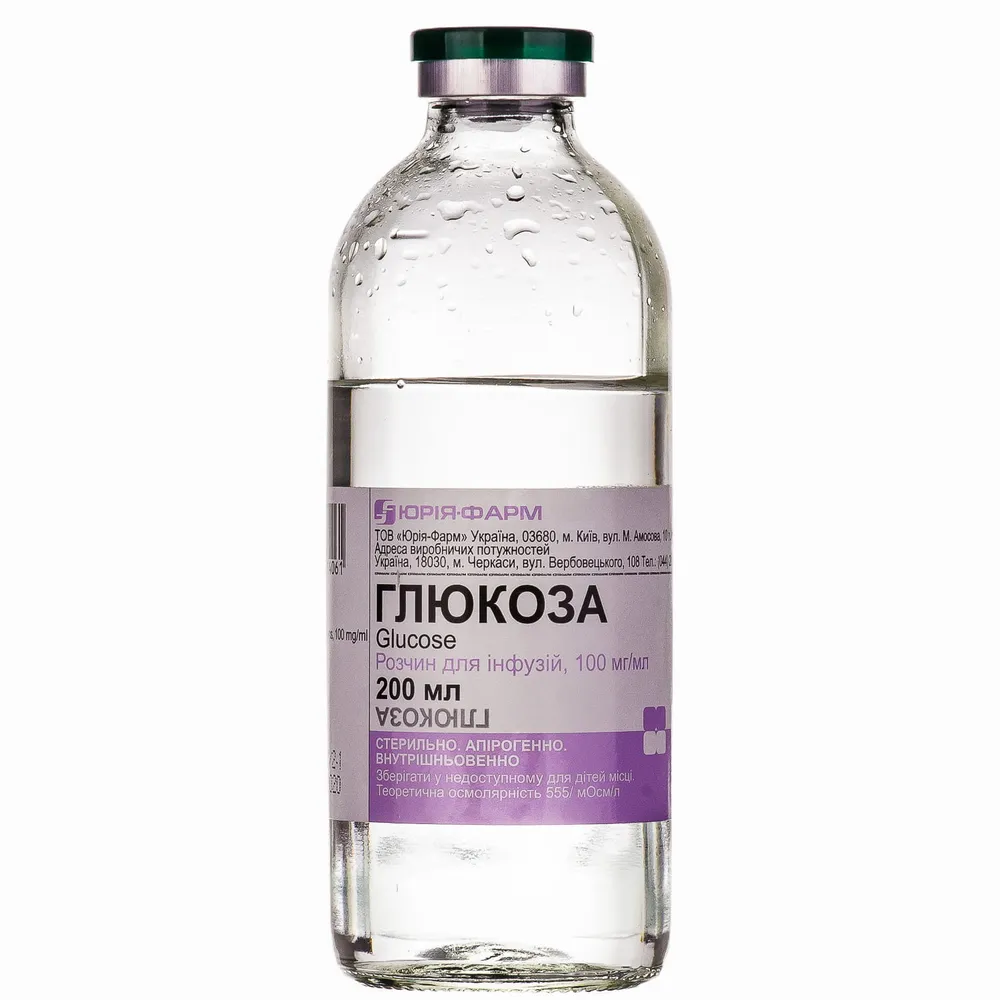
Table of Contents
INSTRUCTIONS FOR MEDICAL USE OF THE MEDICINAL PRODUCT GLUCOSE (GLUCOSE)
Composition:
Active substance: glucose;
1 ml of solution contains glucose monohydrate equivalent to 50 mg of anhydrous glucose;
Excipient: water for injections.
Pharmaceutical form. Infusion solution.
Main physicochemical properties: clear colorless or slightly yellowish liquid.
Pharmacotherapeutic group.
Plasma substitutes and perfusion solutions. ATC code B05CX01.
Pharmacological properties.
Pharmacodynamics.
5 % glucose solution is isotonic with respect to blood plasma and, when administered intravenously, replenishes the circulating blood volume, serves as a source of nutritive material in case of blood loss, and also promotes elimination of toxins from the body. Glucose provides substrate-level replenishment of energy expenditure. With intravenous injections, it activates metabolic processes, improves hepatic antitoxic function, enhances myocardial contractile activity, dilates blood vessels, and increases diuresis.
Pharmacokinetics.
After administration, it rapidly distributes in body tissues. It is excreted by the kidneys.
Clinical characteristics.
Indications.
- Hyper- and isotonic dehydration;
- in children for prevention of water-electrolyte balance disorders during surgical procedures;
- intoxication;
- hypoglycemia;
- as a solvent for other compatible medicinal solutions.
Contraindications.
Glucose solution is contraindicated in patients with:
- hyperglycemia;
- hypersensitivity to glucose.
The preparation must not be administered simultaneously with blood products.
Interaction with other medicinal products and other forms of interaction.
When used concomitantly with thiazide diuretics and furosemide, their ability to affect serum glucose levels should be taken into account. Insulin promotes glucose uptake into peripheral tissues. Glucose solution reduces the hepatotoxic effect of pyrazinamide. Administration of a large volume of glucose solution may lead to the development of hypokalemia, which increases the toxicity of concurrently administered cardiac glycosides. Glucose is incompatible in solutions with aminophylline, soluble barbiturates, hydrocortisone, kanamycin, soluble sulfonamides, and cyanocobalamin.
Special precautions.
The drug should be administered with extreme caution to patients with intracranial and intraspinal hemorrhages.
When administering the drug intravenously for prolonged periods, blood glucose levels should be monitored.
To prevent the development of plasma hypoosmolality, a 5% Glucose solution may be combined with the administration of isotonic sodium chloride solution.
When administering large doses, subcutaneous insulin may be required at a dose of 1 IU per 4–5 g of glucose.
The contents of a vial may be used for one patient only. After the vial or polyethylene bottle has been opened or its seal compromised, any unused portion of the solution must be discarded.
Use during pregnancy or breastfeeding.
The drug may be used if clinically indicated.
Ability to affect reaction rate when driving or operating machinery.
Data are lacking due to the drug's exclusive use in a hospital setting.
Method of Administration and Dosage.
The drug should be administered intravenously by drip infusion. The dose for adults is up to 1500 ml per day. The maximum daily dose for adults is 2000 ml. If necessary, the maximum infusion rate for adults is 150 drops per minute (500 ml/hour).
Children.
For children, the dose depends on age, body weight, clinical condition, and laboratory parameters.
Overdose.
Exaggeration of adverse reactions.
Hyperglycemia and hypotonic hyperhydration may develop. In case of overdose, symptomatic treatment and administration of regular insulin preparations should be prescribed.
Adverse reactions.
Electrolyte imbalance and general systemic reactions associated with massive infusions:
- hypokalemia;
- hypophosphatemia;
- hypomagnesemia;
- hyponatremia;
- hypervolemia;
- hyperglycemia;
- allergic reactions (hyperthermia, skin rashes, angioneurotic edema, shock).
Gastrointestinal disorders: very rare – central nausea.
If adverse reactions occur, infusion should be discontinued, the patient's condition should be assessed, and appropriate medical assistance provided.
Shelf life. 3 years.
Storage conditions.
Store in original packaging at a temperature not exceeding 25 °C.
Keep out of reach of children.
Incompatibility.
Glucose is incompatible in solutions with aminophylline, soluble barbiturates, erythromycin, hydrocortisone, warfarin, kanamycin, soluble sulfonamides, and cyanocobalamin.
Do not use in the same system simultaneously, before, or after blood transfusion due to the risk of pseudoagglutination.
Packaging. 200 ml in bottles.
Prescription status. Prescription only.
Manufacturer.
JSC "Galichfarm".
Manufacturer's location and address of business activity.
6/8 Opryshkivska Street, Lviv, 79024, Ukraine.
Marketing authorization holder. JSC "Galichfarm".
Address of the marketing authorization holder.
6/8 Opryshkivska Street, Lviv, 79024, Ukraine.