Flucinar n
Ukraine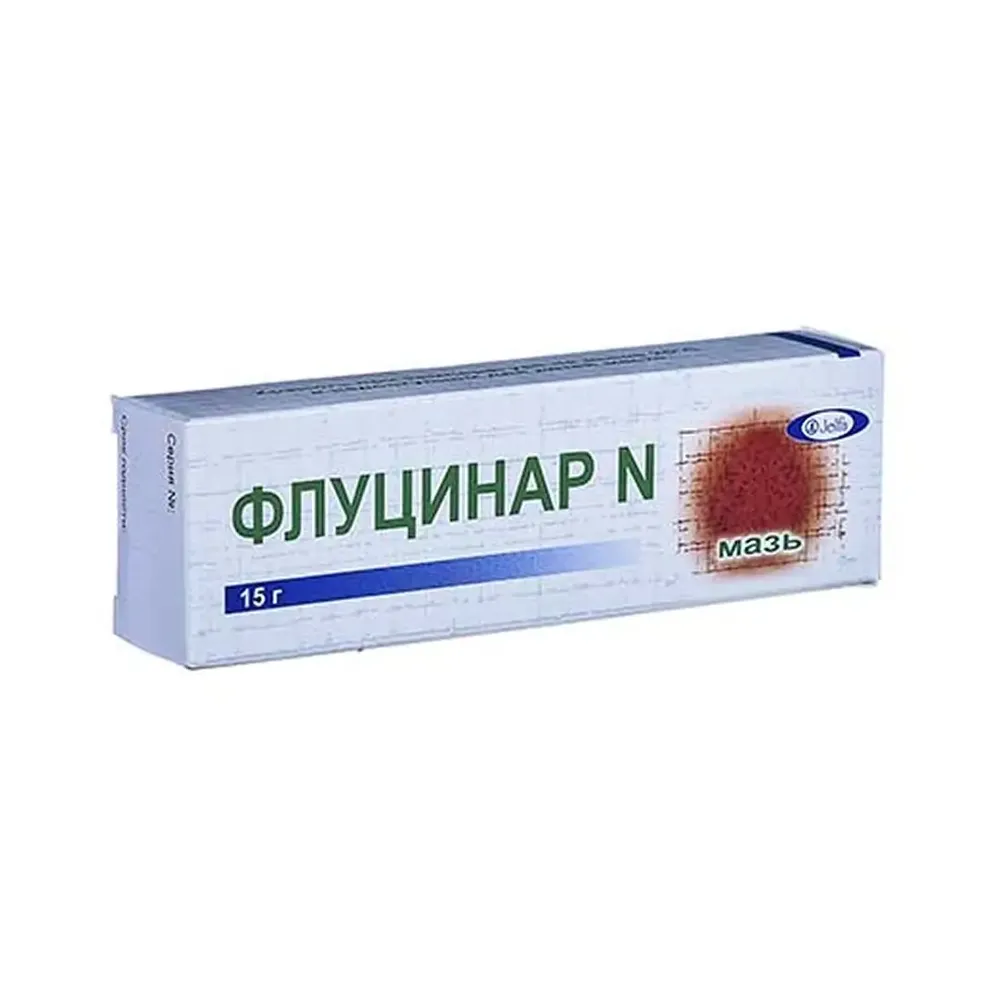
Table of Contents
INSTRUCTION FOR MEDICAL USE OF THE MEDICINAL PRODUCT FLUCINAR®N (FLUCINAR®N)
Composition:
Active substances: fluocinolone acetonide, neomycin;
1 g of ointment contains fluocinolone acetonide 0.25 mg, neomycin sulfate 5 mg;
Excipients: propylene glycol, mineral oil, lanolin, white soft paraffin.
Pharmaceutical form. Ointment.
Main physicochemical properties: light yellow, greasy soft mass, translucent.
Pharmacotherapeutic group. Corticosteroids in combination with antibiotics. Fluocinolone acetonide and antibiotics. ATC code D07CC02.
Pharmacological properties.
Pharmacodynamics.
The effect of the drug is due to the combined action of fluocinolone acetonide and neomycin sulfate.
Fluocinolone acetonide is a highly active synthetic glucocorticosteroid for topical application to the skin. When applied as a 0.025% ointment, it exerts a strong anti-inflammatory, antipruritic, antiallergic, and vasoconstrictive effect. It has lipophilic properties and is easily absorbed through the skin. After application of 2 g of ointment, production of adrenocorticotropic hormone (ACTH) by the pituitary gland may be reduced due to suppression of the "adrenal glands–pituitary" system.
The mechanism of anti-inflammatory action of fluocinolone acetonide is not fully understood, and it is believed that this agent affects the inflammatory process by inhibiting the production of prostaglandins and leukotrienes as a result of reduced phospholipase A2 activity and decreased release of arachidonic acid from cell membrane phospholipids. The drug also exerts an antiallergic effect by suppressing the development of local hypersensitivity reactions. Due to its local vasoconstrictive effect, the drug reduces the risk of exudative reactions. It reduces protein synthesis and collagen deposition. It accelerates protein breakdown in the skin and suppresses proliferative processes.
Neomycin sulfate is an aminoglycoside antibiotic, which due to its high toxicity is primarily used for topical application. It exerts bactericidal activity against certain Gram-positive and Gram-negative bacteria. It is not biotransformed in the skin. After systemic absorption, it is mainly biotransformed in the liver. It is excreted in urine and to a lesser extent in bile, primarily as a conjugate with glucuronic acid, as well as in small amounts unchanged.
Pharmacokinetics.
Absorption. Fluocinolone acetonide readily penetrates the stratum corneum of the skin, where it gradually accumulates and can still be detected even 15 days after application. Absorption of fluocinolone acetonide through the skin is enhanced when applied to sensitive skin areas such as skin folds and the face, as well as to skin with damaged epidermis or inflammatory processes. Use of an occlusive dressing increases skin temperature and moisture, which also enhances absorption of fluocinolone acetonide. In addition, absorption is increased with frequent application and over large skin areas. Skin absorption is higher in children than in adults.
Neomycin sulfate from the ointment base may penetrate into deeper skin layers. With prolonged use over large skin areas, especially if the skin is damaged by inflammation, the active substance may enter the bloodstream.
Metabolism. After absorption, fluocinolone acetonide is mainly metabolized in the liver. Neomycin sulfate is not metabolized in the body.
Excretion. Fluocinolone acetonide is excreted in urine and to a lesser extent in bile, primarily as a conjugate with glucuronic acid, as well as in small amounts unchanged.
Neomycin sulfate is excreted in urine, mainly unchanged, which may be hazardous for patients with renal insufficiency.
Preclinical safety data.
Fluocinolone acetonide.
Single-dose toxicity. Fluocinolone acetonide is intended only for topical use; therefore, toxicity of this compound has not been studied after oral or parenteral administration. It can be assumed that the single-dose toxicity of fluocinolone acetonide does not significantly differ from that of other fluorinated glucocorticosteroids.
Genotoxicity. The mutagenic effect of fluocinolone acetonide has not been studied, but the mutagenic effect of other glucocorticosteroids with a similar chemical structure has been evaluated. Fluticasone propionate did not show mutagenicity in the Ames test on Escherichia coli, in the gene conversion test on yeast Saccharomyces cerevisiae, and in the mutagenicity test on Chinese hamster ovary cells. Furthermore, no mutagenic effect of fluticasone was observed in in vitro studies on human lymphocytes or clastogenic activity in the micronucleus test in mice. Studies with hydrocortisone and prednisolone also did not reveal mutagenic effects.
Carcinogenicity. There are no data indicating that topical application of glucocorticosteroids promotes the development of skin cancer in humans.
Toxic effects on reproductive function and offspring development. Studies on the effect of fluocinolone acetonide on fertility have not been conducted. However, effects of other glucocorticosteroids on fertility have been demonstrated.
Neomycin sulfate.
No long-term animal studies have been conducted to evaluate the effects of neomycin on fertility or its carcinogenic and mutagenic potential.
Clinical characteristics.
Indications.
Treatment of dry dermatitis, especially of allergic origin with signs of secondary infection sensitive to neomycin, which is accompanied by persistent itching or hyperkeratosis. The drug is indicated for seborrheic dermatitis, lichen urticatus, atopic dermatitis, allergic contact eczema, erythema multiforme, lupus erythematosus, advanced psoriasis, and pityriasis rosea.
Contraindications.
Hypersensitivity to fluocinolone acetonide or other glucocorticosteroids; hypersensitivity to neomycin sulfate or other aminoglycoside antibiotics, or to any other components of the medicinal product. Viral (e.g., varicella) or fungal skin infections. Bacterial skin infections (e.g., tuberculosis). Rosacea and common acne. Perioral dermatitis. Varicose ulcers or inflammation. Extensive skin lesions, especially with skin loss, such as burns. Skin neoplasms. Children under 2 years of age. Diaper rash. First trimester of pregnancy.
The drug must not be used in ophthalmology.
Severe and extensive skin lesions (possible resorption of the drug leading to ototoxic effects with hearing loss). Do not use in patients in whom uncontrolled absorption of the drug may occur, particularly in those with severe cardiogenic or neurogenic excretory disorders, or with a history of vestibular or cochlear system disorders. Do not use in the external auditory canal if tympanic membrane perforation is present.
Interaction with other medicinal products and other forms of interaction.
No known interactions associated with topical application of glucocorticosteroids in combination with other medicinal products.
Concomitant use with nonsteroidal anti-inflammatory drugs increases the risk of systemic and local adverse effects. Fluocinar® N reduces the efficacy of antihypertensive, diuretic, antiarrhythmic drugs, and potassium supplements. Diuretic agents (except potassium-sparing diuretics) increase the likelihood of hypokalemia.
Fluocinar® N may enhance the effect of immunosuppressive agents and reduce the effect of immunostimulatory drugs.
The drug should not be used concomitantly with nephrotoxic or ototoxic medicinal products such as furosemide or ethacrynic acid, as these drugs may increase blood concentrations of aminoglycosides, thereby increasing the risk of hearing damage (see section "Special precautions").
Special precautions for use
If signs of skin irritation or allergic skin reaction occur after applying Fluocinare N ointment, the use of the drug should be discontinued immediately.
Prolonged use of the drug may lead to proliferation of neomycin-resistant bacterial strains and allergy to neomycin. Cross-allergy to aminoglycoside antibiotics is possible.
Do not use continuously for more than 2 weeks. With prolonged application over large skin areas, the frequency of systemic adverse effects characteristic of corticosteroids increases, including edema, hypertension, hyperglycemia, and decreased immunity. Therefore, avoid using the drug over large body surface areas, prolonged use, and use in children.
With topical application of the drug, the following may occur: reduced production of adrenocorticotropic hormone by the pituitary due to suppression of the adrenal-pituitary system, decreased blood cortisol levels, and development of iatrogenic Cushing's syndrome, which resolves after discontinuation of the drug. Periodic monitoring of adrenal cortex function by measuring blood and urinary cortisol levels following ACTH stimulation is recommended during prolonged treatment.
Compared to adults, children may absorb a proportionally larger amount of topical corticosteroid, thus having a higher risk of hypothalamic-pituitary-adrenal axis suppression and Cushing's syndrome. Systemic corticosteroid side effects, including growth and developmental disturbances, occur more frequently in children. This is due to children having an underdeveloped skin barrier and a larger skin surface area relative to body mass compared to adults.
If infection develops at the site of ointment application, appropriate antibacterial or antifungal treatment should be administered. If infection symptoms do not resolve, the drug should be discontinued during the treatment of the infection.
Avoid contact of the drug with eyes, mucous membranes, or open wounds.
Do not apply the ointment around the eyes, as there is a risk of developing glaucoma or cataracts.
Use on the face, axillae, and groin area only when strictly necessary, as increased absorption and adverse effects (e.g., telangiectasia, perioral dermatitis) may occur even after short-term use.
Do not apply the ointment under occlusive dressings, as this may lead to epidermal atrophy, striae, and secondary infection.
Use the drug with caution in patients with subcutaneous tissue atrophy, particularly elderly individuals.
For treating skin conditions associated with infection, it is recommended to prescribe the drug in combination with antimicrobial agents. Do not apply on the skin of the mammary glands. The risk of toxic effects increases in patients with severe liver impairment.
Avoid combining systemic and topical aminoglycosides due to the risk of cumulative toxicity.
Due to the ototoxic and nephrotoxic effects of neomycin, application of the ointment over large skin areas, on damaged skin, or prolonged use may cause hearing disturbances, including hearing loss, and kidney damage.
Use the drug with caution in patients with impaired renal function or hearing.
The risk of nephrotoxic and ototoxic effects of the drug is higher in patients with impaired renal function.
Concomitant use of Fluocinare N with other drugs having nephrotoxic or ototoxic potential may enhance their effects.
Visual disturbances may occur during treatment with systemic and topical corticosteroids.
If symptoms such as blurred vision or other visual disturbances occur, consult an ophthalmologist to evaluate possible causes, which may include cataract, glaucoma, or rare conditions such as central serous chorioretinopathy, which has been reported with systemic and topical corticosteroid use.
During treatment, it is recommended to wear loose-fitting clothing.
The product contains propylene glycol and lanolin, which may cause local skin reactions (e.g., contact dermatitis) or irritation. 1 g of ointment contains 50 mg of propylene glycol and 100 mg of lanolin.
Use during pregnancy or breastfeeding
Pregnancy
Fluocinare N may be used only if the therapeutic benefit to the mother outweighs the potential risk to the fetus. Do not use during the first trimester of pregnancy (see section "Contraindications").
Animal studies have confirmed that glucocorticoids have teratogenic effects even when administered orally in low doses. Teratogenic effects in animals have also been confirmed following topical application of potent glucocorticoids. Controlled studies evaluating the potential teratogenic effects of topical application in pregnant women have not been conducted.
Neomycin may cross the placenta and reach the fetus.
Breastfeeding period
It is unknown to what extent fluocinolone acetonide and neomycin may pass into breast milk following topical application.
Fluocinare N may be used only if the therapeutic benefit to the mother outweighs the potential risk to the infant.
The use of the ointment is not recommended, especially for prolonged periods, over large skin areas or on the skin of the chest.
Fertility
The effect of fluocinolone acetonide on fertility has not been studied; however, effects of other glucocorticosteroids on fertility have been reported.
Ability to influence reaction rate when driving or operating machinery
The drug has no effect or has a negligible effect on the ability to drive vehicles or operate machinery.
Dosage and Administration.
The medicinal product is intended for topical use. Apply a thin layer of the ointment to the affected skin once or twice daily. Do not apply the ointment under an occlusive dressing.
Treatment should not be continued continuously for longer than 2 weeks. Application to the facial skin should not exceed 1 week. During one week, no more than 15 g of ointment should be used (1 tube).
The drug should be used with caution and under physician supervision in children aged 2 years and older (only if absolutely necessary), once daily, and only on small skin areas; do not apply to the child's facial skin.
Application to large skin areas or prolonged use is not recommended in patients with severe renal impairment.
Similarly, application to large skin areas or prolonged use is not recommended in patients with severe hepatic impairment.
Children.
The drug is contraindicated in children under 2 years of age (see section "Contraindications").
Overdose.
With prolonged use over large skin areas, symptoms of overdose may occur, manifested by increased local and systemic adverse effects (edema, arterial hypertension, hyperglycemia, decreased immunity, glucosuria), and in severe cases, development of Cushing's syndrome.
Additionally, prolonged use may lead to bacterial resistance to neomycin sulfate due to the presence of neomycin in the ointment formulation, as well as potential ototoxic and nephrotoxic effects, which may be particularly dangerous in patients with renal impairment.
In case of overdose, discontinue the drug or switch to a less potent glucocorticoid.
Adverse reactions.
The adverse reactions listed below are classified by organ systems according to MedDRA (Medical Dictionary for Regulatory Activities). Frequency is defined using the following categories: very common (≥1/10); common (≥1/100, <1/10); uncommon (≥1/1,000, <1/100); rare (≥1/10,000, <1/1,000); very rare (<1/10,000); not known (frequency cannot be estimated from available data).
| Body systems |
Frequency of occurrence |
Adverse reactions |
| Infections and infestations |
Unknown |
Folliculitis Secondary infections |
| Immune system disorders |
Unknown |
Allergic reaction (delayed reactions possible) Immunosuppression* |
| Endocrine disorders |
Unknown |
Cushing's syndrome* Suppression of the hypothalamic-pituitary-adrenal (HPA) axis* |
| Metabolism and nutrition disorders |
Unknown |
Hypoglycemia* |
| Ear and labyrinth disorders |
Unknown |
Ototoxicity |
| Vascular disorders |
Unknown |
Hypertension* |
| Musculoskeletal and connective tissue disorders |
Unknown |
Impaired growth* Developmental delay (in children) |
| Renal and urinary disorders |
Unknown |
Toxic nephropathy Glucosuria* |
| Skin and subcutaneous tissue disorders |
Unknown |
Acne Excessive hair growth Local skin reactions (e.g., contact dermatitis) Perioral dermatitis Steroid-induced purpura Skin atrophy Striae Telangiectasia Adverse effects may include: hyperkeratosis, furunculosis, acneiform eruptions, epidermal growth suppression, burning, itching, irritation, rash, subcutaneous atrophy, dry skin, alopecia, changes in skin color or pigmentation, folliculitis, secondary infections. Rarely, urticaria, maculopapular rash, or exacerbation of existing skin lesions may occur. |
| Eye disorders |
Not often Unknown |
Blurred vision (see also section "Special precautions") When applied topically to the skin around the eyelids, glaucoma or cataract may develop. |
| General disorders and administration site conditions |
Unknown |
Edema* |
* Systemic adverse reactions characteristic of fluocinolone acetonide. Systemic adverse reactions may occur due to absorption of fluocinolone acetonide through the skin during prolonged use, application over large skin areas, application under occlusive dressing, and in children.
Neomycin may cause local irritation and allergic reactions (possibly delayed in time).
When applied to large skin areas, gastritis, steroid-induced gastric ulcer, steroid-induced diabetes mellitus, and adrenal insufficiency are possible. With prolonged use: secondary immunodeficiency (exacerbation of chronic infectious diseases, generalization of infection, development of opportunistic infections), delayed wound healing processes.
Reporting of adverse reactions following marketing authorization is of great importance. It enables continuous monitoring of the benefit-risk balance of the medicinal product. Healthcare and pharmacy professionals, as well as patients or their legal representatives, should report all suspected adverse reactions and lack of efficacy via the Automated Pharmacovigilance Information System at: https://aisf.dec.gov.ua
Shelf life. 3 years.
Storage conditions.
Store at a temperature not exceeding 25 °C. Keep out of reach of children.
Packaging. 15 g in a tube; 1 tube per carton.
Prescription status. Prescription only.
Manufacturer: Jelfa Pharmaceutical Plant A.T.
Manufacturer's address and place of business.
58-500 Jelenia Góra, ul. Wincentego Pola 21, Poland