Fitosed®
Ukraine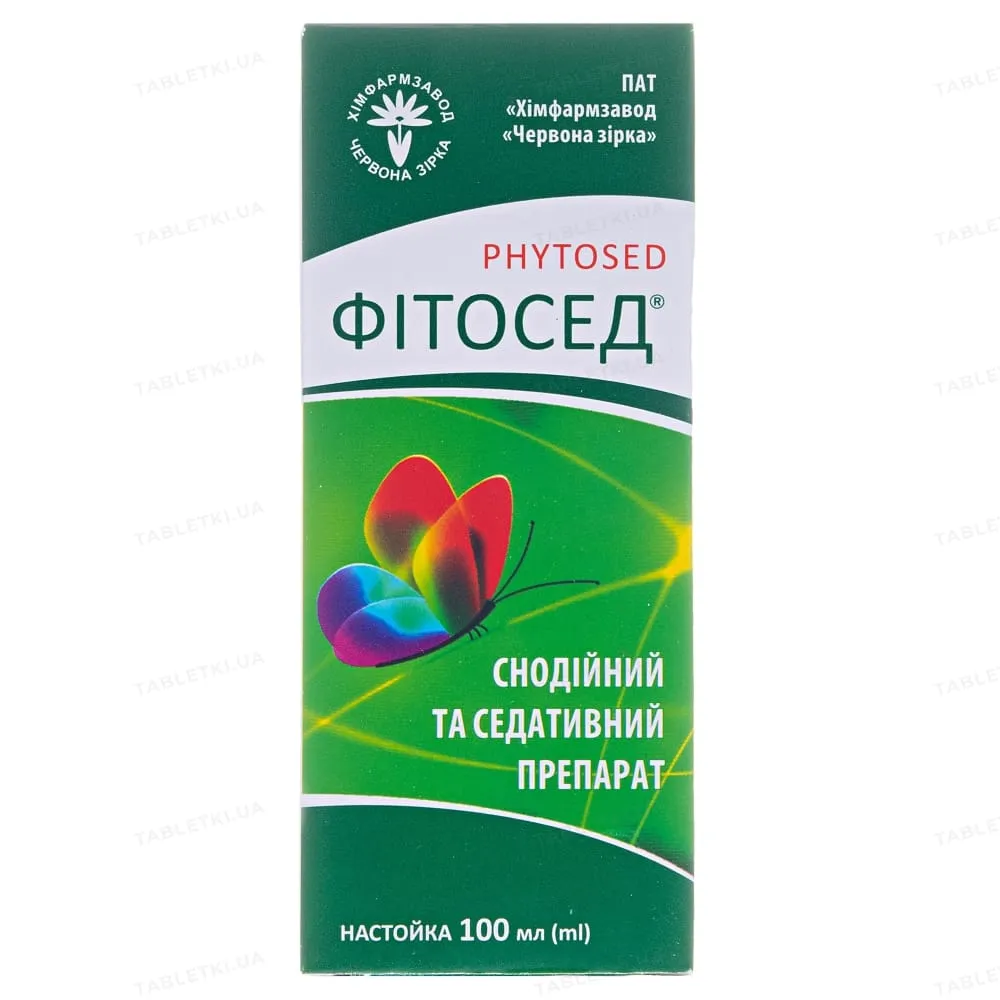
Table of Contents
INSTRUCTIONS FOR MEDICAL USE OF THE MEDICINAL PRODUCT PHYTOSED® (PHYTOSED)
Composition:
Active ingredients: 100 ml of the preparation contains an extract of a mixture of herbal raw materials "Phytosed®" (1:10) (extraction solvent – 40% ethanol): Crataegi fructus (hawthorn fruit) – 1 g; Leonuri cardiacae herba (motherwort herb) – 2 g; Lupuli strobili (hop cones) – 2 g; Aveni fructus (oat fruit) – 2.5 g; Melissae officinalis herba (lemon balm herb) – 1.5 g; Coriandri fructus (coriander fruit) – 0.5 g; Meliloti herba (sweet clover herb) – 0.5 g;
Excipients: none, except the extraction solvent.
Pharmaceutical form. Tincture.
Main physicochemical properties: clear liquid ranging from brown-green to brown-red in color, with a pleasant specific odor. Sediment formation may occur during storage.
Pharmacotherapeutic group. Sedatives and hypnotics.
ATC code: N05CM.
Pharmacological properties.
The drug exerts a sedative effect due to the components included in its formulation.
Active substances of Crataegus fruit (flavonoids, organic acids, tannins) reduce excitability of the central nervous system, improve coronary and cerebral blood flow, normalize cardiac rhythm, and eliminate dizziness.
The complex of biologically active substances in dog nettle herb (alkaloids, glycosides, rutin, saponins), in addition to pronounced sedative effect, demonstrates hypotensive action and reduces heart rate.
Hops cones contain essential oil, resins, and flavonoids, which contribute to the sedative effect.
Indole alkaloid avenine and B-group vitamins contained in oats fruit exert a beneficial effect on the nervous system and have a pronounced calming effect.
Melissa officinalis herb has antidepressant, calming, and tonic effects.
Coriander fruit exhibits sedative effects in conditions of increased nervous excitability.
Valerian herb produces a sedative effect.
The sedative effect of the drug develops from the first day of use. Maximum therapeutic effect occurs within 1–1.5 hours and lasts for 2–4 hours.
Clinical characteristics.
Indications.
As a sedative in neuroses of various etiologies; mild form of neurasthenia accompanied by irritability, anxiety, fear, increased fatigue, and distractibility; nervous excitement; insomnia; neurocirculatory dystonia of hypertensive and cardiac types; asthenic syndrome (hypersthenic form).
Contraindications.
Phytosed® is contraindicated in cases of hypersensitivity to any component of the drug, pronounced arterial hypotension and bradycardia, impaired blood coagulation and internal bleeding, as well as in depression and other conditions accompanied by suppression of central nervous system activity.
Interaction with other medicinal products and other types of interactions.
The drug enhances the effects of hypnotics and other medicinal agents that suppress the central nervous system.
When Phytosed® is taken concomitantly with cardiac glycosides, the effect of the latter is enhanced.
The drug may slightly potentiate the effects of direct and indirect anticoagulants.
Concomitant use of the drug with alkaloid salts is not recommended due to the possibility of forming adverse complexes.
It should not be used together with third-generation antiarrhythmic agents.
The drug may potentiate the pharmacological effects of analgesics and antihypertensive agents, and may also enhance the effects of alcohol.
Special precautions for use.
Shake before use.
This medicinal product contains 40% vol ethanol (alcohol), i.e. 1578 mg/dose, equivalent to 40 ml of beer or 17 ml of wine per dose.
Harmful for patients suffering from alcoholism. Caution should be exercised when administering to children and patients with liver disorders or epilepsy.
Use during pregnancy or breastfeeding.
The use of this medicinal product during pregnancy or breastfeeding is contraindicated.
Ability to affect reaction speed when driving or operating machinery.
This medicine should not be administered to drivers or individuals operating machinery or equipment requiring heightened attention and rapid motor reactions.
Method of Administration and Dosage
Administer orally. For adults and children aged 12 years and older: 1 teaspoon (5 ml) in a small amount of water, 3–4 times daily and once before bedtime. Treatment duration is 10 to 30 days. If necessary, the treatment course may be repeated after 10–15 days (following consultation with a physician).
Children
Do not administer to children under 12 years of age.
Overdose
When doses exceeding the recommended amounts are used, the following may occur: drowsiness, dizziness, headache, fatigue, abdominal pain, hand tremor, pupil dilation, chest tightness, bradycardia. In some cases, arterial hypotension and dyspeptic symptoms (nausea, vomiting, heartburn) may develop. Treatment is symptomatic.
Adverse reactions.
Cardiovascular system: decreased blood pressure, bradycardia.
Central nervous system: dizziness, drowsiness (when taking high doses of the drug), headache, increased fatigue; due to the pronounced sedative effect of dog nettle – reduced mental and physical performance.
Gastrointestinal tract: nausea, vomiting, epigastric pain, heartburn.
Allergic reactions, including urticaria, itching, rash, skin hyperemia, swelling.
Shelf life.
2 years.
Do not use after the expiry date stated on the packaging.
Storage conditions.
Keep out of reach of children.
Store in the original packaging at a temperature not exceeding 25 °C.
Packaging.
100 ml in a bottle or can, in a cardboard box.
Availability category.
Over-the-counter.
Manufacturer/Applicant.
JSC "CHEMICAL PHARMACEUTICAL PLANT "CHERVONA ZIRKA".
Manufacturer's address and location of its business activity.
1, Gordienkivska Street, Kharkiv, Kharkiv region, 61010, Ukraine.