Felkarid
Ukraine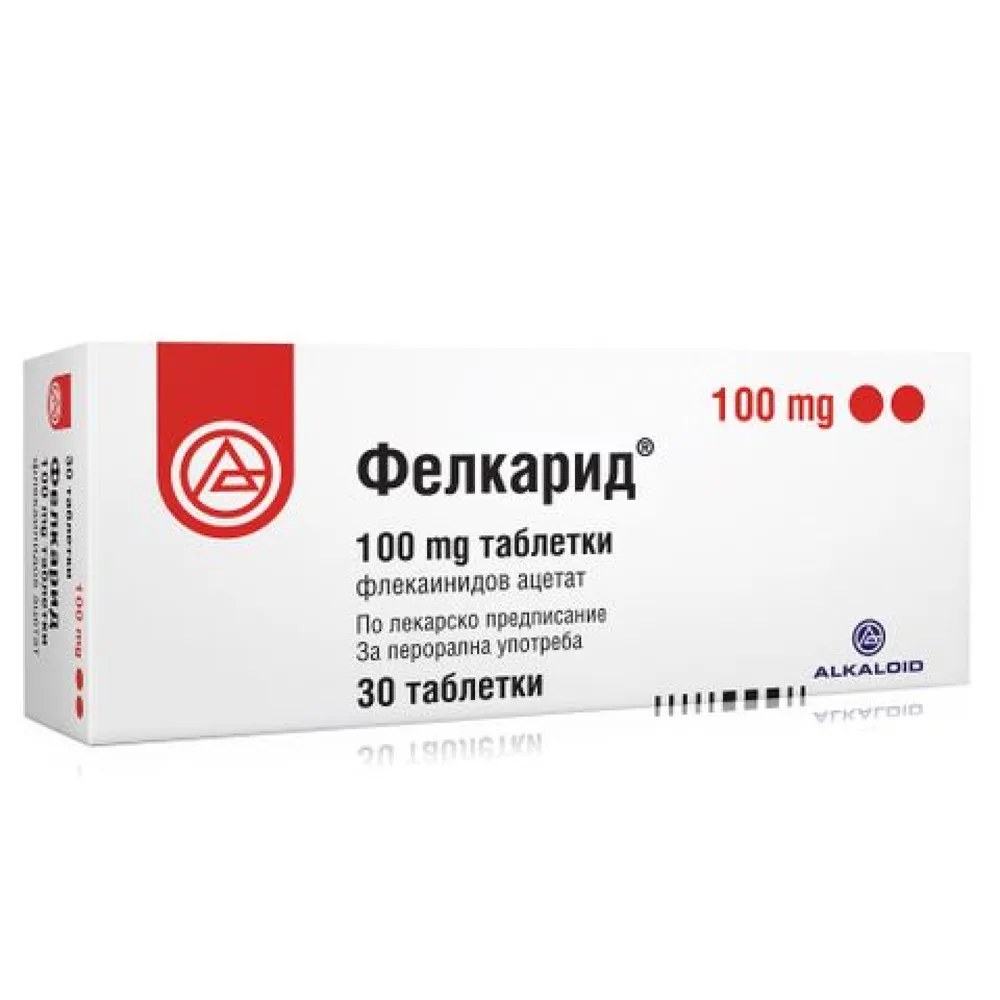
Table of Contents
INSTRUCTION FOR MEDICAL USE OF THE MEDICINAL PRODUCT Felkarid
Composition:
Active substance: flecainide acetate;
1 tablet contains 50 mg or 100 mg of flecainide acetate;
Excipients: pregelatinized starch, sodium croscarmellose, microcrystalline cellulose, hydrogenated vegetable oil, magnesium stearate.
Pharmaceutical form. Tablets.
Main physicochemical properties:
Felkarid, 50 mg tablets: white to almost white, round, biconvex tablets.
Felkarid, 100 mg tablets: white to almost white, round, biconvex tablets with a score line on one side.
Pharmacotherapeutic group. Class IC antiarrhythmic agents. Flecainide. ATC code C01BC04.
Pharmacological Properties.
Pharmacodynamics.
Flecainide belongs to class IC antiarrhythmic agents used for the treatment of severe symptomatic ventricular and supraventricular arrhythmias. The drug should not be used to suppress asymptomatic ventricular arrhythmia in patients with a history of myocardial infarction. Most adverse effects are related to manifestations affecting the central nervous system.
Electrophysiologically, flecainide is an antiarrhythmic compound with local anesthetic action (class IC). It is an amide-type local anesthetic structurally related to procainamide and encainide, as these drugs are also benzamide derivatives.
The classification of flecainide as a class IC agent is based on three characteristics: substantial inhibition of fast sodium channels in the heart; slow kinetics of onset and offset of sodium channel blockade (reflecting slow association and dissociation from sodium channels); and differential effect of the drug on the action potential duration in ventricular muscle compared to Purkinje fibers, with no effect on ventricular muscle and significant shortening of the action potential duration in Purkinje fibers.
This combination of properties leads to a marked reduction in conduction velocity in tissues dependent on fast sodium channels for depolarization, but shows only a slight increase in effective refractory period when studied in isolated cardiac tissue. These electrophysiological effects of flecainide may result in prolongation of the PR interval and widening of the QRS complex on ECG. At very high concentrations, flecainide exerts a weak inhibitory effect on slow channels in the myocardium, which is accompanied by a negative inotropic effect. Flecainide does not exhibit significant interaction with the autonomic nervous system. The drug likely has no measurable effects on cardiac, pulmonary, or other regional circulatory systems.
Pharmacokinetics.
Absorption
Flecainide acetate is almost completely absorbed after oral administration and does not undergo extensive presystemic metabolism. The bioavailability of flecainide acetate tablets is approximately 90%. The therapeutic plasma concentration range is generally between 200 and 1000 ng/mL.
Distribution
Flecainide is approximately 40% bound to plasma proteins. It crosses the placenta and is excreted into breast milk.
Biological Transformation
Flecainide undergoes extensive metabolism (subject to genetic polymorphism), and both of its major metabolites—meta-O-dealkylated flecainide and meta-O-dealkylated flecainide lactam—may exhibit some pharmacological activity.
Elimination
The drug is primarily eliminated via the urine: approximately 30% is excreted unchanged as flecainide, and the remainder as metabolites. Approximately 5% of the drug is excreted in feces. The elimination half-life of flecainide is approximately 20 hours.
Hemodialysis removes about 1% of unchanged flecainide.
Flecainide excretion is reduced in renal insufficiency, heart failure, and alkaline urine.
Clinical characteristics.
Indications.
Treatment of the following conditions:
- AV nodal reentrant tachycardia; arrhythmias associated with Wolff-Parkinson-White syndrome
and similar disorders caused by the presence of accessory conduction pathways (when other treatments are ineffective). - Symptomatic sustained ventricular tachyarrhythmia of severe degree, life-threatening to the patient, when there is no response to other therapies.
- Premature ventricular contractions and/or unstable ventricular tachycardia causing disabling symptoms, which are resistant to other therapies or when other treatments are not tolerated by the patient.
- Paroxysmal atrial arrhythmia (atrial fibrillation, atrial flutter, and atrial tachycardia) in patients with disabling symptoms, when treatment is indicated.
Structural heart disease and/or left ventricular dysfunction must be excluded due to increased risk of arrhythmogenic effects.
Flecainide acetate tablets may be used to maintain normal rhythm after conversion by other means.
Contraindications.
- Hypersensitivity to the active substance or to any of the excipients of the medicinal product.
- Flecainide is contraindicated in heart failure and in patients with a history of myocardial infarction who have either asymptomatic ventricular ectopy or asymptomatic unstable ventricular tachycardia.
- Patients with long-standing atrial fibrillation in whom no attempt has been made to restore sinus rhythm.
- Patients with ventricular dysfunction, cardiogenic shock, severe bradycardia (less than 50 beats per minute), and severe hypotension.
- Concomitant use with class I antiarrhythmic agents (sodium channel blockers).
- In patients with hemodynamically significant heart valve disease.
- Flecainide should not be prescribed to patients with sinus node dysfunction, atrial conduction defects, second- or higher-degree atrioventricular block, bundle branch block, or distal conduction block if emergency cardiac pacing is not available.
- Patients with asymptomatic ventricular arrhythmia or ventricular arrhythmia with mild symptoms should not use flecainide.
- Presence of Brugada syndrome.
Interaction with other medicinal products and other forms of interaction.
Class I antiarrhythmic agents. Flecainide must not be used concomitantly with other class I antiarrhythmic agents (e.g., quinidine).
Class II antiarrhythmic agents. The possibility of additive negative inotropic effects of class II antiarrhythmic agents, such as beta-blockers, must be considered when used concomitantly with flecainide.
Class III antiarrhythmic agents. When flecainide is administered together with amiodarone, the usual flecainide dose should be reduced by 50%, and close monitoring for adverse effects is required. Under these conditions, therapeutic drug monitoring of plasma levels is strongly recommended.
Class IV antiarrhythmic agents. Flecainide should be used with caution when administered concomitantly with other calcium channel blockers, such as verapamil.
Life-threatening or even fatal adverse reactions may occur due to interactions leading to increased plasma concentration of the drug (see section "Overdose"). Flecainide is largely metabolized by CYP2D6; therefore, concomitant administration of medicinal products that inhibit (e.g., antidepressants, neuroleptics, propranolol, ritonavir, certain antihistamines) or induce (e.g., phenytoin, phenobarbital, carbamazepine) this isoenzyme may increase or decrease plasma flecainide concentration, respectively.
Increased plasma drug concentration may also result from impaired renal function due to reduced flecainide clearance (see section "Special precautions for use").
Hypokalemia, as well as hyperkalemia or other electrolyte imbalances, should be corrected prior to flecainide administration. Hypokalemia may result from concomitant use of diuretics, corticosteroids, or laxatives, with an increased risk of cardiotoxicity.
Antihistamines. Increased risk of ventricular arrhythmia with concomitant use of mizolastine, astemizole, and terfenadine (concomitant use should be avoided).
Antiviral agents. Plasma concentration increases when flecainide is used concomitantly with ritonavir, lopinavir, and indinavir (increased risk of ventricular arrhythmia) (concomitant use should be avoided).
Antidepressants. Paroxetine, fluoxetine, and other antidepressants increase flecainide plasma concentration; there is an increased risk of arrhythmia when flecainide is used concomitantly with tricyclic antidepressants.
Antiepileptic agents. Limited data in patients taking known enzyme inducers (phenytoin, phenobarbital, carbamazepine) indicate only a 30% increase in flecainide elimination rate.
Antipsychotic agents. Clozapine, haloperidol, and risperidone: increased risk of arrhythmia when used concomitantly with flecainide.
Antimalarial agents. Quinine and halofantrine – increased flecainide plasma concentration.
Antifungal agents. Terbinafine may increase flecainide plasma concentrations due to inhibition of CYP2D6 activity.
H2-antihistamines (for treatment of gastric ulcers). The H2 antagonist cimetidine inhibits flecainide metabolism. In healthy volunteers taking cimetidine (1 g daily) for one week, the area under the plasma concentration-time curve (AUC) of flecainide increased by approximately 30%, and elimination half-life increased by approximately 10%.
Smoking cessation agents. Caution is required when using bupropion (metabolized by CYP2D6) concomitantly with flecainide: initiate bupropion at the lower end of the dose range. If bupropion is added to the treatment regimen of a patient already receiving flecainide, consider the need to reduce the flecainide dose.
Cardiac glycosides. Flecainide may increase plasma levels of digoxin by approximately 15%, which is unlikely to be clinically significant in patients with digoxin plasma levels within the therapeutic range. Measurement of digoxin plasma levels is recommended in patients receiving digitalis preparations, taken no sooner than 6 hours after administration of any digoxin dose, either before or after flecainide administration.
Anticoagulants. Flecainide treatment is compatible with the use of oral anticoagulants.
Special precautions for use.
Oral flecainide treatment should be initiated and managed in a hospital setting or under the direct supervision of a specialist in patients with the following conditions:
- AV nodal reentrant tachycardia; arrhythmias associated with Wolff-Parkinson-White syndrome and similar disorders due to the presence of accessory conduction pathways.
- Paroxysmal atrial fibrillation in patients with disabling symptoms.
Initiation of flecainide therapy and dose adjustments must be performed under medical supervision with continuous ECG monitoring and plasma drug level monitoring. Hospitalization may be required for certain patients during these procedures, particularly for those with potentially life-threatening ventricular arrhythmias.
Like other antiarrhythmic agents, flecainide may cause proarrhythmic effects, i.e. it may induce a more severe type of arrhythmia, increase the frequency of existing arrhythmias, or exacerbate symptom severity (see section "Adverse reactions").
Flecainide should be avoided in patients with structural heart disease or impaired left ventricular function (see section "Adverse reactions").
Electrolyte imbalances (e.g. hypo- or hyperkalemia) should be corrected prior to flecainide administration (see section "Interaction with other medicinal products and other forms of interaction" regarding drugs that affect electrolyte balance).
Hypokalemia or hyperkalemia may influence the effects of Class I antiarrhythmic agents. Hypokalemia may occur in patients receiving diuretics, corticosteroids, or laxatives.
Severe bradycardia or marked hypotension should be corrected before initiating flecainide therapy.
Since plasma clearance of flecainide may be significantly reduced in patients with severe hepatic impairment, flecainide should not be used in such patients unless the potential benefit clearly outweighs the risks. In these cases, therapeutic drug monitoring is strongly recommended.
Flecainide should be used with caution in patients with renal impairment (creatinine clearance ≤35 mL/min/1.73 m²), and therapeutic monitoring is also recommended.
In elderly patients, the plasma clearance of flecainide may be reduced, and this should be taken into account when adjusting the dose.
Flecainide is not recommended for use in children under 13 years of age, as there is insufficient data on the use of flecainide in this age group.
It is known that flecainide increases the endocardial pacing threshold, i.e. it reduces sensitivity to endocardial electrical stimulation. This effect is reversible and more pronounced on the acute pacing threshold than on the chronic one. Therefore, flecainide should be used with caution in all patients with permanent pacemakers or temporary pacing electrodes and should not be administered to patients with existing low pacing thresholds or non-programmable pacemakers, except when appropriate emergency pacing is available.
Typically, doubling either pulse width or voltage is sufficient to restore capture; however, with flecainide use, it may be difficult to achieve ventricular thresholds below 1 Volt during initial device implantation.
The mild negative inotropic effect of flecainide may become clinically significant in patients predisposed to heart failure. Difficulties with defibrillation have been reported in some patients. In most cases, pre-existing cardiac conditions such as cardiomegaly, myocardial infarction, arteriosclerotic heart disease, and heart failure were noted in the patient history.
Flecainide should be used with caution in patients with recent-onset atrial fibrillation following cardiac surgery.
It has been demonstrated that flecainide increases mortality risk in patients with myocardial infarction and asymptomatic ventricular arrhythmias.
In the absence of therapeutic effect, flecainide may accelerate the ventricular rate during atrial fibrillation.
Flecainide prolongs the QT interval and widens the QRS complex by 12–20%. Its effect on the JT interval is minimal.
Flecainide therapy may unmask Brugada syndrome. If ECG changes suggestive of Brugada syndrome occur during flecainide treatment, discontinuation of therapy should be considered.
Flecainide is not approved for use in children under 13 years of age. Flecainide toxicity has been reported during pediatric treatment, particularly when milk intake was reduced, and in infants transitioning from milk-based formula to dextrose-based mixtures. Dairy products (milk, infant formulas, and possibly yogurt) may reduce flecainide absorption in children, including infants.
For additional warnings and precautions regarding drug use, see section "Interaction with other medicinal products and other forms of interaction".
Sodium
This medicinal product contains less than 1 mmol sodium (23 mg) per tablet, i.e. the product is considered "sodium-free".
Use during pregnancy or breastfeeding.
Pregnancy
There are no data on the safety profile of this medicinal product during human pregnancy. In New Zealand white rabbits, high doses of flecainide caused certain fetal abnormalities, but such effects were not observed in Dutch rabbits or rats. The relevance of these findings to humans is unknown. Data have shown that flecainide crosses the placenta and reaches the fetus in patients taking flecainide during pregnancy. Flecainide should be used during pregnancy only if the potential benefit outweighs the risks.
Breastfeeding period
Flecainide is excreted in human milk. Plasma concentrations measured in breastfed infants are 5–10 times lower than therapeutic drug concentrations (see section "Pharmacological properties"). Although the risk of adverse effects in breastfed infants is very low, flecainide should be used during lactation only if the benefit outweighs the risks.
Ability to affect reaction speed when driving or operating machinery.
Flecainide acetate has a minor to moderate influence on the ability to drive vehicles or operate machinery. Side effects such as dizziness and visual disturbances, if present, may affect the ability to drive, operate machinery, or work.
Method of Administration and Dosage
Method of Administration
For oral use. Tablets should be taken internally with a small amount of liquid. The 100 mg tablets may be divided along the score line into two parts if necessary.
Dosage
Initiation of therapy with flecainide acetate and dose adjustments must be performed under medical supervision with ECG monitoring and plasma drug level control.
During such procedures, hospitalization may be required for individual patients, particularly those with life-threatening ventricular arrhythmias. Such decisions must be made by a qualified specialist.
In patients with underlying organic cardiomyopathy, especially those with a history of myocardial infarction, flecainide treatment should only be initiated when other antiarrhythmic agents not belonging to class IC (particularly amiodarone) are ineffective or not tolerated, and when non-pharmacological therapies (surgical intervention, ablation, or implanted defibrillator) are not indicated. Close medical monitoring with ECG and plasma drug level control is required during treatment.
Adults and children aged 13 years and older
Supraventricular arrhythmias. The recommended initial dose is 50 mg twice daily. If necessary, the dose may be increased up to a maximum of 300 mg per day.
Ventricular arrhythmias. The recommended initial dose is 100 mg twice daily. The maximum dose is 400 mg per day, usually reserved for patients with a hypersthenic body build or when rapid arrhythmia control is required. After 3–5 days, the dose should be gradually adjusted to the lowest level that maintains arrhythmia control. Dose reduction may also be considered during long-term therapy.
Elderly patients
In elderly individuals, the rate of flecainide elimination from plasma may be reduced. This should be taken into account when adjusting the dose.
Plasma levels
Based on suppression of ventricular extrasystoles, the therapeutic plasma concentration required for maximum therapeutic effect ranges from 200 to 1000 ng/mL. Plasma levels exceeding 700–1000 ng/mL are associated with an increased risk of adverse reactions.
Renal impairment
In patients with significant renal impairment (creatinine clearance ≤35 mL/min/1.73 m²), the maximum initial dose should not exceed 100 mg per day or 50 mg twice daily. Regular monitoring of plasma drug levels is strongly recommended in such patients.
Hepatic impairment
Careful monitoring is required when administering the drug to patients with hepatic impairment. The daily dose should not exceed 100 mg.
Treatment of patients with implanted pacemakers should be conducted with caution. The dose should not exceed 100 mg per day, divided into two doses.
Close monitoring is required in patients receiving concomitant therapy with cimetidine or amiodarone. Dose reduction may be necessary in some patients, and the dose should not exceed 100 mg per day, divided into two doses. Monitoring of patients is essential both during initial and maintenance therapy.
Plasma drug level monitoring and ECG control are recommended at regular intervals (ECG monitoring monthly, and long-term ECG monitoring every 3 months) during therapy. During initial therapy and dose escalation, ECG should be performed every 2–4 days.
When flecainide is used in patients with dose titration, frequent ECG monitoring is required (in addition to regular monitoring of plasma flecainide levels). Dose adjustments should be made at 6–8 day intervals. In such patients, ECG monitoring should be performed at 2 and 3 weeks to assess individual dose response.
Children
There is insufficient data on the use of flecainide in children. Since safety and efficacy profiles have not been established, flecainide should not be used in children under 13 years of age.
Overdose
Flecainide overdose is a potentially life-threatening condition requiring immediate medical intervention. Drug interactions may also lead to increased sensitivity to the drug or elevated plasma levels above the therapeutic range (see section "Interaction with other medicinal products and other forms of interaction").
Overdose may result in hypotension, seizures, bradycardia, conduction delays (sinus or AV block), and asystole. QRS and QT intervals are prolonged, and ventricular arrhythmias may occur. Flecainide may slow or reverse the development of atrial fibrillation in patients with atrial flutter with rapid conduction.
There is currently no known effective method for rapid removal of flecainide from the circulatory system. Dialysis and hemoperfusion are ineffective. If possible, the drug should be removed from the gastrointestinal tract before complete absorption. Forced diuresis with acidification of urine may theoretically enhance drug elimination. Intravenous lipid emulsion may reduce the effective free concentration of flecainide.
There are no known specific antidotes. Intravenous sodium bicarbonate 8.4% often reduces flecainide receptor activity within minutes.
Further management should be supportive and may include administration of inotropic agents or cardiac stimulants such as dopamine, dobutamine, or isoproterenol, as well as mechanical ventilation and circulatory support (e.g., intra-aortic balloon pump).
In cases of conduction block, temporary transvenous cardiac pacing should be considered. In selected cases, extracorporeal membrane oxygenation (ECMO) should be considered. Given that the plasma half-life of the drug is approximately 20 hours, these supportive measures may need to be maintained for a prolonged period.
Adverse Reactions
Like other antiarrhythmic agents, flecainide may cause arrhythmia.
Existing arrhythmia may worsen or new arrhythmias may develop. The risk of proarrhythmic effects is greatest in patients with structural heart disease and/or significant left ventricular dysfunction.
The most common cardiovascular adverse reactions include second- and third-degree AV block, bradycardia, heart failure, chest pain, myocardial infarction, hypotension, sinus node arrest, tachycardia (AT and VT), and palpitations.
The most frequently reported adverse reactions are dizziness and visual disturbances, occurring in approximately 15% of patients receiving the drug. These adverse reactions are usually transient and resolve upon discontinuation of treatment or dose reduction.
The following list of adverse reactions is based on clinical trial experience and post-marketing experience.
Adverse reactions are classified by system organ classes and by frequency. Frequency is defined as follows: very common (≥1/10), common (≥1/100, <1/10), uncommon (≥1/1000, <1/100), rare (≥1/10,000, <1/1000), very rare (<1/10,000), frequency not known (cannot be estimated from available data).
Blood and lymphatic system disorders
Uncommon: decreased erythrocyte count, decreased leukocyte count, decreased platelet count.
Immune system disorders
Rare: increased antinuclear antibody titers with or without systemic inflammation.
Psychiatric disorders
Rare: hallucination, depression, confusion, anxiety, amnesia, insomnia.
Nervous system disorders
Very common: dizziness, vertigo, and pre-syncopal episodes, which are usually transient.
Rare: paresthesia, ataxia, hypoesthesia, hyperhidrosis, syncope, tremor, facial flushing, somnolence, headache, peripheral neuropathy, seizures, dyskinesia.
Eye disorders
Very common: visual disturbances such as diplopia and blurred vision.
Very rare: corneal deposits.
Ear and labyrinth disorders
Rare: tinnitus, vertigo.
Cardiac disorders
Common: proarrhythmic effect (most likely in patients with structural heart disease).
Uncommon: in patients with atrial fibrillation, 1:1 AV conduction with rapid ventricular response may develop.
Frequency not known: dose-dependent prolongation of PR and QRS intervals may occur (see section "Special precautions"). Change in cardiac pacing threshold (see section "Special precautions"). Second- and third-degree AV block, cardiac arrest, bradycardia, heart failure/congestive heart failure, chest pain, hypotension, myocardial infarction, palpitations, sinus node arrest, tachycardia (AT and VT or ventricular fibrillation).
Unmasking of pre-existing Brugada syndrome.
Respiratory, thoracic and mediastinal disorders
Common: dyspnea.
Rare: pneumonitis.
Frequency not known: pulmonary fibrosis, interstitial lung disease.
Gastrointestinal disorders
Uncommon: nausea, vomiting, constipation, abdominal pain, decreased appetite, diarrhea, dyspepsia, flatulence.
Hepatobiliary disorders
Rare: increased liver enzyme levels with or without jaundice.
Frequency not known: hepatic dysfunction.
Skin and subcutaneous tissue disorders
Uncommon: allergic dermatitis, including rash, alopecia.
Rare: severe urticaria.
Very rare: photosensitivity reaction.
Musculoskeletal and connective tissue disorders
Frequency not known: arthralgia, myalgia.
General disorders and administration site conditions
Common: asthenia, fatigue, pyrexia, edema, discomfort.
Reporting of suspected adverse reactions after drug authorization is of great importance. It allows continued monitoring of the benefit-risk profile of the medicinal product. Healthcare professionals, pharmacists, patients, or their legal representatives should report all suspected adverse reactions and lack of efficacy through the Automated Pharmacovigilance Information System at the following link: http://aisf.dec.gov.ua/.
Shelf life.
2 years.
Storage conditions.
No special storage conditions required.
Keep out of reach and sight of children.
Packaging.
10 tablets in a blister, 3 blisters in a cardboard box.
Prescription status.
Prescription only.
Manufacturer.
ALKALOID AD Skopje.
ALKALOID AD Skopje.
Manufacturer's address and location of its business operations.
Boulevard Aleksandar Makedonski 12, Skopje, 1000, Republic of North Macedonia.
Boulevard Aleksandar Makedonski 12, Skopje, 1000, Republic of North Macedonia.