Ezorma
Ukraine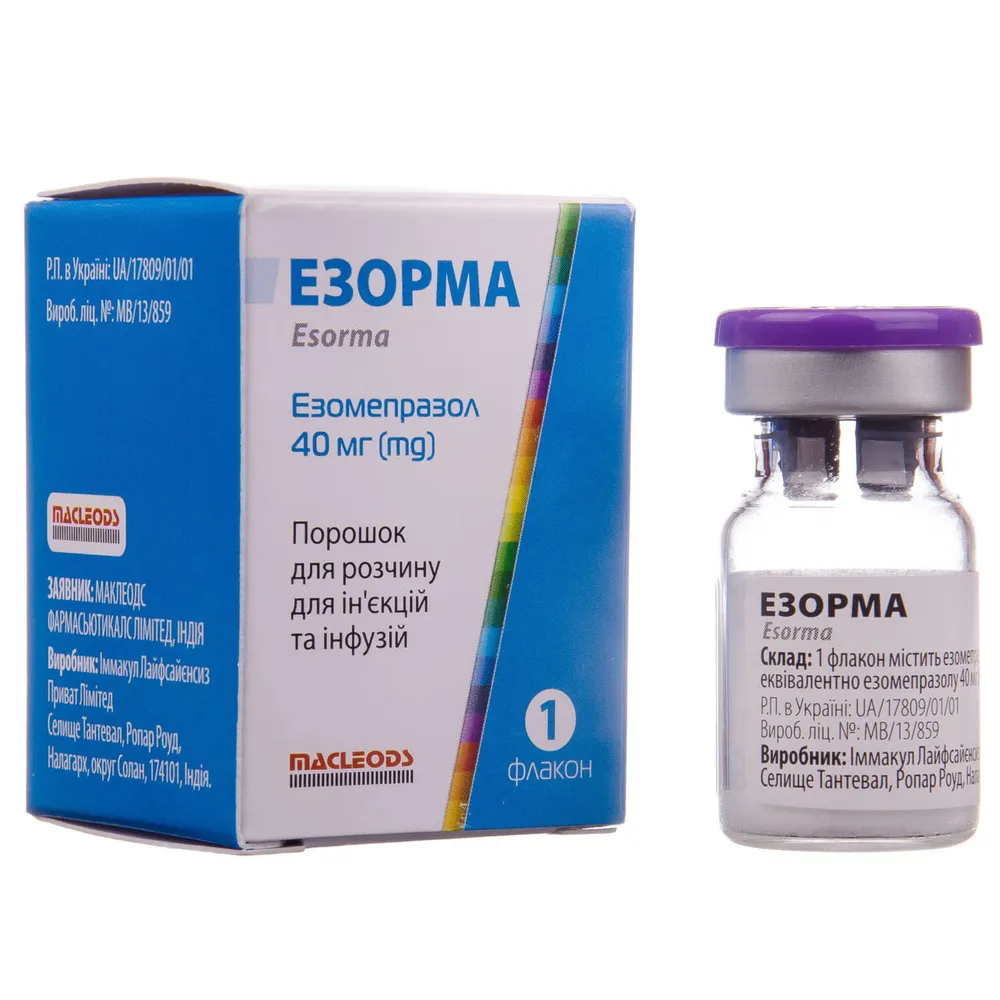
Table of Contents
INSTRUCTION FOR MEDICAL USE OF THE MEDICINAL PRODUCT ESORMA (ESORMA)
Composition:
Active substance: esomeprazole;
1 vial contains esomeprazole sodium equivalent to esomeprazole 40 mg;
Excipients: disodium edetate, sodium hydroxide.
Pharmaceutical form. Powder for solution for injection and infusion.
Main physico-chemical properties: porous mass or powder, white or almost white.
Pharmacotherapeutic group.
Drugs used in acid-related disorders. Agents for treatment of peptic ulcer and gastroesophageal reflux disease. Proton pump inhibitors.
ATC code A02B C05.
Pharmacological properties.
Pharmacodynamics.
Esomeprazole is the S-isomer of omeprazole that inhibits gastric acid secretion through a specific, targeted mechanism of action. It is a specific inhibitor of the H+/K+-ATPase enzyme (the proton pump) in the parietal cells. Both the R- and S-isomers of omeprazole have similar pharmacological activity.
Site and mechanism of action
Esomeprazole is a weak base that accumulates and is transformed into its active form in the highly acidic environment of the secretory canaliculi of parietal cells, where it inhibits the H+/K+-ATPase enzyme (the proton pump), thereby suppressing both basal and stimulated gastric acid secretion.
Effect on gastric acid secretion
After 5 days of oral administration of 20 mg and 40 mg esomeprazole, the intragastric pH remained above 4 for an average of 13 hours and 17 hours, respectively, over a 24-hour period in patients with symptomatic gastroesophageal reflux disease (GERD). The effect is similar regardless of whether esomeprazole is administered orally or intravenously.
Using the area under the plasma concentration-time curve (AUC) as an indirect parameter of drug exposure, a relationship between acid secretion inhibition and drug exposure after oral administration of esomeprazole has been demonstrated.
In healthy volunteers receiving intravenous esomeprazole at a dose of 80 mg as a 30-minute bolus infusion followed by a continuous intravenous infusion at 8 mg/hour for 23.5 hours, intragastric pH remained above 4 and above 6 for an average of 21 hours and 11–13 hours, respectively, over a 24-hour period.
Therapeutic effect of acid secretion inhibition
With oral administration of esomeprazole 40 mg, approximately 78% of patients with reflux esophagitis healed within 4 weeks and 93% within 8 weeks of treatment.
In a randomized, double-blind, placebo-controlled clinical trial in patients with endoscopically confirmed peptic ulcer Forrest class Ia, Ib, IIa, or IIb (9%, 43%, 38%, and 10%, respectively), patients were randomized to receive intravenous esomeprazole (n=375) or placebo (n=389). After endoscopic hemostasis, patients received either esomeprazole 80 mg as a 30-minute intravenous infusion followed by a continuous infusion at 8 mg/hour, or placebo for 72 hours. After the initial 72-hour period, all patients received open-label oral esomeprazole 40 mg daily for 27 days to maintain acid suppression. The rate of recurrent bleeding within 3 days was 5.9% in the esomeprazole group and 10.3% in the placebo group. At 30 days after therapy, the rates of recurrent bleeding were 7.7% in the esomeprazole group and 13.6% in the placebo group.
Other effects related to acid secretion inhibition
During treatment with acid-suppressing agents, serum gastrin levels increase in response to reduced acid secretion. Chromogranin A (CgA) levels also increase due to reduced gastric acidity. Elevated CgA levels may affect laboratory test results for neuroendocrine tumors. Published data indicate that treatment with proton pump inhibitors (PPIs) should be discontinued for a period of 5 days to 2 weeks before measuring CgA levels to allow normalization, as CgA levels may be elevated after PPI therapy.
An increase in enterochromaffin-like (ECL) cell numbers, possibly related to elevated gastrin levels, has been observed in some patients during long-term treatment with oral esomeprazole.
A slight increase in the incidence of gastric glandular cysts has been observed during long-term treatment with oral acid-suppressing agents. These changes are considered a physiological consequence of pronounced inhibition of gastric acid secretion and are benign and reversible.
Reduced gastric acidity due to any cause, including PPI use, leads to increased bacterial colonization in the stomach, normally present in the gastrointestinal tract. PPI treatment may slightly increase the risk of gastrointestinal infections caused by, for example, Salmonella and Campylobacter, and possibly also Clostridium difficile in hospitalized patients.
Children
In a placebo-controlled study (98 patients aged 1 to 11 months), the efficacy and safety of esomeprazole in patients with signs and symptoms of GERD were evaluated. Esomeprazole 1 mg/kg once daily was administered orally for 2 weeks (open phase), and 80 patients continued for an additional 4 weeks (double-blind, treatment withdrawal phase). No significant difference was observed between esomeprazole and placebo regarding achievement of the primary endpoint or discontinuation due to symptom worsening.
In another placebo-controlled study (52 patients aged <1 month), the efficacy and safety of esomeprazole in patients with GERD were evaluated. Esomeprazole 0.5 mg/kg once daily was administered orally for at least 10 days. No significant difference was observed between esomeprazole and placebo regarding the primary endpoint of change in the number of GERD symptom episodes compared to baseline.
Results from studies in pediatric patients show that esomeprazole doses of 0.5 mg/kg and 1.0 mg/kg in infants aged <1 month and 1–11 months, respectively, reduce the mean percentage of time with intraluminal esophageal pH < 4.0. The safety profile of the drug was similar to that in adults.
In a study involving pediatric patients with GERD (aged <1 to 17 years) receiving long-term PPI therapy, 61% of children showed mild ECL cell hyperplasia of unknown clinical significance; no cases of atrophic gastritis or carcinoid tumors were observed.
Pharmacokinetics.
Distribution
The apparent volume of distribution at steady state in healthy volunteers is approximately 0.22 L/kg body weight. Esomeprazole is 97% bound to plasma proteins.
Metabolism and elimination
Esomeprazole is completely metabolized by the cytochrome P450 (CYP) system. The main part of esomeprazole metabolism is dependent on the polymorphic CYP2C19, responsible for the formation of hydroxy and desmethyl metabolites. The remainder is mediated by another specific isoenzyme, CYP3A4, which forms esomeprazole sulfone, the main metabolite in plasma.
The parameters below primarily reflect the pharmacokinetics in individuals with functional CYP2C19 enzyme (i.e., extensive metabolizers).
Total plasma clearance is approximately 17 L/hour after a single dose and about 9 L/hour after repeated administration. The plasma half-life is approximately 1.3 hours with repeated once-daily dosing. The AUC increases with repeated administration of esomeprazole. This increase is dose-dependent and results in a non-linear relationship between dose and AUC after repeated dosing. This time- and dose-dependent relationship is due to reduced pre-systemic metabolism and systemic clearance, likely caused by inhibition of the CYP2C19 enzyme by esomeprazole and/or its sulfone metabolite.
Esomeprazole is completely cleared from plasma between doses, and there is no tendency for accumulation with once-daily administration.
With repeated administration of 40 mg intravenous injections, the mean maximum plasma concentration (Cmax) is approximately 13.6 µmol/L. The mean Cmax after corresponding oral doses is approximately 4.6 µmol/L. A smaller increase (approximately 30%) in AUC is observed with intravenous administration compared to oral administration. A linear, dose-dependent increase in AUC was observed after 30-minute intravenous infusions of esomeprazole (40 mg, 80 mg, or 120 mg) followed by continuous infusion (4 mg/hour or 8 mg/hour) for 23.5 hours.
The main metabolites of esomeprazole do not affect gastric acid secretion. Nearly 80% of an oral dose of esomeprazole is excreted in urine as metabolites, and the remainder in feces. Less than 1% of the parent compound is excreted in urine.
Special patient groups
Slow metabolizers
Approximately 2.9 ± 1.5% of the population lacks functional CYP2C19 enzyme and are termed poor metabolizers. In these individuals, esomeprazole metabolism is likely primarily catalyzed by CYP3A4. After multiple oral doses of 40 mg esomeprazole once daily, the mean total exposure was approximately 100% higher in poor metabolizers than in individuals with functional CYP2C19 (extensive metabolizers). The mean Cmax was increased by approximately 60%. Similar differences were observed with intravenous administration. These data do not require dose adjustments for esomeprazole.
Gender
After a single oral dose of 40 mg esomeprazole, the mean AUC in women is approximately 30% higher than in men. No gender-related differences are observed with repeated once-daily dosing. Similar differences were observed with intravenous administration. These data do not affect esomeprazole dosing.
Liver function impairment
Metabolism of esomeprazole may be impaired in patients with mild to moderate liver dysfunction. In patients with severe liver impairment, the rate of metabolism is reduced, resulting in a doubling of esomeprazole AUC. Therefore, patients with GERD and severe liver impairment should not exceed the maximum dose of 20 mg. In cases of bleeding ulcer with severe liver impairment, after an initial 80 mg bolus dose, continuous intravenous infusion at a maximum rate of 4 mg/hour for 71.5 hours may be sufficient. Esomeprazole or its main metabolites do not show a tendency to accumulate with once-daily administration.
Renal function impairment
No studies have been conducted in patients with impaired renal function. Since the kidneys are responsible for the elimination of esomeprazole metabolites but not the parent compound, no changes in metabolism are expected in patients with renal impairment.
Elderly patients
Esomeprazole metabolism is only slightly altered in elderly individuals (71–80 years).
Children
In a randomized, open-label, multinational, multiple-dose study, esomeprazole was administered as a 3-minute intravenous injection once daily for 4 days. A total of 59 children aged 0 to 18 years were enrolled, of whom 50 (including 7 children aged 1 to 5 years) completed the study and were included in the pharmacokinetic evaluation.
Table 1 presents the systemic exposure results of esomeprazole after 3-minute intravenous injection in pediatric patients and healthy adult volunteers. Values in Table 1 are presented as geometric means (range). The 20 mg dose in adults was administered as a 30-minute infusion. Maximum steady-state plasma concentration (Css,max) was assessed 5 minutes after dosing in all pediatric age groups and 7 minutes after dosing in adults receiving 40 mg and after completion of the 20 mg infusion.
Table 1
| Age group |
Dose group |
AUC (μmol*hr/L) |
Css, max (μmol/L) |
| 0–1 month* |
0.5 mg/kg (n = 6) |
7.5 (4.5–20.5) |
3.7 (2.7–5.8) |
| 1–11 months* |
1.0 mg/kg (n = 6) |
10.5 (4.5–22.5) |
8.7 (4.5–14.0) |
| 1–5 years |
10 mg (n = 7) |
7.9 (2.9–16.6) |
9.4 (4.4–17.2) |
| 6–11 years |
10 mg (n = 8) |
6.9 (3.5–10.9) |
5.6 (3.1–13.2) |
| 20 mg (n = 8) |
14.4 (7.2–42.3) |
8.8 (3.4–29.4) |
|
| 20 mg (n = 6)** |
10.1 (7.2–13.7) |
8.1 (3.4–29.4) |
|
| 12–17 years |
20 mg (n = 6) |
8.1 (4.7–15.9) |
7.1 (4.8–9.0) |
| 40 mg (n = 8) |
17.6 (13.1–19.8) |
10.5 (7.8–14.2) |
|
| Adults |
20 mg (n = 22) |
5.1 (1.5–11.8) |
3.9 (1.5–6.7) |
| 40 mg (n = 41) |
12.6 (4.8–21.7) |
8.5 (5.4–17.9) |
* The age group from 0 to 1 month included patients with a corrected age (sum of gestational age and postnatal age in completed weeks) ≥ 32 completed weeks and < 44 completed weeks. The age group from 1 to 11 months included patients with a corrected age ≥ 44 completed weeks.
** Two patients were excluded: one most likely due to reduced CYP2C19 isoenzyme activity, and the other due to concomitant use of a CYP3A4 isoenzyme inhibitor.
According to the constructed model, Css,max after intravenous administration of esomeprazole via 10-minute, 20-minute, and 30-minute infusions will decrease by 37–49%, 54–66%, and 61–72%, respectively, across all age groups and dosing groups compared to the Css,max value after a 3-minute injection.
Clinical characteristics.
Indications.
Adults
-
Antisecretory therapy when oral administration is not feasible, for example:
-
gastroesophageal reflux disease (GERD) in patients with esophagitis and/or severe reflux symptoms;
-
treatment of gastric ulcers associated with nonsteroidal anti-inflammatory drug (NSAID) therapy;
-
prevention of gastric and duodenal ulcers associated with NSAID therapy in patients at risk.
-
Prevention of recurrent bleeding in patients after endoscopic treatment of acute bleeding due to gastric or duodenal ulcer.
Children aged 1 to 18 years
-
Antisecretory therapy when oral administration is not feasible, for example:
-
GERD in patients with erosive reflux esophagitis and/or severe reflux symptoms.
Contraindications.
Hypersensitivity to esomeprazole, other substituted benzimidazoles, or to any of the excipients of this medicinal product.
Esomeprazole must not be used concomitantly with nelfinavir (see section "Interaction with other medicinal products and other forms of interaction").
Interaction with other medicinal products and other forms of interaction.
Effect of esomeprazole on the pharmacokinetics of other medicinal products
Protease inhibitors
Interactions between omeprazole and certain protease inhibitors have been reported. The clinical significance and mechanisms of these interactions are not always known. Increased gastric pH during omeprazole therapy may alter the absorption of protease inhibitors. Other interaction mechanisms are possible via inhibition of CYP2C19.
Reduced serum levels of atazanavir and nelfinavir have been observed with concomitant use of omeprazole; therefore, co-administration of these agents is not recommended. Concomitant administration of omeprazole (40 mg once daily) with atazanavir 300 mg/ritonavir 100 mg in healthy volunteers resulted in a marked reduction in atazanavir exposure (reduction in AUC, Cmax, and Cmin by approximately 75 %). Increasing the atazanavir dose to 400 mg did not compensate for the effect of omeprazole on atazanavir exposure. Concomitant administration of omeprazole (20 mg daily) with atazanavir 400 mg/ritonavir 100 mg in healthy volunteers reduced atazanavir exposure by approximately 30 % compared to exposure observed with atazanavir 300 mg/ritonavir 100 mg once daily without omeprazole 20 mg daily. Concomitant use of omeprazole (40 mg daily) reduced mean AUC, Cmax, and Cmin values of nelfinavir by 36–39 %, and mean AUC, Cmax, and Cmin values of its pharmacologically active metabolite M8 by 75–92 %.
Increased serum concentrations of saquinavir (co-administered with ritonavir) (80–100 %) were observed with concomitant use of omeprazole (40 mg daily). Omeprazole 20 mg daily did not affect exposure of darunavir (co-administered with ritonavir) or amprenavir (in combination with ritonavir). Esomeprazole 20 mg daily did not affect exposure of amprenavir (with or without ritonavir). Administration of omeprazole 40 mg daily did not alter exposure of lopinavir (in combination with ritonavir). Due to the similar pharmacodynamic effects and pharmacokinetic properties of omeprazole and esomeprazole, concomitant use of esomeprazole and atazanavir is not recommended, and concomitant use of esomeprazole and nelfinavir is contraindicated.
Methotrexate
Methotrexate levels increased in some patients when administered together with PPIs. Temporary discontinuation of esomeprazole may be required when administering high-dose methotrexate.
Tacrolimus
Elevated serum levels of tacrolimus have been reported with concomitant use of esomeprazole. Close monitoring of tacrolimus concentrations and renal function (creatinine clearance) is required, and dose adjustment of tacrolimus may be necessary.
Medicinal products whose absorption is pH-dependent
Suppression of gastric acid secretion during therapy with esomeprazole and other PPIs may lead to reduced or enhanced absorption of medicinal products whose absorption depends on gastric pH. As with other agents that reduce gastric acidity, absorption of drugs such as ketoconazole, itraconazole, and erlotinib may be reduced, while absorption of digoxin may be increased during esomeprazole therapy. In healthy volunteers, concomitant administration of omeprazole (20 mg daily) and digoxin increased digoxin bioavailability by 10 % (up to 30 % in two out of ten participants). Digoxin toxicity has been reported rarely. However, caution should be exercised when administering high doses of esomeprazole to elderly patients. Monitoring of digoxin blood concentrations is recommended.
Medicinal products metabolized by CYP2C19
Esomeprazole inhibits CYP2C19, the main enzyme responsible for esomeprazole metabolism. Therefore, when esomeprazole is combined with medicinal products metabolized by CYP2C19, such as diazepam, citalopram, imipramine, clomipramine, or phenytoin, plasma concentrations of these drugs may increase, and dose reduction may be required. In vivo interaction studies using the intravenous formulation at high doses (80 mg + 8 mg/hour) have not been conducted. The effect of esomeprazole on drugs metabolized by CYP2C19 during such treatment regimens may be more pronounced, and patients should be closely monitored for adverse effects during the three-day intravenous treatment period.
Diazepam
Concomitant oral administration of 30 mg esomeprazole reduced the clearance of the CYP2C19 substrate diazepam by 45 %.
Phenytoin
Concomitant oral administration of 40 mg esomeprazole and phenytoin increased minimum plasma concentrations of phenytoin in epileptic patients by 13 %. Monitoring of phenytoin plasma concentrations is recommended at the start and upon discontinuation of esomeprazole therapy.
Voriconazole
Administration of omeprazole (40 mg once daily) increased Cmax and AUCτ of voriconazole (a CYP2C19 substrate) by 15 % and 41 %, respectively.
Pletal (cilostazol)
Omeprazole, like esomeprazole, is an inhibitor of CYP2C19. In a crossover study in healthy volunteers, administration of omeprazole 40 mg increased Cmax and AUC of cilostazol by 18 % and 26 %, respectively, and of one of its active metabolites by 29 % and 69 %, respectively.
Cisapride
Concomitant oral administration of 40 mg esomeprazole and cisapride in healthy volunteers increased AUC by 32 % and half-life (t1/2) by 31 %, but no significant increase in Cmax of cisapride in plasma was observed. The slight QTc interval prolongation observed with cisapride alone was not increased when cisapride was administered in combination with esomeprazole.
Warfarin
During concomitant oral administration of 40 mg esomeprazole to patients receiving warfarin in a clinical study, blood coagulation time remained within the acceptable range. However, in the post-marketing period, several isolated cases of clinically significant increases in the international normalized ratio (INR) have been reported with concomitant use of these drugs. Monitoring is recommended at the beginning and end of concomitant therapy with esomeprazole and warfarin or other coumarin derivatives.
Clopidogrel
Results from pharmacokinetic (PK)/pharmacodynamic (PD) interaction studies in healthy volunteers evaluating clopidogrel (loading dose 300 mg/maintenance dose 75 mg daily) and esomeprazole (oral 40 mg daily) showed a mean reduction in exposure to the active metabolite of clopidogrel by 40 % and a mean reduction in maximum inhibition of ADP-induced platelet aggregation by 14 %.
In a study in healthy volunteers, when clopidogrel was administered together with esomeprazole and acetylsalicylic acid (ASA) in fixed combination doses (20 mg + 81 mg, respectively), compared to clopidogrel monotherapy, exposure to the active metabolite of clopidogrel was reduced by nearly 40 %. However, maximum levels of inhibition of ADP-induced platelet aggregation were similar between the clopidogrel monotherapy group and the group receiving clopidogrel with esomeprazole and ASA. Observational and clinical studies have yielded conflicting data on the clinical relevance of the PK/PD interaction between esomeprazole and major cardiovascular events. As a precautionary measure, concomitant use of esomeprazole and clopidogrel should be avoided.
Medicinal products studied without clinically significant interaction
Amoxicillin or quinidine
Esomeprazole was shown not to have clinically significant effects on the pharmacokinetics of amoxicillin or quinidine.
Naproxen or rofecoxib
No pharmacokinetic interaction was observed during short-term studies of concomitant administration of esomeprazole with naproxen or rofecoxib.
Effect of other medicinal products on the pharmacokinetics of esomeprazole
Esomeprazole is metabolized by CYP2C19 and CYP3A4. Concomitant oral administration of esomeprazole and the CYP3A4 inhibitor clarithromycin (500 mg twice daily) doubled the AUC of esomeprazole. Concomitant administration of esomeprazole with a combined inhibitor of CYP2C19 and CYP3A4 may increase esomeprazole exposure by more than two-fold. The CYP2C19 and CYP3A4 inhibitor voriconazole increased AUCτ of omeprazole by 280 %. Dose adjustment of esomeprazole is not always necessary in such situations. However, it may be required in patients with severe hepatic impairment and in cases requiring long-term treatment.
Medicinal products inducing CYP2C19 and/or CYP3A4 activity
Agents (such as rifampicin and St. John’s wort) capable of inducing CYP2C19 or CYP3A4, or both enzymes, may reduce serum concentrations of esomeprazole by enhancing its metabolism.
Children
Drug interaction studies have been conducted only in adult patients.
Special precautions for use.
In the presence of any alarming symptoms (e.g., significant unexplained weight loss, recurrent vomiting, dysphagia, hematemesis or melena) or suspicion of, or existing, gastric ulcer, malignancy should be excluded, since esomeprazole may mask symptoms and delay diagnosis.
Gastrointestinal infections
PPI therapy may slightly increase the risk of gastrointestinal infections, such as those caused by Salmonella and Campylobacter (see section "Pharmacodynamics").
Vitamin B12 absorption
Esomeprazole, like all acid-suppressing medications, may impair absorption of vitamin B12 (cyanocobalamin) due to hypo- or achlorhydria. This should be considered in patients with low vitamin B12 stores or risk factors for impaired vitamin B12 absorption during long-term therapy.
Hypomagnesemia
Cases of severe hypomagnesemia have been reported in patients treated with PPIs, such as esomeprazole, for at least three months, and in most cases, for a year or longer. Hypomagnesemia may present serious symptoms such as fatigue, tetany, delirium, seizures, dizziness, and ventricular arrhythmia, and its onset may be insidious and remain unrecognized. In most patients with hypomagnesemia, the condition improved after magnesium replacement therapy and discontinuation of PPI treatment.
For patients expected to require long-term treatment or those taking PPIs with digoxin or medications that may cause hypomagnesemia (e.g., diuretics), it may be advisable to measure magnesium levels before initiating PPI therapy and periodically during treatment.
Risk of fractures
PPIs, particularly when used at high doses and over prolonged periods (>1 year), may slightly increase the risk of fractures of the hip, wrist, and spine, primarily in elderly patients or those with other risk factors. Observational studies suggest that PPIs may increase the overall risk of fractures by 10–40%. This increased risk may partly be due to other risk factors. Patients at risk of osteoporosis should be managed according to current clinical guidelines and should receive adequate intake of vitamin D and calcium.
Subacute cutaneous lupus erythematosus
The use of PPIs has been associated with very rare cases of subacute cutaneous lupus erythematosus. If skin lesions develop, particularly in sun-exposed areas, and are accompanied by arthralgia, the patient should seek immediate medical advice, and discontinuation of esomeprazole should be considered. Development of subacute cutaneous lupus erythematosus in patients during previous PPI therapy may increase the risk of recurrence when other PPIs are used.
Combination with other medicinal products
Concomitant use of esomeprazole with atazanavir is not recommended (see section "Interaction with other medicinal products and other forms of interaction"). If combination therapy with atazanavir and a PPI is considered essential, close monitoring of the patient is recommended, and the dose of atazanavir should be increased to 400 mg in combination with 100 mg ritonavir; the dose of esomeprazole should not exceed 20 mg.
Esomeprazole is a CYP2C19 inhibitor. Potential interactions with drugs metabolized by CYP2C19 should be considered at the start and end of esomeprazole therapy. An interaction between clopidogrel and omeprazole has been reported (see section "Interaction with other medicinal products and other forms of interaction"). The clinical significance of this interaction has not been fully established. As a precautionary measure, concomitant use of esomeprazole and clopidogrel is not recommended.
Severe cutaneous adverse reactions (SCARs)
Very rare cases of severe cutaneous adverse reactions (SCARs), including erythema multiforme (EM), Stevens-Johnson syndrome (SJS), toxic epidermal necrolysis (TEN), and drug reaction with eosinophilia and systemic symptoms (DRESS), which may be life-threatening, have been reported with esomeprazole treatment.
Patients should be informed about the possible signs and symptoms of severe cutaneous adverse reactions (EM/SJS/TEN/DRESS) and should seek immediate medical advice if any characteristic signs or symptoms occur.
If signs or symptoms of severe skin reactions occur, esomeprazole should be discontinued immediately, and additional medical care / close patient monitoring should be provided.
Re-administration of the drug should not be attempted in patients who have experienced EM/SJS/TEN/DRESS.
Effect on laboratory test results
Elevated levels of chromogranin A (CgA) may interfere with the diagnosis of neuroendocrine tumors. To avoid this, esomeprazole should be temporarily discontinued at least five days before measuring CgA levels. If CgA and gastrin levels do not normalize after the initial measurement, repeat measurements should be performed 14 days after discontinuation of PPI therapy.
This medicinal product contains less than 1 mmol/dose of sodium, i.e., essentially sodium-free.
Use during pregnancy or breastfeeding.
Pregnancy
Data on the use of esomeprazole during pregnancy are limited. A somewhat larger amount of epidemiological data on the use of the racemic mixture of omeprazole during pregnancy indicates no risk of congenital malformations or toxic effects of the drug on the fetus. Animal studies with esomeprazole have not revealed any direct or indirect harmful effects on embryonic/fetal development.
Animal studies with the racemic mixture do not indicate direct or indirect adverse effects on pregnancy, delivery, or postnatal development. Esorma should be prescribed to pregnant women with caution.
A moderate amount of data in pregnant women (from 300 to 1000 pregnancy cases) indicates no malformative effects or toxic effects of esomeprazole on the fetus/newborn child's health.
Results of animal studies indicate no direct or indirect harmful effect of the drug on reproductive function due to its toxic effects.
Breastfeeding period
It is unknown whether esomeprazole passes into breast milk. Information on the effects of esomeprazole on newborns/infants is insufficient. Esomeprazole should not be used during breastfeeding.
Fertility
Results of animal studies with the racemic mixture of omeprazole indicate no effect of omeprazole on fertility following oral administration.
Ability to influence reaction speed when driving vehicles or operating machinery.
Esomeprazole has minimal effect on the ability to drive vehicles or operate machinery. Adverse reactions such as dizziness (uncommon) and blurred vision (uncommon) have been reported (see section "Adverse reactions"). If such disorders occur, patients should refrain from driving vehicles or operating machinery.
Administration and Dosage
Dosage
Adults
Antisecretory therapy when oral administration is not possible
For patients unable to take the medicinal product orally, the drug may be administered parenterally at a dose of 20–40 mg once daily. The dose for patients with reflux esophagitis is 40 mg once daily. The dose for patients receiving symptomatic treatment of gastroesophageal reflux disease is 20 mg once daily.
For treatment of gastric ulcers associated with NSAID use, the usual dose is 20 mg once daily. For prevention of gastric and duodenal ulcers associated with NSAID therapy, patients at risk should be given the medicinal product at a dose of 20 mg once daily.
Treatment with the intravenous medicinal product is usually short-term; patients should be switched to oral therapy as soon as possible.
Short-term maintenance of hemostasis and prevention of recurrent bleeding in patients after endoscopic treatment of acute bleeding from gastric or duodenal ulcer
After endoscopic therapy of acute bleeding from gastric or duodenal ulcer, administer 80 mg of the medicinal product as a bolus infusion over 30 minutes, followed by continuous intravenous infusion at a rate of 8 mg/hour for 3 days (72 hours).
After parenteral treatment, therapy should be continued with oral acid-suppressing agents.
Administration method
Instructions for preparing the reconstituted solution are provided below in this section («Instructions for use, handling, and disposal (where applicable)»).
Injections
Dose of 40 mg
Administer 5 mL of reconstituted solution (8 mg/mL) as an intravenous injection over at least 3 minutes.
Dose of 20 mg
Administer 2.5 mL or half of the reconstituted solution (8 mg/mL) as an intravenous injection over at least 3 minutes. Discard any unused solution.
Infusions
Dose of 40 mg
Administer the reconstituted solution as an intravenous infusion over 10–30 minutes.
Dose of 20 mg
Administer half of the reconstituted solution as an intravenous infusion over 10–30 minutes. Discard any unused solution.
Bolus dose of 80 mg
Administer the reconstituted solution as a prolonged intravenous infusion over 30 minutes.
Dose of 8 mg/hour
Administer the reconstituted solution as a continuous intravenous infusion over 71.5 hours (infusion rate calculated at 8 mg/hour).
Special patient groups
Renal impairment
Dose adjustment is not required in patients with renal impairment. As experience with the use of the drug in patients with severe renal impairment is limited, such patients should be treated with caution (see section «Pharmacokinetics»).
Hepatic impairment
GERD: dose adjustment is not required in patients with mild to moderate hepatic impairment. In patients with severe hepatic impairment, the maximum dose of esomeprazole should not exceed 20 mg (see section «Pharmacokinetics»).
Bleeding ulcers: dose adjustment is not required in patients with mild to moderate hepatic impairment. In patients with severe hepatic impairment, after administration of the initial 80 mg bolus dose of esomeprazole for infusion, further administration as a continuous intravenous infusion at a rate of 4 mg/hour for 71.5 hours may be sufficient (see section «Pharmacokinetics»).
Elderly patients
Dose adjustment is not required.
Children
Dosage
Children aged 1–18 years
As an agent for inhibition of gastric secretion when oral administration is not possible
For patients unable to take the drug orally, the drug may be administered parenterally once daily during the full course of treatment of GERD (doses are given in Table 2).
Treatment with the intravenous drug should usually be short-term, and patients should be switched to oral therapy as soon as possible.
Table 2
Recommended intravenous doses of esomeprazole
| Age group |
Treatment of erosive reflux esophagitis |
Symptomatic treatment of GERD |
| 1–11 years |
Body weight <20 kg: 10 mg once daily |
10 mg once daily |
| 12–18 years |
40 mg once daily |
20 mg once daily |
Method of administration
Instructions for preparing the reconstituted solution are provided in this section below ("Instructions for use, handling, and disposal (where applicable)").
Injections
40 mg dose
Administer 5 ml of reconstituted solution (8 mg/ml) as an intravenous injection over at least 3 minutes.
20 mg dose
Administer 2.5 ml or half of the reconstituted solution (8 mg/ml) as an intravenous injection over at least 3 minutes. Discard any unused solution.
10 mg dose
Administer 1.25 ml of reconstituted solution (8 mg/ml) as an intravenous injection over at least 3 minutes. Discard any unused solution.
Infusions
40 mg dose
Administer the reconstituted solution as an intravenous infusion over 10–30 minutes.
20 mg dose
Administer half of the reconstituted solution as an intravenous infusion over 10–30 minutes. Discard any unused solution.
10 mg dose
Administer one-quarter of the reconstituted solution as an intravenous infusion over 10–30 minutes. Discard any unused solution.
Instructions for use, handling, and disposal (where applicable)
Before administration, visually inspect the reconstituted solution for particles and discoloration. Only use clear solutions. The solution is for single use only.
If the entire reconstituted content of the vial is not required, any unused solution should be disposed of according to local requirements.
40 mg injection solution
Prepare the injection solution (8 mg/ml) by adding 5 ml of 0.9% sodium chloride for intravenous use to a 40 mg esomeprazole vial.
The reconstituted injection solution is clear and colorless or slightly yellow.
40 mg infusion solution
Prepare the infusion solution by dissolving the contents of one 40 mg esomeprazole vial in 100 ml of 0.9% sodium chloride for intravenous use.
80 mg infusion solution
Prepare the infusion solution by dissolving the contents of two 40 mg esomeprazole vials in 100 ml of 0.9% sodium chloride for intravenous use.
The reconstituted infusion solution is clear and colorless or slightly yellow.
Children
Can be administered to children aged 1 year and older as an antisecretory agent when oral administration is not feasible.
Overdose
Experience with intentional overdose is currently very limited. Symptoms observed following oral intake of 280 mg included gastrointestinal disturbances and weakness. A single oral dose of 80 mg of esomeprazole and intravenous administration of 308 mg of esomeprazole over 24 hours did not result in any serious adverse effects. There is no specific antidote. Esomeprazole is highly plasma protein-bound and therefore not effectively removed by dialysis. As with any overdose, symptomatic treatment and general supportive measures should be employed.
Adverse reactions.
Summary of safety profile
Among the adverse reactions most commonly observed during clinical trials (as well as in the post-marketing period), headache, abdominal pain, diarrhea, and nausea have been reported. Furthermore, the safety profile of the drug is consistent across different dosage forms, indications, age groups, and patient populations. No dose-dependent adverse reactions have been identified.
List of adverse reactions in tabular form
The adverse reactions listed below were identified or suspected during the clinical development program of esomeprazole with oral or intravenous administration, as well as during post-marketing surveillance with oral administration of the drug. Reactions are categorized by frequency: very common (≥1/10); common (≥1/100 to <1/10); uncommon (≥1/1000 to <1/100); rare (≥1/10,000 to <1/1000); very rare (<1/10,000); frequency not known (cannot be estimated from the available data).
Table 3
| System organ class |
Frequency |
Adverse reaction |
| Blood and lymphatic system disorders |
Uncommon |
Leukopenia, thrombocytopenia |
| Very rare |
Agranulocytosis, pancytopenia |
|
| Immune system disorders |
Uncommon |
Hypersensitivity reactions, e.g. fever, angioedema and anaphylactic reactions/shock |
| Metabolism and nutrition disorders |
Uncommon |
Peripheral edema |
| Uncommon |
Hypomagnesemia (see section "Special precautions"); severe hypomagnesemia may correlate with hypocalcemia. Hypomagnesemia may also be associated with hypokalemia. |
|
| Frequency unknown |
Hypomagnesemia (see section "Special precautions"); severe hypomagnesemia may correlate with hypocalcemia. Hypomagnesemia may also be associated with hypokalemia. |
|
| Psychiatric disorders |
Uncommon |
Insomnia |
| Uncommon |
Agitation, confusion, depression |
|
| Very rare |
Aggression, hallucinations |
|
| Nervous system disorders |
Common |
Headache |
| Uncommon |
Dizziness, paraesthesia, somnolence |
|
| Uncommon |
Taste disturbance |
|
| Eye disorders |
Uncommon |
Blurred vision |
| Ear and labyrinth disorders |
Uncommon |
Vertigo |
| Respiratory system disorders |
Uncommon |
Bronchospasm |
| Gastrointestinal disorders |
Common |
Abdominal pain, constipation, diarrhoea, flatulence, nausea/vomiting, fundic gland polyps (benign) |
| Uncommon |
Dry mouth |
|
| Uncommon |
Stomatitis, gastrointestinal candidiasis |
|
| Frequency unknown |
Microscopic colitis |
|
| Hepatobiliary disorders |
Uncommon |
Elevated liver enzymes |
| Uncommon |
Hepatitis, with or without jaundice |
|
| Very rare |
Hepatic failure, encephalopathy in patients with pre-existing liver disease |
|
| Skin and subcutaneous tissue disorders |
Common |
Injection site reactions* |
| Uncommon |
Dermatitis, pruritus, rash, urticaria |
|
| Uncommon |
Alopecia, photosensitivity |
|
| Very rare |
Erythema multiforme (EM), Stevens-Johnson syndrome (SJS), toxic epidermal necrolysis (TEN), drug reaction with eosinophilia and systemic symptoms (DRESS) |
|
| Frequency unknown |
Subacute cutaneous lupus erythematosus (see section "Special precautions") |
|
| Musculoskeletal and connective tissue disorders |
Uncommon |
Fracture of femur, wrist or spine (see section "Special precautions") |
| Uncommon |
Arthralgia, myalgia |
|
| Very rare |
Muscle weakness |
|
| Renal and urinary disorders |
Very rare |
Interstitial nephritis (in some patients renal failure has also been reported) |
| Reproductive system and breast disorders |
Very rare |
Gynaecomastia |
| General disorders and administration site conditions |
Uncommon |
Malaise, increased sweating |
* Reactions at the injection site were observed predominantly in the study using high doses administered over 3 days (72 hours).
Irreversible visual disturbances have been reported in isolated cases in critically ill patients receiving intravenous omeprazole (racemate), particularly at high doses; however, a causal relationship has not been established.
Pediatric population
A randomized, open-label, international study was conducted to evaluate the pharmacokinetics of multiple intravenous doses of esomeprazole administered once daily for 4 days in children aged 0 to 18 years (see section "Pharmacokinetics"). A total of 57 patients (including 8 children aged 1–5 years) were included in the safety evaluation. The safety profile of the drug was consistent with the known safety profile of esomeprazole, and no new safety concerns were identified.
Reporting of suspected adverse reactions
Reporting suspected adverse reactions after drug authorization is important. It allows ongoing monitoring of the benefit-risk balance of the medicinal product. Healthcare professionals, pharmacists, as well as patients or their legal representatives, are encouraged to report all suspected adverse reactions and lack of efficacy through the Automated Information System for Pharmacovigilance at the following link: https://aisf.dec.gov.ua.
Shelf life. 2 years.
Storage conditions.
Store at temperatures not exceeding 25 °C in the original packaging.
Keep out of reach and sight of children.
Incompatibilities.
This medicinal product should not be mixed with other medicinal products except those specified in the section "Dosage and administration".
Packaging.
1 or 10 vials with the drug in a cardboard pack.
Prescription status. Prescription only.
Manufacturer.
Immacul Lifesciences Private Limited.
Manufacturer's address and location of operations.
Tantewal village, Ropar Road, Nalagarh, Solan district, 174101, India