Ezopram
Ukraine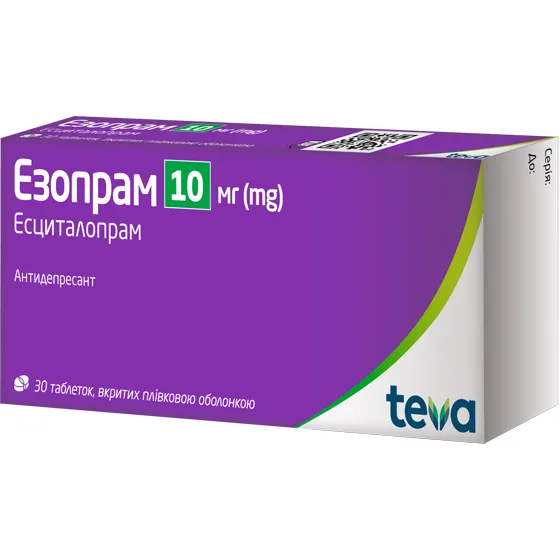
Table of Contents
INSTRUCTIONS FOR MEDICAL USE OF THE MEDICINAL PRODUCT EZOPRAM (EZOPRAM)
Composition:
Active substance: escitalopram;
1 tablet contains: escitalopram oxalate equivalent to escitalopram 10 mg or 20 mg;
Excipients: microcrystalline cellulose, colloidal anhydrous silica, talc, sodium croscarmellose, magnesium stearate;
coating: Opadry 03F2846 White: hypromellose 6 cP, titanium dioxide (E 171), polyethylene glycol 600.
Pharmaceutical form. Film-coated tablets.
Main physico-chemical properties:
Esopram 10 mg – white, oval, biconvex film-coated tablets with marking «E» on one side and a division line on the other side and on both sides;
Esopram 20 mg – white, oval, biconvex film-coated tablets with marking «E» on one side and a division line on the other side and on both sides.
Pharmacotherapeutic group. Antidepressants. Selective serotonin reuptake inhibitors (SSRIs). ATC code N06AB10.
Pharmacological Properties
Pharmacodynamics
Escitalopram is a selective serotonin reuptake inhibitor (5-HT) with high affinity for the primary binding site. It also binds to the allosteric site of the serotonin transporter with 1000-fold lower affinity.
Escitalopram has no or very weak affinity for receptors such as 5-HT1A, 5-HT2, dopaminergic D1 and D2 receptors, α1-, α2-, β-adrenergic receptors, histamine H1, muscarinic cholinergic, benzodiazepine, and opioid receptors. Inhibition of serotonin (5-HT) reuptake is considered the only plausible mechanism capable of explaining the pharmacological and clinical effects of escitalopram.
Pharmacokinetics
Absorption. Absorption is almost complete and is not affected by food intake. The median time to reach maximum plasma concentration (median Tmax) is approximately 4 hours. The absolute bioavailability of escitalopram is expected to be around 80%.
Distribution. The apparent volume of distribution (Vd, β/F) after oral administration ranges from 12 to 26 L/kg. Plasma protein binding of escitalopram and its main metabolites is less than 80%.
Biotransformation. Escitalopram is metabolized in the liver into biologically active demethylated and didemethylated metabolites. Nitrogen may also be oxidized to form an N-oxide metabolite. Both metabolites and the parent compound are partially excreted as glucuronides. After repeated administration, the average concentrations of the demethyl and didemethyl metabolites are typically 28–31% and <5% of escitalopram concentration, respectively. The biotransformation of escitalopram into its demethylated metabolite occurs primarily via the cytochrome CYP2C19. Enzymes CYP3A4 and CYP2D6 may also play a minor role.
Elimination. The elimination half-life (t½β) after repeated administration is approximately 30 hours. Oral plasma clearance is 0.6 L/min. The main metabolites of escitalopram have a longer half-life. Escitalopram and its main metabolites are considered to be eliminated via hepatic (metabolic pathway) and renal routes. The majority is excreted in urine as metabolites.
The pharmacokinetics of escitalopram are linear. Steady-state concentrations are reached after approximately 1 week. The mean steady-state concentration of 50 nmol/L (ranging from 20 to 125 nmol/L) is achieved with a daily dose of 10 mg.
Elderly patients (aged 65 years and older)
Elimination of escitalopram in elderly patients is slower compared to younger patients. Systemic exposure (AUC) in elderly individuals is approximately 50% higher than in younger healthy volunteers.
Hepatic impairment
In patients with mild to moderate hepatic insufficiency (Child-Pugh class A and B), the elimination half-life of escitalopram is nearly doubled, and systemic exposure is approximately 60% higher than in individuals with normal liver function.
Renal impairment
In patients with impaired renal function (CLcr 10–53 mL/min), an increased elimination half-life of racemic citalopram and a slight increase in systemic exposure have been observed. Plasma concentrations of metabolites have not been studied, but an increase can be assumed.
Polymorphism. In individuals with reduced CYP2C19 enzyme activity, plasma concentrations of the drug were approximately twice as high compared to those with normal escitalopram metabolism. No significant changes in exposure were observed in individuals with reduced CYP2D6 enzyme activity.
Clinical characteristics.
Indications.
Treatment:
- Major depressive episodes;
- Panic disorders with or without agoraphobia;
- Social anxiety disorders (social phobia);
- Generalized anxiety disorders;
- Obsessive-compulsive disorders.
Contraindications.
- Hypersensitivity to escitalopram or to any of the excipients of the medicinal product;
- Concomitant use with non-selective irreversible monoamine oxidase inhibitors (MAOIs) is contraindicated due to the risk of serotonin syndrome, which manifests as agitation, tremor, hyperthermia, etc. Combined treatment with escitalopram and reversible MAO-A inhibitors (e.g., moclobemide) or reversible non-selective MAO inhibitors (linezolid) is also contraindicated due to the risk of serotonin syndrome;
- Congenital or diagnosed QT interval prolongation, concomitant use with medicinal products that prolong the QT interval.
Interaction with other medicinal products and other forms of interaction.
Pharmacodynamic interactions
Contraindicated combinations
Non-selective irreversible MAOIs
Serious reactions have been reported in patients taking SSRIs in combination with non-selective irreversible MAOIs, as well as in patients who have recently discontinued SSRI treatment and started MAOI therapy. In some cases, serotonin syndrome developed.
The combination of escitalopram with non-selective irreversible MAOIs is contraindicated. Escitalopram treatment should be initiated no earlier than 14 days after discontinuation of irreversible MAOIs and at least one day after discontinuation of reversible MAOIs such as moclobemide. Treatment with non-selective irreversible MAOIs should not be initiated earlier than 7 days after stopping escitalopram.
Reversible selective MAO-A inhibitor (moclobemide)
Due to the risk of serotonin syndrome, the combination of escitalopram with the MAO-A inhibitor moclobemide is contraindicated. If this combination is deemed necessary, the lowest recommended doses should be used initially with careful clinical monitoring.
Escitalopram treatment may be initiated no earlier than 1 day after discontinuation of the reversible selective MAO inhibitor moclobemide.
Reversible non-selective MAO inhibitor (linezolid)
The antibiotic linezolid (a reversible non-selective MAO inhibitor) should not be administered to patients taking escitalopram. If this combination is necessary, the lowest recommended doses should be prescribed initially with careful clinical monitoring.
Selective irreversible MAO-B inhibitor (selegiline)
The concomitant use of escitalopram with selegiline should be approached with caution due to the risk of serotonin syndrome. There is experience with safe use of selegiline at doses up to 10 mg/day administered concurrently with racemic citalopram.
Medicinal products that prolong the QT interval
Pharmacokinetic and pharmacodynamic studies of escitalopram with medicinal products that prolong the QT interval have not been conducted. An additive effect of escitalopram and these medicinal products cannot be excluded. Therefore, concomitant use of escitalopram with medicinal products that prolong the QT interval, such as Class IA and III antiarrhythmics, antipsychotics (including phenothiazine derivatives, pimozide, haloperidol), tricyclic antidepressants, certain antimicrobial agents (including sparfloxacin, moxifloxacin, intravenous erythromycin, pentamidine), antimalarials, particularly halofantrine, and certain antihistamines (including astemizole, mizolastine), is contraindicated.
Combinations requiring caution
Serotonergic medicinal products
Concomitant use with serotonergic medicinal products (e.g., opioids such as tramadol and buprenorphine; sumatriptan and other triptans) may lead to the development of serotonin syndrome.
Medicinal products that lower seizure threshold
SSRIs may lower the seizure threshold. Caution is recommended when co-administering medicinal products that lower the seizure threshold [e.g., antidepressants (tricyclics, SSRIs), neuroleptics (phenothiazines, thioxanthenes, butyrophenones), mefloquine, bupropion, and tramadol].
Lithium, tryptophan
Cases of enhanced effects have been reported with concomitant use of SSRIs with lithium or tryptophan. Therefore, concomitant administration of these agents with escitalopram should be done with caution.
St. John’s wort
Concomitant use of SSRIs and herbal preparations containing St. John’s wort (Hypericum perforatum) may lead to an increased frequency of adverse reactions.
Anticoagulants
The effects of anticoagulants may be altered when used concomitantly with escitalopram. Patients taking oral anticoagulants should undergo careful monitoring of the coagulation system before and after initiating escitalopram.
Concomitant use of non-steroidal anti-inflammatory drugs may increase the risk of bleeding.
Ethanol
Escitalopram has no pharmacodynamic or pharmacokinetic interaction with ethanol. However, as with other psychotropic medicinal products, concomitant use of escitalopram with ethanol-containing preparations is not recommended.
Medicinal products that may cause hypokalemia/hypomagnesemia
Caution should be exercised when using escitalopram concomitantly with medicinal products that cause hypokalemia/hypomagnesemia, as the risk of developing malignant arrhythmias increases with such combination therapy (see section "Special precautions for use").
Pharmacokinetic interactions
Effect of other medicinal products on the pharmacokinetics of escitalopram
The metabolism of escitalopram occurs primarily via CYP2C19. CYP3A4 and CYP2D6 play a lesser role in its metabolism. CYP2D6 is partially responsible for the catalysis of the metabolism of the main metabolite S-DCT (demethylated escitalopram).
Concomitant administration of escitalopram and omeprazole 30 mg once daily (a CYP2C19 inhibitor) results in a moderate increase (approximately 50%) in plasma escitalopram concentrations.
Concomitant administration of escitalopram and cimetidine 400 mg twice daily (a moderate general enzyme inhibitor) results in a moderate increase (approximately 70%) in plasma escitalopram concentrations, which may require dose adjustment.
Therefore, escitalopram should be prescribed with caution when used concomitantly with cytochrome CYP2C19 inhibitors (e.g., omeprazole, esomeprazole, fluconazole, fluvoxamine, lansoprazole, ticlopidine) or cimetidine. When used concomitantly with the above-mentioned agents, a reduction in the dose of escitalopram may be necessary depending on the presence of adverse effects.
Effect of escitalopram on the pharmacokinetics of other medicinal products
Escitalopram is an inhibitor of the CYP2D6 isoenzyme. Caution is required when prescribing escitalopram concomitantly with medicinal products whose metabolism is mediated by this isoenzyme, as well as with drugs that have a narrow therapeutic index, such as flecainide, propafenone, metoprolol (used in heart failure), or with centrally acting drugs primarily metabolized by CYP2D6, such as antidepressants—desipramine, clomipramine, and nortriptyline; antipsychotics—risperidone, thioridazine, or haloperidol. In such cases, dose adjustment may be necessary.
Concomitant administration with desipramine (the main metabolite of imipramine) or metoprolol results in a doubling of plasma levels of these two CYP2D6 substrates. In vitro studies have shown that escitalopram causes weak inhibition of CYP2C19. Therefore, caution is recommended when co-administering medicinal products whose metabolism is mediated by CYP2C19.
Special precautions for use.
The special warnings listed below apply to the entire class of SSRIs.
Children and adolescents
Suicidal behaviour (suicidal attempts and suicidal thoughts) and hostility (predominantly aggression, oppositional behaviour and anger) have been observed more frequently in clinical trials among children receiving antidepressants compared to those receiving placebo. If a decision to prescribe is made for clinical reasons, careful monitoring for the emergence of suicidal symptoms in the patient is required. In addition, there are no data on the long-term safety in children regarding growth, sexual maturation, and cognitive and behavioural development. Therefore, the drug should not be used for the treatment of children and adolescents (under 18 years of age).
Paradoxical anxiety
In some patients with panic disorders, increased anxiety may occur at the beginning of SSRI treatment. This paradoxical reaction usually disappears within two weeks of treatment. To reduce the likelihood of an anxiogenic effect, low initial doses are recommended.
Seizures
Escitalopram should be discontinued if a patient develops a seizure for the first time or if the frequency of seizures increases (in patients with established epilepsy diagnosis). SSRIs should be avoided in patients with unstable epilepsy, and patients with controlled epilepsy should be closely monitored.
Mania
SSRIs should be used with caution in the treatment of patients with a history of mania/hypomania. If a manic state develops, SSRIs should be discontinued.
Diabetes mellitus
In patients with diabetes mellitus, SSRI treatment may affect glycaemic control (hypoglycaemia or hyperglycaemia). Adjustment of insulin or oral hypoglycaemic agents may be required.
Suicide, suicidal thoughts or clinical worsening
Depression is associated with a risk of suicidal thoughts, self-harm and suicide. This risk persists until a sustained remission is achieved. Since improvement may not occur during the first weeks of treatment or longer, patients should be carefully monitored until their condition improves. Clinical evidence shows that the risk of suicide may increase in the early stages of recovery.
Other indications for which escitalopram is used may also be associated with a risk of suicidal behaviour. In addition, such conditions may be comorbid with major depressive disorder.
Therefore, these warnings are relevant when treating patients with other psychiatric disorders.
Patients with a history of suicidal behaviour prior to the start of treatment have the highest risk of suicidal thoughts or attempts and require careful monitoring during treatment. A meta-analysis of studies revealed an increased risk of suicidal behaviour among patients under 25 years of age receiving antidepressants compared to those receiving placebo. Close monitoring of high-risk patients is particularly necessary at the beginning of treatment and when changing dosage.
Patients (and their caregivers) should be warned to monitor for any worsening of condition, suicidal behaviour or thoughts, and unusual changes in behaviour, and to seek immediate medical consultation if such events occur.
Akathisia/psychomotor agitation
The use of SSRIs/ SNRIs is associated with the development of akathisia—a condition characterized by an unpleasant, distressing sense of restlessness and a compelling need to move, often accompanied by an inability to sit or stand still. This condition is most likely to occur during the first few weeks of treatment. Increasing the dose may be harmful in patients who develop such symptoms.
Hyponatraemia
Isolated cases of hyponatraemia have been reported during SSRI use, probably due to disorders of antidiuretic hormone secretion, which usually resolves after discontinuation of treatment. Particular caution is required when treating patients at risk, particularly elderly patients, patients with liver cirrhosis, and patients concurrently using medicinal products that may cause hyponatraemia.
Bleeding
Skin haemorrhages such as ecchymoses and purpura have been reported with SSRI use. Caution is required when using SSRIs, especially in combination with oral anticoagulants, drugs affecting platelet function (e.g., atypical antipsychotics and phenothiazines, most tricyclic antidepressants, acetylsalicylic acid and non-steroidal anti-inflammatory drugs (NSAIDs), ticlopidine and dipyridamole), and in patients with a predisposition to bleeding.
The use of SSRIs/SNRIs may increase the risk of postpartum haemorrhage (see sections "Use during pregnancy or breastfeeding" and "Adverse reactions").
Electroconvulsive therapy (ECT)
Clinical experience with concomitant use of SSRIs and ECT is limited; therefore, caution should be exercised.
Serotonin syndrome
Caution is required when prescribing escitalopram in combination with medicinal products having serotonergic effects, such as sumatriptan and other triptans, opioids (tramadol and buprenorphine), and tryptophan.
Isolated cases of serotonin syndrome have been reported in patients taking SSRIs together with serotonergic medicinal products. Symptoms indicating the onset of this condition may include agitation, tremor, myoclonic seizures, and hyperthermia. In such cases, escitalopram and the serotonergic medicinal product should be discontinued immediately, and symptomatic treatment initiated.
St. John's wort
Concomitant use of SSRIs and herbal preparations containing St. John's wort (Hypericum perforatum) may lead to an increased frequency of adverse reactions.
Withdrawal syndrome
Symptoms of withdrawal usually occur upon discontinuation of treatment (especially abrupt discontinuation). In clinical trials, adverse effects associated with discontinuation of treatment were observed in approximately 25% of patients in the escitalopram group and in 15% of patients in the placebo group.
The risk of developing withdrawal symptoms depends on several factors, including duration and dose of therapy, and the gradualness of dose reduction. The most commonly reported symptoms include dizziness, sensory disturbances (including paraesthesia and electric shock sensations), sleep disturbances (including insomnia and vivid dreams), agitation or anxiety, nausea/vomiting, tremor, confusion, excessive sweating, headache, diarrhoea, palpitations, emotional instability, irritability, and visual disturbances. Generally, these symptoms are mild to moderate in severity, but may be severe in some patients. They usually occur within the first few days after discontinuation of treatment, although isolated reports of such symptoms after unintentional omission of a single dose have been documented. These symptoms are usually limited in duration and resolve within 2 weeks, although in some individuals they may be prolonged (2–3 months or more). In such cases, it is recommended to discontinue escitalopram gradually by tapering the dose over a period of several weeks to several months, depending on the patient's condition.
Coronary heart disease
Due to limited clinical experience, caution is required when treating patients with coronary heart disease.
QT interval prolongation
Escitalopram has been shown to cause dose-dependent QT interval prolongation. In the post-marketing period, cases of QT interval prolongation and ventricular arrhythmias, including torsades de pointes, have been reported, occurring predominantly in women with hypokalaemia or in patients with pre-existing QT interval prolongation or other cardiac diseases.
Caution is required when using the drug in patients with marked bradycardia and in patients with recent acute myocardial infarction or decompensated heart failure. Electrolyte imbalances such as hypokalaemia and hypomagnesaemia increase the risk of developing malignant arrhythmias and should be corrected before initiating escitalopram treatment.
An ECG should be performed in patients with stabilized cardiac diseases prior to starting treatment.
If signs of cardiac rhythm disturbances occur during escitalopram use, treatment should be discontinued and an ECG performed.
Closed-angle glaucoma
SSRIs, including escitalopram, may affect pupil size, leading to mydriasis. This mydriatic effect may cause narrowing of the anterior chamber angle, resulting in increased intraocular pressure and the development of closed-angle glaucoma, particularly in predisposed patients. Therefore, the drug should be used with caution in patients with closed-angle glaucoma or a history of glaucoma.
Sexual dysfunction
The use of SSRIs/SNRIs may cause symptoms of sexual dysfunction. Reports of persistent sexual dysfunction have been documented, where symptoms persisted even after discontinuation of SSRIs/SNRIs.
Use during pregnancy or breastfeeding.
Pregnancy
Clinical data on the use of escitalopram for the treatment of pregnant women are limited.
In reproductive toxicity studies conducted in rats using escitalopram, embryofetotoxic effects were observed, but without an increase in the frequency of developmental malformations.
Escitalopram should not be prescribed to pregnant women except in cases where a careful risk-benefit assessment has clearly demonstrated the necessity of using the drug. Careful examination of newborns whose mothers received escitalopram during pregnancy, particularly in the third trimester, is recommended. Abrupt discontinuation of treatment during pregnancy should also be avoided.
In newborns whose mothers received selective serotonin reuptake inhibitors (SSRIs)/serotonin-norepinephrine reuptake inhibitors (SNRIs) in late pregnancy, the following symptoms may occur: respiratory distress syndrome, cyanosis, apnoea, seizures, temperature instability, feeding difficulties, vomiting, hypoglycaemia, arterial hypertension, hypotension, hyperreflexia, tremor, jitteriness, nervousness, irritability, apathy, persistent crying, somnolence, and sleep disturbances. These symptoms may develop either as a result of excessive serotonergic activity or as withdrawal symptoms. In most cases, complications manifest immediately or shortly (within 24 hours) after delivery.
Epidemiological data have shown that the use of SSRIs during pregnancy increases the risk of persistent pulmonary hypertension in newborns: the risk is approximately 5 cases per 1000 pregnancies, compared to 1–2 cases per 1000 pregnancies in the general population. Observational data indicate an increased risk (less than 2-fold) of postpartum haemorrhage following the use of SSRIs/SNRIs within one month before delivery (see sections "Special precautions for use" and "Adverse reactions").
Breastfeeding
It is assumed that escitalopram passes into breast milk. Therefore, breastfeeding is recommended to be discontinued during treatment.
Fertility
Animal studies have shown that some SSRIs may affect sperm quality. Data from human studies using individual SSRIs suggest that this effect on sperm quality is reversible. To date, no effect on human fertility has been identified.
Ability to affect reaction speed when driving vehicles or operating machinery.
Although it has been established that escitalopram does not affect cognitive functions and psychomotor activity, any psychotropic agent may impair the ability to think rationally or skills. Patients should be warned about the potential risk of impaired ability to drive vehicles or operate machinery.
Method of Administration and Dosage.
The safety of doses exceeding 20 mg per day has not been established.
Ezopram should be administered orally once daily to adults, independent of food intake.
- Major Depressive Episodes. The usual dose is 10 mg once daily. Depending on individual patient sensitivity, the daily dose may be increased to a maximum of 20 mg.
Antidepressant effect usually occurs within 2–4 weeks. After symptom remission, treatment should be continued for approximately 6 months to consolidate the therapeutic effect.
- Panic Disorders with or without Agoraphobia. A starting dose of 5 mg (administered in the appropriate dosage form) once daily is recommended during the first week before increasing the dose to 10 mg daily. The dose may then be increased to a maximum of 20 mg daily, depending on individual patient sensitivity.
Maximum therapeutic effect in treating panic disorders is achieved within 3 months. The duration of treatment is several months and depends on the severity of the condition.
- Social Anxiety Disorders (Social Phobia). The usual dose is 10 mg once daily. Depending on individual patient sensitivity, the daily dose may be increased to a maximum of 20 mg daily.
Symptom improvement usually occurs within 2–4 weeks of treatment. Continued treatment for 3 months is recommended. Long-term treatment for 6 months prevents recurrence of the disorder and may be prescribed based on individual disease manifestations; the benefits of treatment should be regularly evaluated. Social anxiety disorder is a clearly defined diagnostic entity and should not be confused with exaggerated shyness. Pharmacotherapy is indicated only for disorders significantly impairing a person's professional and social functioning. The efficacy of such treatment compared to cognitive-behavioral therapy has not been studied. Pharmacotherapy should be part of an overall therapeutic strategy.
- Generalized Anxiety Disorders. The usual dose is 10 mg once daily. Depending on individual sensitivity, the dose may be increased up to a maximum of 20 mg daily. Continued treatment for 3 months is recommended to consolidate the effect.
Long-term treatment has been studied for at least 6 months in patients receiving a daily dose of 20 mg. The benefit of treatment and appropriateness of dosing should be regularly evaluated.
- Obsessive-Compulsive Disorder (OCD). The usual dose is 10 mg once daily. Depending on individual sensitivity, the dose may be increased up to a maximum of 20 mg daily. OCD is a chronic condition; treatment should continue for a sufficient duration to ensure complete symptom remission. The benefit of treatment and appropriateness of dosing should be regularly evaluated.
Elderly Patients (aged 65 years and older)
The recommended daily dose for elderly patients is 5 mg (administered in the appropriate dosage form). Depending on individual sensitivity and severity of depression, the daily dose may be increased to 10 mg daily.
The efficacy of escitalopram in treating social anxiety disorders in elderly patients has not been studied.
Renal Impairment
Dose adjustment is not required in patients with mild to moderate renal impairment. The drug should be used with caution in patients with severe renal impairment (creatinine clearance <30 mL/min).
Hepatic Impairment
For patients with mild to moderate hepatic impairment, the recommended initial dose for the first two weeks of treatment is 5 mg daily. Depending on individual patient response, the dose may be increased to 10 mg daily. Escitalopram should be used with particular caution in patients with severe hepatic impairment, with careful dose titration.
Patients with Reduced CYP2C19 Activity
For patients with low CYP2C19 isoenzyme activity, the recommended initial dose for the first two weeks of treatment is 5 mg daily. Depending on individual patient response, the dose may be increased to 10 mg daily.
Discontinuation of Treatment
Abrupt discontinuation of treatment should be avoided.
When discontinuing Ezopram, the dose should be gradually reduced over 1–2 weeks to avoid withdrawal reactions. If withdrawal symptoms occur during dose reduction or after treatment discontinuation, resuming the previously prescribed dose may be necessary. The physician may then continue tapering the dose more gradually.
Children
The drug is contraindicated for use in children (under 18 years of age). Suicidal behavior (suicidal attempts and suicidal thoughts) and hostility (mainly aggression, oppositional behavior, and anger) have been observed more frequently in children treated with antidepressants compared to those receiving placebo. If a clinical decision to prescribe the drug is made, careful monitoring for the emergence of suicidal symptoms is required. Furthermore, there are no data on long-term safety in children regarding growth, sexual maturation, and cognitive and behavioral development.
Overdose.
Toxicity. Clinical data on escitalopram overdose are limited. Many cases involve concomitant overdose with other drugs. In most cases, symptoms were absent or mild in severity. Reports of fatal outcomes following escitalopram overdose are rare, and most involved concomitant overdose with other medications. Ingestion of escitalopram alone in doses of 400–800 mg did not result in any severe symptoms.
Symptoms. Signs of escitalopram overdose primarily affect the central nervous system (from dizziness, tremor, and agitation to rare cases of serotonin syndrome, seizures, and coma), gastrointestinal system (nausea, vomiting), cardiovascular system (hypotension, tachycardia, QT interval prolongation, arrhythmias), and electrolyte imbalances (hypokalemia, hyponatremia).
Treatment. There is no specific antidote. Airway patency must be established and maintained, with adequate oxygenation and respiratory support. Gastric lavage should be performed as soon as possible after oral ingestion, followed by activated charcoal administration. Continuous monitoring of cardiovascular function and vital signs, combined with general symptomatic and supportive measures, is recommended.
Adverse Reactions
Adverse effects most commonly occur during the first or second week of treatment and usually diminish with continuation of therapy.
The adverse effects typical for all SSRIs and escitalopram, observed during placebo-controlled clinical trials and post-marketing use, are listed below by organ systems and frequency of occurrence.
Frequency classification: very common (≥1/10), common (≥1/100 to <1/10), uncommon (≥1/1000 to <1/100), rare (≥1/10000 to <1/1000), very rare (<1/10000), or not known (cannot be estimated from available data).
Blood and lymphatic system disorders
Not known: thrombocytopenia.
Immune system disorders
Rare: anaphylactic reactions.
Endocrine system disorders
Not known: disturbance of antidiuretic hormone secretion.
Nutrition and metabolism disorders
Common: decreased or increased appetite, weight gain.
Uncommon: weight loss.
Not known: hyponatremia, anorexia².
Psychiatric disorders
Common: anxiety, restlessness, abnormal dreams, decreased libido in both men and women, anorgasmia in women.
Uncommon: bruxism (teeth grinding during sleep), agitation, nervousness, panic attacks, confusion.
Rare: aggression, depersonalization, hallucinations.
Not known: mania, suicidal thoughts, suicidal behavior¹.
Nervous system disorders
Very common: headache.
Common: insomnia, somnolence, dizziness, paresthesia, tremor.
Uncommon: taste disturbance, sleep disorders, syncope.
Rare: serotonin syndrome.
Not known: dyskinesia, movement disorders, seizures, psychomotor agitation/akathisia².
Eye disorders
Uncommon: pupillary dilation, visual disturbances.
Ear and labyrinth disorders
Uncommon: tinnitus.
Cardiac disorders
Uncommon: tachycardia.
Rare: bradycardia.
Not known: ventricular arrhythmia, including torsades de pointes, QT interval prolongation (occurred predominantly in female patients with hypokalemia, pre-existing QT prolongation, or other cardiac diseases).
Vascular disorders
Not known: orthostatic hypotension.
Respiratory system disorders
Common: sinusitis, yawning.
Uncommon: epistaxis (nasal bleeding).
Gastrointestinal disorders
Very common: nausea.
Common: vomiting, diarrhea, constipation, dry mouth.
Uncommon: gastrointestinal hemorrhage (including rectal bleeding).
Hepatobiliary disorders
Not known: hepatitis, changes in liver function tests.
Skin and subcutaneous tissue disorders
Common: increased sweating.
Uncommon: skin rash, alopecia, urticaria, pruritus.
Not known: bruising, angioedema.
Musculoskeletal and connective tissue disorders
Common: arthralgia, myalgia.
Renal and urinary disorders
Not known: urinary retention.
Reproductive system and breast disorders
Common: in men: ejaculation disorders, impotence.
Uncommon: in women: metrorrhagia, menorrhagia.
Not known: galactorrhea; in men: priapism; in women: postpartum hemorrhage³.
General disorders
Common: fatigue, pyrexia.
Uncommon: edema.
¹ Suicidal thoughts and behaviors have been reported during treatment with escitalopram or shortly after discontinuation.
² These events are known for the entire SSRI class.
³ This event has been reported for the therapeutic class of SSRIs/SSRI-SNRIs as a whole (see sections "Special precautions for use", "Use during pregnancy or breastfeeding").
Specific effects of SSRIs
Available data suggest an increased risk of bone fractures in patients aged 50 years and older treated with SSRIs and tricyclic antidepressants. The mechanism of this phenomenon is unknown.
Withdrawal symptoms
Discontinuation of SSRIs/SSRI-SNRIs (especially abrupt) commonly leads to withdrawal symptoms. Dizziness, sensory disturbances (including paresthesia and electric shock sensations), sleep disturbances (including insomnia and vivid dreams), agitation or anxiety, nausea and/or vomiting, tremor, confusion, excessive sweating, headache, diarrhea, palpitations, emotional instability, irritability, and visual disturbances are the most commonly reported reactions. These symptoms are usually mild to moderate and transient; however, in some patients they may be severe and/or prolonged. Therefore, it is recommended to gradually discontinue escitalopram treatment by dose reduction (see section "Special precautions for use").
QT interval prolongation
During the post-marketing period, cases of QT interval prolongation, including torsades de pointes, have been reported, primarily in female patients with hypokalemia, pre-existing QT prolongation, or other cardiac conditions (see section "Special precautions for use").
Shelf life: 3 years.
Storage conditions.
Store in a dry, light-protected place at a temperature not exceeding 25 °C. Keep out of reach of children.
Packaging.
10 tablets in a blister pack, 3 blisters per cardboard box.
Prescription status: Prescription only.
Manufacturer:
Actavis LTD.
Balkanpharma-Dupnitsa AD.
Manufacturer's address and place of business:
BLB015, BLB 016 Bulbule Industrial Building, Zeitun ZTN 3000, Malta.
3 Samokovsko Shose Str., Dupnitsa, 2600, Bulgaria.