Escuvit
Ukraine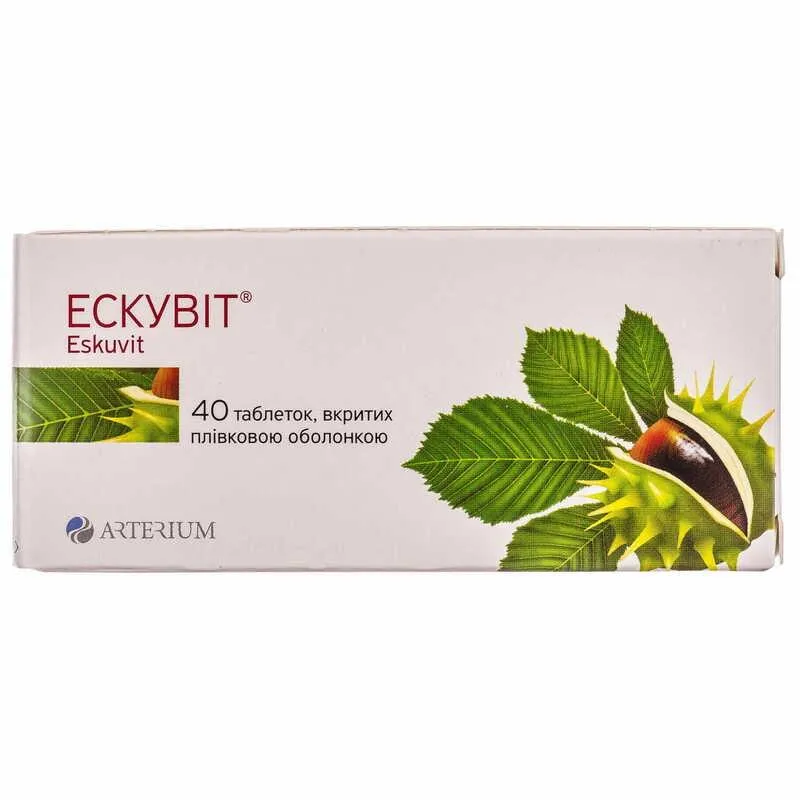
Table of Contents
INSTRUCTIONS FOR MEDICAL USE OF THE MEDICINAL PRODUCT ESKUVIT® (ESKUVIT)
Composition:
Active substance: 1 tablet contains 40 mg of dry extract of horse chestnut fruit (Aesculus hippocastanum D), (1:8.57) (extractant – ethanol 50%), containing not less than 50% of total saponins calculated as escin and dry matter;
Excipients: lactose monohydrate; sodium croscarmellose; light magnesium carbonate; potato starch; calcium stearate; coating mixture "Opadry II Green" 33G21239 (containing: triacetin; hypromellose; lactose monohydrate; titanium dioxide (E 171); polyethylene glycol 3000 (macrogol); tartrazine (E 102); indigo carmine (E 132)).
Pharmaceutical form. Film-coated tablets.
Main physico-chemical properties: film-coated tablets, green in color, round-shaped, biconvex surface; two layers visible upon breaking.
Pharmacotherapeutic group. Angioprotectors. Capillary-stabilizing agents.
ATC code C05CX03.
Pharmacological properties.
Pharmacodynamics.
Angioprotective, capillary-stabilizing, anti-edematous, anti-inflammatory agent. The mechanism of action of escin is due to stabilization of lysosomal membranes and inhibition of release of autolytic cellular enzymes, resulting in reduced degradation of mucopolysaccharides and improved trophic processes in the walls of venous vessels and surrounding connective tissue. The drug reduces pathologically increased vascular-tissue permeability, preventing transcapillary filtration of low-molecular-weight proteins, electrolytes, and fluid into the interstitial space. It increases venous wall tone, eliminates venous stasis (especially in the lower extremities), and reduces peripheral edema, sensation of heaviness in the legs, increased fatigue, tension, itching, and pain.
Pharmacokinetics.
After oral administration, escin is rapidly absorbed, primarily from the duodenum. It undergoes pronounced first-pass liver metabolism. In tissue fluid and blood plasma, escin binds to proteins (approximately 84%) and cholesterol. It is metabolized in the liver. Eliminated from the body via urine and bile as metabolites.
Clinical characteristics.
Indications.
- Chronic venous insufficiency.
- Hemorrhoids.
- Inflammation of veins of the lower limbs.
- Prevention and treatment of post-traumatic and postoperative edema and hematomas.
- Post-thrombotic syndrome.
Contraindications.
Hypersensitivity to the components of the drug, renal insufficiency.
Interaction with other medicinal products and other forms of interaction.
The drug may enhance the effect of antithrombotic agents. Cephalosporin antibiotics increase the concentration of free escin in blood and the risk of adverse effects.
Concomitant use of the drug with aminoglycoside antibiotics should be avoided due to increased nephrotoxic potential of aminoglycosides.
Special precautions for use.
In case of dyspeptic symptoms, it is recommended to take the drug during meals.
The drug must not be used in patients with rare hereditary forms of galactose intolerance, lactase deficiency, or glucose-galactose malabsorption syndrome.
If unusual symptoms occur in one leg, such as swelling, skin discoloration, sensation of tightness or warmth, as well as pain, medical advice must be sought immediately, as these symptoms may indicate serious medical complications.
Renal function should be monitored during treatment with this drug.
When using the drug, patients should follow physician recommendations regarding preventive measures, such as wearing supportive bandages, special garments, or applying cold compresses.
The drug contains the azo dye tartrazine (E 102), which may cause allergic reactions.
Use during pregnancy or breastfeeding.
The drug is not recommended for use during pregnancy or breastfeeding due to insufficient data on its safety in these patient groups.
Ability to affect reaction speed when driving or operating machinery.
The drug does not affect the ability to drive or operate machinery.
Dosage and Administration.
For adults: take 1 tablet (40 mg) three times daily. The tablets should be taken after meals with plenty of water.
The duration of treatment is determined individually by a physician, depending on the severity of the disease and the clinical response to the drug. The usual course of treatment is 3 months; if necessary, the duration may be extended.
Children.
The drug is not intended for use in children.
Overdose.
An overdose may enhance adverse effects. Arterial hypotension may occur following overdose. Listed below are poisoning symptoms observed after ingestion of horse chestnut fruits: feeling of anxiety, severe diarrhea accompanied by vomiting; mydriasis, drowsiness, delirium, and potentially fatal outcome due to respiratory paralysis within 24–48 hours.
When high doses of the drug are used, nephrotoxic reactions and thrombosis are possible.
Adverse Reactions.
Nervous system: headache, dizziness.
Skin, subcutaneous tissues/immune system: hypersensitivity reactions, including urticaria, rash, itching, sensation of warmth, angioneurotic edema.
Cardiovascular system: tachycardia, rapid heartbeat, arterial hypotension.
Gastrointestinal tract: dyspeptic symptoms, epigastric pain, nausea, diarrhea, vomiting.
If other adverse reactions occur, consult a physician.
Shelf life. 3 years.
Storage conditions. Store in the original packaging at a temperature not exceeding 25 °C. Keep out of reach of children.
Packaging. 10 tablets in a blister; 2 or 4 blisters per pack.
Availability. Over-the-counter (without prescription).
Manufacturer.
JSC "Kyivmedpreparat".
JSC "Halychpharm".
Manufacturer's address and place of business.
139 Saksaganskoho St., Kyiv, 01032, Ukraine.
6/8 Opryshkovska St., Lviv, 79024, Ukraine.