Enzystal p
Ukraine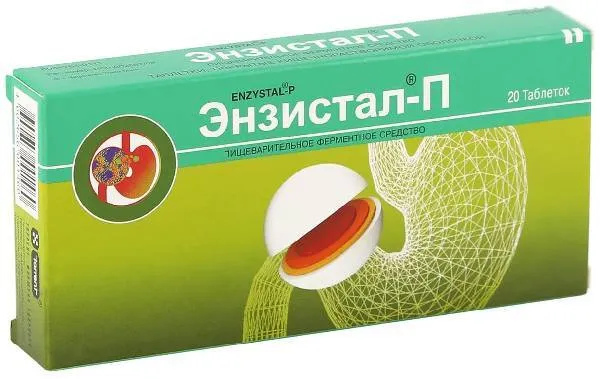
Table of Contents
- INSTRUCTIONS FOR MEDICAL USE OF THE MEDICINAL PRODUCT ENZISTAL P
- Composition:
- Pharmacological properties.
- Clinical characteristics.
- Instructions for use.
- Dosage and Administration.
- Side effects.
- Composition:
- Pharmacological properties.
- Clinical characteristics.
- Instructions for use.
- Dosage and Administration.
- Side effects.
INSTRUCTIONS FOR MEDICAL USE OF THE MEDICINAL PRODUCT ENZISTAL P
Composition:
Active substance:
1 tablet contains 89.36 mg of powdered pancreatin, equivalent to amylase activity of 4200 IU. Ph.Eur., lipase activity of 3500 IU. Ph.Eur., protease activity of 250 IU. Ph.Eur.;
Excipients: lactose monohydrate, microcrystalline cellulose, magnesium stearate, colloidal anhydrous silicon dioxide, sodium starch glycolate (type A), hypromellose, polyethylene glycol 6000, titanium dioxide (E 171), cellulose acetate phthalate, diethyl phthalate, carmoisine (E 122), white wax.
Pharmaceutical form. Enteric-coated tablets.
Main physicochemical characteristics: round, biconvex, pink-colored tablets, coated.
Pharmacotherapeutic group.
Pancreatic enzyme preparations. ATC code A09AA02.
Pharmacological properties.
Pharmacodynamics.
Pancreatin contains exocrine enzymes of the pancreas – lipase, amylase, trypsin, and chymotrypsin, which participate in the digestion of fats, carbohydrates, and proteins. Pancreatin is not absorbed in the gastrointestinal tract but is excreted in feces, and most of it is degraded and denatured in the gastrointestinal tract under the action of digestive juices and bacteria. The key factor of its efficacy is the enzymatic activity of lipase, as well as the action of trypsin, whereas amylolytic activity is significant only in the treatment of cystic fibrosis, since even in chronic pancreatitis, digestion of dietary polysaccharides occurs without disturbances.
Clinical characteristics.
Indications.
Simultaneous consumption of poorly digestible plant-based foods, fatty foods, and unfamiliar foods; flatulence associated with the aforementioned disorders.
Contraindications.
Hypersensitivity to pancreatic powder from pigs (pork allergy), carmoisine (E 122), or to any component of the medicinal product. Acute pancreatitis or exacerbation of chronic pancreatitis. Obstructive intestinal obstruction.
Interaction with other medicinal products and other forms of interactions.
The use of medicinal products containing pancreatic powder may reduce the absorption of folic acid, thus additional folic acid supplementation may be required.
The effect of oral antidiabetic agents such as acarbose and miglitol may be reduced when used concomitantly with Enzystal P.
Instructions for use.
The drug contains active enzymes which, when released in the oral cavity (e.g. by chewing the tablet), may damage the mucous membrane of the mouth and lead to ulcer formation. Therefore, tablets should be swallowed whole.
Use during pregnancy or breastfeeding.
The use of the drug during pregnancy and breastfeeding is possible if, in the opinion of the physician, the expected beneficial effect for the mother outweighs the potential risk to the fetus/child.
Ability to influence reaction rate while driving or operating machinery.
No warnings.
Dosage and Administration.
Adults and children aged 3 years and older usually take 1–2 tablets during meals, without chewing them, and with sufficient fluid, for example, a glass of water.
Depending on the type of food consumed or the severity of digestive disturbances, an additional 2–4 tablets may be taken during meals for enzyme replacement therapy.
The dosage may be adjusted and is determined individually by a physician.
The duration of treatment is determined by a physician on an individual basis.
Children.
The medication may be used in children aged 3 years and older.
Overdose.
When extremely high doses of other pancreatin-containing preparations were taken, hyperuricemia and hyperuricosuria were observed. Treatment is symptomatic.
Side effects.
Immune system side effects: immediate-type allergic reactions (skin rashes, sneezing, lacrimation, bronchospasm); urticaria, skin hyperemia, itching, sensation of heat, tachycardia, weakness, angioneurotic edema.
Gastrointestinal side effects: diarrhea, abdominal discomfort, abdominal pain, nausea, vomiting, constipation, bloating, development of intestinal obstruction.
Other: the product contains carmoisine (E 122), which may cause allergic reactions.
Shelf life. 3 years.
Storage conditions.
Store at a temperature not exceeding 25 °C in the original packaging.
Keep out of reach of children.
Packaging.
10 tablets in a blister pack, 2 blisters per cardboard box.
Availability category. Over-the-counter (without prescription).
Manufacturer
Torrent Pharmaceuticals Ltd.
Manufacturer's address and location of business operations.
Bhad and Makhnu Majra, Tehsil: Baddi – 173205, Dist-Solan (H.P.), India
INSTRUCTIONS
for medical use of medicinal product
ENZYSTAL P
Composition:
Active ingredient:
Each tablet contains 89.36 mg of powdered pancreatin, equivalent to amylase activity of 4200 IU Ph.Eur., lipase activity of 3500 IU Ph.Eur., and protease activity of 250 IU Ph.Eur.
Excipients: lactose monohydrate, microcrystalline cellulose, magnesium stearate, colloidal anhydrous silicon dioxide, sodium starch glycolate (type A), hypromellose, polyethylene glycol 6000, titanium dioxide (E 171), cellulose acetate phthalate, diethyl phthalate, carmoisine (E 122), white wax.
Pharmaceutical form. Enteric-coated tablets.
Main physicochemical properties: round, biconvex, pink-colored tablets with a coating.
Pharmacotherapeutic group.
Pancreatic enzyme preparations. ATC code A09AA02.
Pharmacological properties.
Pharmacodynamics.
Pancreatin contains exocrine enzymes of the pancreas – lipase, amylase, trypsin, and chymotrypsin, which participate in the digestion of fats, carbohydrates, and proteins. Pancreatin is not absorbed in the gastrointestinal tract but is excreted in the feces, and most of it is degraded and denatured in the gastrointestinal tract under the action of digestive juices and bacteria. The key factor of its efficacy is the enzymatic activity of lipase, as well as the action of trypsin, while the amylolytic activity is significant only in the treatment of cystic fibrosis, since even in chronic pancreatitis, digestion of dietary polysaccharides occurs without disturbances.
Clinical characteristics.
Indications.
Concomitant intake of poorly digestible plant-based foods, fatty and unusual foods; flatulence associated with the aforementioned disorders.
Contraindications.
Hypersensitivity to pancreatic powder from pigs (allergy to pork), carmoisine (E 122), or to any component of the medicinal product. Acute pancreatitis or exacerbation of chronic pancreatitis. Obstructive intestinal obstruction.
Interaction with other medicinal products and other forms of interaction.
The use of medicinal products containing pancreatic powder may reduce the absorption of folic acid, thus additional intake of folic acid may be required.
The effect of oral antidiabetic agents such as acarbose and miglitol may be reduced when co-administered with Enzystal P.
Instructions for use.
The drug contains active enzymes which, when released in the oral cavity (e.g., by chewing the tablet), may damage the mucous membrane of the mouth, leading to ulceration. Therefore, tablets should be swallowed whole.
Use during pregnancy or breastfeeding.
The use of this drug during pregnancy and breastfeeding is possible if, in the opinion of the physician, the expected beneficial effect for the mother outweighs the potential risk to the fetus/infant.
Ability to influence reaction rate while driving or operating machinery.
No warnings.
Dosage and Administration.
Adults and children aged 3 years and older usually take 1-2 tablets during meals, without chewing them, and with sufficient fluid, for example, a glass of water.
Depending on the type of food consumed or the severity of digestive disturbances, an additional 2-4 tablets may be taken during meals for enzyme replacement therapy.
The dosage of the drug may be adjusted and is determined individually by a physician.
The duration of treatment is determined by a physician on an individual basis.
Children.
The drug is used in children aged 3 years and older.
Overdose.
With intake of extremely high doses of other pancreatin-containing drugs, hyperuricemia and hyperuricosuria have been observed. Treatment is symptomatic.
Side effects.
Immune system side effects: immediate-type allergic reactions (skin rashes, sneezing, lacrimation, bronchospasm); urticaria, skin hyperemia, itching, sensation of warmth, tachycardia, weakness, angioneurotic edema.
Gastrointestinal side effects: diarrhea, abdominal discomfort, abdominal pain, nausea, vomiting, constipation, bloating, development of intestinal obstruction.
Other: the product contains Carmoisine (E 122), which may cause allergic reactions.
Shelf life. 3 years.
Storage conditions.
Store at a temperature not exceeding 25 °C in the original packaging.
Keep out of reach of children.
Packaging.
10 tablets per blister pack, 2 blisters per cardboard box.
Availability category. Over-the-counter.
Manufacturer
Torrent Pharmaceuticals Ltd.
Manufacturer's address and location of business operations.
Bhad and Makhnun Majra, Tehsil: Baddi – 173205, Dist-Solan (H.P.), India.