Enalapril
Ukraine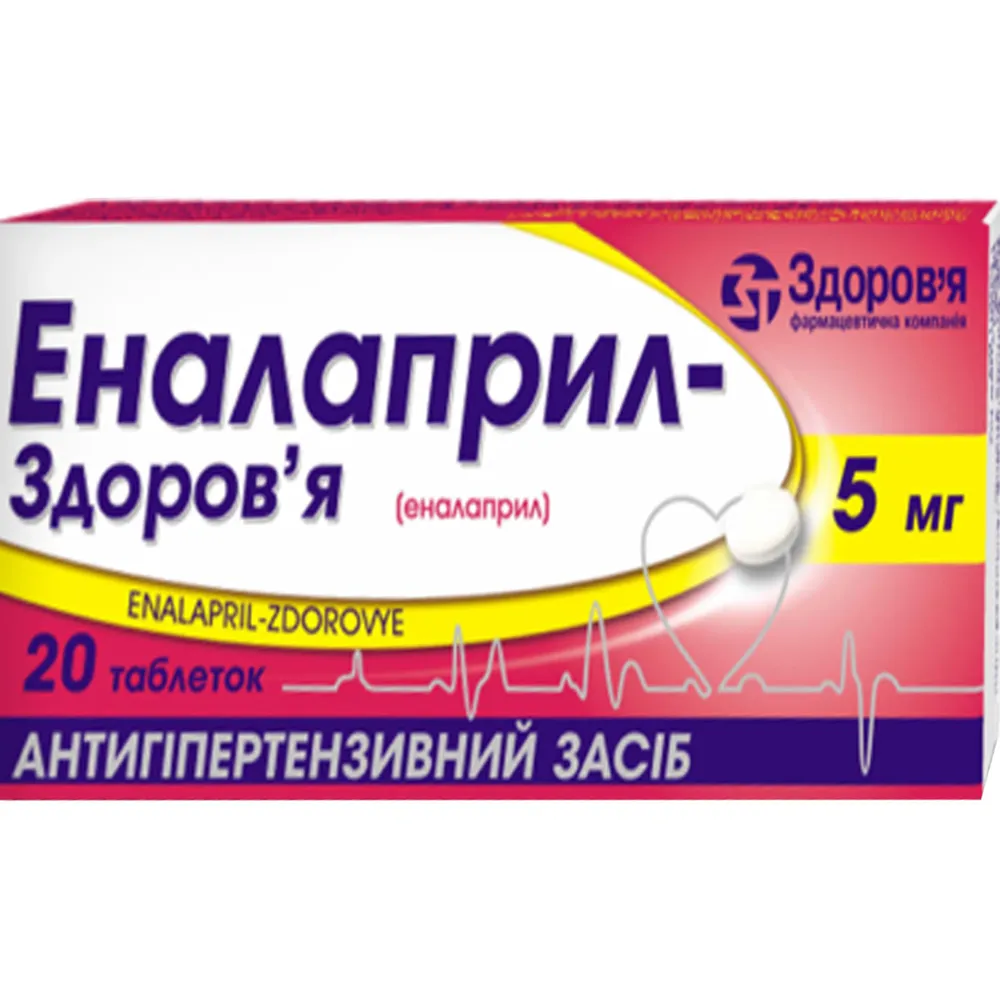
Table of Contents
INSTRUCTIONS FOR MEDICAL USE OF THE MEDICINAL PRODUCT ENALAPRIL (ENALAPRIL)
Composition:
Active substance: enalapril;
1 tablet contains enalapril maleate equivalent to 100% substance 10 mg or 20 mg;
Excipients: sodium hydrocarbonate; lactose monohydrate; corn starch; pregelatinized starch; magnesium stearate.
Pharmaceutical form. Tablets.
Main physico-chemical properties: round, biconvex tablets of white or almost white color, with the imprint "10" (for 10 mg dosage) or "20" (for 20 mg dosage) on one side.
Pharmacotherapeutic group. Angiotensin-converting enzyme inhibitors, single-component. Enalapril. ATC code C09A A02.
Pharmacological Properties
Pharmacodynamics
Enalapril is the maleate salt of enalapril, a derivative of two amino acids, L-alanine and L-proline.
Mechanism of Action
Angiotensin-converting enzyme (ACE) is a peptidyl dipeptidase that catalyzes the conversion of angiotensin I into the pressor substance angiotensin II. After absorption, enalapril is hydrolyzed to enalaprilat, which inhibits ACE. Inhibition of ACE leads to a reduction in plasma angiotensin II levels, resulting in increased plasma renin activity (due to suppression of the negative feedback of angiotensin II on renin release) and decreased aldosterone secretion.
ACE is identical to kininase II. Thus, enalapril may also block the breakdown of bradykinin, a potent vasodilator peptide. However, the significance of this effect for the therapeutic action of the drug remains unclear.
The mechanism by which enalapril reduces blood pressure is primarily attributed to inhibition of the renin-angiotensin-aldosterone system (RAAS). Enalapril may exert antihypertensive effects even in patients with low-renin hypertension.
Administration of enalapril in arterial hypertension results in reduction of blood pressure in both supine and upright positions without a significant increase in heart rate.
Symptomatic postural hypotension occurs infrequently. In some patients, optimal blood pressure reduction may require several weeks of therapy. Abrupt discontinuation of enalapril has not been associated with rapid rebound hypertension.
Effective inhibition of ACE activity is generally achieved within 2–4 hours after a single oral dose of enalapril. Antihypertensive activity typically begins within 1 hour, with peak blood pressure reduction occurring 4–6 hours after administration. The duration of effect is dose-dependent. However, at recommended doses, antihypertensive and hemodynamic effects are maintained for at least 24 hours.
In hemodynamic studies of patients with essential hypertension, blood pressure reduction was generally associated with decreased peripheral arterial resistance, increased cardiac output, and either slight tachycardia or no change in heart rate. Following enalapril administration, renal blood flow typically increases, while glomerular filtration rate (GFR) remains unchanged. Signs of sodium or water retention are not observed. However, in patients with low baseline GFR, this value usually increases.
In short-term clinical studies in patients with or without diabetes and kidney disease, enalapril administration was associated with reduced albuminuria, urinary IgG excretion, and total urinary protein excretion.
When used concomitantly with thiazide diuretics, the antihypertensive effects of enalapril are at least additive. Enalapril may reduce or prevent the development of thiazide-induced hypokalemia.
In patients with heart failure receiving cardiac glycosides and diuretics, administration of oral or injectable enalapril was associated with reduced peripheral resistance and blood pressure. Cardiac output increased, and heart rate (usually elevated in heart failure patients) decreased. Pulmonary capillary wedge pressure also decreased. Exercise tolerance improved, and the severity of heart failure, assessed by NYHA (New York Heart Association) criteria, was reduced. These effects were sustained during long-term treatment.
In patients with mild to moderate heart failure, enalapril slowed the progression of myocardial dilation and heart failure, as evidenced by reduced left ventricular end-diastolic and end-systolic volumes and improved ejection fraction.
In a multicenter, randomized, double-blind, placebo-controlled trial (SOLVD Prevention), a population with asymptomatic left ventricular dysfunction (left ventricular ejection fraction <35%) was studied. A total of 4228 patients were randomized to receive placebo (n = 2117) or enalapril (n = 2111). In the placebo group, 818 patients developed heart failure or died (38.6%) compared to 630 in the enalapril group (29.8%) (29% risk reduction, 95% CI, 21–36%, p < 0.001). 518 patients in the placebo group (24.5%) and 434 in the enalapril group (20.6%) died or were hospitalized due to development or worsening of heart failure (20% risk reduction, 95% CI; 9–30%, p < 0.001). In a multicenter, randomized, double-blind, placebo-controlled trial (SOLVD Treatment), a population with symptomatic congestive heart failure associated with systolic dysfunction (ejection fraction <35%) was studied. 2569 patients receiving standard heart failure therapy were randomized to placebo (n = 1284) or enalapril (n = 1285). There were 510 deaths (39.7%) in the placebo group compared to 452 in the enalapril group (35.2%) (16% risk reduction, 95% CI, 5–26%, p = 0.0036). Cardiovascular deaths were 461 in the placebo group versus 399 in the enalapril group (18% risk reduction, 95% CI, 6–28%, p < 0.002), primarily due to reduced mortality from progressive heart failure (251 in placebo vs. 209 in enalapril group, 22% risk reduction, 95% CI, 6–35%). Fewer patients died or were hospitalized due to worsening heart failure (736 in placebo vs. 613 in enalapril group, 26% risk reduction, 95% CI, 18–34%, p < 0.0001). Overall, in the SOLVD trial, enalapril reduced the risk of myocardial infarction by 23% (95% CI, 11–34%, p < 0.001) and reduced the risk of hospitalization for unstable angina by 20% (95% CI, 9–29%, p < 0.001).
Clinical Pharmacology in Children
Experience with enalapril use in children aged 6 years and older with arterial hypertension is limited. In a clinical study involving 110 children aged 6 to 16 years with arterial hypertension, body weight ≥20 kg, and glomerular filtration rate >30 mL/min/1.73 m², patients weighing <50 kg received 0.625, 2.5, or 20 mg of enalapril daily, while those weighing ≥50 kg received 1.25, 5, or 40 mg daily. Once-daily enalapril administration reduced diastolic blood pressure in a dose-dependent manner. The dose-dependent antihypertensive effect of enalapril was consistent across all subgroups (age, Tanner stage, sex, race). However, the lowest studied doses, 0.625 mg and 1.25 mg (averaging approximately 0.02 mg/kg once daily), did not provide sustained antihypertensive effects. The maximum studied dose was 0.58 mg/kg (up to 40 mg) once daily. The adverse effect profile in children was similar to that in adults.
Pharmacokinetics
Absorption
After oral administration, enalapril is rapidly absorbed, with peak serum concentrations of enalapril achieved within 1 hour. The extent of absorption from tablets is approximately 60%. The presence of food in the gastrointestinal tract does not affect the absorption of oral enalapril. After absorption, orally administered enalapril is rapidly and extensively hydrolyzed to enalaprilat, a potent ACE inhibitor. Peak serum concentrations of enalaprilat occur approximately 4 hours after oral enalapril administration.
The effective half-life (T½) of enalaprilat after multiple oral doses is 11 hours.
Distribution
Across the entire therapeutic concentration range, no more than 60% of enalaprilat is protein-bound to serum proteins.
Biological Transformation
Apart from conversion to enalaprilat, there is no evidence of significant further metabolism of enalapril.
Elimination
Enalaprilat is primarily eliminated by the kidneys. The main components in urine are enalaprilat, accounting for approximately 40% of the dose, and unchanged enalapril (approximately 20%).
Renal Impairment
In patients with renal impairment, exposure to enalapril and enalaprilat is increased. In patients with mild to moderate renal dysfunction (creatinine clearance 40–60 mL/min), the steady-state AUC of enalaprilat is approximately twice that in patients with normal renal function after 5 mg once daily. In severe renal impairment (creatinine clearance ≤30 mL/min), AUC increases approximately 8-fold. After multiple doses of enalapril maleate, the effective elimination half-life of enalaprilat is prolonged, and the time to reach steady state is increased (see section "Dosage and Administration").
Enalaprilat can be removed from the systemic circulation by hemodialysis. The dialysis clearance of enalaprilat is 62 mL/min.
Clinical characteristics.
Indications.
- Treatment of arterial hypertension;
- treatment of clinically manifest heart failure;
- prevention of clinically manifest heart failure in patients with asymptomatic left ventricular dysfunction (ejection fraction ≤ 35%).
Contraindications.
- Hypersensitivity to enalapril, to any excipient, or to any other angiotensin-converting enzyme (ACE) inhibitor.
- History of angioedema associated with ACE inhibitor therapy.
- Hereditary or idiopathic angioedema.
- Pregnancy or planned pregnancy (see section "Use in pregnancy or lactation").
Enalapril must not be used in combination with aliskiren-containing products in patients with diabetes or renal impairment (GFR < 60 mL/min/1.73 m²).
Enalapril must not be used in combination with sacubitril/valsartan, as this combination increases the risk of angioedema. Enalapril must not be administered within 36 hours before or after sacubitril/valsartan, a neprilysin inhibitor-containing product (see sections "Special warnings and precautions for use" and "Interaction with other medicinal products and other forms of interaction").
Interaction with other medicinal products and other forms of interaction.
Antihypertensive therapy
Concomitant use of antihypertensive agents may potentiate the hypotensive effect of enalapril. Concomitant use with nitroglycerin, other nitrates, or other vasodilators may additionally reduce arterial blood pressure.
Potassium-sparing diuretics, potassium supplements, or other agents that may increase serum potassium levels
ACE inhibitors reduce diuretic-induced potassium loss. Concomitant use of potassium-sparing diuretics (e.g., spironolactone, eplerenone, triamterene, or amiloride), potassium-containing dietary supplements, salt substitutes containing potassium, or other agents that may increase serum potassium levels (e.g., trimethoprim-containing preparations) may lead to significant increases in serum potassium, particularly in patients with impaired renal function. If concomitant use of enalapril with the above agents is considered necessary, they should be used with caution and serum potassium levels should be monitored regularly (see section "Special warnings and precautions for use").
Diuretics (thiazide or loop diuretics)
Prior treatment with high-dose diuretics may result in reduced intravascular volume and increase the risk of arterial hypotension at the start of enalapril therapy (see section "Special warnings and precautions for use"). Hypotensive effects may be minimized by discontinuing the diuretic, increasing dietary salt intake, or initiating therapy with a low dose of enalapril.
Antidiabetic agents
Epidemiological studies have shown that concomitant use of ACE inhibitors and antidiabetic agents (insulin, oral hypoglycemic agents) may reduce blood glucose levels, increasing the risk of hypoglycemia. This phenomenon is most likely during the first weeks of concomitant therapy and in patients with renal impairment (see sections "Special warnings and precautions for use", "Undesirable effects").
Serum lithium
Increases in serum lithium levels and lithium toxicity have been reported during concomitant use of ACE inhibitors and lithium. Concomitant use of ACE inhibitors with thiazide diuretics may further increase serum lithium levels and increase the risk of lithium toxicity. Concomitant use of enalapril and lithium is not recommended; however, if such combination is necessary for a patient, careful monitoring of serum lithium levels is required (see section "Special warnings and precautions for use").
Tricyclic antidepressants/neuroleptics/anesthetics/sedatives
Concomitant use of certain anesthetics, tricyclic antidepressants, and neuroleptics with ACE inhibitors may lead to additional reduction in arterial blood pressure (see section "Special warnings and precautions for use").
Non-steroidal anti-inflammatory drugs, including selective cyclooxygenase-2 inhibitors
Non-steroidal anti-inflammatory drugs (NSAIDs), including selective cyclooxygenase-2 (COX-2) inhibitors, may reduce the effects of diuretics and other antihypertensive agents. Thus, the antihypertensive effect of angiotensin II receptor antagonists or ACE inhibitors may be attenuated by NSAIDs, including selective COX-2 inhibitors.
Concomitant use of NSAIDs, including COX-2 inhibitors, with angiotensin II receptor antagonists or ACE inhibitors may have additive effects on increasing serum potassium and may lead to deterioration of renal function. These effects are usually reversible.
Acute renal failure may rarely occur, particularly in certain patients with pre-existing renal impairment (e.g., elderly patients or patients with reduced intravascular volume, including those receiving diuretics). Therefore, such combinations should be used with caution in patients with renal impairment. Patients should be adequately hydrated and renal function should be closely monitored at the start of concomitant therapy and periodically during treatment.
Dual blockade of the renin-angiotensin-aldosterone system (RAAS)
Dual blockade (e.g., adding an ACE inhibitor to an angiotensin II receptor antagonist) should be limited to selected cases with careful monitoring of blood pressure, renal function, and electrolyte levels. Several studies have reported that in patients with established atherosclerotic vascular disease, heart failure, or diabetes with end-organ damage, dual blockade of the renin-angiotensin-aldosterone system is associated with higher incidences of arterial hypotension, syncope, hyperkalemia, and worsening renal function (including acute renal failure) compared to treatment with a single agent acting on the RAAS.
Enalapril must not be used with aliskiren in patients with diabetes or renal impairment (GFR < 60 mL/min/1.73 m²) (see sections "Contraindications" or "Special warnings and precautions for use").
Gold preparations
Nitritoid reactions (symptoms including facial swelling, nausea, vomiting, and arterial hypotension) have been rarely reported in patients receiving injectable gold preparations (sodium aurothiomalate) concomitantly with an ACE inhibitor, including enalapril.
Medicinal products that increase the risk of angioedema
Concomitant use of ACE inhibitors with sacubitril/valsartan is contraindicated due to increased risk of angioedema (see sections "Contraindications" and "Special warnings and precautions for use").
Concomitant use of ACE inhibitors with racécadotril, mTOR inhibitors (such as sirolimus, everolimus, temsirolimus), or vildagliptin may increase the risk of angioedema (see section "Special warnings and precautions for use").
Sympathomimetics
Sympathomimetics may reduce the antihypertensive effects of ACE inhibitors.
Alcohol
Alcohol enhances the hypotensive effect of ACE inhibitors.
Acetylsalicylic acid, thrombolytics, and β-blockers
Enalapril can be safely used concomitantly with acetylsalicylic acid (at cardiologic doses), thrombolytics, and β-blockers.
Special precautions for use.
Symptomatic hypotension
Symptomatic hypotension is rarely observed in patients with uncomplicated arterial hypertension. In patients with arterial hypertension receiving enalapril, symptomatic hypotension occurs more frequently in the presence of hypovolemia, which may result, for example, from diuretic therapy, salt restriction, in patients undergoing hemodialysis, as well as in patients with diarrhea or vomiting (see sections "Interaction with other medicinal products and other forms of interaction" and "Side effects"). Symptomatic hypotension has also been observed in patients with heart failure, with or without renal insufficiency. Symptomatic hypotension occurs more frequently in patients with more severe forms of heart failure, who are receiving higher doses of loop diuretics, have hyponatremia, or impaired renal function. Such patients should begin treatment with enalapril under medical supervision. Monitoring should be particularly careful when adjusting the dose of enalapril and/or diuretic. Similarly, patients with ischemic heart disease or cerebrovascular disease should be closely monitored, as excessive reduction in blood pressure may lead to myocardial infarction or stroke.
In case of development of arterial hypotension, the patient should be placed in a horizontal position and, if necessary, physiological saline should be administered intravenously. Transient arterial hypotension during enalapril administration is not a contraindication for further use, which can usually be continued without complications after normalization of blood pressure by restoring fluid volume.
In some patients with heart failure and normal or low blood pressure, enalapril may further reduce blood pressure levels. This response to the drug is expected and generally is not a reason to discontinue treatment. If arterial hypotension becomes symptomatic, dose reduction and/or discontinuation of diuretic and/or enalapril therapy may be necessary.
Aortic or mitral stenosis / hypertrophic cardiomyopathy
Like all vasodilators, ACE inhibitors should be used with caution in patients with obstruction of the left ventricular outflow tract or outflow tract obstruction. Their use should be avoided in cases of cardiogenic shock and hemodynamically significant obstruction.
Renal impairment
For patients with impaired renal function (creatinine clearance < 80 mL/min), the initial dose of enalapril should be adjusted according to creatinine clearance (see section "Dosage and administration") and subsequently based on response to treatment. Regular monitoring of serum potassium and creatinine levels is standard medical practice for such patients.
Renal impairment has been reported in association with enalapril use, predominantly in patients with severe heart failure or kidney disease, including renal artery stenosis. Renal failure associated with enalapril therapy is usually reversible when detected early and managed appropriately.
In some patients with hypertension, without prior kidney disease, enalapril in combination with diuretics has caused usually mild and transient increases in blood urea nitrogen and serum creatinine. In such cases, dose reduction and/or discontinuation of the diuretic may be necessary. This situation increases the likelihood of renal artery stenosis (see section "Special precautions for use": Renovascular hypertension).
Renovascular hypertension
There is an increased risk of arterial hypotension and renal failure in patients with bilateral renal artery stenosis or stenosis of the artery of a single functioning kidney treated with ACE inhibitors. Loss of renal function may occur even with minimal changes in serum creatinine levels. Such patients should start treatment with low doses under close medical supervision, with careful titration and monitoring of renal function.
Kidney transplantation
There is no experience with enalapril use in patients who have recently undergone kidney transplantation. Therefore, enalapril treatment is not recommended for these patients.
Hepatic impairment
Rarely, ACE inhibitors have been associated with a syndrome beginning with cholestatic jaundice or hepatitis and progressing to fulminant hepatic necrosis and (sometimes) death. The mechanism of this syndrome remains unclear. Patients taking ACE inhibitors who develop jaundice or marked elevation of liver enzymes should discontinue the ACE inhibitor and be placed under appropriate medical observation.
Neutropenia/agranulocytosis
Cases of neutropenia/agranulocytosis, thrombocytopenia, and anemia have been reported in patients taking ACE inhibitors. Neutropenia is rare in patients with normal renal function and in the absence of other complicating factors. Enalapril should be used with extreme caution in patients with collagen vascular diseases receiving immunosuppressive therapy, allopurinol, or procainamide, or in combination with these complicating factors, especially if renal function is already impaired. Serious infections, sometimes unresponsive to intensive antibiotic therapy, have developed in some of these patients. Periodic monitoring of white blood cell count is recommended when enalapril is prescribed to such patients, and patients should be advised to report any signs of infection.
Hypersensitivity/angioedema
Cases of angioedema of the face, extremities, lips, tongue, glottis, and/or larynx have been reported during treatment with ACE inhibitors, including enalapril, occurring at various times during therapy. In such cases, enalapril treatment should be discontinued immediately and continuous observation of the patient should be instituted until complete resolution of symptoms is confirmed. Observation may be discontinued only after this. Even when only tongue swelling occurs without respiratory distress, prolonged observation may be required, as treatment with antihistamines and corticosteroids may be insufficient.
Very rarely, death due to angioedema of the larynx or tongue swelling has been reported. When swelling occurs in the area of the tongue, glottis, or larynx, especially in patients with a history of airway surgery, airway obstruction may develop. When the tongue, pharynx, or larynx are involved and airway obstruction is possible, appropriate therapy should be initiated immediately, which may include subcutaneous administration of 1:1000 adrenaline solution (0.3–0.5 mL) and/or measures to ensure airway patency.
Angioedema occurs more frequently in patients of Black race taking ACE inhibitors compared to patients of other races.
Patients with a history of angioedema unrelated to ACE inhibitor use may have an increased risk of developing angioedema when treated with an ACE inhibitor (see also section "Contraindications").
Concomitant use of ACE inhibitors with racecadotril, mTOR inhibitors (such as sirolimus, everolimus, temsirolimus), and vildagliptin may increase the risk of angioedema (e.g., swelling of the airways or tongue with or without respiratory distress) (see section "Contraindications"). Caution should be exercised when using racecadotril, mTOR inhibitors (such as sirolimus, everolimus, temsirolimus), and vildagliptin in patients already taking ACE inhibitors. Concomitant use of enalapril with sacubitril/valsartan is contraindicated due to increased risk of angioedema (see section "Contraindications"). Sacubitril/valsartan therapy should be initiated only 36 hours after the last dose of enalapril. If sacubitril/valsartan therapy is discontinued, enalapril therapy should be initiated only 36 hours after the last dose of sacubitril/valsartan (see sections "Contraindications" and "Interaction with other medicinal products and other forms of interaction").
Anaphylactoid reactions during allergen desensitization with Hymenoptera venom
Rarely, anaphylactoid reactions, potentially life-threatening, have occurred in patients receiving ACE inhibitors during allergen desensitization with Hymenoptera venom. Such reactions may be avoided by temporarily discontinuing the ACE inhibitor before desensitization.
Anaphylactoid reactions during low-density lipoprotein apheresis
Rarely, life-threatening anaphylactoid reactions have occurred in patients taking ACE inhibitors during low-density lipoprotein apheresis with dextran sulfate. Such reactions may be avoided by temporarily discontinuing ACE inhibitors before each apheresis session.
Patients undergoing hemodialysis
Patients undergoing dialysis with high-flux membranes (e.g., AN 69®) and concomitantly taking an ACE inhibitor may develop anaphylactoid reactions. Therefore, for such patients, consideration should be given to using dialysis membranes of a different type or an antihypertensive agent from another class.
Hypoglycemia
Patients with diabetes who are taking oral antidiabetic agents or insulin and starting ACE inhibitor therapy should be advised to monitor blood glucose levels carefully, especially during the first few months of concomitant use (see section "Interaction with other medicinal products and other forms of interaction").
Cough
Cough has been reported during treatment with ACE inhibitors. The cough is usually non-productive and persistent and resolves after discontinuation of the drug. Cough due to ACE inhibitor therapy should be considered in the differential diagnosis of cough.
Surgical procedures/anesthesia
During major surgical procedures or anesthesia with agents causing arterial hypotension, enalapril blocks the formation of angiotensin II secondary to compensatory renin release. If arterial hypotension develops due to these interaction mechanisms, it can be corrected by increasing fluid volume.
Hyperkalemia
During treatment with ACE inhibitors, including enalapril, increased serum potassium levels have been observed in some patients. The risk of hyperkalemia is increased in patients with renal impairment, impaired renal function, age > 70 years, diabetes mellitus, transient conditions such as dehydration, acute heart decompensation, metabolic acidosis, and concomitant use of potassium-sparing diuretics (e.g., spironolactone, eplerenone, triamterene, or amiloride), potassium-containing dietary supplements, salt substitutes containing potassium, or other drugs associated with increased serum potassium levels (e.g., heparin, trimethoprim-containing preparations). Concomitant use of potassium-containing dietary supplements, potassium-sparing diuretics, potassium-containing salt substitutes, or other drugs that may increase serum potassium levels, especially in patients with impaired renal function, may lead to significant increases in serum potassium. Hyperkalemia may cause serious, sometimes fatal, arrhythmias. If concomitant use of enalapril and any of the above-mentioned drugs is considered necessary, they should be used with caution, with regular monitoring of serum potassium levels (see section "Interaction with other medicinal products and other forms of interaction").
Lithium
Combination of lithium and enalapril is generally not recommended (see section "Interaction with other medicinal products and other forms of interaction").
Concomitant therapy with ACE inhibitor and angiotensin receptor antagonist
Data indicate that concomitant use of ACE inhibitors, angiotensin II receptor blockers, or aliskiren increases the risk of arterial hypotension, hyperkalemia, and decreased renal function (including acute renal failure). Therefore, dual blockade of the RAAS pathway by combining ACE inhibitors, angiotensin II receptor blockers, or aliskiren is not recommended (see sections "Interaction with other medicinal products and other forms of interaction" and "Pharmacological properties").
If dual blockade is necessary, therapy should be conducted under specialist supervision with continuous monitoring of renal function, electrolyte levels, and blood pressure. ACE inhibitors and angiotensin II receptor blockers should not be used concomitantly in patients with diabetic nephropathy (see section "Interaction with other medicinal products and other forms of interaction").
Lactose
Enalapril contains lactose and therefore should not be used in patients with rare hereditary conditions of galactose intolerance, lactase deficiency, or glucose-galactose malabsorption.
Children
There is limited experience with effective and safe use in children aged 6 years and older with arterial hypertension, but no experience with other indications. There are also limited pharmacokinetic data in children from 2 months of age (see sections "Dosage and administration", "Pharmacological properties"). Enalapril is not recommended for treating children with conditions other than arterial hypertension.
Enalapril is not recommended for use in newborns and children with glomerular filtration rate < 30 mL/min/1.73 m² due to lack of data (see section "Dosage and administration").
Pregnancy
The medicinal product should not be used during pregnancy or by women planning to become pregnant.
If pregnancy is confirmed, treatment with ACE inhibitors should be discontinued immediately and, if possible, alternative therapy should be initiated (see sections "Contraindications" and "Use during pregnancy or breastfeeding").
Ethnic characteristics
Like other ACE inhibitors, enalapril is less effective in reducing blood pressure in patients of Black race compared to other racial groups, possibly because low renin levels are more common in this population of patients with arterial hypertension.
Sodium content
Each tablet of the medicinal product ENALAPRIL, 10 mg tablets contains 1.4 mg of sodium per tablet.
Each tablet of the medicinal product ENALAPRIL, 20 mg tablets contains 2.8 mg of sodium per tablet.
Use during pregnancy or breastfeeding.
Pregnancy
The drug should not be used during pregnancy or by women planning to become pregnant. If pregnancy is confirmed during treatment with this drug, its use should be discontinued immediately and replaced with another drug approved for use during pregnancy.
ACE inhibitors used during the second and third trimesters of pregnancy may cause fetotoxicity (reduced renal function, oligohydramnios, delayed skull ossification) or neonatal toxicity (renal failure, arterial hypotension, hyperkalemia).
If ACE inhibitors were taken during the second trimester of pregnancy, ultrasound examination of the kidneys and skull is recommended.
Newborns whose mothers took ACE inhibitors should be closely monitored for signs of arterial hypotension (see sections "Contraindications", "Special precautions for use").
Breastfeeding period
Limited pharmacokinetic data indicate very low concentrations of the drug in breast milk (see section "Pharmacokinetics"). Although such concentrations are considered clinically insignificant, enalapril use is not recommended during breastfeeding of preterm infants and newborns in the first few weeks after birth due to a theoretical risk of cardiovascular and renal effects and insufficient experience. In the case of older infants, enalapril use during breastfeeding may be considered if treatment is necessary for the mother, provided the infant is monitored for any adverse effects.
Ability to affect reaction rate when driving or operating machinery.
When driving or operating machinery, the possible development of dizziness or increased fatigue should be taken into account.
Dosage and Administration
Food intake does not affect the absorption of Enalapril tablets. Since the tablet is not scored and cannot be divided, in cases where a dose lower than 10 mg is prescribed, enalapril-containing medications with appropriate dosing options should be used.
Dosage must be individually adjusted according to each patient's condition (see section "Special Instructions") and the response of arterial blood pressure.
Children
There is limited experience from clinical studies on the use of enalapril in the treatment of hypertension in children (see sections "Special Instructions", "Pharmacological Properties").
Arterial Hypertension
The dose of enalapril ranges from an initial 5 mg to a maximum of 20 mg, depending on the severity of arterial hypertension and the patient's condition (see below). Enalapril is taken once daily. For mild arterial hypertension, the recommended initial dose of enalapril is 5–10 mg.
In patients with a highly activated renin-angiotensin-aldosterone system (e.g., renovascular hypertension, disturbances in salt and/or fluid balance, decompensated cardiac function, or severe arterial hypertension), excessive reduction in arterial blood pressure may occur after the initial dose. Such patients should start with a dose of enalapril 5 mg or lower, and treatment initiation should be under medical supervision.
Prior treatment with high doses of diuretics may lead to fluid depletion and increase the risk of arterial hypotension at the beginning of enalapril therapy. For such patients, the recommended initial dose of enalapril is 5 mg or lower. If possible, diuretic therapy should be discontinued 2–3 days before starting enalapril treatment. Renal function and serum potassium levels should be monitored.
The usual maintenance dose is 20 mg once daily. The maximum maintenance dose is 40 mg per day.
Heart Failure / Asymptomatic Left Ventricular Dysfunction
For the treatment of clinically manifest heart failure, enalapril is used in combination with diuretics and, if necessary, with cardiac glycosides or beta-blockers. The initial dose of enalapril for patients with clinically manifest heart failure or asymptomatic left ventricular dysfunction is 2.5 mg. The drug should be administered under close medical supervision to assess the initial effect of enalapril on arterial blood pressure. In the absence of adverse effects or after appropriate management of symptomatic hypotension occurring at the beginning of enalapril therapy in heart failure treatment, the dose may be gradually increased to the usual maintenance dose of 20 mg, which may be given as a single dose or divided into two doses per day, depending on patient tolerance. Dose titration is recommended over 2–4 weeks. This therapeutic regimen has been shown to effectively reduce mortality in patients with clinically manifest heart failure. The maximum dose is 40 mg per day, given in two divided doses.
Table 1
Proposed dose adjustment of enalapril in patients with heart failure / asymptomatic left ventricular dysfunction.
| Week |
Dose, mg/day |
| Week 1 |
days 1–3: 2.5 mg/day* once daily days 4–7: 5 mg/day in two divided doses |
| Week 2 |
10 mg/day in one or two divided doses |
| Weeks 3 and 4 |
20 mg/day in one or two divided doses |
*The drug should be used with caution in patients with impaired renal function or those taking diuretics (see section "Special precautions").
Careful monitoring of blood pressure and renal function should be performed both before and during treatment with Enalapril (see section "Special precautions"), as cases of arterial hypotension and (less frequently) subsequent renal failure have been reported. In patients receiving diuretics, the diuretic dose should be reduced, if possible, prior to initiating treatment with Enalapril. The occurrence of arterial hypotension after the initial dose of Enalapril does not necessarily predict persistent hypotension during prolonged therapy and is not an indication to discontinue the drug. Serum potassium levels and renal function should also be monitored.
Dosing in renal impairment
In general, the dosing interval of enalapril should be prolonged and/or the dosage reduced; see Table 2.
Table 2
| Renal status |
Creatinine clearance (CrCL), mL/min |
Initial dose, mg/day |
| Mild impairment |
30 < CrCL < 80 mL/min |
5 – 10 mg |
| Moderate impairment |
10 < CrCL ≤ 30 mL/min |
2.5 mg – 5 mg |
| Severe impairment. Such patients are usually on hemodialysis |
CrCL ≤ 10 mL/min |
2.5 mg on dialysis days† |
†See section "Special precautions": Patients undergoing haemodialysis.
Enalapril is removed by haemodialysis. Dosage adjustment on days when haemodialysis is not performed should be based on the level of arterial pressure.
Elderly patients
Dosage should be adjusted according to renal function (see section "Special precautions").
Children aged 6 years and older with arterial hypertension
For children who can swallow tablets, the dose should be individually determined based on the patient's condition, blood pressure response to treatment, and body weight. The recommended initial dose of enalapril is 2.5 mg for patients with body weight from 20 to 50 kg and 5 mg for patients with body weight ≥ 50 kg. Enalapril is taken once daily. Dosage should be adjusted according to need up to a maximum of 20 mg daily for patients with body weight from 20 to 50 kg and 40 mg for patients with body weight ≥ 50 kg (see sections "Special precautions" and "Children").
Enalapril is not recommended for neonates and children with glomerular filtration rate < 30 mL/min/1.73 m² due to lack of data.
Children.
Use in children aged 6 years and older.
Enalapril is not recommended for neonates and children with glomerular filtration rate < 30 mL/min/1.73 m² due to lack of data.
Overdose.
Data on enalapril overdose in humans are limited. The main signs of overdose reported in available data include marked hypotension starting approximately 6 hours after drug intake and coinciding with blockade of the renin-angiotensin system, and stupor. Symptoms associated with overdose of ACE inhibitors may include circulatory shock, electrolyte imbalance, renal failure, hyperventilation, tachycardia, palpitations, bradycardia, dizziness, anxiety, and cough. Plasma enalaprilat levels exceeding 100 and 200 times the maximum levels achieved with therapeutic doses have been reported following ingestion of 300 mg and 440 mg of enalapril, respectively.
For treatment of overdose, intravenous infusion of isotonic saline solution is recommended. If hypotension occurs, the patient should be placed in a supine position. Infusion of angiotensin II and/or intravenous administration of catecholamines may be considered. If the drug has been recently ingested, measures to eliminate enalapril maleate should be initiated (e.g., induced emesis, gastric lavage, administration of adsorbents and sodium sulfate). Enalaprilat can be removed from systemic circulation by haemodialysis (see section "Special precautions": patients undergoing haemodialysis). In case of bradycardia resistant to therapeutic measures, treatment with a cardiac pacemaker is indicated. Vital signs, electrolyte concentrations, and serum creatinine levels should be continuously monitored.
Side effects
Adverse effects that may occur during enalapril administration are classified by frequency: very common (≥ 1/10), common (≥ 1/100 and < 1/10), uncommon (≥ 1/1000 and < 1/100), rare (≥ 1/10,000 and < 1/1000), very rare (< 1/10,000), frequency not known (cannot be estimated from available data).
When enalapril is used, most adverse effects are mild, transient, and do not require discontinuation of therapy.
Blood and lymphatic system disorders: uncommon – anaemia (including aplastic and haemolytic); rare – neutropenia, decreased haemoglobin, decreased haematocrit, thrombocytopenia, agranulocytosis, bone marrow depression, pancytopenia, lymphadenopathy, autoimmune diseases.
Endocrine disorders: frequency not known – syndrome of inappropriate antidiuretic hormone secretion.
Metabolism and nutrition disorders: uncommon – hypoglycaemia (see section "Special precautions").
Nervous system and psychiatric disorders: common – depression, headache; uncommon – confusion, drowsiness, insomnia, nervousness, paraesthesia, vertigo; rare – sleep disorders, abnormal dreams.
Eye disorders: very common – blurred vision.
Cardiac and vascular disorders: very common – dizziness; common – hypotension (including orthostatic hypotension), syncope, chest pain, arrhythmia, angina pectoris, tachycardia; uncommon – orthostatic hypotension, tachycardia, myocardial infarction or stroke*, possibly due to excessive reduction in blood pressure in high-risk patients (see section "Special precautions"); rare – Raynaud's syndrome.
Respiratory system disorders: very common – cough; common – dyspnoea; uncommon – rhinorrhoea, sore throat, hoarseness, bronchospasm/asthma; rare – pulmonary infiltrates, rhinitis, allergic alveolitis/eosinophilic pneumonia, pharyngitis.
Gastrointestinal disorders: very common – nausea; common – diarrhoea, abdominal pain, taste disturbances; uncommon – intestinal obstruction, pancreatitis, vomiting, dyspepsia, constipation, anorexia, gastric irritation, dry mouth, peptic ulcers; rare – stomatitis/aphthous ulcers, glossitis; very rare – intestinal angioedema.
Hepatobiliary disorders: rare – hepatic failure; hepatocellular or cholestatic hepatitis, hepatitis including necrosis; cholestasis, including jaundice.
Skin and subcutaneous tissue disorders: common – rash, increased sensitivity/angioedema of the face, limbs, lips, tongue, glottis and/or larynx (see section "Special precautions"); uncommon – increased sweating, pruritus, urticaria, alopecia; rare – erythema multiforme, Stevens-Johnson syndrome, exfoliative dermatitis, toxic epidermal necrolysis, pemphigus, erythroderma.
A complex syndrome has been reported, which may include some or all of the following manifestations: fever, serositis, vasculitis, myalgia/myositis, arthralgia/arthritis, positive antinuclear antibody test, elevated erythrocyte sedimentation rate (ESR), eosinophilia, and leukocytosis. Skin rash, photosensitization, and other skin reactions may also occur as adverse reactions.
Renal and urinary disorders: uncommon – impaired renal function, renal failure, proteinuria; rare – oliguria.
Reproductive system disorders: uncommon – impotence; rare – gynaecomastia.
General disorders and administration site conditions: very common – asthenia; common – increased fatigue; uncommon – muscle cramps, flushing, tinnitus, discomfort.
Laboratory test abnormalities: common – hyperkalaemia, increased serum creatinine; uncommon – increased blood urea, hyponatraemia; rare – increased liver enzymes, increased serum bilirubin.
*The incidence was comparable between placebo and active control groups in clinical trials.
Shelf life. 2 years.
Do not use the medicinal product after the expiry date stated on the packaging.
Storage conditions.
Store in the original packaging at a temperature not exceeding 25 °C. Keep out of the reach of children.
Packaging.
10 tablets in a blister, 2 blisters in a carton.
Prescription status. Prescription only.
Manufacturer. JSC "Kyivmedpreparat".
Manufacturer's address and place of business.
139 Saksaganskogo Street, Kyiv, 01032, Ukraine.