Elonva
Ukraine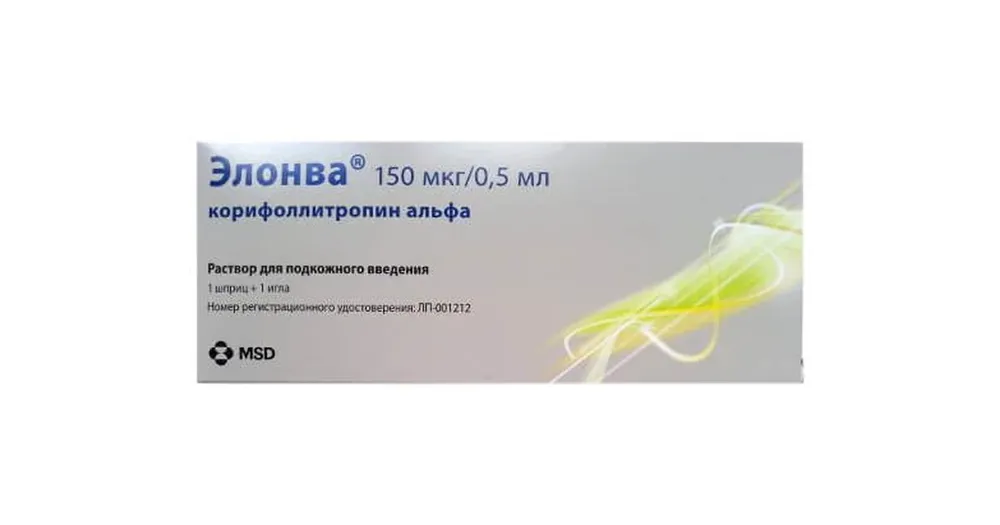
Table of Contents
INSTRUCTIONS for medical use of the medicinal product ELONVA (ELONVA®)
Composition:
Active substance: corifollitropin alfa;
1 pre-filled syringe (0.5 mL) contains 100 mcg or 150 mcg of corifollitropin alfa;
Excipients: sodium citrate, sucrose, polysorbate 20, methionine, sodium hydroxide and/or concentrated hydrochloric acid, water for injections.
Pharmaceutical form. Solution for injection.
Main physicochemical characteristics: clear aqueous solution.
Pharmacotherapeutic group. Gonadotropins and other ovulation stimulants. Corifollitropin alfa. ATC code G03GA09.
Pharmacological Properties
Pharmacodynamics
Corifollitropin alfa has been designed as a long-acting agent that initiates stimulation of ovulation, with the same pharmacodynamic profile as recombinant follicle-stimulating hormone (rFSH), but with a significantly prolonged duration of FSH activity. Due to its ability to initiate and sustain the growth of multiple follicles over an entire week, a single subcutaneous injection of the recommended dose of Elonva can replace the first 7 injections of any daily recombinant FSH product in a controlled ovarian stimulation (COS) treatment cycle. The prolonged FSH activity is achieved by adding a carboxy-terminal peptide of the beta-subunit of human chorionic gonadotropin (hCG) to the beta-chain of human FSH.
Corifollitropin alfa does not exhibit any LH/hCG activity.
Pharmacokinetics
The pharmacokinetic parameters of corifollitropin alfa were evaluated after subcutaneous administration in women undergoing a COS treatment cycle.
Due to the long elimination half-life, after administration of the recommended dose, serum concentrations of corifollitropin alfa are sufficient to maintain the growth of multiple follicles over an entire week. This justifies the replacement of the first 7 daily injections of rFSH with a single subcutaneous injection of Elonva in COS for the development of multiple follicles and pregnancy in assisted reproductive technology (ART) programs (see section "Dosage and Administration").
The dose-determining factor for corifollitropin alfa is body weight. The exposure to corifollitropin alfa after a single subcutaneous injection is 665 hours*ng/mL (AUC, 426–1037 hours*ng/mL1) and is comparable after administration of 100 mcg corifollitropin alfa to women with body weight ≤ 60 kg and 150 mcg corifollitropin alfa to women with body weight > 60 kg.
Absorption
After a single subcutaneous injection of Elonva, the maximum serum concentration of corifollitropin alfa is 4.24 ng/mL (2.49–7.21 ng/mL1) and is reached at 44 hours (35–57 hours1). Absolute bioavailability is 58% (48–70%1).
Distribution
The characteristics of distribution, metabolism, and elimination of corifollitropin alfa are very similar to those of other gonadotropins such as FSH, hCG, and LH. After absorption into the blood, corifollitropin alfa is distributed primarily to the ovaries and kidneys. The volume of distribution at steady state is 9.2 L (6.5–13.1 L1). Exposure to corifollitropin alfa increases proportionally with dose increases within the range of 60 to 240 mcg.
Elimination
Corifollitropin alfa has an elimination half-life of 70 hours (59–82 hours1) and a clearance of 0.13 L/hour (0.10–0.18 L/hour1). Elimination of corifollitropin alfa occurs predominantly via the kidneys and may be impaired in patients with renal insufficiency (see sections "Dosage and Administration" and "Special Warnings and Precautions for Use").
1 Predicted range for 90% of patients.
Other Special Patient Populations
Hepatic Impairment
Although data in patients with hepatic impairment are lacking, it is unlikely that impaired liver function would affect the pharmacokinetic profile of corifollitropin alfa.
Clinical characteristics.
Indications.
Controlled ovarian stimulation (COS) in combination with a gonadotropin-releasing hormone (GnRH) antagonist for the development of multiple follicles in women undergoing assisted reproductive technology (ART) programs.
Contraindications.
- Hypersensitivity to the active substance or to any of the excipients listed in the section "Composition".
- Pregnancy (see section "Use during pregnancy or lactation").
- Tumors of the ovaries, breasts, uterus, pituitary gland, or hypothalamus.
- Pathological (non-menstrual) vaginal bleeding of unknown/diagnosed etiology.
- Primary ovarian dysfunction.
- Ovarian cysts or ovarian enlargement.
- Uterine fibroids incompatible with pregnancy.
- Congenital abnormalities of the reproductive organs incompatible with pregnancy.
- Risk factors for ovarian hyperstimulation syndrome (OHSS):
- History of OHSS.
- Previous COS cycle resulting in more than 30 follicles ≥ 11 mm in diameter as measured by ultrasound.
- Number of basal antral follicles >20.
- Polycystic ovary syndrome (PCOS).
Interaction with other medicinal products and other forms of interaction.
No studies of interactions between Elonva and other medicinal products have been conducted. Since corifollitropin alfa is not a substrate of cytochrome P450 enzymes, no interactions with other medicinal products are expected.
Elonva may lead to a false positive result in a urinary hCG pregnancy test if the test is performed during an ART ovarian stimulation cycle. This may be due to cross-reactivity of certain urinary hCG pregnancy tests with the carboxy-terminal peptide of the beta-subunit of Elonva.
Special precautions for use.
Assessment of infertility prior to treatment initiation
Prior to initiating treatment, the causes of infertility in the couple should be established. In particular, the woman should be evaluated for hypothyroidism, adrenocortical insufficiency, hyperprolactinemia, pituitary or hypothalamic tumors, as well as any prior specific treatment received. Additionally, before starting treatment with Elonva, medical conditions in which pregnancy is contraindicated should be assessed.
Dosing during the stimulation cycle
Elonva is intended for administration as a single subcutaneous injection only. Additional injections of the drug must not be administered during the same treatment cycle (see section "Dosage and administration").
Until day 8 of stimulation, no additional recombinant FSH (rFSH) products should be administered following administration of Elonva (see also section "Dosage and administration").
Renal impairment
In patients with mild, moderate, or severe renal impairment, elimination of corifollitropin alfa may be reduced (see section "Dosage and administration" and subsection "Pharmacokinetics"), therefore use of the drug in such patients is not recommended.
Unrecommended use with gonadotropin-releasing hormone (GnRH) agonist
Data on the use of Elonva in combination with a GnRH agonist are limited. Study results suggest a potentially higher ovarian response compared to use with a GnRH antagonist. Therefore, the use of Elonva in combination with a GnRH agonist is not recommended (see section "Dosage and administration").
Ovarian hyperstimulation syndrome (OHSS)
OHSS differs from simple ovarian enlargement. Clinical signs and symptoms of mild to moderate OHSS include abdominal pain, nausea, diarrhea, mild to moderate ovarian enlargement, and ovarian cysts. Severe OHSS can be life-threatening. Clinical signs and symptoms of severe OHSS include large ovarian cysts, acute abdominal pain, ascites, pleural effusion, hydrothorax, dyspnea, oliguria, hematological abnormalities, and weight gain. Venous or arterial thromboembolic events may occasionally occur concomitantly with OHSS. OHSS has also been associated with transient pathological changes in liver function tests indicating impaired liver function, with or without morphological changes on liver biopsy.
OHSS may occur as a consequence of hCG administration and pregnancy (endogenous hCG). Early OHSS occurs within 10 days after hCG administration and may be associated with an exaggerated ovarian response to gonadotropin stimulation. Late OHSS occurs more than 10 days after hCG administration as a result of hormonal changes during pregnancy. Due to the risk of OHSS, patients should be monitored for at least 2 weeks following hCG administration.
Women with known risk factors for an excessive ovarian response may have an increased susceptibility to developing OHSS during or after treatment with Elonva. Women undergoing their first cycle of ovarian stimulation, in whom risk factors are only partially known, should be carefully monitored for early signs and symptoms of OHSS.
Follow current clinical practices to reduce the risk of OHSS during Assisted Reproductive Technologies (ART). Adherence to the recommended dose of Elonva and treatment regimen, along with careful monitoring of ovarian response, is important to minimize the risk of OHSS.
To monitor OHSS risk, ultrasound assessment of follicular development should be performed before treatment initiation and at regular intervals during treatment; concurrent measurement of serum estradiol levels may also be useful. During ART, the risk of OHSS is increased when 18 or more follicles with a diameter of 11 mm or greater are present. If OHSS occurs, standard and appropriate management of OHSS should be implemented and followed.
Ovarian torsion
Ovarian torsion has been reported following treatment with gonadotropins, including Elonva. Ovarian torsion may be associated with other conditions such as OHSS, pregnancy, previous abdominal surgery, history of ovarian torsion, or current or past ovarian cysts. Ovarian damage due to compromised blood flow can be prevented by timely diagnosis and immediate correction of the torsion.
Multiples pregnancy
Multiple pregnancies and multiple births have been observed with all gonadotropins, including Elonva. Before initiating treatment, the woman and her partner should be informed about the potential risks for the mother (pregnancy and delivery complications) and for the newborns (low birth weight). In women undergoing ART procedures, the risk of multiple pregnancy is primarily related to the number of embryos transferred.
Ectopic pregnancy
Infertile women undergoing ART treatments have an increased incidence of ectopic pregnancy. It is essential to perform an early ultrasound examination to confirm intrauterine pregnancy and exclude ectopic pregnancy.
Congenital anomalies
The rate of congenital malformations following ART may be slightly higher than after spontaneous conception. This is believed to be due to differences in parental characteristics (e.g., maternal age, sperm characteristics) and the increased frequency of multiple pregnancies.
Tumors of the ovary and other reproductive organs
Benign and malignant neoplasms of the ovary and other reproductive organs have been reported in women who received multiple cycles of fertility treatment. It has not been established whether gonadotropin treatment may increase the risk of such tumors in infertile women.
Vascular complications
Thromboembolic disorders (with or without OHSS) have been reported following treatment with gonadotropins, including Elonva.
Intravascular thrombosis, both venous and arterial, may lead to reduced blood flow to vital organs and extremities. In women with well-recognized risk factors for thromboembolic events, such as personal or family history, severe obesity, or thrombophilia, treatment with gonadotropins, including Elonva, may further increase this risk. For such women, the potential benefits of gonadotropin therapy should be weighed against the possible risks. It should be noted that pregnancy itself also increases the risk of thrombosis.
Use during pregnancy or breastfeeding
Pregnancy
Use of Elonva during pregnancy is contraindicated.
In cases of inadvertent use of Elonva during pregnancy, clinical data are insufficient to exclude adverse effects on pregnancy.
Reproductive toxicity was observed in animal studies.
Breastfeeding
Use of Elonva during breastfeeding is not recommended.
Fertility
Elonva is indicated for the treatment of infertility (see section "Indications").
Ability to influence the speed of reactions when driving vehicles or operating machinery
No studies on the effect on the ability to drive vehicles or operate machinery have been conducted.
Since the drug may cause dizziness, patients are advised to avoid driving vehicles or operating machinery during treatment.
Dosage and Administration
Treatment with the medicinal product Elonva should be initiated under the supervision of a physician experienced in the management of infertility.
Dosage
For women of reproductive age, the dose of Elonva depends on body weight and age.
- The recommended single dose is 100 mcg for women with a body weight less than or equal to 60 kg and aged 36 years or younger.
- The recommended single dose is 150 mcg for women:
- with a body weight greater than 60 kg, regardless of age,
- with a body weight of 50 kg or more and aged over 36 years.
Women over 36 years of age weighing less than 50 kg have not been studied.
| Body weight |
||||
| Less than 50 kg |
50–60 kg |
More than 60 kg |
||
| Age |
36 years or younger |
100 mcg |
100 mcg |
150 mcg |
| Over 36 years |
Not studied |
150 mcg |
150 mcg |
|
The recommended doses of Elonva have been established only in regimens involving a GnRH antagonist administered starting on day 5 or 6 of stimulation (see also sections "Indications" and "Special precautions").
Day 1 of stimulation:
Elonva should be administered as a single subcutaneous injection, preferably into the abdominal wall, at the beginning of the follicular phase of the menstrual cycle.
Day 5 or 6 of stimulation:
Treatment with a GnRH antagonist should be initiated on day 5 or 6 of stimulation, depending on ovarian response, i.e. the number and size of developing follicles and serum estradiol levels. Concurrent measurement of serum estradiol levels may also be required. The GnRH antagonist is administered to prevent premature luteinizing hormone (LH) surges.
Day 8 of stimulation:
Seven days after the Elonva injection given on day 1 of stimulation, controlled ovarian stimulation (COS) may be continued with daily injections of recombinant follicle-stimulating hormone (rFSH) until criteria for triggering final oocyte maturation are met (3 follicles ≥ 17 mm). The daily dose of rFSH may be adjusted according to ovarian response. For patients with normal response, the recommended daily dose is 150 IU of rFSH. The rFSH injection on the day of hCG administration may be omitted, depending on ovarian response. Adequate follicular development is generally achieved by approximately day 9 of treatment (range: days 6–18).
Once 3 follicles ≥ 17 mm are observed, final oocyte maturation should be triggered on the same day or the following day by administering 5000–10000 IU of hCG. In cases of high ovarian response, to minimize the risk of ovarian hyperstimulation syndrome (OHSS), refer to the recommendations provided in the section "Special precautions".
Special patient groups
Renal impairment
Clinical studies in patients with renal impairment have not been conducted. Since elimination of corifollitropin alfa may be reduced in patients with impaired renal function, use of Elonva in such patients is not recommended.
Hepatic impairment
Data in patients with impaired liver function are lacking; however, it is unlikely that hepatic insufficiency would affect the elimination of corifollitropin alfa.
Method of administration
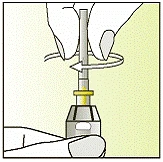
Elonva must be administered by subcutaneous injection into a skin fold (pinched between thumb and index finger) just below the navel. The injection may be given by a healthcare professional (e.g. a nurse), by the woman herself, or by her partner, provided they have been properly instructed by a physician. Always follow your doctor's instructions exactly when using Elonva. If you are uncertain about any aspect, consult your doctor again. Step-by-step instructions for administering Elonva are provided below.
Do not inject Elonva into muscle.
Instructions for administering Elonva
HTMLIMG0END
Preparing the injection
|
|
1
|
|
|
2
|
|
|
3
|
|
|
4
|
|
|
5
|
|
|
6
|



Administration of injection
|
|
7
|
|
|
8
|
|
|
9
|


Children. The drug is not used for ovarian stimulation in pediatric patients.
Overdose.
It is likely that administration of more than 1 injection of the drug Elonva during one treatment cycle or use of increased doses of the drug and/or rFSH will increase the risk of OHSS development (see section "Special precautions").
Adverse reactions.
Short safety profile
During treatment with Elonva, the most commonly reported adverse reactions observed in clinical trials (N=2,397) were: pelvic discomfort (6.0%), OHSS (4.3%, see also section "Special warnings and precautions for use"), headache (4.0%), pelvic pain (2.9%), nausea (2.3%), fatigue (1.5%) and breast tenderness (1.3%).
List of adverse reactions
The table below presents the main adverse reactions observed in women treated with Elonva during clinical trials and post-marketing surveillance. Adverse reactions are listed by system organ class and frequency: very common (> 1/10), common (from > 1/100 to <1/10), uncommon (from > 1/1,000 to <1/100), rare (from > 1/10,000 to <1/1,000), very rare (<1/10,000), and not known (cannot be estimated from the available data). Within each frequency grouping, adverse reactions are listed in order of decreasing severity.
| System organ class |
Frequency |
Adverse reactions |
| Immune system disorders |
Unknown |
Hypersensitivity reactions, both local and generalized, including rash* |
| Psychiatric disorders |
Uncommon |
Mood swings |
| Nervous system disorders |
Common |
Headache |
| Uncommon |
Dizziness |
|
| Vascular disorders |
Uncommon |
Hot flush |
| Gastrointestinal disorders |
Common |
Nausea |
| Uncommon |
Abdominal pain, vomiting, diarrhea, constipation |
|
| Musculoskeletal and connective tissue disorders |
Uncommon |
Back pain |
| Pregnancy, puerperium and perinatal conditions |
Uncommon |
Spontaneous abortion |
| Reproductive system and breast disorders |
Common |
OHSS, pelvic pain and discomfort, breast tenderness |
| Uncommon |
Ovarian torsion, adnexal pain, premature ovulation, breast pain |
|
| General disorders and administration site conditions |
Common |
Fatigue |
| Uncommon |
Haematoma at injection site, injection site pain, irritation |
|
| Investigations |
Uncommon |
Increased alanine aminotransferase level, increased aspartate aminotransferase level |
| Injury, poisoning and procedural complications |
Uncommon |
Pain during procedure |
* Adverse reactions were identified through post-marketing surveillance.
Description of some adverse reactions
In addition, ectopic pregnancy and multiple pregnancies have been reported. This should be considered in relation to ART procedures or subsequent pregnancies.
In isolated cases, thromboembolism has been associated with treatment with Elonva, as with the use of other gonadotropins.
Reporting of adverse reactions
Reporting of suspected adverse reactions after authorization of the medicinal product is important. It allows continued monitoring of the benefit-risk balance of the medicinal product. Healthcare professionals are requested to report any suspected adverse reactions through the national reporting system.
Shelf life: 3 years.
Storage conditions.
Store in a light-protected place at 2–8 °C. Keep out of reach of children.
Incompatibilities.
There are no data on compatibility with other medicinal products. The injection solution must not be mixed with other medicinal products.
Packaging.
0.5 mL of solution in a pre-filled syringe made of hydrolytic glass type 1 with a needle holder, rubber plunger, and tip cap. The syringe is equipped with an automatic safety system (to prevent needlestick injuries after use). One pre-filled syringe together with a sterile injection needle is placed in an open plastic tray inside a cardboard box.
Prescription category.
Prescription only.
Manufacturer.
N.V. Organon, the Netherlands.
Manufacturer's address and location of business operations.
Kloosterstraat 6, 5349 AB Oss, the Netherlands (legal address).
Molenstraat 110, 5342 SS Oss, the Netherlands (location of business operations).