Elkocin
Ukraine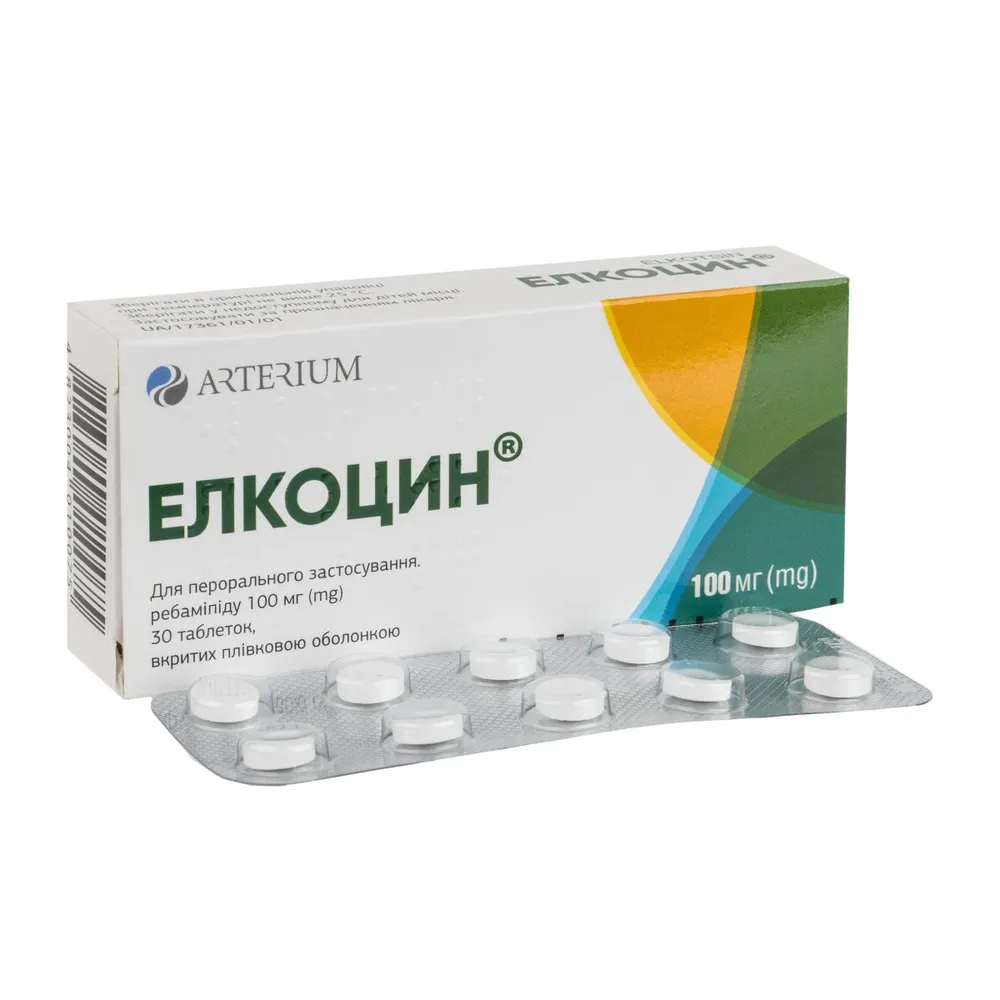
Table of Contents
INSTRUCTION FOR MEDICAL USE OF THE MEDICINAL PRODUCT ELKOTSIN® (ELKOTSIN)
Composition:
Active substance: rebamipide;
One tablet contains rebamipide 100 mg;
Excipients: microcrystalline cellulose, low-substituted hydroxypropylcellulose, hydroxypropylcellulose, magnesium stearate;
Coating mixture: hypromellose, titanium dioxide (E 171), polyethylene glycol (macrogol).
Pharmaceutical form. Film-coated tablets.
Main physicochemical characteristics: white, round, smooth, flat convex tablets on both sides, coated with a film layer.
Pharmacotherapeutic group. Drugs for the treatment of acid-related disorders.
ATC code A02HX.
Pharmacological properties.
Pharmacodynamics.
Rebamipide increases endogenous levels of prostaglandins E2 and I2 (PGE2 and PGI2) present in gastric juice, as well as elevates prostaglandin E2 (PGE2) levels in the gastric mucosa, thereby promoting mucosal protection against damaging factors. Rebamipide exerts a cytoprotective effect demonstrated in in vitro studies, improves gastric mucosal blood flow, and stimulates cell proliferation. By enhancing the activity of enzymes involved in the biosynthesis of high-molecular-weight glycoproteins, rebamipide increases the amount of surface gastric mucus. Rebamipide does not affect basal or stimulated gastric secretion.
Pharmacokinetics.
After single oral administration of 100 mg of rebamipide, maximum plasma concentration (216 ± 79 ng/mL) was observed at 2.4 ± 1.2 hours. In vitro experiments with plasma proteins showed approximately 90% binding of the drug; however, multiple studies have demonstrated that the drug does not accumulate in the body. The drug undergoes minimal metabolism in the human body and is primarily excreted unchanged. The elimination half-life from plasma is approximately 1.9 ± 0.7 hours. When rebamipide was administered at a dose of 100 mg to patients with renal insufficiency, increased plasma drug concentrations and a prolonged elimination half-life were observed compared to healthy subjects.
Clinical characteristics.
Indications.
Gastric ulcer, acute gastritis, exacerbation period of chronic gastritis, pathological changes of the gastric mucosa (erosions, hemorrhages, hyperemia, edema).
Contraindications.
Hypersensitivity to rebamipide or to any of the other components of the drug. Malignant gastric diseases.
Interaction with other medicinal products and other forms of interaction.
When rebamipide is used as part of conventional anti-Helicobacter treatment regimens, the efficacy of conventional therapy is likely to increase. Interactions with other drugs have not been studied.
Rebamipide showed a slight inhibitory effect on cytochrome P450 enzymes in vitro. Rebamipide is practically not metabolized in the liver and is excreted in urine in unchanged form; thus, the drug has minimal effect on the metabolism of other drugs. Regarding concomitant administration with other drugs that have a higher protein binding rate in rats (H2-blocker and warfarin), although rebamipide has a high protein binding rate (95% or more), its blood concentration reaches 200 ng/mL; therefore, this drug is considered less likely to increase blood concentrations compared to other drugs. In addition, there are reports indicating that rebamipide is not affected by plasma salicylic acid concentration (in humans) during administration of aspirin, serum indomethacin concentration (in humans) during administration of indomethacin, and plasma and tumor tissue 5-FU concentrations (in rats) during administration of UFT.
No drug interactions between rebamipide and other medicinal products have been reported.
Special precautions for use.
There is a possibility of shock and anaphylactic reactions occurring during administration of the drug; therefore, the drug should be administered under physician supervision. If such hypersensitivity reactions occur, the drug should be discontinued and appropriate measures should be taken.
Occasionally, a decrease in the number of leukocytes and platelets may occur. If abnormalities are detected, the drug should be discontinued and appropriate measures should be taken to improve the patient's condition.
Occasionally, an increase in the levels of AST, ALT, γ-GGT, and alkaline phosphatase (ALP), as well as other liver function abnormalities and jaundice, may occur. In the event of such reactions, appropriate examinations should be performed. If abnormalities are detected, the drug should be discontinued and necessary measures should be taken to improve the patient's condition. If transaminase levels increase significantly or if fever and rash develop, the drug should be discontinued and appropriate measures should be taken.
Use during pregnancy or breastfeeding.
Since the safety of rebamipide use during pregnancy or breastfeeding has not been established, the drug is contraindicated during these periods.
Since rebamipide passes into breast milk, breastfeeding should be discontinued during treatment with this drug.
Ability to affect reaction speed when driving vehicles or operating machinery.
Dizziness and drowsiness may occur during rebamipide administration. In such cases, patients should refrain from driving vehicles, operating machinery, and from engaging in other activities requiring heightened attention and rapid reaction.
Dosage and Administration
For oral use.
Stomach ulcer
Adults – 100 mg (1 tablet) three times a day in the morning, afternoon, and evening.
For symptom relief in acute gastritis, during exacerbation of chronic gastritis, and in pathological changes of the gastric mucosa (erosions, bleeding, hyperemia, edema).
Adults – 100 mg (1 tablet) three times a day.
Elderly patients
The drug should be prescribed with caution to elderly patients to reduce the risk of gastrointestinal disorders, as this patient group is more sensitive to the drug's effects.
Children
The drug is not recommended for use in children, as studies on its use in this age group have not been conducted.
Overdose
Cases of overdose have not been reported. Possible symptoms include nausea, vomiting, abdominal pain, diarrhea or constipation, headache, and increased severity of adverse reactions.
In case of overdose, gastric lavage should be performed and symptomatic therapy administered. There is no specific antidote.
Side effects
Adverse reactions have been classified by organ systems and frequency of occurrence. Frequencies are categorized as follows: very common (> 1/10), common (> 1/100 and < 1/10), uncommon (> 1/1,000 and < 1/100), rare (> 1/10,000 and < 1/1,000), very rare (< 1/10,000), frequency not known (cannot be estimated based on available data).
Blood and lymphatic system disorders:
Uncommon – leukopenia, granulocytopenia; frequency not known – thrombocytopenia.
Hepatobiliary disorders:
Uncommon – increased levels of liver enzymes (AST, ALT, gamma-glutamyl transferase, ALP) and other liver function abnormalities; frequency not known – jaundice.
Immune system disorders:
Uncommon – skin rash, itching, drug-induced eczema, other hypersensitivity symptoms; frequency not known – shock, anaphylactic reactions, urticaria.
Nervous system disorders:
Frequency not known – numbness, dizziness, drowsiness.
Gastrointestinal disorders:
Uncommon – constipation, bloating and abdominal fullness, diarrhea, nausea, vomiting, heartburn, abdominal pain, belching, taste disturbances; frequency not known – thirst.
Respiratory system disorders:
Frequency not known – cough, dyspnea, respiratory distress.
Reproductive and urinary system disorders:
Uncommon – menstrual cycle disturbances in women; frequency not known – breast swelling and tenderness, development of "female breasts" in men (gynecomastia), galactorrhea.
Investigations:
Frequency not known – increased urea levels.
General disorders:
Uncommon – hypersensitivity reactions, edema, foreign body sensation in nasopharynx; frequency not known – fever, anxiety, flushing (sudden reddening of the face), tongue numbness, palpitations, alopecia.
If symptoms of hypersensitivity occur, the drug should be discontinued.
If significant elevation of transaminase levels occurs, or if there is concurrent fever, rash, or other symptoms, the drug should be discontinued and appropriate measures taken to improve the patient's condition.
Reporting suspected adverse reactions
Reporting of suspected adverse reactions after marketing authorization is important. It allows continuous monitoring of the benefit-risk balance of the medicinal product. Healthcare professionals, pharmacists, patients, and their legal representatives are encouraged to report any suspected adverse reactions and lack of efficacy through the Automated Pharmacovigilance Information System at the following link: https://aisf.dec.gov.ua.
Shelf life. 3 years.
Storage conditions. Store in original packaging at a temperature not exceeding 25 °C.
Keep out of reach and sight of children.
Packaging. 10 tablets per blister, 3 blisters per carton.
Prescription status. Prescription only.
Manufacturer. JSC "Kyivmedpreparat".
Manufacturer's address and location of operations.
139 Saksaganskogo Street, Kyiv, 01032, Ukraine.