Edoxacord
Ukraine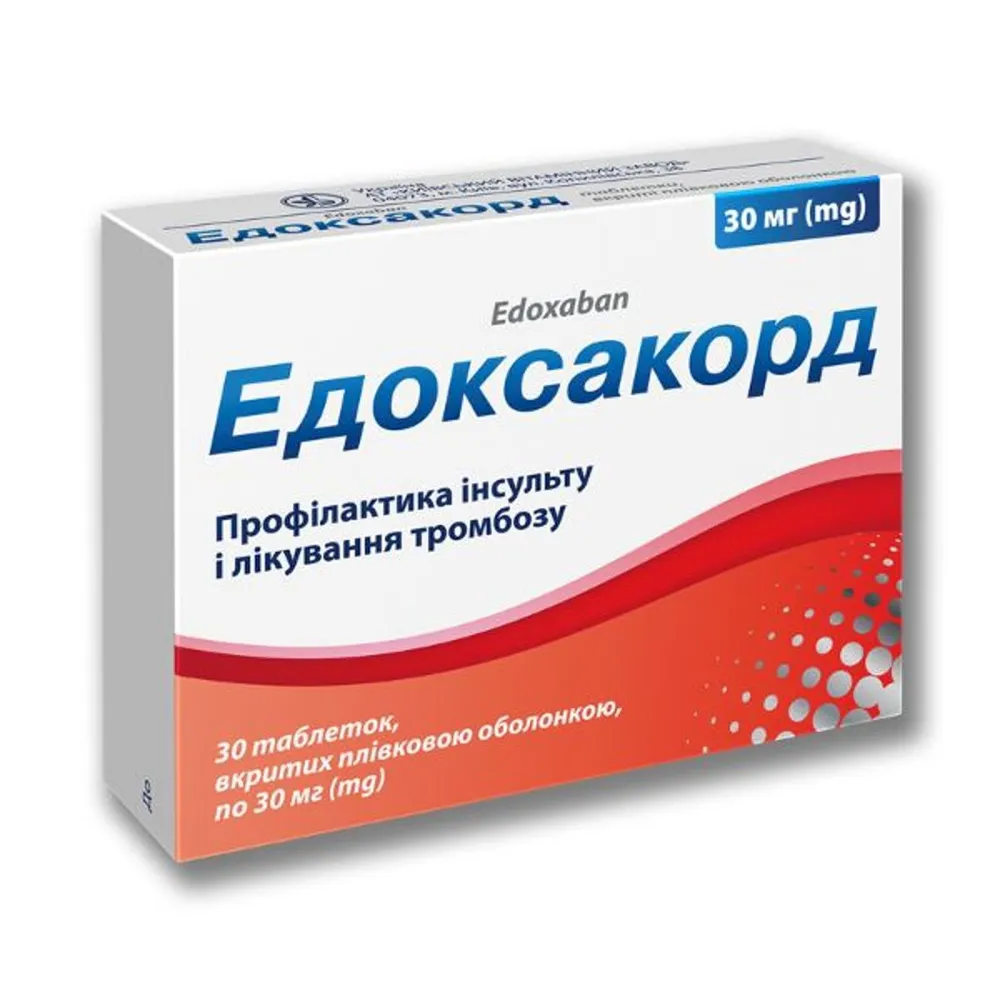
Table of Contents
INSTRUCTIONS FOR MEDICAL USE OF THE MEDICINAL PRODUCT EDOKSAKORD (EDOKSAKORD)
Composition:
Active substance: edoxaban;
1 tablet contains edoxaban (in the form of tosylate monohydrate) 15 mg or 30 mg or 60 mg;
Excipients: mannitol (E 421); pregelatinized starch; crospovidone; hydroxypropylcellulose; magnesium stearate;
Coating:
15 mg tablets: Opadry II Orange 32F230000: hypromellose (hydroxypropylmethylcellulose); lactose monohydrate; polyethylene glycol (macrogol); titanium dioxide (E 171); yellow iron oxide (E 172), red iron oxide (E 172);
30 mg tablets: Opadry II Pink 32F240010: hypromellose (hydroxypropylmethylcellulose); lactose monohydrate; polyethylene glycol (macrogol); titanium dioxide (E 171); red iron oxide (E 172);
60 mg tablets: Opadry II Yellow 32F220004: hypromellose (hydroxypropylmethylcellulose); lactose monohydrate; polyethylene glycol (macrogol); titanium dioxide (E 171); yellow iron oxide (E 172).
Pharmaceutical form. Film-coated tablets.
Main physicochemical properties:
15 mg tablets: round, biconvex tablets, film-coated, light brown to brown in color;
30 mg tablets: round, biconvex tablets, film-coated, light pink to pink in color;
60 mg tablets: round, biconvex tablets, film-coated, light yellow to yellowish-brown in color.
Pharmacotherapeutic group. Antithrombotic agents. Direct factor Xa inhibitors. Edoxaban. ATC code B01AF03.
Pharmacological properties.
Pharmacodynamics.
Mechanism of action
Edoxaban is a highly selective direct reversible inhibitor of factor Xa, a serine protease that is the final common pathway in the coagulation cascade. Edoxaban inhibits free factor Xa and prothrombinase activity. Inhibition of factor Xa in the coagulation cascade leads to reduced thrombin generation, prolongs blood clotting time, and reduces the risk of thrombus formation.
Pharmacodynamic effects
Edoxaban provides a rapid onset of pharmacodynamic effect within 1–2 hours, corresponding to the time of maximum plasma concentration (Cmax) of edoxaban. Pharmacodynamic effects, measured by anti-factor Xa activity assays, are predictable and correlate with the dose and plasma concentration of edoxaban. As a result of factor Xa inhibition, edoxaban also prolongs clotting time in prothrombin time (PT) and activated partial thromboplastin time (aPTT) tests. Changes in coagulation parameters observed with therapeutic doses of edoxaban are minor and highly variable, and are not recommended for monitoring the anticoagulant effect of edoxaban.
Effect of coagulation markers when switching from rivaroxaban, dabigatran, or apixaban to edoxaban
In clinical pharmacology studies, healthy subjects received rivaroxaban 20 mg once daily, dabigatran 150 mg twice daily, or apixaban 5 mg twice daily, followed by a single 60 mg dose of edoxaban on Day 4. Effects on PT and other coagulation biomarkers (e.g., anti-factor Xa activity, aPTT) were assessed. On Day 4 after switching to edoxaban, PT values were equivalent to those observed on Day 3 of rivaroxaban and apixaban treatment. aPTT values were higher after edoxaban administration following prior dabigatran treatment compared to edoxaban alone. This is considered to be due to the residual effect of dabigatran; however, it did not result in prolonged bleeding time.
Based on these data, when switching from these anticoagulants to edoxaban, the first dose of edoxaban can be administered instead of the next scheduled dose of the previous anticoagulant (see section "Dosage and administration").
Clinical efficacy and safety
Prevention of stroke and systemic embolism
The clinical trial program evaluating edoxaban in atrial fibrillation was designed to demonstrate the efficacy and safety of two dose regimens of edoxaban compared to warfarin for the prevention of stroke and systemic embolism in patients with non-valvular atrial fibrillation (NVAF) and moderate to high risk of stroke and systemic embolic events. The primary efficacy endpoint was a composite of stroke and systemic embolic events. Secondary efficacy endpoints included: composite of stroke, systemic embolic events, and cardiovascular death; major adverse cardiovascular event (MACE), defined as a composite of non-fatal myocardial infarction (MI), non-fatal stroke, non-fatal systemic embolic event, and death due to cardiovascular causes or bleeding; composite of stroke, systemic embolic event, and death from any cause.
The primary efficacy analysis aimed to demonstrate non-inferiority of edoxaban compared to warfarin regarding the primary endpoint of stroke or systemic embolic events occurring during treatment or within three days after the last dose in the modified treatment-start population. Edoxaban 60 mg demonstrated non-inferior efficacy compared to warfarin for the primary efficacy endpoint—stroke or systemic embolic event.
The primary safety endpoint was major bleeding.
A significant reduction in the risk of major bleeding, intracranial hemorrhage, and other types of bleeding was observed in the edoxaban 60 mg treatment group compared to the warfarin group.
The edoxaban 60 mg group also showed a significant reduction in fatal bleeding compared to the warfarin group, primarily due to fewer fatal intracranial hemorrhages.
Treatment of deep vein thrombosis (DVT) and pulmonary embolism (PE), and prevention of DVT and PE recurrence [VTE (venous thromboembolism)]
The clinical trial program for edoxaban in VTE was designed to demonstrate the efficacy and safety of edoxaban for the treatment of DVT and PE and for the prevention of recurrent DVT and PE.
The study demonstrated that edoxaban was non-inferior to warfarin for the primary efficacy endpoint—recurrent VTE.
Efficacy results in predefined major subgroups (with dose reduction as needed), including age, body weight, sex, and renal function, were consistent with the overall efficacy results in the entire trial population.
The primary safety endpoint was clinically significant bleeding (major or non-major but clinically relevant).
The edoxaban group showed a significant reduction in the risk of clinically significant bleeding, major bleeding, or clinically relevant non-major bleeding compared to the warfarin group.
Stroke and systemic embolism prevention in NVAF patients with creatinine clearance (CrCl) > 100 mL/min
Based on data from NVAF patients with high CrCl (> 100 mL/min) receiving edoxaban 60 mg, the expected annual rate of ischemic stroke/systemic embolism is ≤ 1%. Increasing the edoxaban dose (above 60 mg) in NVAF patients with high CrCl (> 100 mL/min) does not provide additional protection against stroke and may be associated with increased adverse effects. Therefore, these patients are recommended to receive edoxaban 60 mg once daily after careful individual assessment of thromboembolic and bleeding risk.
Patients undergoing cardioversion
During studies, a low incidence of major and clinically relevant non-major bleeding and thromboembolic events was observed in patients undergoing cardioversion.
Paediatric population
The safety, efficacy, pharmacokinetics, and pharmacodynamics of edoxaban in patients from birth to 18 years of age with VTE and cardiac conditions at risk of thrombotic events were evaluated in two studies (see section "Dosage and administration").
The primary efficacy endpoint was a composite endpoint of symptomatic recurrent venous thromboembolic disease, death due to VTE, and lack of improvement or increase in thrombotic burden during the first 3 months (planned treatment duration was 6 to 12 weeks for children from birth to less than 6 months of age).
Edoxaban doses were determined based on age and body weight. Dose reduction was recommended based on clinical factors, including renal function and concomitant use of P-gp inhibitors.
The risk ratio for the edoxaban group compared to the standard therapy control group was 1.01 (95% CI: 0.59–1.72). The upper limit of the 95% CI (1.72) exceeded the pre-specified non-inferiority margin of 1.5; therefore, non-inferiority of edoxaban compared to standard therapy was not demonstrated.
Pharmacokinetics.
Absorption. After absorption, maximum plasma concentration of edoxaban is reached within 1–2 hours. Absolute bioavailability is approximately 62%. Food intake increases maximum exposure inconsistently but has minimal effect on overall drug exposure. Edoxaban was studied both with and without food. Edoxaban has poor solubility at pH levels of 6.0 or higher. Concomitant use of proton pump inhibitors does not have a clinically significant effect on edoxaban exposure.
Distribution. Edoxaban exhibits biphasic distribution. The volume of distribution averages 107 L (standard deviation 19.9 L).
Plasma protein binding in vitro is approximately 55%. There is no clinically significant accumulation of edoxaban (accumulation ratio 1.14) with once-daily dosing. Steady-state concentrations are achieved within 3 days.
Metabolism. Edoxaban is predominantly present in unchanged form in plasma. Edoxaban is metabolized via hydrolysis (mediated by carboxylesterase 1), conjugation, or oxidation by CYP3A4/5 (< 10%). Edoxaban has three active metabolites; the main one (M-4), formed via hydrolysis, is active and accounts for less than 10% of the parent drug concentration in healthy subjects. Concentrations of other metabolites are less than 5%. Edoxaban is a substrate of the efflux transporter P-glycoprotein (P-gp), but is not a substrate of uptake transporters such as organic anion transporting polypeptide OATP1B1, organic anion transporters OAT1 or OAT3, or organic cation transporter OCT2. Its active metabolite is a substrate of OATP1B1.
Elimination. In healthy subjects, calculated total clearance is 22 (± 3) L/h; 50% of the drug is excreted by the kidneys (11 L/h). Renal clearance accounts for approximately 35% of the administered dose. The remainder is cleared via metabolism and biliary/intestinal excretion. The elimination half-life after oral administration is 10–14 hours.
Linearity. Edoxaban exhibits approximately dose-proportional pharmacokinetics over the dose range of 15 mg to 60 mg.
Special populations
Elderly patients
Population pharmacokinetic analysis showed that, after adjusting for renal function and body weight, patient age has no additional clinically significant effect on the pharmacokinetics of edoxaban.
Renal impairment
AUC (area under the concentration-time curve) in patients with mild (CrCl > 50–80 mL/min), moderate (CrCl 30–50 mL/min), and severe (CrCl < 30 mL/min, not on dialysis) renal impairment was increased by 32%, 74%, and 72%, respectively, compared to patients with normal renal function. The metabolite profile changes in patients with renal impairment, with increased formation of active metabolites.
A linear correlation between plasma edoxaban concentration and anti-factor Xa activity was observed, independent of renal function.
Patients with end-stage renal disease undergoing peritoneal dialysis had 93% higher total exposure compared to healthy subjects.
Population pharmacokinetic modeling indicates that exposure is approximately doubled in patients with severe renal impairment compared to those with normal renal function.
Anti-factor Xa activity according to CrCl
Edoxaban treatment does not require routine monitoring; however, the anticoagulant effect can be assessed using a calibrated quantitative anti-factor Xa assay, which may be useful in exceptional situations where information on edoxaban exposure can aid clinical decision-making, such as in overdose or emergency surgery.
After a 4-hour hemodialysis session, total edoxaban exposure was reduced by less than 9%.
Hepatic impairment
Pharmacokinetic and pharmacodynamic parameters in patients with mild or moderate hepatic impairment were similar to those observed in healthy control subjects. The use of edoxaban in patients with severe hepatic impairment has not been studied.
Sex
Population pharmacokinetic analysis showed that patient sex has no additional clinically significant effect on the pharmacokinetics of edoxaban.
Ethnic origin
Population pharmacokinetic analysis showed that maximum and total exposure in Asian patients and non-Asian patients were comparable.
Body weight
Population pharmacokinetic analysis showed that in patients with low body weight (55 kg), Cmax and AUC were increased by 40% and 13%, respectively, compared to patients with average weight (84 kg). In a study (for NVAF and VTE indications), patients with body weight ≤ 60 kg received a 50% reduced dose of edoxaban and showed similar efficacy and fewer bleeding events compared to warfarin.
Pharmacokinetic/pharmacodynamic (PK/PD) relationship
PT, INR (international normalized ratio), aPTT, and anti-factor Xa activity showed linear correlation with edoxaban concentration. A linear correlation between anti-factor Xa activity and plasma edoxaban concentration was also observed in children from birth to 18 years of age. Overall, the PK/PD relationship was similar between paediatric patients (birth to 18 years) and adult patients with VTE. However, variability in PD introduced considerable uncertainty in the assessment of this relationship.
Clinical characteristics.
Indications.
- For the prevention of stroke and systemic embolism in adult patients with non-valvular atrial fibrillation (NVAF) and one or more risk factors such as congestive heart failure, hypertension, diabetes mellitus, prior stroke or transient ischemic attack (TIA), or age ≥75 years.
- For the treatment of deep vein thrombosis (DVT) and pulmonary embolism (PE), as well as for the prevention of recurrent DVT and PE in adults (see section "Special precautions for use" regarding patients with PE and hemodynamically unstable conditions).
Contraindications.
- Hypersensitivity to the active substance or to any of the excipients.
- Clinically significant active bleeding.
- Liver disease associated with coagulopathy and clinically relevant bleeding risk.
- Conditions or injuries associated with a high risk of bleeding, including current or recent peptic ulcer disease of the gastrointestinal tract, presence of malignant neoplasms with high bleeding risk, recent trauma to the brain or spinal cord, recent surgery on the brain, spinal cord, or eyes, recent intracranial hemorrhage, diagnosed or suspected esophageal varices, arteriovenous malformations, aneurysms, or significant intraspinal or intracranial vascular anomalies.
- Uncontrolled severe arterial hypertension.
- Concomitant use of any other anticoagulants, such as unfractionated heparin (UFH), low molecular weight heparins (LMWHs) (e.g., enoxaparin, dalteparin), heparin derivatives (e.g., fondaparinux), or oral anticoagulants (e.g., warfarin, dabigatran, rivaroxaban, apixaban), except in specific cases of switching anticoagulant therapy (see section "Dosage and administration") or administration of UFH in doses required to maintain patency of a central venous or arterial catheter (see section "Interaction with other medicinal products and other forms of interaction").
- Pregnancy or breastfeeding (see section "Use during pregnancy or breastfeeding").
Interaction with other medicinal products and other forms of interaction.
Edoxaban is predominantly absorbed in the upper gastrointestinal tract. Therefore, medicinal products or diseases that increase gastric emptying and intestinal peristalsis may reduce the dissolution and absorption of edoxaban.
P-glycoprotein (P-gp) inhibitors
Edoxaban is a substrate of the efflux transporter P-gp. In pharmacokinetic studies, concomitant administration of edoxaban with P-gp inhibitors such as cyclosporine, dronedarone, erythromycin, ketoconazole, quinidine, or verapamil resulted in increased plasma concentrations of edoxaban.
Concomitant use of edoxaban with cyclosporine, dronedarone, erythromycin, or ketoconazole requires dose reduction to 30 mg once daily.
Concomitant use of edoxaban with quinidine, verapamil, or amiodarone does not require dose reduction (see section "Dosage and administration").
The use of edoxaban with other P-gp inhibitors, including HIV protease inhibitors, has not been studied.
Edoxaban at a dose of 30 mg once daily can be used concomitantly with the following P-gp inhibitors:
- Cyclosporine: concomitant administration of a single 500 mg dose of cyclosporine with a single 60 mg dose of edoxaban increased the AUC and Cmax of edoxaban in serum by 73% and 74%, respectively.
- Dronedarone: 400 mg twice daily for 7 days, with a single concomitant 60 mg dose of edoxaban on day 5, increased the AUC and Cmax of edoxaban by 85% and 46%, respectively.
- Erythromycin: 500 mg four times daily for 8 days, with a single concomitant 60 mg dose of edoxaban on day 7, increased the AUC and Cmax of edoxaban by 85% and 68%, respectively.
- Ketoconazole: 400 mg once daily for 7 days, with a single concomitant 60 mg dose of edoxaban on day 4, increased the AUC and Cmax of edoxaban by 87% and 89%, respectively.
Edoxaban at a dose of 60 mg once daily can be used concomitantly with the following P-gp inhibitors:
- Quinidine: administration of quinidine 300 mg once daily on days 1 and 4, and three times daily on days 2 and 3, together with a single concomitant 60 mg dose of edoxaban on day 3, resulted in an increase in AUC over 24 hours by 77% and Cmax by 85%.
- Verapamil: administration of verapamil 240 mg once daily for 11 days, together with a single 60 mg dose of edoxaban on day 10, resulted in an increase in AUC and Cmax of edoxaban by approximately 53%.
- Amiodarone: concomitant administration of amiodarone 400 mg once daily with edoxaban 60 mg once daily resulted in an increase in AUC by 40% and Cmax by 66%. This increase was not considered clinically significant. In a clinical trial involving patients with NVAF, efficacy and safety were similar in patients receiving concomitant amiodarone and those not receiving it.
- Clarithromycin: clarithromycin (500 mg twice daily) for 10 days, with a single dose of edoxaban 60 mg on day 9, increased the AUC and Cmax of edoxaban by approximately 53% and 27%, respectively.
P-gp inducers
Concomitant administration of edoxaban with the P-gp inducer rifampicin resulted in reduced mean AUC of edoxaban and shortened elimination half-life, potentially reducing pharmacodynamic effects. Concomitant use of edoxaban with other P-gp inducers (e.g., phenytoin, carbamazepine, phenobarbital, or St. John’s wort) may lead to decreased plasma concentrations of edoxaban. Caution is advised when using edoxaban concomitantly with P-gp inducers.
P-gp substrates
Digoxin: administration of edoxaban 60 mg once daily for 1–14 days, together with multiple doses of digoxin 0.25 mg twice daily (on days 8 and 9) and 0.25 mg once daily (on days 10 and 14), resulted in a 17% increase in Cmax of edoxaban, without significant effect on AUC or renal clearance at steady state. In a study evaluating the effect of edoxaban on digoxin pharmacokinetics, Cmax of digoxin increased by approximately 28% and AUC by 7%. This increase was not considered clinically significant. No dose adjustment is required when edoxaban is used concomitantly with digoxin.
Anticoagulants, antiplatelet agents, nonsteroidal anti-inflammatory drugs (NSAIDs), and selective serotonin reuptake inhibitors/serotonin-norepinephrine reuptake inhibitors (SSRIs/SNRIs)
Anticoagulants: concomitant use of edoxaban with other anticoagulants is contraindicated due to increased bleeding risk (see section "Contraindications").
Acetylsalicylic acid (ASA): concomitant use of ASA (100 mg or 325 mg) with edoxaban increases bleeding time. Concomitant use of high-dose ASA (325 mg) led to increased steady-state Cmax and AUC of edoxaban. Long-term concomitant use of high-dose ASA and edoxaban is not recommended. Concomitant use of ASA doses above 100 mg should be performed under strict medical supervision.
In clinical trials, concomitant use of low-dose ASA (≤100 mg/day), other antiplatelet agents, and thienopyridines was permitted and resulted in approximately a two-fold increase in major bleeding compared to monotherapy, with similar increases observed in both the edoxaban and warfarin treatment groups (see section "Special precautions for use"). Concomitant use of low-dose ASA did not affect the maximum or overall effect of edoxaban after a single dose.
Edoxaban may be used concomitantly with low-dose ASA (≤100 mg/day).
Antiplatelet agents: in clinical trials, concomitant monotherapy with thienopyridines (e.g., clopidogrel) increased the incidence of clinically significant bleeding, although the relative risk was lower with edoxaban than with warfarin (see section "Special precautions for use").
Experience with edoxaban in combination with dual antiplatelet therapy or fibrinolytics is very limited.
NSAIDs: concomitant use of naproxen and edoxaban prolongs bleeding time compared to monotherapy with either agent. Naproxen does not affect Cmax or AUC of edoxaban. Clinical trials have shown that concomitant use of NSAIDs increases the incidence of clinically significant bleeding. Long-term concomitant use of NSAIDs with edoxaban is not recommended.
SSRIs/SNRIs: as with other anticoagulants, the risk of bleeding is increased in patients receiving SSRIs or SNRIs concomitantly with edoxaban, due to the effect of these agents on platelet function (see section "Special precautions for use").
Effect of edoxaban on other medicinal products
Edoxaban increased the Cmax of concomitantly administered digoxin by 28%, but had no effect on AUC. Edoxaban did not affect the Cmax or AUC of quinidine.
Edoxaban decreased the Cmax and AUC of concomitantly administered verapamil by 14% and 16%, respectively.
Special precautions for use.
Edoxaban 15 mg is not indicated as monotherapy, as this may lead to reduced efficacy. It is indicated only during transition from edoxaban 30 mg [with one or more clinical factors increasing exposure (see Table 1)] to VKA (vitamin K antagonist) together with an appropriate dose of VKA (see Table 2, section "Dosage and method of administration").
Bleeding risk
Edoxaban increases the risk of bleeding and may cause serious, potentially life-threatening bleeding. As with other anticoagulants, edoxaban should be used with caution in patients with conditions associated with increased bleeding risk. In case of serious bleeding, the drug should be discontinued (see sections "Overdose" and "Adverse reactions").
It is known from clinical trials that mucosal bleeding (e.g., epistaxis, gastrointestinal bleeding, genitourinary bleeding) and anemia occur more frequently during long-term edoxaban therapy than during VKA treatment. Therefore, in addition to appropriate clinical monitoring, laboratory testing of hemoglobin/hematocrit levels should be considered in appropriate cases to detect occult bleeding.
Certain patient categories, as listed below, have an increased risk of bleeding. Such patients should be closely monitored after initiation of treatment for signs of hemorrhagic complications and anemia (see section "Adverse reactions"). Any unexplained decrease in hemoglobin levels or blood pressure requires identification of the bleeding source.
The anticoagulant effect of edoxaban cannot be reliably monitored by standard laboratory tests. There is no specific antidote to reverse the anticoagulant effect of edoxaban (see section "Overdose").
Hemodialysis has no significant effect on edoxaban clearance (see section "Pharmacokinetics").
Elderly patients
Concomitant use of edoxaban and acetylsalicylic acid (ASA) in elderly patients requires caution due to increased bleeding risk (see section "Interaction with other medicinal products and other forms of interaction").
Patients with renal impairment
Plasma AUC values in patients with mild (CrCl > 50–80 mL/min), moderate (CrCl 30–50 mL/min), and severe (CrCl < 30 mL/min, not on dialysis) renal impairment are increased compared to patients with normal renal function (see section "Dosage and method of administration").
Edoxaban treatment is not recommended in patients with CrCl < 15 mL/min or in patients on dialysis (see sections "Pharmacokinetics" and "Dosage and method of administration").
Renal function in non-valvular AF
When edoxaban is used, there is a trend toward reduced efficacy with increasing CrCl compared to appropriate warfarin use (see section "Pharmacodynamics"). Therefore, edoxaban should be used in patients with non-valvular AF and high CrCl only after careful assessment of individual thromboembolic and bleeding risks.
Assessment of renal function: CrCl should be monitored at the start of treatment in all patients and periodically thereafter as clinically indicated (see section "Dosage and method of administration").
Patients with hepatic impairment
Edoxaban is not recommended in patients with severe hepatic impairment (see sections "Pharmacokinetics" and "Dosage and method of administration").
Edoxaban should be used with caution in patients with mild to moderate hepatic impairment (see section "Dosage and method of administration").
Patients with elevated liver enzymes (alanine aminotransferase/aspartate aminotransferase [ALT/AST] more than twice the upper limit of normal) or total bilirubin levels exceeding 1.5 times the upper limit of normal were not included in clinical trials. Therefore, edoxaban should be used with caution in this patient population (see sections "Pharmacokinetics" and "Dosage and method of administration"). Liver function tests should be performed before initiating edoxaban therapy. Periodic monitoring of liver function is recommended in patients treated with edoxaban for more than one year.
Discontinuation prior to surgical and other procedures
If anticoagulant therapy needs to be discontinued to reduce bleeding risk during surgery or other procedures, edoxaban should be stopped as early as possible, at least 24 hours before the procedure.
If the procedure cannot be delayed, the presence of increased bleeding risk and urgency of the procedure should be assessed. Edoxaban therapy should be resumed after surgical or other procedures once adequate hemostasis has been achieved, considering that the anticoagulant effect of edoxaban occurs within 1–2 hours after administration.
If oral medication cannot be administered during or after surgery, parenteral anticoagulation should be considered, followed by transition to once-daily oral edoxaban (see section "Dosage and method of administration").
Interactions with other medicinal products affecting blood coagulation
Concomitant use of medicinal products affecting blood coagulation increases bleeding risk. These include ASA, platelet aggregation inhibitors, other antiplatelet agents, fibrinolytics, SSRIs, and long-term use of NSAIDs (see section "Interaction with other medicinal products and other forms of interaction").
Prosthetic heart valves and moderate to severe mitral valve stenosis
The efficacy of edoxaban has not been studied in patients with prosthetic heart valves, patients within the first 3 months after bioprosthetic valve implantation (with or without atrial fibrillation), or in patients with moderate to severe mitral stenosis. Therefore, the use of edoxaban in these patients is not recommended.
Patients with PE and hemodynamic instability, or patients requiring thrombolysis or pulmonary embolectomy
Edoxaban is not recommended as an alternative to unfractionated heparin (UFH) in patients with pulmonary embolism (PE) and hemodynamic instability or in those who may undergo thrombolysis or pulmonary embolectomy, as the safety and efficacy of edoxaban in these clinical situations have not been established.
Patients with active cancer
The efficacy and safety of edoxaban for treatment and/or prevention of VTE in patients with active cancer have not been established.
Patients with antiphospholipid syndrome
Direct oral anticoagulants, including edoxaban, are not recommended in patients with thrombosis history and diagnosed antiphospholipid syndrome. In particular, in patients with confirmed positive results for all three antiphospholipid antibodies (lupus anticoagulant, anticardiolipin antibodies, anti-beta-2-glycoprotein I antibodies), direct oral anticoagulant therapy increases the risk of recurrent thrombotic events compared to VKA therapy.
laboratory parameters
Although edoxaban treatment does not require routine monitoring, the anticoagulant effect can be assessed by calibrated quantitative anti-factor Xa assay, which may assist in clinical decision-making in certain situations, such as overdose or emergency surgery (see section "Pharmacokinetics").
Edoxaban prolongs standard coagulation tests such as PT, INR, and aPTT due to factor Xa inhibition. However, changes in these coagulation tests during drug use within the expected therapeutic range are minimal and attributable to high variability; thus, they are not useful for monitoring the anticoagulant effect of edoxaban.
Excipients
The medicinal product contains lactose; therefore, patients with rare hereditary conditions such as galactose intolerance, lactase deficiency, or glucose-galactose malabsorption should not take this medicinal product.
Use during pregnancy or breastfeeding.
Effect on reproductive function. Women of reproductive potential should avoid pregnancy during edoxaban treatment.
Pregnancy. The efficacy and safety of edoxaban in pregnant women have not been studied. Animal studies have shown reproductive toxicity. Due to potential reproductive toxicity, high bleeding risk, and placental transfer of edoxaban, the medicinal product Edoxacord is contraindicated during pregnancy (see section "Contraindications").
Lactation. The efficacy and safety of edoxaban in women during breastfeeding have not been studied. Animal studies have shown that edoxaban is excreted in breast milk. Therefore, Edoxacord is contraindicated during breastfeeding (see section "Contraindications"). A decision should be made whether to discontinue breastfeeding or discontinue/abstain from edoxaban therapy.
Fertility. Specific studies evaluating the effect of edoxaban on human fertility have not been conducted. Fertility studies in male and female rats showed no effect.
Ability to influence the speed of reactions while driving or operating machinery.
The medicinal product Edoxacord has no or negligible effect on the ability to drive or operate machinery.
Method of administration and dosage.
Prevention of stroke and systemic embolism
The recommended dose is 60 mg of edoxaban once daily.
Edoxaban therapy in patients with NVAF should be continued long-term.
Treatment of DVT and PE, and prevention of recurrent DVT and PE (VTE)
The recommended dose is 60 mg of edoxaban once daily, following initial parenteral anticoagulant therapy for at least 5 days (see section "Pharmacodynamics"). Edoxaban and parenteral anticoagulants should not be used concomitantly.
The duration of treatment for DVT and PE (VTE), as well as prevention of recurrent VTE, should be individually determined following careful assessment of the benefits of treatment versus the risk of bleeding (see section "Special precautions"). Short-term therapy (for at least 3 months) is recommended in the presence of transient risk factors (e.g., recent surgery, trauma, immobilization), whereas longer-term therapy is indicated in the presence of persistent risk factors or in cases of idiopathic DVT or PE.
The recommended dose for NVAF and VTE (DVT and PE) is 30 mg of edoxaban once daily in patients with one or more of the following clinical factors:
- moderate to severe renal impairment (CrCl 15–50 mL/min);
- low body weight: ≤ 60 kg;
- concomitant use of the following P-glycoprotein (P-gp) inhibitors: cyclosporine, dronedarone, erythromycin, or ketoconazole.
Table 1. Summary of dosing recommendations for NVAF and VTE (DVT and PE)
| General dosing recommendations |
|
| Recommended dose |
60 mg edoxaban once daily |
| Dosing recommendations for patients with one or more of the following clinical factors: |
|
| moderate or severe renal impairment (CrCl 15–50 mL/min) |
30 mg once daily |
| low body weight: ≤ 60 kg |
|
| P-gp inhibitors: cyclosporine, dronedarone, erythromycin, ketoconazole |
|
Missed Dose
If a dose of edoxaban is missed, this dose should be taken immediately, and the once-daily regimen should be continued the following day according to recommendations. A double dose should not be taken within the same day to compensate for the missed dose.
Switching to Edoxaban and Switching from Edoxaban
Patients with NVAF and VTE should receive continuous anticoagulant therapy. In certain situations, a switch in anticoagulant therapy may be necessary (Table 2).
Table 2. Switching between anticoagulants in NVAF and VTE (DVT and PE)
Switching to Edoxaban
| Current drug |
Recommendations |
| Vitamin K antagonist (VKA) |
Discontinue VKA and start edoxaban when INR ≤ 2.5 is achieved |
| Other oral anticoagulants, except VKA
|
Discontinue dabigatran, rivaroxaban, or apixaban and start edoxaban at the time the next dose of the oral anticoagulant was due |
| Parenteral anticoagulants |
These drugs should not be used concomitantly. Subcutaneous anticoagulants (e.g., LMWH, fondaparinux): discontinue subcutaneous anticoagulant and start edoxaban at the time the next subcutaneous dose was scheduled. Intravenous UFH: stop infusion and start edoxaban 4 hours later. |
Edoxaban translation
| Drug being switched to |
Recommendations |
| VKA |
There is a potential for inadequate anticoagulant effect during transition from edoxaban to VKA. Adequate anticoagulation should be ensured when switching to any alternative anticoagulant. Oral administration: patients receiving a 60 mg dose should be given edoxaban 30 mg once daily concomitantly with a therapeutic dose of VKA. Patients receiving a 30 mg dose (due to presence of one or more of the following clinical factors: moderate or severe renal impairment, low body weight, or concomitant use of specific P-gp inhibitors) should be given edoxaban 15 mg once daily concomitantly with a therapeutic dose of VKA. Patients should not receive a VKA loading dose with the aim of rapidly achieving a stable INR of 2 to 3. It is recommended to consider using a maintenance dose of VKA and to take into account whether the patient has previously received VKA, or to use a reliable VKA dosing algorithm based on INR values, in accordance with accepted local practice. After achieving an INR ≥ 2.0, edoxaban should be discontinued. Most patients (85%) achieve an INR ≥ 2.0 within 14 days of concomitant edoxaban and VKA therapy. After 14 days, edoxaban should be discontinued and VKA dosing continued to achieve an INR between 2 and 3. During the first 14 days of concomitant therapy, INR should be measured at least 3 times, immediately before the daily dose of edoxaban, to minimize the influence of edoxaban on INR values. Concomitant use of edoxaban and VKA may increase INR values by approximately 46% after a dose of edoxaban. Parenteral administration: discontinue edoxaban and administer a parenteral anticoagulant and VKA at the time of the next scheduled edoxaban dose. After achieving a stable INR ≥ 2.0, discontinue the parenteral anticoagulant and continue VKA therapy. |
| Other oral anticoagulants, except VKA |
Discontinue edoxaban and initiate therapy with another non-VKA oral anticoagulant at the time of the next scheduled edoxaban dose. |
| Parenteral anticoagulants |
These medicinal products should not be used concomitantly. Edoxaban should be discontinued and parenteral anticoagulant therapy initiated at the time of the next scheduled edoxaban dose. |
Special patient groups
Elderly patients
Dose adjustment is not required (see section "Pharmacokinetics").
Renal impairment
Renal function should be assessed in all patients prior to initiating edoxaban therapy by determining creatinine clearance (CrCl) in order to avoid using edoxaban in patients with end-stage renal disease (CrCl < 15 mL/min), to establish the appropriate edoxaban dose for patients with CrCl 15–50 mL/min (30 mg once daily), for patients with CrCl > 50 mL/min (60 mg once daily), and to evaluate the appropriateness of edoxaban use in patients with elevated CrCl values (see section "Special warnings and precautions for use").
Assessment of renal function should also be performed whenever changes in renal function are expected during treatment (e.g., in cases of hypovolemia, dehydration, or concomitant use of certain medicinal products).
Renal function (CrCl in mL/min) is determined using the following Cockcroft-Gault formula:
- To obtain creatinine levels in µmol/L:

- To obtain creatinine levels in mg/dL:

This method is recommended for assessing CrCl levels in patients before and during edoxaban therapy.
For patients with mild renal impairment (CrCl > 50–80 mL/min), the recommended dose is 60 mg edoxaban once daily.
For patients with moderate or severe renal impairment (CrCl 15–50 mL/min), the recommended dose is 30 mg edoxaban once daily (see section "Pharmacodynamics").
Edoxaban is not recommended for patients with end-stage renal disease (CrCl < 15 mL/min) or patients on dialysis (see sections "Pharmacokinetics" and "Special warnings and precautions for use").
Hepatic impairment
Edoxaban is contraindicated in patients with liver disease associated with coagulopathy and clinically significant risk of bleeding (see section "Contraindications").
Edoxaban is not recommended for use in patients with severe hepatic impairment (see sections "Pharmacokinetics" and "Special warnings and precautions for use").
Edoxaban should be used with caution in patients with mild or moderate hepatic impairment (see section "Special warnings and precautions for use); the recommended dose for such patients is 60 mg once daily (see section "Pharmacokinetics").
Patients with elevated liver enzymes (alanine aminotransferase [ALT] or aspartate aminotransferase [AST] more than twice the upper limit of normal [ULN]) or elevated total bilirubin (≥1.5 times ULN) were excluded from clinical trials. Therefore, Edoxacord should be used with caution in these patients (see sections "Pharmacokinetics" and "Special warnings and precautions for use"). Liver function tests should be performed before initiating edoxaban therapy.
Body weight
For patients with body weight ≤ 60 kg, the recommended dose is 30 mg edoxaban once daily (see section "Pharmacokinetics").
Gender
Dose adjustment is not required (see section "Pharmacokinetics").
Concomitant use of Edoxacord and P-glycoprotein (P-gp) inhibitors
For patients who are concomitantly using edoxaban and P-gp inhibitors such as cyclosporine, dronedarone, erythromycin, or ketoconazole, the recommended dose of edoxaban is 30 mg once daily (see section "Interaction with other medicinal products and other forms of interaction"). No dose reduction is required when amiodarone, quinidine, or verapamil are used concomitantly (see section "Interaction with other medicinal products and other forms of interaction").
The concomitant use of edoxaban with other P-gp inhibitors, including HIV protease inhibitors, has not been studied.
Patients undergoing cardioversion
Initiating or continuing Edoxacord therapy is permitted in patients who may require cardioversion.
When performing transesophageal echocardiography (TEE)-guided cardioversion in patients who have not previously received anticoagulants, Edoxacord treatment should be initiated at least 2 hours before cardioversion to ensure adequate anticoagulation level (see sections "Pharmacodynamics" and "Pharmacokinetics"). Cardioversion should be performed no later than 12 hours after the edoxaban dose on the day of the procedure.
For all patients who have undergone cardioversion: prior to cardioversion, confirmation must be obtained that they have taken edoxaban as prescribed. Decisions regarding initiation and duration of treatment should consider current anticoagulation guidelines for patients undergoing cardioversion.
Children
Edoxaban is not recommended for use in children and adolescents aged from birth to 18 years with confirmed VTE (DVT and/or PE), as efficacy has not been established. Available data in VTE patients are described in sections "Pharmacodynamics", "Pharmacokinetics", and "Undesirable effects".
Method of administration
For oral use.
Edoxaban may be taken with or without food (see section "Pharmacokinetics").
Children.
Safety and efficacy of this medicinal product in children and adolescents under 18 years of age have not been established. Data are lacking.
Overdose.
Overdose of edoxaban may lead to bleeding. Experience with overdose cases is very limited.
There is no specific antidote that neutralizes the pharmacodynamic effect of edoxaban.
In case of edoxaban overdose, early administration of activated charcoal may be used to reduce absorption. This recommendation is based on standard overdose management and available data on similar compounds, as the use of activated charcoal to reduce edoxaban absorption has not been specifically studied.
Treatment of bleeding. In case of bleeding complications, the next dose of edoxaban should be delayed or treatment discontinued. The elimination half-life of edoxaban is approximately 10–14 hours (see section "Pharmacokinetics"). Treatment should be individualized depending on the severity and location of bleeding. If necessary, appropriate symptomatic treatment should be provided, such as mechanical compression for severe epistaxis, surgical hemostasis with bleeding control procedures, restoration of fluid and electrolyte balance and hemodynamic support, blood transfusion (packed red blood cells or fresh frozen plasma, depending on the condition—anaemia or coagulopathy), or platelets.
Since life-threatening bleeding cannot be controlled by measures such as transfusion or hemostasis, it has been established that administration of a 4-factor prothrombin complex concentrate (PCC) at a dose of 50 IU/kg neutralizes the effect of edoxaban within 30 minutes after completion of infusion.
Recombinant factor VIIa (r-FVIIa) may also be considered. However, clinical experience with this agent in patients receiving edoxaban is limited.
In cases of major bleeding, consultation with a hematologist may be required.
Protamine sulfate and vitamin K are not expected to affect the anticoagulant activity of edoxaban.
There is no experience with the use of antifibrinolytic agents (tranexamic acid, aminocaproic acid) in patients receiving edoxaban. There is no scientific rationale or clinical experience supporting the use of systemic hemostatic agents (desmopressin, aprotinin) in patients receiving edoxaban. Due to high plasma protein binding, edoxaban is not expected to be removed by dialysis.
Side effects
The most commonly reported adverse reactions with edoxaban were nosebleeds, haematuria, and anaemia. Bleeding may occur at any site and can be severe, even fatal (see section "Special warnings and precautions for use").
The adverse reactions listed below are classified by system organ class (according to MedDRA) and frequency of occurrence: very common (≥1/10); common (≥1/100 to <1/10); uncommon (≥1/1,000 to <1/100); rare (≥1/10,000 to <1/1,000); very rare (<1/10,000); frequency not known (cannot be estimated from the available data).
Blood and lymphatic system disorders: common — anaemia; uncommon — thrombocytopenia.
Immune system disorders: rare — anaphylactic reactions, angioedema; uncommon — hypersensitivity.
Nervous system disorders: common — dizziness, headache; uncommon — intracranial haemorrhage; rare — subarachnoid haemorrhage.
Eye disorders: uncommon — ocular haemorrhage, conjunctival/scleral haemorrhage.
Cardiac disorders: rare — pericardial haemorrhage.
Vascular disorders: uncommon — other haemorrhages.
Respiratory, thoracic and mediastinal disorders: common — epistaxis; uncommon — haemoptysis.
Gastrointestinal disorders: common — abdominal pain, gastrointestinal bleeding (upper and lower), oral/pharyngeal bleeding, nausea; rare — peritoneal haemorrhage.
Hepatobiliary disorders: common — increased blood levels of bilirubin and gamma-glutamyltransferase; uncommon — increased blood levels of alkaline phosphatase and transaminases.
Skin and subcutaneous tissue disorders: common — skin haemorrhage into soft tissues, rash, pruritus; uncommon — urticaria.
Musculoskeletal and connective tissue disorders: rare — muscle haemorrhage (without compartment syndrome), intra-articular haemorrhage.
Renal and urinary disorders: common — macroscopic haematuria/urethral bleeding; frequency not known — anticoagulant nephropathy.
Reproductive system and breast disorders: common — vaginal bleeding¹.
General disorders and administration site conditions: common — bleeding at the site of drug administration.
Investigations: common — abnormal liver function tests.
Injury, poisoning and procedural complications: uncommon — bleeding at surgical sites; rare — subdural haemorrhage.
¹Vaginal bleeding was generally observed in women under 50 years of age and was uncommon in women over 50 years of age (based on clinical studies).
Description of selected adverse reactions
Haemorrhagic anaemia
Due to its pharmacological mechanism of action, edoxaban increases the risk of internal or external bleeding in any tissues and organs, which may lead to post-haemorrhagic anaemia. Signs, symptoms, and severity (including potentially fatal outcomes) vary depending on the location and extent of bleeding and/or anaemia (see section "Overdose"). Clinical studies have shown that mucosal bleeding (e.g., epistaxis, gastrointestinal bleeding, genitourinary bleeding) and anaemia occurred more frequently during long-term treatment with edoxaban than with vitamin K antagonists (VKAs). Therefore, in addition to appropriate clinical monitoring, laboratory testing for haemoglobin/hematocrit levels is recommended in appropriate cases to detect occult internal bleeding. The risk of bleeding may be higher in certain patient groups, such as those with uncontrolled severe hypertension and/or those taking concomitant medications affecting blood coagulation (see section "Special warnings and precautions for use"). Menstrual bleeding may become more intense and/or prolonged. Manifestations of haemorrhagic complications may include weakness, pallor, dizziness, headache, unexplained swelling, dyspnoea, or shock of unknown origin.
Complications resulting from severe bleeding, such as compartment syndrome and renal failure due to hypoperfusion or anticoagulant-related nephropathy, have been reported. Therefore, when assessing patients receiving anticoagulants, the risk of bleeding should be carefully considered.
Paediatric population
The safety of edoxaban was evaluated in two studies in patients from birth to 18 years of age with venous thromboembolism (VTE) (286 patients, 145 receiving edoxaban) and cardiac conditions with risk of thrombotic complications (167 patients, 109 receiving edoxaban). Overall, the safety profile in children was similar to that in adult populations. Adverse reactions were observed in 16.6% of paediatric patients treated with edoxaban for VTE.
Reporting of suspected adverse reactions
Reporting suspected adverse reactions after marketing authorization is important. It allows continued monitoring of the benefit-risk balance of the medicinal product. Healthcare professionals are encouraged to report any suspected adverse reactions.
Shelf life. 2 years.
Storage conditions.
Store in the original packaging at a temperature not exceeding 25 °C.
Keep out of the reach and sight of children.
Packaging. 10 tablets in a blister; 3 blisters in a carton.
Prescription category. Prescription only.
Manufacturer. JSC "KYIV VITAMIN PLANT".
Manufacturer's address and place of business.
38 Kopilivska Street, Kyiv, 04073, Ukraine.
Web-site: www.vitamin.com.ua