Edarbiclor®
Ukraine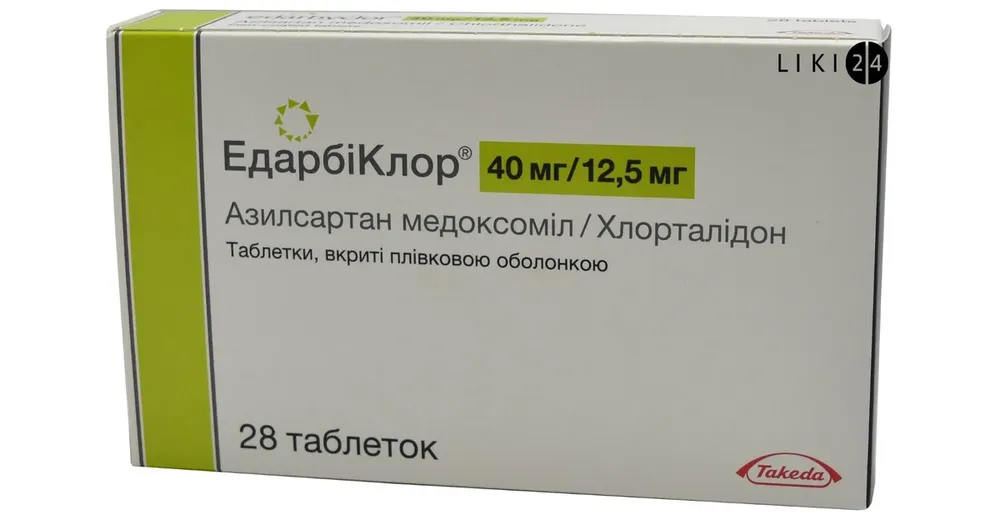
Table of Contents
INSTRUCTIONS FOR MEDICAL USE OF THE MEDICINAL PRODUCT EDARBYCLOR® (EDARBYCLOR®)
Composition:
Active substances: azilsartan medoxomil, chlorthalidone.
One tablet contains potassium azilsartan medoxomil 42.68 mg (equivalent to 40 mg of azilsartan medoxomil) and chlorthalidone 12.5 mg.
Excipients: mannitol (E 421), microcrystalline cellulose, fumaric acid, sodium hydroxide, hydroxypropylcellulose, crospovidone, magnesium stearate, hypromellose 2910, talc, titanium dioxide (E 171), iron oxide red (E 172), polyethylene glycol 8000, grey printing ink F1.
Pharmaceutical form. Film-coated tablets.
Main physicochemical properties: light pink, round, film-coated tablets, with the imprint «A/C» and «40/12.5» on one side.
Pharmacotherapeutic group: Angiotensin II antagonists and diuretics.
ATC code: C09DA09.
Pharmacological properties.
Pharmacodynamics.
EdarbiClor® is a combination of two antihypertensive agents with complementary mechanisms of blood pressure regulation: azilsartan medoxomil, an active prodrug of an angiotensin II AT1 receptor antagonist, and chlorthalidone, a thiazide-like diuretic.
Mechanism of action and pharmacodynamic effects.
Azilsartan medoxomil is an active prodrug administered orally, which is rapidly converted during absorption by esterases in the gastrointestinal tract into the active molecule azilsartan. Azilsartan selectively blocks the binding of angiotensin II to the AT1 receptor in various tissues, thereby inhibiting the effects of angiotensin II. Angiotensin II is the primary pressor agent of the renin-angiotensin system, responsible for vasoconstriction, stimulation of aldosterone synthesis and release, cardiac stimulation, and renal sodium reabsorption.
Blockade of the AT1 receptor interrupts the negative feedback of angiotensin II on renin secretion, resulting in increased plasma renin activity and circulating angiotensin II levels. However, this does not diminish the antihypertensive effect of azilsartan.
Chlorthalidone induces diuresis with increased excretion of sodium and chloride. Its site of action is the distal portion of the renal tubules (early segment of the convoluted tubule). The diuretic effect of chlorthalidone is due to inhibition of Na+Cl- reabsorption, mediated by antagonism of the Na+Cl- cotransporter in this segment, leading to increased excretion of sodium and water.
Effects on cardiac repolarization.
A thorough QT/QTc interval study was conducted to evaluate the potential of azilsartan medoxomil to prolong the QT/QTc interval in healthy subjects. No evidence of QT/QTc interval prolongation was observed with azilsartan medoxomil at a dose of 320 mg.
Clinical outcome studies have demonstrated that long-term treatment with chlorthalidone reduces morbidity and mortality associated with cardiovascular diseases.
Studies evaluating the use of a combination of angiotensin-converting enzyme (ACE) inhibitors with angiotensin II receptor antagonists in patients with a history of cardiovascular or cerebrovascular disease or type 2 diabetes with evidence of target organ damage, as well as in patients with type 2 diabetes and diabetic nephropathy, did not demonstrate significant benefit in terms of clinical outcomes or mortality related to kidney and/or cardiovascular disease. Moreover, an increased risk of hyperkalemia, acute kidney injury, and/or hypotension was observed compared to monotherapy.
A study designed to assess the benefit of adding aliskiren to standard therapy with an ACE inhibitor or angiotensin receptor blocker in patients with type 2 diabetes and chronic kidney disease, cardiovascular disease, or both, was prematurely terminated due to an increased risk of adverse outcomes.
Pharmacokinetics.
Concomitant administration of 80 mg azilsartan and 25 mg chlorthalidone once daily for 7 days did not affect the PK of these substances in healthy volunteers.
After oral administration of the fixed-dose combination tablet, the peak plasma concentration (Cmax) of chlorthalidone is 45% higher compared to administration of chlorthalidone and azilsartan as separate tablets. The extent of absorption, determined by the area under the curve (AUC), of both azilsartan and chlorthalidone after administration of EdarbiClor® is similar to that observed when azilsartan and chlorthalidone are administered as separate drugs.
EdarbiClor® can be taken independently of food intake.
Below are the pharmacokinetic properties of the individual components of EdarbiClor® (azilsartan medoxomil/chlorthalidone), as described in their respective brief product characteristics.
Absorption.
Azilsartan medoxomil. Azilsartan medoxomil is an orally administered drug substance that is rapidly converted by esterases into the active compound azilsartan during absorption.
Azilsartan medoxomil is not detectable in plasma after oral administration. In vitro studies indicate that carboxymethylenebutenolide esterase is involved in its hydrolysis in the intestine and liver. Additionally, hydrolysis of azilsartan medoxomil to azilsartan occurs via plasma esterases.
The estimated absolute bioavailability of azilsartan medoxomil is approximately 60%. After oral administration of azilsartan medoxomil, the Cmax of azilsartan is reached within 1.5–3 hours. Food intake does not affect the bioavailability of azilsartan (see section "Special precautions for use").
Chlorthalidone. The estimated bioavailability of chlorthalidone is approximately 64% within 8–12 hours after administration. With repeated dosing at 50 mg daily, the average steady-state blood concentration of 7.2 µg/mL (21.2 µmol/L), measured at the end of the 24-hour dosing interval, is achieved within 1–2 weeks.
Distribution.
Azilsartan medoxomil. The volume of distribution of azilsartan is approximately 16 liters. Azilsartan is highly bound (>99%) to plasma proteins, primarily serum albumin. Protein binding in plasma is not altered over a concentration range significantly higher than those achieved with recommended doses.
Chlorthalidone. In whole blood, chlorthalidone is primarily bound to carbonic anhydrase present in erythrocytes. In plasma, approximately 76% of chlorthalidone is bound to plasma proteins, predominantly albumin. Chlorthalidone crosses the placental barrier and is excreted in breast milk. In women receiving 50 mg chlorthalidone daily before and after delivery, the chlorthalidone concentration in fetal whole blood was approximately 15% of that in maternal blood. Concentrations of chlorthalidone in amniotic fluid and breast milk are approximately 4% of maternal plasma concentrations.
Metabolism.
Azilsartan medoxomil. Azilsartan is metabolized into two major metabolites. The primary metabolite in plasma is formed via O-dealkylation and is designated as metabolite M-II, while the secondary metabolite is formed via decarboxylation and is designated as metabolite M-I. Systemic exposure levels of the primary and secondary metabolites in humans are approximately 50% and less than 1% of azilsartan, respectively. M-I and M-II do not contribute to the pharmacological activity of azilsartan medoxomil. The main enzyme responsible for azilsartan metabolism is CYP2C9.
Chlorthalidone. Hepatic metabolism and excretion via bile play a minor role in elimination. Approximately 70% of chlorthalidone is excreted in urine and feces within 120 hours, primarily in unchanged form.
Elimination.
Azilsartan medoxomil. After oral administration of radiolabeled 14C-azilsartan medoxomil, approximately 55% was excreted in feces and about 42% in urine. Approximately 15% of the dose was excreted in urine as unchanged azilsartan. The elimination half-life of azilsartan in plasma is approximately 11 hours, and renal clearance is about 2.3 mL/min. Steady-state concentrations of azilsartan are reached within 5 days, and no accumulation occurs in plasma with once-daily dosing.
Chlorthalidone. The elimination half-life of chlorthalidone in whole blood and plasma averages 50 hours. The half-life after repeated dosing remains unchanged. The majority of the absorbed dose of chlorthalidone is eliminated by the kidneys, with an average renal clearance of 60 mL/min.
Linearity/Non-linearity.
Azilsartan medoxomil.
Dose proportionality for azilsartan exposure was established in the dose range of azilsartan medoxomil from 20 mg to 320 mg after single or multiple doses.
Chlorthalidone.
For doses of 25 mg and 50 mg, Cmax values average 1.5 µg/mL (4.4 µmol/L) and 3.2 µg/mL (9.4 µmol/L), respectively. Proportional increases in AUC are observed for doses up to 100 mg.
Special populations.
Elderly patients.
The pharmacokinetics of azilsartan are not significantly different between young (age range 18–45 years) and elderly (age range 65–85 years) patients.
In elderly patients, chlorthalidone elimination is slower than in healthy young subjects, although absorption remains unchanged. Therefore, caution is recommended when treating very elderly patients (≥75 years) with EdarbiClor® (see section "Dosage and administration").
Renal impairment.
In patients with mild, moderate, and severe renal impairment, total exposure to azilsartan (AUC) was increased by +30%, +25%, and +95%, respectively. No increase (+5%) was observed in dialysis patients with end-stage renal disease. However, there is no clinical experience with the use of the drug in patients with severe renal impairment (eGFR < 30 mL/min/1.73 m²) or end-stage renal disease (see section "Indications"). Azilsartan is not removed from systemic circulation by hemodialysis.
The majority of absorbed chlorthalidone is eliminated by the kidneys; however, renal impairment does not significantly alter chlorthalidone pharmacokinetics. The rate-limiting factor for chlorthalidone elimination from blood or plasma is likely its affinity for carbonic anhydrase in erythrocytes. Therefore, dose adjustment is not required in patients with mild to moderate renal impairment (eGFR ≥ 30 to < 90 mL/min/1.73 m²).
Hepatic impairment.
Administration of azilsartan medoxomil for 5 days in patients with mild (Child-Pugh class A) or moderate (Child-Pugh class B) hepatic impairment resulted in a slight increase in azilsartan exposure (AUC increased 1.3–1.6 times). The use of azilsartan in patients with severe hepatic impairment has not been studied. The use of chlorthalidone in patients with hepatic impairment has not been studied.
EdarbiClor®, due to its chlorthalidone content, is contraindicated in patients with severe hepatic impairment (see section "Dosage and administration").
Gender.
The pharmacokinetics of azilsartan are not significantly different between men and women. In a population pharmacokinetic analysis of patients with arterial hypertension receiving EdarbiClor®, men had lower exposure (Cmax and AUC) than women (≤30%). These pharmacokinetic differences are not considered clinically significant.
Dose adjustment based on gender is not required.
Race.
The pharmacokinetics of azilsartan do not significantly differ between Caucasian and African American patients. In a population pharmacokinetic analysis of patients with arterial hypertension receiving EdarbiClor®, no effect of race on the pharmacokinetics of azilsartan or chlorthalidone was observed.
Dose adjustment based on race is not required.
Clinical characteristics.
Indications.
Treatment of arterial hypertension in adults whose blood pressure is not adequately controlled with monotherapy with azilsartan medoxomil.
Contraindications.
- Hypersensitivity to the active substance or to any of the excipients;
- anuria;
- therapy-resistant hypercalcemia, hyponatremia;
- severe hepatic and renal impairment (creatinine clearance < 30 mL/min);
- symptomatic hyperuricemia;
- pregnancy;
- do not use in combination with aliskiren-containing products in patients with diabetes mellitus or renal impairment (eGFR < 60 mL/min/1.73 m²).
Interaction with other medicinal products and other forms of interaction.
Combinations not recommended.
Lithium. Increased serum lithium concentrations and symptoms of lithium toxicity have been reported when lithium is used concomitantly with angiotensin II receptor antagonists. Serum lithium levels should be monitored when these agents are used together. Diuretics such as chlorthalidone reduce renal lithium clearance, thereby increasing its toxicity. When using EdarbiClor®, monitoring of lithium levels in the body is recommended.
Due to lack of experience with concomitant use of EdarbiCl0r® and lithium, this combination is not recommended. If such combination therapy is necessary, monitoring of serum lithium levels should be considered.
Caution is required when used concomitantly.
Nonsteroidal anti-inflammatory drugs (NSAIDs), including selective cyclooxygenase-2 inhibitors (COX-2 inhibitors), acetylsalicylic acid (> 3 g/day), and nonselective NSAIDs. In elderly patients, patients with hypovolemia (including those receiving diuretics), and patients with impaired renal function, concomitant administration of NSAIDs (including selective COX-2 inhibitors) and angiotensin II receptor antagonists, including azilsartan, may lead to deterioration of renal function, including development of acute renal failure, and increased serum potassium levels. Adequate hydration and monitoring of renal function at the beginning of treatment are therefore recommended.
Concomitant use of angiotensin II receptor antagonists with NSAIDs (selective COX-2 inhibitors, acetylsalicylic acid (> 3 g/day), and nonselective NSAIDs) may reduce the antihypertensive effect of EdarbiClor®.
Potassium supplements, potassium-containing salt substitutes, and other substances that may increase potassium levels. Based on experience with other medicinal products affecting the renin-angiotensin-aldosterone system (RAAS), use of EdarbiClor® with potassium supplements, potassium-containing salt substitutes, or other medicinal products that may increase potassium levels (e.g., heparin) may lead to increased serum potassium levels in patients with arterial hypertension (see section "Special precautions").
Digitalis. Concomitant use of digitalis may exacerbate adverse effects of hypokalemia (see section "Special precautions").
Additional information.
EdarbiClor®.
Clinical trial data have demonstrated that dual blockade of the renin-angiotensin-aldosterone system (RAAS) by combining ACE inhibitors, angiotensin II receptor antagonists, or aliskiren is associated with a higher incidence of adverse events such as hypotension, hyperkalemia, and impaired renal function (including acute renal failure), compared to treatment with a single agent acting on the RAAS (see sections "Pharmacological properties", "Contraindications", and "Special precautions").
The pharmacokinetics of azilsartan medoxomil and chlorthalidone are not altered when administered concomitantly.
Interaction studies between EdarbiClor® and other medicinal products have not been conducted, although studies on interactions of azilsartan medoxomil and chlorthalidone with other medicinal products have been performed.
Azilsartan medoxomil. Studies of concomitant administration of azilsartan medoxomil or azilsartan with amlodipine, antacids, chlorthalidone, digoxin, fluconazole, glyburide, ketoconazole, metformin, pioglitazone, and warfarin showed no clinically significant drug interactions.
Azilsartan medoxomil is a prodrug that is rapidly hydrolyzed by esterases to the active molecule azilsartan in the gastrointestinal tract and/or during absorption (see section "Pharmacological properties"). In vitro studies have demonstrated that interactions based on esterase inhibition are unlikely.
Chlorthalidone. Diuretics potentiate the effects of curare derivatives and antihypertensive agents (e.g., guanethidine, methyldopa, beta-blockers, vasodilators, calcium antagonists, ACE inhibitors, and ARBs).
The hypokalemic effect of chlorthalidone may be potentiated by corticosteroids, ACTH, β2-agonists, amphotericin, and carbenoxolone.
Allopurinol. Concomitant use of chlorthalidone may increase the frequency of hypersensitivity reactions to allopurinol.
Amantadine. Chlorthalidone may increase the risk of adverse effects caused by amantadine.
Anticholinergic agents (e.g., atropine, biperiden) may increase the bioavailability of chlorthalidone by reducing gastrointestinal motility and gastric emptying rate.
Antidiabetic medicinal products (oral agents and insulin). Dose adjustment of antidiabetic agents may be required.
Calcium salts. The pharmacological effects of both calcium salts and vitamin D may be enhanced to clinically significant levels when used concomitantly with chlorthalidone.
Cyclosporine. Concomitant treatment with cyclosporine may increase the risk of hyperuricemia and gout-like complications.
Cholestyramine. Absorption of chlorthalidone is impaired in the presence of anion-exchange resins. A reduced pharmacological effect may be expected.
Cytotoxic agents. Concomitant use may reduce renal excretion of cytotoxic drugs (e.g., cyclophosphamide, methotrexate) and potentiate their myelosuppressive effects.
Diazoxide. The hyperglycemic effect of diazoxide may be enhanced by chlorthalidone.
Special precautions for use.
Dual blockade of the renin-angiotensin-aldosterone system (RAAS).
Data indicate that concomitant use of ACE inhibitors, angiotensin II receptor antagonists, or aliskiren increases the risk of hypotension, hyperkalemia, and impaired renal function (including acute renal failure). Therefore, dual blockade of the RAAS by combining ACE inhibitors, angiotensin II receptor antagonists, or aliskiren is not recommended (see section "Interaction with other medicinal products and other forms of interaction").
If dual blockade is considered absolutely necessary, such therapy should be administered only under specialist supervision and with frequent careful monitoring of renal function, electrolytes, and blood pressure. ACE inhibitors and angiotensin II receptor antagonists should not be used concomitantly in patients with diabetic nephropathy.
Activated renin-angiotensin-aldosterone system.
In patients whose vascular tone and renal function primarily depend on the activity of the renin-angiotensin-aldosterone system (e.g., patients with congestive heart failure or renal disease, including bilateral renal artery stenosis), treatment with agents affecting this system, such as ACE inhibitors and angiotensin II receptor antagonists, has been associated with acute hypotension, azotemia, oliguria, and rarely, acute renal failure. The possibility of such effects cannot be excluded with the use of EdarbiClor®.
Assessment of patients with arterial hypertension and activated RAAS should include periodic evaluation of renal function and electrolyte levels.
Excessive reduction in blood pressure in patients with ischemic cardiomyopathy or ischemic cerebrovascular disease may lead to myocardial infarction or stroke.
Renal impairment.
Chlorthalidone, a component of EdarbiClor®, should not be used in severe renal impairment (eGFR < 30 mL/min/1.73 m²) (see section "Contraindications"). Dose adjustment is not required in patients with mild to moderate renal impairment.
Patients with renal impairment require monitoring for worsening renal function through periodic assessment of serum creatinine and electrolyte levels. The likelihood of reports of abnormally high serum creatinine levels is higher in patients with renal impairment. For these patients, the dose of EdarbiClor® should be carefully titrated, and blood pressure and renal function parameters should be monitored. Renal function may deteriorate in patients with renal artery stenosis.
Chlorthalidone should be used with caution in patients with renal impairment, as chlorthalidone may precipitate azotemia. If progressive renal failure becomes evident, discontinuation or cessation of diuretic therapy should be considered.
Renal transplantation.
Currently, there is no experience with the use of EdarbiClor® in patients who have recently undergone kidney transplantation.
Hepatic impairment.
Chlorthalidone, a component of EdarbiClor®, should not be used in severe hepatic impairment (see section "Contraindications").
There is limited experience with the use of EdarbiClor® in patients with mild to moderate hepatic impairment; however, pharmacokinetic studies indicate that dose adjustment is not required in patients with mild to moderate hepatic impairment. Minor changes in fluid and electrolyte balance caused by thiazide diuretics may precipitate hepatic coma. Therefore, careful monitoring is recommended (see section "Pharmacological properties").
Hypotension in patients with volume depletion and/or salt depletion.
EdarbiClor® should be initiated under close medical supervision in patients with possible intravascular volume depletion or salt depletion (e.g., patients experiencing vomiting, diarrhea, or those on high-dose diuretics) (see section "Dosage and administration"). Volume depletion and/or salt depletion should be corrected before initiating treatment with EdarbiClor®.
Primary hyperaldosteronism.
Patients with primary hyperaldosteronism generally do not respond to antihypertensive therapy acting through inhibition of the renin-angiotensin system. Therefore, EdarbiClor® is not recommended for use in these patients.
Electrolyte imbalance.
Serum electrolyte levels should be periodically monitored in patients receiving diuretic therapy.
Thiazides may cause disturbances in water-electrolyte balance (including hypokalemia, hypercalcemia, hyponatremia, and hypochloremic alkalosis). Warning signs of water-electrolyte imbalance include dry mouth, thirst, asthenia, lethargy, drowsiness, restlessness, muscle pain or cramps, muscle fatigue, hypotension, oliguria, tachycardia, and gastrointestinal disturbances such as nausea or vomiting (see section "Adverse reactions"). Water-electrolyte balance should be corrected before initiating treatment with EdarbiClor®.
Hypokalemia.
Hypokalemia is a dose-dependent adverse reaction that may develop during monotherapy with chlorthalidone. Concomitant use with azilsartan medoxomil has been shown to reduce chlorthalidone-associated hypokalemia. Concomitant use of digoxin may exacerbate the adverse effects of hypokalemia. Hypokalemia should be corrected before initiating treatment with EdarbiClor®.
Hyperkalemia.
Due to the antagonism of azilsartan medoxomil, a component of EdarbiClor®, at angiotensin II receptors, hyperkalemia may develop. Although clinically significant hyperkalemia has not been reported with EdarbiClor®, risk factors for hyperkalemia include renal and/or cardiac impairment, as well as diabetes mellitus. Potassium-sparing diuretics, potassium supplements, or potassium-containing salt substitutes should be used cautiously when administered concomitantly with EdarbiClor® (see section "Interaction with other medicinal products and other forms of interaction").
Hyponatremia and hypochloremic alkalosis.
Thiazides have been shown to cause hyponatremia. EdarbiClor® should not be used in patients with refractory hyponatremia (see section "Contraindications"). Chloride deficiency is usually mild and generally does not require treatment.
Hypercalcemia.
Thiazides may reduce calcium excretion in urine and cause occasional and slight elevation of serum calcium levels in the absence of known calcium metabolism disorders. Marked hypercalcemia may indicate occult hyperparathyroidism. Thiazide therapy should be discontinued before testing parathyroid function. EdarbiClor® should not be used in patients with hypercalcemia (see section "Contraindications").
Hypomagnesemia.
Thiazides have been shown to increase urinary magnesium excretion, which may lead to hypomagnesemia (see section "Interaction with other medicinal products and other forms of interaction").
Aortic and mitral valve stenosis, obstructive hypertrophic cardiomyopathy.
As with other vasodilating agents or agents causing fluid volume depletion, special caution is advised in patients with aortic or mitral valve stenosis or obstructive hypertrophic cardiomyopathy.
Metabolic and endocrine effects.
Thiazide therapy may impair glucose tolerance, potentially requiring adjustment of insulin or antidiabetic therapy. Latent diabetes mellitus may become manifest during thiazide therapy. Increased cholesterol and triglyceride levels have been associated with thiazide diuretic therapy.
Hyperuricemia.
Hyperuricemia or manifestation of overt gout may develop in some patients receiving chlorthalidone or other thiazide diuretics. EdarbiClor® should not be used in patients with symptoms of hyperuricemia (see section "Contraindications").
Pregnancy.
EdarbiClor® should not be used during pregnancy (see section "Contraindications").
Initiation of angiotensin II receptor antagonists during pregnancy is not recommended. If continuation of therapy with angiotensin II receptor antagonists is not necessary, women planning pregnancy should be switched to alternative antihypertensive treatments with an established safety profile during pregnancy. If pregnancy is detected, treatment with angiotensin II receptor antagonists should be discontinued immediately, and alternative therapy initiated if necessary (see sections "Contraindications" and "Use in pregnancy or lactation").
Diuretics should not be used for the treatment of edema or arterial hypertension during pregnancy (see section "Use in pregnancy or lactation").
Lithium.
As with other angiotensin II receptor antagonists, combination of lithium with EdarbiClor® is not recommended (see section "Interaction with other medicinal products and other forms of interaction").
Choroidal effusion, acute myopia, and secondary angle-closure glaucoma.
Medicinal products containing sulfonamide or sulfonamide derivatives may cause an idiosyncratic reaction leading to choroidal effusion with visual field defects, transient myopia, and acute angle-closure glaucoma. Symptoms include acute onset of decreased visual acuity or eye pain and typically occur within hours or weeks of starting the medication.
Untreated acute angle-closure glaucoma may lead to permanent vision loss. The primary treatment is prompt discontinuation of the medication. If intraocular pressure remains uncontrolled, medical or surgical treatment may be necessary. Risk factors for acute angle-closure glaucoma may include a history of sulfonamide or penicillin allergy.
Intestinal angioedema.
Cases of intestinal angioedema have been reported in patients treated with angiotensin II receptor antagonists (see section "Adverse reactions"). These patients experienced abdominal pain, nausea, vomiting, and diarrhea. Symptoms resolved after discontinuation of angiotensin II receptor antagonists. If intestinal angioedema is diagnosed, EdarbiClor® should be discontinued and appropriate monitoring initiated until complete resolution of symptoms.
Use during pregnancy or breastfeeding.
Pregnancy.
EdarbiClor® should not be used during pregnancy (see sections "Contraindications" and "Special precautions for use").
| Use of angiotensin II receptor antagonists is not recommended during the first trimester of pregnancy (see section "Special precautions"). Use of angiotensin II receptor antagonists is contraindicated during the second and third trimesters of pregnancy (see sections "Contraindications" and "Special precautions"). Thiazides are contraindicated during pregnancy (see sections "Contraindications" and "Special precautions"). |
There are no clinical data on the use of EdarbiClor® in pregnant women. Animal studies have demonstrated reproductive toxicity.
Azilsartan medoxomil.
Epidemiological data on the risk of teratogenicity following exposure to angiotensin-converting enzyme inhibitors during the first trimester of pregnancy are not conclusive; however, a small increased risk cannot be excluded. Despite the lack of controlled epidemiological data on the risk of using angiotensin II receptor antagonists, similar risks may exist for this class of medicinal products. If continuation of therapy with angiotensin II receptor antagonists is not considered necessary, women planning pregnancy should be switched to alternative antihypertensive treatments with an established safety profile during pregnancy. If pregnancy is detected, treatment with angiotensin II receptor antagonists should be stopped immediately, and alternative therapy should be initiated if necessary.
It is known that exposure to angiotensin II receptor antagonists during the second and third trimesters of pregnancy causes fetotoxicity (reduced renal function, oligohydramnios, delayed skull ossification) and neonatal toxicity (renal failure, hypotension, hyperkalemia) in humans.
If exposure to angiotensin II receptor antagonists occurred from the second trimester of pregnancy, ultrasound evaluation of renal function and skull development is recommended.
Infants born to mothers who have taken angiotensin II receptor antagonists should be carefully monitored for hypotension (see sections "Contraindications" and "Special warnings and precautions for use").
Chlorthalidone.
Diuretics should not be used to treat edema or arterial hypertension during pregnancy, as their use may be associated with hypovolemia, increased blood viscosity, and reduced placental perfusion. Diuretics such as chlorthalidone have been shown to cross the placental barrier and appear in umbilical cord blood. Cases of fetal bone marrow suppression, thrombocytopenia, and jaundice in the fetus and newborn associated with the use of thiazide-like diuretics have been reported.
Breastfeeding.
There is no information available on the use of EdarbiClor® or azilsartan medoxomil during breastfeeding. However, chlorthalidone passes into breast milk, and therefore EdarbiClor® is not recommended during breastfeeding. During breastfeeding, preference should be given to alternative treatments with more clearly established safety profiles, especially when nursing a newborn or preterm infant.
Fertility.
There are no data on the effect of EdarbiClor® on human fertility. Preclinical studies have demonstrated that azilsartan medoxomil does not affect male or female fertility in rats.
Ability to influence reaction speed when driving or operating machinery.
Given the pharmacodynamic properties of EdarbiClor®, the effect of the drug on reaction speed when driving or operating machinery is expected to be minimal. However, when using any antihypertensive medication, the possibility of dizziness or increased fatigue should be taken into account.
Method of Administration and Dosage
EdarbiClor® is intended for oral use; the tablets can be taken independently of food intake.
The recommended initial dose for adults is 1 tablet (40/12.5 mg) once daily. The antihypertensive effect is mainly observed within 1–2 weeks of treatment. After 2–4 weeks of treatment, the dose may be increased, if necessary, to 40/25 mg to achieve the target blood pressure level.
Special Patient Groups
Renal Impairment
Chlorthalidone, a component of EdarbiClor®, should not be used in patients with severe renal impairment (eGFR < 30 mL/min/1.73 m²) or anuria (see section "Contraindications"). Experience with EdarbiClor® in patients with recent kidney transplantation is lacking. Dose adjustment is not required in patients with mild (estimated eGFR 60–90 mL/min/1.73 m²) or moderate (estimated eGFR 30–60 mL/min/1.73 m²) renal impairment.
Hepatic Impairment
Chlorthalidone, a component of EdarbiClor®, should not be used in patients with severe hepatic impairment (see section "Contraindications"). Limited experience exists with the use of EdarbiClor® in patients with mild to moderate hepatic impairment; however, no dose adjustment of EdarbiClor® is required in these patients.
Thiazides should be used with caution in patients with impaired liver function (see sections "Contraindications" and "Special Warnings and Precautions for Use"). Minor alterations in fluid and electrolyte balance caused by thiazide diuretics may precipitate hepatic coma. Close monitoring is recommended.
Elderly Patients
No dose adjustment of EdarbiClor® is required in elderly patients; however, caution should be exercised and careful monitoring is advised in elderly patients (over 75 years of age), who may be at increased risk of adverse reactions.
Intravascular Volume Depletion
EdarbiClor® should be initiated under close medical supervision only after restoration of adequate volume status in patients with intravascular volume or salt depletion (e.g., patients experiencing vomiting, diarrhea, or those on high-dose diuretics) (see section "Special Warnings and Precautions for Use").
Transient hypotensive response due to volume depletion does not preclude further treatment, which can usually be continued without difficulty after stabilization of blood pressure and blood volume.
Heart Failure
Caution should be exercised in patients with hypertension and congestive heart failure, as experience with the use of EdarbiClor® in such patients is lacking.
Patients of Non-Negroid Race
Dose adjustment is not required in patients of non-negroid race, who are typically characterized as having "low-renin" hypertension with a reduced response to renin-angiotensin-aldosterone system (RAAS) blockers. The effect on blood pressure and safety profile of EdarbiClor® in non-negroid patients is comparable to that in patients of other races.
Children EdarbiClor® is not recommended for use in children, as data on safety and efficacy in pediatric patients (under 18 years of age) are lacking.
Overdose
Limited data are available on overdose with this medicinal product.
Azilsartan Medoxomil Based on its pharmacological profile, the main manifestations of azilsartan medoxomil overdose are likely to be symptomatic hypotension and dizziness. In controlled clinical studies in healthy volunteers, azilsartan medoxomil was well tolerated at doses up to 320 mg once daily for 7 days. In case of overdose, supportive treatment should be administered based on the patient's clinical condition. Azilsartan is not removed by dialysis.
Chlorthalidone Symptoms of acute overdose include nausea, weakness, dizziness, and electrolyte imbalance. There is no specific antidote. Recommended treatment includes gastric lavage followed by supportive therapy. If necessary, intravenous administration of dextrose and sodium chloride with potassium should be cautiously considered as part of supportive treatment.
Adverse reactions.
The adverse reactions considered to be at least possibly related to treatment are listed in Table 1 by "system-organ-class" and frequency. Frequency is defined according to the criteria below.
Very common (≥ 1/10), common (≥ 1/100 to < 1/10), uncommon (≥ 1/1,000 to < 1/100), rare (≥ 1/10,000 to < 1/1,000), very rare (< 1/10,000), frequency not known (frequency cannot be estimated from the available data).
Table 1
| System organ class |
Frequency |
Adverse reactions |
| Blood and lymphatic system disorders |
Uncommon |
Anaemia |
| Metabolism and nutrition disorders |
Common |
Increased blood uric acid, hyperuricaemia |
| Uncommon |
Hypokalaemia, increased blood potassium, hyponatraemia, decreased blood sodium, gout |
|
| Nervous system disorders |
Common |
Dizziness, postural dizziness |
| Uncommon |
Fainting, paraesthesia |
|
| Vascular disorders |
Common |
Hypotension |
| Gastrointestinal disorders |
Common |
Diarrhoea, nausea |
| Skin and subcutaneous tissue disorders |
Uncommon |
Rash, pruritus |
| Musculoskeletal and connective tissue disorders |
Common |
Muscle spasms |
| General disorders and administration site conditions |
Common |
Fatigue |
| Investigations |
Very common |
Increased blood creatinine |
| Common |
Increased blood urea |
|
| Uncommon |
Increased blood glucose |
Additional information on individual components.
Adverse reactions known to occur with each component individually, but not observed in clinical studies, may occur during treatment with EdarbiClor®.
Azilsartan medoxomil.
In addition to the adverse reactions listed above for EdarbiClor®, the following adverse reactions have been reported with azilsartan medoxomil: peripheral edema, migraine, and increased blood creatine phosphokinase levels, which were reported as uncommon.
During clinical trials, renal function disorders were rarely reported. Severe angioneurotic edema may occur rarely (from ≥ 1/10,000 to < 1/1,000).
Chlorthalidone.
In addition to the adverse reactions listed above for EdarbiClor®, adverse reactions have been reported with chlorthalidone (see Table 2).
Table 2
| System Organ Class |
Frequency |
Adverse Reactions |
| Blood and lymphatic system disorders |
Uncommon |
Thrombocytopenia, leukopenia, agranulocytosis, eosinophilia |
| Metabolism and nutrition disorders |
Very common |
Increased blood lipid levels |
| Common |
Hypomagnesemia |
|
| Uncommon |
Hypercalcemia, glucosuria, worsening of metabolic control in diabetes mellitus |
|
| Very rare |
Hypochloremic alkalosis |
|
| Nervous system disorders |
Uncommon |
Headache |
| Cardiac disorders |
Common |
Orthostatic hypotension |
| Uncommon |
Cardiac arrhythmia |
|
| Eye disorders |
Frequency not known |
Choroidal effusion |
| Respiratory, thoracic and mediastinal disorders |
Uncommon |
Idiosyncratic pulmonary edema |
| Gastrointestinal disorders |
Common |
Loss of appetite, mild gastrointestinal disturbances |
| Uncommon |
Constipation, stomach pain |
|
| Very rare |
Pancreatitis |
|
| Hepatobiliary disorders |
Uncommon |
Intrahepatic cholestasis or jaundice |
| Skin and subcutaneous tissue disorders |
Common |
Urticaria |
| Uncommon |
Photosensitization, cutaneous vasculitis |
|
| Renal and urinary disorders |
Uncommon |
Allergic interstitial nephritis |
| Reproductive system and breast disorders |
Common |
Impotence |
Description of individual adverse reactions.
Renal function impairment and renal failure have been reported as uncommon adverse reactions in association with increased blood creatinine levels; most of these cases were reversible either during treatment or after discontinuation of EdarbiClor®, and none required dialysis.
As with other ARAs, severe angioedema may rarely occur (from ≥ 1/10,000 to < 1/1,000).
Cases of intestinal angioedema have been reported following administration of angiotensin II receptor antagonists (see section "Special precautions").
Laboratory tests.
Serum creatinine.
Elevation of serum creatinine is a known pharmacological effect of agents acting on the renin-angiotensin-aldosterone system (RAAS), such as angiotensin II receptor antagonists and ACE inhibitors, and is related to the degree of blood pressure reduction. Treatment with EdarbiClor® resulted in a higher incidence of increased serum creatinine compared to azilsartan medoxomil or chlorthalidone alone. Increases in creatinine levels were generally transient, non-progressive, and reversible, and were associated with more pronounced blood pressure reduction.
Uric acid.
Treatment with EdarbiClor® was associated with increased serum uric acid levels, consistent with the known pharmacological effects of diuretics. The increase in uric acid levels is dose-dependent on chlorthalidone, although reports of gout manifestation were infrequent across treatment groups, even in long-term studies.
Hemoglobin and hematocrit.
Treatment with EdarbiClor® was associated with a slight decrease in hematocrit, hemoglobin levels, and erythrocyte count, consistent with the known pharmacological effects of renin-angiotensin-aldosterone system inhibitors.
Post-marketing period. The following adverse reactions have been observed: nausea, dizziness, loss of consciousness, rash, pruritus, angioedema. Since these data come from a population of uncertain size, it is not always possible to reliably estimate their frequency or establish a causal relationship to the use of the medicinal product.
Shelf life. 3 years.
Storage conditions. Store in the original packaging at a temperature not exceeding 25 °C. Keep out of reach of children!
Packaging. 14 tablets in a blister; 1 or 2 blisters per cardboard box.
Prescription status. Prescription only.
Manufacturer. Takeda Ireland Ltd, Ireland.
Manufacturer's address and place of business.
Bray Business Park, Kilruddery, Co. Wicklow, Ireland / Bray Business Park, Kilruddery, Co. Wicklow, Ireland.