Dysport
Ukraine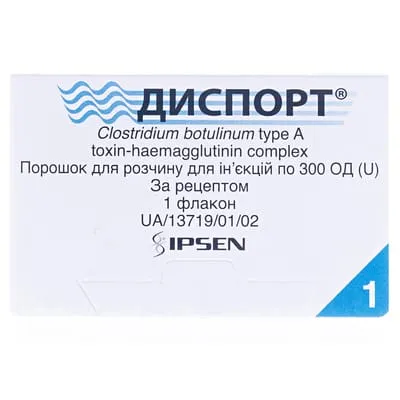
Table of Contents
INSTRUCTIONS FOR MEDICAL USE OF THE MEDICINAL PRODUCT DYSPORT®
Composition:
Active substance: Clostridium botulinum type A toxin-haemagglutinin complex
One vial contains 300 IU or 500 IU of type A botulinum toxin-haemagglutinin complex;
Excipients: human albumin solution, lactose monohydrate.
Pharmaceutical form. Powder for solution for injection.
Main physicochemical properties:
300 IU:
white lyophilized powder without visible foreign particles. After reconstitution – clear, colorless solution without mechanical inclusions.
500 IU:
white lyophilized powder without foreign particles.
Pharmacotherapeutic group.
Peripheral-acting muscle relaxants. ATC code: M03AX01.
Pharmacological properties.
Pharmacodynamics.
Botulinum toxin type A-haemagglutinin complex (Clostridium botulinum type A toxin-haemagglutinin complex) blocks peripheral cholinergic transmission at the neuromuscular synapse via a presynaptic action at the site proximal to acetylcholine release. The toxin acts on the nerve terminal, interfering with Ca2+-dependent processes that lead to neurotransmitter release. It does not affect postganglionic cholinergic transmission or postganglionic sympathetic transmission.
The action of the toxin involves an initial binding phase, during which the toxin rapidly and tightly attaches to the presynaptic membrane. This is followed by internalization, whereby the toxin crosses the presynaptic membrane without causing paralysis. Ultimately, the toxin blocks the release of acetylcholine by disrupting the Ca2+-dependent mechanism of its exocytosis, thereby reducing end-plate potential and resulting in paralysis.
Recovery of nerve impulse transmission occurs gradually through the formation of new nerve terminals and re-establishment of connections with the postsynaptic motor end plate; in experimental animals, this process takes 6 to 8 weeks.
Upper limb focal spasticity in adults
The efficacy and safety of Dysport® for the treatment of upper limb spasticity were evaluated in a randomized, multicenter, double-blind, placebo-controlled study involving 238 patients (159 receiving Dysport® and 79 receiving placebo) with upper limb spasticity due to stroke (90%) or traumatic brain injury (10%) that occurred at least 6 months prior to enrollment. The primary target muscle group (PTMG) included finger flexors (56%), elbow flexors (28%), and wrist flexors (16%).
The primary efficacy variable was muscle tone in the PTMG at week 4, measured using the Modified Ashworth Scale (MAS), a 5-point scale ranging from 0 (no increase in muscle tone) to 4 (affected limb rigid in flexion or extension). The primary secondary endpoint was the Physician Global Assessment (PGA) of treatment response, a 9-point scale ranging from –4 [marked worsening] through 0 [no change] to +4 [marked improvement].
Table 1
Key results at week 4 and week 12
| Parameters |
Week 4 |
Week 12 |
||||
| Placebo (N = 79) |
Dysport® (500 U) (N = 80) |
Dysport® (1000 U) (N = 79) |
Placebo (N = 79) |
Dysport® (500 U) (N = 80) |
Dysport® (1000 U) (N = 79) |
|
| Mean change in upper limb muscle tone assessed by MAS from baseline (LSM method) |
-0.3 |
-1.2** |
-1.4** |
-0.1 n = 75 |
-0.7** n = 76 |
-0.8** n = 76 |
| Mean change in treatment response assessed by PGA (LSM method) |
0.7 |
1.4* |
1.8** |
0.4 n = 75 |
0.5 n = 76 |
1.0* n = 76 |
| Mean change in wrist flexor muscle tone assessed by MAS from baseline (LSM method) |
-0.3 n = 54 |
-1.4** n = 57 |
-1.6** n = 58 |
-0.3 n = 52 |
-0.7* n = 54 |
-0.9* n = 56 |
| Mean change in finger flexor muscle tone assessed by MAS from baseline (LSM method) |
-0.3 n = 70 |
-0.9* n = 66 |
-1.2** n = 73 |
-0.1 n = 67 |
-0.4* n = 62 |
-0.6* n = 70 |
| Mean change in elbow flexor muscle tone assessed by MAS from baseline (LSM method) |
-0.3 n = 56 |
-1.0* n = 61 |
-1.2** n = 48 |
-0.3 n = 53 |
-0.7* n = 58 |
-0.8* n = 46 |
| Mean change in shoulder extensor muscle tone assessed by MAS from baseline(1) |
-0.4 n = 12 |
-0.6 n = 7 |
-0.7 n = 6 |
0.0 n = 12 |
-0.9 n = 7 |
0.0 n = 6 |
| * p < 0.05; ** p < 0.0001; LSM – least squares method. (1) Statistical testing was not performed due to low event rates in the treatment and placebo groups, as available data on patients treated for shoulder muscles are limited. |
||||||
To assess the impact of treatment on functional impairments (passive function), the Principal Target of Treatment (PTT) was evaluated using the Disability Assessment Scale (DAS). Although some improvements in mean change from baseline at week 4 in the groups receiving Dysport® did not reach statistical significance compared to placebo groups, the proportion of patients achieving a therapeutic effect on the DAS scale (i.e., patients who showed an improvement of at least one scale point) for achieving PTT was significantly higher with the 1000 IU dose, as shown in Table 2.
Table 2
| Treatment group |
4 week % of patients responding to therapy |
12 week % of patients responding to therapy |
|
| Dysport® 500 IU |
50.0 p = 0.13 |
41.3 p = 0.11 |
|
| Dysport® 1000 IU |
62.0 p = 0.0018 |
55.7 p = 0.0004 |
|
| Placebo |
39.2 |
32.9 |
|
| * DAS includes domains such as ability to perform hygiene procedures, ability to dress independently, limb position at rest, and pain intensity. |
|||
In addition, statistically significant improvements in spasticity (severity and angle) were observed according to the Tardieu scale regarding the range of active movement of fingers, wrist, or elbows, and regarding ease of splint application in patients, particularly at the dose of 1000 IU. However, no treatment effect was demonstrated on active function assessed by the Modified Frenchay Scale, or on quality of life according to the EQ5D or SF-36 questionnaires.
Lower limb focal spasticity affecting the ankle joint
The efficacy and safety of Dysport® in the treatment of lower limb spasticity were evaluated in a randomized, multicenter, double-blind, placebo-controlled study involving 385 patients (255 receiving Dysport® and 130 receiving placebo) with lower limb spasticity following stroke or traumatic brain injury, primarily involving lower limb spasticity affecting the ankle joint. The efficacy of Dysport® was assessed at two dose levels: Dysport® 1000 IU (n = 125) and Dysport® 1500 IU (n = 128), compared to placebo (n = 128). The primary target muscle group was the gastrocnemius-soleus complex (GSC). The primary efficacy endpoint was the response rate of the ankle joint with extended knee, measured using the Modified Ashworth Scale (MAS) at Week 4.
Dysport® doses were distributed between the gastrocnemius and soleus muscles (GSC) and at least one additional distal or proximal lower limb muscle, according to clinical indication.
The primary efficacy endpoint—the response rate of the ankle joint with extended knee (involving all plantar flexors), measured by the Modified Ashworth Scale (MAS)—showed a statistically significant improvement with the 1500 IU dose. In contrast, the response rate of the ankle joint with flexed knee (involving all plantar flexors except the gastrocnemius), measured by the Modified Ashworth Scale (MAS), showed statistically significant improvement with both the 1000 IU and 1500 IU doses.
Table 3
| Parameters |
Week 4 |
Week 12 |
||||
| Placebo (N = 128) |
Dysport® (1000 U) (N = 125) |
Dysport® (1500 U) (N = 128) |
Placebo (N = 128) |
Dysport® (1000 U) (N = 125) |
Dysport® (1500 U) (N = 128) |
|
| Mean change in MAS score (extended knee) from baseline (LS means method) |
-0.5 |
-0.6 |
-0.8* |
-0.4 |
-0.4 |
-0.6* |
| Mean change in MAS score (flexed knee) from baseline (LS means method) |
-0.4 |
-0.7* |
-0.8** |
-0.3 |
-0.5* |
-0.6* |
| * p < 0.05; ** p < 0.0001; LS means – least squares means method |
||||||
Statistically significant improvements in spasticity were observed based on the Tardieu Scale (TS) from week 4 to week 20 in the group receiving Dysport® at a dose of 1500 IU, and from week 4 to week 12 in the group receiving Dysport® at a dose of 1000 IU. Furthermore, statistically significant differences in the angle of flexion were observed in favor of the higher Dysport® dose at weeks 1 and 16. Results of a retrospective analysis conducted due to the non-normality of Physician's Global Assessment (PGA) data demonstrated that treatment with Dysport® at both doses was also associated with statistically significant clinical improvement as measured by the Physician's Global Assessment scale.
The primary efficacy variable was improvement in ankle plantar flexion at week 4 after administration of the higher dose of Dysport®. Additional efficacy endpoints, such as pain reduction, use of analgesics, and quality of life, did not show statistically significant improvements.
In an open-label study involving 345 patients, the clinical need for repeat treatment with Dysport® at doses of 1000 IU or 1500 IU was established. Results from the long-term study confirmed the prolonged effect of treatment for lower-limb spasticity with repeated injections. Efficacy outcomes (Modified Ashworth Scale [MAS], PGA, and TS) achieved by week 4 of Dysport® treatment in the double-blind phase were maintained with repeat administration.
Improvements in 10-meter walking speed (comfortable and maximum, with or without footwear) were observed, increasing with subsequent treatment cycles. No significant improvements were observed regarding pain reduction measured by the Social Phobia Inventory (SPIN) scale, use of assistive devices, or quality of life.
Blepharospasm
Three doses of Dysport® were evaluated over one treatment cycle in a clinical study.
Efficacy was measured as the median difference in Percentage of Normal Activity (PNA)—derived from the Blepharospasm Rating Scale—between each treatment group and placebo. A clear dose-dependent improvement in blepharospasm was observed with increasing doses of Dysport®; outcomes in all treatment groups were superior to those in the placebo group.
Table 4
| Difference between the median change from baseline in PNA values in the active group and the median change from baseline in PNA values in the placebo group Visit |
Dysport® 40 IU (N = 30) |
Dysport® 80 IU (N = 31) |
Dysport® 120 IU (N = 31) |
| Week 4 |
31.2 % |
41.3 % |
48.5 % |
| Week 8 |
36.0 % |
48.3 % |
55.0 % |
| Week 12 |
36.0 % |
36.3 % |
50 % |
| Week 16 |
10.5 %[a] |
24.2 % |
31.3 % |
[a] p > 0.001
In the treatment groups receiving 40 U, 80 U, and 120 U of Dysport®, the median changes from baseline PNA scores were statistically significantly higher compared to the corresponding medians in the placebo group at weeks 4, 8, and 12.
A statistically significant difference compared to the placebo group was also observed in the treatment groups receiving 80 U and 120 U of Dysport® at week 16, indicating a longer duration of effect at doses of 80 U and 120 U.
The incidence of treatment-emergent adverse events (TEAEs), including ptosis, was higher in the treatment groups receiving Dysport® than in the placebo group and was dose-dependent, with a higher incidence observed at higher doses of Dysport® (see Table 5).
Table 5
| TEAEs |
Incidence |
Placebo (N = 26) |
Dysport® 40 U (N = 31) |
Dysport® 80 U (N = 31) |
Dysport® 120 U (N = 31) |
| Patients with associated TEAEs |
n (%) |
3 (12) |
19 (61) |
23 (74) |
26 (84) |
| Patients with associated ocular TEAEs |
n (%) |
3 (12) |
16 (52) |
23 (74) |
26 (84) |
Dynamic equinus foot deformity due to focal spasticity in children with cerebral palsy, aged 2 years and older
A double-blind, placebo-controlled, multicenter study (study Y-55-52120-141) was conducted in children with cerebral palsy and dynamic equinus foot deformity due to focal spasticity. A total of 235 patients, previously treated or untreated with botulinum toxin type A, with a score of 2 or higher on the modified Ashworth Scale (MAS), received either botulinum toxin type A at a dose of 15 IU/kg injected into one lower limb or placebo. Since 41% of patients received treatment in both limbs, Dysport® was administered at a total dose of either 20 IU/kg or 30 IU/kg. The primary efficacy endpoint was the change from baseline in MAS score for ankle plantar flexors at Week 4. Secondary efficacy endpoints included the change in mean Physician Global Assessment (PGA) score and Goal Attainment Scaling (GAS) score at Week 4. Patients were followed for at least 12 weeks and up to 28 weeks after treatment. Upon completion of the study, patients were offered the opportunity to participate in an open-label study (study Y-55-52120-147).
Table 6
Changes in MAS score from baseline at Week 4 and Week 12. PGA and GAS scores at Week 4 and Week 12 (in the intent-to-treat (ITT) population)
| Parameters |
Placebo (N = 77) |
Dysport® |
|
| 10 IU/kg/injection into one lower limb (N = 79) |
15 IU/kg/injection into one lower limb (N = 79) |
||
| Mean change in ankle tone score on the MAS scale from baseline (LS method) Week 4 Week 12 |
-0.5 -0.5 |
-0.9** -0.8* |
-1.0*** -1.0*** |
| Mean change in treatment response assessed by PGA (LS method) Week 4 Week 12 |
0.7 0.4 |
1.5*** 0.8* |
1.5*** 1.0** |
| Mean change in GAS score[a] (LS method) Week 4 Week 12 |
46.2 45.6 |
51.5*** 52.5*** |
50.9** 50.5* |
| * p ≤ 0.05; ** p ≤ 0.003; *** p ≤ 0.0006 compared with placebo; LS – least squares method [a] GAS measures progress toward achieving goals selected at baseline from a list of 12 categories. The five most common goals: improved walking (70.2%), improved balance (32.3%), reduced frequency of falls (31.1%), reduced number of loss-of-balance episodes (19.6%), and increased endurance (17.0%). |
|||
Improvements in ankle joint spasticity were observed when assessed using the Tardieu scale. Statistically significant improvements in the degree of spasticity (Y) compared to placebo were observed in the Dysport® treatment groups both at a dose of 10 U/kg injected into one lower limb and at a dose of 15 U/kg injected into one lower limb at weeks 4 and 12: the clonus angle (XV3) was significant in the Dysport® 10 U/kg group injected into one lower limb at week 12, and in the Dysport® 15 U/kg group injected into one lower limb at weeks 4 and 12.
Both Dysport® treatment groups at doses of 10 U/kg and 15 U/kg injected into one lower limb showed significant improvement from baseline on the Observational Gait Scale (OGS) at week 4 compared to placebo; furthermore, a statistically higher proportion of patients responded to treatment based on the OGS initial foot contact parameter at weeks 4 and 12.
In the pediatric quality-of-life questionnaire, parents completed the module assessing the condition of children with cerebral palsy. A statistically significant improvement in the fatigue parameter from baseline values was observed at week 12 in both Dysport® treatment groups (10 U/kg and 15 U/kg injected into one lower limb) compared to placebo. No statistically significant improvements were observed in other assessment modules.
After completion of this study, 216 patients entered an open-label extension study (Y-55-52120-147), where they could receive repeat treatment as clinically necessary. The medicinal product was administered into both distal (m. gastrocnemius, m. soleus, m. tibialis posterior) and proximal muscles (hamstrings and hip adductors), including multi-level injections. Efficacy, as assessed by MAS, PGA, and GAS, was maintained throughout repeated treatment sessions over a period of up to 1 year.
Upper limb focal spasticity in children with cerebral palsy aged 2 years and older
The efficacy and safety of Dysport® for the treatment of upper limb spasticity in children were evaluated in a randomized, multicenter, double-blind, controlled study comparing doses of 8 U/kg and 16 U/kg in selected upper limb muscles versus a low-dose control group (2 U/kg) (Table 7). A total of 210 patients, previously untreated or previously treated with botulinum toxin, with upper limb spasticity due to cerebral palsy (Modified Ashworth Scale [MAS] score ≥2 in the primary target muscle group [PTMG]) were enrolled in the study to receive Dysport®.
After the initial Dysport® treatment course, up to three additional treatment cycles could be administered at planned doses of 8 U/kg or 16 U/kg, although the investigator could decide to increase or decrease the dose (but not exceeding 16 U/kg).
The total dose of Dysport® was administered intramuscularly into affected upper limb muscles, including the primary target muscle group (PTMG)—elbow flexors or wrist flexors—as well as other upper limb muscles depending on disease presentation. No more than 0.5 mL of Dysport® was allowed per single injection site per muscle.
For accurate localization of injection sites, guidance techniques such as electromyography, electrical stimulation, or ultrasound are recommended.
The primary efficacy endpoint was defined as the mean change from baseline in muscle tone of the PTMG at week 6, assessed using the Modified Ashworth Scale (MAS).
Table 7
Changes in MAS scores at weeks 6 and 16 from baseline, PGA and GAS at weeks 6 and 16 – one treatment cycle (ITT population)
| Parameter |
Dysport® 2 U/kg (N = 69) |
Dysport® 8 U/kg (N = 69) |
Dysport® 16 U/kg (N = 70) |
| Mean change in PTMG score on the MAS scale from baseline (LS method) Week 6 Week 16 |
-1.6 -0.9 |
-2.0* -1.2* |
-2.3*** -1.5** |
| Mean change in wrist flexor tone on the MAS scale from baseline (LS method) Week 6 Week 16 |
-1.4 -0.9 |
-1.6 -0.9 |
-1.7 -1.1 |
| Mean change in elbow flexor tone on the MAS scale from baseline (LS method) Week 6 Week 16 |
-1.1 -0.6 |
-1.7** -0.9* |
-1.9*** -1.1*** |
| Mean change in finger flexor tone on the MAS scale from baseline (LS method) Week 6 Week 16 |
-0.6 -0.8 |
-1.5** -1.1 |
-1.4* -1.4* |
| Mean change in GAS score Week 6 Week 16 |
1.8 1.8 |
2.0 1.7 |
2.0 1.9 |
| Overall mean change in GAS score[a] Week 6 Week 16 |
|
54.2 |
53.7 |
| LS – least squares PTMG – elbow flexors or wrist flexors Mean change on MAS scale and mean physician rating (PGA) are based on inverted values, and p-values are derived from ANCOVA/ANOVA analysis of variance. * p ≤ 0.05; ** p ≤ 0.001; *** p ≤ 0.0001 compared to the 2 U/kg dose group. [a] The four most common goals were primary tasks: "Grasping", "Grasping and holding", "Using the limb as an assisting hand", and "Using the affected arm in daily activities". |
|||
A reduction in PTMG spasticity on the Tardieu scale was observed. In the elbow flexors, the catch angle (Xv3) of PTMG was significant in both treatment groups with Dysport® – 8 U/kg and 16 U/kg – as well as in the Dysport® 16 U/kg treatment group at week 16 compared to the Dysport® 2 U/kg treatment group at week 6. Compared to baseline, the spasticity level (Y) decreased significantly in the Dysport® 16 U/kg treatment group at weeks 6 and 16 compared to the Dysport® 2 U/kg treatment group. In the wrist flexors, the catch angle (Xv3) of PTMG was significant compared to baseline values of catch angle (Xv3) and spasticity level (Y) in the Dysport® 16 U/kg treatment group compared to the Dysport® 2 U/kg treatment group at week 6, but not in the Dysport® 8 U/kg treatment group.
Parents of patients completed a specific module assessing quality of life in children with cerebral palsy. A statistically significant reduction in fatigue (p = 0.0443) from baseline was observed at week 16 in the Dysport® 8 U/kg treatment group, and improved mobility and balance (p = 0.0068) were observed in the Dysport® 16 U/kg treatment group compared to the Dysport® 2 U/kg treatment group. No other statistically significant improvements were observed based on additional assessment scales.
In most patients treated with Dysport®, a prolonged response was observed, namely 28 weeks (62.3% in the Dysport® 8 U/kg treatment group and 61.4% in the Dysport® 16 U/kg treatment group), although more than 24% of patients in both groups required retreatment before week 34.
Moderate and severe glabellar lines and lateral periorbital lines
During clinical trials of botulinum toxin type A for the treatment of moderate and severe glabellar lines and lateral periorbital lines, over 4500 patients were enrolled in various clinical studies, and approximately 3800 patients received botulinum toxin type A.
Glabellar lines
In clinical trials, a total of 2032 patients with moderate and severe glabellar lines received botulinum toxin type A at the recommended dose of 50 U. Of these, 305 patients received botulinum toxin type A at a dose of 50 U in two pivotal phase III double-blind placebo-controlled studies, and 1200 patients received repeated doses of botulinum toxin type A 50 U in a long-term open-label phase III study with multiple administrations. The remaining patients were included in supportive trials and dose-finding studies.
The mean time to onset of response was 2 to 3 days after injection, with maximum effect observed by day 30. In both pivotal placebo-controlled phase III studies, botulinum toxin type A injections demonstrated a significant reduction in the severity of glabellar lines for up to 4 months. In one of the two pivotal studies, this effect remained significant after 5 months.
At 30 days post-injection, investigator-assessed response to treatment (defined as none or minimal glabellar lines at maximum frown) was observed in 90% (273 of 305) of patients receiving botulinum toxin type A, compared to 3% (4 of 153) in the placebo group. At 5 months post-injection, 17% (32 of 190) of patients receiving botulinum toxin type A showed a treatment response compared to 1% (1 of 92) of placebo recipients. The proportion of patients with maximum frown who responded to treatment at 30 days based on self-assessment was 82% (251 of 305) in the botulinum toxin type A group versus 6% (9 of 153) in the placebo group. The proportion of patients showing a two-grade improvement at maximum frown was 77% (79 of 103) according to investigator assessment in one pivotal phase III study.
A subgroup of 177 patients with moderate or severe glabellar lines at rest was evaluated prior to treatment. Investigator assessment of this population at 30 days post-treatment showed that 71% (125 of 177) of patients receiving botulinum toxin type A responded to treatment compared to 10% (8 of 78) of placebo recipients.
A long-term open-label study with repeated drug administration showed that the median time to onset of response remained consistent at 3 days across repeated treatment cycles. The frequency of response at maximum frown, as assessed by investigators at day 30, was maintained across repeated treatment cycles (ranging from 80% to 91% over five cycles). The frequency of response at rest across repeated treatment cycles corresponded to data collected in single-dose studies: 56% to 74% of patients receiving botulinum toxin type A were rated by investigators as responders 30 days after drug administration.
Lateral periorbital lines
In clinical double-blind studies, 308 patients with moderate and severe lateral periorbital lines at maximum smile received the recommended dose of 30 U on each side. Of these, 252 patients were included in a double-blind placebo-controlled phase III study, and 56 patients were included in a double-blind phase II dose-ranging study.
In the phase III study, botulinum toxin type A injections significantly reduced the severity of lateral periorbital lines compared to placebo (p ≤ 0.001) at weeks 4, 8, and 12 (investigator-assessed at maximum smile). Statistically significant improvement in the appearance of lateral periorbital lines was observed with botulinum toxin type A treatment compared to placebo (p ≤ 0.010) in favor of botulinum toxin type A at weeks 4, 8, and 12.
The primary efficacy endpoint was assessed at week 4 post-injection: investigator assessment showed that 47.2% (119 of 252) of patients responded to treatment (no visible lateral periorbital lines even at maximum smile) compared to 7.2% (6 of 83) of placebo recipients.
In a retrospective analysis, 75% (189 of 252) of patients receiving botulinum toxin type A showed at least a one-grade improvement at maximum smile at 4 weeks post-injection compared to 19% (16 of 83) of placebo recipients.
An open-label phase III study included 315 patients who were treated simultaneously for both lateral periorbital and glabellar lines. Patients who received treatment in the double-blind placebo-controlled phase III study underwent an average of 3 treatment sessions for lateral periorbital lines. The protocol-defined median interval between injections for lateral periorbital lines ranged from 85 to 108 days. Results showed that efficacy was maintained with repeated injections over one year. Patient satisfaction levels assessed at weeks 4, 16, and 52 after the first botulinum toxin type A injection indicated that 165 of 252 patients (65.5%) were either very satisfied or satisfied with the appearance of their lateral periorbital lines.
At week 16, four weeks after either the second botulinum toxin type A injection for patients randomized to active treatment or the first administration of the drug for those randomized to placebo, the proportion of patients satisfied or very satisfied with treatment was 233 of 262 (89.0%). At week 52, when subjects could have received up to five cycles of botulinum toxin type A treatment (one of which occurred at week 48), the proportion of very satisfied patients was 255 of 288 (84.7%).
No patient developed neutralizing antibodies after repeated cycles of botulinum toxin type A treatment over one year.
Axillary hyperhidrosis
The efficacy and safety of Dysport® for the treatment of axillary hyperhidrosis were evaluated in a multicenter, randomized, double-blind clinical trial involving 152 adults with axillary hyperhidrosis lasting more than one year, for whom standard therapy had proven ineffective. Patients received 200 U of Dysport® in one axilla and placebo in the other. After 2 weeks, patients received 100 U of Dysport® in the axilla previously injected with placebo. The primary endpoint, measured two weeks after Dysport® treatment, was efficacy assessed as PCF (proportional change in sweating function by gravimetric analysis, mg/min) relative to baseline. Results are presented in Table 8.
Table 8
| PCS sweating 2 weeks after injection |
Dysport® 200 U (N = 152) |
Dysport® 100 U (N = 151) |
Placebo (N = 152) |
| Mean reduction (SD) |
-0.814 (0.239)*# |
-0.769 (0.257) |
-0.051 (0.546) |
| % reduction |
81.4 |
76.9 |
5.1 |
| Median reduction [range of values] |
-0.900 [-1.000; 0.545] |
-0.845 [-1.000; 0.835] |
-0.110 [-0.917; 3.079] |
PCF – proportional change function; SD – standard deviation; U – units; vs – compared with.
* Two-sided t-test Disport® 200 U vs placebo: p < 0.0001.
Two-sided t-test Disport® 200 U vs Disport® 100 U: p = 0.0416.
In this same study, absolute sweating was assessed as a secondary endpoint: following administration of Disport® at a dose of 200 U, the absolute sweating rate decreased from 165 ± 112 mg/min to 24 ± 27 mg/min at 2 weeks post-injection, and 86.2% of patients achieved an absolute sweating rate below 50 mg/min. Following administration of Disport® at a dose of 100 U, the absolute sweating rate decreased from 143 ± 111 mg/min to 31 ± 48 mg/min at 2 weeks post-injection, and 83.4% of patients achieved an absolute sweating rate below 50 mg/min. In the placebo group, the absolute sweating rate decreased from 173 ± 131 mg/min to 143 ± 111 mg/min at 2 weeks post-injection, with only 3.9% of patients achieving an absolute sweating rate below 50 mg/min.
Efficacy was observed for up to 48 weeks. With subsequent injections during the open-label extension study, a similar reduction in sweating was observed, although some data suggest that the effect may last longer with repeated treatment cycles.
Pharmacokinetics.
Pharmacokinetic studies of botulinum toxin in animals are challenging due to its high toxicity, the low doses used, the large molecular weight of the compound, and difficulties in radiolabeling to achieve sufficient specific activity of the toxin. Studies using I125-labeled toxin demonstrated that receptor binding is specific and saturable, and the high receptor density contributes to increased toxin potency. Dose- and time-response studies in animals showed that following low-dose administration, the onset of effect occurred within 2–3 days, with peak effect observed at 5–6 days post-injection. Duration of effect, assessed by changes in ocular focus and muscle paralysis, ranged from 2 weeks to 8 months. Similar processes involving binding, internalization, and neuromuscular junction changes are observed in humans.
Clinical characteristics.
Indications.
Dysport® is indicated for symptomatic treatment of focal spasticity:
- in upper limbs in adults;
- in lower limbs in adults with ankle involvement following stroke or traumatic brain injury;
- in dynamic equinus foot deformity in children aged 2 years and older with cerebral palsy; treatment should be administered in specialized medical facilities;
- in upper limbs in children with cerebral palsy aged 2 years and older.
Dysport® is indicated for symptomatic treatment in adults of:
- spasmodic torticollis;
- blepharospasm;
- hemifacial spasm;
- severe primary axillary hyperhidrosis unresponsive to topical antiperspirant and antihidrotic agents.
Dysport® is indicated for temporary improvement of moderate to severe:
- glabellar lines (vertical frown lines between the eyebrows) at maximum frown, and/or
- lateral periorbital lines (crow’s feet) at maximum smile,
in adults under 65 years of age when marked expression of these lines causes significant psychological impact on the patient.
Contraindications.
Dysport® is contraindicated:
- in case of known hypersensitivity to the active substance or to any of the excipients of the medicinal product;
- in the presence of infection at the injection sites;
- in patients with severe myasthenia gravis, Lambert–Eaton syndrome, or amyotrophic lateral sclerosis.
Safety precautions.
Special storage precautions
The medicinal product must be stored at a temperature between 2 and 8 °C in a medical facility where injections are administered. The medicinal product must not be stored by the patient.
Special safety precautions for handling unused medicinal product and waste
Immediately after injection, any remaining Dysport® in the vial or syringe must be inactivated using diluted sodium hypochlorite solution (containing 1% active chlorine).
Spilled Dysport® must be cleaned up using an absorbent pad moistened with diluted sodium hypochlorite solution.
Any unused medicinal product or waste materials that have been in contact with the medicinal product must be disposed of in accordance with hospital waste management standards.
Interaction with other medicinal products and other forms of interaction.
The effect of botulinum toxin may be potentiated when used concomitantly with medicinal products that directly or indirectly affect neuromuscular function (such as aminoglycosides, non-depolarizing curare-like inhibitors, and muscle relaxants). Such medicinal products should be used with caution in patients receiving botulinum toxin therapy due to the potential risk of adverse effects.
Special precautions for use.
Adverse reactions (see section "Adverse reactions") have been reported due to the spread of toxin effects beyond the injection site, which in some cases led to dysphagia, pneumonia, and/or severe exhaustion, very rarely resulting in death. Patients receiving therapeutic doses of the medicinal product may develop marked muscle weakness. The risk of such adverse reactions can be reduced by using the lowest effective dose and ensuring that the maximum recommended doses are not exceeded.
Dysport® should be used with caution and under close medical supervision in patients with subclinical or clinical signs of neuromuscular transmission disorders (e.g. severe myasthenia gravis). Such patients may be more sensitive to drugs like Dysport®, which may cause marked muscle weakness when administered at therapeutic doses. Patients with concomitant neurological disorders are at increased risk of developing this adverse reaction.
Adult patients, especially elderly individuals, with lower limb spasticity should be treated with botulinum toxin type A with particular caution, as there is an increased risk of falls. In placebo-controlled clinical trials involving patients with lower limb spasticity, falls occurred in 6.3% of patients treated with Dysport® compared to 3.7% in the placebo group.
Dry eye has been reported following the use of botulinum toxin type A for the treatment of glabellar lines, lateral periorbital lines, blepharospasm, and hemifacial spasm (see section "Adverse reactions"). The use of botulinum toxins, including botulinum toxin type A, may lead to reduced tear production, decreased blinking, and corneal damage.
Very rare fatal cases have been reported after treatment with botulinum toxin type A or B, sometimes associated with dysphagia, pneumopathy (including respiratory distress, respiratory failure, respiratory arrest, etc.), and/or severe asthenia. The risk of these adverse reactions is increased in patients with disorders leading to impaired neuromuscular transmission, or with swallowing or breathing difficulties. This medicinal product should be used in such patients only under specialist supervision and when the expected benefit outweighs the risk.
Patients who have previously experienced swallowing or breathing difficulties should be treated with Dysport® with particular caution, as such disorders may be exacerbated by the spread of the toxin to relevant muscles. Aspiration has rarely occurred and represents a risk when treating patients with chronic respiratory dysfunction.
Recommended doses and frequency of Dysport® administration must not be exceeded (see section "Dosage and administration").
Patients and their caregivers should be informed of the need to seek immediate medical attention if difficulty swallowing, speech impairment, or respiratory problems occur.
Botulinum toxin type A should not be used in patients who have developed fixed contractures.
As with any intramuscular injection, botulinum toxin type A should be administered only when strictly necessary in patients with prolonged bleeding time or with infection or inflammation at the proposed injection site.
Caution should be exercised when administering botulinum toxin type A if the target muscle shows excessive weakness or atrophy.
Dysport® from a single vial should be used to treat only one patient during a single procedure. Special precautions must be taken during preparation and administration of the medicinal product (see section "Dosage and administration") and during inactivation and disposal of any unused prepared solution (see section "Special precautions for safety").
Rare cases of antibody formation against Dysport® have been reported in patients receiving treatment with this medicinal product. Clinically, the presence of neutralizing antibodies may be suspected when there is a significant reduction in treatment effect and/or a need for continuous dose escalation.
When treating glabellar lines, it is important to assess the patient's facial anatomy prior to administration of the medicinal product. Attention should be paid to facial asymmetry, ptosis, excessive dermatochalasis, scarring, and any changes resulting from previous surgical procedures.
Injections in patients with a history of allergic reactions to medicinal products containing botulinum toxin type A should be performed only after careful consideration. The risk of an allergic reaction should be weighed against the benefit of treatment.
Pediatric patients
Dysport® may be used in children with spasticity associated with cerebral palsy from the age of 2 years. Very rare post-marketing reports have described possible toxin spread in pediatric patients with concomitant conditions, primarily in patients with cerebral palsy. In such cases, doses exceeding the recommended amount were usually administered (see section "Adverse reactions"). Rare spontaneous reports of fatal outcomes, sometimes associated with aspiration pneumonia, have been received in children with severe forms of cerebral palsy following administration of botulinum toxin, including off-label use (e.g. in the neck area). The product should be used with particular caution in the treatment of children with severe neurological disorders, dysphagia, or those who have recently had aspiration pneumonia or lung disease. Treatment of weakened patients should only be performed when it has been demonstrated that the benefits of treatment outweigh the risks.
Monitoring
To improve traceability of medicinal products, the name and batch number of the product should be clearly documented.
Use during pregnancy or breastfeeding.
Pregnancy
Data on the use of the botulinum toxin type A-haemagglutinin complex in pregnant women are limited. Animal studies have shown reproductive toxicity at high doses that are toxic to the maternal organism.
Dysport® may be used during pregnancy only if the benefit justifies any potential risk to the fetus. The medicinal product should be prescribed cautiously to pregnant women.
Breastfeeding
It is unknown whether the botulinum toxin type A-haemagglutinin complex is excreted in human milk. Excretion of the botulinum toxin type A-haemagglutinin complex into breast milk has not been studied in animals. The use of the botulinum toxin type A-haemagglutinin complex during breastfeeding is not recommended.
Ability to affect reaction speed when driving or operating machinery.
There is a potential risk of muscle weakness or visual disturbances, which may temporarily impair the ability to drive vehicles or operate machinery.
Method of administration and dosage.
Units of Dysport® are specific to this medicinal product and cannot be compared with units of other medicinal products containing botulinum toxin.
Preparation for administration. Treatment with Dysport® should only be carried out by specialists who have received appropriate training.
Special safety precautions for handling unused medicinal product or medicinal waste, and for disposal, see section "Special precautions".
The central portion of the rubber stopper of the vial should be disinfected with alcohol immediately before piercing. A sterile 23 or 25 gauge needle should be used.
Each vial is intended for single use only.
For each indication, specific concentrations are required (see Tables 9, 10).
Table 9
| Obtained concentration (IU/ml) |
Volume of diluent* (ml) per vial containing 300 IU |
| 500 200 100 |
0.6 ml 1.5 ml 3 ml |
* 0.9% sodium chloride injection solution (without preservatives).
Table 10
| Obtained concentration (IU/mL) |
Volume of diluent* (mL) per vial containing 500 IU |
| 500 200 100 |
1 mL 2.5 mL 5 mL |
* 0.9% sodium chloride solution for injection (without preservatives).
In spasticity associated with cerebral palsy in children, dosing is determined in IU per kg of body weight; therefore, further dilution of the solution may be required to obtain the volume needed for injection.
Focal spasticity in adults
Upper limbs
Dosing
Dosing during initial and subsequent treatment sessions should be individualized based on the patient's specific needs, taking into account the size, number, and location of involved muscles, severity of spasticity, presence of local muscle weakness, response to prior treatment, and/or history of adverse reactions to prior use of Dysport®. In clinical studies, doses of 500 IU and 1000 IU were distributed among selected muscles during a single treatment session, as shown in Table 11 below.
Generally, no more than 1 mL of the medicinal product should be injected at each individual injection site.
The total dose should not exceed 1000 IU during a single treatment session.
Table 11
| Muscles for Disport® injection |
Recommended dose of Disport® |
| Flexor carpi radialis (FCR) |
100–200 IU |
| Flexor carpi ulnaris (FCU) |
100–200 IU |
| Flexor digitorum profundus (FDP) |
100–200 IU |
| Flexor digitorum superficialis (FDS) |
100–200 IU |
| Flexor Pollicis Longus |
100–200 IU |
| Adductor Pollicis |
25–50 IU |
| Brachialis |
200–400 IU |
| Brachioradialis |
100–200 IU |
| Biceps brachii (BB) |
200–400 IU |
| Pronator Teres |
100–200 IU |
| Triceps Brachii (long head) |
150–300 IU |
| Pectoralis Major |
150–300 IU |
| Subscapularis |
150–300 IU |
| Latissimus Dorsi |
150–300 IU |
Although the injection site can be determined by palpation, guidance methods such as electromyography, electrical stimulation, or ultrasound are recommended for accurate localization of injection sites.
Clinical improvement may be expected within one week after injection and may last up to 20 weeks. Injections can be repeated approximately every 12–16 weeks as needed to maintain the effect, but not more frequently than once every 12 weeks. The degree and pattern of muscle spasticity at the time of repeat injection may require adjustment of the dose of Dysport® and of the muscles to be injected.
Lower limb spasticity involving the ankle joint
Dosage
In clinical studies, doses ranging from 1000 IU to 1500 IU were distributed among individual muscles (Table 12).
The exact dosage and number of injection sites should be individually tailored for each patient depending on the size, number, and location of affected muscles, severity of spasticity, presence of muscle weakness, and the patient's response to prior treatment. However, the total dose should not exceed 1500 IU.
Generally, no more than 1 mL of solution should be injected into any single injection site.
Table 12
| Muscles |
Recommended dose of Dysport® (IU) |
Number of injection sites in one muscle |
| Primary target muscle |
||
| Soleus |
300–550 IU |
2–4 |
| Gastrocnemius: Medial head Lateral head |
||
| 100–450 IU |
1–3 |
|
| 100–450 IU |
1–3 |
|
| Distal muscles |
||
| Tibialis posterior |
100–250 IU |
1–3 |
| Flexor digitorum longus |
50–200 IU |
1–2 |
| Flexor digitorum brevis |
50–200 IU |
1–2 |
| Flexor hallucis longus |
50–200 IU |
1–2 |
| Flexor hallucis brevis |
50–100 IU |
1–2 |
During repeat injections, it may be necessary to adjust the dose of Dysport® depending on the degree and pattern of muscle spasticity being treated.
Although the injection site can be determined by palpation, the use of guidance techniques such as electromyography, electrical stimulation, or ultrasound is recommended to identify the precise injection sites.
Repeat treatment with Dysport® is generally possible no more frequently than every 12–16 weeks, or as needed based on the return of clinical symptoms, but not earlier than 12 weeks after the previous injection.
Upper and lower limbs
If treatment of both upper and lower limbs is required during a single therapy session, the dose of Dysport® administered into each limb should be individually determined for each patient; however, the total dose must not exceed 1500 IU.
Elderly patients (≥ 65 years of age). Clinical experience has not revealed differences in response between elderly and younger adult patients. However, elderly patients should be monitored carefully to assess their tolerance to Dysport®, considering the higher prevalence of concomitant diseases and use of other medications.
Preparation of solution and method of administration
For the treatment of focal spasticity of upper and lower limbs in adults, Dysport® should be reconstituted with 0.9% sodium chloride solution to obtain a solution containing 100 IU per 1 mL, 200 IU per 1 mL, or 500 IU per 1 mL of the product (see Tables 9, 10). Dysport® is administered by intramuscular injection into the muscles indicated above.
Focal spasticity in children with cerebral palsy aged 2 years and older
The maximum total doses of Dysport® per treatment session and the minimum intervals before the next treatment session are specified in Table 13.
Table 13
| Limb |
Maximum total dose of Dysport® per treatment session |
Minimum interval before repeat treatment |
| One lower limb Both lower limbs |
15 IU/kg or 1000 IU* 30 IU/kg or 1000 IU* |
Not less than 12 weeks |
| One upper limb Both upper limbs |
16 IU/kg or 640 IU* 21 IU/kg or 840 IU* |
Not less than 16 weeks |
| Upper and lower limbs simultaneously |
30 IU/kg or 1000 IU* |
Not less than 12 – 16 weeks |
* Depending on which of the doses is lower.
For detailed information on dosage and method of administration, see below.
Dynamic equinus foot deformity caused by focal spasticity due to cerebral palsy in children aged two years and older
Dosage
Dosage during initial and subsequent treatment sessions should be individualized based on the patient's size, number and location of involved muscles, severity of spasticity, presence of local muscle weakness, patient's response to prior treatment and/or history of adverse reactions to botulinum toxins. At the beginning of treatment, it is advisable to use a lower starting dose.
The maximum total dose of Dysport® administered during a single treatment session should not exceed 15 IU/kg when injected into one lower limb or 30 IU/kg when injected into both lower limbs. Additionally, the total dose of Dysport® administered during a single treatment session should not exceed 1000 IU or 30 IU/kg, whichever is lower. The total dose administered should be divided among the spastic muscles of the affected lower limb(s). If possible, the dose injected into a single muscle should be distributed across multiple injection sites.
In general, no more than 0.5 mL of Dysport® should be injected into any single injection site. Recommended doses are provided in Table 14.
Table 14
| Muscles |
Recommended dose of Dysport® per injection into one muscle of one leg (Units/kg body weight) |
Number of injection sites per muscle |
| Gastrocnemius |
5 to 15 Units/kg |
Up to 4 |
| Soleus |
4 to 6 Units/kg |
Up to 2 |
| Tibialis posterior |
3 to 5 Units/kg |
Up to 2 |
| Total dose |
Up to 15 Units/kg per lower limb or 30 Units/kg*, if administered into both lower limbs, but not more than 1000 Units. Note: For simultaneous treatment of upper and lower limbs, the total dose should not exceed 30 Units/kg or 1000 Units*. |
|
* Depending on which dose is lower.
Although the injection site can be determined by palpation, the use of guidance methods such as electromyography, electrical stimulation, or ultrasound is recommended to identify injection sites.
Re-treatment with Dysport® should be administered when the effect of the previous injection has diminished, but no more frequently than once every 12 weeks. In clinical studies, most patients received re-treatment between 16–22 weeks; however, in some patients, the duration of response was longer—up to 28 weeks. Depending on the degree and pattern of muscle spasticity at the time of re-injection, dosage adjustment of Dysport® and changes in the muscles to be injected may be required.
Clinical improvement can be expected within 2 weeks after injection.
Preparation of the solution and method of administration
For the treatment of spasticity in children with cerebral palsy, Dysport® should be reconstituted using 0.9% sodium chloride solution to obtain a solution for intramuscular injection, as described above (see also Tables 9, 10).
Upper limb focal spasticity in children with cerebral palsy aged 2 years and older
Dosage
Dosage during initial and subsequent treatment cycles should be individualized based on the patient's size, number and location of affected muscles, severity of spasticity, presence of local muscle weakness, patient's response to prior treatment, and/or history of adverse reactions to Dysport®. Treatment should be initiated with a lower starting dose.
The maximum total dose of Dysport® per treatment session should not exceed 16 IU/kg or 640 IU total when injected into one upper limb, whichever is lower. For bilateral administration during the same treatment session, the maximum total dose should not exceed 21 IU/kg or 840 IU total, whichever is lower. The total dose should be distributed among the spastic muscles of the affected upper limb(s). Generally, no more than 0.5 mL of Dysport® should be injected into any single injection site. Recommended doses are shown in Table 15.
Table 15
| Muscles |
Recommended dose of Dysport® for injection into one muscle of one hand (Units/kg body weight) |
Number of injection sites per single muscle |
| Brachialis |
3 to 6 Units/kg |
Up to 2 |
| Brachioradialis |
1.5 to 3 Units/kg |
1 |
| Biceps brachii |
3 to 6 Units/kg |
Up to 2 |
| Pronator teres |
1 to 2 Units/kg |
1 |
| Pronator quadratus |
0.5 to 1 Unit/kg |
1 |
| Flexor carpi radialis |
2 to 4 Units/kg |
Up to 2 |
| Flexor carpi ulnaris |
1.5 to 3 Units/kg |
1 |
| Flexor digitorum profundus |
1 to 2 Units/kg |
1 |
| Flexor digitorum superficialis |
1.5 to 3 Units/kg |
Up to 4 |
| Flexor pollicis brevis / opponens pollicis |
0.5 to 1 Unit/kg |
1 |
| Adductor pollicis |
0.5 to 1 Unit/kg |
1 |
| Pectoralis major |
2.5 to 5 Units/kg |
Up to 2 |
| Total dose |
Up to 16 Units/kg or 640 Units* in total per one hand (no more than 21 Units/kg or 840 Units* when injected into both hands) Note: For simultaneous treatment of upper and lower limbs, the total dose should not exceed 30 Units/kg or 1000 Units*. |
|
* Depending on which dose is lower.
Although the injection site can be determined by palpation, guidance techniques such as electromyography, electrical stimulation, or ultrasound are recommended for accurate localization.
Re-treatment with Dysport® should be administered when the effect of the previous injection has diminished, but not earlier than 16 weeks after the previous injection. In clinical studies, most patients received re-treatment between 16 and 28 weeks; in some patients, the duration of response was longer — 34 weeks or more. Depending on the degree and pattern of muscle spasticity at the time of re-injection, adjustment of the Dysport® dose and the muscles to be injected may be required.
Preparation of solution and method of administration
For the treatment of upper limb spasticity in children with cerebral palsy, Dysport® should be reconstituted with 0.9% sodium chloride solution for subsequent intramuscular injection, as described above (see also Tables 9, 10).
Focal spasticity of upper and lower limbs in children with cerebral palsy aged 2 years and older
Dosing
When treating both upper and lower limbs simultaneously in children aged 2 years and older, the dose of Dysport® administered to each limb should be individually determined according to the dosing recommendations provided above. The total dose during a single treatment session for both upper and lower limbs should not exceed 30 IU/kg or 1000 IU in total, whichever is lower.
Re-treatment in this case may be performed no sooner than 12–16 weeks after the previous treatment. The optimal timing should be determined based on individual disease progression and response to treatment.
Preparation of solution and method of administration
For the treatment of focal spasticity in both upper and lower limbs in children with cerebral palsy, the preparation of the solution and method of administration are as described in the sections on focal spasticity of upper limbs and focal spasticity of lower limbs in children with cerebral palsy aged 2 years and older.
Spastic torticollis
Dosing
The recommended doses of the medicinal product for the treatment of torticollis are intended for adults regardless of age, provided that the patient's body weight is within normal limits and neck muscles are adequately developed. The dose may be reduced in patients with significantly reduced body weight or in elderly patients with decreased muscle mass.
The recommended initial dose for the treatment of spastic torticollis is 500 IU per patient, administered in divided doses into 2 or 3 of the most active neck muscles.
-
For rotational torticollis, 500 IU should be administered as follows: 350 IU injected ipsilaterally into the splenius capitis muscle relative to the direction of chin/head rotation, and 150 IU injected contralaterally into the sternocleidomastoideus muscle.
-
For laterocollis, 500 IU should be administered as follows: 350 IU injected ipsilaterally into the splenius capitis muscle and 150 IU injected ipsilaterally into the sternocleidomastoideus muscle. In cases associated with shoulder elevation, the ipsilateral trapezius muscle or levator scapulae muscle may also require treatment if visible muscle hypertrophy is present or based on electromyography (EMG) findings. If the medicinal product needs to be administered into three muscles, the 500 IU should be distributed as follows: 300 IU into the splenius capitis muscle, 100 IU into the sternocleidomastoideus muscle, and 100 IU into the third muscle.
-
For retrocollis, the 500 IU dose should be distributed as follows: 250 IU injected into each splenius capitis muscle. Bilateral injections into the splenius muscles may increase the risk of neck muscle weakness.
-
Treatment of other forms of torticollis is directly dependent on the specialist's knowledge and EMG data, which help identify and treat the most active muscles. EMG should be used to diagnose all complex forms of torticollis, in cases of repeated injections after failed previous injections in uncomplicated cases, and when administering the medicinal product into deep muscles or in patients with excessive body weight in whom neck muscles are not palpable.
For subsequent injections, the dose may be adjusted based on clinical effect and consideration of adverse effects.
Doses between 250 IU and 1000 IU are recommended, although higher doses may increase the incidence of adverse reactions, including the risk of dysphagia.
The maximum dose should not exceed 1000 IU.
Clinical effect in the treatment of torticollis is expected within 1 week after injection. Injections may be repeated approximately every 16 weeks or as needed to maintain effect, but not more frequently than once every 12 weeks.
Children. Safety and efficacy of Dysport® in children for the treatment of spastic torticollis have not been established.
Preparation of solution and method of administration
For the treatment of spastic torticollis, 0.9% sodium chloride solution should be added to the vial containing Dysport® to obtain a solution with a concentration of 500 IU of the medicinal product per 1 mL (see Tables 9, 10).
Dysport® should be administered intramuscularly according to the scheme described above.
Blepharospasm and hemifacial spasm
Dosing
In a clinical study determining the optimal dose of Dysport® for the treatment of benign essential blepharospasm, a dose of 40 IU per eye was found to be highly effective. Doses of 80 IU and 120 IU per eye resulted in a longer duration of effect. However, the frequency of local adverse reactions, particularly ptosis, was dose-dependent. For the treatment of blepharospasm and hemifacial spasm, the maximum dose should not exceed 120 IU per eye.
An injection of 10 IU (0.05 mL) medially and 10 IU (0.05 mL) laterally should be administered at the junction between the preseptal and orbital portions into the upper (points 3 and 4) and lower (points 5 and 6) regions of the orbicularis oculi muscle of each eye (see Fig. 1). To reduce the risk of ptosis, injections near the levator palpebrae superioris muscle should be avoided.
Fig. 1
For upper eyelid injections, the needle should be directed laterally away from the center to avoid the levator palpebrae superioris muscle. Figure 1 shows the injection sites. Symptom relief is expected within 2–4 days, with maximum effect achieved within 2 weeks. Injections should be repeated approximately once every 12 weeks or as needed to prevent symptom recurrence, but not sooner than 12 weeks after the previous injection.
When re-administering the medicinal product, if the initial treatment effect is insufficient, the dose per eye may be increased to 60 IU: 10 IU (0.05 mL) medially and 20 IU (0.1 mL) laterally, or to 80 IU: 20 IU (0.1 mL) medially and 20 IU (0.1 mL) laterally, or to 120 IU: 20 IU (0.1 mL) medially and 40 IU (0.2 mL) laterally, both superiorly and inferiorly for each eye, according to the scheme described above. Additional injections into the frontalis muscle above the eyebrow (points 1 and 2, Fig. 1) may also be performed if spasms in these areas impair vision.
In unilateral blepharospasm, injections should be limited to the affected eye area. Patients with hemifacial spasm should be treated in the same manner as patients with unilateral blepharospasm. Recommended doses are intended for adults regardless of age, including elderly patients.
Children. Safety and efficacy of Dysport® in children for the treatment of blepharospasm and hemifacial spasm have not been established.
Preparation of solution and method of administration
For the treatment of blepharospasm and hemifacial spasm, 0.9% sodium chloride solution should be added to the vial containing Dysport® to obtain a solution with a concentration of 200 IU of the medicinal product per 1 mL (see Tables 9, 10).
Dysport® should be administered subcutaneously medially and laterally at the junction between the preseptal and orbital portions into the upper and lower regions of the orbicularis oculi muscles of the eyes, as described above.
Axillary hyperhidrosis
Dosing
The recommended initial dose is 100 IU per axilla. If the desired effect is not achieved, the dose for subsequent injections may be increased up to 200 IU per axilla. The maximum dose should not exceed 200 IU per axilla.
Injection sites should be determined in advance using the iodine-starch test. Both axillae should be cleaned and disinfected. Then, intradermal injections of 10 IU each at ten sites (totaling 100 IU per axilla) should be administered. Maximum effect is observed by the 2nd week after injection. The recommended dose usually provides adequate suppression of sweating lasting approximately 48 weeks. The timing of the next administration should be determined individually based on clinical need. The interval between injections should be at least 12 weeks. Some data suggest a cumulative effect with repeated doses; therefore, the timing of administration should be individualized.
Children. Safety and efficacy of Dysport® in children for the treatment of axillary hyperhidrosis have not been established.
Preparation of solution and method of administration
For the treatment of axillary hyperhidrosis, 0.9% sodium chloride solution should be added to the vial containing Dysport® to obtain a solution with a concentration of 200 IU of Dysport® per 1 mL (see Table 9, 10). For the treatment of axillary hyperhidrosis, Dysport® should be administered intradermally as described above.
Moderate to severe glabellar lines and/or lateral periorbital lines
Dosing
The interval between administrations depends on the individual patient's response to repeated injections. Repeated injections of botulinum toxin type A should not be administered more frequently than every 3 months.
Remove any makeup and disinfect the skin with a local antiseptic.
Intramuscular injections should be performed using a sterile 29 or 30 gauge needle.
Recommended injection sites for glabellar and lateral periorbital lines are shown in Fig. 2.
Fig. 2
Injection sites for glabellar lines
Injection sites for lateral periorbital lines
Glabellar lines
The recommended dose is 50 IU (0.25 mL of reconstituted solution) of botulinum toxin type A, distributed among 5 injection sites: 10 IU (0.05 mL of reconstituted solution) injected intramuscularly at a right angle to the skin at each of the 5 sites — 2 injections into each corrugator supercilii muscle and one into the procerus muscle near the nasion, as shown in Fig. 2.
Anatomical landmarks are easier to identify by inspection and palpation when the patient frowns maximally. Prior to injection, press the area below the orbital rim with the thumb or index finger to prevent bruising.
During injection, the needle should be directed upward and medially. To prevent ptosis, injections near the levator palpebrae superioris muscle should be avoided, especially in patients with more complex brow depressor syndromes (depressor supercilii muscle). Injections into the corrugator supercilii muscle should be made into the central portion of the muscle, at least 1 cm above the orbital rim.
Clinical studies have demonstrated that the treatment effect lasts up to 4 months after injection. In some patients, the effect lasted up to 5 months (see section "Pharmacodynamics").
Lateral periorbital lines
The recommended dose is 30 IU (60 IU when administered bilaterally, 0.30 mL of reconstituted solution) of botulinum toxin type A, administered intramuscularly at 3 sites per side: 10 IU (0.05 mL of reconstituted solution) per site.
During injection, the needle should be directed at a 20–30° angle to the skin surface. All injections should be administered into the lateral portion of the orbicularis oculi muscle and sufficiently far from the bony orbital rim (approximately 1–2 cm), as shown in Fig. 2.
Anatomical landmarks are easier to identify by inspection and palpation when the patient smiles maximally. To prevent asymmetric smile, injections into the zygomaticus major and zygomaticus minor muscles should be avoided.
General information
If treatment is ineffective or the effect diminishes with repeated injections, alternative treatment approaches should be considered. If no effect is observed after the first administration, the following actions may be taken:
- analyze reasons for inefficacy, such as incorrect muscle targeting, improper injection technique, or development of neutralizing antibodies;
- reassess the need for botulinum toxin type A treatment.
Clinical studies have shown that the effect of treatment for glabellar lines lasts up to 24 months after injection and up to 8 repeated treatment cycles, and for lateral periorbital lines — up to 12 months and up to 5 repeated treatment cycles.
Children. Safety and efficacy of botulinum toxin type A for the treatment of moderate to severe glabellar lines or lateral periorbital lines in individuals under 18 years of age have not been established.
Method of administration
For the treatment of moderate to severe glabellar and lateral periorbital lines, Dysport® should be reconstituted with 0.9% sodium chloride solution to obtain a solution containing 200 IU of botulinum toxin type A per 1 mL (see Table 9, 10).
Dysport® should be administered by intramuscular injection as described above.
Children.
Information on the use of Dysport® in children is provided in the section "Method of administration and dosage" for each indication, as well as in the section "Special precautions".
Dysport® is indicated for symptomatic treatment of focal upper limb spasticity in children with cerebral palsy aged 2 years and older, and for dynamic equinus foot deformity caused by focal spasticity in children aged 2 years and older with cerebral palsy (exclusively in specialized healthcare facilities with trained staff).
Overdose.
Administration of large doses of the medicinal product may cause distant and profound neuromuscular paralysis. Overdose may increase the risk of neurotoxin entering systemic circulation, potentially leading to complications associated with botulinum toxin poisoning (e.g., dysphagia and dysphonia). If respiratory muscle paralysis occurs, artificial ventilation of the lungs is required. General supportive therapy is recommended. In case of overdose, the patient should be monitored for signs of excessive muscle weakness or paralysis. Symptomatic treatment should be initiated if necessary.
Symptoms of overdose may not appear immediately after injection. In case of accidental injection or oral ingestion, the patient should be kept under medical supervision for several weeks due to the potential development of symptoms of excessive muscle weakness or paralysis.
Adverse reactions.
Adverse reactions due to the spread of toxin effects beyond the injection site have been reported (increased muscle weakness, dysphagia, aspiration/ aspiration pneumonia, musculoskeletal pain, musculoskeletal rigidity, and in very rare cases, fatal outcome (see section "Special precautions")). Hypersensitivity reactions have also been reported in the post-marketing period.
The frequency of adverse reactions during placebo-controlled studies following a single administration of the drug was determined according to the following criteria: very common (> 1/10), common (> 1/100, < 1/10), uncommon (> 1/1000, < 1/100), rare (> 1/10,000, < 1/1000), very rare (< 1/10,000); frequency unknown.
In patients treated for various indications, including blepharospasm, hemifacial spasm, cervical dystonia, spasticity due to cerebral palsy or stroke/ traumatic brain injury, and axillary hyperhidrosis, the following adverse reactions were observed (see Table 16).
Table 16
| System organ class |
Frequency |
Adverse reaction |
| Nervous system disorders |
Uncommon |
Neuralgic amyotrophy |
| Skin and subcutaneous tissue disorders |
Uncommon |
Pruritus |
| Rare |
Skin rash |
|
| General disorders and administration site conditions |
Common |
Asthenia, fatigue, influenza-like illness, injection site reactions (pain, bruising, pruritus, swelling) |
Frequency of specific adverse reactions for each indication
Adverse reactions associated with individual indications have been reported (see tables 17–26).
Focal spasticity of the upper limbs in adults
Table 17
| Organ system class |
Frequency |
Adverse reaction |
| Gastrointestinal disorders |
Uncommon |
Dysphagia* |
| Musculoskeletal and connective tissue disorders |
Common |
Muscle weakness, musculoskeletal pain, limb pain |
* The frequency of dysphagia was determined based on pooled data from open-label studies. Dysphagia was not observed during double-blind studies of the drug administered for the treatment of upper limb spasticity in adults.
Lower limb focal spasticity in adults
Table 18
| System organ class |
Frequency |
Adverse reaction |
| Gastrointestinal disorders |
Common |
Dysphagia |
| Skeletal and connective tissue disorders |
Common |
Muscle weakness, myalgia |
| General disorders and administration site conditions |
Common |
Asthenia, fatigue, influenza-like illness, injection site reactions (pain, bruising, rash, pruritus) |
| Injury, poisoning and procedural complications |
Common |
Falls |
Dynamic equinus foot deformity caused by focal spasticity due to cerebral palsy in children aged 2 years and older
Table 19
| System organ class |
Frequency |
Adverse reaction |
| Musculoskeletal and connective tissue disorders |
Common |
Myalgia, muscle weakness |
| Renal and urinary disorders |
Common |
Urinary incontinence |
| General disorders and administration site conditions |
Common |
Influenza-like illness, injection site reactions (pain, redness, bruising, etc.), gait disturbance, fatigue |
| Uncommon |
Asthenia |
|
| Injury, poisoning and procedural complications |
Common |
Fall |
Focal spasticity of the upper limbs in children with cerebral palsy aged 2 years and older
Table 20
| System organ class |
Frequency |
Adverse reaction to the drug |
| Skeletal and connective tissue disorders |
Common |
Muscle weakness, limb pain |
| Uncommon |
Myalgia |
|
| General disorders and administration site conditions |
Common |
Influenza-like syndrome, asthenia, fatigue, bruising at injection site |
| Uncommon |
Eczema at injection site, injection site pain, injection site rash, injection site swelling |
|
| Skin and subcutaneous tissue disorders |
Common |
Skin rashes |
Spastic torticollis
Table 21
| System organ class |
Frequency |
Adverse reaction |
| Nervous system disorders |
Common |
Headache, dizziness, facial muscle paresis |
| Eye disorders |
Common |
Blurred vision, decreased visual acuity |
| Uncommon |
Diplopia, ptosis |
|
| Respiratory, thoracic and mediastinal disorders |
Common |
Dysphonia, dyspnea |
| Rare |
Aspiration |
|
| Gastrointestinal disorders |
Very common |
Dysphagia, dry mouth |
| Uncommon |
Nausea |
|
| Musculoskeletal and connective tissue disorders |
Very common |
Muscle weakness |
| Common |
Neck pain, musculoskeletal pain, myalgia, limb pain, musculoskeletal rigidity |
|
| Uncommon |
Muscle atrophy, jaw dysfunction |
Dysphagia is dose-dependent and most commonly occurs after injection into the sternocleidomastoid muscle. A special diet should be followed until symptoms resolve. These adverse reactions usually disappear within two to four weeks.
Blepharospasm and hemifacial spasm
Table 22
| System organ class |
Frequency |
Adverse reaction |
| Nervous system disorders |
Common |
Facial muscle weakness |
| Uncommon |
VII cranial nerve paralysis |
|
| Eye disorders |
Very common |
Ptosis |
| Common |
Diplopia, dry eye, increased lacrimation |
|
| Rare |
Ophthalmoplegia |
|
| Skin and subcutaneous tissue disorders |
Common |
Periorbital edema |
| Rare |
Eyelid eversion |
Side effects may occur due to deep or improperly administered injections of Dysport®, resulting in temporary paralysis of adjacent muscle groups.
Axillary hyperhidrosis
Table 23
| System organ class |
Frequency |
Adverse reaction |
| Skin and subcutaneous tissue disorders |
Common |
Compensatory sweating |
Moderate and severe glabellar lines
Table 24
| System Organ Class |
Frequency |
Adverse Reaction |
| Nervous system disorders |
Very common |
Headache |
| Common |
Transient facial paresis (due to temporary paralysis of facial muscles at proximal injection sites, predominantly characterized as acute paresis) |
|
| Uncommon |
Dizziness |
|
| Eye disorders |
Common |
Asthenopia, eyelid ptosis, eyelid edema, increased lacrimation, dry eyes, muscle spasms (twitching of muscles around the eyes) |
| Uncommon |
Visual disturbance, blurred vision, diplopia |
|
| Rare |
Impaired eye movements |
|
| Skin and subcutaneous tissue disorders |
Uncommon |
Pruritus, rash |
| Rare |
Urticaria |
|
| General disorders and administration site reactions |
Very common |
Injection site reactions (erythema, swelling, irritation, rash, pruritus, paresthesia, pain, discomfort, burning sensation, and bruising) |
| Immune system disorders |
Uncommon |
Hypersensitivity |
Moderate and severe lateral periorbital wrinkles
Table 25
| System Organ Class |
Frequency |
Adverse Reaction |
| Nervous system disorders |
Common |
Headache, transient facial paresis (due to temporary paralysis of facial muscles in the proximal areas of injection) |
| Eye disorders |
Common Uncommon |
Blepharoptosis, eyelid edema Dry eyes |
| General disorders and administration site reactions |
Common |
Injection site reactions (e.g., hematoma, swelling, pruritus) |
Post-registration period
Table 26
| System organ class |
Frequency |
Adverse reaction |
| Immune system disorders |
Unknown |
Hypersensitivity |
| Nervous system disorders |
Unknown |
Hypoesthesia |
| Musculoskeletal and connective tissue disorders |
Unknown |
Muscle atrophy |
Reporting of suspected adverse reactions after drug registration is important. It allows continuous monitoring of the benefit-risk balance of the medicinal product. Medical and pharmaceutical personnel, as well as patients or their legal representatives, should report all suspected adverse reactions and lack of effectiveness of the medicinal product via the Automated Pharmacovigilance Information System at the following link: https://aisf.dec.gov.ua
Shelf life.
2 years.
Storage conditions.
Powder (unopened vial)
Store in the original packaging at a temperature of 2 to 8 °C. Do not freeze.
Keep out of the reach of children. Do not use after the expiry date stated on the packaging.
Reconstituted solution
Chemical and physical in-use stability has been demonstrated for 24 hours at a temperature of 2 to 8 °C.
From a microbiological point of view, if the method of solution preparation does not exclude the risk of microbial contamination, the medicinal product should be used immediately. If the medicinal product is not used immediately, the responsibility for the in-use shelf life and storage conditions prior to use lies with the user.
Packaging.
300 IU:
Powder for solution for injection in a 3 ml glass vial, stoppered with a rubber stopper, sealed with an aluminum crimp cap and closed with a "flip-off" protective cap; 1 vial of powder in a cardboard box.
500 IU:
Powder for solution for injection in a 3 ml glass vial, stoppered with a rubber stopper, sealed with an aluminum crimp cap and closed with a "flip-off" protective cap; 1 vial of powder in a cardboard box.
Prescription status. By prescription only.
Manufacturer.
IPSEN BIOPHARM LIMITED / IPSEN BIOPHARM LIMITED.
Manufacturer's location and address of place of business.
ASH ROAD WREXHAM INDUSTRIAL ESTATE WREXHAM LL13 9UF, UNITED KINGDOM /
ASH ROAD WREXHAM INDUSTRIAL ESTATE WREXHAM LL13 9UF, UNITED KINGDOM.
Marketing Authorization Holder.
IPSEN PHARMA / IPSEN PHARMA.
Address of Marketing Authorization Holder.
65, quai Georges Gorse - 92100 Boulogne Billancourt, France /
65, quai Georges Gorse - 92100 Boulogne Billancourt, France.