Dicor long
Ukraine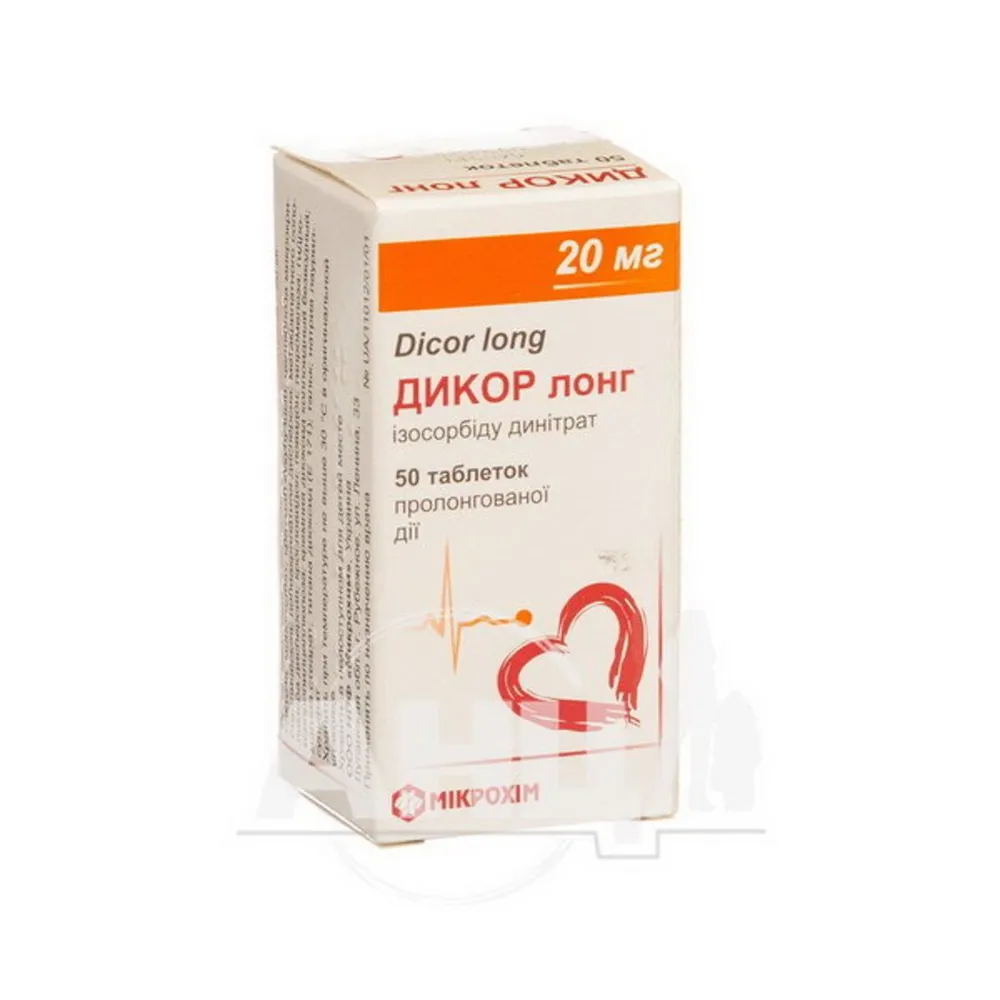
Table of Contents
- INSTRUCTIONS FOR MEDICAL USE OF THE MEDICINAL PRODUCT DIСOR LONG
- Composition:
- Pharmacological properties.
- Clinical characteristics.
- Special precautions for use
- Method of Administration and Dosage.
- Side effects
- Composition:
- Pharmacological properties.
- Clinical characteristics.
- Special precautions for use
- Dosage and Administration.
- Adverse Reactions
INSTRUCTIONS FOR MEDICAL USE OF THE MEDICINAL PRODUCT DIСOR LONG
Composition:
Active substance: isosorbide dinitrate;
One tablet contains 20 mg, or 40 mg, or 60 mg of isosorbide dinitrate;
Excipients: lactose monohydrate; maize starch; microcrystalline cellulose; polyacrylate dispersion; methacrylate copolymer dispersion; crospovidone; povidone; hypromellose; hydroxypropylcellulose; colloidal anhydrous silicon dioxide; magnesium stearate; titanium dioxide (E 171); talc; sodium lauryl sulfate.
Pharmaceutical form. Prolonged-release tablets.
Main physicochemical properties: white tablets with a biconvex smooth surface, film-coated, through which granule contours may be visible.
Pharmacotherapeutic group.
Cardiovascular system. Cardiological preparations. Vasodilators used in the treatment of heart diseases. Organic nitrates. Isosorbide dinitrate.
ATC code C01D A08.
Pharmacological properties.
Pharmacodynamics.
Mechanism of action.
Like all organic nitrates, isosorbide dinitrate (ISDN) acts as a donor of nitric oxide (NO). NO induces relaxation of vascular smooth muscle by stimulating guanylate cyclase and subsequent increase in intracellular cyclic guanosine monophosphate (cGMP) concentration. This, in turn, activates cGMP-dependent protein kinase, leading to altered phosphorylation of various proteins in the smooth muscle cell. Consequently, this results in dephosphorylation of myosin light chains and reduced contractility.
Pharmacodynamic effect.
ISDN causes relaxation of vascular smooth muscle, leading to vasodilation. Dilation of veins promotes venous pooling of blood and reduces venous return to the heart, thereby decreasing ventricular end-diastolic pressure and volume (preload).
Effects on arteries, and at higher doses on arterioles, lead to reduction in systemic vascular resistance (afterload). This, in turn, improves cardiac function.
The combined effect on both preload and afterload results in decreased myocardial oxygen demand.
In addition, ISDN promotes redistribution of blood flow to subendocardial regions of the heart under conditions of atherosclerotic disease. This effect may be explained by selective dilation of large coronary vessels. Nitrate-induced dilation of collateral arteries may improve myocardial perfusion in the presence of vessel stenosis. Furthermore, nitrates prevent and relieve coronary spasms.
In patients with congestive heart failure, nitrates improve hemodynamics both at rest and during exertion. This beneficial effect arises from several mechanisms, including reduction in valvular regurgitation (by decreasing ventricular dilation) and decreased myocardial oxygen demand.
Thus, increased oxygen supply to the myocardium coupled with reduced oxygen demand decreases the extent of myocardial damage. Therefore, isosorbide dinitrate may be beneficial in patients with myocardial infarction.
Effects on other organ systems include relaxation of bronchial smooth muscle, gastrointestinal tract muscles, as well as smooth muscles of biliary and urinary tracts; there are reports of a relaxant effect on uterine smooth muscle.
Pharmacokinetics.
In the gastrointestinal tract, ISDN is slowly released from the prolonged-release tablet over several hours. Absorption of the active substance is high. Bioavailability is 22% (first-pass liver effect). Therapeutic concentration is achieved within 30 minutes, maximum concentration (Cmax) – within 1 hour. Plasma protein binding is 30%. Elimination half-life is 12 hours. ISDN is metabolized in the liver to form isosorbide-2-mononitrate (T1/2 – 1.5–2 hours) and isosorbide-5-mononitrate (T1/2 – 4–6 hours). Both metabolites are pharmacologically active. Excretion occurs primarily via the kidneys (mainly as metabolites).
Clinical characteristics.
Indications.
Prevention and long-term treatment of angina pectoris.
Contraindications.
The drug is contraindicated in:
- hypersensitivity to isosorbide dinitrate, other nitrate compounds, or to any of the excipients;
- acute circulatory failure (shock, vascular collapse);
- cardiogenic shock when left ventricular end-diastolic pressure cannot be corrected by appropriate measures;
- severe hypotension (systolic blood pressure (BP) below 90 mm Hg);
- hypertrophic obstructive cardiomyopathy;
- constrictive pericarditis;
- cardiac tamponade;
- severe anemia;
- hemorrhage, severe hypovolemia (isosorbide dinitrate, by reducing venous return, may provoke syncope).
- During nitrate therapy, phosphodiesterase inhibitors such as sildenafil must not be used (see section "Interaction with other medicinal products and other forms of interaction").
- During nitrate therapy, the soluble guanylate cyclase stimulator riociguat must not be used (see section "Interaction with other medicinal products and other forms of interaction").
Interaction with other medicinal products and other forms of interaction.
The hypotensive effect of the drug may be enhanced when used concomitantly with antihypertensive agents (e.g., β-blockers, diuretics, calcium channel blockers, angiotensin-converting enzyme (ACE) inhibitors), monoamine oxidase inhibitors (MAOIs), vasodilators, neuroleptics, tricyclic antidepressants, and also with alcohol consumption.
The interaction when isosorbide mononitrate is used concomitantly with ACE inhibitors or arterial vasodilators may be beneficial, provided the antihypertensive effect is not excessive and when dose reduction of one or both agents is required.
The hypotensive effect of the drug is enhanced when used concomitantly with phosphodiesterase inhibitors (such as sildenafil, tadalafil, vardenafil), which may lead to life-threatening cardiovascular complications (see sections "Contraindications" and "Special precautions"). Concomitant use of isosorbide dinitrate and phosphodiesterase inhibitors (such as sildenafil, tadalafil, vardenafil) is contraindicated.
The use of DICOR LONG together with riociguat, a soluble guanylate cyclase stimulator, is contraindicated (see section "Contraindications"), as concomitant use of these agents may cause arterial hypotension.
Patients who have recently received therapy with phosphodiesterase inhibitors (e.g., sildenafil, vardenafil, tadalafil) must not be treated with isosorbide dinitrate for acute conditions within 24 hours after discontinuation of sildenafil and vardenafil, and within 48 hours after discontinuation of tadalafil.
There have been reports that concomitant use of the drug with dihydroergotamine may increase dihydroergotamine blood concentrations and thereby enhance its effects.
Sapropterin (tetrahydrobiopterin, BH4) – a cofactor of nitric oxide synthase. Caution is recommended when using medicinal products containing sapropterin concomitantly with any vasodilators whose mechanism of action is also related to effects on nitric oxide metabolism or which are also classical donors of nitric oxide (including nitroglycerin (GTN), isosorbide dinitrate (ISDN), isosorbide mononitrate (ISMN)).
Special precautions for use
The drug should be used with particular caution and under close medical supervision:
- in low filling pressure, including acute myocardial infarction with impaired left ventricular function (left ventricular failure). Blood pressure should be maintained at not less than 90 mm Hg;
- in aortic and/or mitral stenosis;
- in orthostatic hypotension;
- in conditions associated with increased intracranial pressure (further increase is possible. Such symptoms have been observed only after intravenous administration of high doses of nitroglycerin to date);
- in severe liver diseases.
The drug is not intended for the relief of acute angina attacks.
Development of tolerance (reduced efficacy), as well as cross-tolerance to other nitrate-type drugs (reduced effect if the patient has previously taken another nitrate), has been reported. To prevent reduction or loss of efficacy, prolonged administration of high doses (120 mg per day) should be avoided.
Patients receiving maintenance therapy with the drug must be informed that they must not take medications containing phosphodiesterase inhibitors (e.g., sildenafil, tadalafil, vardenafil) due to the risk of developing uncontrolled arterial hypotension.
The medicinal product should not be used as emergency treatment in patients who have recently taken phosphodiesterase inhibitors (e.g., sildenafil, vardenafil, tadalafil) within 24 hours after discontinuation (48 hours after discontinuation of tadalafil) — see sections "Contraindications" and "Interaction with other medicinal products and other forms of interaction".
ISDN therapy must not be discontinued in order to administer drugs containing phosphodiesterase inhibitors (e.g., sildenafil, tadalafil, vardenafil) due to the increased risk of angina attack (see sections "Contraindications" and "Special precautions for use").
Because the drug contains lactose, it is contraindicated in patients with rare hereditary conditions such as galactose intolerance, Lapp lactase deficiency, or glucose-galactose malabsorption.
Caution should be exercised in patients with hypoxemia and ventilation/perfusion imbalance due to lung disease or ischemic heart disease.
As a potent vasodilator, isosorbide dinitrate may increase perfusion of poorly ventilated areas, worsen ventilation/perfusion imbalance, and further reduce arterial partial oxygen pressure.
Alcohol consumption should be avoided during treatment with isosorbide dinitrate, as it may enhance the hypotensive effect of the drug.
Use during pregnancy or breastfeeding
Pregnancy
Reproductive toxicity studies in animals using isosorbide dinitrate at doses toxic to adult animals did not reveal evidence of fetal toxicity. However, adequate and well-controlled studies in pregnant women are lacking.
Since animal studies do not always reliably predict effects in humans, the drug should be used during pregnancy only if clearly needed and under continuous medical supervision.
Breastfeeding
It is unknown whether isosorbide dinitrate is excreted in human breast milk; therefore, the drug is not recommended for administration to women during breastfeeding.
Fertility
There are no data on the effect of isosorbide dinitrate on human fertility.
Ability to affect reaction speed when driving or operating machinery
Even when used as directed, the drug may affect the ability to react quickly when driving or operating machinery. This effect is enhanced by alcohol.
Method of Administration and Dosage.
DICOR LONG 20 mg: 1 tablet twice daily (equivalent to 40 mg of isosorbide dinitrate). The second/subsequent dose should be taken no earlier than 6–8 hours after the first dose. If there is an increased need for nitrates, the daily dose may be increased to 1 tablet three times daily (equivalent to 60 mg of isosorbide dinitrate), provided a 12-hour nitrate-free interval is maintained every 24 hours.
DICOR LONG 40 mg: 1 tablet once daily (equivalent to 40 mg of isosorbide dinitrate). If there is an increased need for nitrates, the daily dose may be increased to 1 tablet twice daily (equivalent to 80 mg of isosorbide dinitrate), provided a 12-hour nitrate-free interval is maintained every 24 hours. The second/subsequent dose should be taken no earlier than 6–8 hours after the first dose.
DICOR LONG 60 mg: 1 tablet once daily (equivalent to 60 mg of isosorbide dinitrate). If there is an increased need for nitrates, the daily dose may be increased to 1 tablet twice daily (equivalent to 120 mg of isosorbide dinitrate), provided a 12-hour nitrate-free interval is maintained every 24 hours. The second/subsequent dose should be taken no earlier than 6–8 hours after the first dose.
The maximum daily dose is 120 mg. The duration of treatment is determined individually. The drug is intended for long-term use, which must not be discontinued abruptly.
Elderly Patients.
There is no evidence indicating the need to adjust dosage in elderly patients.
Paediatric Population.
The safety and efficacy of isosorbide dinitrate in children have not been established.
Method of Administration.
Tablets should be swallowed whole with sufficient liquid (e.g., a glass of water), without chewing.
Treatment should be initiated at the lowest dose, gradually increasing to the maximum effective dose. The duration of treatment is determined by the physician.
Children.
Not recommended for use in children.
Overdose.
Experience from animal studies.
Significant lethality (LD50) was observed in mice after a single intravenous administration of the drug at a dose of 33.4 mg/kg.
Experience from human use.
Symptoms:
- reduction in arterial blood pressure ≤ 90 mm Hg;
- pallor;
- increased sweating;
- weak pulse filling;
- tachycardia;
- dizziness (including orthostatic reactions upon changing body position);
- headache;
- asthenia;
- weakness;
- nausea;
- vomiting;
- diarrhea;
- cases of methemoglobinemia have been reported in patients taking other nitrates. During biotransformation of isosorbide dinitrate, nitrite ions are released, which may induce methemoglobinemia and cyanosis, followed by tachypnea, anxiety, loss of consciousness, and cardiac arrest. This adverse reaction cannot be excluded in cases of isosorbide dinitrate overdose;
- excessive doses may increase intracranial pressure, sometimes causing cerebral symptoms.
General measures:
- discontinue administration of the drug;
- general measures used in nitrate-induced arterial hypotension:
- place the patient in a horizontal position with the head lowered and legs elevated;
- ensure oxygen supply;
- increase plasma volume (intravenous infusion);
- initiate specific anti-shock therapy (the patient should be managed in an intensive care unit).
Specific measures.
- In case of severe hypotension, appropriate actions to raise blood pressure must be taken;
- vasopressor (vasoconstrictor) agents should be used if the patient does not respond adequately to fluid therapy.
Treatment of methemoglobinemia:
- reductive therapy with vitamin C, methylene blue, or toluidine blue, as appropriate;
- oxygen administration (if needed);
- artificial ventilation, blood transfusion (if needed);
- hemodialysis (if needed).
Resuscitation measures:
In the event of signs of respiratory or circulatory arrest, immediate resuscitation measures must be initiated.
Side effects
The frequency of adverse effects is defined as follows: very common (≥ 1/10), common (≥ 1/100, < 1/10), uncommon (≥ 1/1000, < 1/100), rare (≥ 1/10000, < 1/1000), very rare (< 1/10000), frequency not known (cannot be estimated from the available data).
The following adverse reactions may occur during treatment with this medicinal product.
Nervous system disorders: very common – headache ("nitrate" headache); common – dizziness, drowsiness.
Cardiac disorders: common – tachycardia; uncommon – worsening of angina symptoms.
Vascular disorders: common – orthostatic hypotension; uncommon – vascular collapse (sometimes accompanied by bradycardia and loss of consciousness); frequency not known – hypotension.
Gastrointestinal disorders: uncommon – nausea, vomiting; very rare – heartburn.
Skin and subcutaneous tissue disorders: uncommon – allergic skin reactions (e.g. rash), flushing; very rare – angioneurotic edema, Stevens-Johnson syndrome; frequency not known – exfoliative dermatitis.
General disorders: common – asthenia.
Severe hypotensive reactions accompanied by nausea, vomiting, restlessness, pallor, and increased sweating have been reported during treatment with organic nitrates.
During therapy, transient hypoxemia may occur due to a relative redistribution of blood flow to alveolar areas with hypoventilation. In particular, in patients with ischemic heart disease, this may lead to myocardial hypoxia.
Increasing the dose and/or changing the dosing interval may result in reduced efficacy or lack of effect.
Reporting of suspected adverse reactions
Reporting suspected adverse reactions after the medicine is authorized is important. It allows continued monitoring of the benefit/risks balance of the medicinal product. Healthcare professionals are asked to report any suspected adverse reactions via the national reporting system.
Shelf life
3 years.
Storage conditions
Store at temperatures not exceeding 30 °C in the original packaging.
Keep out of reach and sight of children.
Packaging
50 tablets in a bottle, 1 bottle in a cardboard box.
10 tablets in a blister, 5 blisters in a cardboard box.
Prescription status
Prescription only.
Manufacturer
MICROCHEM PHARMACEUTICALS LLC
(responsible for batch release, excluding batch control/testing)
Manufacturer's address and place of business
5 Budynstriji Street, Kyiv, 01013, Ukraine
To report an adverse event related to this medicinal product, please call: +38 (050) 309-83-54 (24/7).
INSTRUCTION
for medical use
DICOR LONG
(DICOR LONG)
Composition:
Active substance: isosorbide dinitrate;
1 tablet contains 20 mg, 40 mg, or 60 mg of isosorbide dinitrate;
Excipients: lactose monohydrate; corn starch; microcrystalline cellulose; polyacrylate dispersion; methacrylate copolymer dispersion; crospovidone; povidone; hypromellose; hydroxypropylcellulose; colloidal anhydrous silicon dioxide; magnesium stearate; titanium dioxide (E 171); talc; sodium lauryl sulfate.
Pharmaceutical form. Prolonged-release tablets.
Main physicochemical characteristics: white, biconvex tablets with a smooth surface, film-coated, through which granule outlines may be visible.
Pharmacotherapeutic group.
Cardiovascular system. Cardiac drugs. Vasodilators used in the treatment of heart diseases. Organic nitrates. Isosorbide dinitrate.
ATC code C01D A08.
Pharmacological properties.
Pharmacodynamics.
Mechanism of action.
Like all organic nitrates, isosorbide dinitrate (ISDN) acts as a donor of nitric oxide (NO). NO causes relaxation of vascular smooth muscle by stimulating guanylate cyclase and subsequently increasing the concentration of intracellular cyclic guanosine monophosphate (cGMP). This, in turn, activates (cGMP)-dependent protein kinase, leading to altered phosphorylation of various proteins in the smooth muscle cell. As a result, dephosphorylation of myosin light chains occurs, reducing contractility.
Pharmacodynamic effect.
ISDN induces relaxation of vascular smooth muscles, resulting in vasodilation. Dilation of veins promotes venous "pooling" of blood and reduces venous return to the heart, thereby decreasing ventricular end-diastolic pressure and volume (preload).
Effects on arteries, and at higher doses on arterioles, lead to reduced systemic vascular resistance (afterload). This, in turn, improves cardiac function.
The effect on both preload and afterload results in reduced myocardial oxygen demand.
In addition, ISDN causes redistribution of blood flow to subendocardial regions of the heart under conditions of atherosclerotic lesions. This effect may be explained by selective dilation of large coronary vessels. Nitrate-induced dilation of collateral arteries may improve myocardial perfusion in the presence of vessel stenosis. Furthermore, nitrates prevent and relieve coronary spasms.
In patients with congestive heart failure, nitrates improve hemodynamics both at rest and during exercise. This beneficial effect develops due to several mechanisms, including reduction of valvular regurgitation (by decreasing ventricular dilation) and decreased myocardial oxygen demand.
Thus, increased oxygen supply to the myocardium coupled with reduced oxygen demand decreases the extent of myocardial damage. Therefore, isosorbide dinitrate may be beneficial in patients with myocardial infarction.
Effects on other organ systems include relaxation of bronchial muscles, gastrointestinal tract muscles, as well as muscles of the biliary and urinary tracts. There are reports of a relaxant effect on uterine smooth muscle.
Pharmacokinetics.
In the gastrointestinal tract, ISDN is slowly released from the prolonged-release tablet over several hours. Absorption of the active substance is high. Bioavailability is 22% (due to first-pass hepatic metabolism). Therapeutic plasma concentration is achieved within 30 minutes; maximum concentration (Cmax) is reached within 1 hour. Plasma protein binding is 30%. Elimination half-life is 12 hours. ISDN is metabolized in the liver to isosorbide-2-mononitrate (T1/2 – 1.5–2 hours) and isosorbide-5-mononitrate (T1/2 – 4–6 hours). Both metabolites are pharmacologically active. Excretion occurs primarily via the kidneys (mainly as metabolites).
Clinical characteristics.
Indications.
Prevention and long-term treatment of angina pectoris.
Contraindications.
The drug is contraindicated in:
- hypersensitivity to isosorbide dinitrate, other nitrate compounds, or to any of the components of the drug;
- acute circulatory failure (shock, vascular collapse);
- cardiogenic shock when end-diastolic pressure of the left ventricle cannot be corrected by appropriate measures;
- severe hypotension (systolic blood pressure (BP) below 90 mm Hg);
- hypertrophic obstructive cardiomyopathy;
- constrictive pericarditis;
- cardiac tamponade;
- severe anemia;
- hemorrhage, severe hypovolemia (isosorbide dinitrate, by reducing venous return, may provoke syncope).
- During nitrate therapy, phosphodiesterase inhibitors such as sildenafil must not be used (see section "Interaction with other medicinal products and other forms of interactions").
- During nitrate therapy, the soluble guanylate cyclase stimulator riociguat must not be used (see section "Interaction with other medicinal products and other forms of interactions").
Interaction with other medicinal products and other forms of interactions.
The hypotensive effect of the drug may be enhanced when used concomitantly with antihypertensive agents (e.g., β-blockers, diuretics, calcium channel blockers, angiotensin-converting enzyme (ACE) inhibitors), monoamine oxidase inhibitors (MAOIs), vasodilators, neuroleptics, tricyclic antidepressants, as well as with alcohol consumption.
The interaction when isosorbide mononitrate is used concomitantly with ACE inhibitors or arterial vasodilators may be desirable, provided the antihypertensive effect is not excessive and when dose reduction of one or both drugs is required.
The hypotensive effect of the drug is enhanced when taken concomitantly with phosphodiesterase inhibitors (such as sildenafil, tadalafil, vardenafil), which may lead to life-threatening cardiovascular complications (see sections "Contraindications" and "Special precautions for use"). Concomitant use of isosorbide dinitrate and phosphodiesterase inhibitors (such as sildenafil, tadalafil, vardenafil) is not permitted.
Concomitant use of the drug DICOR LONG with riociguat, a soluble guanylate cyclase stimulator, is contraindicated (see section "Contraindications"), as simultaneous use of these agents may cause arterial hypotension.
Patients who have recently received therapy with phosphodiesterase inhibitors (e.g., sildenafil, vardenafil, tadalafil) must not be treated with isosorbide dinitrate for acute conditions within 24 hours after discontinuation of sildenafil and vardenafil, and within 48 hours after discontinuation of tadalafil.
There have been reports that concomitant use of the drug with dihydroergotamine may lead to increased plasma concentration of dihydroergotamine and thus enhance its effects.
Sapropterin (tetrahydrobiopterin, BH4) – a cofactor of nitric oxide synthase. Caution is recommended when using medicinal products containing sapropterin concomitantly with any vasodilators whose mechanism of action is also related to the influence on nitric oxide metabolism or which are classical nitric oxide donors (including nitroglycerin (GTN), isosorbide dinitrate (ISDN), isosorbide mononitrate (ISMN)).
Special precautions for use
The drug can be used with special caution and under close medical supervision:
- in low filling pressure, including acute myocardial infarction with impaired left ventricular function (left ventricular failure). Blood pressure should be maintained at no less than 90 mm Hg;
- in aortic and/or mitral stenosis;
- in orthostatic dysfunction;
- in diseases associated with increased intracranial pressure (further increase is possible. Such symptoms have been observed only after intravenous administration of high doses of nitroglycerin to date);
- in severe liver diseases.
The drug should not be used to relieve acute angina attacks.
Development of tolerance (reduced effectiveness) has been reported, as well as cross-tolerance to other nitrate-type drugs (reduced effect if the patient has previously taken another nitrate). To prevent reduction or loss of effect, prolonged use of high doses (120 mg per day) should be avoided.
Patients receiving maintenance therapy with this drug must be informed that they must not take medications containing phosphodiesterase inhibitors (e.g., sildenafil, tadalafil, vardenafil) due to the risk of developing uncontrolled arterial hypotension.
The medicinal product should not be used as emergency treatment in patients who have recently taken phosphodiesterase inhibitors (e.g., sildenafil, vardenafil, tadalafil) within 24 hours after discontinuation (48 hours after discontinuation of tadalafil) — see sections "Contraindications" and "Interaction with other medicinal products and other forms of interaction".
ISDN therapy must not be discontinued in order to take medications containing phosphodiesterase inhibitors (e.g., sildenafil, tadalafil, vardenafil), due to the increased risk of angina attack (see sections "Contraindications" and "Special precautions for use").
Because the drug contains lactose, it is contraindicated in patients with rare hereditary conditions such as galactose intolerance, Lapp lactase deficiency, or glucose-galactose malabsorption.
Patients with hypoxemia and ventilation/perfusion imbalance due to lung disease or ischemic heart disease should take precautions.
As a potent vasodilator, isosorbide dinitrate may increase perfusion of poorly ventilated areas, worsen ventilation/perfusion imbalance, and further reduce arterial partial oxygen pressure.
Alcohol consumption should be avoided during treatment with isosorbide dinitrate, as it may enhance the hypotensive effect of the drug.
Use during pregnancy or breastfeeding.
Pregnancy.
Reproductive toxicity studies in animals using isosorbide dinitrate at doses toxic to adult animals did not show evidence of fetal toxicity. However, adequate and well-controlled studies in pregnant women are lacking.
Since animal studies do not always reliably predict effects in humans, the drug should be used during pregnancy only if clearly needed and under constant medical supervision.
Breastfeeding.
It is unknown whether isosorbide dinitrate passes into breast milk; therefore, the drug is not recommended for administration to women during breastfeeding.
Fertility.
There are no data on the effect of isosorbide dinitrate on human fertility.
Ability to affect reaction speed when driving or operating machinery.
Even when used as directed, the drug may affect the ability to react quickly while driving or operating machinery. This effect is intensified by alcohol.
Dosage and Administration.
DICOR LONG 20 mg: 1 tablet twice daily (equivalent to 40 mg of isosorbide dinitrate). The second/subsequent dose should be taken no earlier than 6–8 hours after the first dose. If the need for nitrates is increased, the daily dose may be increased to 1 tablet three times daily (equivalent to 60 mg of isosorbide dinitrate), but ensuring a 12-hour nitrate-free interval every 24 hours.
DICOR LONG 40 mg: 1 tablet once daily (equivalent to 40 mg of isosorbide dinitrate). If the need for nitrates is increased, the daily dose may be increased to 1 tablet twice daily (equivalent to 80 mg of isosorbide dinitrate), but ensuring a 12-hour nitrate-free interval every 24 hours. The second/subsequent dose should be taken no earlier than 6–8 hours after the first dose.
DICOR LONG 60 mg: 1 tablet once daily (equivalent to 60 mg of isosorbide dinitrate). If the need for nitrates is increased, the daily dose may be increased to 1 tablet twice daily (equivalent to 120 mg of isosorbide dinitrate), but ensuring a 12-hour nitrate-free interval every 24 hours. The second/subsequent dose should be taken no earlier than 6–8 hours after the first dose.
The maximum daily dose is 120 mg. The duration of treatment is determined individually. The drug is intended for long-term use and must not be abruptly discontinued.
Elderly patients.
There is no evidence indicating the need to adjust dosage in elderly patients.
Paediatric population.
The safety and efficacy of isosorbide dinitrate in children have not been established.
Administration method.
Tablets should be swallowed whole, without chewing, with sufficient liquid (e.g., a glass of water).
Treatment should be initiated at the lowest dose, gradually increasing to the maximum effective dose. The duration of treatment is determined by the physician.
Children.
Not to be used in children.
Overdose.
Experience from animal studies.
Significant lethality (LD50) was observed in mice after a single intravenous administration of the drug at a dose of 33.4 mg/kg.
Experience from human use.
Symptoms:
- arterial blood pressure reduction ≤ 90 mm Hg;
- pallor;
- increased sweating;
- weak pulse filling;
- tachycardia;
- dizziness (including orthostatic reactions upon changing body position);
- headache;
- asthenia;
- weakness;
- nausea;
- vomiting;
- diarrhea;
- in patients who have taken other nitrates, cases of methaemoglobinaemia have been reported. During biotransformation of isosorbide dinitrate, nitrite ions are released, which may induce methaemoglobinaemia and cyanosis, followed by tachypnoea, anxiety, loss of consciousness, and cardiac arrest. This adverse reaction cannot be excluded in cases of isosorbide dinitrate overdose;
- excessive doses may increase intracranial pressure, sometimes causing cerebral symptoms.
General measures:
- discontinue administration of the drug;
- general measures used in nitrate-induced arterial hypotension:
- place the patient in a horizontal position with the head lowered and legs elevated;
- ensure oxygen supply;
- increase plasma volume (intravenous infusion);
- initiate specific anti-shock therapy (the patient should be managed in an intensive care unit).
Specific measures.
- In case of severe hypotension, appropriate measures to raise blood pressure should be taken;
- vasoconstrictors (vasopressors) should be used if the patient does not respond adequately to fluid therapy.
Treatment of methaemoglobinaemia:
- reducing therapy with vitamin C, methylene blue, or toluidine blue, as appropriate;
- oxygen administration (if needed);
- artificial ventilation, blood transfusion (if needed);
- hemodialysis (if needed).
Resuscitation measures:
in case of signs of respiratory or circulatory arrest, immediate resuscitation measures should be initiated.
Adverse Reactions
The frequency of adverse effects can be defined as follows: very common (≥ 1/10), common (≥ 1/100, < 1/10), uncommon (≥ 1/1000, < 1/100), rare (≥ 1/10000, < 1/1000), very rare (< 1/10000), frequency not known (cannot be estimated from available data).
The following adverse events may occur during administration of the drug.
Nervous system disorders: very common – headache ("nitrate" headache); common – dizziness, somnolence.
Cardiac disorders: common – tachycardia; uncommon – worsening of angina symptoms.
Vascular disorders: common – orthostatic hypotension; uncommon – vascular collapse (sometimes accompanied by bradycardia and loss of consciousness); frequency not known – hypotension.
Gastrointestinal disorders: uncommon – nausea, vomiting; very rare – heartburn.
Skin and subcutaneous tissue disorders: uncommon – allergic skin reactions (e.g., rash), flushing; very rare – angioneurotic edema, Stevens-Johnson syndrome; frequency not known – exfoliative dermatitis.
General disorders: common – asthenia.
Severe hypotensive reactions accompanied by nausea, vomiting, restlessness, pallor, and increased sweating have been reported with the use of organic nitrates.
During therapy with this drug, transient hypoxemia may occur due to a relative redistribution of blood flow to alveolar areas with hypoventilation. In particular, in patients with ischemic heart disease, this may lead to myocardial hypoxia.
Increasing the dose and/or changing the dosing interval may lead to reduced efficacy or lack of effect.
Reporting suspected adverse reactions
Reporting suspected adverse reactions after drug authorization is of great importance. It allows ongoing monitoring of the benefit-risk balance of the medicinal product. Healthcare professionals should report any suspected adverse reactions via the national reporting system.
Shelf life.
3 years.
Storage conditions.
Store at a temperature not exceeding 30 °C in the original packaging.
Keep out of reach and sight of children.
Packaging.
50 tablets in a bottle, 1 bottle in a cardboard box.
10 tablets in a blister pack, 5 blisters in a cardboard box.
Prescription status.
Prescription only.
Manufacturer.
MIKROKHEM LTD.
Manufacturer's address and place of business.
33 Lenin St., Rubizhne, Luhansk Oblast, 93000, Ukraine.
To report an adverse event associated with the use of this medicinal product, please call: +38 (050) 309-83-54 (24/7).