Digoxin
Ukraine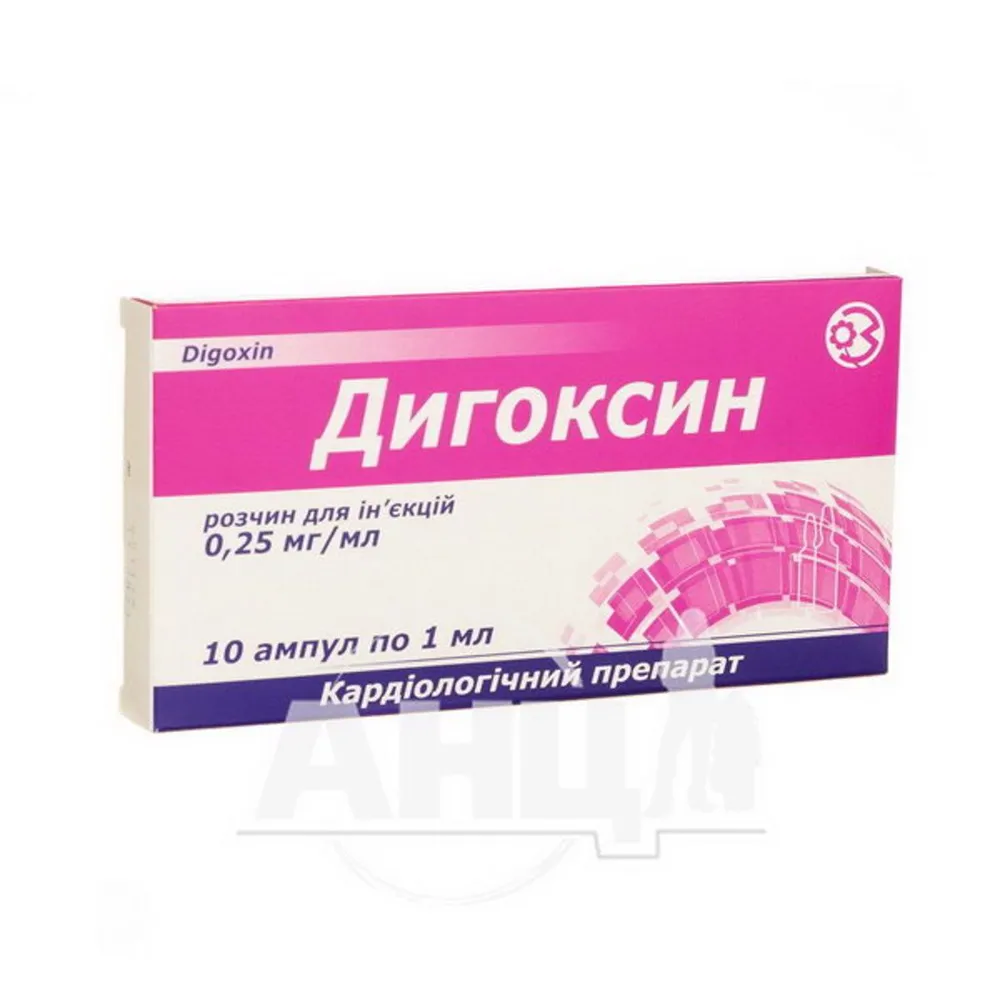
Table of Contents
INSTRUCTIONS FOR MEDICAL USE OF THE MEDICINAL PRODUCT DIGOXIN
Composition:
active substance: digoxin;
1 ml of solution contains digoxin, recalculated to 100 % content of the active ingredient, 0.25 mg;
excipients: glycerol, ethanol (96 %), sodium phosphate dibasic anhydrous, citric acid monohydrate, water for injections.
Pharmaceutical form. Injection solution.
Main physicochemical properties: colorless, transparent liquid.
Pharmacotherapeutic group. Cardiology drugs. Cardiac glycosides. Digitalis glycosides. ATC code C01AA05.
Pharmacological Properties.
Pharmacodynamics.
A highly lipophilic cardiac glycoside of intermediate duration of action, obtained from the leaves of Digitalis lanata. Exerts a positive inotropic effect by forming a complex with Na+-K+-ATPase and disrupting the transport of sodium and potassium ions across the membranes of cardiomyocytes. As a result, transmembrane calcium ion transport increases and intracellular calcium release within cardiomyocytes is enhanced, leading to increased myofibrillar activity. Slows AV conduction, prolongs the effective refractory period, and reduces heart rate primarily by increasing the tone of the parasympathetic and decreasing the tone of the sympathetic division of the autonomic nervous system.
Pharmacokinetics.
After intravenous administration, the drug is 30–35% bound to plasma proteins, undergoes minimal biotransformation in the liver, and is primarily excreted in urine, with a small portion eliminated in feces. It may penetrate into breast milk. Digoxin accumulation is less pronounced than that of digitoxin. Specific cardiotonic action begins within 5–10 minutes, peak effect occurs within 1–5 hours, and complete elimination of the drug occurs within 36 hours.
Clinical characteristics.
Indications. Congestive heart failure, atrial fibrillation and atrial flutter (for control of ventricular rate), supraventricular paroxysmal tachycardia.
Contraindications. Hypersensitivity to the drug and other cardiac glycosides. Endocarditis, myocarditis, constrictive pericarditis, Adams-Stokes-Morgagni syndrome, digitalis intoxication from previously administered cardiac glycosides, ventricular tachycardia, second- or third-degree atrioventricular block, marked bradycardia, hypercalcemia, hypokalemia, isolated mitral stenosis, hypertrophic obstructive cardiomyopathy, carotid sinus syndrome, aneurysm of the thoracic aorta, WPW syndrome, acute phase of myocardial infarction, arrhythmias caused by glycoside intoxication in history, presence of accessory atrioventricular pathways, hypertrophic subaortic stenosis, unstable angina pectoris, cardiac tamponade, ventricular fibrillation.
Interaction with other medicinal products and other forms of interaction. Digoxin is a substrate for P-glycoprotein. Drugs that induce or inhibit P-glycoprotein affect digoxin pharmacokinetics (intestinal absorption, renal clearance), altering its blood concentration. Measurement of digoxin serum concentrations using microparticle enzyme chemiluminescent immunoassay (CMIA) during concomitant use of enzalutamide may result in falsely elevated digoxin serum levels. Results should be confirmed by another analytical method (see section "Special precautions for use").
Agents causing hypokalemia may increase sensitivity to digoxin (e.g., certain diuretics, lithium salts, glucocorticosteroids).
Serum digoxin concentrations may increase when co-administered with the following drugs: amiodarone, prazosin, propafenone, quinidine, spironolactone, tetracycline, erythromycin, gentamicin, indomethacin, quinine, trimethoprim, itraconazole, alprazolam, verapamil, felodipine, nifedipine, dronedarone, flecainide, disopyramide, captopril, nitrendipine, ranolazine, tiapamil, carvedilol, diltiazem, nicardipine, lercanidipine, rabeprozole, telmisartan, diazepam, atorvastatin, azithromycin, clarithromycin, telithromycin, chloroquine, hydroxychloroquine, cyclosporine, diclofenac, aspirin, ibuprofen, diphenoxylate, epoprostenol, esomeprazole, itraconazole, ketoconazole, lansoprazole, metformin, omeprazole, propantheline, nefazodone, trazodone, topiramate – measure serum digoxin concentrations before initiating concomitant therapy. Dose reduction of digoxin may be required, and continued monitoring is recommended.
Serum digoxin concentrations may decrease when co-administered with the following drugs: antacids, kaolin-pectin, certain laxatives, cholestyramine, sulfasalazine, neomycin, rifampicin, certain cytostatics, penicillamine, metoclopramide, epinephrine, salbutamol, sodium nitroprusside, hydralazine, miglitol, carbimazole, sucralfate, barbiturates, phenylbutazone, St. John’s wort preparations – measure serum digoxin concentrations before initiating concomitant therapy. Dose increase of digoxin may be required, and continued monitoring is recommended.
Adrenergic agents. Concomitant use of hydrochloride ephedrine, epinephrine hydrochloride, or norepinephrine hydrotartrate, as well as selective β-adrenergic agonists with cardiac glycosides, may provoke cardiac arrhythmias.
Myorelaxants (edrophonium, succinylcholine, pancuronium, tizanidine): possible potentiation of arterial hypotension, excessive bradycardia, and AV block due to rapid potassium efflux from myocardial cells. Concomitant use should be avoided.
β-Adrenergic blockers, including sotalol, and calcium channel blockers: increased risk of proarrhythmic events; additive effects on AV nodal conduction may lead to bradycardia and complete heart block.
Phenytoin: intravenous phenytoin should not be used to treat digoxin-induced arrhythmias due to the risk of cardiac arrest.
Colchicine: possible increased risk of myopathy.
Mefloquine: possible increased risk of bradycardia.
Etoricoxib, ketoprofen, meloxicam, piroxicam, and rofecoxib do not increase plasma digoxin levels.
Chlorpromazine and other phenothiazine derivatives: the effect of cardiac glycosides is reduced.
Anticholinesterase agents. Concomitant use of anticholinesterase agents with cardiac glycosides enhances bradycardia. If necessary, this effect can be counteracted or reduced by administration of atropine sulfate.
Glucocorticosteroids. Prolonged glucocorticosteroid therapy causing hypokalemia may increase adverse effects of cardiac glycosides.
Diuretics. When diuretics (which cause hypokalemia and hypomagnesemia but increase serum calcium levels) are combined with cardiac glycosides, the effect of the latter is enhanced. Optimal dosing must be observed during concomitant use. Potassium-sparing diuretics (spironolactone, triamterene) may be prescribed periodically to correct hypokalemia and prevent arrhythmias. However, hyponatremia may develop.
Potassium preparations. Under the influence of potassium supplements, adverse effects of cardiac glycosides are reduced.
Calcium preparations. Parenteral administration of calcium preparations during therapy with cardiac glycosides is dangerous because cardiotoxic effects (arrhythmias) are potentiated.
Disodium edetate (ethylene diamine tetraacetic acid disodium salt). Reduced efficacy and toxicity of cardiac glycosides may occur.
Corticotropic agents. The action of cardiac glycosides may be enhanced under the influence of corticotropin.
Xanthine derivatives. Caffeine or theophylline preparations may occasionally provoke cardiac arrhythmias.
Sodium adenosine triphosphate. Sodium adenosine triphosphate should not be administered concomitantly with cardiac glycosides.
Activated charcoal. Due to reduced gastrointestinal absorption, the effect of cardiac glycosides is often diminished.
Ergocalciferol. In cases of ergocalciferol-induced hypervitaminosis, the effect of cardiac glycosides may be enhanced due to development of hypercalcemia.
Dotetilide: increased risk of torsades de pointes arrhythmia.
Moracizine: possible additive effects on cardiac conduction, significant QT interval prolongation, which may lead to AV block.
Narcotic analgesics. Combination of fentanyl and cardiac glycosides may cause arterial hypotension.
Naproxen. In healthy individuals, combination of cardiac glycosides with naproxen does not affect results of psychological testing.
Paracetamol. The clinical significance of this interaction is insufficiently studied, but data suggest decreased renal excretion of cardiac glycosides under the influence of paracetamol.
Administration of digoxin together with anabolic steroids, thiamine chloride, riboflavin, pyridoxine, folic acid, methyluracil, methionine, unithiol, phosphaden, and inosine enhances its positive inotropic effect.
Special precautions for use.
Patients receiving digoxin must be under medical supervision. During long-term therapy, the optimal individual dose is usually determined over 7–10 days.
Dosage must be selected particularly carefully in elderly and/or debilitated patients, patients with impaired renal function, or those with implanted cardiac pacemakers, as toxic effects may occur at doses that are generally well tolerated by other patients.
The risk of digitalis intoxication is increased in patients with hypokalemia, hypomagnesemia, hypercalcemia, hypernatremia, hypothyroidism, or "pulmonary heart" disease. Such patients should avoid high single doses of digoxin.
The drug is contraindicated in hypertrophic obstructive cardiomyopathy, but should be used with caution in patients with concomitant atrial fibrillation and heart failure.
Use with caution in patients with thyroid disorders. In patients with reduced thyroid function, initial and maintenance doses of digoxin should be reduced. In hyperthyroidism, there is relative resistance to digoxin, which may necessitate higher doses. During treatment for thyrotoxicosis, digoxin doses should be reduced as the condition comes under control. Changes in thyroid function may affect sensitivity to digoxin independently of its plasma concentration.
Patients with short bowel syndrome or malabsorption syndromes may require higher doses of digoxin due to impaired absorption.
Patients with severe respiratory diseases may exhibit increased myocardial sensitivity to digitalis glycosides.
In patients with cardiovascular involvement in beriberi disease, an inadequate response to digoxin may occur unless the underlying thiamine deficiency is simultaneously treated.
Hypokalemia, hypomagnesemia, hypercalcemia, hypernatremia, hypothyroidism, hypoxia, and "pulmonary heart" disease increase the risk of digitalis intoxication and arrhythmias. Electrolyte imbalances must be corrected. High single doses of digoxin should be avoided in such patients.
In patients scheduled for cardioversion, digoxin should be discontinued 1–2 days prior to the procedure, if possible. If cardioversion is mandatory and digoxin has already been administered, the lowest effective electrical shock should be used.
During digoxin therapy, regular monitoring of ECG and serum electrolyte levels (potassium, calcium, magnesium) is required. Electrolyte imbalances must be corrected, as hypokalemia and hypomagnesemia enhance the toxicity of digitalis glycosides.
Since digoxin slows sinoatrial and AV conduction, therapeutic doses may cause prolongation of the PR interval and ST segment depression on the electrocardiogram.
Digoxin intake may lead to false-positive ST-T changes on ECG during stress testing. These electrophysiological effects reflect the expected pharmacological action of the drug and do not indicate toxicity.
Use with particular caution in elderly patients. Due to prolonged elimination half-life in elderly patients, there is an increased risk of adverse effects and potential overdose.
If strophanthin is required, it should not be administered earlier than 24 hours after discontinuation of digoxin.
Digoxin is contraindicated in patients undergoing scheduled hemodialysis (only 2% of the administered dose is removed in 7 days via dialysate).
During treatment, intake of heavy meals and foods containing pectins should be limited.
This medicinal product contains less than 1 mmol (23 mg) of sodium per dose, i.e., it is practically sodium-free.
This medicinal product contains 311 mg of ethanol per 1 ml dose. It is harmful for patients with alcoholism. Caution is advised when used in pregnant and breastfeeding women (see section "Use during pregnancy or breastfeeding"), children, and patients with liver disease or epilepsy.
Interference with laboratory tests. In patients receiving enzalutamide, falsely elevated serum digoxin levels may be observed when samples are analyzed using the Architect chemiluminescent microparticle immunoassay (CMIA), regardless of digoxin administration. In case of questionable results, confirmation of serum digoxin levels by an alternative assay method not subject to such interference is recommended to avoid any inappropriate discontinuation or dose reduction of digoxin (see section "Interaction with other medicinal products and other forms of interaction").
Use during pregnancy or breastfeeding. Information regarding the potential teratogenic effects of digoxin is lacking. It should be noted that digoxin crosses the placenta and its clearance is prolonged during pregnancy.
Digoxin may be used during pregnancy only if the expected benefit to the mother outweighs the potential risk to the fetus.
Digoxin is excreted into breast milk in amounts that do not adversely affect the infant (digoxin concentration in breast milk is 0.6–0.9% of maternal plasma concentration). When digoxin is administered to breastfeeding women, the infant's heart rate should be monitored.
Ability to affect reaction speed when driving or operating machinery. Digoxin has no direct effect. However, due to possible adverse effects on the nervous system, patients should refrain from potentially hazardous activities requiring heightened attention and rapid psychomotor responses during treatment.
Administration and Dosage.
Digoxin is administered intravenously.
For adults, administer 0.25–0.5 mg (1–2 mL of a 0.025% solution). Inject slowly into 10 mL of 5% glucose solution or 0.9% sodium chloride solution. During the first few days of treatment, administer 1–2 times daily; subsequently, once daily for 4–5 days, then switch to per os administration in maintenance doses. For infusion, dilute 1–2 mL of a 0.025% solution in 100 mL of 5% glucose solution or 0.9% sodium chloride solution (infuse at a rate of 20–40 drops per minute).
Pediatric doses depend on age (mg/kg): premature newborns – 0.02–0.03; full-term newborns – 0.03–0.04; 1 month to 2 years of age – 0.04–0.06; 2 to 10 years of age – 0.03–0.04; over 10 years of age – 0.03.
Due to the potential for prolonged elimination half-life and cumulative effects in elderly patients, creatinine clearance should be determined in elderly individuals. If creatinine clearance decreases to 50 mL/min, the maintenance dose of Digoxin should be reduced by 30–50%.
Children. The drug may be administered to children.
Overdose.
Symptoms:
Cardiovascular system: arrhythmias, including bradycardia, atrioventricular block, ventricular tachycardia or extrasystoles, ventricular fibrillation;
Gastrointestinal tract: anorexia, nausea, vomiting, diarrhea;
Central nervous system and sensory organs: headache, increased fatigue, dizziness; rarely – color vision disturbances, decreased visual acuity, scotoma, macropsia and micropsia; very rarely – confusion, syncope.
The most dangerous symptoms are rhythm disturbances due to the risk of fatal outcomes associated with the development of ventricular arrhythmias or cardiac block with asystole.
Treatment: gastric lavage, administration of activated charcoal, cholestyramine or colestipol. In case of arrhythmia, administer 2–2.4 g of potassium chloride with 10 IU insulin in 500 mL of 5% glucose solution intravenously by infusion (discontinue infusion when serum potassium concentration reaches 5 mEq/L). Potassium-containing agents are contraindicated in atrioventricular conduction disturbances. In case of pronounced bradycardia, administer atropine sulfate solution. Oxygen therapy is indicated. For detoxification, unithiol and ethylenediaminetetraacetic acid may also be administered. Treatment is symptomatic.
In case of life-threatening digoxin overdose, administration of ovine antibody fragments (Digoxin immune Fab, Digitalis-Antidote BM) that bind digoxin through a membrane filter is indicated; 40 mg of antidote binds approximately 0.6 mg of digoxin.
Hemodialysis and exchange blood transfusion are poorly effective in digitalis glycoside poisoning.
Adverse Reactions.
Cardiovascular system: rhythm and conduction disturbances (sinus bradycardia, sinoatrial block, unifocal or multifocal extrasystoles (especially bigeminy, trigeminy), prolongation of PR interval, ST segment depression, AV block, paroxysmal atrial tachycardia, ventricular fibrillation, ventricular arrhythmias), development or worsening of heart failure. These disturbances may be early signs of excessive digoxin dosage.
Blood system: eosinophilia, thrombocytopenia, agranulocytosis.
Psychiatric disorders: disorientation, confusion, amnesia, depression, acute psychosis, delirium, visual and auditory hallucinations, especially in elderly patients; seizures have also been reported.
Nervous system: headache, neuralgia, increased fatigue, weakness, dizziness, drowsiness, unpleasant dreams, restlessness, nervousness, excitement, apathy.
Eye disorders: blurred vision, photophobia, halo effect, disturbances in visual perception (perceiving surrounding objects in green, white or yellow colors).
Gastrointestinal tract: anorexia, nausea, vomiting, diarrhea, impaired visceral circulation, intestinal ischemia and necrosis, abdominal pain.
Immune system: hypersensitivity reactions, including itching, hyperemia, rash, such as erythematous, papular, maculopapular, vesicular; urticaria, angioedema (Quincke's edema).
Other: gynecomastia.
Adverse reactions to digoxin are dose-dependent and usually occur with doses exceeding those required to achieve therapeutic effect. Dosage of the drug should be carefully selected and adjusted according to the patient's clinical condition.
Shelf life. 4 years.
Storage conditions. Store at a temperature not exceeding 25 °C in the original packaging.
Keep out of reach of children.
Incompatibility. The drug must not be mixed with other medicinal products in the same syringe.
Packaging. 1 ml in vials, 10 vials per pack; 10 or 5x2 in blisters per pack.
Prescription category. Prescription only.
Manufacturer.
Limited Liability Company "Research Plant 'GNCLS'".
LIMITED LIABILITY COMPANY "CORPORATION 'ZDOROV'YA'".
Address of manufacturer and location of business activity.
Ukraine, 61057, Kharkiv region, city of Kharkiv, Vorobiova Street, building 8.
(Limited Liability Company "Research Plant 'GNCLS')
Ukraine, 61013, Kharkiv region, city of Kharkiv, Shevchenka Street, building 22.
(LIMITED LIABILITY COMPANY "CORPORATION 'ZDOROV'YA')