Duphaston
Ukraine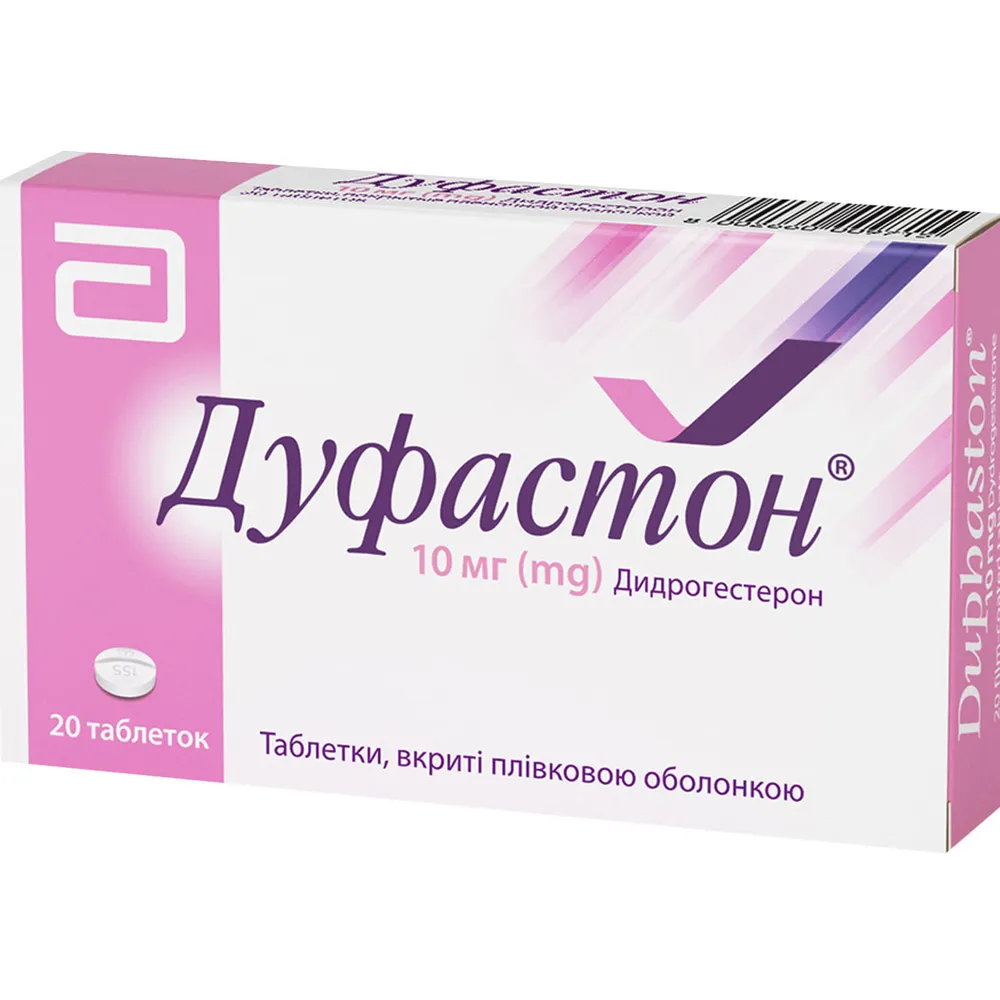
Table of Contents
INSTRUCTIONS FOR MEDICAL USE OF THE MEDICINAL PRODUCT DUFALON® (DUPHASTON®)
Composition:
Active substance: dydrogesterone;
1 tablet contains 10 mg of dydrogesterone;
Excipients:
tablet core – lactose monohydrate; hypromellose; maize starch; colloidal anhydrous silicon dioxide; magnesium stearate;
coating: macrogol 400, hypromellose, titanium dioxide (E 171).
Pharmaceutical form. Film-coated tablets.
Main physico-chemical properties: white, round, biconvex, film-coated tablet with beveled edges, with a break line and the imprint "155" on one side on both sides of the break line. Diameter – 7 mm.
The break line is intended only to facilitate swallowing and does not divide the tablet into equal doses.
Pharmacotherapeutic group. Sex hormones and drugs used in disorders of the reproductive system. Progestogens. Pregna-diene derivatives. ATC code G03DB01.
Pharmacological Properties
Pharmacodynamics
Mechanism of Action
Dydrogesterone is a synthetic progestogen with oral bioavailability that induces secretory transformation of the endometrium in an estrogen-stimulated uterus. It prevents the increased risk of endometrial hyperplasia and/or endometrial cancer caused by estrogens. Dydrogesterone has no estrogenic, androgenic, anabolic, or corticoid properties.
Dydrogesterone does not suppress ovulation. This means that the possibility of fertilization of the oocyte in women of reproductive age remains during treatment with dydrogesterone.
In postmenopausal women with an intact uterus, estrogen replacement therapy leads to an increased risk of endometrial hyperplasia and endometrial cancer. The addition of a progestogen prevents this additional risk.
Clinical Efficacy and Safety
A double-blind, double-dummy, randomized, multicenter study with two parallel groups was conducted to compare the efficacy, safety, and tolerability of oral dydrogesterone 30 mg daily versus intravaginal micronized progesterone capsules 600 mg daily for luteal phase support in assisted reproductive technologies (in vitro fertilization) (LOTUS I).
A randomized, open-label, multicenter study with two parallel groups was conducted to compare the efficacy, safety, and tolerability of oral dydrogesterone 30 mg daily versus intravaginal progesterone 8% gel (Crinone) 90 mg daily for luteal phase support in assisted reproductive technologies (in vitro fertilization) (LOTUS II).
Clinical trials LOTUS I and LOTUS II confirmed the following.
The primary objective of the studies—to demonstrate non-inferiority of oral dydrogesterone compared to intravaginal micronized progesterone in terms of fetal heart rate at week 12 of gestation (week 10 of pregnancy)—was achieved.
In the study population, the rate of pregnancy confirmed at week 12 of gestation (week 10 of pregnancy) was 37.6% and 33.1% (LOTUS I) and 36.7% and 34.7% (LOTUS II). The difference in pregnancy rates between the two groups was 4.7 (95% CI, -1.2; 10.6) (LOTUS I) and 2.0 (95% CI, -4.0; 8.0) (LOTUS II).
In the safety-evaluable population (1029 subjects (LOTUS I) and 1030 subjects (LOTUS II) who received at least one dose of study medication), the most frequently reported treatment-emergent adverse events (TEAEs) were identical in both treatment groups.
Given the nature of the investigated indication and patient population, a certain number of early miscarriages/spontaneous abortions is expected, particularly before week 12 of gestation (week 10 of pregnancy), as the anticipated pregnancy rate during this period is approximately 35%.
The safety profile observed in both LOTUS studies was consistent with the expected profile, considering the established safety profile of dydrogesterone, as well as the studied patient population and indication.
Pharmacokinetics
Absorption
After oral administration of dydrogesterone in film-coated tablets, it is rapidly absorbed. Maximum plasma concentrations (Cmax) of approximately 3.2 ng/mL for the parent compound dydrogesterone and 57 ng/mL for its active metabolite 20-alpha-dihydrodydrogesterone (DHD) are reached within 0.5–1.5 hours after intake. Total exposure over time (AUC) is approximately 9.1 and 220 ng·h/mL for dydrogesterone and DHD, respectively.
After a single dose, food delays the time to peak plasma concentration of dydrogesterone by approximately 1 hour, resulting in a reduction of the peak plasma concentration of dydrogesterone by about 20%, without affecting the overall exposure (AUC) of dydrogesterone and DHD.
The observed effect of concomitant food intake on the peak plasma concentration of dydrogesterone is considered clinically insignificant. Therefore, Dufaston® film-coated tablets can be taken independently of meals.
Distribution
After oral administration of dydrogesterone, the apparent volume of distribution is large, approximately 22,000 L. More than 90% of dydrogesterone and DHD is bound to plasma proteins.
Metabolism
After oral administration, dydrogesterone is rapidly metabolized to DHD. The concentration of the main active metabolite DHD reaches its peak at the same time as dydrogesterone. Plasma concentrations of DHD are substantially higher than those of the parent compound. The ratios of AUC and Cmax of DHD to those of dydrogesterone are approximately 25 and 20, respectively. The mean terminal elimination half-life of both dydrogesterone and DHD is approximately 15 hours. A common characteristic of all major metabolites is the preservation of the 4,6-diene-3-one structure of the parent compound and the absence of 17-alpha-hydroxylation, which explains the lack of estrogenic and androgenic effects of dydrogesterone.
Excretion
After oral administration, on average, 63% of the dose is excreted in urine. The apparent total plasma clearance of dydrogesterone is high, approximately 20 L/min. Complete elimination occurs within 72 hours. DHD is excreted in urine predominantly as a glucuronide conjugate.
Dose- and Time-Dependency
The pharmacokinetics of single and multiple doses are linear following oral administration in the dose range of 2.5–20 mg. Comparison of single-dose and multiple-dose kinetics shows that the pharmacokinetics of dydrogesterone and DHD do not change with repeated dosing. Steady-state conditions are generally achieved within 3 days of treatment.
Clinical characteristics.
Indications.
- Irregular menstrual cycles;
- endometriosis;
- dysmenorrhea;
- infertility due to luteal phase deficiency;
- luteal phase support in assisted reproductive technologies (ART);
- threatened and habitual miscarriage associated with progesterone deficiency.
Dufaston® may be used as cyclic add-back therapy to estrogen treatment in women with intact uterus:
- for prevention of endometrial hyperplasia during menopause;
- in dysfunctional uterine bleeding;
- in secondary amenorrhea.
Contraindications.
- Undiagnosed vaginal bleeding;
- current or past history of severe liver disease, if liver function tests have not returned to normal;
- consider contraindications for estrogens when used in combination with progestogens such as dydrogesterone;
- known hypersensitivity to the active substance or to any of the excipients;
- established or suspected progesterone-dependent neoplasia;
- meningioma or history of meningioma.
Treatment for luteal phase support in assisted reproductive technologies (ART) should be discontinued if abortion/miscarriage is diagnosed.
Interaction with other medicinal products and other forms of interaction.
In vitro studies indicate that the main metabolic pathway leading to the formation of the primary pharmacologically active metabolite, 20α-dihydrodydrogesterone (DHD), is catalyzed by human cytosolic aldoketo reductase 1C (AKR 1C). In addition to cytosolic metabolism, metabolic transformations are mediated by cytochrome P450 (CYP) isoenzymes, almost exclusively by the CYP3A4 isoenzyme, resulting in several minor metabolites. The main active metabolite DHD is a substrate for metabolic transformation by CYP3A4. Therefore, the metabolism of dydrogesterone and DHD may be accelerated when co-administered with substances that induce cytochrome P450 enzymes, such as anticonvulsants (e.g., phenobarbital, phenytoin, carbamazepine), antimicrobial agents (e.g., rifampicin, rifabutin, nevirapine, efavirenz), and herbal preparations containing St. John’s wort (Hypericum perforatum), sage, or ginkgo biloba.
Ritonavir and nelfinavir are known as strong inhibitors of cytochrome enzymes but may exhibit enzyme-inducing properties when co-administered with steroid hormones. Clinically, increased metabolism of dydrogesterone may lead to reduced efficacy.
In vitro studies have shown that dydrogesterone and DHD, at clinically relevant concentrations, do not inhibit or induce cytochrome P450 enzymes involved in the metabolism of medicinal products.
Special precautions for use.
Before initiating treatment with dydrogesterone for pathological bleeding, an organic cause of bleeding should be excluded.
Breakthrough bleeding or spotting may occur during the first months of treatment. If breakthrough bleeding or spotting continues to occur after some time on treatment or persists after treatment has ended, the cause should be investigated, including, if necessary, exclusion of endometrial malignancy by endometrial biopsy.
If any of the following disorders occurs for the first time or worsens during treatment, discontinuation of therapy should be considered:
- severe headache, migraine, or symptoms that may indicate cerebral ischaemia;
- significant increase in blood pressure;
- occurrence of venous thromboembolism.
In cases of habitual or threatened miscarriage, the viability of the fetus should be assessed and monitored during treatment to confirm that pregnancy continues and the embryo is alive.
Conditions requiring monitoring
The following rare conditions are known to be influenced by sex hormones, and therefore may appear or worsen during pregnancy or when sex hormones are administered: cholestatic jaundice, herpes gestationis, severe pruritus, otosclerosis, porphyria, depression, and abnormal liver function tests due to acute or chronic liver disease. If any of these conditions is present or has occurred previously, and/or worsened during pregnancy or previous hormone therapy, the patient should be under close surveillance. It should be considered that these conditions may recur or worsen during dydrogesterone therapy, and therefore therapy should be discontinued in such cases.
Patients with a history of depression should be under close surveillance. If severe depression recurs, dydrogesterone treatment should be discontinued.
The following warnings apply to the use of Duofaston® for the indication "prevention of endometrial hyperplasia during menopause"
See also warnings in the instructions for medical use of estrogen preparations.
Hormone replacement therapy (HRT) for the treatment of postmenopausal symptoms should be prescribed only when symptoms negatively affect quality of life. In all cases, the benefit-risk balance of HRT should be carefully evaluated at least once a year. HRT should be continued only if benefits outweigh risks.
Evidence regarding risks associated with HRT for the treatment of premature menopause is limited. Due to the low absolute risk in younger women, the benefit-risk balance in this group may be more favourable than in older women.
Medical examination/follow-up monitoring
Before initiating HRT or resuming it after a break, a complete personal and family medical history should be taken. Based on the history, as well as contraindications and warnings for the drug, a physical examination of the patient (including pelvic organs and breast examination) should be performed. Periodic examinations are recommended during treatment, with frequency and nature depending on individual patient characteristics. Women should be informed about which breast changes should be reported to their physician or nurse (see below Breast cancer). Breast examinations, including appropriate imaging methods such as mammography, should be performed according to current screening practices, taking into account individual clinical needs.
Endometrial hyperplasia and carcinoma
In women with an intact uterus, the risk of endometrial hyperplasia and carcinoma is increased with prolonged estrogen-only therapy. Depending on duration of treatment and estrogen dose, the risk may be 2 to 12 times higher than in women not taking estrogens. This risk persists for at least 10 years after discontinuation of estrogen therapy. Adding progestogens such as dydrogesterone, cyclically for at least 12 days per month in a 28-day cycle or as continuous combined estrogen-progestogen therapy, in women with an intact uterus, can prevent the excess risk associated with estrogen-only HRT.
Breakthrough bleeding and spotting may occur during the first months of treatment. If breakthrough bleeding or spotting occurs after some time on therapy, or if it persists after treatment ends, further investigation is indicated. This may include endometrial biopsy to exclude malignancy.
Breast cancer
All available data indicate an increased risk of breast cancer in women receiving combined estrogen-progestogen therapy or estrogen-only HRT. This risk depends on the duration of HRT use.
Combined estrogen-progestogen therapy: the Women’s Health Initiative (WHI) randomized placebo-controlled trial and meta-analyses of prospective epidemiological studies showed an increased risk of breast cancer in women taking combined estrogen-progestogen HRT, evident after approximately 3 (1 to 4) years. Results of a large meta-analysis showed that after discontinuation of treatment, this increased risk decreases over time, and the time required to return to baseline risk depends on the duration of prior HRT use. If therapy lasted more than 5 years, this risk may persist for 10 years or longer.
HRT, particularly combined estrogen-progestogen therapy, increases mammographic density, which may negatively affect radiological detection of breast cancer.
Ovarian cancer
Ovarian cancer occurs much less frequently than breast cancer. Epidemiological data from a large meta-analysis showed a slightly increased risk in women using estrogen-only therapy or combined estrogen-progestogen therapy as HRT; this risk becomes evident within 5 years of use and decreases over time after therapy is stopped. Some other studies, including WHI, have shown that combined HRT may be associated with a similar or slightly lower risk (see "Adverse reactions").
Venous thromboembolism
HRT is associated with a 1.3- to 3-fold increased risk of venous thromboembolism, i.e. deep vein thrombosis or pulmonary embolism. The occurrence of such an event is more likely during the first year of HRT than later.
Patients with known thrombophilic conditions have an increased risk of venous thromboembolism, and HRT may further increase this risk. Therefore, HRT is contraindicated in this patient group.
Well-established risk factors for venous thromboembolism include estrogen use, advanced age, major surgery, prolonged immobilization, obesity (BMI > 30 kg/m²), pregnancy/postpartum period, systemic lupus erythematosus (SLE), and cancer. There is no consensus on the possible role of varicose veins in the development of venous thromboembolism.
As in all postoperative patients, preventive measures should be considered to prevent venous thromboembolism after surgery. If planned surgery requires prolonged immobilization, it is recommended to temporarily discontinue HRT 4–6 weeks before surgery. Treatment should not be resumed until the woman has regained full mobility.
Women without a personal history of venous thromboembolism but with a family history of thrombosis in first-degree relatives at a young age may be offered screening after careful discussion of its limitations (only a portion of thrombophilic defects can be detected by screening). If a thrombophilic defect associated with thrombosis in family members or a defect associated with a serious anomaly (e.g. antithrombin, protein S or protein C deficiency, or a combination of defects) is identified, HRT is contraindicated.
In women already receiving long-term anticoagulant therapy, the benefit-risk balance of HRT should be carefully evaluated.
If venous thromboembolism develops after starting therapy, the drug should be discontinued. Patients should be informed that they should seek immediate medical attention if potential thromboembolic symptoms occur (e.g. painful leg swelling, sudden chest pain, dyspnea).
Ischaemic heart disease
Randomized controlled trials have not shown evidence of protection against myocardial infarction in women with or without ischaemic heart disease receiving combined estrogen-progestogen therapy or estrogen-only HRT.
Combined estrogen-progestogen therapy: the relative risk of ischaemic heart disease during HRT is slightly increased. Since the baseline absolute risk of ischaemic heart disease largely depends on age, the number of additional cases of ischaemic heart disease due to estrogen-progestogen use is very low in healthy women at menopause but increases with age.
Ischaemic stroke
Combined estrogen-progestogen therapy and estrogen-only therapy are associated with a 1- to 1.5-fold increased risk of ischaemic stroke. The relative risk does not change with age or time since menopause. However, since the baseline risk of stroke largely depends on age, the overall risk of stroke in women taking HRT increases with age.
Meningioma
Cases of meningioma (single and multiple) have been reported with the use of combined estradiol/dydrogesterone therapy. Patients should be monitored for signs and symptoms of meningioma according to clinical practice. If a patient is diagnosed with meningioma, any treatment with dydrogesterone must be discontinued (see section "Contraindications"). Tumour regression has been observed after discontinuation of treatment.
Excipients
This medicinal product contains lactose monohydrate. Patients with rare hereditary problems of galactose intolerance, lactase deficiency or glucose-galactose malabsorption should not take this medicine.
Use during pregnancy or breastfeeding.
Pregnancy
It is estimated that more than 9 million pregnant women have used dydrogesterone. To date, no evidence of harmful effects of dydrogesterone when used during pregnancy has been found.
Literature includes a study suggesting that use of certain progestogens may be associated with an increased risk of hypospadias. However, as this has not been confirmed in other studies, the role of progestogens in hypospadias development cannot be definitively established. Clinical studies involving a limited number of women treated with dydrogesterone in early pregnancy have not shown an increased risk. No other epidemiological data are available to date.
In preclinical studies of embryofetal and postnatal development, effects were consistent with the pharmacological profile. Adverse effects occurred only when drug exposure greatly exceeded the maximum human exposure.
Dydrogesterone may be used during pregnancy when clearly indicated.
Breastfeeding
There are no data on the passage of dydrogesterone into breast milk. Studies on the passage of dydrogesterone into breast milk have not been conducted.
Experience with other progestogens indicates that progestogens and their metabolites pass into breast milk in small amounts. The risk to the infant is unknown; therefore, dydrogesterone should not be used during breastfeeding.
Fertility
There is no evidence that dydrogesterone at therapeutic doses reduces fertility.
Ability to influence the speed of reactions while driving or operating machinery.
Duofaston® has negligible influence on the ability to drive vehicles and operate machinery.
Rarely, dydrogesterone may cause mild drowsiness and/or dizziness, especially in the first few hours after administration. Therefore, driving or operating machinery should be done with caution.
Dosage and Administration
The following dosage regimens are recommended for treatment with Dufaston®. Dosage, regimen, and duration of treatment may be adjusted depending on the severity of the disorder and the individual clinical response of the patient.
Irregular menstrual cycles
A cycle length of 28 days may be achieved by administering 1 tablet of Dufaston® daily from day 11 to day 25 of the cycle.
Endometriosis
From 1 to 3 tablets of Dufaston® daily from day 5 to day 25 of the cycle or throughout the entire cycle. Doses equivalent to 10 mg daily should be evenly distributed throughout the day. It is recommended to initiate treatment with the highest dose.
Dysmenorrhea
From 1 to 2 tablets of Dufaston® daily from day 5 to day 25 of the cycle. Doses equivalent to 10 mg daily should be evenly distributed throughout the day. It is recommended to initiate treatment with the highest dose.
Infertility due to luteal phase deficiency
1 tablet of Dufaston® daily from day 14 to day 25 of the cycle.
This treatment should be continued for a minimum of 6 consecutive cycles. It is recommended to continue treatment during the first months of pregnancy at the same dosage as for habitual abortion.
Luteal phase support in assisted reproductive technologies (ART)
1 tablet of Dufaston® 3 times daily (30 mg daily). Treatment should begin on the day of oocyte retrieval and continue for 10 weeks if pregnancy is confirmed.
Threatened abortion
Initial dose: 4 tablets of Dufaston® immediately, followed by 1 tablet of Dufaston® every 8 hours. Doses equivalent to 10 mg daily should be evenly distributed throughout the day. It is recommended to initiate treatment with the highest dose.
If symptoms do not resolve or recur during treatment, the dose should be increased by 1 tablet of Dufaston® every 8 hours.
After symptoms resolve, the effective dose should be maintained for one week, after which it may be gradually reduced. If symptoms recur, treatment should be immediately resumed at the dose previously found effective.
Habitual abortion
Treatment should begin prior to conception. 1 tablet of Dufaston® daily until week 20 of pregnancy, after which the dose may be gradually reduced.
If symptoms of threatened pregnancy interruption occur during treatment, treatment should be continued as described for threatened abortion.
Dysfunctional uterine bleeding
To stop bleeding, administer 2 tablets of Dufaston® daily for 5–7 days. Bleeding significantly decreases within a few days. Withdrawal bleeding usually occurs several days after completion of treatment, and the patient should be informed about this.
To prevent further episodes of heavy uterine bleeding, Dufaston® should be administered at a dose of 1 tablet daily from day 11 to day 25 of the cycle, if necessary in combination with estrogen, for 2–3 cycles. After this, treatment may be discontinued to assess normalization of the cycle in the patient.
Secondary amenorrhea
From 1 to 2 tablets of Dufaston® daily from day 11 to day 25 of the cycle to ensure optimal secretory transformation of the endometrium adequately stimulated by endogenous or exogenous estrogens.
Prevention of endometrial hyperplasia in the menopausal period
During each 28-day cycle of estrogen therapy, administer estrogen alone for the first 14 days, and for the subsequent 14 days, add 1 or 2 tablets containing 10 mg dydrogesterone to estrogen therapy. In case of a dydrogesterone dose of 10 mg twice daily, tablet intake should be evenly distributed throughout the day. Withdrawal bleeding usually occurs during dydrogesterone administration.
Combined estrogen and progestogen therapy in postmenopausal women should be limited to the lowest effective dose and shortest duration compatible with therapeutic goals and individual risks, and the continued need for such treatment should be reviewed periodically (see "Special precautions").
Administration
For oral use.
When higher doses are used, tablets should be evenly distributed throughout the day.
Children
Dydrogesterone is not used before the onset of menstruation. The safety and efficacy of dydrogesterone in adolescents aged 12 to 18 years have not been established.
Overdose
Symptoms
Dydrogesterone is a drug with very low toxicity. Theoretically possible symptoms in case of overdose include nausea, vomiting, drowsiness, and dizziness. There are no known cases in which dydrogesterone overdose has resulted in harmful effects (maximum daily dose taken by a person was 360 mg).
Treatment
No specific treatment is required. Symptomatic treatment may be considered in case of overdose.
Adverse Reactions
In clinical trials of dydrogesterone used for indications without concomitant estrogen therapy, the most frequently reported adverse reactions were: vaginal bleeding, migraine/headache, nausea, vomiting, abdominal pain, menstrual disorders, and breast pain/tenderness.
The adverse reactions listed below were observed with the following frequency in clinical trials of dydrogesterone (n=3483) for indications without concomitant estrogen therapy, in two company-sponsored interventional clinical trials on luteal phase support in assisted reproductive technology (ART) using dydrogesterone (n=1036), and in spontaneous reports. The frequency categories are defined according to the most conservative approach: very common (≥1/10); common (≥1/100, <1/10); uncommon (≥1/1000, <1/100); rare (≥1/10000, <1/1000).
Benign, malignant and unspecified neoplasms (including cysts and polyps):
Rare: Increase in size of progesterone-dependent neoplasms (e.g., meningioma)*.
Blood and lymphatic system disorders
Rare: Haemolytic anaemia*.
Psychiatric disorders
Uncommon: Depressed mood.
Immune system disorders
Rare: Hypersensitivity reactions.
Nervous system disorders
Common: Headache, migraine.
Uncommon: Dizziness.
Rare: Somnolence.
Gastrointestinal disorders
Common: Nausea, vomiting, abdominal pain.
Hepatobiliary disorders
Uncommon: Liver function abnormalities associated with weakness or malaise, jaundice, and abdominal pain.
Skin and subcutaneous tissue disorders
Uncommon: Allergic dermatitis (e.g., rash, pruritus, urticaria).
Rare: Angioneurotic oedema*.
Reproductive system and breast disorders
Very common: Vaginal bleeding.
Common: Menstrual disorders (including metrorrhagia, menorrhagia, oligo-/amenorrhoea, dysmenorrhoea, and irregular menstruation), breast pain/tenderness.
Rare: Breast swelling.
General disorders and administration site conditions
Rare: Oedema.
Investigations
Uncommon: Weight increase.
*Adverse reactions from spontaneous reports, not observed in clinical trials, were included in the "rare" frequency category based on the assumption that the upper limit of the 95% confidence interval of the expected frequency does not exceed 3/x, where x=3483 (total number of subjects observed in clinical trials).
Adverse reactions associated with estrogen-progestagen therapy (see also section "Special warnings and precautions for use" and package leaflets of estrogen-containing medicinal products):
- Breast cancer, endometrial hyperplasia and carcinoma, ovarian cancer**;
- Venous thromboembolism;
- Myocardial infarction, ischaemic heart disease, ischaemic stroke.
** Use of estrogen-only or combined estrogen-progestagen hormone replacement therapy (HRT) has been associated with a slightly increased risk of ovarian cancer diagnosis (see "Special warnings and precautions for use"). A meta-analysis of 52 epidemiological studies showed an increased risk of ovarian cancer in women who used HRT compared to women who never used HRT (RR 1.43; 95% CI 1.31–1.56). In women aged 50–54 years who used HRT for 5 years, this resulted in one additional case per 2000 users. Among approximately 2 out of 2000 women aged 50–54 years not using HRT, ovarian cancer was diagnosed over a 5-year period.
Shelf life. 5 years.
Storage conditions. No special storage conditions required. Keep out of reach and sight of children.
Packaging. 14, 20, or 28 tablets in a blister pack; 1 blister pack in a cardboard box.
Prescription status. Prescription only.
Manufacturer. Abbott Biologicals B.V., The Netherlands.
Manufacturer's address and location of operations. Veerweg 12, 8121 AA Olst, The Netherlands.