Dokulak® is
Ukraine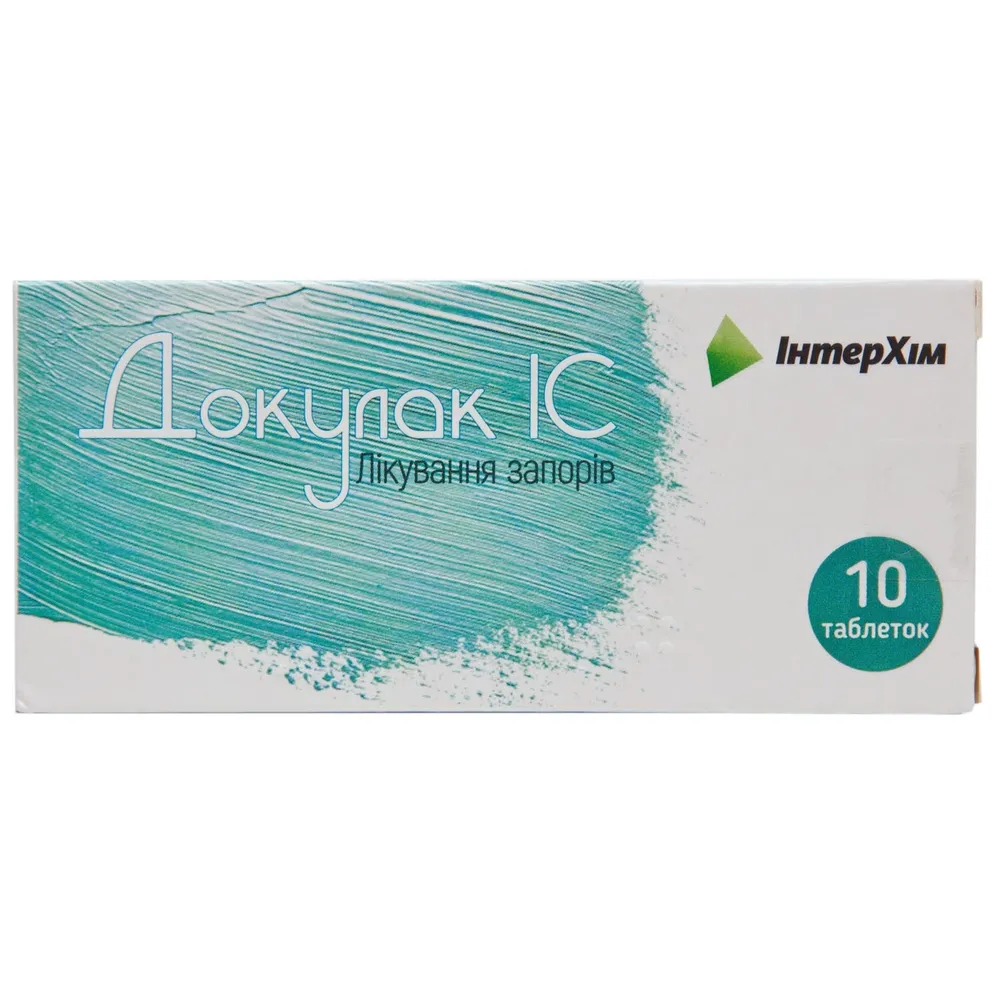
Table of Contents
INSTRUCTIONS FOR MEDICAL USE OF THE MEDICINAL PRODUCT DOCKULAC® IS
Composition:
Active substance: docusate sodium;
1 tablet contains 50 mg or 100 mg of docusate sodium;
Excipients: calcium hydrogen phosphate dihydrate, microcrystalline cellulose, pregelatinized starch, sodium croscarmellose, colloidal anhydrous silicon dioxide, magnesium stearate, sodium benzoate (E 211), hypromellose (hydroxypropylmethylcellulose), polyethylene glycol, talc, titanium dioxide (E 171).
Pharmaceutical form. Film-coated tablets.
Main physicochemical properties: white, round, biconvex film-coated tablets.
Pharmacotherapeutic group.
Laxatives. Stool softening laxatives. Docusate sodium.
ATC code A06A A02.
Pharmacological Properties.
Pharmacodynamics.
Docusate sodium is an anionic wetting agent that acts as a stool softener by reducing the surface tension of intestinal fluids, thereby promoting the penetration of fluid into hardened dry fecal masses. Docusate sodium also acts on the intestinal mucosa, increasing the secretion of water and electrolytes into the intestinal lumen by enhancing mucosal permeability, mediated through an increase in intracellular cyclic adenosine monophosphate (cAMP) levels via competitive inhibition of cAMP-phosphodiesterase.
Pharmacokinetics.
Absorption
Docusate sodium exerts its pharmacological effects locally within the gastrointestinal tract. However, there is evidence that docusate sodium is partially absorbed in the duodenum and jejunum of the small intestine.
Elimination
Docusate sodium is eliminated from the body via the biliary tract.
Clinical characteristics.
Indications.
Treatment of constipation:
- to prevent the formation of hard, dry stools and to reduce straining during defecation in the presence of hemorrhoids and anal fissures;
- to soften hard, dry stools in order to reduce straining during defecation.
As an adjunctive agent for radiological examination of abdominal organs.
Contraindications.
Hypersensitivity to the active substance or to any of the excipients of the medicinal product.
Inflammatory bowel diseases (e.g., ulcerative colitis, Crohn's disease, etc.), intestinal obstruction and conditions which may lead to intestinal obstruction, nausea, vomiting, abdominal pain not related to constipation.
Children under 12 years of age.
Interaction with other medicinal products and other forms of interaction.
Sodium docusate may enhance intestinal absorption of other active substances when used concomitantly.
Not recommended combinations
- Mineral oils (paraffin oil).
Sodium docusate increases intestinal absorption of mineral oils.
- Anthraquinone derivatives.
When used concomitantly with sodium docusate, anthraquinone derivatives should be administered in reduced doses due to increased intestinal absorption.
- Medicinal products that may induce ventricular tachycardia of the torsades de pointes type:
- antiarrhythmic agents: bepridil, class Ia antiarrhythmics (e.g., quinidine), sotalol, amiodarone;
- other medicinal products: phenoxedil, lidoflazine, prenylamine, vincamine.
Prior to administration of a medicinal product that may induce ventricular tachycardia of the torsades de pointes type, correction of hypokalemia should be performed with monitoring of cardiac function by electrocardiography (ECG), clinical observation, and control of serum electrolyte levels to reduce the risk of ventricular arrhythmias, particularly torsades de pointes.
Combinations requiring precautionary measures and monitoring of blood potassium levels
- Digoxin.
Hypokalemia increases the cardiotoxicity of cardiac glycosides. Prior to administration of digoxin, hypokalemia should be corrected with monitoring of cardiac function by ECG, clinical observation, and control of serum electrolyte levels.
- Other medicinal products that reduce serum potassium levels: amphotericin B (intravenous administration), corticosteroids (glucocorticoids and mineralocorticoids administered systemically), tetracosactide, hypokalemic diuretics (as monotherapy or in combination).
Concomitant use with sodium docusate increases the risk of developing hypokalemia. Serum potassium levels should be monitored and, if necessary, hypokalemia should be corrected.
Special precautions for use
Before initiating treatment with any laxative, organic bowel disorders should be ruled out.
Drug treatment of constipation should only be an adjunct to maintaining a healthy lifestyle and adherence to dietary measures, such as:
- increasing dietary fiber and fluid intake;
- maintaining the recommended level of physical activity and establishing/restoring the defecation reflex.
Like other laxatives, Docusate® IS should not be used continuously. Prolonged use of the medicinal product may lead to colonic atony, severe functional colopathy, colonic melanosis, proctocolitis, and disturbances in water and electrolyte balance with hypokalemia. With long-term use, there is a risk of developing dependence, requiring regular use of a laxative and increasing its dosage; upon discontinuation of the medicinal product, severe constipation may occur.
If daily use of a laxative becomes necessary or if abdominal pain develops, medical advice should be sought.
Pediatric population
When prescribing laxatives to children, the risk of interfering with the normal function of the defecation reflex should be considered.
Use during pregnancy or breastfeeding.
Pregnancy
There are insufficient data on the safety of sodium docusate in pregnant women. Animal studies are insufficient to assess the impact of sodium docusate on pregnancy and embryofetal development. The potential risk to humans is unknown. Throughout the long period of widespread use of sodium docusate, no cases of congenital developmental abnormalities have been reported. However, as a precautionary measure, sodium docusate should not be administered during the first trimester of pregnancy. Sodium docusate may be prescribed during the second and third trimesters of pregnancy only if the expected benefit outweighs the potential risks.
Breastfeeding
Animal studies have shown that sodium docusate and its metabolites are excreted in breast milk following systemic administration of sodium docusate. Therefore, sodium docusate should not be administered to breastfeeding women.
Fertility
Animal studies have not shown any effect of sodium docusate on fertility.
Studies on the effect of sodium docusate on human fertility have not been conducted.
Ability to affect reaction speed while driving or operating machinery.
Data are lacking.
Method of Administration and Dosage
Administer orally. Tablets should be swallowed whole with a glass of water. Adequate hydration should be maintained during treatment with this medicinal product.
Adults and children aged 12 years and older
The maximum daily dose of the medicinal product is 500 mg. Treatment should be initiated with higher doses, such as 100 mg three times daily, which should then be gradually reduced to the lowest effective dose depending on the clinical response.
For radiological examination of the abdominal organs together with barium mixture, sodium docucate should be administered at a dose of 400 mg.
Elderly patients
Dosage adjustment is not required.
Due to the specific mechanism of action, the therapeutic effect of the medicinal product Docolac® IS develops within 24 hours.
The recommended duration of treatment is no more than 7 days.
In severe cases, the treatment duration may be extended upon physician's recommendation if the expected benefit outweighs the potential risks to the patient.
Children
The medicinal product is not intended for use in children under 12 years of age.
Overdose
In case of sodium docucate overdose, diarrhea, abdominal pain, and symptoms of dehydration may occur. Symptomatic treatment and restoration of fluid and electrolyte balance may be required.
Adverse Reactions
Adverse reactions are classified by system organ classes and frequency. By frequency, adverse reactions are categorized as follows: rare (≥1/10,000 to <1/1,000), frequency not known (cannot be estimated from available data).
Skin and subcutaneous tissue disorders: rare – skin rash; frequency not known – pruritus.
Gastrointestinal disorders: rare – diarrhea, nausea, abdominal cramps.
Metabolic and nutritional disorders: hypokalemia.
Reporting of suspected adverse reactions
Reporting suspected adverse reactions after medicinal product registration is important. It allows continuous monitoring of the benefit-risk balance of the medicinal product. Healthcare professionals and patients or their legal representatives are encouraged to report any suspected adverse reactions and lack of efficacy via the Automated Pharmacovigilance Information System at the following link: https://aisf.dec.gov.ua.
Shelf life: 2.5 years.
Storage conditions:
Store in the original packaging at a temperature not exceeding 25 °C.
Keep out of reach and sight of children.
Packaging:
10 tablets in a blister; 1 blister per carton.
10 tablets in a blister.
Supply category:
Over-the-counter (without prescription).
Manufacturer:
Interkhim Limited Liability Company.
Manufacturer's address and location of operations:
40-A, Staryokyivska Road, 21st km, Odesa, Ukraine, 65025.