Dexamethasone
Ukraine
Table of Contents
INSTRUCTIONS FOR MEDICAL USE OF THE MEDICINAL PRODUCT DEXAMETHASONE (DEXAMETHASONE)
Composition:
Active substance: dexamethasone phosphate;
1 ml of injection solution contains 4 mg dexamethasone phosphate in the form of sodium dexamethasone phosphate;
Excipients: glycerin, disodium edetate, sodium hydrogen phosphate dihydrate, water for injections.
Medicinal form. Solution for injection.
Main physico-chemical properties: clear, colorless to pale yellow solution, practically free from mechanical particles.
Pharmacotherapeutic group. Corticosteroids for systemic use. ATC code H02AB02.
Pharmacological Properties.
Pharmacodynamics.
Dexamethasone is a synthetic adrenocortical hormone (a corticosteroid) with glucocorticoid activity. It exerts anti-inflammatory and immunosuppressive effects and also influences energy metabolism, glucose metabolism, and (via negative feedback) the secretion of hypothalamic corticotropin-releasing factor and adenohypophyseal tropic hormones.
The mechanism of action of glucocorticoids is not yet fully understood. Currently, there is sufficient evidence supporting the mechanism of glucocorticoid action at the cellular level. Within the cell cytoplasm, two well-defined receptor systems exist. By binding to glucocorticoid receptors, corticosteroids exert anti-inflammatory and immunosuppressive effects and regulate glucose metabolism. Binding to mineralocorticoid receptors regulates sodium and potassium metabolism and water-electrolyte balance.
Glucocorticoids are lipid-soluble and readily penetrate target cells through the cell membrane. Hormone binding to the receptor induces a conformational change in the receptor, increasing its affinity for DNA. The hormone-receptor complex enters the cell nucleus and binds to the regulatory region of the DNA molecule, known as the glucocorticoid response element (GRE). The activated receptor, bound to GRE or specific genes, modulates mRNA transcription, either increasing or decreasing it. The newly formed mRNA is transported to ribosomes, leading to the synthesis of new proteins. Depending on the target cells and processes involved, protein synthesis may be enhanced (e.g., tyrosine transaminase formation in liver cells) or reduced (e.g., IL-2 production in lymphocytes). Since glucocorticoid receptors are present in all tissue types, glucocorticoids are considered to act on most cells in the body.
Effects on Energy Metabolism and Glucose Homeostasis
Dexamethasone, together with insulin, glucagon, and catecholamines, regulates energy storage and utilization. In the liver, it increases glucose formation from pyruvate or amino acids and promotes glycogen synthesis. In peripheral tissues, particularly in muscles, glucose uptake is reduced, and amino acids (from proteins) are mobilized as substrates for hepatic gluconeogenesis. A direct effect on lipid metabolism is the central redistribution of adipose tissue and increased lipolytic response to catecholamines.
Via receptors in renal proximal tubules, dexamethasone increases renal blood flow and glomerular filtration, inhibits vasopressin formation and secretion, and enhances the kidney's ability to excrete acids.
By increasing the number and affinity of β-adrenergic receptors, which mediate the positive inotropic effects of catecholamines, dexamethasone directly enhances myocardial contractility and peripheral vascular tone.
When administered in high doses, dexamethasone inhibits fibroblast production of type I and type III collagen and glycosaminoglycans. Thus, by suppressing extracellular collagen and matrix formation, wound healing is delayed. Prolonged administration of high doses leads to progressive bone resorption via indirect effects and reduced osteogenesis via direct effects (increased parathyroid hormone secretion and decreased calcitonin secretion), and causes a negative calcium balance due to reduced intestinal calcium absorption and increased urinary calcium excretion. This typically results in secondary hyperparathyroidism and phosphaturia.
Effects on the Pituitary and Hypothalamus
Dexamethasone has approximately 30 times greater activity than cortisol. Thus, it is a more potent inhibitor of corticotropin-releasing factor (CRF) and ACTH secretion compared to endogenous cortisol. This leads to reduced cortisol secretion and, after prolonged suppression of CRF and ACTH secretion, to adrenal gland atrophy. Adrenal insufficiency may develop as early as days 5 to 7 of dexamethasone administration at a dose equivalent to 20–30 mg of prednisone per day, or after 30 days of low-dose therapy. After discontinuation of short-term therapy (up to 5 days) with high doses, adrenal cortex function should recover within 1 week; after long-term therapy, normalization occurs later, usually within 1 year. In some patients, irreversible adrenal atrophy may develop.
Anti-inflammatory and Immunosuppressive Effects of glucocorticoids are based on their molecular and biochemical actions. The molecular anti-inflammatory effect results from binding to glucocorticoid receptors and subsequent modulation of gene expression for various signaling molecules, proteins, and enzymes involved in the inflammatory response. The biochemical anti-inflammatory effect of glucocorticoids is due to inhibition of the synthesis and activity of humoral inflammatory mediators: prostaglandins, thromboxanes, cytokines, and leukotrienes. Dexamethasone reduces leukotriene formation by decreasing the release of arachidonic acid from cellular phospholipids, caused by inhibition of phospholipase A2 activity. This effect on phospholipases is not direct but results from increased concentrations of lipocortin (macrocortin), an inhibitor of phospholipase A2. Dexamethasone inhibits prostaglandin and thromboxane formation by reducing the synthesis of specific mRNA, thereby decreasing cyclooxygenase production. Dexamethas游戏副本
| Result |
Dexamethasone |
Usual care |
Rate ratio* |
| (N = 2104) |
(N = 4321) |
(95 % CI) |
|
| Number/total number of patients (%) |
|||
| Primary endpoint |
482/2104 (22.9) |
1110/4321 (25.7) |
0.83 (0.75–0.93) |
| 28-day mortality |
|||
| Secondary endpoint |
|||
| Discharged from hospital within 28 days |
1413/2104 (67.2) |
2745/4321 (63.5) |
1.10 (1.03–1.17) |
| Invasive mechanical ventilation or death†: |
456/1780 (25.6) |
994/3638 (27.3) |
0.92 (0.84–1.01) |
|
102/1780 (5.7) |
285/3638 (7.8) |
0.77 (0.62–0.95) |
|
387/1780 (21.7) |
827/3638 (22.7) |
0.93 (0.84–1.03) |
* The ratios were adjusted for age with regard to 28-day mortality and hospital discharge. Risk ratios were adjusted for age with regard to the outcome of receiving invasive mechanical ventilation or death, and its components;
† Patients who received invasive mechanical ventilation at randomization were excluded from this category.
Safety
During the study, 4 serious adverse events related to the investigational treatment were recorded: 2 cases of hyperglycemia development, 1 case of steroid-induced psychosis, and 1 case of upper gastrointestinal tract bleeding. All cases were resolved.
Subgroup Analysis
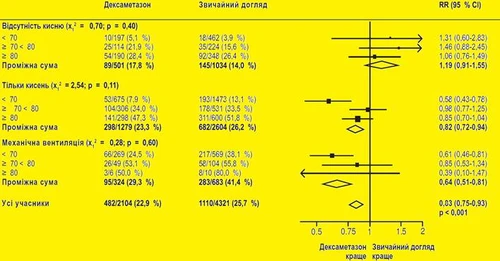
Effects of dexamethasone on 28-day mortality according to age and type of respiratory support at randomization2
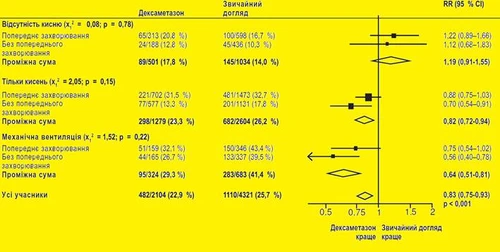
Effects of dexamethasone on 28-day mortality according to type of respiratory support at randomization and presence of any chronic comorbidity3
1 www.recoverytrial.net
2, 3 (Source: Horby P. et al., 2020; https://www.medrxiv.org/content/10.1101/2020.06.22.20137273v1;
doi: https://doi.org/10.1101/2020.06.22.20137273).
Pharmacokinetics
Absorption
Dexamethasone reaches peak plasma concentration within the first 5 minutes following intravenous administration and within 1 hour following intramuscular administration. After local injection into a joint or soft tissues (site of inflammation), absorption is slower than after intramuscular administration. Following intravenous administration, onset of action is immediate; after intramuscular administration, clinical effect occurs within 8 hours. The duration of action lasts 17–28 days after intramuscular administration and from 3 days to 3 weeks after local administration.
Distribution
In blood plasma and synovial fluid, conversion of dexamethasone phosphate to dexamethasone occurs very rapidly. In plasma, approximately 77% of dexamethasone is bound to plasma proteins, primarily to albumin. Only a small amount of dexamethasone binds to other proteins. Dexamethasone is lipophilic and therefore freely penetrates cells and interstitial spaces. In the central nervous system (hypothalamus, pituitary gland), it binds and acts via membrane receptors. In peripheral tissues, it binds and acts via cytoplasmic receptors.
Biological Transformation
Degradation of dexamethasone occurs at the site of action, i.e., within the cell itself. Dexamethasone is primarily metabolized in the liver, and possibly also in the kidneys and other tissues.
Elimination
The biological half-life of dexamethasone is 24–72 hours. It is primarily excreted in the urine.
Clinical characteristics.
Indications.
Dexamethasone is administered intravenously or intramuscularly in emergency situations and when oral administration is not feasible.
Endocrine disorders:
- Replacement therapy for primary or secondary (pituitary) adrenal insufficiency (except acute adrenal insufficiency, where hydrocortisone or cortisone are more suitable due to their stronger mineralocorticoid activity);
- Acute adrenal insufficiency (hydrocortisone or cortisone are drugs of choice; concomitant use with mineralocorticoids may be necessary, especially when using synthetic analogs);
- Preoperatively and in cases of severe trauma or illness in patients with established adrenal insufficiency or uncertain adrenocortical reserve;
- Shock unresponsive to conventional therapy, when adrenal insufficiency is present or suspected;
- Congenital adrenal hyperplasia;
- Nonsuppurative thyroiditis and severe forms of radiation-induced thyroiditis.
Rheumatological disorders:
(as adjunctive therapy during periods when basic therapy has not been effective, i.e., in patients in whom analgesic and anti-inflammatory effects of NSAIDs were inadequate);
- Rheumatoid arthritis, including juvenile rheumatoid arthritis and extra-articular manifestations of rheumatoid arthritis (rheumatoid lung disease, cardiac, ocular, and cutaneous vasculitis);
- Synovitis in osteoarthritis; post-traumatic osteoarthritis; epicondylitis; acute nonspecific tenosynovitis; acute gouty arthritis; psoriatic arthritis; ankylosing spondylitis; systemic connective tissue diseases; vasculitis.
Skin disorders:
- Pemphigus; severe erythema multiforme (Stevens-Johnson syndrome); exfoliative dermatitis; bullous pemphigoid; severe forms of exudative erythema; erythema nodosum; severe forms of seborrheic dermatitis; severe forms of psoriasis; urticaria unresponsive to standard treatment; mycosis fungoides; dermatomyositis.
Allergic disorders:
(unresponsive to conventional therapy)
- Bronchial asthma; contact dermatitis; atopic dermatitis; serum sickness; chronic or seasonal allergic rhinitis; drug allergy; transfusion-related urticaria.
Ophthalmic disorders:
- Inflammatory eye diseases (acute central choroiditis, optic neuritis); allergic conditions (conjunctivitis, uveitis, scleritis, keratitis, iritis); systemic immune disorders (sarcoidosis, temporal arteritis); proliferative changes in the orbit (endocrine ophthalmopathy, pseudotumor); immunosuppressive therapy in corneal transplantation.
The solution may be administered systemically or locally (subconjunctival, retrobulbar, or peribulbar injection).
Gastrointestinal disorders:
for managing critical periods in:
- Ulcerative colitis (severe course); Crohn's disease (severe course); chronic autoimmune hepatitis; hepatic transplant rejection.
Respiratory disorders:
- Symptomatic sarcoidosis (symptomatic); acute toxic bronchiolitis; chronic bronchitis and asthma (during exacerbations); focal or disseminated pulmonary tuberculosis (in combination with appropriate antituberculosis therapy); berylliosis (granulomatous inflammation); radiation or aspiration pneumonitis.
Hematological disorders:
- Acquired or congenital chronic aplastic anemia; autoimmune hemolytic anemia;
- Secondary thrombocytopenia in adults; erythroblastopenia; acute lymphoblastic leukemia (induction therapy); idiopathic thrombocytopenic purpura in adults (intravenous administration only; intramuscular administration is contraindicated).
Renal disorders:
- Immunosuppressive therapy in kidney transplantation; stimulation of diuresis or reduction of proteinuria in idiopathic nephrotic syndrome (without uremia) and renal dysfunction in systemic lupus erythematosus.
Malignant neoplastic disorders:
- Palliative treatment of leukemia and lymphoma in adults; acute leukemia in children; hypercalcemia associated with malignancies.
Cerebral edema:
- Cerebral edema due to primary or metastatic brain tumors, craniotomy, and traumatic brain injury.
Shock:
- Shock unresponsive to conventional therapy; shock in patients with adrenal insufficiency; anaphylactic shock (intravenous after epinephrine administration); preoperative use to prevent shock in suspected or confirmed adrenal insufficiency.
Other indications:
- Tuberculous meningitis with subarachnoid block (in combination with appropriate antituberculosis therapy); trichinellosis with neurological symptoms or myocardial involvement; cystic tumor of aponeurosis or tendon (ganglion).
- Dexamethasone KRKA is indicated for the treatment of coronavirus disease 2019 (COVID-19) in adults and adolescents (aged 12 years and older with body weight ≥40 kg) who require supplemental oxygen therapy.
Indications for intra-articular or soft tissue injection:
- Rheumatoid arthritis (severe inflammation of a single joint); ankylosing spondylitis (when joint inflammation is unresponsive to conventional therapy); psoriatic arthritis (oligoarticular form and tenosynovitis); monoarthritis (after evacuation of synovial fluid); osteoarthritis of joints (only in cases of synovitis and effusion); periarticular rheumatism (epicondylitis, tenosynovitis, bursitis); acute and gouty arthritis.
Local injection (injection at site of lesion):
- Keloid lesions; hypertrophic, inflammatory, and infiltrated lesions in lichen, psoriasis, granuloma annulare, sclerosing folliculitis, discoid lupus erythematosus, and cutaneous sarcoidosis; discoid lupus erythematosus; Urbach-Wiethe disease; localized alopecia.
Contraindications.
Hypersensitivity to the active substance or to any other component of the medicinal product.
Acute viral, bacterial, or systemic fungal infections (unless appropriate therapy is administered).
Cushing's syndrome.
Live vaccine vaccination.
Breastfeeding (except in emergency situations).
Intramuscular injection is contraindicated in patients with severe coagulation disorders.
Local injection is contraindicated in bacteremia, systemic fungal infections, patients with unstable joints, and infections at the site of administration, including septic arthritis due to gonorrhea or tuberculosis.
Interaction with other medicinal products and other types of interactions.
Concomitant use of dexamethasone and nonsteroidal anti-inflammatory drugs increases the risk of gastrointestinal bleeding and ulcer formation.
The effect of dexamethasone is reduced when used simultaneously with drugs that induce CYP3A4 enzyme activity (phenytoin, phenobarbital, carbamazepine, primidone, rifabutin, rifampicin) or increase glucocorticoid metabolic clearance (ephedrine and aminoglutethimide). In such cases, the dose of dexamethasone should be increased. Interactions between dexamethasone and all the above-mentioned drugs may interfere with the dexamethasone suppression test. This should be considered when interpreting test results.
Concomitant use of dexamethasone and drugs that inhibit CYP3A4 enzyme activity (ketoconazole, macrolides) may lead to increased serum concentrations of dexamethasone. Dexamethasone is a moderate inducer of CYP3A4. Concomitant use with drugs metabolized by CYP3A4 (indinavir, erythromycin) may increase their clearance, resulting in decreased serum concentrations.
By inhibiting CYP3A4 enzyme activity, ketoconazole may increase serum concentrations of dexamethasone. Conversely, ketoconazole may suppress adrenal synthesis of glucocorticoids, thereby potentially leading to adrenal insufficiency due to reduced dexamethasone concentrations.
Dexamethasone reduces the therapeutic effect of antidiabetic drugs, antihypertensives, praziquantel, and natriuretic agents (thus, the dose of these drugs should be increased), but enhances the activity of heparin, albendazole, and potassium-wasting diuretics (the dose of these drugs should be reduced if necessary).
Dexamethasone may alter the effect of coumarin anticoagulants; therefore, prothrombin time should be monitored more frequently when this combination is used.
Concomitant use of high-dose glucocorticoids and β2-adrenergic agonists increases the risk of hypokalemia. In patients with hypokalemia, cardiac glycosides are more likely to cause arrhythmias and have greater toxicity.
Dexamethasone reduces the therapeutic effect of anticholinesterase agents used in myasthenia gravis.
Antacids reduce the absorption of dexamethasone in the stomach. The effect of dexamethasone when taken simultaneously with food and alcohol has not been studied, but concomitant use of the drug with food high in sodium is not recommended. Smoking does not affect the pharmacokinetics of dexamethasone.
Glucocorticoids enhance renal clearance of salicylates, making it sometimes difficult to achieve therapeutic serum concentrations. Caution is required in patients being gradually tapered off corticosteroids, as salicylate serum concentrations may rise and lead to intoxication.
If oral contraceptives are used concomitantly, the elimination half-life of glucocorticoids may be prolonged, enhancing their biological effect and potentially increasing the risk of adverse effects.
Concomitant use of ritodrine and dexamethasone is contraindicated during labor, as it may lead to fatal pulmonary edema in the mother. Fatal outcomes due to this condition have been reported.
Concomitant use of dexamethasone and thalidomide may cause toxic epidermal necrolysis.
Interactions with therapeutic benefits: concomitant administration of dexamethasone with metoclopramide, diphenhydramine, prochlorperazine, or 5-HT3 receptor antagonists (serotonin or 5-hydroxytryptamine type 3 receptors, such as ondansetron or granisetron) is effective in preventing nausea and vomiting induced by chemotherapy with cisplatin, cyclophosphamide, methotrexate, or fluorouracil.
Concomitant therapy with CYP3A inhibitors, including drugs containing cobicistat, is expected to increase the risk of systemic adverse effects. This combination should be avoided unless benefit outweighs risk; in such cases, patients should be monitored for systemic corticosteroid effects.
Special precautions for use.
Hypersensitivity reactions may rarely occur during parenteral corticosteroid therapy; therefore, appropriate precautions should be taken before initiating dexamethasone treatment, considering the possibility of allergic reactions (especially in patients with a history of allergic reactions to any other drugs).
Severe psychiatric reactions may accompany systemic corticosteroid therapy. Symptoms usually appear within several days or weeks after starting treatment. The risk of developing these symptoms increases with high-dose regimens. Most reactions resolve upon dose reduction or discontinuation of the drug. Close monitoring and timely detection of changes in mental status—particularly depressive mood, suicidal thoughts, and intentions—are essential. Corticosteroids should be used with special caution in patients with a history of affective disorders, especially those with a history of allergic reactions to any other drugs or in their close relatives. The occurrence of adverse effects can be minimized by using the lowest effective doses for the shortest possible duration or by administering the required daily dose once in the morning.
In patients receiving prolonged dexamethasone therapy, discontinuation may lead to withdrawal syndrome (without apparent signs of adrenal insufficiency), with symptoms such as fever, rhinitis, conjunctival redness, headache, dizziness, somnolence or irritability, muscle and joint pain, vomiting, weight loss, general weakness, and frequent seizures. Therefore, the dose of dexamethasone should be tapered gradually. Abrupt cessation may be fatal. If a patient experiences severe stress (due to trauma, surgery, or serious illness) during therapy, the dose of dexamethasone should be increased; if this occurs during discontinuation, hydrocortisone or cortisone should be administered.
Patients who have received prolonged dexamethasone therapy and experience severe stress after stopping treatment should resume dexamethasone, as adrenal insufficiency induced by the drug may persist for several months after discontinuation.
Treatment with dexamethasone or natural glucocorticoids may mask symptoms of existing or newly developed infections, as well as symptoms of intestinal perforation.
Dexamethasone may exacerbate systemic fungal infections, latent amoebiasis, and pulmonary tuberculosis.
Patients with active pulmonary tuberculosis should receive dexamethasone (in combination with anti-tuberculosis agents) only in cases of rapidly progressive or widely disseminated pulmonary tuberculosis. Patients with inactive pulmonary tuberculosis receiving dexamethasone, or patients with a positive tuberculin test, should receive chemoprophylaxis.
Caution and medical supervision are recommended for patients with osteoporosis, arterial hypertension, heart failure, tuberculosis, glaucoma, hepatic or renal insufficiency, diabetes, active peptic ulcer, recent intestinal anastomosis, ulcerative colitis, and epilepsy. Particular care is required during the first weeks after myocardial infarction, and in patients with thromboembolism, myasthenia gravis, glaucoma, hypothyroidism, psychosis or psychoneurosis, and elderly patients.
During treatment, worsening of diabetes or transition from latent to clinical diabetes may occur.
Serum potassium levels should be monitored during prolonged therapy.
Live vaccination is contraindicated during dexamethasone treatment. Inactivated viral or bacterial vaccines may not induce the expected antibody synthesis and may not provide the anticipated protective effect. Dexamethasone should generally not be administered within 8 weeks before vaccination, nor should it be initiated earlier than 2 weeks after vaccination.
Patients who have received prolonged high-dose dexamethasone therapy and have never had measles should avoid contact with infected individuals; in case of accidental exposure, prophylactic immunoglobulin treatment is recommended.
Caution is advised in patients recovering from surgery or bone fractures, as dexamethasone may delay wound healing and bone tissue formation.
The effect of glucocorticoids is enhanced in patients with liver cirrhosis or hypothyroidism.
Intra-articular corticosteroid injection may result in local and systemic effects. Frequent use may lead to cartilage damage or bone necrosis.
Before intra-articular injection, synovial fluid should be aspirated and examined (to check for infection). Corticosteroids should not be injected into infected joints. If joint infection develops after injection, appropriate antibiotic therapy should be initiated.
Patients should be advised to avoid physical stress on affected joints until inflammation resolves.
Injection into unstable joints should be avoided.
Corticosteroids may distort the results of skin allergy tests.
In the treatment of coronavirus disease 2019 (COVID-19), systemic corticosteroids should not be discontinued in patients already receiving systemic (oral) corticosteroids for other reasons (e.g., patients with chronic obstructive pulmonary disease) who do not require supplemental oxygen.
Visual disturbances may occur with systemic and local corticosteroid use. If a patient experiences symptoms such as blurred vision or other visual disturbances, they should be referred to an ophthalmologist for evaluation of possible causes, including cataract, glaucoma, or rare conditions such as central serous chorioretinopathy (CSC), which have been reported after systemic and local corticosteroid use.
Pheochromocytoma crisis
Pheochromocytoma crisis, which may be fatal, has been reported after systemic corticosteroid administration. Corticosteroids should be prescribed to patients with suspected or confirmed pheochromocytoma only after a proper benefit-risk assessment.
Hypertrophic cardiomyopathy
Hypertrophic cardiomyopathy has been reported after systemic corticosteroid use, including dexamethasone, in premature infants. In most reported cases, this was reversible after discontinuation of treatment. Diagnostic evaluation and monitoring of cardiac function and structure are recommended in preterm neonates receiving systemic dexamethasone therapy (see "Adverse reactions").
Preterm neonates: Long-term neurodevelopmental impairments have been reported after early treatment (<96 hours) of preterm infants with chronic lung disease using dexamethasone at initial doses of 0.25 mg/kg twice daily.
Special warnings regarding excipients
The product contains less than 1 mmol (23 mg) of sodium per dose, which is considered negligible.
Use during pregnancy or breastfeeding.
Pregnancy.
Harmful effects on the fetus and newborn infant cannot be excluded. The medicinal product suppresses intrauterine fetal development. Dexamethasone may be administered to pregnant women only in rare emergency situations when the expected benefit to the mother outweighs the potential risk to the fetus. Particular caution is recommended in cases of preeclampsia. According to general guidelines for glucocorticoid therapy during pregnancy, the lowest effective dose should be used to control the underlying condition. Infants born to mothers who received glucocorticoids during pregnancy should be carefully monitored for adrenal insufficiency.
Glucocorticoids cross the placenta and reach high concentrations in the fetus. Dexamethasone is less actively metabolized in the placenta than, for example, prednisone. Consequently, high concentrations of dexamethasone may be observed in fetal serum. Some data suggest that even pharmacological doses of glucocorticoids may increase the risk of placental insufficiency, oligohydramnios, delayed fetal growth, or intrauterine fetal death, elevated white blood cell count (neutrophils) in the fetus, and adrenal insufficiency. There is no evidence confirming the teratogenic effect of glucocorticosteroids.
Administration of corticosteroids to pregnant animals may cause fetal developmental abnormalities, including cleft palate, intrauterine growth retardation, and effects on brain growth and development. There is no evidence that corticosteroids increase the frequency of congenital malformations such as cleft palate/lip in humans (see section "Pharmacological properties").
Additional doses of glucocorticoids are recommended during childbirth for women who received glucocorticoids during pregnancy. In cases of prolonged labor or planned cesarean section, intravenous administration of 100 mg hydrocortisone every 8 hours is recommended.
Studies have shown an increased risk of neonatal hypoglycemia following antenatal administration of a short course of corticosteroids, including dexamethasone, to women at risk of late preterm delivery.
Breastfeeding.
Use during breastfeeding is contraindicated (except in emergency cases).
A small amount of glucocorticoids passes into breast milk; therefore, breastfeeding is not recommended for mothers receiving dexamethasone, especially when doses exceed physiological levels (approximately 1 mg). This may lead to growth retardation in the infant and suppression of endogenous corticosteroid secretion.
Ability to affect reaction speed when driving or operating machinery.
Dexamethasone does not affect the ability to drive a vehicle or operate machinery.
Method of Administration and Dosage
Dexamethasone Injection Solution is intended for use in adults and children from birth.
The injection solution may be administered intravenously (by injection or infusion with glucose solution or sodium chloride solution), intramuscularly, or locally (by intra-articular injection or injection into the affected skin area or soft tissue infiltrate). For intravenous infusion, 0.9% sodium chloride solution or 5% glucose solution should be used as the diluent.
Solutions intended for intravenous administration or further dilution of the drug must not contain preservatives when used in infants, especially premature infants.
Sterile safety procedures must be followed when mixing the drug with an infusion diluent. The mixture should be used within 24 hours, as infusion solutions generally do not contain preservatives. Parenteral preparations should be visually inspected for particulate matter and discoloration prior to each administration.
The dosage should be individually determined based on the patient's specific condition, anticipated duration of treatment, corticoid tolerance, and individual response.
Parenteral Administration
Dexamethasone should be administered parenterally in emergency cases, when oral therapy is not feasible, and in conditions specified in the section "Indications".
The injection solution is intended for intravenous, intramuscular, or infusion administration (with glucose solution or sodium chloride solution).
The recommended average initial daily dose for intravenous or intramuscular administration is 0.5–9 mg per day; the dose may be increased if necessary. Initial doses should be maintained until clinical response occurs, after which the dose should be gradually reduced to the lowest clinically effective dose.
When high doses are administered for several days, the dose should be gradually tapered over the following several days or longer.
For Treatment of COVID-19
Adult patients: 6 mg intravenously once daily for up to 10 days.
Pediatric Population
Adolescents aged 12 years and older: 6 mg intravenously once daily for up to 10 days.
Duration of treatment depends on clinical response and individual patient needs.
Elderly Patients, Patients with Renal or Hepatic Impairment
Dosage adjustment is not required.
Local Administration
For intra-articular injection, recommended doses range from 0.4 mg to 4 mg, depending on the size of the affected joint. Typically, 2–4 mg is administered into large joints and 0.8–1 mg into small joints. Repeated intra-articular injections may be performed every 3–4 months. Injections may be repeated up to three or four times into a single joint during a lifetime, and no more than two joints should be treated simultaneously. More frequent intra-articular injections may damage articular cartilage and lead to bone necrosis.
The usual dose injected into the bursa is 2–3 mg, into the tendon sheath 0.4–1 mg, and into a ganglion 1–2 mg.
The dose administered into a site of injury is equivalent to the intra-articular dose. Dexamethasone may be administered simultaneously into no more than two injury sites.
Dosages for soft tissue injection (around the joint) range from 2–6 mg.
Dosage in Children
For intramuscular administration, the recommended dose for replacement therapy is 0.02 mg/kg body weight or 0.67 mg/m² body surface area, divided into three doses administered every third day, or 0.008–0.01 mg/kg body weight or 0.2–0.3 mg/m² body surface area per day.
For all other indications, the recommended dose is 0.02–0.1 mg/kg body weight or 0.8–5 mg/m² body surface area every 12–24 hours.
Equivalent doses of corticosteroids
| Dexamethasone 0.75 mg |
Prednisone 5 mg |
| Cortisone 25 mg |
Methylprednisolone 4 mg |
| Hydrocortisone 20 mg |
Triamcinolone 4 mg |
| Prednisolone 5 mg |
betamethasone 0.75 mg |
Children.
Dexamethasone should be used in children from birth only in cases of extreme necessity. Careful monitoring of growth and development in children and adolescents is required during treatment with dexamethasone.
Overdose.
There have been isolated reports of acute overdose or fatal outcomes due to acute overdose.
Overdose usually occurs only after several weeks of administration. Overdose may cause most of the adverse effects listed in the section "Side Effects," particularly Cushing's syndrome. There is no specific antidote. Treatment of overdose should be supportive and symptomatic. Hemodialysis is not an effective method for accelerating the elimination of dexamethasone from the body.
Adverse Reactions
Adverse effects during short-term treatment with dexamethasone
Immune system disorders: hypersensitivity reactions.
Endocrine disorders: transient suppression of adrenal function.
Metabolism and nutrition disorders: decreased carbohydrate tolerance, increased appetite and weight gain, hypertriglyceridemia.
Psychiatric disorders: psychiatric disturbances.
Gastrointestinal disorders: peptic ulcer and acute pancreatitis.
Adverse effects during long-term treatment with dexamethasone
Immune system disorders: reduced immune response and increased susceptibility to infections.
Endocrine disorders: persistent suppression of adrenal function, growth retardation in children and adolescents, premature closure of epiphyseal growth plates.
Metabolism and nutrition disorders: obesity.
Eye disorders: cataract, glaucoma.
Vascular disorders: hypertension; telangiectasia.
Skin and subcutaneous tissue disorders: skin thinning.
Musculoskeletal and connective tissue disorders: muscle atrophy, osteoporosis, avascular bone necrosis, fractures of long bones.
Adverse effects that may also occur in individual organs and systems during treatment with dexamethasone:
Blood and lymphatic system disorders: thromboembolic complications; decreased number of monocytes and/or lymphocytes; leukocytosis; eosinophilia (as with other glucocorticoids); thrombocytopenia and non-thrombocytopenic purpura.
Immune system disorders: rash, bronchospasm, anaphylactic reactions, development of opportunistic infections.
Cardiac disorders: multifocal ventricular extrasystoles, transient bradycardia, heart failure, cardiac arrest, myocardial perforation following previous myocardial infarction, hypertrophic cardiomyopathy in premature infants (see section "Special precautions").
Vascular disorders: hypertensive encephalopathy.
Respiratory, thoracic and mediastinal disorders: reactivation of latent tuberculosis.
Nervous system disorders: optic nerve edema and increased intracranial pressure (benign intracranial hypertension) after discontinuation of treatment; dizziness; vertigo; headache; convulsions.
Psychiatric disorders: personality and behavioral changes, more commonly manifesting as euphoria; insomnia, irritability, hyperkinesia, depression, nervousness, restlessness, manic-depressive psychosis, delirium, disorientation, hallucinations, paranoia, mood lability, suicidal thoughts, psychosis, sleep disturbances, confusion, amnesia, worsening of schizophrenia, worsening of epilepsy.
Endocrine disorders: suppression of adrenal function and adrenal atrophy (reduced response to stress), Cushing's syndrome, menstrual cycle disturbances, hirsutism.
Metabolism and nutrition disorders: transition from latent to clinical diabetes; increased need for insulin and oral antidiabetic agents in diabetic patients; sodium and water retention; increased potassium loss; hypokalemic alkalosis; negative nitrogen balance due to protein catabolism; hypocalcemia.
Gastrointestinal disorders: dyspepsia, vomiting, nausea, hiccup, peptic ulcer of the stomach or duodenum, esophagitis, gastrointestinal perforation and bleeding (hematemesis, melena), pancreatitis, gallbladder perforation and intestinal perforation (especially in patients with inflammatory bowel diseases).
Musculoskeletal and connective tissue disorders: muscle weakness, steroid myopathy (muscle weakness due to muscle catabolism), vertebral compression fractures, tendon ruptures (especially with concomitant use of certain quinolones), joint cartilage damage and bone necrosis (with frequent intra-articular injections).
Skin and subcutaneous tissue disorders: delayed wound healing, striae, petechiae and bruising, increased sweating, acne, suppression of skin tests, angioedema (Quincke's edema), allergic dermatitis, urticaria, pruritus.
Eye disorders: increased intraocular pressure; exophthalmos; exacerbation of bacterial, fungal or viral eye infections; corneal thinning, blurred vision, chorioretinopathy.
Reproductive system and breast disorders: impotence, amenorrhea.
General disorders and administration site conditions: transient burning and tingling sensation in the perineum following intravenous administration or high-dose administration; swelling, hyper- or hypopigmentation of the skin, skin and subcutaneous tissue atrophy, sterile abscess, skin redness.
Signs of glucocorticoid withdrawal syndrome.
In patients treated with dexamethasone for prolonged periods, too rapid dose reduction may lead to withdrawal syndrome, resulting in adrenal insufficiency, arterial hypotension, or even fatal outcomes. In some cases, symptoms of withdrawal syndrome may resemble those of worsening or relapse of the disease being treated. If severe adverse reactions occur, treatment must be discontinued.
Shelf life.
5 years.
Storage conditions.
Store at temperatures not exceeding 25 °C. Keep out of reach of children.
Incompatibilities.
The product should not be mixed with other medicinal products except 0.9% sodium chloride solution or 5% glucose solution.
Precipitation occurs when dexamethasone is mixed with chlorpromazine, diphenhydramine, doxapram, doxorubicin, daunorubicin, idarubicin, hydromorphone, ondansetron, prochlorperazine, potassium nitrate, and vancomycin.
Approximately 16% of dexamethasone degrades in 2.5% glucose solution and 0.9% sodium chloride solution containing amikacin.
Some medicinal products, such as lorazepam, should be mixed only in glass vials, not in plastic bags (lorazepam concentration decreases to below 90% within 3–4 hours when stored in polyvinyl chloride bags at room temperature).
With certain medicinal products such as metaraminol, a so-called delayed incompatibility develops after 24 hours when mixed with dexamethasone.
Dexamethasone and glycopyrrolate: the pH of the final solution is 6.4, which is outside the stability range.
Packaging.
1 ml in a clear glass ampoule; 5 ampoules in a blister; 5 blisters in a cardboard box.
Prescription status.
Prescription only.
Manufacturer.
KRKA, d.d., Novo mesto / KRKA, d.d., Novo mesto.
Manufacturer's address and place of business.
Smarjeska cesta 6, 8501 Novo mesto, Slovenia / Smarjeska cesta 6, 8501 Novo mesto, Slovenia.