Decriz
Ukraine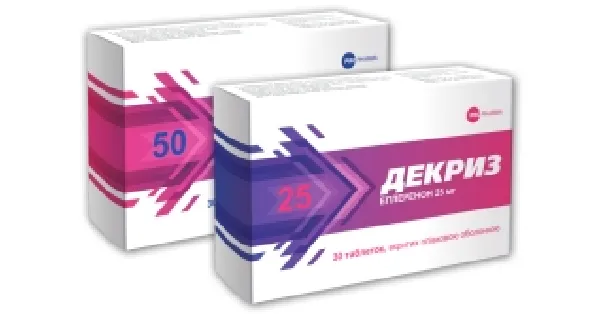
Table of Contents
INSTRUCTIONS FOR MEDICAL USE OF THE MEDICINAL PRODUCT DECRIS (DECRIS)
Composition:
Active substance: eplerenone;
1 tablet contains 25 mg or 50 mg of eplerenone;
Excipients: lactose monohydrate, microcrystalline cellulose, sodium croscarmellose, hypromellose, sodium lauryl sulfate, talc, magnesium stearate;
Tablet coating: hypromellose, macrogol 400, polysorbate 80, titanium dioxide (E 171), yellow iron oxide (E172), red iron oxide (E172).
Pharmaceutical form. Film-coated tablets.
Main physicochemical properties:
25 mg dosage: round, beige, biconvex film-coated tablets with the logo "25" on one side;
50 mg dosage: round, beige, biconvex film-coated tablets with the logo "50" on one side.
Pharmacotherapeutic group.
Potassium-sparing diuretics. Aldosterone antagonists. Eplerenone. ATC code C03D A04.
Pharmacological properties.
Pharmacodynamics.
Mechanism of action. Eplerenone has relative selectivity for binding to recombinant human mineralocorticoid receptors compared to its interaction with recombinant human glucocorticoid, progesterone, and androgen receptors. Eplerenone prevents receptor binding by aldosterone—a key hormone of the renin-angiotensin-aldosterone system involved in the regulation of blood pressure and implicated in the pathophysiological mechanisms of cardiovascular diseases.
Pharmacodynamic effects. Eplerenone has been shown to cause sustained increases in plasma renin levels and serum aldosterone levels, consistent with inhibition of the negative feedback pathway of aldosterone on renin secretion. However, this increase in plasma renin activity and serum aldosterone levels does not diminish the efficacy of eplerenone.
In dose-ranging studies in chronic heart failure (NYHA classes II–IV), adding eplerenone to standard therapy resulted in the expected dose-dependent increase in aldosterone levels. Similarly, in the EPHESUS ancillary cardiorenal study (Eplerenone Post-Acute Myocardial Infarction Heart Failure Efficacy and Survival Study), eplerenone treatment led to a significant increase in aldosterone levels. These findings confirm mineralocorticoid receptor blockade in this patient population.
Eplerenone was evaluated in the EPHESUS study. This was a 3-year, double-blind, placebo-controlled trial involving 6,632 subjects with acute myocardial infarction, left ventricular dysfunction (defined by left ventricular ejection fraction ≤ 40%) and clinical signs of heart failure. Within 3–14 days (median 7 days) after acute myocardial infarction, subjects received either eplerenone or placebo in addition to standard therapy, starting at an initial dose of 25 mg once daily. The dose was then gradually increased (over 4 weeks) to the target dose of 50 mg once daily, provided serum potassium levels remained below 5 mmol/L. Throughout the study, subjects received standard therapy, including acetylsalicylic acid (92%), ACE inhibitors (90%), β-blockers (83%), nitrates (72%), loop diuretics (66%), or HMG-CoA reductase inhibitors (60%).
The primary endpoints in the EPHESUS study were all-cause mortality and a composite endpoint (cardiovascular death or hospitalization due to cardiovascular events). 14.4% of subjects in the eplerenone group and 16.7% in the placebo group died (from any cause), while 26.7% in the eplerenone group and 30% in the placebo group met the criteria for the composite endpoint (cardiovascular death or hospitalization due to cardiovascular events). Thus, in the EPHESUS study, eplerenone reduced the risk of death from any cause by 15% (HR 0.85; 95% CI 0.75–0.96; p=0.008) compared to placebo, primarily due to a reduction in cardiovascular mortality. The risk of cardiovascular death or hospitalization due to cardiovascular events was reduced by 13% with eplerenone (HR 0.87; 95% CI 0.79–0.95, p=0.002). The absolute risk reduction was 2.3% for all-cause mortality and 3.3% for the composite endpoint of cardiovascular death or hospitalization. The clinical efficacy of eplerenone was primarily demonstrated in patients under 75 years of age. The benefit in subjects aged 75 years and older has not been sufficiently established. A statistically significant greater proportion of subjects receiving eplerenone showed improvement or stabilization in NYHA functional class compared to the placebo group. The incidence of hyperkalemia was 3.4% in the eplerenone group and 2% in the placebo group (p < 0.001). The incidence of hypokalemia was 0.5% in the eplerenone group and 1.5% in the placebo group (p < 0.001).
In a study involving 147 healthy volunteers to assess ECG changes during pharmacokinetic evaluations, no sustained effects of eplerenone on heart rate, QRS complex duration, or PR and QT intervals were observed.
The EMPHASIS-HF study (Eplerenone in Mild Patients Hospitalization and Survival Study in Heart Failure) evaluated the effect of eplerenone added to standard therapy on clinical outcomes in subjects with systolic heart failure and mild symptoms (NYHA functional class II).
The study included subjects aged 55 years and older, with left ventricular ejection fraction ≤ 30% or ≤ 35% if QRS duration was >130 milliseconds, and who had either been hospitalized for cardiovascular events within the preceding 6 months or had plasma B-type natriuretic peptide (BNP) levels ≥ 250 pg/mL or plasma N-terminal pro-BNP levels ≥ 500 pg/mL in men (750 pg/mL in women). The initial dose of eplerenone was 25 mg once daily. After 4 weeks, the dose was increased to 50 mg once daily, provided serum potassium levels remained below 5 mmol/L. Alternatively, if estimated glomerular filtration rate (eGFR) was 30–49 mL/min/1.73 m², the initial dose of eplerenone was 25 mg every 2 days, subsequently increased to 25 mg once daily.
A total of 2,737 subjects were randomized (double-blind) to receive eplerenone or placebo in addition to background therapy, including diuretics (85%), ACE inhibitors (78%), angiotensin receptor blockers type II (19%), β-blockers (87%), antiplatelet agents (88%), lipid-lowering agents (63%), and digitalis glycosides (27%). The mean left ventricular ejection fraction was ~26%, and mean QRS duration was ~122 ms. The majority of subjects (83.4%) had been hospitalized for cardiovascular events within the 6 months prior to randomization, approximately half of them due to heart failure. Approximately 20% of subjects had implanted defibrillators or were on cardiac resynchronization therapy.
The primary endpoint (cardiovascular death or hospitalization for heart failure) occurred in 249 subjects (18.3%) in the eplerenone group and 356 subjects (25.9%) in the placebo group (HR 0.63; 95% CI 0.54–0.74, p < 0.001). The effect of eplerenone on the primary endpoint was consistently observed across all predefined subgroups.
The secondary endpoint (all-cause mortality) occurred in 171 patients (12.5%) in the eplerenone group and 213 subjects (15.5%) in the placebo group (HR 0.76; 95% CI 0.62–0.93, p=0.008). Cardiovascular death occurred in 147 subjects (10.8%) in the eplerenone group and 185 subjects (13.5%) in the placebo group (HR 0.76; 95% CI 0.61–0.93, p=0.01).
During the study, hyperkalemia (serum potassium > 5.5 mmol/L) occurred in 158 subjects (11.8%) in the eplerenone group and 96 subjects (7.2%) in the placebo group (p < 0.001). Hypokalemia (serum potassium < 4 mmol/L) occurred significantly less frequently in the eplerenone group compared to placebo (38.9% vs. 48.4%, p < 0.0001).
Children. The use of eplerenone in children with heart failure has not been studied.
In a 10-week study involving children with hypertension (aged 4–16 years, n=304), eplerenone administered at doses of 25–100 mg daily, resulting in exposure similar to that in adults, did not demonstrate effective blood pressure reduction. In this study and in a 1-year safety study involving 149 children aged 5–17 years, the safety profile was similar to that observed in adults. The use of eplerenone in children under 4 years of age with hypertension has not been studied, as studies in older children showed lack of efficacy (see section "Dosage and administration").
No studies have been conducted on the long-term effects of eplerenone on hormonal status in children.
Pharmacokinetics.
Absorption. The absolute bioavailability of eplerenone after a 100 mg oral dose is 69%.
Maximum plasma concentration is reached approximately 1.5–2 hours after administration. Maximum plasma concentration (Cmax) and area under the pharmacokinetic curve (AUC) increase proportionally with dose in the range of 10–100 mg and less than proportionally at doses above 100 mg. Steady state is achieved within 2 days of starting treatment. Food does not affect drug absorption.
Distribution. Eplerenone is approximately 50% bound to plasma proteins, primarily to α-1-acid glycoproteins. The apparent volume of distribution at steady state is estimated to be 42–90 L. Eplerenone does not bind significantly to erythrocytes.
Biotransformation. Eplerenone metabolism is primarily mediated by the CYP3A4 enzyme. No active metabolites of eplerenone have been detected in human plasma.
Elimination. Less than 5% of the eplerenone dose is excreted unchanged in urine and feces. After oral administration of a single radiolabeled dose, approximately 32% of the dose was eliminated in feces and approximately 67% in urine. The elimination half-life of eplerenone is approximately 3–6 hours. Apparent plasma clearance is approximately 10 L/h.
Use in specific populations.
Age, gender, and race. Pharmacokinetic studies of eplerenone administered at 100 mg once daily were conducted in elderly subjects (≥65 years), male and female patients, and non-white race subjects. No significant differences in eplerenone pharmacokinetics were observed based on gender. In elderly subjects, steady-state Cmax was 22% higher and AUC was 45% higher compared to younger subjects (18–45 years). In non-white race subjects, steady-state Cmax was 19% lower and AUC was 26% lower (see section "Dosage and administration").
Children. Population pharmacokinetic modeling based on data from two studies involving 51 patients aged 4–16 years showed that body weight has a statistically significant effect on the volume of distribution of eplerenone, but not on its elimination. It is expected that the volume of distribution and peak exposure in children with higher body weight will be similar to those observed in adults with comparable body weight. In patients weighing 45 kg, the volume of distribution is approximately 40% lower, and peak exposure is expected to be higher than typically observed in adults. Children received an initial dose of eplerenone 25 mg once daily; after 2 weeks, the dose was increased to 25 mg twice daily, and if clinically indicated, to 50 mg twice daily. With these dosing regimens, peak eplerenone concentrations in children were not substantially higher than those observed in adults receiving an initial dose of 50 mg once daily.
Renal impairment. The pharmacokinetics of eplerenone were evaluated in patients with varying degrees of renal impairment and in patients on hemodialysis.
In patients with severe renal impairment, steady-state AUC and Cmax were increased by 38% and 24%, respectively, compared to the control group. In patients on hemodialysis, these values were decreased by 26% and 3%, respectively, compared to the control group. No correlation was observed between plasma eplerenone clearance and creatinine clearance. Eplerenone is not removed by hemodialysis (see section "Special precautions").
Hepatic impairment. The pharmacokinetics of eplerenone at a dose of 400 mg were studied in patients with moderate hepatic impairment (Child-Pugh class B) and compared to patients with normal liver function. Steady-state Cmax and AUC of eplerenone were increased by 3.6% and 42%, respectively (see section "Dosage and administration"). Since no studies have been conducted on the use of eplerenone in patients with severe hepatic impairment, its use in such patients is contraindicated (see section "Contraindications").
Heart failure. Pharmacokinetic studies of eplerenone administered at 50 mg were conducted in patients with heart failure (NYHA classes II–IV). Steady-state Cmax and AUC values in patients with heart failure were 38% and 30% higher, respectively, than in age-, body weight-, and gender-matched healthy volunteers. According to these findings, population pharmacokinetic analysis in a subgroup of patients from the EPHESUS study indicates that eplerenone clearance in patients with heart failure does not differ from that in elderly healthy volunteers.
Clinical characteristics.
Indications.
Adjunct to standard therapy with beta-blockers to reduce the risk of morbidity and mortality associated with cardiovascular disease in stable patients with left ventricular dysfunction (left ventricular ejection fraction ≤ 40%) and clinical signs of heart failure following a recent myocardial infarction.
Adjunct to standard optimal therapy to reduce the risk of morbidity and mortality associated with cardiovascular disease in adult patients with NYHA Class II (chronic) heart failure and left ventricular dysfunction (left ventricular ejection fraction ≤ 30%) (see section "Pharmacodynamics").
Contraindications.
Hypersensitivity to eplerenone or to any of the excipients of the medicinal product.
Patients with serum potassium levels > 5 mmol/L at the start of treatment.
Patients with severe renal impairment (estimated glomerular filtration rate < 30 mL/min/1.73 m²).
Severe hepatic impairment (Child-Pugh Class C).
Patients receiving potassium-sparing diuretics or strong CYP3A4 inhibitors (e.g., itraconazole, ketoconazole, ritonavir, nelfinavir, clarithromycin, telithromycin, and nefazodone) (see section "Interaction with other medicinal products and other forms of interaction").
Concomitant use of eplerenone in triple combination with an ACE inhibitor and an angiotensin receptor blocker.
Interaction with other medicinal products and other forms of interaction.
Pharmacodynamic interactions.
Potassium-sparing diuretics and potassium supplements. Eplerenone should not be administered to patients receiving other potassium-sparing diuretics or potassium supplements due to increased risk of hyperkalemia (see section "Contraindications"). Potassium-sparing diuretics may also enhance the antihypertensive effect and the effect of other diuretics.
ACE inhibitors, angiotensin receptor blockers. The risk of hyperkalemia may be increased when eplerenone is used in combination with an ACE inhibitor and/or an angiotensin receptor blocker. Careful monitoring of serum potassium levels and renal function is recommended, especially in patients at risk of impaired renal function, such as elderly patients. Eplerenone should not be used concomitantly in triple combination with an ACE inhibitor and an angiotensin receptor blocker (see sections "Contraindications" and "Special precautions for use").
Lithium. Studies on the interaction between eplerenone and lithium have not been conducted. However, cases of lithium toxicity have been reported in patients receiving lithium concomitantly with ACE inhibitors and diuretics (see section "Special precautions for use"). Concomitant use of eplerenone and lithium-containing medications should be avoided. If concomitant use cannot be avoided, plasma lithium levels should be monitored (see section "Special precautions for use").
Cyclosporine, tacrolimus. Cyclosporine and tacrolimus may cause renal dysfunction and increase the risk of hyperkalemia. Concomitant use of eplerenone with cyclosporine or tacrolimus should be avoided. If cyclosporine or tacrolimus must be administered during eplerenone therapy, careful monitoring of serum potassium levels is recommended (see section "Special precautions for use").
Nonsteroidal anti-inflammatory drugs (NSAIDs). Due to their direct effect on glomerular filtration, NSAID therapy may lead to acute renal failure, especially in patients at high risk (elderly age and/or dehydration). Patients receiving eplerenone and NSAIDs should be adequately hydrated before initiating treatment, and their renal function should be monitored.
Trimethoprim. Concomitant administration of trimethoprim and eplerenone increases the risk of hyperkalemia. Serum potassium levels and renal function should be monitored, especially in elderly patients and patients with impaired renal function.
α1-Blockers (e.g., prazosin, alfuzosin). Combination of α1-blockers with eplerenone may enhance antihypertensive effects and/or lead to orthostatic hypotension.
When α1-blockers are used concomitantly, patients should be monitored for signs of orthostatic hypotension.
Tricyclic antidepressants, neuroleptics, amifostine, baclofen. Concomitant use of these medicinal products with eplerenone may potentially enhance hypotensive effects and increase the risk of orthostatic hypotension.
Glucocorticoids, tetracosactide. Concomitant use of these medicinal products with eplerenone may potentially reduce antihypertensive efficacy due to fluid and sodium retention.
Pharmacokinetic interactions.
In vitro studies indicate that eplerenone is not an inhibitor of the CYP1A2, CYP2C19, CYP2C9, CYP2D6, or CYP3A4 isoenzymes. Eplerenone is neither a substrate nor an inhibitor of P-glycoprotein.
Digoxin. Systemic exposure (AUC) to digoxin increases by 16% (90% CI: 4–30%) when administered concomitantly with eplerenone. Digoxin should be prescribed with caution when doses are near the upper limit of the therapeutic range.
Warfarin. No clinically significant pharmacokinetic interactions with warfarin have been reported. Warfarin should be prescribed with caution when doses are near the upper limit of the therapeutic range.
CYP3A4 substrates. Pharmacokinetic studies using probe substrates of CYP3A4 (i.e., midazolam and cisapride) did not reveal evidence of significant pharmacokinetic interactions when these drugs were administered concomitantly with eplerenone.
CYP3A4 inhibitors. Strong CYP3A4 inhibitors: concomitant use of eplerenone with drugs that inhibit CYP3A4 enzyme activity may lead to significant pharmacokinetic interactions. Under the influence of a strong CYP3A4 inhibitor (ketoconazole 200 mg twice daily), the AUC of eplerenone increased by 441% (see section "Contraindications"). Concomitant use of eplerenone with strong CYP3A4 inhibitors (ketoconazole, itraconazole, ritonavir, nelfinavir, clarithromycin, telithromycin, and nefazodone) is contraindicated (see section "Contraindications").
Weak and moderate CYP3A4 inhibitors. Concomitant use with erythromycin, saquinavir, amiodarone, diltiazem, verapamil, and fluconazole resulted in significant pharmacokinetic interactions, increasing AUC levels by 98–187%. Therefore, when eplerenone is used concomitantly with weak or moderate CYP3A4 inhibitors, the dose of eplerenone should not exceed 25 mg once daily (see section "Dosage and administration").
CYP3A4 inducers. Concomitant use of eplerenone with St. John’s wort (a strong CYP3A4 inducer) resulted in a 30% reduction in eplerenone AUC. Use of stronger CYP3A4 inducers (such as rifampicin) may lead to a more pronounced reduction in eplerenone AUC. Due to the risk of reduced efficacy of eplerenone, concomitant use with strong CYP3A4 inducers (rifampicin, carbamazepine, phenytoin, phenobarbital, St. John’s wort) is not recommended (see section "Special precautions for use").
Antacids. Based on results of clinical pharmacokinetic studies, significant interactions are not expected when eplerenone is administered concomitantly with antacids.
Special precautions for use.
Hyperkalemia. During treatment with eplerenone, hyperkalemia may occur due to its mechanism of action. Serum potassium levels should be monitored in all patients at the beginning of treatment and following any dose adjustment. Periodic monitoring is subsequently recommended, particularly in patients at increased risk of hyperkalemia (such as elderly patients, patients with renal impairment (see section "Dosage and administration") and diabetes). Potassium-containing supplements are not recommended after initiation of eplerenone due to the increased risk of hyperkalemia. It has been demonstrated that reducing the dose of eplerenone leads to a decrease in serum potassium concentration. In one study, the additional use of hydrochlorothiazide during eplerenone treatment counterbalanced the increase in serum potassium concentration.
When eplerenone is used in combination with an ACE inhibitor and/or angiotensin receptor blocker, the risk of hyperkalemia may be increased.
Eplerenone must not be used concomitantly in triple combination with an ACE inhibitor and an angiotensin receptor blocker (see sections "Contraindications" and "Interaction with other medicinal products and other forms of interaction").
Renal function impairment. In patients with impaired renal function (including those with diabetic microalbuminuria), serum potassium levels should be monitored regularly. Reduced renal function is associated with an increased risk of hyperkalemia. Although data from the EPHESUS study in patients with type 2 diabetes and microalbuminuria are limited, an increased incidence of hyperkalemia was observed in this small patient group. Therefore, treatment of such patients should be undertaken with caution. Eplerenone is not removed by hemodialysis.
Hepatic function impairment. In patients with mild to moderate hepatic impairment (Child-Pugh classes A and B), serum potassium levels exceeding 5.5 mmol/L were not observed. These patients require monitoring of electrolyte levels. The use of eplerenone in patients with severe hepatic impairment has not been studied; therefore, eplerenone is contraindicated in such patients (see sections "Dosage and administration" and "Contraindications").
Inducers of CYP3A4. Concomitant use of eplerenone and strong inducers of CYP3A4 is not recommended (see section "Interaction with other medicinal products and other forms of interaction").
Concomitant use of lithium, cyclosporine, tacrolimus should be avoided during treatment with eplerenone (see section "Interaction with other medicinal products and other forms of interaction").
Fertility. There is no information available on the effect of eplerenone on human fertility.
Lactose: The medicinal product contains lactose; therefore, it should not be administered to patients with rare hereditary problems of galactose intolerance, Lapp lactase deficiency, or glucose-galactose malabsorption.
Use during pregnancy or breastfeeding.
Pregnancy. There are no adequate data on the use of eplerenone in pregnant women. Animal studies have not indicated any direct or indirect adverse effects on pregnancy, embryonic and fetal development, parturition, or postnatal development. Eplerenone should be used during pregnancy only with caution.
Breastfeeding. It is not known whether eplerenone passes into human breast milk after oral administration. However, preclinical data indicate the presence of eplerenone and/or its metabolites in the milk of rats and normal development of offspring exposed via this route. Since the potential for adverse effects in breastfed infants has not been studied, a clinical decision should be made whether to discontinue breastfeeding or to discontinue/abstain from eplerenone therapy, taking into account the importance of the drug for the mother.
Ability to influence the speed of reactions when driving or operating machinery.
Studies on the effect of eplerenone on the ability to drive or operate machinery have not been conducted. Eplerenone does not cause drowsiness or impair cognitive function; however, when driving or operating machinery, the possibility of dizziness during treatment with the drug should be taken into account.
Method of administration and dosage.
Adults.
The drug is available in 25 mg and 50 mg dosages to allow individual dose titration. The maximum daily dose is 50 mg.
Eplerenone may be taken with or without food (see section "Pharmacokinetics").
Patients with heart failure following myocardial infarction.
The recommended maintenance dose of eplerenone is 50 mg once daily. Treatment should be initiated at a dose of 25 mg once daily and gradually increased to the target dose of 50 mg once daily. This dose level should preferably be reached within 4 weeks, taking into account serum potassium levels (see table below). Eplerenone therapy is usually initiated 3–14 days after acute myocardial infarction.
Patients with NYHA Class II (chronic) heart failure.
Treatment of patients with chronic heart failure of NYHA Class II should be initiated at a dose of 25 mg once daily and gradually increased to the target dose of 50 mg once daily. This dose level should preferably be achieved within 4 weeks, considering serum potassium levels (see table below and section "Special warnings and precautions for use").
Eplerenone treatment should not be initiated in patients with serum potassium levels exceeding 5 mmol/L (see section "Contraindications").
Serum potassium levels should be measured before starting eplerenone treatment, during the first week of treatment, and one month after initiation or dose adjustment. Serum potassium levels should be monitored periodically during treatment as clinically indicated.
After initiation of treatment, the drug dosage should be adjusted according to serum potassium concentration as specified in the table below.
Dosage adjustment after initiation of treatment
| Serum potassium concentration (mmol/L) |
Action |
Dose adjustment |
| < 5.0 |
Increased |
From 25 mg once every 2 days to 25 mg once daily |
| 5.0–5.4 |
No change |
No dose adjustment required |
| 5.5–5.9 |
Decreased |
From 50 mg once daily to 25 mg once daily |
| ≥ 6.0 |
Temporary discontinuation |
- |
After temporary discontinuation of eplerenone due to an increase in potassium levels to ≥ 6 mmol/L, treatment may be resumed at a dose of 25 mg once every 2 days once potassium concentration decreases below 5 mmol/L.
Elderly patients
There is no need for adjustment of the initial dose in elderly patients. However, due to age-related decline in renal function, the risk of developing hyperkalemia is increased in elderly patients. The risk may be further increased in the presence of concomitant conditions associated with elevated systemic exposure to the drug, such as mild to moderate hepatic impairment. Periodic monitoring of serum potassium levels is recommended (see section "Special warnings and precautions for use").
Renal impairment
Patients with mild renal impairment do not require adjustment of the initial dose. Periodic monitoring of serum potassium levels is recommended, and dosage should be adjusted according to the table above.
For patients with moderate renal impairment (creatinine clearance 30–60 mL/min), treatment should be initiated at a dose of 25 mg once every 2 days, with subsequent dose adjustments based on potassium concentration (see table above). Periodic monitoring of serum potassium levels is recommended (see section "Special warnings and precautions for use").
There is no experience with the use of eplerenone in patients with creatinine clearance < 50 mL/min and heart failure following myocardial infarction. Eplerenone should be used with caution in such patients.
The use of doses exceeding 25 mg daily has not been studied in patients with creatinine clearance < 50 mL/min.
Eplerenone is contraindicated in patients with severe renal impairment (creatinine clearance < 30 mL/min) (see section "Contraindications"). Eplerenone is not removed from the body by dialysis.
Hepatic impairment
Patients with mild or moderate hepatic impairment do not require adjustment of the initial dose; however, due to increased systemic exposure to eplerenone, more frequent and regular monitoring of serum potassium concentration is recommended in these patients, particularly in elderly patients (see section "Special warnings and precautions for use").
Combination therapy
When eplerenone is used concomitantly with weak or moderate CYP3A4 inhibitors (e.g., amiodarone, diltiazem, verapamil), treatment may be initiated at the initial dose of 25 mg once daily. The dose should not exceed 25 mg once daily (see section "Interaction with other medicinal products and other forms of interaction").
Children
The safety and efficacy of eplerenone in children have not been established. Available information is currently presented in the sections "Pharmacodynamics" and "Pharmacokinetics".
Overdose
There have been no reports of adverse reactions associated with eplerenone overdose in humans. The most likely manifestations of eplerenone overdose in humans are expected to be hypotension or hyperkalemia. Eplerenone cannot be removed from the body by hemodialysis. Eplerenone has been shown to bind effectively to activated charcoal. In cases of hypotension, supportive treatment should be initiated. In cases of hyperkalemia, treatment should be initiated according to standard guidelines.
Adverse Reactions
In two studies (EPHESUS and EMPHASIS-HF), it has been demonstrated that the overall incidence of adverse reactions with eplerenone was similar to that with placebo.
Below are listed adverse reactions that may be related to eplerenone use, which occurred more frequently during treatment than with placebo, serious adverse reactions that occurred more frequently during treatment than with placebo, or those reported during post-marketing surveillance.
Adverse reactions are classified by organ systems and absolute frequency: very common (≥ 1/10), common (≥ 1/100 to < 1/10), uncommon (≥ 1/1,000 to < 1/100), rare (≥ 1/10,000 to < 1/1,000), very rare (< 1/10,000), frequency not known (cannot be estimated from available data).
Infections and infestations.
Uncommon: infections, pyelonephritis, pharyngitis.
Blood and lymphatic system disorders.
Uncommon: eosinophilia.
Endocrine disorders.
Uncommon: hypothyroidism.
Metabolism and nutrition disorders.
Common: hyperkalaemia (see sections "Contraindications" and "Special warnings and precautions for use"), hypercholesterolaemia;
Uncommon: hyponatraemia, dehydration, hypertriglyceridaemia.
Psychiatric disorders.
Common: insomnia.
Nervous system disorders.
Common: dizziness, syncope, headache;
Uncommon: paraesthesia.
Cardiac disorders.
Common: left ventricular dysfunction, atrial fibrillation;
Uncommon: tachycardia.
Vascular disorders.
Common: hypotension;
Uncommon: arterial thrombosis of limbs, orthostatic hypotension.
Respiratory, thoracic and mediastinal disorders.
Common: cough.
Gastrointestinal disorders.
Common: diarrhoea, nausea, constipation, vomiting;
Uncommon: abdominal distension.
Skin and subcutaneous tissue disorders.
Common: rash, pruritus;
Uncommon: hyperhidrosis, angioneurotic oedema.
Musculoskeletal and connective tissue disorders.
Common: muscle spasms, back pain;
Uncommon: musculoskeletal pain.
Renal and urinary disorders.
Common: renal function impairment (see sections "Interactions with other medicinal products and other forms of interactions" and "Special warnings and precautions for use").
Hepatobiliary disorders.
Uncommon: cholecystitis.
Reproductive system and breast disorders.
Uncommon: gynaecomastia.
General disorders and administration site conditions.
Common: asthenia;
Uncommon: malaise.
Investigations.
Common: increased blood urea; increased creatinine levels;
Uncommon: decreased epidermal growth factor receptor count, increased blood glucose levels.
In the EPHESUS study, a numerically higher number of stroke cases was observed in the group of patients aged ≥ 75 years. However, there was no statistically significant difference in the frequency of stroke between the eplerenone group and the placebo group.
Shelf life. 3 years.
Storage conditions.
Store in the original packaging at a temperature not exceeding 25 °C.
Keep out of the reach of children.
Packaging.
10 tablets in a blister pack, 3 blisters in a cardboard box.
Prescription category. Prescription only.
Manufacturer.
Adamed Pharma S.A.
Manufacturer's address and place of business.
ul. Marszałka J. Piłsudskiego 5, 95-200 Pabianice, Poland.