Botox® complex of botulinum toxin type a (from clostridium botulinum)
Ukraine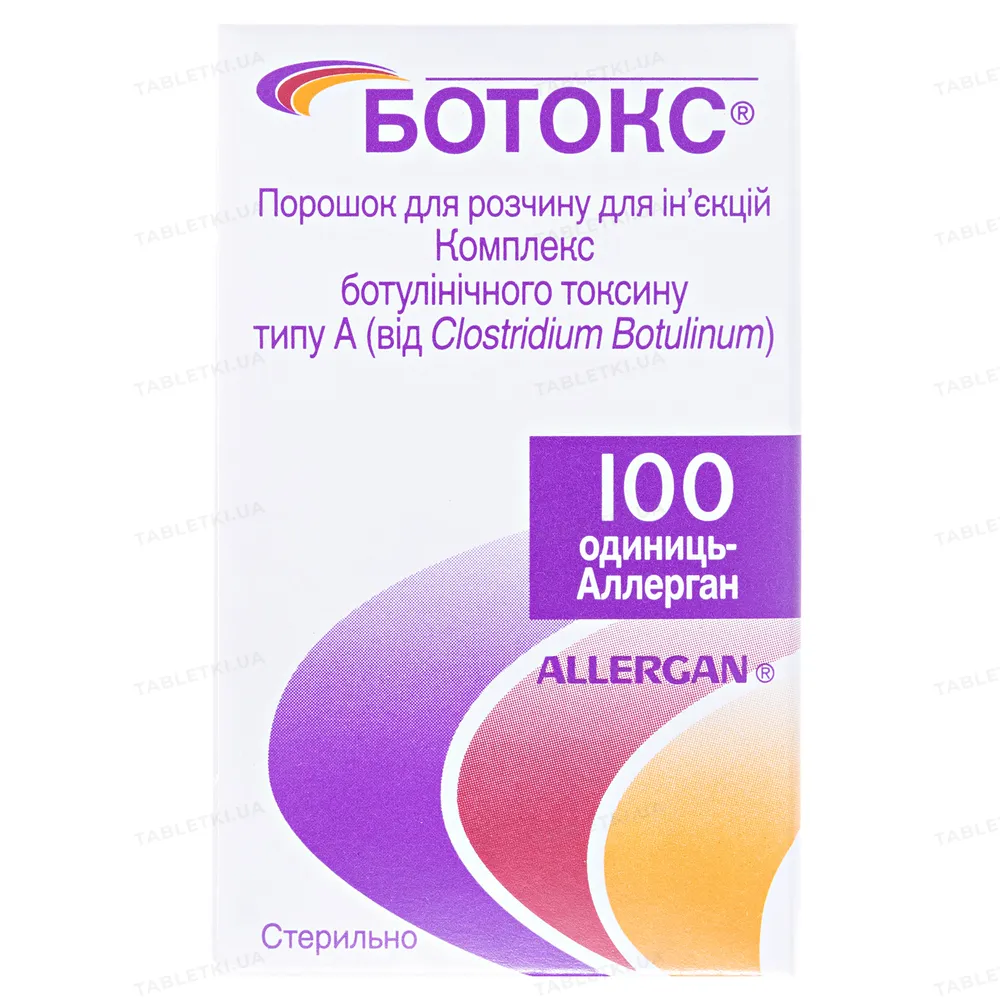
Table of Contents
INSTRUCTIONS for medical use of the medicinal product BOTOX® Botulinum Toxin Complex Type A (from Clostridium botulinum) BOTOX® Complex of Botulinum Toxin Type A (from Clostridium botulinum)
Composition:
Active substance: botulinum toxin type A (from Clostridium botulinum);
1 vial contains botulinum toxin type A (from Clostridium botulinum) 100 or 200 Allergan units;
Excipients: human albumin, sodium chloride.
Pharmaceutical form. Powder for solution for injection.
Main physicochemical properties: white powder appearing as a thin layer of white sediment at the bottom of the vial, which may be difficult to see.
Pharmacotherapeutic group. Peripheral-acting muscle relaxants. Botulinum toxin.
ATC code: M03AX01.
Pharmacological properties.
Pharmacodynamics.
Mechanism of action
Botulinum toxin type A blocks peripheral acetylcholine release at presynaptic cholinergic nerve endings by cleaving SNAP-25, an essential component for vesicle docking and acetylcholine release from nerve terminals.
Pharmacodynamic effect
Following injection, the toxin initially binds rapidly to surface receptors on specific cells. This is followed by translocation of the toxin across the plasma membrane via receptor-mediated endocytosis. The toxin is then released into the cytosol. This process leads to a gradual reduction in acetylcholine release, with clinical effects appearing within 2–3 days and maximal effect observed 5–6 weeks after injection. Clinical data indicate that BOTOX® reduces pain and neurogenic inflammation, and increases the cutaneous thermal pain threshold in a capsaicin-induced triple sensitization study.
Recovery after intramuscular injection occurs over 12 weeks as nerve endings regenerate and re-establish connections with the endplate. After subcutaneous injection targeting axillary sweat glands, in patients who received 50 Allergan units per axilla, the effect lasted on average 7.5 months after the first injection. However, in 27.5% of patients, the effect lasted for 1 year or longer.
Reinnervation of sympathetic nerve endings innervating sweat glands after subcutaneous injection has not been studied.
Following intradetrusor injection, BOTOX® acts on efferent pathways of detrusor activity by inhibiting acetylcholine release. BOTOX® may also inhibit afferent neurotransmitters and sensory pathways.
Clinical efficacy and safety
NEUROLOGICAL DISORDERS
Focal spasticity of upper limbs in children
The efficacy and safety of BOTOX® for the treatment of upper limb spasticity in children aged 2 years and older were evaluated in a randomized, multicenter, double-blind, placebo-controlled study. The study included 234 pediatric patients (77 patients in the BOTOX® 6 Allergan units/kg group, 78 patients in the BOTOX® 3 Allergan units/kg group, and 79 patients in the placebo group) with upper limb spasticity due to cerebral palsy (87%) or post-stroke (13%), and a baseline score of at least 2 on the MAS scale for elbow or wrist muscle spasticity. Total doses of 3 Allergan units/kg (not exceeding 100 Allergan units) or 6 Allergan units/kg (not exceeding 200 Allergan units), or placebo, were administered intramuscularly and distributed among elbow or wrist and finger muscles. All patients received standardized physiotherapy. Use of electromyographic needle guidance, nerve stimulation, or ultrasound techniques was required to ensure accurate muscle localization for injections. The primary endpoint was the mean change from baseline in the MAS score of the primary muscle group (elbow or wrist muscles) at weeks 4 and 6; a key secondary endpoint was the CGI score at weeks 4 and 6. Physician-rated GAS scores for active and passive goals were assessed as secondary endpoints at weeks 8 and 12. Pain was assessed using the Faces Pain Scale (FPS) in a subgroup of patients: FPS pain scores were recorded on Day 1 for patients aged 4 years and older. Patients who reported no pain (pain score = 0) on Day 1 were not required to answer this question during subsequent visits. Overall, 40 patients reported an FPS score > 0 at baseline: 11 participants in the BOTOX® 6 Allergan units/kg group, 11 patients in the BOTOX® 3 Allergan units/kg group, and 18 patients in the placebo group. Patients were followed for 12 weeks.
Eligible patients could enter an open-label extension study, in which they received up to five treatment sessions with doses up to 10 Allergan units/kg (not exceeding 340 Allergan units), with simultaneous administration into lower and upper limbs.
Statistically significant improvement compared to placebo was observed in patients receiving BOTOX® at 3 and 6 Allergan units/kg for the primary endpoint and all secondary endpoints over 12 weeks. Improvement in MAS scores was similar in both BOTOX® treatment groups. However, the difference between treatment groups and placebo never exceeded 1 point on the MAS scale (see Table 1). Treatment response rates, based on responder analysis, ranged approximately between 10–20%.
Table 1
Efficacy results in primary and secondary endpoints
| Mean change from baseline in the primary muscle group (elbow or wrist muscles) on the MASa scale |
BOTOX® 3 units-Allergan/kg (N = 78) |
BOTOX® 6 units-Allergan/kg (N = 77) |
Placebo (N = 79) |
| Mean score at Weeks 4 and 6 |
-1.92* |
-1.87* |
-1.21 |
| Mean change from baseline in muscle – finger flexors on the MASa scale |
|||
| Mean score at Weeks 4 and 6 |
-1.46 |
-1.41 |
-1.02 |
| Mean score on the CGIb scale |
|||
| Mean score at Weeks 4 and 6 |
1.88 |
1.87 |
1.66 |
| Mean score on the GASc scale |
|||
| Passive goals at Week 8 |
0.23 |
0.30 |
0.06 |
| Passive goals at Week 12 |
0.31 |
0.71* |
0.11 |
| Active goals at Week 8 |
0.12 |
0.11 |
0.21 |
| Active goals at Week 12 |
0.26 |
0.49 |
0.52 |
| Mean change from baseline on the FPSg scale |
N = 11 |
N = 11 |
N = 18 |
| Week 4 |
-4.91 |
-3.17 |
-3.55 |
| Week 6 |
-3.12 |
-2.53 |
-3.27 |
* Statistically significantly different from placebo (p < 0.05).
a MAS (Modified Ashworth Scale) – a 6-point scale (0 [no increase in muscle tone], 1, 1+, 2, 3, and 4 [limb poorly flexes or extends]), used to measure the force required to move a limb around a joint, with lower scores indicating improvement in spasticity.
b CGI (Clinician Global Impression of Change) – assessment of treatment response from the perspective of how the patient feels in daily life, using a 9-point scale (from -4 – very marked worsening to +4 – very marked improvement).
c GAS (Goal Attainment Scaling) – a 6-point scale (-3 [worse than baseline], -2 [same as baseline], -1 [less than expected], 0 [expected goal], +1 [somewhat better than expected], +2 [much better than expected]).
d Pain was assessed in participants aged over 4 years using a pain score > 0 at baseline, based on the Faces Pain Scale (FPS: from 0 – no pain to 10 – very severe pain).
Lower limb focal spasticity in children
The efficacy and safety of BOTOX® for the treatment of lower limb spasticity in children aged 2 years and older were evaluated in a randomized, multicenter, double-blind, placebo-controlled study. A total of 384 pediatric patients participated in the study (128 patients in the BOTOX® 8 units-Allergan/kg group, 126 patients in the BOTOX® 4 units-Allergan/kg group, and 128 patients in the placebo group) with lower limb spasticity due to cerebral palsy and ankle muscle spasticity of at least 2 points. Total doses of 4 units-Allergan/kg (up to a maximum of 150 units-Allergan), 8 units-Allergan/kg (up to a maximum of 300 units-Allergan), or placebo were administered intramuscularly and distributed among the gastrocnemius, soleus, and tibialis posterior muscles. All patients received standardized physical therapy. Use of electromyographic needle guidance, nerve stimulation, or ultrasound techniques was required to assist in accurate muscle localization for injections. The primary endpoint was the mean change from baseline in ankle muscle rating at weeks 4 and 6, and the key secondary endpoint was the CGIb score at weeks 4 and 6. Physician-rated GASc scores for active and passive functional goals were assessed as a secondary endpoint at weeks 8 and 12. Gait was evaluated using the EVGg scale at weeks 8 and 12 in a subgroup (total of 65 patients: 26 patients receiving BOTOX® 8 units-Allergan/kg, 21 patients receiving BOTOX® 4 units-Allergan/kg, and 18 patients receiving placebo). Patients were followed for 12 weeks.
Patients who met eligibility criteria could enter an open-label extension study, in which they received up to five treatment cycles with doses of up to 10 units-Allergan/kg (maximum 340 units-Allergan), if the drug was administered into more than one limb.
Statistically significant improvement compared to placebo was observed in patients receiving BOTOX® at 4 and 8 units-Allergan/kg for the primary endpoint and for all endpoints over 12 weeks. Improvement in MASa scores was similar in both BOTOX® treatment groups. However, the difference between the treatment groups and placebo never exceeded 1 point on the MAS scale (see Table 2). Treatment effect, based on responder analysis, was less than 15% at all endpoints.
Table 2
Efficacy results in primary and secondary endpoints
| Parameter |
BOTOX® 4 units-Allergan/kg (N = 125) |
BOTOX® 8 units-Allergan/kg (N = 127) |
Placebo (N = 129) |
| Mean change from baseline in plantar flexors muscle group on the MASa scale |
|||
| Mean score at Weeks 4 and 6 |
-1.01* |
-1.06* |
-0.80 |
| Mean score on the CGIb scale |
|||
| Mean score at Weeks 4 and 6 |
1.49 |
1.65* |
1.36 |
| Mean score on the GASv scale |
|||
| Passive goals at Week 8 |
0.18* |
0.19* |
-0.26 |
| Passive goals at Week 12 |
0.27 |
0.40* |
0.00 |
| Active goals at Week 8 |
-0.03* |
0.10* |
-0.31 |
| Active goals at Week 12 |
0.09 |
0.37* |
-0.12 |
| Mean change from baseline on the EVGg scale |
|||
| Week 8 |
-2.11 |
-3.12* |
-0.86 |
| Week 12 |
-2.07 |
-2.57 |
-1.68 |
* Statistically significantly different from placebo (p < 0.05).
a MAS – a 6-point scale (0 [no increase in muscle tone], 1, 1+, 2, 3, and 4 [limb poorly bends or extends]), according to which the force required to move the limb around the joint is measured, with lower scores indicating improvement in spasticity.
b CGI – assessment of treatment response from the patient's perspective regarding their daily functioning, using a 9-point scale (from -4 – very marked worsening to +4 – very marked improvement).
c GAS – a 6-point scale (-3 [worse than baseline], -2 [same as baseline], -1 [less than expected], 0 [expected goal], +1 [somewhat better than expected], +2 [much better than expected]).
d EVG – Edinburgh Visual Gait Score. An 11-item scale assessing gait based on foot placement (5 items), knee stability (2 items), leg swing (2 items), and knee movements (2 items). The scale has three rating levels: (0 [normal], 1 [mild flexion or extension grade 1], and 2 [moderate flexion or extension grade 2]) for each item, respectively.
In pediatric patients with lower limb spasticity, based on analyzed data from one Phase 3 study and an open-label extension study, neutralizing antibodies developed in 2 out of 264 patients (0.8%) who received BOTOX® over 5 treatment cycles. In both patients, clinical benefit continued to be observed with further administration of BOTOX®.
Upper limb focal spasticity in adult patients
The efficacy and safety of BOTOX® for the treatment of upper limb spasticity in adults were evaluated in four randomized, multicenter, double-blind, placebo-controlled studies.
Study 1 included 126 adult patients (64 received BOTOX® and 62 received placebo) with upper limb spasticity (Ashworth Scale scores of at least 3 for wrist flexor tone and at least 2 for finger flexor tone) who had experienced a stroke at least 6 months prior. BOTOX® (total dose ranging from 200 Allergan units to 240 Allergan units) or placebo was administered intramuscularly into the flexor digitorum profundus, flexor digitorum sublimis, flexor carpi radialis, flexor carpi ulnaris muscles, and, if necessary, into the adductor pollicis and flexor pollicis longus muscles.
Results from Study 1 for the primary endpoint and key secondary endpoints are presented in Table 3.
Table 3
Results of primary and secondary efficacy endpoints at Week 6 of Study 1
| Parameters |
BOTOX® 200–240 Allergan units (number of patients 64) |
Placebo (number of patients 62) |
| Mean change in wrist flexor muscle tone from baseline on the Ashworth scalea |
-1.7* |
-0.5 |
| Mean change in treatment response on the PGA scaleb |
1.8* |
0.6 |
| Mean change in finger flexor muscle tone from baseline on the Ashworth scalea |
-1.3* |
-0.5 |
| Mean change in thumb flexor muscle tone from baseline on the Ashworth scalea |
-1.7* |
-0.5 |
* Significantly different from placebo (p < 0.05).
a The Ashworth Scale is a 5-point scale (0 [no increased muscle tone], 1, 2, 3, and 4 [limb rigid in flexion or extension]), measuring the force required to move a limb at a joint, where a decrease in score indicates improvement in spasticity.
b Physician Global Assessment (PGA) evaluates treatment response based on how the patient felt under usual life conditions, on a scale from -4 [marked worsening] to +4 [marked improvement].
Study 2 included 124 adult patients with upper limb spasticity following stroke, who received either 400 Allergan units of BOTOX® (240 Allergan units to wrist, finger, and thumb flexors and 160 Allergan units to elbow flexors; n=61), or 240 Allergan units of BOTOX® (to wrist, finger, and thumb flexors and placebo to elbow flexors; n=63). Patients were observed for 12 weeks, followed by an open-label phase during which patients could receive up to 3 additional treatments with 400 Allergan units of BOTOX®, administered at intervals of no less than 12 weeks, distributed among finger flexors, thumb flexors, wrist flexors, or elbow flexors, pronator teres muscle, or adductor muscles/internal rotator muscles of the shoulder.
The primary efficacy results for elbow flexors are presented below.
Table 4
Efficacy Results for Elbow Flexors at Week 6 of Study 2
| Parameters |
BOTOX® 400 units-Allergan (160 units-Allergan in elbow) (number of patients 61) |
BOTOX® 240 units-Allergan (placebo in elbow) (number of patients 63) |
| Response rate to elbow flexor treatment according to MAS scale |
68.9 %* |
50.8 % |
| Mean change in elbow flexor muscle tone according to MAS scale from baselineb |
-1.1** |
-0.7 |
| Mean CGI scale score, physician assessmentc |
1.5 |
1.4 |
| Response rate according to CGI scale, physician assessmentd |
82.0 % |
79.4 % |
| Mean CGI scale score, patient assessmentc |
1.2 |
1.3 |
| Mean change in elbow pain level according to NRS scale from baselined |
-0.9 |
-0.6 |
| Mean change in limb position according to DAS scale from baselinee |
-0.6 |
-0.2 |
* Difference of 240 units-Allegan = 18.1%; 95% confidence interval from 1.1 to 35.0.
** Nominal p-value < 0.05.
a Proportion of patients with an improvement of ≥ 1 on the Modified Ashworth Scale (MAS).
b MAS (Modified Ashworth Scale) is a 6-point scale (0 [no increase in muscle tone], 1, 1+, 2, 3, and 4 [limb rigid in flexion or extension]) used to measure the amount of force required to move a limb at a joint, with lower scores indicating reduced spasticity.
c CGI (Clinical Global Impression of Overall Change)—an assessment of treatment response from the perspective of how the patient feels in daily life—performed by the physician or patient using a 9-point scale ranging from -4 (marked worsening) to +4 (marked improvement).
d Proportion of patients with a score of ≥ +1 on the CGI scale.
e Elbow pain intensity was assessed on a scale from 0 to 10, where 0 meant "no pain" and 10 meant "pain as intense as can be imagined."
f DAS (Disability Assessment Scale) is a 4-point scale from 0 to 3, where 0 indicates no disability and 3 indicates severe disability.
Overall, 84 patients from Study 2 received open-label treatment with BOTOX® in the adductor/internal rotator muscles of the shoulder. The efficacy results at Week 6 on the MAS in shoulder muscles are presented in Table 5.
Table 5
Efficacy results for the shoulder at Week 6 of open-label treatment cycles in Study 2
| Parameters |
Open-label cycle 1 (number of patients 72) |
Open-label cycle 2 (number of patients 76) |
Open-label cycle 3 (number of patients 56) |
| Mean baseline muscle tone of the shoulder according to the MAS scale |
3.4 |
3.3 |
3.2 |
| Mean change in shoulder muscle tone according to the MAS scale from baseline |
-0.7 |
-0.6 |
-0.5 |
The study 3 included 53 adult patients with upper limb spasticity following stroke. A standardized treatment approach was applied to the patients – one fixed dose to specific muscles with BOTOX® 300 units-Allergan (150 units-Allergan to the elbow; 150 units-Allergan to the shoulder), BOTOX® 500 units-Allergan (250 units-Allergan to the elbow; 250 units-Allergan to the shoulder), or placebo, distributed among the muscles of the elbow and shoulder of one limb.
The primary efficacy results are shown in Table 6.
Table 6
Efficacy results for the elbow and shoulder at Week 6 of Study 3
| Parameters |
BOTOX® 300 units-Allergan (number of patients 18) |
BOTOX® 500 units-Allergan (number of patients 17) |
Placebo (number of patients 18) |
| Mean change in elbow muscle tone on MAS scale from baseline |
-1.47 |
-1.62* |
-0.74 |
| Response rate of elbow flexor on MAS scale |
72.2% |
75.0% |
47.1% |
| Mean change in shoulder muscle tone on MAS scale from baseline |
-1.4 |
-1.6 |
-1.4 |
| Mean CGI score for shoulder only, physician assessment |
1.22 |
1.21 |
1.04 |
| Mean CGI score, physician assessment |
1.31 |
1.21 |
0.94 |
* Significantly different from placebo (p < 0.05).
a Proportion of patients with an improvement of ≥ 1 point on the modified Ashworth Scale (MAS).
b Physician-rated, shoulder-specific CGI (Clinical Global Impression of Overall Change – assessment of overall clinical improvement in shoulder joint function) on a scale from -4 (marked worsening) to +4 (marked improvement).
c CGI scale (Clinical Global Impression of Overall Change – assessment of treatment response from the patient's perspective regarding their daily functioning), evaluating overall improvement on a scale from -4 (marked worsening) to +4 (marked improvement).
Study 4 included a subgroup of 26 adult post-stroke patients with upper limb spasticity who received up to 2 treatments with BOTOX® in up to 3 affected shoulder muscles (pectoralis major with or without teres major and latissimus dorsi). The primary efficacy results are presented in Table 7.
Table 7
Efficacy results for the shoulder at Week 10 after the 2nd injection or at Week 24 in Study 4
| Parameters |
BOTOX® |
Placebo |
| Mean change in muscle tone on the REPAS scale from baselinea |
(number of patients 20) |
(number of patients 20) |
| Muscle tone of the shoulder |
-0.6 |
-0.2 |
| In patients on the REPAS scale from baseline ≥ 2 |
-0.7 |
-0.2 |
| In patients on the REPAS scale from baseline ≥ 3 |
-1.1 |
-0.5 |
| Mean score on the GASb scale, physician assessment |
(number of patients 26) |
(number of patients 23) |
| Primary endpoint |
0.0 |
-0.8 |
| Secondary endpoint |
-0.2 |
-0.9 |
a REPAS (REsistance to PAssive movement Scale – scale for assessing general resistance to passive movements in arms and legs) from 0 (no increased tone) to 4 (limbs rigid in flexion or extension position), where a higher score indicates greater resistance to movement. The REPAS scores for shoulder extension are presented here.
b GAS (Goal Attainment Scale) – a 6-point scale on which the physician evaluates goal achievement: -3 [worse than baseline], -2 [same as baseline], -1 [less than expected], 0 [expected goal], +1 [somewhat better than expected], +2 [much better than expected].
Lower limb focal spasticity in adult patients
The efficacy and safety of BOTOX® were evaluated in a randomized, multicenter, double-blind, placebo-controlled study involving 468 post-stroke patients (233 patients in the BOTOX® group and 235 patients in the placebo group) with ankle spasticity (muscle tone score in the ankle of at least 3 points on the Modified Ashworth Scale [MAS]) who had experienced a stroke at least 3 months prior to the study. BOTOX® 300–400 Allergan units or placebo was administered intramuscularly into predefined study sites, specifically the gastrocnemius, soleus, and tibialis posterior muscles, as well as selected additional muscles including the flexor hallucis longus, flexor digitorum longus, flexor digitorum brevis, extensor hallucis, and rectus femoris.
The primary endpoint was the mean change from baseline in the Modified Ashworth Scale (MAS) score for ankle muscles at weeks 4 and 6. The key secondary endpoint was the mean change in the Clinical Global Impression (CGI) score at weeks 4 and 6. Statistically and clinically significant differences between BOTOX® and placebo were observed for the parameters listed in Table 8.
In patients aged ≥65 years, improvement from baseline was not observed in the BOTOX® group compared to the placebo group for the primary endpoint, which was the mean change in the Modified Ashworth Scale (MAS) score for ankle muscles at weeks 4 and 6.
Table 8
| Parameters |
BOTOX® 300–400 units-Allergan (number of patients 233) |
Placebo (number of patients 235) |
| Mean change from baseline in ankle muscle tone assessed by MAS in the muscle – plantar flexors |
||
| Mean value at weeks 4 and 6 |
-0.8* |
-0.6 |
| Investigator’s Global Impression of Change scale (mean) |
||
| Mean value at weeks 4 and 6 |
0.9* |
0.7 |
| Mean change from baseline in ankle muscle tone assessed by MAS in the muscle – flexor hallucis longus |
||
| Mean value at weeks 4 and 6 for flexor hallucis longus muscle |
-1.02* |
-0.6 |
| Mean value at weeks 4 and 6 for flexor digitorum longus muscle |
-0.88 |
|
| Mean change from baseline in ankle muscle tone assessed by MAS in the muscle – plantar flexors in patients aged ≥ 65 years |
N = 60 |
N = 64 |
| Mean value at weeks 4 and 6 |
-0.7 |
-0.7 |
* Significantly different from placebo (p < 0.05)
Another 3-phase, double-blind, placebo-controlled, randomized, multicenter clinical study was conducted in adult patients following stroke (mean duration of 6.5 years) with lower limb spasticity affecting the ankle. A total of 120 patients were enrolled and randomly assigned to receive either BOTOX® (58 patients) (total dose – 300 units-Allegan) or placebo (62 patients). The study included only Japanese patients with a score of ≥ 3 on the Modified Ashworth Scale (MAS) who had experienced a stroke 6.5 years prior to the study.
Significant improvement in ankle muscle tone on the MAS with BOTOX® compared to placebo was observed at the primary endpoint relative to baseline, measured as area under the curve (AUC), as well as during individual post-injection visits at 4, 6, and 8 weeks. The proportion of responders (patients with improvement of at least 1 point) was also significantly greater than in the placebo group.
BOTOX® was also associated with a significant improvement in functional capacity (secondary endpoint, without multiplicity adjustment) on the Clinical Global Impression (CGI) scale compared to placebo. However, clinically significant improvement in function and walking speed was not demonstrated on the Physician Rating Scale (PRS).
The results of the 3-phase study are presented below.
Table 9
Primary and secondary efficacy endpoints of the study
| Parameters |
BOTOX® (58 patients) |
Placebo (62 patients) |
p-value |
| Mean AUC scores on the MAS scale |
|||
| AUC (from Day 0 to Week 12) |
-8.5 |
-5.1 |
0.006 |
| Mean change from baseline on the MAS scale |
|||
| Baseline |
3.28 |
3.24 |
|
| Week 1 |
-0.61 |
-0.52 |
0.222 |
| Week 4 |
-0.88 |
-0.43 |
< 0.001 |
| Week 6 |
-0.91 |
-0.47 |
< 0.001 |
| Week 8 |
-0.82 |
-0.43 |
< 0.001 |
| Week 12 |
-0.56 |
-0.40 |
0.240 |
| Proportion of responders* |
|||
| Week 1 |
52.6% |
38.7% |
0.128 |
| Week 4 |
67.9% |
30.6% |
< 0.001 |
| Week 6 |
68.4% |
36.1% |
< 0.001 |
| Week 8 |
66.7% |
32.8% |
< 0.001 |
| Week 12 |
44.4% |
34.4% |
0.272 |
* Patients with an improvement of at least 1 point from baseline on the MAS scale.
A consistent response to repeated administration of the drug was observed.
Chronic migraine.
BOTOX® blocks the release of neurotransmitters involved in pain generation. The mechanism of action of BOTOX® in alleviating symptoms of chronic migraine is not fully understood. Preclinical and clinical pharmacodynamic studies suggest that BOTOX® suppresses peripheral sensitization and may thereby also slow central sensitization.
Key efficacy results from a pooled analysis after two treatment cycles of BOTOX®, administered 12 weeks apart, from two phase 3 clinical trials in patients with chronic migraine who, during the initial 28-day period, had at least 4 episodes and ≥15 days of headache (with at least 4 consecutive hours of headache), and at least 50% of headache days classified as migraine/possible migraine days, are presented in Table 10.
Table 10
| Mean change from baseline at Week 24 |
BOTOX® (688 patients) |
Placebo (696 patients) |
p-value |
| Number of headache days |
-8.4 |
-6.6 |
p < 0.001 |
| Number of moderate/severe headache days |
-7.7 |
-5.8 |
p < 0.001 |
| Number of migraine/possible migraine days |
-8.2 |
-6.2 |
p < 0.001 |
| % of patients with ≥50% reduction in number of headache days |
47% |
35% |
p < 0.001 |
| Total cumulative hours of headache on headache days |
-120 |
-80 |
p < 0.001 |
| Frequency of headache episodes |
-5.2 |
-4.9 |
p = 0.009 |
| Headache Impact Test (HIT-6) total scores |
-4.8 |
-2.4 |
p < 0.001 |
Although the studies were not designed to assess subgroup differences, a lower treatment effect can be observed in the subgroup of male patients (188 individuals) and non-Caucasian patients (137 individuals) compared to the overall study population.
BLADDER FUNCTION DISORDER
Idiopathic overactive bladder in adult patients
Two randomized, double-blind, placebo-controlled, parallel-group, multicenter phase 3 studies were conducted in patients with overactive bladder with symptoms of urinary incontinence, urgency, and increased urinary frequency; the duration of the studies was 24 weeks. A total of 1105 patients who had not achieved adequate response to at least one anticholinergic agent (either inadequate response or intolerable side effects) were enrolled and randomized to receive either BOTOX® 100 Units-Allergan (557 patients) or placebo (548 patients).
In both studies, statistically significant improvements compared to placebo in the primary efficacy variable—weekly episodes of urinary incontinence—were observed in favor of BOTOX® 100 Units-Allergan at the primary efficacy time point at week 12 (5.49 in the BOTOX® group and 5.39 in the placebo group), including the percentage of "dry" patients. Using the Treatment Benefit Scale, the number of patients with a positive treatment response (defined as "much improved" or "improved") was significantly higher in the BOTOX® group compared to the placebo group in both studies. Significant improvements were also observed compared to placebo in other symptoms, including urinary frequency, urgency, and nocturia. Voided volume per micturition was also significantly increased. Overall, significant improvement was observed from week 2 in patients with symptoms of overactive bladder.
Treatment with BOTOX® was associated with significant improvements compared to placebo in health-related quality of life measures, as assessed by the Incontinence Quality of Life questionnaire (I-QOL), including avoidance behavior, psychological impact, and social embarrassment, and by the King’s Health Questionnaire (KHQ), including impact of incontinence, role limitations, social limitations, physical limitations, personal relationships, emotions, sleep/energy, and severity of psychological distress.
No clinically significant differences in efficacy were observed between patients aged ≥65 years and those aged ≤65 years following treatment with BOTOX®.
Results from the pooled pivotal studies are presented in Table 11.
Table 11
Primary and secondary endpoints at baseline and change from baseline in the pooled pivotal studies
| Parameters |
BOTOX® 100 units-Allergan (557 patients) |
Placebo (548 patients) |
p-value |
| Frequency of urinary incontinence episodes per day* Mean baseline level Mean change at Week 2 Mean change at Week 6 Mean change at Week 12 |
5.49 -2.85 -3.11 -2.80 |
5.39 -1.21 -1.22 -0.95 |
< 0.001 < 0.001 < 0.001 |
| Percentage of positive treatment response using Treatment Benefit Scale (%) Week 2 Week 6 Week 12a |
64.4 68.1 61.8 |
34.7 32.8 28.0 |
< 0.001 < 0.001 < 0.001 |
| Frequency of micturition episodes per day Number Mean baseline level Mean change at Week 2 Mean change at Week 6 Mean change at Week 12 |
11.99 -1.53 -2.18 -2.35 |
11.48 -0.78 -0.97 -0.87 |
< 0.001 < 0.001 < 0.001 |
| Frequency of urgent need to urinate per day Number Mean baseline level Mean change at Week 2 Mean change at Week 6 Mean change at Week 12 |
8.82 -2.89 -3.56 -3.30 |
8.31 -1.35 -1.40 -1.23 |
< 0.001 < 0.001 < 0.001 |
| Quality of life score based on Incontinence Quality of Life questionnaire (I-QOL) Mean baseline level Mean change at Week 12 |
34.1 +22.5 |
34.7 +6.6 |
< 0.001 |
| Quality of life score based on King's Health Questionnaire (KHQ): Role Limitations Mean baseline level Mean change at Week 12 |
65.4 -25.4 |
61.2 -3.7 |
< 0.001 |
| Quality of life score based on King's Health Questionnaire (KHQ): Social Limitations Mean baseline level Mean change at Week 12 |
44.8 -16.8 |
42.2 -2.5 |
< 0.001 |
* The percentage of "dry" patients (without incontinence) at week 12 was 27.1% in the BOTOX® group and 8.4% in the placebo group. Reductions in incontinence episodes by 75% and 50% from baseline were observed in 46.0% and 60.5% of patients in the BOTOX® group, compared to 17.7% and 31.0% in the placebo group, respectively.
a Primary endpoint.
b Secondary endpoint.
c Predefined minimal difference for overall I-QOL score was +10 points and -5 points for KHQ.
The mean duration of response after BOTOX® treatment, based on patient demand for repeat treatment, was 166 days (approximately 24 weeks).
The mean duration of response to treatment, based on patient demand for repeat treatment, in patients who continued into the new open-label extension study and received only BOTOX® 100 Units-Allergan (438 patients), was 212 days (approximately 30 weeks).
Although only a limited number of patients were studied in the age group <40 years (88 patients, 8.8%), non-Caucasian patients (101 patients, 9.1%), and males (135 patients, 12.2%) in the two phase 3 clinical trials, data from these subgroups supported the positive treatment effect. In males compared to females, adverse events such as urinary retention, incomplete bladder emptying, and pollakiuria were observed more frequently.
Table 12
Results for primary endpoints and changes from baseline in males in the studies (pooled core studies)
| Parameters |
BOTOX® 100 units-Allergan (61 patients) |
Placebo (74 patients) |
p-value |
| Frequency of urinary retention per day Number Mean baseline level Mean change at week 12 |
5.61 -1.86 |
4.33 -1.23 |
0.612 |
| Percentage (%) of positive treatment response using the Treatment Benefit Scale (TBS) Week 12 |
40.7 |
25.4 |
0.060 |
A total of 839 patients participated in the long-term open-label extension study (738 women and 81 men). Consistent improvement was observed across all efficacy endpoints during repeated treatment. In the subgroup of 345 patients (316 women and 29 men) who reached week 12 of the third treatment cycle, the mean reduction in daily urinary incontinence episodes was -3.07, -3.49, and -3.49 at week 12 after the first, second, and third treatments with BOTOX®, 100 Units-Allergan, respectively. The corresponding proportion of patients with a positive treatment response according to the Treatment Benefit Scale was 63.6%, 76.9%, and 77.3%. In the main clinical studies involving 615 patients, no neutralizing antibodies were detected in any patient. During the Phase 3 core studies and open-label extension studies, neutralizing antibodies were detected in 0 of 954 patients (0.0%) treated with BOTOX®, 100 Units-Allergan, and in 3 of 260 patients (1.2%) after receiving at least one dose of 150 Units-Allergan. In one of these three patients, clinical benefit from BOTOX® treatment continued. Compared to the overall patient population receiving BOTOX®, patients with detected neutralizing antibodies generally experienced a shorter duration of response and thus required more frequent injections.
Idiopathic overactive bladder in pediatric patients
Limited efficacy data are available from one double-blind, randomized, multicenter, parallel-group clinical study (191622-137) involving patients aged 12 to 17 years with overactive bladder with urinary incontinence symptoms. A total of 55 patients (out of a planned 108) were enrolled—those who had an inadequate response to or intolerance of at least one anticholinergic medication—resulting in an insufficient sample size to draw conclusions about efficacy in this population. Patients were randomized into groups receiving 25 Units-Allergan, 50 Units-Allergan, or 100 Units-Allergan of BOTOX®, not exceeding 6 Units-Allergan/kg body weight: 18 patients, 17 patients, and 20 patients received BOTOX®, 25 Units-Allergan, BOTOX®, 50 Units-Allergan, and BOTOX®, 100 Units-Allergan, respectively. Prior to treatment, patients received local anesthesia. All patients received general anesthesia or sedation.
Table 13
Primary and secondary endpoints at baseline and change from baseline in the double-blind, parallel-group clinical study
| Parameters |
BOTOX® 100 units-Allergan (20 patients) |
BOTOX® 50 units-Allergan (17 patients) |
BOTOX® 25 units-Allergan (18 patients) |
p-value BOTOX® 100 units-Allergan vs. 25 units-Allergan |
p-value BOTOX® 50 units-Allergan vs. 25 units-Allergan |
| Frequency of daytime urinary incontinence episodes Mean baseline level Mean change* at Week 12** (95% CI) |
3.6 -2.3 (-3.8, -0.9) |
3.5 -1.0 (-2.6, 0.7) |
5.3 -1.4 (-3.0, 0.2) |
0.3802 |
0.7330 |
| Percentage of patients with at least 50% reduction in daytime urinary incontinence (UI) episodes compared to baseline UIb (%) Week 12c (95% CI) |
80.0 (56.3, 94.3) |
47.1 (23.0, 72.2) |
50.0 (26.0, 74.0) |
0.0472 |
0.9924 |
| Positive treatment response ("much improved" or "improved")b (%) Week 12c (95% CI) |
68.4 (43.5, 87.4) |
70.6 (44.0, 89.7) |
52.9 (27.8, 77.0) |
0.6092 |
0.4824 |
| Frequency of micturition episodes per dayb Mean baseline level Mean change* at Week 12** (95% CI) |
8.1 -1.0 (-3.0, 1.0) |
8.5 0.3 (-1.7, 2.4) |
11.2 -1.8 (-3.9, 0.2) |
0.5743 |
0.1451 |
| Frequency of urgent micturition episodes per dayb Mean baseline level Mean change* at Week 12** (95% CI) |
4.4 -2.2 (-4.1, -0.3) |
5.4 -1.8 (-3.8, 0.2) |
7.5 -1.9 (-3.9, 0.2) |
0.8206 |
0.9604 |
CI – confidence interval.
* Least squares (LS) mean change from baseline, treatment difference, 95% CI, and p-value are based on an ANCOVA model with baseline value as a covariate and treatment group as a factor. Last observation carried forward was used for the analysis of the primary efficacy variable.
** Primary time point.
a Primary variable.
b Secondary variable.
c p-values are obtained using the Cochran–Mantel–Haenszel test, stratified by baseline daily episodes of urinary incontinence (≤ 6 or > 6). Exact 95% CI (Clopper–Pearson method) was constructed using the binomial distribution.
None of the 55 pediatric patients who had negative baseline binding or neutralizing antibodies and had at least one post-baseline assessment in a randomized, double-blind study developed neutralizing antibodies after receiving BOTOX® at doses ranging from 25 Units-Allergan to 100 Units-Allergan.
Neurogenic detrusor overactivity-induced urinary incontinence in adult patients
Phase 3 clinical studies
Two randomized, double-blind, placebo-controlled, multicenter, phase 3 clinical studies were conducted in patients with urinary incontinence due to neurogenic detrusor overactivity who either experienced involuntary urine leakage or required catheterization. A total of 691 patients with spinal cord injury or multiple sclerosis were enrolled; all had an inadequate response to at least one anticholinergic agent. These patients were randomized to receive either 200 Units-Allergan of BOTOX® (227 patients), 300 Units-Allergan of BOTOX® (223 patients), or placebo (241 patients).
In both phase 3 studies, significant improvements compared to placebo in the primary efficacy analysis from baseline, defined as the frequency of urinary incontinence episodes per week, were observed in favor of BOTOX® (200 Units-Allergan and 300 Units-Allergan) at the 6-week interim efficacy assessment, including the proportion of "dry" patients. Significant improvements in urodynamic parameters were also observed, including increased maximum cystometric volume and decreased detrusor pressure at first involuntary contraction. Additionally, significant improvement compared to placebo was observed in health-related quality of life specific to urinary incontinence, as measured by the Incontinence Quality of Life (I-QOL) questionnaire, including domains of avoidance behavior, psychological impact, and social embarrassment. No additional benefits were demonstrated for 300 Units-Allergan compared to 200 Units-Allergan of BOTOX®, and a more favorable safety profile was observed with 200 Units-Allergan of BOTOX®.
The results from the combined pivotal studies are presented in Table 14.
Table 14
Primary and secondary endpoints and changes from baseline
| Parameters |
BOTOX®, 200 units-Allergan (227 patients) |
Placebo (241 patients) |
p-value |
| Weekly frequency of urinary incontinence episodes * Mean baseline level Mean change at Week 2 Mean change at Week 6a |
32.4 -17.7 -21.3 -20.6 |
31.5 -9.0 -10.5 -9.9 |
p < 0.001 p < 0.001 p < 0.001 |
| Maximum cystometric capacity (mL) Mean baseline level Mean change at Week 6b |
250.2 +153.6 |
253.5 +11.9 |
p < 0.001 |
| Maximum detrusor pressure during first involuntary detrusor contraction (cmH2O) Mean baseline level Mean change at Week 6c |
51.5 -32.4 |
47.3 +1.1 |
p < 0.001 |
| Overall Quality of Life scored, e Mean baseline level Mean change at Week 6c Mean change at Week 12 |
35.37 +25.89 +28.89 |
35.32 +11.15 +8.86 |
p < 0.001 p < 0.001 |
* The percentage of "dry" patients (without urinary incontinence) at week 6 was 37% in the BOTOX® 200 Units-Allergan group and 9% in the placebo group. The proportion achieving at least a 75% reduction from baseline in episodes of urinary incontinence was 63% and 24%, respectively. The proportion achieving a 50% reduction from baseline was 76% and 39%, respectively.
a Primary endpoint.
b Secondary endpoint.
c Quality of life score based on the Incontinence Quality of Life (I-QOL) questionnaire ranges from 0 points (problematic) to 100 points (no problems).
d At baseline, the previously established minimal important difference (MID) from baseline for the overall I-QOL score was 8 points based on patient assessment, and is estimated to be approximately 4 to 11 points in patients with neurogenic detrusor overactivity.
The mean duration of response in patients in both pivotal studies, determined by patient request for retreatment, was 256–295 days (36–42 weeks) in the BOTOX® 200 Units-Allergan group and 92 days (13 weeks) in the placebo group. The mean duration of response, determined by patient request for retreatment, in patients who continued into the new open-label extension study and received only BOTOX®, 200 Units-Allergan (174 patients), was 253 days (~36 weeks).
For all efficacy endpoints, consistent improvement was observed during repeated treatments.
During the pivotal studies, neutralizing antibodies were not detected in any of the total 475 patients with neurogenic detrusor overactivity. During the development program (including the open-label extension study), neutralizing antibodies were detected in 3 out of 300 patients (1.0%) after receiving only BOTOX®, 200 Units-Allergan, and in 5 out of 258 patients (1.9%) after receiving at least one dose of 300 Units-Allergan of this product. Clinical benefit continued to be observed in four of these eight patients. Compared to the overall number of patients who received BOTOX®, patients with detected neutralizing antibodies had a shorter duration of response and thus required more frequent injections.
Post-marketing study
A post-marketing, placebo-controlled, double-blind study was conducted in patients with multiple sclerosis (MS) and urinary incontinence due to neurogenic detrusor overactivity who were inadequately controlled with only one anticholinergic agent and who were not catheterized at baseline. These patients were randomized to the BOTOX®, 100 Units-Allergan group (66 patients) or the placebo group (78 patients).
Significant improvements compared to placebo in the primary efficacy variable from baseline—daily episodes of urinary incontinence—were observed in favor of BOTOX®, 100 Units-Allergan at week 6, including the percentage of "dry" patients. Significant improvements were also observed in urodynamic parameters and Incontinence Quality of Life (I-QOL) questionnaire scores, including avoidance behavior, psychological impact, and social embarrassment.
The results of the post-marketing study are presented in Table 15.
Table 15
Primary and secondary endpoints and changes from baseline in the post-marketing study of BOTOX®, 100 Units-Allergan, in patients with multiple sclerosis who were not catheterized at baseline
| Parameters |
BOTOX® 100 units-Allergan (66 individuals) |
Placebo (78 individuals) |
p-value |
| Episodes of urinary incontinence per day* Mean baseline level Mean change at Week 2 Mean change at Week 6a Mean change at Week 12 |
4.2 -2.9 -3.3 -2.8 |
4.3 -1.2 -1.1 -1.1 |
p < 0.001 p < 0.001 p < 0.001 |
| Maximum cystometric capacity (ml) Mean baseline level Mean change at Week 6b |
24.4 +127.2 |
245.7 -1.8 |
p < 0.001 |
| Maximum detrusor pressure during first involuntary detrusor contraction (cmH2O) Mean baseline level Mean change at Week 6b |
35.9 -19.6 |
36.1 +3.7 |
p = 0.007 |
| Overall Incontinence Quality of Life score, g Mean baseline level Mean change at Week 6b Mean change at Week 12 |
32.4 +40.4 +38.8 |
34.2 +9.9 +7.6 |
p < 0.001 p < 0.001 |
- The percentage of "dry" patients (without incontinence) at week 6 was 53.0% in the BOTOX® 100 Units-Allergan group and 10.3% in the placebo group.
a Primary endpoint.
b Secondary endpoint.
c Quality of life score based on the Incontinence Quality of Life (I-QOL) questionnaire ranges from 0 points (problematic) to 100 points (no problems).
d Predefined minimal clinically important difference (MID) for the overall I-QOL score was 11 points based on MID assessment and is approximately 4 to 11 points for patients with neurogenic detrusor overactivity.
The mean duration of response to treatment in this study, calculated based on patient requirement for repeat treatment, was 362 days (~52 weeks) in the BOTOX® 100 Units-Allergan group and 88 days (~13 weeks) in the placebo group.
Neurogenic detrusor overactivity in children
One double-blind, parallel-group, randomized, multicenter clinical study (191622-120) was conducted in patients aged 5 to 17 years with urinary incontinence due to detrusor overactivity associated with a neurologic condition and who performed clean intermittent catheterization. A total of 113 patients (including 99 with spinal dysraphism such as spina bifida, 13 with spinal cord injury, and 1 with transverse myelitis), who demonstrated an inadequate response or intolerance to at least one anticholinergic agent, were enrolled. The mean age was 11 years, and 42.5% of patients were female. These patients were randomized to receive 50 Units-Allergan, 100 Units-Allergan, or 200 Units-Allergan of BOTOX®, not exceeding 6 Units-Allergan/kg body weight. Patients who received a lower randomized dose due to this maximum were assigned to the closest dose group for analysis: N = 38, 45, and 30 for the 50 Units-Allergan, 100 Units-Allergan, and 200 Units-Allergan BOTOX® groups, respectively. Prior to drug administration, patients received anesthesia according to their age and injection site. One hundred nine patients (97.3%) received general anesthesia or conscious sedation, and 3 patients (2.7%) received local anesthesia.
The study results demonstrated improvement in the primary efficacy variable from baseline in daytime urinary incontinence episodes (normalized to 12 hours) at the primary efficacy assessment time point (Week 6) in all three BOTOX® treatment groups. Additional benefit was observed with BOTOX® 200 Units-Allergan compared to 50 Units-Allergan in measures related to reduction in maximum bladder pressure. Reduction in maximum detrusor pressure (MDP) during the bladder filling phase, defined as the highest value in the detrusor pressure channel Pdet during filling phase [i.e., the highest among: maximum Pdet during the highest amplitude involuntary detrusor contraction (IDC), maximum Pdet during terminal detrusor contraction, Pdet at the end of filling, or the highest Pdet at any other time during the filling phase], at Week 6 was greater after administration of BOTOX® 200 Units-Allergan than after administration of 50 Units-Allergan.
Table 16
Summary results of the pediatric study
| Parameters |
BOTOX ® 200 units-Allergan (N = 30) |
BOTOX ® 100 units-Allergan (N = 45) |
BOTOX ® 50 units-Allergan (N = 38) |
| Daytime frequency of episodes of urinary incontinence per day |
|||
| Mean baseline (SD) |
3.7 (5.1) |
3.0 (1.1) |
2.8 (1.0) |
| Mean change* at Week 2 (95% CI) |
-1.1 (-1.7, -0.6) |
-1.0 (-1.4, -0.6) |
-1.2 (-1.6, -0.7) |
| Mean change* at Week 6** (95% CI) |
-1.3 (-1.8, -0.9) |
-1.3 (-1.7, -0.9) |
-1.3 (-1.7, -0.9) |
| Mean change* at Week 12 (95% CI) |
-0.9 (-1.5, -0.4) |
-1.4 (-1.8, -1.0) |
-1.2 (-1.6, -0.7) |
| Urine volume at first morning catheterization (mL)b |
|||
| Mean baseline (SD) |
187.7 (135.7) |
164.2 (114.5) |
203.5 (167.5) |
| Mean change* at Week 2 (95% CI) |
63.2 (27.9, 98.6) |
29.4 (2.5, 56.3) |
31.6 (3.3, 60.0) |
| Mean change* at Week 6** (95% CI) |
87.5 (52.1, 122.8) |
34.9 (7.9, 61.9) |
21.9 (-7.2, 51.1) |
| Mean change* at Week 12 (95% CI) |
45.2 (10.0, 80.5) |
55.8 (28.5, 83.0) |
12.9 (-17.1, 42.9) |
| Maximum detrusor pressure during filling phase (cmH2O)b |
|||
| Mean baseline (SD) |
56.7 (33.9) |
56.5 (26.9) |
58.2 (29.5) |
| Mean change* at Week 6** (95% CI) |
-27.3 (-36.4, -18.2) |
-20.1 (-27.3, -12.9) |
-12.9 (-20.4, -5.3) |
SD – standard deviation.
CI – confidence interval.
* Least squares (LS) mean changes and 95% CI are based on an ANCOVA model with baseline value as a covariate and treatment group, age (<12 years or ≥12 years), episodes of daytime urinary incontinence (≤6 or >6) at baseline, and baseline anticholinergic therapy (yes/no) as factors.
** Primary endpoint.
a Primary outcome measure.
b Secondary outcome measure.
The mean duration of response in this study, determined based on the patient's requirement for repeat treatment, was 214 days (31 weeks), 169 days (24 weeks), and 207 days (30 weeks) for the BOTOX® 50 Units-Allergan, BOTOX® 100 Units-Allergan, and BOTOX® 200 Units-Allergan groups, respectively.
Among the 99 pediatric patients who were negative for antibodies at baseline and had at least one post-baseline assessment, no patient developed neutralizing antibodies after receiving up to four injections of BOTOX® at doses of 50–200 Units-Allergan.
SKIN AND SUBCUTANEOUS TISSUE DISORDERS
Primary Axillary Hyperhidrosis
A double-blind, multicenter clinical study was conducted in patients with persistent bilateral primary axillary hyperhidrosis who, according to gravimetric measurements, spontaneously produced at least 50 mg of sweat per axilla over 5 minutes at room temperature. A total of 320 patients were randomized into two groups: one received 50 Units-Allergan of the study drug (242 patients), and the other received placebo (78 patients). The proportion of patients who demonstrated a reduction in axillary sweating of at least 50% from baseline at 4 weeks after injection (primary endpoint) was 93.8% in the drug-treated group compared to 35.9% in the placebo group (p < 0.001). The proportion of responders in the BOTOX®-treated group remained significantly higher (p < 0.001) than in the placebo group throughout the post-treatment period up to 16 weeks.
An additional open-label study included 207 patients who received up to three treatment cycles with the drug. The proportion of clinical responders at week 16 after the first (287 patients), second (123 patients), and third (30 patients) injection was 85.0%, 86.2%, and 80.0%, respectively.
The mean duration of effect, determined from combined single-dose and open-label long-term trials, was 7.5 months after the first treatment cycle; however, in 27.5% of patients, the effect lasted for 1 year or longer.
There is limited clinical experience with the use of BOTOX® in children aged 12 to 18 years with primary axillary hyperhidrosis. In the United States, a single-center, one-year, uncontrolled, repeat-dose safety study was conducted in pediatric patients aged 12 to 17 years (144 patients) with severe primary axillary hyperhidrosis. The study population consisted predominantly of females (86.1%) and Caucasian patients (82.6%). Participants received treatment with 50 Units-Allergan injected into each axilla, for a total dose of 100 Units-Allergan per treatment session. However, no dose-finding studies have been conducted in adolescents, and therefore no dosing recommendations can be provided. The efficacy and safety of BOTOX® in this population have not been definitively established.
Glabellar Lines (Frown Lines)
In a clinical study, patients (n = 537) with moderate to severe glabellar lines (vertical frown lines between the eyebrows) at maximum frown received injections of the study drug. The treatment significantly reduced the severity of these lines for up to 4 months, as assessed by a specific rating scale for glabellar line severity at maximum frown and by patients’ overall self-assessment of facial appearance changes. No clinical endpoints included objective assessment of psychological impact. At 30 days after injection, 80% of patients (325 of 405) responded to treatment (none or mild severity at maximum frown) compared to 3% of patients (4 of 132) in the placebo group. Additionally, 89% of patients (362 of 405) who received the study drug reported moderate or marked improvement compared to 7% (9 of 132) in the placebo group.
Injections of BOTOX® also significantly reduced the severity of glabellar lines at rest. Among the 537 patients, 39% (210 of 537) had moderate to severe glabellar lines at rest (15% had no lines at rest). Of these, 74% (119 of 161) of patients treated with BOTOX® responded to treatment (none or mild severity) 30 days after injection, compared to 20% (10 of 49) in the placebo group.
Limited Phase 3 clinical data are available on the use of BOTOX® in patients over 65 years of age (6% of subjects, 32 of 537). The efficacy of the drug was lower in this age group.
Crow’s Feet Lines
A total of 1362 patients participated in the studies: 445 patients with moderate to severe crow’s feet lines at full smile (Study #191622-098) and 917 patients with moderate to severe crow’s feet lines at full smile as well as moderate to severe glabellar lines at maximum frown (Study #191622-099).
Injections of BOTOX® significantly reduced the severity of crow’s feet lines at full smile compared to placebo at all assessment time points (p < 0.001), with an effect lasting up to 5 months. This was determined by the proportion of patients with none or mild severity on the Crow’s Feet Severity Rating Scale in two pivotal studies: up to Day 150 (study completion) in Study #191622-098 and on Day 120 (end of first treatment cycle) in Study #191622-099. Both investigator and patient assessments at baseline showed a higher proportion of patients with none or mild crow’s feet lines on the severity scale in those with moderate severity compared to those with severe crow’s feet lines. Table 17 presents results at Day 30, the primary efficacy assessment endpoint.
In Study #191622-104 (an extension of Study #191622-099), 101 patients previously assigned to the placebo group were enrolled to receive their first injection of 44 Units-Allergan. Patients in the BOTOX® treatment group showed statistically significant superiority over the placebo group at the primary efficacy endpoint at 30 days after injection. The response rate was similar to that observed in the 44 Units-Allergan group at 30 days after the first injection in Study #191622-099. A total of 123 patients completed four treatment cycles with 44 Units-Allergan of BOTOX® for combined treatment of crow’s feet and glabellar lines.
Table 17
Day 30: Investigator and patient assessment of crow’s feet lines at full smile – responder rates (% of patients with none or mild crow’s feet lines)
| Clinical study |
Dose |
BOTOX® |
Placebo |
BOTOX® |
Placebo |
| Investigator assessment |
Patient assessment |
||||
| 191622-098 |
24 units-Allergan |
66.7 %* (148/222) |
6.7 % (15/223) |
58.1 %* (129/222) |
5.4 % (12/223) |
| 191622-099 |
24 units-Allergan |
54.9 %* (168/306) |
3.3 % (10/306) |
45.8 %* (140/306) |
3.3 % (10/306) |
| 44 units-Allergan |
59.0 %* (180/305) |
3.3 % (10/306) |
48.5 %* (148/305) |
3.3 % (10/306) |
|
* p < 0.001 (BOTOX® vs. placebo).
Patient-reported improvement from baseline in the appearance of crow's feet lines at full smile was observed in the BOTOX® group (24 units-Allergan and 44 units-Allergan) compared to placebo at Day 30 and at all post-treatment assessment time points in both pivotal studies (p < 0.001).
Treatment with BOTOX® (24 units-Allergan) also significantly reduced the severity of crow's feet lines at rest. At baseline, 63% of patients (330 out of 528) had moderate or severe crow's feet lines at rest. Of these, 58% (192 out of 330) in the BOTOX® group showed a positive response to treatment (no lines or mild lines) 30 days after injection, compared to 11% (39 out of 352) in the placebo group.
Using the Facial Line Outcomes (FLO-11) patient self-assessment scale, improvement in self-perception and attractiveness was also observed in the BOTOX® group (24 units-Allergan and 44 units-Allergan) compared to placebo at the first assessment time point (Day 30; p < 0.001) and at all subsequent assessment time points in both pivotal studies.
In the pivotal studies, 3.9% of patients (53 out of 1362) were over 65 years of age. Investigator-assessed response to treatment in this age group was observed in 36% of patients (on Day 30) in the BOTOX® group (24 units-Allergan and 44 units-Allergan). In age subgroup analyses (≤ 50 years and > 50 years), both groups demonstrated statistically significant improvement compared to placebo. However, investigator-assessed response to treatment in the 24 units-Allergan BOTOX® group was lower in patients > 50 years of age compared to those ≤ 50 years of age (42.0% vs. 71.2%, respectively).
Overall, the response to BOTOX® treatment for crow's feet lines at full smile was lower (60%) than for glabellar lines at maximum frown (80%).
Antibody formation was assessed in 916 patients (517 in the 24 units-Allergan group and 399 in the 44 units-Allergan group) who received BOTOX®. Neutralizing antibodies were not detected in any patient.
Forehead lines
A total of 822 patients with moderate or severe forehead lines and either glabellar lines at maximum frown alone (254 patients, Study 191622-142) or moderate or severe crow’s feet lines at maximum smile (568 patients, Study 191622-143) were included in the primary patient population for analysis of primary and secondary efficacy endpoints. In clinical studies, correction of forehead lines was performed concurrently with correction of glabellar lines.
Investigator- and patient-assessed percentages of patients with none or mild forehead lines at maximum eyebrow elevation after BOTOX® injection were higher than with placebo at Day 30, the primary efficacy endpoint (Table 18). Also shown below are the proportions of patients with a 1-grade reduction in forehead line severity at rest from baseline and patients with none or mild lines in the upper face at maximum frown.
Table 18
Day 30: Investigator and patient assessment of forehead line severity and upper facial lines at maximum frown and at rest
| Clinical study |
Endpoint of efficacy assessment |
Investigator assessment |
Patient assessment |
||
| BOTOX® |
Placebo |
BOTOX® |
Placebo |
||
| Study 191622-142 40 units-Allergan (20 units-Allergan forehead lines + 20 units-Allergan glabellar lines) |
Forehead lines at maximum muscle contractiona |
94.8% (184/194) |
1.7% (1/60) |
87.6% (170/194) |
0.0% (0/60) |
| P < 0.0005 |
P < 0.0005 |
||||
| Forehead lines at restb |
86.2% (162/188) |
22.4% (13/58) |
89.7% (174/194) |
10.2% (6/59) |
|
| P < 0.0001 |
P < 0.0001 |
||||
| Study 191622-143 40 units-Allergan (20 units-Allergan forehead lines + 20 units-Allergan glabellar lines) |
Forehead lines at maximum muscle contractiona |
90.5% (201/222) |
2.7% (3/111) |
81.5% (181/222) |
3.6% (4/111) |
| P < 0.0005 |
P < 0.0005 |
||||
| Forehead lines at restb |
84.1% (185/220) |
15.9% (17/107) |
83.6% (184/220) |
17.4% (19/109) |
|
| P < 0.0001 |
P < 0.0001 |
||||
| Study 191622-143 64 units-Allergan (20 units-Allergan forehead lines + 20 units-Allergan glabellar lines + 24 units-Allergan crow's feet lines) |
Forehead lines at maximum muscle contractiona |
93.6% (220/235) |
2.7% (3/111) |
88.9% (209/235) |
3.6% (4/111) |
| P < 0.0005 |
P < 0.0005 |
||||
| Upper facial lines at maximum muscle contractionc |
56.6% (133/235) |
0.9% (1/111) |
data not available |
||
| P < 0.0001 |
|||||
a Percentage of patients with absent or mild glabellar lines at maximum eyebrow elevation.
b Percentage of patients with a 1-point reduction in the severity of glabellar lines at rest compared to baseline.
c Percentage of patients with response to treatment, defined as the same patients with absent or mild glabellar lines, lateral canthal lines, and forehead lines in each facial area at maximum frown.
BOTOX® injections significantly reduced the severity of glabellar lines at maximum eyebrow elevation compared to placebo for up to 6 months (p < 0.05): assessed as the percentage of patients with absent or mild glabellar lines at maximum eyebrow elevation in both pivotal studies; up to day 150 in study 191622-142 (21.6% after BOTOX® injection compared to 0% after placebo) and up to day 180 in study 191622-143 (6.8% after BOTOX® injection compared to 0% after placebo).
When BOTOX® was administered simultaneously into all three areas in study 191622-143 (BOTOX® group, 64 units-Allergan), BOTOX® injections significantly reduced the severity of glabellar lines for up to 6 months (5.5% after BOTOX® injection compared to 0% after placebo), lateral canthal lines for up to 6 months (3.4% after BOTOX® injection compared to 0% after placebo), and forehead lines for up to 6 months (9.4% after BOTOX® injection compared to 0% after placebo).
Overall, during 1 year, 116 and 150 patients received 3 treatment cycles of BOTOX® injections at 40 units-Allergan (20 units-Allergan for forehead lines and 20 units-Allergan for glabellar lines) and 64 units-Allergan (20 units-Allergan for forehead lines, 20 units-Allergan for glabellar lines, and 24 units-Allergan for lateral canthal lines), respectively. Improvement in treatment response for forehead lines was similar across all injection cycles.
According to the Facial Line Self-Assessment Scale (FLO-11), improvement in patients' self-perception of forehead lines, appearance for their age, and attractiveness was significantly greater (p < 0.001) in patients after BOTOX® injection at doses of 40 units-Allergan (20 units-Allergan for forehead lines and 20 units-Allergan for glabellar lines) and 64 units-Allergan (20 units-Allergan for forehead lines, 20 units-Allergan for glabellar lines, and 24 units-Allergan for lateral canthal lines) compared to placebo at the primary efficacy assessment time point on day 30 in studies 191622-142 and 191622-143.
According to the Facial Line Satisfaction Questionnaire (FLSQ), improvement in self-perception and emotional state (regarding such aspects as appearing older than one's age, self-image, tired appearance, feeling unhappy, and appearing irritable) was observed in 78.1% (150 out of 192) of patients in study 191622-142 and 62.7% (138 out of 220) in study 191622-143 after BOTOX® injection at a dose of 40 units-Allergan (20 units-Allergan for forehead lines and 20 units-Allergan for glabellar lines), compared to 19.0% (11 out of 58) in study 191622-142 and 18.9% (21 out of 111) in study 191622-143 in the placebo group on day 30 (p < 0.0001 in both studies).
According to the same scale, 90.2% (174 out of 193) of patients in study 191622-142 and 79.2% (175 out of 221, 40 units-Allergan) or 86.4% (203 out of 235, 64 units-Allergan) in study 191622-143 reported being very satisfied/mostly satisfied after BOTOX® injection at doses of 40 units-Allergan or 64 units-Allergan, compared to 1.7% (1 out of 58) and 3.6% (4 out of 110) in the placebo groups in studies 191622-142 and 191622-143, respectively, at the primary assessment time point on day 60 using the FLSQ (p < 0.0001 in both studies).
In the pivotal studies, 3.7% (22 out of 587) of patients were over 65 years of age. Investigator-assessed treatment response in this age group was observed in 86.7% (13 out of 15) (on day 30) after BOTOX® injection compared to 28.6% (2 out of 7) after placebo injection. The treatment response in the BOTOX® group was similar to that in the overall patient group, but statistical significance was not achieved, and comparison with placebo was difficult due to the small number of patients.
Pharmacokinetics.
General properties of the active substance
Distribution studies conducted in animals showed slow diffusion of the 125I-labeled botulinum neurotoxin complex into the gastrocnemius muscle after injection, followed by rapid systemic metabolism and urinary excretion. The amount of radiolabeled material in the muscle decreased with a half-life of approximately 10 hours. Radioactivity at the injection site was associated with large protein molecules, while in plasma it was associated with small molecules, indicating rapid systemic metabolism of the substrate. Within 24 hours after administration, 60% of radioactivity was excreted in urine. The toxin is likely metabolized by proteases and molecular components that are recycled through normal metabolic pathways.
Classical absorption, distribution, metabolism, and excretion studies of the active substance were not conducted due to the nature of this product.
Properties upon administration to patients
Minimal systemic absorption of BOTOX® is expected when administered at therapeutic doses. Clinical studies using single-fiber electromyographic techniques showed increased electrophysiological neuromuscular activity in muscles distant from the injection site, without any clinical symptoms.
Preclinical safety data
Reproductive studies
When pregnant animals were administered BOTOX® intramuscularly during the organogenesis period, NOAEL (no observed adverse effect level) values were 4–0.125 units/kg. Higher doses were associated with reduced fetal body weight and/or delayed ossification and abortions in rabbits.
Fertility and reproductive performance
Regarding reproductive function, the toxic dose of BOTOX® administered intramuscularly was 4 units-Allergan/kg for male rats and 8 units-Allergan/kg for female rats. Higher doses were associated with delayed fertility proportional to dose increase. Although cases of failed fertilization occurred, no adverse effects on embryo number or viability were observed.
Other studies
In addition to reproductive toxicity studies, the following preclinical safety studies were conducted with BOTOX®: acute toxicity, repeated-dose toxicity, local tolerance, mutagenicity, antigenicity, and compatibility with human blood. These studies did not reveal significant hazards to humans when used at appropriate clinical doses. The maximum recommended human dose per treatment course is 300 units-Allergan (equivalent to 6 units-Allergan/kg for a 50 kg individual). The recorded intramuscular LD-50 in animals is 39 units-Allergan/kg.
Systemic toxicity was not observed after a single intradetrusorial injection of < 50 units-Allergan/kg of BOTOX® in animals. After 9 months of intradetrusorial repeat-dose studies (4 injections), ptosis was observed at a dose of 24 units-Allergan/kg and lethal outcomes at doses of 24 units-Allergan/kg and higher. Degeneration/regeneration of myofibrils was observed in the skeletal muscle of animals at doses of 24 units-Allergan/kg and higher. These myopathic changes are considered secondary effects of systemic exposure. A dose of 12 units-Allergan/kg exceeds the clinically recommended dose of BOTOX® 200 units-Allergan for urinary incontinence due to neurogenic detrusor overactivity by threefold (for a patient weighing 50 kg).
Clinical characteristics.
Indications.
Treatment of neurological disorders:
- Focal spasticity of the elbow, wrist, and hand in children with cerebral palsy aged two years and older, as an adjunct to rehabilitation therapy;
- Focal spasticity of the ankle and foot, associated with dynamic foot deformity due to spasticity, in children aged two years and older with cerebral palsy receiving outpatient care, as an adjunct to rehabilitation therapy;
- Focal spasticity of upper limbs in adult patients;
- Focal spasticity of the ankle and foot in adult patients (see section "Special precautions");
- Blepharospasm, hemifacial spasm, and associated focal dystonia;
- Cervical dystonia (spasmodic torticollis);
- Symptom reduction of chronic migraine (headache occurring on ≥15 days per month, with at least 8 days featuring migraine) in adult patients who have inadequate response to or intolerance of preventive migraine medications (see section "Special precautions").
Treatment of bladder dysfunction:
- Idiopathic overactive bladder with symptoms of urinary incontinence, urgency, and increased frequency of urination in adults who have inadequate response to or intolerance of anticholinergic medications;
- Urinary incontinence in adult patients with neurogenic detrusor overactivity due to neurogenic bladder resulting from stable subcervical spinal cord injury or multiple sclerosis.
Treatment of disorders of the skin and adjacent organs:
- Persistent, severe primary axillary hyperhidrosis that interferes with socialization and is unresponsive to topical treatment;
- For temporary improvement of appearance when the severity of the following facial lines has a significant psychological impact in adult patients up to 65 years of age:
- Moderate to severe glabellar lines (vertical lines between the eyebrows) at maximum frown, and/or
- Moderate or severe lateral canthal lines (crow's feet) at full smile, and/or
- Moderate or severe forehead lines at maximum eyebrow elevation.
Contraindications.
- Hypersensitivity to botulinum toxin type A or any other component of the product;
- Myasthenia gravis or Eaton-Lambert syndrome (for treatment of glabellar lines between the eyebrows in children (under 18 years) and elderly patients (over 65 years));
- Active infection at the planned injection site.
Bladder dysfunction:
- Active urinary tract infection at the time of treatment;
- Acute urinary retention at the time of treatment in patients not on regular catheterization;
- In patients unwilling or unable to initiate catheterization post-treatment, if required;
- Presence of bladder stones.
Special precautions.
Units of botulinum toxin from one product are not interchangeable with units of another product. Doses recommended in Allergan units differ from those of other botulinum toxin products.
Special safety precautions must be observed during preparation and administration of the product, as well as during inactivation and disposal of unused solution.
Recommended doses and frequency of BOTOX® administration must not be exceeded, as there is a risk of overdose, excessive muscle weakness, toxin spread beyond the injection site, and development of neutralizing antibodies. Treatment in patients who have not previously received the product should begin with the lowest recommended dose for the specific indication.
Physicians and patients must be aware that adverse effects may occur despite previous well-tolerated injections. Therefore, each injection must be performed with caution. The vial is intended for single use only, and any unused solution must be discarded.
Adverse reactions related to toxin spread far from the injection site, sometimes fatal, have been reported, occasionally associated with dysphagia, pneumonia, and/or severe generalized weakness. Symptoms are consistent with the mechanism of action of botulinum toxin and have occurred several hours or weeks after injection. The risk of adverse reactions is likely highest in patients with underlying or concomitant conditions predisposing to such symptoms, including children and adults being treated for spasticity who receive high doses.
Patients receiving therapeutic doses may experience increased muscle weakness.
The risk-benefit ratio must be carefully considered for each individual patient before initiating BOTOX® treatment.
Dysphagia has also been reported following injections outside the cervical region.
BOTOX® should be used with particular caution and under close medical supervision in patients with subclinical or clinical signs of neuromuscular transmission disorders (e.g., myasthenia gravis or Eaton-Lambert syndrome), peripheral motor neuron involvement (e.g., amyotrophic lateral sclerosis or motor neuropathy), or concomitant neurological diseases. Such patients may have increased sensitivity to BOTOX®, even at therapeutic doses, potentially leading to excessive muscle weakness and increased risk of clinically evident systemic effects, including severe dysphagia and respiratory insufficiency.
Swallowing and breathing difficulties are serious adverse reactions and may lead to death.
Such patients should receive botulinum toxin only under specialist supervision and only when treatment benefits clearly outweigh the risks. Patients with a history of dysphagia or aspiration should be treated with particular caution.
Patients and caregivers should be informed that if swallowing, speech, or breathing difficulties occur, immediate medical attention is required.
As with any treatment enabling increased activity in immobilized patients, such improvement in this patient group should occur gradually.
Patient anatomy and any alterations due to prior surgical procedures must be evaluated before BOTOX® administration, and injections into vulnerable anatomical structures should be avoided.
Pneumothorax related to the injection procedure has been reported following BOTOX® administration in the thoracic region. Use with caution near the lungs, especially the upper lobes.
Serious adverse reactions, including fatalities, have occurred in patients receiving BOTOX® injections off-label: directly into salivary glands, oropharyngeal-tongue-pharyngeal area, esophagus, and stomach. Some of these patients had pre-existing dysphagia and significant weakness.
Cases of severe immediate-type hypersensitivity reactions, including anaphylaxis, serum sickness, urticaria, angioedema, and dyspnea, have been reported. Some of these reactions occurred after BOTOX® administration alone or in combination with other drugs associated with similar reactions. If such a reaction occurs, further BOTOX® injections should be discontinued and appropriate therapy (e.g., epinephrine) initiated immediately. A fatal case due to anaphylactic shock occurred as a result of incorrect reconstitution of BOTOX® using 5 mL of 1% lidocaine as diluent.
As with any injections, procedure-related injuries may occur. Injections may lead to local infection, pain, inflammation, paresthesia, hyposthesia, tenderness, swelling, erythema, and/or bleeding/bruising. Needle-related pain and/or fear may trigger vasovagal reactions, such as hypotension or syncope.
BOTOX® should be used cautiously if inflammation is present at the planned injection site or if the target muscle shows weakness or atrophy. BOTOX® should be used with particular caution in patients with peripheral motor neuron involvement (e.g., amyotrophic lateral sclerosis or motor neuropathy).
Cases of cardiovascular adverse reactions, including arrhythmias and myocardial infarction (including fatal cases), have also been reported. Some of these reactions occurred in patients with cardiovascular risk factors.
New or recurrent episodes were generally reported in patients predisposed to such conditions. The exact relationship between these events and botulinum toxin injections has not been established. Reports of adverse reactions in children were primarily in patients with cerebral palsy undergoing spasticity treatment.
The development of antibodies neutralizing botulinum toxin type A may reduce the efficacy of BOTOX® treatment by inactivating the toxin's biological activity.
Results from some studies suggest that BOTOX® injections administered at shorter intervals or at higher doses may increase the likelihood of antibody formation. If necessary, the risk of antibody formation may be minimized by using the lowest effective dose at the longest clinically appropriate intervals between injections.
Clinical variations upon repeat administration of BOTOX® (as with all botulinum toxins) may depend on differences in reconstitution procedures, intervals between injections, different muscles injected, and minor variations in potency values from the biological assay method used.
NEUROLOGICAL DISORDERS
Focal spasticity in adult patients and children
Treatment of focal spasticity is under investigation within standard treatment regimens and is not intended to replace existing therapies. It is unlikely to be effective in increasing range of motion in joints affected by contracture.
The product should be used for treating spasticity in adult patients when reduced muscle tone is expected to improve function (e.g., improved gait) or alleviate symptoms (e.g., reduced muscle spasms or pain). Improvement in active function may be limited if treatment is initiated more than 2 years after stroke or in patients with a score <3 on the modified Ashworth scale (MAS).
The product should be used with caution in treating spasticity in adult patients who are at increased risk of sudden weakness.
BOTOX® should be used cautiously for treating focal ankle spasticity in elderly patients post-stroke with severe comorbidities, and only if treatment benefits outweigh potential risks.
BOTOX® should be used for treating lower limb spasticity post-stroke only after evaluation by healthcare professionals experienced in stroke care and rehabilitation.
Post-marketing reports have described fatal cases (sometimes associated with aspiration pneumonia) and possible toxin spread in children with comorbidities, primarily in patients with cerebral palsy, following botulinum toxin administration.
Blepharospasm
Reduced blink rate after botulinum toxin injection into the periorbital orbicularis oculi muscle may affect the cornea, leading to persistent epithelial defects or corneal ulcers, especially in patients with cranial nerve VII dysfunction. Careful corneal sensitivity testing should be performed in operated eyes; injections into the lower eyelid area should be avoided to prevent ectropion; and any epithelial defect should be properly managed. This may necessitate protective eye drops, ointments, therapeutic soft contact lenses, or eye patching.
Ecchymosis occurs easily in the delicate eyelid tissues. It can be minimized by gentle pressure applied immediately after the procedure.
Due to the anticholinergic effect of botulinum toxin, extreme caution is required when treating patients at risk of developing angle-closure glaucoma, including those with anatomically narrow angles.
Cervical dystonia
Patients with cervical dystonia should be informed of the possible development of dysphagia, which may be mild or severe. Dysphagia may last 2–3 weeks after injection, but cases lasting up to 5 months have been reported. Aspiration, dyspnea, and need for tube feeding may follow dysphagia. Rare cases of fatal aspiration pneumonia due to dysphagia have been reported.
Limiting the dose to 100 Allergan units injected into the sternocleidomastoid muscle may reduce the risk of dysphagia. The risk of dysphagia increases in patients with smaller neck muscle mass or those receiving bilateral sternocleidomastoid injections.
Dysphagia is attributed to toxin spread into esophageal musculature. Injections into the levator scapulae muscle may be associated with increased risk of upper respiratory tract infection and dysphagia.
Dysphagia may lead to reduced food and fluid intake, resulting in weight loss and dehydration. Patients with subclinical dysphagia are at higher risk of developing more severe dysphagia after BOTOX® injections.
Chronic migraine
Chronic migraine should be diagnosed, and BOTOX® should be administered exclusively under the supervision of neurologists specializing in chronic migraine treatment.
The safety and efficacy of BOTOX® for preventing headache in patients with episodic migraine (headaches <15 days per month) or chronic tension-type headache have not been studied.
The safety and efficacy of BOTOX® in patients with medication-overuse headache (secondary headache disorder) have not been studied.
BLADDER FUNCTION DISORDERS
Appropriate precautions should be taken during cystoscopy.
In patients not on regular catheterization, post-void residual urine volume should be assessed within 2 weeks after treatment and periodically as clinically indicated over 12 weeks. Patients should be informed to contact their physician if they experience difficulty urinating, as catheterization may be required.
Idiopathic overactive bladder
BOTOX® should not be used in men with overactive bladder and symptoms of urinary outflow obstruction.
Urinary incontinence due to neurogenic detrusor overactivity
Autonomic dysreflexia related to the procedure may occur, potentially requiring emergency medical intervention.
DISORDERS OF THE SKIN AND SUBCUTANEOUS TISSUE
Primary axillary hyperhidrosis
Medical history, physical examination, and appropriate additional tests are necessary to exclude potential causes of secondary hyperhidrosis (e.g., hyperthyroidism, pheochromocytoma). This helps prevent symptomatic treatment of hyperhidrosis without diagnosing or treating the underlying condition.
Vertical lines between the eyebrows (glabellar lines) at maximum frown and/or crow's feet at full smile and/or forehead lines at maximum eyebrow elevation
To avoid intravascular injection, BOTOX® must be administered cautiously into the area of vertical glabellar lines at maximum frown, crow's feet at full smile, or forehead lines at maximum eyebrow elevation. Special precautions must be observed during preparation and administration of the product, as well as during deactivation and disposal of unused solution. There is a risk of eyelid ptosis after injection; recommendations for minimizing this risk are provided in the "Dosage and administration" section.
The efficacy and safety of repeated BOTOX® injections for glabellar lines at maximum frown, crow's feet at full smile, or forehead lines at maximum eyebrow elevation beyond 12 months have not been studied.
Interaction with other medicinal products and other forms of interaction.
Do not use concomitantly with aminoglycoside antibiotics or spectinomycin, or other agents interfering with neuromuscular transmission (e.g., neuromuscular blockers).
The effect of using different serological types of botulinum neurotoxin simultaneously or within several months is unknown. Excessive neuromuscular weakness may be potentiated by administering another botulinum toxin before the effect of the previously administered botulinum toxin has ended.
Interaction studies have not been conducted. No clinically significant interactions have been reported.
Children.
Interaction studies in children have not been conducted.
Special precautions for use.
According to instructions, reconstitution in the vial and syringe preparation should be performed over a special absorbent paper towel to prevent spillage.
Reconstitution of BOTOX® must be carried out only with sterile saline solution without preservatives (0.9% sodium chloride for injection). The appropriate amount of diluent should be drawn into a syringe; see section "Dosage and administration".
When using different BOTOX® vials during the same injection procedure, carefully select the amount of diluent to achieve a specific concentration of units per 0.1 mL. The amount of diluent differs between BOTOX®, 100 Units-Allergan, and BOTOX®, 200 Units-Allergan. Each syringe must be properly labeled.
This medicinal product contains less than 1 mmol of sodium (23 mg) per vial, i.e., it is essentially "sodium-free".
Since BOTOX® is denatured by bubble formation or other vigorous agitation, the diluent should be introduced into the vial gently. Do not use the vial if the vacuum does not draw in the diluent. Reconstituted BOTOX® should be a clear, colorless or slightly yellow solution, free from particulate matter. Visually inspect the diluted solution for clarity and absence of particles before administration. Reconstituted BOTOX® solution in the vial may be stored in the refrigerator (at 2 to 8°C) until use for up to 24 hours. The date and time of reconstitution must be recorded in the designated space on the vial label. If BOTOX® is reconstituted in a syringe for intravesical administration, the solution should be used immediately. This product is intended for single use only, and any unused solution must be discarded.
For safe disposal, unused vials should be rinsed with a small amount of water and then autoclaved. All used vials, syringes, spilled solution, etc., must be autoclaved; residual BOTOX® can be inactivated using a diluted hypochlorite solution (0.5%) for 5 minutes.
Any unused medicinal product or waste material must be disposed of in accordance with national requirements.
Use during pregnancy or breastfeeding.
Pregnancy
There are insufficient data on the use of botulinum toxin type A in pregnant women. Animal studies have shown reproductive toxicity. The potential risk to humans is unknown. BOTOX® should not be administered to pregnant women, women planning pregnancy, or women not using contraception.
Breastfeeding
There is no information on the excretion of BOTOX® into human milk. Use in breastfeeding women is not recommended.
Fertility
There are insufficient data on the effect of botulinum toxin type A on fertility in women of reproductive age. Animal studies have shown impaired fertility.
Effect on the ability to drive and use machines.
There are no studies evaluating the effect of BOTOX® on the ability to drive or operate machinery. However, BOTOX® may cause asthenia, muscle weakness, dizziness, and visual disturbances, which could impair the ability to drive or operate machinery.
Dosage and administration.
Units of botulinum toxin from one product are not interchangeable with units from another product. Doses recommended in Units-Allergan differ from those of other botulinum toxin products.
Elderly patients
No special dose adjustment is required when administering to elderly patients. The initial dose should be the lowest recommended dose for the specific indication. For repeat injections, the lowest effective dose at the longest possible clinical interval between injections is recommended. Use with caution in elderly patients with severe comorbidities and in patients taking concomitant medications. Limited data are available on the use of BOTOX® in patients over 65 years of age for the treatment of neurogenic detrusor overactivity with urinary incontinence, lower limb spasticity affecting ankle and foot function, and facial wrinkles.
If BOTOX® vials of different sizes are used in the same therapeutic procedure, carefully select the required amount of diluent to achieve a specific concentration of units per 0.1 mL. The amount of diluent varies between 100 Units-Allergan and 200 Units-Allergan. Each syringe must be properly labeled.
BOTOX® must be reconstituted only with sterile saline solution without preservatives (0.9% sodium chloride for injection). The appropriate amount of diluent (see Table 19) should be drawn into a syringe.
Table 19
Reconstitution of BOTOX®, 100 Units-Allergan and 200 Units-Allergan, for all indications except bladder dysfunction
| Received dose (units-Allergan per 0.1 ml) |
Amount of diluent (0.9% sodium chloride for injection) to be added to the vial |
|
| 100 units-Allergan |
200 units-Allergan |
|
| 20 units-Allergan |
0.5 ml |
1 ml |
| 10 units-Allergan |
1 ml |
2 ml |
| 5 units-Allergan |
2 ml |
4 ml |
| 4 units-Allergan |
2.5 ml |
5 ml |
| 2.5 units-Allergan |
4 ml |
8 ml |
| 1.25 units-Allergan |
8 ml |
Not applicable |
Idiopathic overactive bladder
It is recommended to use the 100 units-Allergan vial for ease of reconstitution.
For 100 units-Allergan
- Reconstitute one vial of BOTOX® 100 units-Allergan with 10 mL of 0.9% sodium chloride injection solution without preservatives and gently mix.
- Transfer 10 mL from the vial into a 10 mL syringe.
This results in a 10 mL syringe containing a total of 100 units-Allergan reconstituted BOTOX®. Use immediately after reconstitution in the syringe. Any unused solution must be discarded.
For 200 units-Allergan
- Reconstitute one vial of BOTOX® 200 units-Allergan with 8 mL of 0.9% sodium chloride injection solution without preservatives and gently mix.
- Transfer 4 mL from the vial into a 10 mL syringe.
- Complete reconstitution by adding 6 mL of 0.9% sodium chloride injection solution without preservatives to the 10 mL syringe, and gently mix.
This results in a 10 mL syringe containing a total of 100 units-Allergan reconstituted BOTOX®. Use immediately after reconstitution in the syringe. Any unused solution must be discarded.
Urinary incontinence due to neurogenic detrusor overactivity
It is recommended to use the 200 units-Allergan vial or two 100 units-Allergan vials for ease of reconstitution.
For 100 units-Allergan
- Reconstitute two vials of BOTOX®, 100 units-Allergan each, with 6 mL of 0.9% sodium chloride injection solution without preservatives per vial, and gently mix.
- Transfer 4 mL from each vial into each of two separate 10 mL syringes.
- Transfer the remaining 2 mL from each vial into a third 10 mL syringe.
- Complete reconstitution by adding 6 mL of 0.9% sodium chloride injection solution without preservatives to each of the three 10 mL syringes, and gently mix.
This results in three 10 mL syringes, each containing a total of 200 units-Allergan reconstituted BOTOX®. Use immediately after reconstitution in the syringes. Any unused solution must be discarded.
For 200 units-Allergan
- Reconstitute 200 units-Allergan of BOTOX® with 6 mL of 0.9% sodium chloride injection solution without preservatives and gently mix.
- Transfer 2 mL from the vial into each of three 10 mL syringes.
- Complete reconstitution by adding 8 mL of 0.9% sodium chloride injection solution without preservatives to each of the three 10 mL syringes, and gently mix.
This results in three 10 mL syringes, each containing a total of 200 units-Allergan reconstituted BOTOX®. Use immediately after reconstitution in the syringes. Any unused solution must be discarded.
Refer to the detailed instructions for use for each of the indications listed below.
BOTOX® must be administered only by a qualified physician with appropriate experience in treatment and using appropriate equipment during therapy.
In general, the optimal dose and number of injections per muscle have not been established for all indications; therefore, the individual therapeutic dose should be determined by the physician. The optimal dose should be determined by titration, but the recommended maximum dose must not be exceeded.
NEUROLOGICAL DISORDERS
Upper limb focal spasticity associated with cerebral palsy in pediatric patients
| Recommended needle |
Sterile needle of appropriate gauge. Needle length should be selected based on muscle location and depth. |
|||||||||||||||||||||||||||||||||||||||||||||
| Administration instructions |
Localization of target muscles is recommended using techniques such as electromyographic guidance, nerve stimulation, or ultrasound. Prior to injection, anesthesia or local anesthesia with minimal or moderate sedation may be used according to local medical practice. The safety and efficacy of BOTOX® administration under general anesthesia or strong sedative/analgesic agents for the treatment of spasticity in children have not been evaluated. Figure 1 indicates injection sites for the treatment of upper limb spasticity in children. Figure 1 |
|||||||||||||||||||||||||||||||||||||||||||||
| Recommended dose |
The recommended dose for treatment of upper limb spasticity in children is 3 to 6 Allergan units/kg body weight, divided among affected muscles. BOTOX® dosing for individual muscles in upper limb spasticity in children
|
|||||||||||||||||||||||||||||||||||||||||||||
| Maximum total dose |
The total dose of BOTOX® administered per single treatment session in the upper limb should not exceed 6 Allergan units/kg body weight or 200 Allergan units, whichever is lower. If the clinician considers it appropriate, in the event of a reduced clinical response to the previous injection, repeat administration to the patient should be considered no sooner than 12 weeks after the previous injection. When treating both upper and lower limbs simultaneously, the total dose should not exceed 10 Allergan units/kg body weight or 340 Allergan units, with an interval of 12 weeks between injections. |
|||||||||||||||||||||||||||||||||||||||||||||
| Additional information |
Treatment with BOTOX® is not intended to replace standard rehabilitation regimens. Clinical improvement typically occurs within the first two weeks following injection. Re-administration of the drug should be performed if the clinical effect of the previous injection has diminished, but no more frequently than every three months. |
|||||||||||||||||||||||||||||||||||||||||||||
Focal spasticity of the lower limbs associated with cerebral palsy in children
| Recommended needle |
Sterile needle of appropriate gauge. Needle length should be selected based on muscle location and depth. |
||||||||||||||||||||
| Administration instructions |
Localization of target muscles is recommended using techniques such as electromyographic guidance, nerve stimulation, or ultrasound. Prior to injection, anesthesia or local anesthetic with minimal to moderate sedation may be used, as appropriate according to local medical practice. The safety and efficacy of BOTOX® administration under general anesthesia or under the influence of strong sedatives/analgesics for the treatment of spasticity in children have not been evaluated. Injection sites for the treatment of lower limb spasticity in children are shown in Figure 2 below: Figure 2 |
||||||||||||||||||||
| Recommended dose |
The recommended dose for treatment of lower limb spasticity in children is 4 to 8 Allergan units/kg body weight, divided among affected muscles. Table 21 BOTOX® dosing for individual muscles in lower limb spasticity in children
|
||||||||||||||||||||
| Maximum total dose |
The total dose of BOTOX® administered per treatment session in the lower limb should not exceed 8 Allergan units/kg body weight or 300 Allergan units, whichever is lower. If clinically indicated, repeat injection may be considered when the clinical effect of the previous injection has diminished, but not sooner than 12 weeks after the previous injection. When treating both lower limbs or treating upper and lower limbs simultaneously, the total dose should not exceed 10 Allergan units/kg body weight or 340 Allergan units, administered at 12-week intervals. |
||||||||||||||||||||
| Additional information |
Treatment with BOTOX® is not intended to replace standard rehabilitation regimens. Clinical improvement usually occurs within the first two weeks after injection. Repeat doses should be administered when the effect of previous injections diminishes, but no more frequently than every 12 weeks. For children, the dose should be selected to allow injection-free intervals of at least 6 months. |
Focal spasticity of upper limbs in adult patients
| Recommended Needle |
Sterile 25, 27, or 30 gauge needle. The needle length should be selected based on the location and depth of the target muscle. |
||||||||||||||
| Administration Instructions |
Neurostimulation or electromyography may be used to localize the target muscle. Multiple injection sites allow BOTOX® to have a broader effect within the innervation zones, which is particularly important for larger muscles. Injection sites for the treatment of upper limb spasticity in adults are shown in Figure 3. Figure 3 |
||||||||||||||
| Recommended Dose |
The recommended dose for the treatment of upper limb spasticity in adults is up to 400 Allergan units, distributed among the affected muscles as indicated in Table 22. The exact dose and number of injection sites should be adjusted based on individual patient factors such as body size, number and location of affected muscles, severity of spasticity, presence of local muscle weakness, and individual patient response to prior treatment. Table 22
* For combined intramuscular injections into the shoulder muscles, the recommended maximum dose is 250 units-Allergan. ** For injections into the paraspinal and/or intercostal muscles, the recommended maximum dose is 50 units-Allergan per arm. |
||||||||||||||
| Maximum total dose |
400 units-Allergan. |
||||||||||||||
| Additional information |
In controlled clinical studies, patients were evaluated for 12 weeks following a single injection. Improvement in muscle tone occurred within two weeks, and maximum effect was generally observed within 4–6 weeks. In an open, uncontrolled clinical study, most patients received repeat injections at intervals of 12–16 weeks, when the effect on muscle tone began to diminish. These patients received up to 4 injections with a maximum cumulative dose of 960 units-Allergan over 54 weeks. At the physician’s discretion, repeat doses may be administered when the effect of the previous injection diminishes. The degree and pattern of muscle spasticity at the time of repeat injection may necessitate adjustment of the dose and selection of muscles for injection. The lowest effective dose should be used. |
Focal spasticity of the lower limbs in adult patients
| Recommended needle |
Sterile needle of gauge 25, 27, or 30. Needle length should be selected according to the location and depth of the target muscle. |
||||||||||||||
| Administration instructions |
Localization of the target muscle may be facilitated by using neurostimulation or electromyography, or ultrasound guidance. Multiple injection sites allow broader distribution of BOTOX® within the innervation zones, which is particularly important for larger muscles. The diagram below shows injection sites for the treatment of lower limb spasticity in adults. Fig. 4 |
||||||||||||||
| Recommended dose |
300–400 Allergan units, divided among 6 muscles, as specified in Table 23. Table 23 Dosing of BOTOX® for the treatment of lower limb spasticity in adults
|
||||||||||||||
| Maximum dose |
400 units-Allergan total. |
||||||||||||||
| Additional information |
The physician may consider it necessary to perform a repeat injection when the clinical effect of the previous injection has diminished, but repeat injection should not be performed earlier than 12 weeks after the previous injection. |
||||||||||||||
Blepharospasm / hemifacial spasm
| Recommended needle |
Sterile 27–30 gauge, 0.40–0.30 mm needle. |
| Administration instructions |
Electromyographic guidance is not required. |
| Recommended dose |
The initial recommended dose of 1.25–2.5 Allergan units is administered into the central and lateral portions of the upper eyelid orbicularis oculi muscle and into the lateral portion of the lower eyelid orbicularis oculi muscle. Additional injection sites may include the brow area, lateral circular muscle, and upper facial area if spasms in these regions interfere with visual function. |
| Maximum total dose |
The initial dose should not exceed 25 Allergan units per eye region. When managing blepharospasm, the total dose should not exceed 100 Allergan units every 12 weeks. |
| Additional information |
To reduce the risk of ptosis (eyelid drooping), injections near the muscle that elevates the upper eyelid should be avoided. To reduce the risk of diplopia (double vision), injections into the central portion of the lower eyelid should be avoided. Possible injection sites are shown in Figure 5. |
| Figure 5 |
|
| The initial effect of injections may be observed within 3 days, with maximum effect achieved within the first 2 weeks after the procedure. The effect of each treatment lasts approximately 3 months, after which the procedure may be repeated if necessary. During repeated sessions, the dose may be nearly doubled if the response after the first treatment is inadequate. |
|
| However, it has been demonstrated that there is no added benefit from administering more than 5 Allergan units per injection site. There are no additional benefits from administering treatment more frequently than every 3 months. Patients with hemifacial spasm or dysfunction of cranial nerve VII should be treated as patients with unilateral blepharospasm; the drug may be administered into other affected muscles as needed (e.g., zygomaticus major, orbicularis oris muscles). |
|
Spasticity of neck and shoulder muscles in adults (cervical dystonia)
| Recommended needle |
Needles of appropriate gauge (usually 25–30G/0.50–0.30 mm). |
| Instructions for use |
In clinical trials, treatment of cervical dystonia was typically performed by injecting BOTOX® into the following muscles: sternocleidomastoid; levator scapulae; scalene; splenius capitis; semispinalis; longissimus and/or trapezius. This list is not exhaustive, as any of the muscles responsible for controlling head position may be affected and therefore may require treatment. Muscle mass and degree of hypertrophy or atrophy are factors to be considered when selecting the appropriate dose. The pattern of muscle activation may change spontaneously in cervical dystonia without a change in the clinical picture of dystonia. In cases of any difficulty in identifying specific muscles, injections should be performed using electromyography guidance. |
| Recommended dose |
For initial treatment, the total dose should not exceed 200 Allergan units; for subsequent treatments, the dose should be adjusted according to the initial response. In the initial controlled clinical trials assessing safety and efficacy in the treatment of cervical dystonia, reconstituted BOTOX® doses ranged from 140 to 280 Allergan units. In later studies, doses ranged from 95 to 360 Allergan units (with a mean dose of approximately 240 Allergan units). As with any other medicinal product, the initial dose in a patient who has not previously received the drug should be the lowest effective dose. No more than 50 Allergan units should be administered into any single site. No more than 100 Allergan units should be administered into the sternomastoid muscle. To minimize the risk of dysphagia, the sternomastoid muscle should not be injected bilaterally. |
| Maximum total dose |
The total dose administered in a single session should not exceed 300 Allergan units. Treatment intervals shorter than 10 weeks are not recommended. |
| Additional information |
Clinical improvement is usually observed within the first 2 weeks after injection. Maximum clinical benefit is typically observed 6 weeks after injection. The duration of clinical effect observed in clinical trials varied significantly between individual cases (from 2 to 33 weeks), with a mean duration of 12 weeks. |
Chronic migraine
| Recommended needle |
Sterile 30G/0.30 mm needle. |
||||||||||||||||||
| Instructions for administration |
Injections should be administered into 7 specific head and neck muscle areas as shown in Figure 6 and Table 24. For the neck area, patients with very thick neck muscles may require a 25G/0.50 mm needle. The procerus muscle should receive a single injection (midline). All other muscles should be injected bilaterally: half of the injection dose on the left side and half on the right side of the head and neck. If there are areas of primary pain localization, additional injections may be administered on one or both sides into 3 specific muscle groups: occipitalis, temporalis, and trapezius. The maximum dose per muscle is indicated in Table 24. Figure 6 shows the injection sites. |
||||||||||||||||||
| Figure 6 Figure 6a indicates the recommended muscle groups for optional additional injections. Figure 6a |
|||||||||||||||||||
| Recommended dose |
155 to 195 Allergan units administered intramuscularly at 0.1 mL (5 Allergan units) per site into 31–39 sites. Table 24 Dosing of BOTOX® for the treatment of chronic migraine by muscle groups
a 0.1 mL represents one dose for intramuscular injection at a single site, equivalent to 5 Allergan units of BOTOX®. b Dose administered bilaterally. |
||||||||||||||||||
| Additional Information |
The recommended treatment regimen is every 12 weeks. |
||||||||||||||||||
URINARY BLADDER DYSFUNCTION
At the time of treatment, patients should not have a urinary tract infection.
To prevent infection, antibiotics should be administered: 1–3 days before treatment initiation, on the day of treatment, and 1–3 days after treatment.
Patients are advised to discontinue antiplatelet therapy at least 3 days prior to the procedure. Patients receiving anticoagulant therapy should be under appropriate medical supervision to minimize the risk of bleeding.
For the treatment of urinary incontinence, BOTOX® must be administered by a physician experienced in the diagnosis and management of urinary bladder dysfunction (e.g., urologist, urogynecologist).
Idiopathic overactive bladder
| Recommended Needle |
A flexible or rigid cystoscope may be used. The injection needle should be filled (flushed) with approximately 1 mL of reconstituted BOTOX® solution prior to starting injections (depending on the needle length) to displace air. |
| Administration Instructions |
Prior to injection, intravesical instillation of a dissolved analgesic (with or without sedation) may be administered depending on the patient's condition. If local anesthesia is used, the bladder should be drained and irrigated with sterile sodium chloride solution before proceeding with the procedure. The reconstituted BOTOX® solution (100 Allergan units/10 mL) is injected into the detrusor muscle using a flexible or rigid cystoscope, avoiding the trigone and bladder base (see Fig. 7). A sufficient volume of sodium chloride solution should be instilled into the bladder to achieve adequate visualization for injections, but overdistension of the bladder should be avoided. The needle should be inserted approximately 2 mm into the detrusor muscle. A total of 20 injections, each of 0.5 mL (total volume 10 mL), should be administered approximately 1 cm apart (see Fig. 7). At the final injection, approximately 1 mL of sterile sodium chloride solution should be injected to ensure complete dosing. After injection, the sodium chloride solution used for visualization of the bladder wall should not be drained until the patient has had the opportunity to void before leaving the medical facility. Patients should be monitored for at least 30 minutes after injection until spontaneous voiding occurs. Fig. 7 |
| Recommended Dose |
The recommended dose is 100 Allergan units of BOTOX®, delivered as 0.5 mL injections (5 Allergan units) into 20 sites of the detrusor muscle. |
| Additional Information |
Clinical improvement may be observed within 2 weeks. Patients should receive a repeat injection if the clinical effect from the previous injection has diminished (in Phase 3 clinical trials, the mean duration of effect was 166 days [~24 weeks] based on patient demand for re-treatment), but not sooner than 3 months after the previous administration. |
Urinary incontinence due to neurogenic detrusor overactivity
| Recommended Needle |
A flexible or rigid cystoscope may be used. The injection needle should be filled (flushed) with approximately 1 mL of reconstituted BOTOX® product before starting injections (depending on the needle length) to displace air. |
| Instructions for Use |
Prior to injection, intravesical administration of a local anesthetic solution (with or without sedation) or general anesthesia, or local anesthesia at the site of involvement may be considered. If local anesthesia at the site of involvement is used, the bladder should be drained and irrigated with sterile sodium chloride solution before proceeding with the injection procedure. Reconstituted BOTOX® (200 units-Allergan/30 mL) is injected into the detrusor muscle using a flexible or rigid cystoscope, avoiding the trigone and bladder base. An adequate volume of sodium chloride solution should be instilled into the bladder to allow sufficient visualization, but overdistension of the bladder should be avoided. The needle should be inserted approximately 2 mm into the detrusor. Perform 30 injections, each of 1 mL (total volume 30 mL), spaced approximately 1 cm apart (see Fig. 7). For the final injection, approximately 1 mL of sterile sodium chloride solution should be injected to ensure complete dosing. After injection, the sodium chloride solution used for visualization of the bladder wall should be drained. Patients should be observed for at least 30 minutes following injection. |
| Recommended Dose |
The recommended dose is 200 units-Allergan of BOTOX®, administered as 1 mL injections (~6.7 units-Allergan per injection) into 30 sites of the detrusor muscle. |
| Additional Information |
Clinical improvement is usually observed within 2 weeks. Patients should receive repeat injections when the clinical effect of the previous injection has diminished (in Phase 3 clinical trials, the mean duration of effect was 256–295 days (~36–42 weeks) with BOTOX® 200 units-Allergan, based on patient demand for repeat treatment), but not sooner than 3 months after the previous injection. |
DISORDERS OF THE SKIN AND SUBCUTANEOUS TISSUE
Primary axillary hyperhidrosis
| Recommended needle |
Sterile 30 gauge/0.30 mm needle. |
| Administration instructions |
The area of maximum sweating can be identified using staining techniques, such as the iodine-starch test. |
| Recommended dose |
50 Allergan units of the product are administered intradermally, distributed at multiple sites approximately 1–2 cm apart within the area of maximum sweating in each axilla. |
| Maximum total dose |
A dose exceeding 50 Allergan units per axilla is not recommended. Injections should not be repeated more frequently than every 16 weeks. |
| Additional information |
Clinical improvement is usually observed within the first week after injection. Repeat injection of BOTOX® may be administered when the clinical effect of the previous injection has diminished and, in the physician’s judgment, repeat injection is necessary. |
Vertical frown lines between the eyebrows (glabellar lines)
| Recommended needle |
Sterile 30G/0.30 mm needle. |
| Administration instructions |
Prior to injection, firmly press the thumb or index finger below the orbital rim to prevent extravasation. The needle should be directed from above and in the middle. In addition, injections near the levator palpebrae superioris muscle should be avoided, especially in patients with a more developed depressor supercilii complex. Injections into the corrugator muscle should be administered into the central portion of the muscle, at least 1 cm above the eyebrow arch (see Fig. 8). Exercise caution when injecting in the area of vertical glabellar lines (glabellar frown lines at maximum frown) to avoid entering blood vessels. Fig. 8 |
| Recommended dose |
Inject 0.1 mL (4 Allergan units) into each of the five injection sites (see Fig. 8): two injections into each corrugator muscle and one injection into the procerus muscle, for a total dose of 20 Allergan units. |
| Maximum total dose |
To reduce the risk of eyelid ptosis, the maximum dose of 4 Allergan units per injection site and the number of injection sites should not be exceeded. |
| Additional information |
Reduction in the severity of glabellar frown lines at maximum frown is usually observed within one week after treatment, with effects lasting up to 4 months. Treatment may be repeated no more frequently than every 3 months. If treatment is ineffective or the effect diminishes after repeated injections, alternative treatment methods may be considered. If the administered dose of BOTOX® proves ineffective, repeat injections may be given, and the total dose may be increased up to 40–50 Allergan units, taking into account analysis of prior unsuccessful administrations. |
Wrinkles in the form of "crow's feet" with a wide smile
| Recommended needle |
Sterile 30G/0.30 mm needle. |
|||
| Administration instructions |
The injection should be administered by inserting the beveled needle facing upward and away from the eye. The first injection (A) should be administered approximately 1.5–2.0 cm from the lateral canthus into the temple-orbital area. If crow’s feet wrinkles are located higher or lower than the lateral canthus, perform the injection as shown in Fig. 9. Otherwise, if crow’s feet wrinkles are predominantly below the lateral canthus, perform the injection as shown in Fig. 9a. To reduce the risk of eyelid ptosis, injections should be administered into the temple-orbital area to ensure adequate distance from the muscle controlling eyelid opening.
Exercise caution when injecting into the crow's feet area with a broad smile to avoid intravascular injection. |
|||
| Recommended dose |
0.1 mL (4 units-Allegan) per injection site into each of 3 sites on each side of the muscle (6 injection sites total) of the lateral orbicularis oculi muscle; total dose is 24 units-Allegan with a total volume of 0.6 mL (12 units-Allegan per side). When treating glabellar lines at maximum frown (dose of 20 units-Allegan) and crow's feet lines with a broad smile (dose of 24 units-Allegan) simultaneously, the total dose is 44 units-Allegan with a total volume of 1.1 mL (see the instructions for use of the product for treatment of glabellar lines and Fig. 8). |
|||
| Maximum total dose |
To reduce the risk of eyelid ptosis, the maximum dose of 4 units-Allegan per injection site and the number of injection sites should not be exceeded. |
|||
| Additional information |
The interval between injections should not be less than 3 months. |
Forehead lines at maximum eyebrow elevation
| Recommended needle |
Sterile 30G/0.30 mm needle. |
| Instructions for use |
To determine appropriate injection sites in the frontalis muscle, assess the overall relationship between the patient's forehead area and the extent of frontalis muscle activity. To define the horizontal injection rows, lightly palpate the frontalis muscle at rest and during maximal eyebrow elevation:
Five injections should be administered at the intersection points of these horizontal injection rows with the following vertical landmarks:
|
| Fig. 10 Inject with caution into the forehead wrinkle area during maximal eyebrow elevation to avoid intravascular injection. |
|
| Recommended dose |
0.1 mL (4 Allergan units) into each of the five frontalis muscle injection sites, for a total dose of 20 Allergan units and a total volume of 0.5 mL (see Fig. 10). The total dose for correction of forehead wrinkles (20 Allergan units) combined with glabellar lines (20 Allergan units) is 40 Allergan units/1.0 mL. When correcting glabellar lines and crow’s feet lines simultaneously, the total dose is 64 Allergan units, including 20 Allergan units for forehead wrinkles, 20 Allergan units for glabellar lines (see instructions for use for correction of glabellar lines and Fig. 8), and 24 Allergan units for crow’s feet lines (see instructions for use for correction of crow’s feet lines and Fig. 9 and 9a). |
| Additional information |
The interval between injections should not be less than 3 months. Improvement in the appearance of forehead wrinkles during maximal eyebrow elevation was observed within 1 week after injection. The effect lasted on average for 4 months after injection. |
All indications
If no significant clinical improvement compared to the initial condition is observed within the first month after injection, the following measures should be taken:
- perform a clinical examination, including electromyographic assessment by a specialist to evaluate the toxin's effect on the muscle(s) injected;
- analyze the reasons for treatment failure, such as incorrect muscle selection for injection, insufficient dose, improper injection technique, development of fixed contracture, weakness of antagonist muscles, or development of neutralizing antibodies;
- reassess the appropriateness of continuing treatment with botulinum toxin type A;
- if no adverse reactions occurred after the first treatment cycle, proceed with a second treatment cycle as follows:
- adjust the dose, taking into account the analysis of previous ineffective doses;
- use electromyographic guidance;
- maintain a 3-month interval between the two treatment cycles.
If treatment remains ineffective or the effect diminishes after subsequent repeated injections, alternative treatment methods should be considered.
When treating adult patients for multiple indications, the maximum total dose should not exceed 400 Allergan units. The interval between administrations of total doses should be at least 12 weeks.
When treating children, including for multiple indications, the maximum cumulative dose should not exceed 10 Allergan units/kg body weight or 340 Allergan units over a 12-week interval, whichever is lower.
Children
The safety and efficacy of BOTOX® for indications other than those described in the section "Indications" have not been established. No recommendations are provided for use in treating conditions other than focal spasticity associated with pediatric cerebral palsy. As stated in Table 25, current data on use are available as described in the sections "Dosage and administration", "Special precautions", "Adverse reactions", and "Pharmacodynamics".
BOTOX® should be administered only by qualified physicians experienced in the assessment and treatment of focal spasticity in children, and as part of a structured rehabilitation program.
Table 25
| Indications |
Patient age |
| Focal spasticity associated with pediatric cerebral palsy |
2 years of age (see sections "Method of administration and dosage", "Special precautions", "Adverse reactions") |
| Blepharospasm, hemifacial spasm, and cervical dystonia (spasmodic torticollis) |
12 years of age (see sections "Special precautions", "Adverse reactions") |
| Primary axillary hyperhidrosis |
12 years of age (limited experience in adolescents aged 12–17 years, see sections "Special precautions", "Adverse reactions", and "Pharmacodynamics") |
In post-marketing reports, there have been very rare instances of possible toxin spread beyond the injection site in children with underlying conditions, primarily in patients with cerebral palsy. In general, such cases involved doses exceeding the recommended amount.
Rare spontaneous reports of fatal outcomes, sometimes associated with the development of aspiration pneumonia in children with severe forms of cerebral palsy, have been received following administration of botulinum toxin, including off-label use (e.g., injection into the neck area). Extreme caution should be exercised when administering the drug for treatment of children with severe forms of neurological disorders, dysphagia, or in children who recently had aspiration pneumonia or pulmonary disease. Treatment of weakened patients should only be performed when it has been demonstrated that benefits outweigh the risks.
Overdose.
Overdose of BOTOX® may depend on the dose for a specific indication (an overdose for one indication may not be considered an overdose for another), injection site, and inherent tissue characteristics. There have been no reports of systemic toxicity due to accidental injection of BOTOX®. Exceeding the recommended dose may result in localized or generalized, partial or complete neuromuscular paralysis.
Cases of accidental ingestion of BOTOX® are unknown.
Symptoms of overdose do not appear immediately after injection. In the event of accidental injection, ingestion, or suspected overdose, the patient should be under medical supervision for several weeks to monitor for progressive signs of muscle weakness, which may occur at or distant from the injection site, including ptosis, diplopia, dysphagia, dysarthria, generalized weakness, or respiratory disorders. These patients should undergo further medical evaluation and receive immediate medical care, which may include hospitalization.
If the muscles of the oropharynx and esophagus are affected, aspiration pneumonia may develop. In cases of excessive muscle weakness or paralysis of respiratory muscles, tracheal intubation and mechanical ventilation may be required until normal respiratory function is restored. In addition to general supportive therapy, tracheostomy and prolonged mechanical ventilation may be necessary.
Adverse reactions.
General
In controlled clinical trials, adverse reactions were observed in 35% of patients with blepharospasm, 28% with cervical dystonia, 8% of pediatric patients with spasticity, 11% with primary axillary hyperhidrosis, 9% of adult patients with upper limb focal spasticity, and 11% of adult patients with lower limb focal spasticity.
In clinical trials for idiopathic overactive bladder, the incidence of adverse reactions was 26% during the first treatment and decreased to 22% during the second treatment. In clinical trials for urinary incontinence due to neurogenic detrusor overactivity, the incidence of adverse reactions was 32% in adult patients and 6.2% in pediatric patients. In clinical trials for chronic migraine, the incidence of adverse reactions was 26% during the first treatment and decreased to 11% during the second treatment.
In controlled clinical trials for glabellar lines, adverse reactions were observed in 23.5% of patients. In controlled clinical trials for lateral canthal lines (crow’s feet) with wide smile, adverse reactions were reported in 7.6% (24 units-Allergan for crow’s feet only) and 6.2% (44 units-Allergan: 24 units-Allergan for crow’s feet plus 20 units-Allergan for glabellar lines) of patients, compared to 4.5% in the placebo group. During the first injection cycle in clinical trials for forehead lines with maximum eyebrow elevation, adverse reactions considered by investigators to be related to BOTOX® were reported in 20.6% of patients after injection of 40 units-Allergan (20 units-Allergan into the frontalis muscle group and 20 units-Allergan into the glabellar muscle group) and in 14.3% of patients after injection of 64 units-Allergan (20 units-Allergan into the frontalis muscle group, 20 units-Allergan into the glabellar muscle group, and 24 units-Allergan into the lateral periorbital lines) compared to 8.9% of patients in the placebo group.
Adverse reactions typically occur within the first few days after injection and are usually temporary: they may last for several months, rarely longer.
Local muscle weakness is an expected pharmacological effect of botulinum toxin in muscle tissue. However, cases of weakness in adjacent muscles and/or muscles distant from the injection site have been reported.
As with any other injections, local pain, inflammation, paresthesia, hypoesthesia, fatigue, swelling, erythema, localized infection, bleeding, and/or bruising may occur. Pain or discomfort associated with needle use may lead to vasovagal reactions, including transient symptomatic hypotension and syncope. High fever and flu-like syndrome have also been reported after botulinum toxin injections.
Adverse reactions are classified into the following categories based on frequency of occurrence:
| Very common |
occurs in more than 1 in 10 patients |
| Common |
occurs in 1–10 in 100 patients |
| Uncommon |
occurs in 1–10 in 1,000 patients |
| Rare |
occurs in 1–10 in 10,000 patients |
| Very rare |
occurs in less than 1 in 10,000 patients |
| Not known |
cannot be estimated from the available data |
The list of adverse reactions below may vary depending on the part of the body into which BOTOX® is administered.
NEUROLOGICAL DISORDERS
Upper limb focal spasticity in children
Table 26
| System organ class |
Preferred term |
Frequency |
| Infections and infestations |
Upper respiratory tract infection |
Common |
| Gastrointestinal disorders |
Nausea |
Common |
| Skeletal and connective tissue disorders |
Muscle weakness |
Common |
| General disorders and administration site reactions |
Injection site pain |
Common |
Focal spasticity of the lower limbs in children
Table 27
| System organ class |
Preferred term |
Frequency |
| Skin and subcutaneous tissue disorders |
Rash |
Common |
| Musculoskeletal and connective tissue disorders |
Muscle weakness |
Uncommon |
| Injury, poisoning and procedural complications |
Ligament sprain, skin abrasion |
Common |
| General disorders and administration site reactions |
Gait disturbance, injection site pain |
Common |
Focal spasticity of upper limbs in adult patients
Table 28
| System Organ Class |
Preferred Term |
Frequency |
| Gastrointestinal disorders |
Nausea |
Common |
| Musculoskeletal and connective tissue disorders |
Limb pain, muscle weakness |
Common |
| General disorders and administration site conditions |
Malaise, peripheral edema |
Common |
No changes in the overall safety profile were observed with repeated dosing.
Injection of BOTOX® for upper limb spasticity in patients with compromised pulmonary function was associated with a small but statistically significant decrease in forced vital capacity (FVC) and/or forced expiratory volume in 1 second (FEV1), which were subclinical and did not correlate with any adverse clinical pulmonary reactions.
Focal spasticity of lower limbs in adult patients
Table 29
| System Organ Class |
Preferred Term |
Frequency |
| Disorders of skin and subcutaneous tissue |
Rash |
Common |
| Skeletal and connective tissue disorders |
Arthralgia, musculoskeletal stiffness, muscle weakness |
Common |
| General disorders and administration site reactions |
Peripheral edema |
Common |
| Injury, poisoning and procedural complications |
Weakness |
Common |
In clinical studies involving patients with lower limb spasticity, the incidence of sudden weakness was 5.9% and 5.3% in the BOTOX® group and the placebo group, respectively.
After repeat injection, the overall safety profile remained unchanged.
Blepharospasm, hemifacial spasm, and related dystonias
Table 30
| System organ class |
Preferred term |
Frequency |
| Nervous system disorders |
Dizziness, facial paresis, facial nerve injury |
Uncommon |
| Eye disorders |
Blepharoptosis |
Very common |
| Superficial keratitis, inability to close eye, dry eyes, photophobia, eye irritation, increased lacrimation |
Common |
|
| Keratitis, ectropion, diplopia, entropion, visual disturbance, blurred vision |
Uncommon |
|
| Periorbital edema |
Rare |
|
| Ulcerative keratitis, corneal epithelial defect, corneal perforation |
Very rare |
|
| Skin and subcutaneous tissue disorders |
Ecchymosis |
Common |
| Rash/dermatitis |
Uncommon |
|
| General disorders and administration site reactions |
Local irritation, facial swelling |
Common |
| Apathy |
Uncommon |
Cervical dystonia
Table 31
| System organ class |
Preferred term |
Frequency |
| Infections and infestations |
Rhinitis, upper respiratory tract infection |
Common |
| Nervous system disorders |
Dizziness, muscle hyperesthesia, hypoesthesia, somnolence, headache |
Common |
| Eye disorders |
Diplopia, eyelid ptosis |
Uncommon |
| Respiratory, thoracic and mediastinal disorders |
Dyspnea, dystonia |
Uncommon |
| Gastrointestinal disorders |
Dysphagia |
Very common |
| Dry mouth, nausea |
Common |
|
| Musculoskeletal and connective tissue disorders |
Muscle weakness |
Very common |
| Musculoskeletal stiffness, pain |
Common |
|
| General disorders and administration site conditions |
Pain |
Very common |
| Asthenia, influenza-like illness, malaise |
Common |
|
| Fever |
Uncommon |
Chronic migraine
Table 32
| System organ class |
Preferred term |
Frequency |
| Nervous system disorders |
Headache, migraine including worsening of migraine, facial paresis |
Common |
| Eye disorders |
Blepharoptosis |
Common |
| Skin and subcutaneous tissue disorders |
Pruritus, rash |
Common |
| Skin pain |
Uncommon |
|
| Musculoskeletal and connective tissue disorders |
Neck pain, myalgia, musculoskeletal pain and stiffness, muscle spasms, muscle tension, muscle weakness |
Common |
| Jaw pain |
Uncommon |
|
| Mephisto eyebrows (elevation of the lateral part of the eyebrow) |
Unknown |
|
| General disorders and administration site reactions |
Injection site pain |
Common |
| Gastrointestinal disorders |
Dysphagia |
Uncommon |
The percentage of patients who discontinued treatment due to adverse reactions in phase 3 trials was 3.8% in the BOTOX® group and 1.2% in the placebo group.
BLADDER FUNCTION DISORDER
Overactive bladder in adult patients
Table 33
| System organ class |
Preferred term |
Frequency |
| Infections and infestations |
Urinary tract infection |
Very common |
| Bacteriuria |
Common |
|
| Renal and urinary disorders |
Dysuria |
Very common |
| Urinary retention, pollakiuria, leukocyturia |
Common |
|
| Investigations |
Incomplete bladder emptying* |
Common |
* Urine volume in incomplete bladder emptying not requiring catheterization.
Procedure-related adverse reactions occurring at a frequency of "common" were dysuria and hematuria.
Sterile intermittent catheterization was initiated in 6.5% of patients after treatment with BOTOX®, 100 Units-Allegan, compared to 0.4% of patients in the placebo group.
Of the 1,242 patients enrolled in placebo-controlled clinical studies, 41.4% (514 patients) were aged ≥65 years and 14.7% (182 patients) were aged ≥75 years. In these studies, no substantial differences in the safety profile after treatment with BOTOX® were observed between patients aged ≥65 years and those aged <65 years, except for urinary tract infections, which occurred more frequently in elderly patients in both subgroups compared to younger study participants.
Upon repeated administration of the drug, no changes in the overall safety profile were observed.
Overactive bladder in children
In one double-blind, randomized, multicenter, parallel-group study involving 55 patients aged 12–17 years, adverse reactions generally corresponded to the overall safety profile observed in adults with overactive bladder; however, in this small study on overactive bladder, cases of urethral and abdominal pain were also observed (see Table 34).
Table 34
| System Organ Class |
Preferred Term |
Frequency |
| Infections and infestations |
Urinary tract infection |
Common |
| Renal and urinary disorders |
Dysuria*, urethral pain* |
Common |
| Gastrointestinal disorders |
Abdominal pain, lower abdominal pain |
Common |
- Adverse reactions related to the procedure.
Urinary incontinence due to neurogenic detrusor overactivity in adults
Table 35
| System Organ Class |
Preferred Term |
Frequency |
| Infections and infestations |
Urinary tract infectiona, b, bacteriab |
Very common |
| Investigations |
Incomplete bladder emptying**b |
Very common |
| Psychiatric disorders |
Insomniaa |
Common |
| Gastrointestinal disorders |
Constipationa |
Common |
| Musculoskeletal and connective tissue disorders |
Muscle weaknessa, muscle spasma |
Common |
| Renal and urinary disorders |
Urinary retentiona, b |
Very common |
| Hematuria*a,b, dysuria*a,b, bladder diverticuluma |
Common |
|
| General disorders and administration site conditions |
Fatiguea, gait disturbancea |
Common |
| Injury, poisoning and procedural complications |
Autonomic dysreflexia*a, weaknessa |
Common |
* Adverse reactions associated with the procedure.
** Urine volume with incomplete bladder emptying (PVR) not requiring catheterization.
a Adverse reactions occurring during phase 2 and 3 baseline clinical studies.
b Adverse reactions occurring during the post-marketing study of BOTOX® 100 Units-Allergan in patients with multiple sclerosis who did not undergo catheterization at baseline.
In clinical studies, urinary tract infection was observed in 49.2% of patients treated with BOTOX®, 200 Units-Allergan, and in 35.7% of placebo-treated patients (53.0% of patients with multiple sclerosis treated with BOTOX®, 200 Units-Allergan, and 29.3% in the placebo group; 45.4% of patients with spinal cord injury treated with BOTOX®, 200 Units-Allergan, and 41.7% in the placebo group). Urinary retention was observed in 17.2% of patients treated with BOTOX®, 200 Units-Allergan, and in 2.9% of placebo-treated patients (28.8% of patients with multiple sclerosis treated with BOTOX®, 200 Units-Allergan, and 4.5% in the placebo group; 5.4% of patients with spinal cord injury treated with BOTOX®, 200 Units-Allergan, and 1.4% in the placebo group).
No changes in the type of adverse reactions were observed upon repeated administration.
No differences in annual relapse rates of multiple sclerosis (i.e., number of multiple sclerosis relapses per patient-year) were observed (BOTOX® – 0.23, placebo – 0.20) in patients with multiple sclerosis participating in the baseline studies or in the post-marketing study of BOTOX®, 100 Units-Allergan, in patients with multiple sclerosis who did not undergo catheterization at baseline (BOTOX® – 0.0, placebo – 0.07).
In the baseline studies among patients who did not undergo catheterization prior to injection, catheterization was performed in 38.9% of patients after administration of BOTOX®, 200 Units-Allergan, compared to 17.3% of patients in the placebo group.
In the post-marketing study of BOTOX®, 100 Units-Allergan, in patients with multiple sclerosis who did not undergo catheterization at baseline, catheterization was performed in 15.2% of patients after administration of BOTOX®, 100 Units-Allergan, compared to 2.6% of patients in the placebo group.
Neurogenic detrusor overactivity in children
Table 36
| Organ system class |
Preferred term |
Frequency |
| Infections and infestations |
Bacteriuria |
Very common |
| Urinary tract infection, leukocyturia |
Common |
|
| Renal and urinary disorders |
Hematuria |
Common |
No changes in the overall safety profile were observed upon repeated administration of the drug.
SKIN AND SUBCUTANEOUS TISSUE DISORDERS
Primary axillary hyperhidrosis
Table 37
| System organ class |
Preferred term |
Frequency |
| Nervous system disorders |
Headache, paraesthesia |
Common |
| Vascular disorders |
Hot flushes |
Common |
| Gastrointestinal disorders |
Nausea |
Uncommon |
| Skin and subcutaneous tissue disorders |
Hyperhidrosis (non-axillary sweating), unusual skin odour, pruritus, subcutaneous nodules, alopecia |
Common |
| Musculoskeletal and connective tissue disorders |
Limb pain |
Common |
| Muscle weakness, myalgia, arthropathy |
Uncommon |
|
| General disorders and administration site reactions |
Injection site pain |
Very common |
| Injection site pain, injection site swelling, injection site haemorrhage, injection site hypersensitivity, injection site irritation, asthenia, and injection site reactions |
Common |
In clinical trials for the treatment of primary axillary hyperhidrosis, non-axillary sweating increased during the first month after injection in 4.5% of patients, with no specific anatomical localization observed. These symptoms resolved in approximately 30% of patients within four months.
Hand weakness was reported rarely (0.7%), was mild and transient, did not require treatment, and resolved without sequelae. This adverse effect may be related to the treatment procedure and/or injection technique. In isolated cases of muscle weakness, a neurological examination may be performed. Furthermore, prior to subsequent injections, it is advisable to review the injection technique to ensure subcutaneous placement.
In an uncontrolled safety study of BOTOX® (50 units-Allergan administered into each axilla) involving adolescent patients aged 12 to 17 years (144 individuals), adverse reactions occurring more than once (in two patients each) included injection site pain and hyperhidrosis (non-axillary sweating).
Glabellar lines
Table 38
| System organ class |
Preferred term |
Frequency |
| Infections and infestations |
Infection |
Uncommon |
| Psychiatric disorders |
Anxiety |
Uncommon |
| Nervous system disorders |
Headache, paraesthesia |
Common |
| Dizziness |
Uncommon |
|
| Eye disorders |
Blepharoptosis |
Common |
| Blepharitis, eye pain, visual disturbance (including blurred vision) |
Uncommon |
|
| Gastrointestinal disorders |
Nausea |
Common |
| Dry mouth |
Uncommon |
|
| Skin and subcutaneous tissue disorders |
Redness, skin tightness |
Common |
| Swelling (face, eyelids, periorbital), photosensitivity reaction, pruritus, dry skin |
Uncommon |
|
| Musculoskeletal and connective tissue disorders |
Localized muscle weakness |
Common |
| Muscle cramp |
Uncommon |
|
| Mephisto eyebrows (elevation of the lateral part of the eyebrow) |
Uncommon |
|
| General disorders and administration site reactions |
Facial pain, injection site swelling, ecchymosis, injection site pain, injection site irritation |
Common |
| Influenza-like syndrome, asthenia, pyrexia |
Uncommon |
Wrinkles in the form of "crow's feet" and/or glabellar wrinkles
The following adverse reactions were reported during double-blind, placebo-controlled clinical studies following injections for correction of "crow's feet" wrinkles with or without glabellar wrinkles.
Table 39
| System organ class |
Preferred term |
Frequency |
| Eye disorders |
Eye lid oedema |
Common |
| General disorders and administration site conditions |
Injection site haematoma* |
Common |
| Injection site haemorrhage*, injection site pain*, injection site paraesthesia |
Uncommon |
*Adverse reactions associated with the procedure.
Frontal lines and glabellar lines with or without crow’s feet
The adverse reactions listed below were reported during double-blind, placebo-controlled clinical studies following injection of BOTOX® for the simultaneous treatment of frontal lines, glabellar lines, and crow’s feet.
Table 40
| System Organ Class |
Preferred Term |
Frequency |
| Nervous system disorders |
Headache |
Common |
| Eye disorders |
Upper eyelid ptosis1 |
Common |
| Skin and subcutaneous tissue disorders |
Skin induration |
Common |
| Brow ptosis2 |
Common |
|
| General disorders and administration site conditions |
Injection site bruising*, haematoma at injection site* |
Common |
| Pain at injection site* |
Uncommon |
|
| Musculoskeletal and connective tissue disorders |
Mephisto brows (elevation of the lateral part of the eyebrow) |
Common |
1 The mean time to onset of eyelid ptosis was 9 days after injection.
2 The mean time to onset of eyebrow ptosis was 5 days after injection.
* Adverse reactions related to the procedure.
After repeated injections, the overall safety profile remained unchanged.
Additional Information
Below is a list of adverse reactions or other adverse effects reported post-marketing, regardless of indication, which may supplement the adverse reactions listed in the section "Safety Warnings" and the section "Adverse Reactions".
Table 41
| System organ class |
Preferred term |
| Immune system disorders |
Anaphylaxis, angioneurotic edema, serum sickness, urticaria |
| Metabolism and nutrition disorders |
Anorexia |
| Nervous system disorders |
Brachial plexopathy, dysphonia, dysarthria, facial nerve paresis, hypoesthesia, muscle atrophy, myasthenia gravis, peripheral neuropathy, paresthesia, radiculopathy, dizziness, facial paralysis |
| Eye disorders |
Angle-closure glaucoma (during treatment of blepharospasm), eyelid ptosis, lagophthalmos, strabismus, blurred vision, visual disturbance, dry eye, eyelid edema |
| Ear and labyrinth disorders |
Hypoacusis, tinnitus, dizziness |
| Cardiac disorders |
Arrhythmia, myocardial infarction |
| Respiratory, thoracic and mediastinal disorders |
Aspiration pneumonia (fatal in several cases), dyspnea, bronchospasm, respiratory failure and respiratory arrest |
| Gastrointestinal disorders |
Abdominal pain, diarrhea, constipation, dry mouth, dysphagia, nausea, vomiting |
| Skin and subcutaneous tissue disorders |
Alopecia, brow ptosis, psoriasiform dermatitis, erythema multiforme, hyperhidrosis, madarosis, pruritus, rash |
| Musculoskeletal and connective tissue disorders |
Muscle atrophy, myalgia, localized muscle spasms/spontaneous muscle contractions |
| General disorders and administration site conditions |
Denervation atrophy, malaise, fever |
Reporting of adverse reactions following marketing authorization of the medicinal product is important. This allows continuous monitoring of the benefit-risk balance of the medicinal product. Medical and pharmaceutical professionals, as well as patients or their legal representatives, should report all suspected adverse reactions and lack of efficacy of the medicinal product via the automated pharmacovigilance information system at the following link: https://aisf.dec.gov.ua.
Shelf life.
3 years.
The medicinal product should not be used after the expiry date stated on the packaging.
Storage conditions.
Store in a refrigerator (at 2 to 8 °C) or in a freezer (at –5 to –20 °C).
The reconstituted solution in the vial may be stored for up to 24 hours in a refrigerator at 2 to 8 °C.
After reconstitution in the syringe, the solution should be used immediately.
Keep out of the reach and sight of children.
Incompatibilities.
As compatibility studies have not been conducted, this medicinal product must not be mixed with other medicinal products.
Packaging.
Powder for solution for injection, 100 or 200 units-Allergan per vial.
1 vial in a cardboard box.
Prescription status.
By prescription only.
Manufacturer.
Allergan Pharmaceuticals Ireland.
Allergan Pharmaceuticals Ireland.
Address of the manufacturer and location of the manufacturing site.
Castlebar Road, Westport, Co. Mayo, F28 AW83, Ireland.