Bisoprolol-kv
Ukraine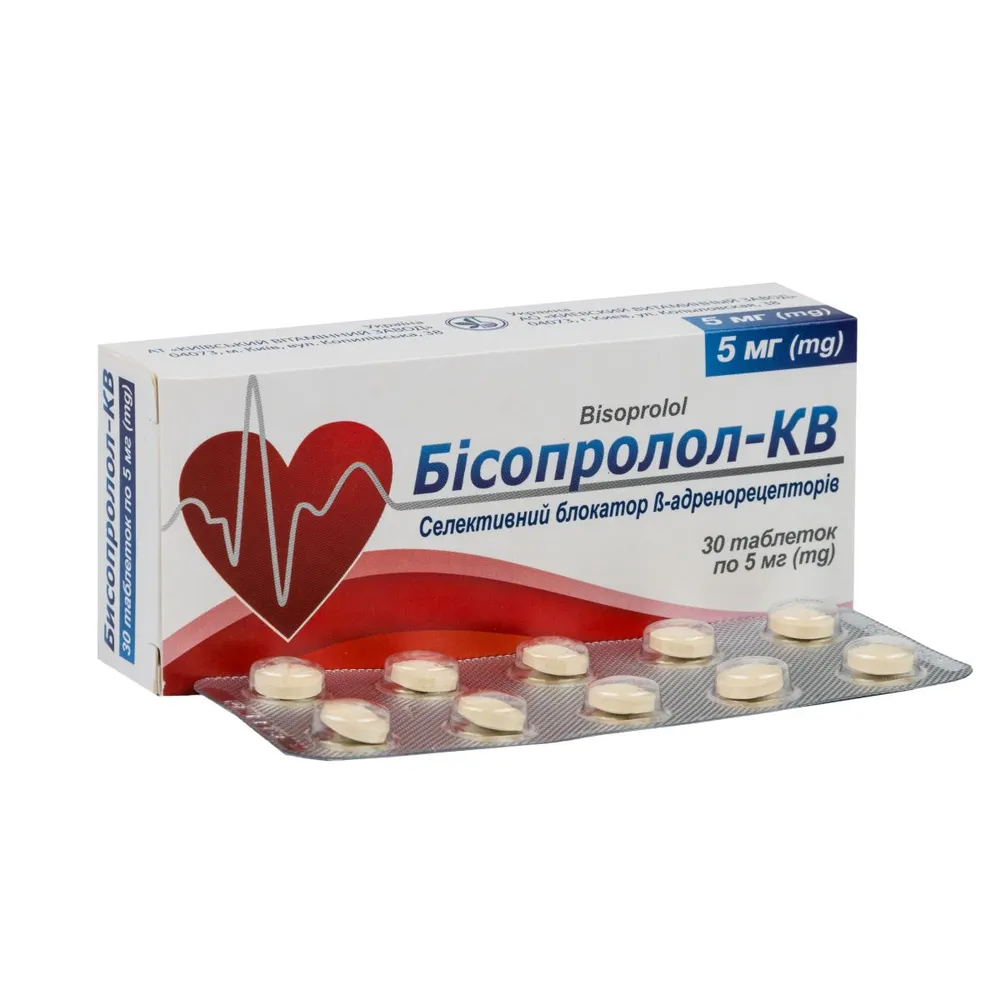
Table of Contents
INSTRUCTIONS FOR MEDICAL USE OF THE MEDICINAL PRODUCT BISOPROLOL-KV (BISOPROLOL-KV)
Composition:
Active substance: bisoprolol;
5 mg: 1 tablet contains 5 mg of bisoprolol fumarate;
Excipients: lactose monohydrate; microcrystalline cellulose; crospovidone; magnesium stearate; iron oxide yellow (E 172) as colouring agent;
10 mg: 1 tablet contains 10 mg of bisoprolol fumarate;
Excipients: lactose monohydrate; microcrystalline cellulose; crospovidone; magnesium stearate; colouring agents iron oxide yellow (E 172) and iron oxide red (E 172).
Pharmaceutical form. Tablets.
Main physicochemical properties:
5 mg: tablets of round shape with a biconvex surface, with a score line, brownish-yellow in colour. Speckles on the tablet surface are permissible;
10 mg: tablets of round shape with a biconvex surface, with a score line, brownish-pink in colour. Speckles on the tablet surface are permissible.
Pharmacotherapeutic group. Selective beta-adrenoreceptor blockers. ATC code C07AB07.
Pharmacological properties.
Pharmacodynamics.
Bisoprolol is a highly selective β1-adrenoblocker. It has no intrinsic sympathomimetic activity and no clinically significant membrane-stabilizing properties. The drug has very low affinity for β2-receptors of bronchial and vascular smooth muscle, as well as for β2-receptors involved in metabolic regulation. Thus, bisoprolol does not affect airway resistance or β2-mediated metabolic effects. The β1-adrenoceptor selectivity of bisoprolol extends beyond the therapeutic dose range.
Bisoprolol has no pronounced negative inotropic effect.
The maximum effect of bisoprolol occurs 3–4 hours after oral administration. The elimination half-life from blood plasma is 10–12 hours, resulting in 24-hour efficacy after a single dose. The maximum antihypertensive effect is achieved within 2 weeks of treatment.
During intensive therapy in patients with ischemic heart disease without chronic heart failure, bisoprolol reduces cardiac output and myocardial oxygen demand by decreasing heart rate and stroke volume. With prolonged therapy, elevated peripheral resistance decreases. The antihypertensive effect of β-blockers is also mediated by reduced plasma renin activity.
Bisoprolol suppresses the response to sympathetic-adrenergic activity by blocking cardiac β1-receptors. This leads to a reduction in heart rate and myocardial contractility, thereby decreasing myocardial oxygen demand. This mechanism provides the desired therapeutic effect in patients with angina pectoris and ischemic heart disease.
Pharmacokinetics.
Absorption. After oral administration, more than 90% of bisoprolol is absorbed from the gastrointestinal tract. Absorption is not affected by food intake. The first-pass effect is ≤ 10%. Bioavailability is approximately 90%.
Distribution. The volume of distribution is 3.5 L/kg. Plasma protein binding is approximately 30%.
Metabolism and elimination. Bisoprolol is eliminated from the body via two pathways: 50% is metabolized in the liver into inactive metabolites and excreted by the kidneys, and 50% is excreted unchanged by the kidneys. Total clearance of bisoprolol is 15 L/hour. Due to its long elimination half-life (10–12 hours), the drug maintains its therapeutic effect for 24 hours with once-daily administration.
Linearity. The pharmacokinetics of bisoprolol are linear and are not influenced by age.
Special patient groups. Since bisoprolol is eliminated equally by the kidneys and liver, dosage adjustment is not required in patients with hepatic or renal impairment. Pharmacokinetics in patients with stable chronic heart failure and hepatic or renal dysfunction have not been studied. In patients with chronic heart failure of NYHA functional class III, plasma levels of bisoprolol are higher and the elimination half-life is longer compared to healthy volunteers. The steady-state plasma concentration reaches 64\u+002B21 ng/mL at a daily dose of 10 mg, with an elimination half-life of 17\u+002B5 hours.
Clinical characteristics.
Indications.
- Arterial hypertension;
- Ischemic heart disease (angina pectoris);
- Chronic heart failure with left ventricular systolic dysfunction, in combination with ACE inhibitors, diuretics, and, if necessary, cardiac glycosides.
Contraindications.
- Acute heart failure or decompensated heart failure requiring inotropic therapy;
- Cardiogenic shock;
- Second- or third-degree atrioventricular block (except in patients with a permanent pacemaker);
- Sick sinus syndrome;
- Marked sinoatrial block;
- Symptomatic bradycardia;
- Symptomatic arterial hypotension;
- Severe form of bronchial asthma;
- Advanced stages of peripheral circulatory disorders or Raynaud's disease;
- Untreated pheochromocytoma;
- Metabolic acidosis;
- Hypersensitivity to bisoprolol or to any of the excipients of the medicinal product.
Interaction with other medicinal products and other forms of interaction.
Combinations not recommended for use.
Treatment of chronic heart failure.
- Class I antiarrhythmic agents (e.g., quinidine, disopyramide, lidocaine, phenytoin, flecainide, propafenone): possible potentiation of effects on atrioventricular conduction and enhanced negative inotropic effect.
All indications.
- Calcium channel blockers (verapamil group, and to a lesser extent diltiazem): negative effect on myocardial contractility and atrioventricular conduction. Intravenous administration of verapamil in patients receiving β-blockers may lead to marked arterial hypotension and atrioventricular block.
- Antihypertensive agents with central mechanism of action (clonidine, methyldopa, moxonidine, rilmenidine): possible worsening of heart failure due to reduction in central sympathetic tone (decreased heart rate and cardiac output, vasodilation). Sudden withdrawal of the drug, particularly following discontinuation of β-blockers, may increase the risk of rebound hypertension.
Combinations that should be used with caution.
Treatment of arterial hypertension or ischemic heart disease (angina pectoris).
- Class I antiarrhythmic agents (e.g., quinidine, disopyramide, lidocaine, phenytoin, flecainide, propafenone): possible potentiation of effects on atrioventricular conduction and enhanced negative inotropic effect.
All indications.
- Dihydropyridine-type calcium channel blockers (e.g., nifedipine, felodipine, amlodipine): possible increased risk of arterial hypotension. A potential increase in negative inotropic effects on myocardial function in patients with heart failure cannot be excluded.
- Class III antiarrhythmic agents (e.g., amiodarone): possible potentiation of effects on atrioventricular conduction.
- Locally acting β-blockers (e.g., those contained in ophthalmic solutions for glaucoma treatment): possible enhancement of systemic effects of bisoprolol.
- Parasympathomimetics: possible prolongation of atrioventricular conduction time and increased risk of bradycardia.
- Insulin and oral hypoglycemic agents: enhanced hypoglycemic effect. β-Adrenoceptor blockade may mask symptoms of hypoglycemia.
- Anesthetic agents: increased risk of myocardial depression and arterial hypotension (see section "Special precautions").
- Cardiac glycosides: reduced heart rate, prolonged atrioventricular conduction time.
- Nonsteroidal anti-inflammatory drugs (NSAIDs): possible attenuation of the antihypertensive effect of bisoprolol.
- β-Sympathomimetics (e.g., orciprenaline, isoprenaline, dobutamine): concomitant use with Bisoprolol-KV may reduce the therapeutic effect of both agents. Higher doses of adrenaline may be required for treatment of allergic reactions.
- Sympathomimetics activating both α- and β-adrenoceptors (e.g., adrenaline, noradrenaline): possible manifestation of α-adrenoceptor-mediated vasoconstrictive effects, leading to increased blood pressure and worsening of intermittent claudication. Such interaction is more likely with non-selective β-blockers.
Concomitant use with antihypertensive agents or other drugs exhibiting hypotensive effects (e.g., tricyclic antidepressants, barbiturates, phenothiazines) may increase the risk of arterial hypotension.
Possible combinations.
- Mefloquine: possible increased risk of bradycardia.
- MAO inhibitors (except MAO-B inhibitors): enhanced antihypertensive effect of β-blockers, but risk of hypertensive crisis exists.
Special precautions for use.
Treatment of stable chronic heart failure with bisoprolol should be initiated with a titration phase.
In patients with ischemic heart disease, treatment should not be abruptly discontinued without urgent need, as this may lead to transient worsening of the condition. Initiation and discontinuation of bisoprolol therapy require regular monitoring.
Currently, there is insufficient therapeutic experience in treating heart failure in patients with the following conditions and pathological states: type 1 diabetes mellitus (insulin-dependent), severe renal impairment, severe hepatic impairment, restrictive cardiomyopathy, congenital heart defects, hemodynamically significant acquired heart valve disorders, myocardial infarction within the past 3 months.
The medicinal product should be used with caution in patients with the following conditions:
- Bronchospasm (in bronchial asthma, obstructive airway diseases);
- Diabetes mellitus with significant fluctuations in blood glucose levels; in such cases, symptoms of hypoglycemia (tachycardia, palpitations, sweating) may be masked;
- Strict diet;
- Desensitization therapy. Like other β-blockers, bisoprolol may enhance sensitivity to allergens and increase the severity of anaphylactic reactions. In such cases, treatment with adrenaline may not always produce a positive therapeutic effect;
- First-degree atrioventricular block;
- Prinzmetal's angina; episodes of coronary artery spasm have been observed. Despite high β1-selectivity, angina attacks cannot be completely controlled when bisoprolol is prescribed to patients with Prinzmetal's angina;
- Peripheral arterial occlusive diseases (worsening of symptoms may occur at the beginning of therapy);
- General anesthesia.
In patients scheduled for general anesthesia, the use of β-blockers reduces the incidence of arrhythmias and myocardial ischemia during induction, intubation, and the postoperative period. It is recommended to continue β-blocker therapy throughout the perioperative period. The anesthesiologist must be informed about the use of β-adrenergic blockers, as they need to consider potential interactions with other drugs that may lead to bradyarrhythmia, reflex tachycardia, and reduced compensatory capacity of the reflex mechanism in response to blood loss. If bisoprolol is discontinued prior to surgery, the dose should be gradually reduced and the drug discontinued 48 hours before general anesthesia.
Combination of bisoprolol with calcium antagonists of the verapamil or diltiazem group, class I antiarrhythmic agents, or centrally acting antihypertensive drugs is not recommended (see section "Interaction with other medicinal products and other types of interactions").
Although cardioselective β-blockers (β1) have less impact on lung function compared to non-selective β-blockers, their use, like all β-blockers, should be avoided in obstructive airway diseases unless there are strong indications for therapy. If such indications exist, Bisoprolol-KV should be used with caution. In patients with obstructive airway diseases, bisoprolol therapy should be initiated at the lowest possible dose, and patients should be monitored for the emergence of new symptoms (such as dyspnea, exercise intolerance, cough).
If symptoms of bronchial asthma or other chronic obstructive lung diseases that may cause symptoms occur, concomitant therapy with bronchodilators is indicated. In some cases, patients with bronchial asthma may require higher doses of β2-sympathomimetics due to increased airway resistance during drug administration.
β-blockers (e.g., bisoprolol) may be prescribed to patients with psoriasis (including in medical history) only after careful benefit-risk assessment.
In patients with pheochromocytoma, the drug should be prescribed only after initiating therapy with α-adrenergic blockers. Symptoms of thyrotoxicosis may be masked during drug administration. Use of the medicinal product Bisoprolol-KV may result in a positive doping test result.
The medicinal product contains lactose; therefore, it should not be administered to patients with rare hereditary forms of galactose intolerance, lactase deficiency, or glucose-galactose malabsorption syndrome.
Use during pregnancy or breastfeeding.
Pregnancy. Bisoprolol has pharmacological properties that may cause harmful effects on the course of pregnancy and/or fetal/neonatal development.
Generally, β-adrenergic blockers reduce placental blood flow, which may lead to intrauterine growth retardation, intrauterine death, spontaneous abortion, or premature delivery. Adverse effects in the fetus and newborn (e.g., hypoglycemia, bradycardia) may occur. If β-blocker therapy is necessary, a β1-selective blocker is preferred.
The medicinal product should be used during pregnancy only when the expected benefit to the mother outweighs the potential risk to the fetus. Uteroplacental blood flow and fetal growth should be monitored. If harmful effects on pregnancy or the fetus occur, alternative therapy should be considered.
After delivery, the newborn should be under close observation. Hypoglycemia and bradycardia should be anticipated during the first 3 days of life.
Lactation (breastfeeding). There are no data on the excretion of bisoprolol in breast milk; therefore, the drug is not recommended during breastfeeding.
Ability to influence reaction speed when driving vehicles or operating machinery.
In clinical studies involving patients with ischemic heart disease, the drug did not affect the ability to drive a car. However, in individual cases, the medicinal product may affect the ability to drive vehicles or operate complex machinery. Particular attention should be paid at the beginning of treatment, when changing the dose of the drug, or when used concomitantly with alcohol.
Method of Administration and Dosage
Tablets should be taken without chewing, in the morning on an empty stomach, during or after breakfast, with a small amount of liquid.
Arterial hypertension; ischemic heart disease (angina pectoris).
Treatment should be initiated gradually with low doses, followed by dose escalation. The recommended dose is 5 mg (1 tablet of Bisoprolol-KV 5 mg) once daily. For mild hypertension (diastolic pressure up to 105 mm Hg), a dosage of 2.5 mg (½ tablet of 5 mg) once daily is acceptable.
If necessary, the daily dose may be increased to 10 mg (1 tablet of Bisoprolol-KV 10 mg) once daily. Further dose increases are justified only in exceptional cases. The maximum recommended dose is 20 mg once daily.
Dose adjustments should be individually determined by the physician based on pulse rate and therapeutic benefit.
Chronic heart failure with systolic left ventricular dysfunction, in combination with ACE inhibitors, diuretics, and, if necessary, cardiac glycosides.
Standard therapy for chronic heart failure includes ACE inhibitors (or angiotensin receptor blockers in case of ACE inhibitor intolerance), β-blockers, diuretics, and, if necessary, cardiac glycosides.
Bisoprolol-KV should be prescribed for treatment of patients with chronic heart failure without signs of exacerbation.
Treatment must be administered by a physician experienced in managing chronic heart failure.
Treatment of stable chronic heart failure with Bisoprolol-KV should be initiated according to the titration schedule below and may be adjusted based on individual patient response.
- 1.25 mg* of bisoprolol fumarate once daily for 1 week; if well tolerated, increase to
- 2.5 mg* of bisoprolol fumarate (½ tablet of 5 mg) once daily for the next week; if well tolerated, increase to
- 3.75 mg** of bisoprolol fumarate once daily for the next week; if well tolerated, increase to
- 5 mg of bisoprolol fumarate once daily for the next 4 weeks; if well tolerated, increase to
- 7.5 mg of bisoprolol fumarate (1½ tablets of 5 mg) once daily for the next 4 weeks; if well tolerated, increase to
- 10 mg of bisoprolol fumarate (1 tablet of 10 mg or 2 tablets of 5 mg) once daily as maintenance therapy.
* At the beginning of therapy for chronic heart failure, a dosage of 2.5 mg is recommended;
** Use appropriate dosage forms.
The maximum recommended dose of bisoprolol fumarate is 10 mg once daily.
During the titration phase, monitoring of vital signs (arterial pressure, heart rate) and symptoms of worsening heart failure is required. Symptoms may develop from the first day of treatment.
Modification of Therapy.
If the maximum recommended dose is poorly tolerated, gradual dose reduction may be considered. If progressive worsening of heart failure, arterial hypotension, or bradycardia occurs during or after the titration phase, dose adjustment is recommended, which may require temporary reduction of bisoprolol dose or, possibly, interruption of treatment. After stabilization of the patient's condition, re-initiation of bisoprolol therapy should always be considered.
Treatment should not be discontinued abruptly, especially in patients with ischemic heart disease, as this may worsen the patient's condition. If discontinuation is necessary, therapy should be gradually tapered, for example, by halving the dose weekly.
Treatment of stable chronic heart failure is usually long-term.
The duration of treatment with Bisoprolol-KV is prolonged and depends on the nature and severity of the disease.
Patients with hepatic and/or renal impairment.
Arterial hypertension; ischemic heart disease. Dose adjustment is generally not required in patients with mild to moderate hepatic or renal impairment. In patients with severe renal impairment (creatinine clearance <20 mL/min) or severe hepatic impairment, the dose should not exceed 10 mg of bisoprolol once daily. Limited data are available on the use of bisoprolol in dialysis patients. No dosage adjustment is necessary.
Chronic heart failure. There are no pharmacokinetic data on bisoprolol in patients with chronic heart failure and concomitant hepatic or renal impairment; therefore, dose escalation should be performed cautiously.
Elderly patients do not require dose adjustment.
Children. Clinical data on the efficacy and safety of the drug in children are lacking; therefore, the drug should not be used in this patient population.
Overdose.
Symptoms. Cases of atrioventricular block of third degree, bradycardia, and dizziness have been reported following overdose (e.g., administration of a daily dose of 15 mg instead of 7.5 mg). The most common signs of β-blocker overdose are bradycardia, arterial hypotension, acute heart failure, hypoglycemia, and bronchospasm. Several cases of overdose have been reported in patients with arterial hypertension and/or ischemic heart disease (maximum dose reported: 2000 mg of bisoprolol), with manifestations including bradycardia and/or arterial hypotension. All patients recovered. There is wide variability in individual sensitivity to a single high dose of bisoprolol; patients with heart failure may be more sensitive to the drug. Therefore, treatment should be initiated with gradual dose escalation (see section "Method of Administration and Dosage").
Treatment. In case of overdose, discontinue the drug and provide supportive and symptomatic therapy. Limited data suggest that bisoprolol is poorly dialyzable. In suspected overdose, based on the expected pharmacological effects and recommendations for other β-blockers, the following general measures should be considered:
- In bradycardia: intravenous administration of atropine. If no response, administer isoprenaline or another agent with positive chronotropic effect cautiously. In exceptional cases, transvenous pacemaker insertion may be required.
- In arterial hypotension: intravenous fluid administration and vasoconstrictors. Intravenous glucagon may be beneficial.
- In atrioventricular block of grade II or III: close monitoring, infusion of isoprenaline, or transvenous pacemaker insertion.
- In acute exacerbation of chronic heart failure: intravenous diuretics, inotropic agents, and vasodilators.
- In bronchospasm: bronchodilators (e.g., isoprenaline), β₂-adrenergic agonists, and/or aminophylline.
- In hypoglycemia: intravenous glucose administration.
Adverse Reactions
Undesirable effects are classified by frequency of occurrence into the following categories:
very common (> 1/10), common (> 1/100 and < 1/10), uncommon (> 1/1000 and < 1/100), rare (> 1/10000 and < 1/1000), very rare (< 1/10000), not known (frequency cannot be determined from available data).
Cardiac disorders.
Very common: bradycardia (in patients with chronic heart failure).
Common: signs of worsening heart failure (in patients with chronic heart failure).
Uncommon: atrioventricular conduction disturbances, bradycardia (in patients with arterial hypertension or ischemic heart disease), signs of worsening heart failure (in patients with arterial hypertension or ischemic heart disease).
Nervous system disorders.
Common: dizziness*, headache*.
Rare: syncope.
Eye disorders.
Rare: decreased lacrimation (should be considered in contact lens wearers).
Very rare: conjunctivitis.
Ear and labyrinth disorders.
Rare: hearing impairment.
Respiratory system disorders.
Uncommon: bronchospasm in patients with bronchial asthma or obstructive respiratory diseases in medical history.
Rare: allergic rhinitis.
Gastrointestinal disorders.
Common: nausea, vomiting, diarrhea, constipation.
Skin and subcutaneous tissue disorders.
Rare: hypersensitivity reactions including pruritus, erythema, rash, angioneurotic edema.
Very rare: alopecia. Treatment with ß-blockers may exacerbate psoriasis in some patients, manifesting as psoriatic rash.
Musculoskeletal and connective tissue disorders.
Uncommon: muscle weakness, cramps.
Hepatic disorders.
Rare: hepatitis.
Vascular disorders.
Common: sensation of cold or numbness in extremities, arterial hypotension (in patients with chronic heart failure).
Uncommon: orthostatic hypotension (in patients with chronic heart failure), arterial hypotension (in patients with arterial hypertension or ischemic heart disease).
Reproductive system disorders.
Rare: erectile dysfunction.
Psychiatric disorders.
Uncommon: depression, sleep disturbances.
Rare: nightmares, hallucinations.
Investigations (laboratory parameters).
Rare: increased blood triglyceride levels, increased plasma liver enzyme activity (AST, ALT).
General disorders.
Common: asthenia (in patients with chronic heart failure), fatigue*.
Uncommon: asthenia (in patients with arterial hypertension or ischemic heart disease).
* Applies only to patients with arterial hypertension or ischemic heart disease. These symptoms usually occur at the beginning of therapy, are mild, and resolve within the first 1–2 weeks.
If adverse events or undesirable reactions occur, a physician should be informed immediately.
Shelf life. 3 years.
Storage conditions.
Store in the original packaging at a temperature not exceeding 25°C.
Keep out of reach of children.
Packaging. 10 tablets in a blister; 3 blisters per carton.
Prescription status. Prescription only.
Manufacturer. JSC "KYIV VITAMIN PLANT".
Manufacturer's address and location of business activity.
38 Kopilivska Street, Kyiv, 04073, Ukraine.
Web-site: www.vitamin.com.ua.