Bi-prenelia®
Ukraine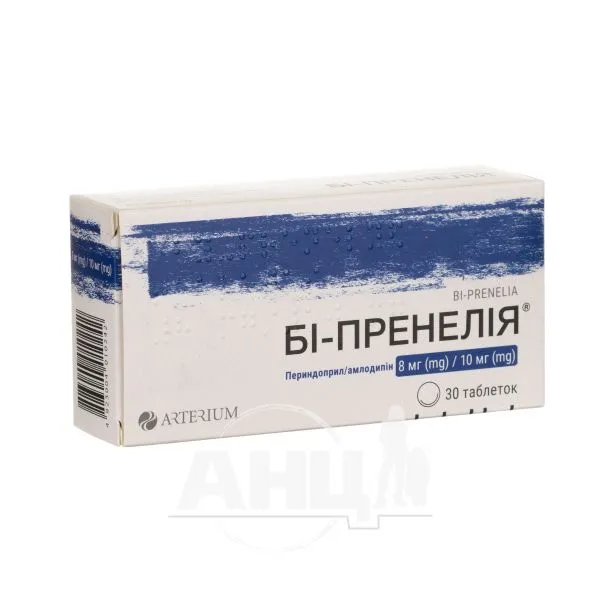
Table of Contents
INSTRUCTIONS FOR MEDICAL USE OF THE MEDICINAL PRODUCT BI-PRENELIA® (BI-PRENELIA)
Composition:
Active substances: perindopril tert-butylamine, amlodipine;
1 tablet 4 mg/5 mg contains: perindopril tert-butylamine — 4.00 mg, equivalent to 3.34 mg of perindopril; amlodipine besylate — 6.94 mg, equivalent to 5.00 mg of amlodipine;
1 tablet 8 mg/10 mg contains: perindopril tert-butylamine — 8.00 mg, equivalent to 6.68 mg of perindopril; amlodipine besylate — 13.87 mg, equivalent to 10.00 mg of amlodipine;
Excipients: microcrystalline cellulose (type 200XLM), microcrystalline cellulose (type 112), sodium starch glycolate (type A), colloidal anhydrous silicon dioxide, magnesium stearate.
Pharmaceutical form. Tablets.
Main physicochemical properties:
BI-PRENELIA® 4 mg/5 mg: white or almost white, round tablets, 7 mm in diameter, biconvex;
BI-PRENELIA® 8 mg/10 mg: white or almost white, round tablets, 9.5 mm in diameter, biconvex, with "5" embossed on one side.
Pharmacotherapeutic group. ACE inhibitors, combinations. ACE inhibitors and calcium channel blockers. Perindopril and amlodipine.
ATC code C09B B04.
Pharmacological properties.
Pharmacodynamics.
Perindopril
Perindopril is an inhibitor of the enzyme converting angiotensin I into angiotensin II (angiotensin-converting enzyme, ACE). The converting enzyme, or kininase, is an exopeptidase that enables the conversion of angiotensin I into the vasoconstrictive angiotensin II, as well as promotes the breakdown of the vasodilator bradykinin into an inactive heptapeptide. Inhibition of ACE leads to a reduction in angiotensin II concentration in plasma, resulting in increased plasma renin activity (due to suppression of the negative feedback on renin release) and decreased aldosterone secretion. Since ACE inactivates bradykinin, ACE inhibition also increases the activity of circulating and local kallikrein-kinin systems (and thus also activates the prostaglandin system). This mechanism of action underlies the antihypertensive effect of ACE inhibitors and partially accounts for the occurrence of certain adverse effects (e.g., cough).
Perindopril acts via its active metabolite—perindoprilat. Other metabolites do not demonstrate ACE-inhibiting activity under experimental conditions.
Arterial hypertension. Perindopril effectively reduces arterial blood pressure in all stages of arterial hypertension: mild, moderate, and severe. Reduction in systolic and diastolic blood pressure is observed both in the supine and standing positions.
Perindopril reduces peripheral vascular resistance, leading to a decrease in arterial blood pressure. As a result, peripheral blood flow increases without affecting heart rate.
Renal blood flow usually increases, while glomerular filtration rate (GFR) generally remains unchanged.
The maximum antihypertensive effect develops 4–6 hours after a single dose and lasts at least 24 hours: the T/R ratio (maximum/minimum effectiveness over 24 hours) of perindopril is 87–100%.
Arterial pressure decreases rapidly. In patients responding to treatment, normalization of blood pressure occurs within one month and is maintained without tachyphylaxis.
Upon discontinuation of perindopril, no rebound effect occurs.
Perindopril reduces left ventricular hypertrophy.
Clinical studies have demonstrated that perindopril has vasodilatory properties. It improves the elasticity of large arteries and reduces the wall-to-lumen ratio in small arteries.
Prevention of cardiovascular complications in patients with documented stable ischemic heart disease (IHD). In experimental studies, congestive heart failure was induced by coronary artery ligation, and it was demonstrated that perindopril reduces myocardial hypertrophy and excessive subendocardial collagen content, restores the myosin to isoenzyme ratio, and reduces the incidence of reperfusion arrhythmias.
Perindopril tert-butylamine reduces cardiac workload by decreasing preload and afterload.
Studies involving patients with heart failure have demonstrated:
- Reduction in filling pressures of the right and left ventricles;
- Decreased systemic peripheral resistance;
- Increased cardiac index and improved cardiac output;
- Increased regional myocardial blood flow.
In comparative studies, initial administration of 2 mg perindopril to patients with mild to moderate heart failure was not associated with any significant reduction in blood pressure compared to placebo.
Amlodipine
Amlodipine is a calcium ion influx inhibitor belonging to the dihydropyridine group (a slow calcium channel blocker or calcium antagonist) that blocks transmembrane calcium ion influx into vascular and myocardial smooth muscle cells.
The antihypertensive mechanism of amlodipine is due to a direct relaxant effect on vascular smooth muscle. The exact mechanism by which amlodipine reduces angina symptoms is not fully defined, but amlodipine reduces overall ischemic load through the following actions:
- Amlodipine dilates peripheral arterioles, thereby reducing total peripheral resistance (afterload). Since heart rate remains unchanged, reduced cardiac workload decreases myocardial energy consumption and oxygen demand.
- Amlodipine also partially promotes dilation of major coronary arteries and coronary arterioles in both normal and ischemic myocardial areas. This dilation increases oxygen delivery to the myocardium in patients with vasospastic angina (Prinzmetal's angina or variant angina).
In patients with arterial hypertension, once-daily administration of amlodipine provides clinically significant blood pressure reduction over 24 hours, both in the supine and standing positions. Due to its slow onset of action, amlodipine does not cause acute hypotension.
In patients with angina, once-daily amlodipine increases total exercise duration, time to onset of angina, and time to 1 mm ST-segment depression, reduces the frequency of angina attacks, and decreases nitroglycerin use.
Amlodipine is not associated with any negative metabolic effects or changes in plasma lipid levels, making it suitable for use in patients with asthma, diabetes, and gout.
Pharmacokinetics.
The rate and extent of absorption of perindopril and amlodipine, whether as monotherapeutic agents or in the fixed-dose combination BIPRENELE® are not significantly different.
Perindopril
After oral administration, perindopril is rapidly absorbed, with peak plasma concentration reached within 1 hour. The plasma half-life of perindopril is 1 hour.
Perindopril is a prodrug. Approximately 27% of the administered perindopril reaches the circulation as the active metabolite—perindoprilat. In addition to the active metabolite perindoprilat, the drug forms five inactive metabolites. Peak plasma concentration of perindoprilat is achieved 3–4 hours after administration.
Food intake reduces the conversion of perindopril to perindoprilat, thereby decreasing its bioavailability. Therefore, the daily dose of perindopril tert-butylamine is recommended to be taken once daily in the morning before a meal.
A linear relationship between perindopril dose and plasma concentration is observed. The volume of distribution of unbound perindoprilat is approximately 0.2 L/kg. Plasma protein binding of perindoprilat is 20%, primarily to angiotensin-converting enzyme, but this value is dose-dependent. Perindoprilat is excreted in urine. The terminal half-life of the unbound fraction is approximately 17 hours. Steady-state plasma concentration is achieved within 4 days of starting treatment.
Elimination of perindoprilat is slowed in elderly patients and in patients with cardiac or renal insufficiency (see section "Special precautions"). Therefore, routine medical monitoring should include frequent checks of creatinine and potassium levels.
Dialysis clearance of perindoprilat is 70 mL/min.
Perindopril kinetics are altered in patients with hepatic cirrhosis: hepatic clearance of perindopril is reduced by half. However, the amount of formed perindoprilat does not decrease. Therefore, dose adjustment is not required in these patients (see section "Special precautions").
Amlodipine
After oral administration of therapeutic doses of amlodipine, it is well absorbed and reaches peak blood concentration within 6–12 hours. Absolute bioavailability ranges from 64% to 80%. The volume of distribution is approximately 21 L/kg. In vitro studies have shown that approximately 97.5% of circulating amlodipine is plasma protein-bound.
Food intake does not affect amlodipine bioavailability.
The plasma elimination half-life is approximately 35–50 hours, allowing once-daily dosing.
Amlodipine is primarily metabolized in the liver to inactive metabolites. About 60% of metabolites are excreted in urine, 10% unchanged.
Use in elderly patients: Time to peak plasma concentration of amlodipine is similar in elderly and younger patients. In elderly patients, there is a tendency toward reduced amlodipine clearance, resulting in increased AUC and prolonged half-life. Increased AUC and elimination half-life in patients with congestive heart failure corresponded to the age characteristics of the studied population.
Use in patients with hepatic impairment: There is very limited clinical data on amlodipine use in patients with hepatic dysfunction. In patients with hepatic insufficiency, amlodipine clearance is reduced, leading to prolonged half-life and increased AUC by approximately 40–60%.
Clinical characteristics.
Indications.
Arterial hypertension and/or ischemic heart disease (when treatment with perindopril and amlodipine is required).
Contraindications.
- Hypersensitivity to perindopril (or to any other angiotensin-converting enzyme [ACE] inhibitors), to amlodipine (or to dihydropyridine derivatives), or to any excipient;
- History of angioedema associated with previous ACE inhibitor therapy (see section "Special precautions");
- Hereditary or idiopathic angioedema;
- Severe arterial hypotension;
- Shock, including cardiogenic shock;
- Significant bilateral renal artery stenosis or stenosis of the artery of a single functioning kidney (see section "Special precautions");
- Obstruction of the left ventricular outflow tract (e.g., severe aortic stenosis);
- Hemodynamically unstable heart failure following acute myocardial infarction;
- Pregnancy or planned pregnancy (see section "Use during pregnancy or breastfeeding");
- Extracorporeal treatments leading to blood contact with negatively charged surfaces (see section "Interaction with other medicinal products and other forms of interaction");
- Concomitant use with medicinal products containing the active substance aliskiren in patients with diabetes mellitus or patients with renal impairment (glomerular filtration rate < 60 mL/min/1.73 m²) (see sections "Interaction with other medicinal products and other forms of interaction" and "Special precautions");
- Concomitant use with sacubitril/valsartan. The use of BI-PRENELIA® must not be initiated earlier than 36 hours after the last dose of sacubitril/valsartan (see sections "Special precautions" and "Interaction with other medicinal products and other forms of interaction").
Interaction with other medicinal products and other forms of interaction.
All warnings regarding individual components of the medicinal product apply to BI-PRENELIA®.
Perindopril
Clinical study data indicate that dual blockade of the renin-angiotensin-aldosterone system (RAAS) by concomitant administration of ACE inhibitors, angiotensin II receptor blockers, or aliskiren is associated with a higher incidence of adverse reactions, such as hypotension, hyperkalemia, and impaired renal function (including acute renal failure), compared to treatment with a single RAAS-acting agent (see sections "Contraindications" and "Special precautions").
Medicinal products increasing the risk of angioedema
Concomitant use of ACE inhibitors with sacubitril/valsartan is contraindicated due to increased risk of angioedema (see sections "Contraindications", "Special precautions"). Initiation of sacubitril/valsartan should not occur earlier than 36 hours after the last dose of perindopril. Perindopril therapy should not be initiated earlier than 36 hours after the last dose of sacubitril/valsartan (see sections "Contraindications" and "Special precautions").
Concomitant use of ACE inhibitors with racecadotril, mTOR inhibitors (e.g., sirolimus, everolimus, temsirolimus), and gliptins (e.g., linagliptin, saxagliptin, sitagliptin, vildagliptin) may increase the risk of angioedema (see section "Special precautions").
Medicinal products causing hyperkalemia.
Serum potassium levels usually remain within normal limits, but hyperkalemia may occur in some patients receiving perindopril.
Certain medicinal products or therapeutic classes may cause hyperkalemia: aliskiren, potassium salts, potassium-sparing diuretics (e.g., spironolactone, triamterene, or amiloride), ACE inhibitors, angiotensin II receptor antagonists, nonsteroidal anti-inflammatory drugs (NSAIDs), heparins, immunosuppressants such as cyclosporine or tacrolimus, trimethoprim, and co-trimoxazole (trimethoprim/sulfamethoxazole), since trimethoprim acts as a potassium-sparing diuretic similar to amiloride. Concomitant use of these agents increases the risk of hyperkalemia.
Therefore, concomitant use of perindopril with the above-mentioned agents is not recommended. If concomitant use is necessary, it should be done with caution and frequent monitoring of serum potassium levels is required.
Concomitant use is contraindicated (see section "Contraindications").
Aliskiren: In patients with diabetes mellitus or renal impairment, the risk of hyperkalemia, worsening renal function, cardiovascular morbidity, and mortality is increased.
Extracorporeal treatment methods that lead to blood contact with negatively charged surfaces, such as high-flux dialysis or hemofiltration membranes (e.g., polyacrylonitrile membranes) or for low-density lipoprotein apheresis with dextran sulfate, increase the risk of severe anaphylactoid reactions (see section "Contraindications"). If such treatment is required, consideration should be given to using a different type of dialysis membrane or another class of antihypertensive agents.
Concomitant use is not recommended (see section "Special precautions").
Aliskiren: In all other patients, including those with diabetes or renal impairment, the risk of hyperkalemia, worsening renal function, cardiovascular morbidity, and mortality is increased.
Concomitant use of an ACE inhibitor and an angiotensin receptor blocker
According to scientific literature, in patients with atherosclerosis, heart failure, or diabetes with target organ damage, concomitant use of ACE inhibitors and angiotensin receptor blockers has been associated with increased incidence of arterial hypotension, syncope, hyperkalemia, and worsening renal function (including acute renal failure) compared to monotherapy with RAAS-acting agents. Dual blockade (i.e., combination of an ACE inhibitor with angiotensin II receptor antagonists) may be considered only in selected cases under strict monitoring of renal function, potassium levels, and blood pressure.
Estramustine: Increased risk of adverse reactions such as angioedema.
Potassium-sparing diuretics (e.g., triamterene, amiloride, etc.), potassium salts: Risk of hyperkalemia (potentially fatal), especially in patients with impaired renal function (additive hyperkalemic effect). These agents are not recommended for concomitant use with perindopril (see section "Special precautions"). However, if concomitant use is necessary, it should be done with caution and frequent monitoring of serum potassium levels is required. For use of spironolactone in heart failure, see subsection "Concomitant use requiring special attention" below.
Lithium. Cases of reversible increases in serum lithium concentrations and lithium toxicity have been reported with concomitant use of ACE inhibitors and lithium-containing products. Concomitant use of perindopril with lithium is not recommended. If such use is necessary, serum lithium levels must be closely monitored (see section "Special precautions").
Concomitant use requiring special attention.
Antidiabetic agents (insulin, oral hypoglycemic agents).
Epidemiological studies suggest that concomitant use of ACE inhibitors and antidiabetic agents (insulin, oral hypoglycemic agents) may enhance the glucose-lowering effect, increasing the risk of hypoglycemia. This phenomenon is most likely to occur during the first weeks of combined therapy and in patients with renal impairment.
Baclofen potentiates the antihypertensive effect. Blood pressure should be monitored and antihypertensive dosage adjusted if necessary.
Diuretics. In patients taking diuretics, especially those with disturbed water-electrolyte balance, excessive reduction in blood pressure may occur after initiation of ACE inhibitor therapy. The risk of hypotensive effects may be reduced by discontinuing the diuretic, increasing circulating blood volume, or salt intake before starting perindopril therapy, which should begin with a low dose and be gradually increased. In arterial hypertension, when a previously prescribed diuretic may have caused water/electrolyte deficiency, the diuretic should be discontinued before starting ACE inhibitor therapy (diuretic use may be resumed later), or the ACE inhibitor should be started at a low dose with gradual dose escalation. In congestive heart failure on diuretic therapy, ACE inhibitor therapy should be initiated at the lowest dose, possibly after reducing the diuretic dose. In any case, renal function (creatinine levels) should be monitored during the first weeks of ACE inhibitor therapy.
Potassium-sparing diuretics (eplerenone, spironolactone). When eplerenone or spironolactone (12.5–50 mg daily) is used concomitantly with low-dose ACE inhibitors in patients with NYHA class II–IV heart failure and ejection fraction < 40%, who have previously received ACE inhibitors and loop diuretics, there is a risk of hyperkalemia (potentially fatal), especially if recommendations for use of this combination are not followed. Before starting this combination, absence of hyperkalemia and renal dysfunction should be confirmed. Careful monitoring of serum potassium and creatinine is recommended weekly during the first month of treatment and monthly thereafter.
Nonsteroidal anti-inflammatory drugs (NSAIDs), including acetylsalicylic acid ≥ 3 g/day. The antihypertensive effect of ACE inhibitors may be attenuated when used concomitantly with NSAIDs such as acetylsalicylic acid at anti-inflammatory doses, cyclooxygenase-2 (COX-2) inhibitors, and nonselective NSAIDs. Concomitant use of ACE inhibitors and NSAIDs increases the risk of worsening renal function, including acute renal failure, and elevated serum potassium levels, particularly in patients with a history of renal impairment. This combination should be prescribed with caution, especially in elderly patients. Patients should be adequately hydrated, and renal function should be monitored at the start and during continued combined therapy.
Concomitant use requiring attention.
Antihypertensive agents and vasodilators: Concomitant use of antihypertensive agents may enhance the hypotensive effect of perindopril. Concomitant use with nitroglycerin and other nitrates or with other vasodilators may lead to additional reduction in blood pressure.
Gliptins (linagliptin, saxagliptin, sitagliptin, vildagliptin): In patients receiving a combination of a gliptin and an ACE inhibitor, the risk of angioedema is increased due to the gliptin's inhibition of dipeptidyl peptidase-IV (DPP-IV) activity.
Concomitant use of certain anesthetics, tricyclic antidepressants, or antipsychotics with ACE inhibitors may lead to further reduction in blood pressure (see section "Special precautions").
Sympathomimetics may reduce the antihypertensive effect of ACE inhibitors.
Gold: Nitrate-like reactions (symptoms: facial flushing, nausea, vomiting, and arterial hypotension) have been rarely reported in patients receiving ACE inhibitors, including perindopril, concomitantly with injectable gold preparations (sodium aurothiomalate).
Amlodipine
Effects of other medicinal products on amlodipine.
Available data support the safe use of amlodipine with thiazide diuretics, alpha-blockers, beta-blockers, ACE inhibitors, long-acting nitrates, sublingual nitroglycerin, nonsteroidal anti-inflammatory drugs, antibiotics, and oral hypoglycemic agents.
Data from in vitro studies using human plasma indicate that amlodipine does not affect the protein binding of digoxin, phenytoin, warfarin, or indomethacin.
Inhibitors of CYP3A4.
Concomitant use of amlodipine with strong or moderate CYP3A4 inhibitors (protease inhibitors, azole antifungals, macrolides such as erythromycin or clarithromycin, verapamil, or diltiazem) may lead to a significant increase in amlodipine exposure, increasing the risk of hypotension, especially in elderly patients. Clinical monitoring and dose adjustment may be necessary.
Concomitant use of amlodipine with grapefruit or grapefruit juice is not recommended, as in some patients, amlodipine bioavailability may increase, leading to enhanced hypotensive effects.
Inducers of CYP3A4.
Plasma concentrations of amlodipine may change with concomitant use of known CYP3A4 inducers. Therefore, blood pressure should be monitored and dosage adjusted accordingly during and after concomitant therapy, especially with strong CYP3A4 inducers (e.g., rifampicin, St. John's wort).
Dantrolene (infusions).
In animal studies, ventricular fibrillation with fatal outcome and cardiovascular collapse associated with hyperkalemia were observed after intravenous administration of verapamil and dantrolene. Due to the risk of hyperkalemia, calcium channel blockers such as amlodipine should be avoided in patients susceptible to malignant hyperthermia and during treatment of malignant hyperthermia.
Effects of amlodipine on other medicinal products.
The antihypertensive effect of amlodipine may potentiate the antihypertensive effects of other antihypertensive agents.
Tacrolimus.
There is a risk of increased blood levels of tacrolimus when used concomitantly with amlodipine, although the pharmacokinetic mechanism is not fully understood. To avoid tacrolimus toxicity, blood levels of tacrolimus should be regularly monitored and the dose adjusted if necessary in patients receiving both amlodipine and tacrolimus.
Inhibitors of mTOR (mammalian target of rapamycin).
mTOR inhibitors such as sirolimus, temsirolimus, and everolimus are CYP3A substrates. Amlodipine is a weak CYP3A inhibitor. Concomitant use of amlodipine with mTOR inhibitors may enhance their effects.
Cyclosporine.
Interaction studies between cyclosporine and amlodipine have not been conducted in healthy volunteers or other groups, except in kidney transplant recipients, where variable increases in cyclosporine trough concentrations (on average 0–40%) were observed. In kidney transplant recipients receiving amlodipine, monitoring of cyclosporine concentrations should be considered, and cyclosporine dosage reduced if necessary.
Simvastatin.
Concomitant administration of multiple doses of amlodipine 10 mg and simvastatin 80 mg resulted in a 77% increase in simvastatin exposure compared to simvastatin alone. In patients receiving amlodipine, the dose of simvastatin should be limited to 20 mg daily.
Sildenafil.
Single 100 mg dose of sildenafil in patients with essential hypertension did not affect the pharmacokinetics of amlodipine. When amlodipine and sildenafil are used concomitantly, each drug exerts its antihypertensive effect independently of the other.
Other medicinal products.
Clinical interaction studies have shown that amlodipine does not affect the pharmacokinetics of atorvastatin, digoxin, or warfarin.
Ethanol (alcohol).
Single and multiple doses of 10 mg amlodipine had no significant effect on the pharmacokinetics of ethanol.
Concomitant use of amlodipine with cimetidine did not affect the pharmacokinetics of amlodipine.
Concomitant use of aluminum/magnesium-containing products (antacids) with a single dose of amlodipine had no significant effect on amlodipine pharmacokinetics.
Laboratory tests.
The effect on laboratory test parameters is unknown.
Combination of perindopril and amlodipine
Medicinal products requiring special caution when used concomitantly
- Baclofen potentiates the antihypertensive effect. Blood pressure and renal function should be monitored, and dosage adjusted if necessary.
Medicinal products requiring attention when used concomitantly
- Antihypertensive agents (e.g., beta-blockers) and vasodilators:
Concomitant use may enhance the hypotensive effect of perindopril and amlodipine.
Concomitant use with nitroglycerin and other nitrates or other vasodilators may lead to further reduction in blood pressure and should be used with caution.
- Corticosteroids, tetracosactide: attenuation of antihypertensive effect (due to water and salt retention by corticosteroids).
- Alpha-blockers (prazosin, alfuzosin, doxazosin, tamsulosin, terazosin): enhanced antihypertensive effect and increased risk of orthostatic hypotension.
- Amifostine: may potentiate the antihypertensive effect of amlodipine.
- Tricyclic antidepressants/antipsychotics/anesthetics: enhanced antihypertensive effect and increased risk of orthostatic hypotension.
Special precautions for use.
All warnings regarding individual components of the medicinal product apply to the fixed combination of BI-PRENELELIA®.
Perindopril
Stable ischemic heart disease. If an episode of unstable angina (of any severity) occurred during the first month of treatment with perindopril, the benefit/risk ratio should be carefully assessed before deciding on continuing therapy.
Arterial hypotension. Administration of ACE inhibitors may cause a reduction in arterial pressure. Symptomatic arterial hypotension is less common in patients with uncomplicated arterial hypertension and is more likely to occur in patients with hypovolemia, those taking diuretics, those on a low-salt diet, patients on dialysis, in cases of diarrhea or vomiting, and in patients with severe renin-dependent arterial hypertension (see sections "Interaction with other medicinal products and other forms of interaction" and "Undesirable effects"). Symptomatic arterial hypotension has been observed in patients with symptomatic heart failure, with or without concomitant renal impairment. The occurrence of symptomatic arterial hypotension is most likely in patients with more severe degrees of heart failure who are taking high doses of loop diuretics, have hyponatremia, or functional renal impairment. Patients at increased risk of symptomatic arterial hypotension should be closely monitored by a physician at the beginning of therapy and during dose titration (see sections "Dosage and administration" and "Undesirable effects"). These warnings also apply to patients with ischemic heart disease or cerebrovascular disorders, in whom excessive reduction in blood pressure may lead to myocardial infarction or stroke.
In case of arterial hypotension, the patient should be placed in a horizontal position and, if necessary, receive an intravenous infusion of 0.9% (9 mg/mL) sodium chloride solution.
Transient hypotension is not a contraindication for further use of the drug, which can usually be continued without difficulty after restoration of blood volume and elevation of blood pressure.
In some patients with congestive heart failure and normal or low blood pressure, perindopril may cause additional reduction in systemic arterial pressure. This effect is expected and usually does not require discontinuation of the drug. If arterial hypotension becomes symptomatic, dose reduction or discontinuation of the drug may become necessary.
Stenosis of aortic and mitral valves/hypertrophic cardiomyopathy. As with other ACE inhibitors, perindopril should be administered with caution to patients with mitral valve stenosis or left ventricular outflow tract obstruction (aortic stenosis or hypertrophic cardiomyopathy).
Renal function impairment.
In case of renal impairment (creatinine clearance < 60 mL/min), the initial dose of perindopril should be adjusted according to the patient's creatinine clearance (see section "Dosage and administration"), and subsequently based on the patient's response to treatment. Monitoring of potassium and creatinine levels is part of standard medical practice for such patients (see section "Undesirable effects").
In patients with symptomatic heart failure, arterial hypotension occurring at the beginning of ACE inhibitor therapy may lead to renal impairment, sometimes resulting in acute renal failure, which is usually reversible.
In some patients with bilateral renal artery stenosis or stenosis of the artery of a solitary kidney, treatment with ACE inhibitors has been associated with increases in blood urea and plasma creatinine levels, which usually return to normal after discontinuation of treatment. This is particularly relevant for patients with pre-existing renal impairment. In the presence of concomitant renovascular hypertension, the risk of severe arterial hypotension and renal failure is increased. For such patients, treatment should be initiated under close medical supervision with low doses and cautious dose titration. Given the above, diuretic therapy may contribute to the development of arterial hypotension; therefore, diuretics should be discontinued and renal function should be monitored during the first weeks of perindopril treatment.
In some patients with arterial hypertension, in whom no renovascular disease was detected prior to treatment initiation, increases in blood urea and serum creatinine levels have occurred, usually mild and transient, especially when perindopril was administered concomitantly with a diuretic. However, this is more typical in patients with pre-existing renal impairment. Dose reduction and/or discontinuation of the diuretic and/or perindopril may become necessary.
Patients undergoing hemodialysis. Cases of anaphylactoid reactions have been reported in patients taking ACE inhibitors during hemodialysis with high-flux membranes. Such patients should use a different type of dialysis membrane or be prescribed another class of antihypertensive agents.
Patients after kidney transplantation. There is no experience with the use of perindopril in patients after recent kidney transplantation surgery.
Renovascular hypertension.
Administration of ACE inhibitors to patients with bilateral renal artery stenosis or stenosis of the artery of a single functioning kidney increases the risk of hypotension and renal failure (see section "Contraindications"). Diuretic therapy may be a predisposing factor. Loss of renal function may manifest as minimal changes in serum creatinine levels even in patients with stenosis of one renal artery.
Hypersensitivity/angioedema.
Rare cases of angioedema of the face, extremities, lips, mucous membranes, tongue, glottis, and/or larynx have been reported in patients during treatment with ACE inhibitors, including perindopril (see section "Undesirable effects"). This may occur at any time during treatment. In such cases, the drug must be discontinued immediately, and appropriate patient monitoring should be established until complete resolution of symptoms. In isolated cases where swelling is limited to the face and lips, the patient's condition usually improves without treatment. Administration of antihistamines may be helpful in reducing symptoms.
Angioedema involving laryngeal edema may be fatal. In cases where swelling extends to the tongue, glottis, or larynx, causing airway obstruction, emergency treatment is required, which may include administration of adrenaline and/or securing airway patency. The patient should remain under close medical supervision until complete resolution of symptoms or stabilization of condition. Patients with a history of angioedema unrelated to ACE inhibitor use belong to a high-risk group for developing angioedema during ACE inhibitor therapy (see section "Contraindications").
Rare cases of intestinal angioedema have been reported in patients during treatment with ACE inhibitors. These patients experienced abdominal pain (with or without nausea or vomiting); in some cases, there was no prior history of facial angioedema, and C1-esterase levels were within normal limits. The diagnosis of intestinal angioedema was confirmed by abdominal computed tomography or ultrasound, or during surgical intervention. Symptoms of angioedema resolved after discontinuation of the ACE inhibitor. Intestinal angioedema should be considered in the differential diagnosis of abdominal pain in patients taking ACE inhibitors.
Concomitant use of perindopril with sacubitril/valsartan is contraindicated due to an increased risk of angioedema (see section "Contraindications"). Initiation of sacubitril/valsartan should not begin earlier than 36 hours after the last dose of perindopril. If treatment with sacubitril/valsartan is discontinued, perindopril therapy should not be initiated earlier than 36 hours after the last dose of sacubitril/valsartan (see sections "Contraindications" and "Interaction with other medicinal products and other forms of interaction"). Concomitant use of ACE inhibitors with neutral endopeptidase (NEP) inhibitors (e.g., racecadotril), mTOR inhibitors (e.g., sirolimus, everolimus, temsirolimus), or gliptins (e.g., linagliptin, saxagliptin, sitagliptin, vildagliptin) may increase the risk of angioedema (e.g., airway or tongue swelling, with or without respiratory impairment) (see section "Interaction with other medicinal products and other forms of interaction"). Caution should be exercised when initiating treatment with racecadotril, mTOR inhibitors (e.g., sirolimus, everolimus, temsirolimus), or gliptins (e.g., linagliptin, saxagliptin, sitagliptin, vildagliptin) in patients already taking ACE inhibitors.
Anaphylactoid reactions during low-density lipoprotein (LDL) apheresis. Rarely, life-threatening anaphylactoid reactions may occur in patients taking ACE inhibitors during LDL apheresis using dextran sulfate. Anaphylactoid reactions can be avoided by temporarily discontinuing ACE inhibitor therapy before each apheresis session.
Anaphylactoid reactions during desensitization therapy. Anaphylactoid reactions, potentially life-threatening, may occur in patients taking ACE inhibitors during desensitization therapy (e.g., with bee venom-containing preparations). These reactions can be avoided by temporarily discontinuing ACE inhibitors, but may recur if provocation tests are performed carelessly.
Hepatic impairment. Rarely, ACE inhibitor use has been associated with a syndrome beginning with cholestatic jaundice and progressing to fulminant hepatic necrosis, sometimes fatal. The mechanism of this syndrome is unclear. If jaundice develops or liver enzyme levels increase during ACE inhibitor therapy, the ACE inhibitor should be discontinued and appropriate medical evaluation and treatment should be provided (see section "Undesirable effects").
Neutropenia/agranulocytosis, thrombocytopenia, and anemia
Cases of neutropenia/agranulocytosis, thrombocytopenia, and anemia have been reported in patients taking ACE inhibitors. In patients with normal renal function and no other risk factors, neutropenia is rare. Perindopril should be administered with extreme caution to patients with collagen diseases, during immunosuppressive therapy, with allopurinol or procainamide, or in combination with these risk factors, especially if renal impairment is present. Some of these patients developed serious infections, which in several cases did not respond to intensive antibiotic therapy. In patients receiving perindopril, periodic monitoring of white blood cell count is recommended. Patients should also be informed to report any signs of infection (sore throat, fever).
Racial characteristics. ACE inhibitors more frequently cause angioedema in black patients than in patients of other races. Perindopril, like other ACE inhibitors, is less effective in reducing blood pressure in black patients compared to individuals of other races. This may be explained by the lower plasma renin levels in black patients with arterial hypertension.
Cough. Cough has been reported during therapy with ACE inhibitors. The cough is typically non-productive, persistent, and resolves after discontinuation of the drug. ACE inhibitor-induced cough should be considered in the differential diagnosis of cough.
During surgical procedures or administration of anesthetics causing hypotension, perindopril may block the secondary formation of angiotensin II in response to compensatory renin release. The drug should be discontinued one day before surgery. If arterial hypotension develops and is considered to be caused by this mechanism, the patient's condition can be normalized by increasing circulating blood volume.
Hyperkalemia. In some patients taking ACE inhibitors, including perindopril, increased serum potassium levels have been observed. ACE inhibitors may cause hyperkalemia by suppressing aldosterone release. In patients with normal renal function, this effect is usually mild. Risk factors for hyperkalemia include: renal impairment, worsening renal function, age ≥70 years, diabetes mellitus, intercurrent conditions such as dehydration, acute heart decompensation, metabolic acidosis, and concomitant use of potassium-sparing diuretics (e.g., spironolactone, eplerenone, triamterene, or amiloride), potassium-containing dietary supplements, potassium-containing salt substitutes, or other drugs that increase serum potassium concentration (e.g., heparin, co-trimoxazole, also known as trimethoprim/sulfamethoxazole), and particularly aldosterone antagonists or angiotensin receptor blockers. The use of potassium-containing dietary supplements, potassium-sparing diuretics, or potassium-containing salt substitutes, especially in patients with renal impairment, is not recommended, as it may lead to significant increases in serum potassium levels. Hyperkalemia may lead to serious, sometimes fatal, arrhythmias. Patients taking ACE inhibitors should be prescribed potassium-sparing diuretics and angiotensin receptor blockers with caution, and serum potassium levels and renal function should be closely monitored. If concomitant use of perindopril with any of the above substances is considered necessary, they should be used with caution and with frequent monitoring of serum potassium levels (see section "Interaction with other medicinal products and other forms of interaction").
Patients with diabetes mellitus taking oral antidiabetic agents or receiving insulin require careful monitoring of blood glucose levels during the first month of ACE inhibitor therapy (see section "Interaction with other medicinal products and other forms of interaction").
Lithium. Concomitant use of lithium and perindopril is generally not recommended (see section "Interaction with other medicinal products and other forms of interaction").
Concomitant use of perindopril with potassium-sparing diuretics, potassium-containing dietary supplements, or potassium-containing salt substitutes is not recommended (see section "Interaction with other medicinal products and other forms of interaction").
Dual blockade of the renin-angiotensin-aldosterone system (RAAS). Data indicate that concomitant use of ACE inhibitors, angiotensin II receptor blockers, or aliskiren increases the risk of hypotension, hyperkalemia, and reduced renal function (including acute renal failure). Therefore, dual blockade of the RAAS by concomitant use of ACE inhibitors, angiotensin II receptor blockers, or aliskiren is not recommended (see section "Interaction with other medicinal products and other forms of interaction"). If treatment with dual RAAS blockade is considered absolutely necessary, it should only occur under specialist supervision with careful monitoring of renal function, electrolyte levels, and blood pressure. ACE inhibitors and angiotensin II receptor blockers should not be used concomitantly in patients with diabetic nephropathy.
Primary hyperaldosteronism. Patients with primary hyperaldosteronism generally do not respond to antihypertensive drugs acting via inhibition of the renin-angiotensin system. Therefore, this drug is not recommended for such patients.
Amlodipine
The safety and efficacy of amlodipine in hypertensive crisis have not been evaluated.
Patients with hepatic impairment.
In patients with hepatic impairment, the elimination half-life of amlodipine is prolonged and AUC parameters are higher. Therefore, treatment in this patient group should be initiated with the lowest dose. Caution is required both at the beginning of treatment and during dose escalation. Patients with severe hepatic impairment may require slow dose titration and close monitoring.
Patients with heart failure.
Amlodipine should be used with caution in this patient group. In a long-term placebo-controlled study in patients with severe heart failure (NYHA class III and IV), the incidence of pulmonary edema was higher with amlodipine compared to placebo. Calcium channel blockers, including amlodipine, should be used with caution in patients with congestive heart failure, as they may increase the risk of cardiovascular complications and future mortality.
Elderly patients.
Dose escalation in this patient group should be performed cautiously.
Patients with renal impairment.
Standard doses of the drug are recommended for this patient group. Plasma concentrations of amlodipine do not correlate with the degree of renal impairment. Amlodipine is not removed by dialysis.
Amlodipine does not affect laboratory test results.
Concomitant use of amlodipine with grapefruit or grapefruit juice is not recommended, as in some patients bioavailability may be increased, leading to enhanced hypotensive effect.
Precautions related to the fixed combination BI-PRENELELIA®
The medicinal product BI-PRENELELIA® can be prescribed to patients with creatinine clearance ≥ 60 mL/min and should not be prescribed to patients with creatinine clearance < 60 mL/min. For such patients, individual dose titration of each component of the medicinal product is recommended.
Concomitant use of lithium, potassium-sparing agents, potassium-containing dietary supplements, or dantrolene with the medicinal product BI-PRENELELIA® is not recommended (see section "Interaction with other medicinal products and other forms of interaction").
Excipients
The medicinal product BI-PRENELELIA® contains less than 1 mmol of sodium (23 mg) per tablet, i.e., it is practically sodium-free.
Use during pregnancy or breastfeeding.
Use of the medicinal product BI-PRENELELIA® is contraindicated during pregnancy.
Use of the medicinal product BI-PRENELELIA® is not recommended during breastfeeding. If use of the medicinal product is necessary, breastfeeding should be discontinued.
Pregnancy
Perindopril. Use of ACE inhibitors is contraindicated during pregnancy. There are no convincing epidemiological data on teratogenic risk with ACE inhibitor use during the first trimester of pregnancy; however, a small increase in this risk cannot be excluded. If continuation of ACE inhibitor therapy is considered mandatory, patients planning pregnancy should be switched to alternative antihypertensive agents with established safety data during pregnancy. If pregnancy is confirmed during treatment, ACE inhibitor therapy should be discontinued immediately and, if necessary, replaced with another medicinal product permitted for use during pregnancy. It is known that ACE inhibitor use during the second and third trimesters of pregnancy leads to fetotoxicity (renal dysfunction, oligohydramnios, delayed ossification of the skull bones) and neonatal toxicity (renal failure, arterial hypotension, hyperkalemia). If ACE inhibitors were used from the second trimester of pregnancy, ultrasound evaluation of renal function and skull structure in the newborn is recommended. Newborns whose mothers took ACE inhibitors during pregnancy should be monitored for timely detection and correction of arterial hypotension.
Amlodipine. The safety of amlodipine use in pregnant women has not been established. In animal studies, toxic effects on reproduction were observed with high-dose administration. Use of the drug during pregnancy is recommended only if no safer alternative treatment is available and the disease poses a greater risk to the pregnant woman and fetus.
Breastfeeding
Perindopril. Use of perindopril during breastfeeding is not recommended due to lack of data. During breastfeeding, it is preferable to prescribe an alternative treatment with a better-studied safety profile, especially when breastfeeding a newborn or preterm infant.
Amlodipine passes into breast milk. The dose received by the infant has been estimated on an interquartile basis and ranges from 3–7%, with a maximum of 15%, of the maternal dose. The effect of amlodipine on infants is unknown.
The decision on continuing/discontinuing breastfeeding or continuing/discontinuing amlodipine treatment should be made, taking into account the benefit of breastfeeding for the child and the benefit of amlodipine treatment for the mother.
Fertility
Perindopril. No effect on reproductive function or fertility has been observed.
Amlodipine. Reversible biochemical changes in the sperm head have been reported in some patients treated with calcium channel blockers. Clinical data on the potential effect of amlodipine on fertility are insufficient. It is known that in a rat study, adverse effects on male fertility were observed.
Ability to affect reaction speed when driving vehicles or operating machinery.
There are no data on the effect of the medicinal product BI-PRENELELIA® on the ability to drive vehicles or operate machinery. Amlodipine may have a slight or moderate effect on the ability to drive vehicles and operate machinery. Impaired reaction in the driver may occur due to dizziness, headache, weakness, confusion, or nausea. Some patients may experience individual reactions related to reduced blood pressure during perindopril use, especially at the beginning of treatment or when used concomitantly with other antihypertensive drugs. As a result, the ability to drive vehicles or operate machinery may be impaired.
Caution is recommended, especially at the beginning of treatment.
Dosage and Administration
For oral use.
Fixed-dose combination is not suitable for initial therapy.
Dosage must be individually adjusted for each patient depending on the indication, disease progression, and blood pressure levels.
Adults should receive 1 tablet daily, preferably in the morning before food. The tablet must not be divided.
Maximum daily dose — 1 tablet of BI-PRENELELIA® 8 mg/10 mg per day.
For patients in risk groups — see section "Special Warnings and Precautions for Use".
Patients with renal impairment and elderly patients (see sections "Special Warnings and Precautions for Use" and "Pharmacokinetics"). Elimination of perindoprilat is reduced in patients with renal impairment and in elderly patients; therefore, frequent monitoring of creatinine and potassium levels is required during treatment.
BI-PRENELELIA® may be prescribed to patients with creatinine clearance ≥ 60 mL/min, but must not be prescribed to patients with creatine clearance < 60 mL/min. In such patients, individual dose titration of each component of the medicinal product should be considered separately.
With good tolerability, amlodipine dosing is the same for both younger and elderly patients. The usual dosing regimen is recommended for elderly patients; however, dose escalation should be performed cautiously.
Plasma concentration of amlodipine does not depend on the degree of renal impairment.
Amlodipine is not removed during dialysis.
Patients with hepatic impairment (see sections "Special Warnings and Precautions for Use" and "Pharmacokinetics"). There are no specific dosage recommendations for patients with mild to moderate hepatic impairment; therefore, dose titration should be cautious, starting with the lowest doses (see sections "Special Warnings and Precautions for Use" and "Pharmacokinetics"). For determining the optimal initial and maintenance dose of the medicinal product in patients with hepatic impairment, separate dose titration of amlodipine and perindopril is required. There are no pharmacokinetic data available for amlodipine in patients with severe hepatic impairment. In patients with severe hepatic impairment, treatment with amlodipine should be initiated at the lowest doses and gradually increased.
Children. BI-PRENELELIA® is not recommended for use in children (under 18 years of age) due to lack of studies in this patient group.
Overdose
Information regarding overdose with BI-PRENELELIA® is not available.
Data on intentional overdose of amlodipine are limited.
Symptoms of overdose: available information suggests that significant overdose of amlodipine may lead to excessive peripheral vasodilation and possibly reflex tachycardia. Severe and potentially prolonged systemic arterial hypotension has been reported, including shock with fatal outcome. Rare cases of non-cardiogenic pulmonary edema following amlodipine overdose have been reported, which may present with delayed onset (24–48 hours after ingestion) and may require mechanical ventilation. Factors contributing to the development of non-cardiogenic pulmonary edema may include early resuscitation measures (including fluid overload) aimed at supporting perfusion and cardiac output.
Treatment: clinically significant hypotension caused by amlodipine overdose requires active cardiovascular support, including monitoring of cardiac and respiratory function, elevation of the lower limbs in the supine position, and monitoring of circulating fluid volume and urine output.
Vasoconstrictor agents may be used to restore vascular tone and blood pressure, provided there are no contraindications to their use. Intravenous calcium gluconate may be beneficial in counteracting the effects of calcium channel blockade.
In some cases, gastric lavage may be helpful. Administration of activated charcoal to healthy volunteers within 2 hours after 10 mg amlodipine intake significantly reduced its absorption.
Since amlodipine is highly protein-bound, dialysis is of limited benefit.
Information on perindopril overdose is limited. In cases of ACE inhibitor overdose, the following may occur: hypotension, circulatory shock, electrolyte imbalances, renal failure, hyperventilation, tachycardia, palpitations, bradycardia, dizziness, anxiety, and cough.
In case of overdose, intravenous administration of 0.9% sodium chloride solution is recommended. If hypotension occurs, the patient should be placed in a supine position. Consideration should be given to angiotensin II infusion and/or intravenous catecholamines. Perindopril may be removed from systemic circulation by hemodialysis (see section "Special Warnings and Precautions for Use"). In cases of treatment-resistant bradycardia, temporary cardiac pacing may be recommended. Monitoring of vital signs, serum electrolytes, and creatinine levels is essential.
Adverse reactions.
The following adverse reactions have been observed with the use of perindopril and amlodipine, classified according to the MedDRA Standardized MedDical Terminology dictionary by organ systems and frequency of occurrence: very common (≥1/10); common (≥1/100 to <1/10); uncommon (>1/1000 to <1/100); rare (>1/10000 to <1/1000); very rare (<1/10000); frequency not known (cannot be estimated from the available data).
| Body systems |
Adverse reactions |
Frequency |
|
| Amlodipine |
Perindopril |
||
| Blood and lymphatic system disorders |
Leukopenia/neutropenia |
Very rare |
Very rare |
| Agranulocytosis or pancytopenia |
|
Very rare |
|
| Eosinophilia |
|
Uncommon* |
|
| Thrombocytopenia |
Very rare |
Very rare |
|
| Hemolytic anemia in patients with congenital glucose-6-phosphate dehydrogenase deficiency |
|
Very rare |
|
| Decreased hemoglobin and hematocrit levels |
|
Very rare |
|
| Immune system disorders |
Allergic reactions |
Very rare |
Uncommon* |
| Metabolism and nutrition disorders |
Hyperglycemia |
Very rare |
|
| Hypoglycemia |
|
Uncommon* |
|
| Hyponatremia |
|
Uncommon* |
|
| Hyperkalemia |
|
Uncommon* |
|
| Psychiatric disorders |
Insomnia |
Uncommon |
|
| Mood changes (including anxiety) |
Uncommon |
Uncommon |
|
| Depression |
Uncommon |
Uncommon |
|
| Sleep disorders |
|
Uncommon |
|
| Nervous system disorders |
Somnolence (especially at the beginning of treatment) |
Common |
Uncommon* |
| Dizziness (especially at the beginning of treatment) |
Common |
Common |
|
| Headache (especially at the beginning of treatment) |
Common |
Common |
|
| Tremor |
Uncommon |
|
|
| Taste disturbances (dysgeusia) |
Uncommon |
Common |
|
| Hypoesthesia |
Uncommon |
|
|
| Paraesthesia |
Uncommon |
Common |
|
| Fainting |
|
Uncommon* |
|
| Peripheral neuropathy |
Very rare |
|
|
| Confusion |
Rare |
Very rare |
|
| Hypertonia |
Very rare |
|
|
| Cerebrovascular events — may occur due to excessive reduction in blood pressure in high-risk patients |
|
Very rare |
|
| Extrapyramidal disorders (extrapyramidal syndrome) |
Frequency unknown |
|
|
| Eye disorders |
Visual disturbances (including diplopia) |
Common |
Common |
| Ear and labyrinth disorders |
Tinnitus |
Uncommon |
Common |
| Vertigo |
|
Common |
|
| Cardiac disorders |
Palpitations |
Common |
Uncommon* |
| Tachycardia |
|
Uncommon* |
|
| Syncope |
Uncommon |
|
|
| Angina pectoris |
|
Very rare |
|
| Myocardial infarction — may occur due to excessive reduction in blood pressure in high-risk patients |
Very rare |
Very rare |
|
| Arrhythmia (including bradycardia, ventricular tachycardia, and atrial fibrillation) |
Very rare |
Very rare |
|
| Vascular disorders |
Hot flushes |
Common |
Rare |
| Hypotension (and associated symptoms) |
Uncommon |
Common |
|
| Vasculitis |
Very rare |
Uncommon* |
|
| Raynaud's phenomenon |
|
Frequency unknown |
|
| Respiratory, thoracic and mediastinal disorders |
Dyspnea |
Common |
Common |
| Rhinitis |
Uncommon |
Very rare |
|
| Cough |
Uncommon |
Common |
|
| Bronchospasm |
|
Uncommon |
|
| Eosinophilic pneumonia |
|
Very rare |
|
| Hepatobiliary disorders |
Hepatitis, jaundice |
Very rare |
|
| Cytolytic or cholestatic hepatitis |
|
Very rare |
|
| Elevated liver enzymes (mainly cholestasis-related) |
Very rare |
|
|
| Gastrointestinal disorders |
Gingival hyperplasia |
Very rare |
|
| Abdominal pain, nausea |
Common |
Common |
|
| Vomiting |
Uncommon |
Common |
|
| Dyspepsia |
Common |
Common |
|
| Change in defecation rhythm |
Common |
|
|
| Dry mouth |
Uncommon |
Uncommon |
|
| Diarrhea, constipation |
Common |
Common |
|
| Pancreatitis |
Very rare |
Very rare |
|
| Gastritis |
Very rare |
|
|
| Skin and subcutaneous tissue disorders |
Angioedema of face, extremities, lips, mucous membranes, tongue, glottis and/or larynx |
Very rare |
Uncommon |
| Multiform erythema |
Very rare |
Very rare |
|
| Alopecia |
Uncommon |
|
|
| Purpura |
Uncommon |
|
|
| Skin discoloration |
Uncommon |
|
|
| Worsening of psoriasis symptoms |
|
Rare |
|
| Hyperhidrosis |
Uncommon |
Uncommon |
|
| Pruritus |
Uncommon |
Common |
|
| Rash, exanthema |
Uncommon |
Common |
|
| Urticaria |
Uncommon |
Uncommon |
|
| Pemphigoid |
|
Uncommon* |
|
| Stevens-Johnson syndrome |
Very rare |
|
|
| Exfoliative dermatitis |
Very rare |
|
|
| Photosensitization |
Very rare |
Uncommon* |
|
| Toxic epidermal necrolysis |
Unknown |
|
|
| Musculoskeletal and connective tissue disorders |
Arthralgia, myalgia |
Uncommon |
Uncommon* |
| Muscle cramps |
Common |
Common |
|
| Leg swelling |
Common |
|
|
| Back pain |
Uncommon |
|
|
| Renal and urinary disorders |
Renal failure |
|
Uncommon |
| Urinary disorders, nocturia, frequent urination |
Uncommon |
|
|
| Anuria/oliguria |
|
Rare |
|
| Acute renal failure |
|
Rare |
|
| Endocrine disorders |
Syndrome of inappropriate antidiuretic hormone secretion (SIADH) |
|
Rare |
| Reproductive system and breast disorders |
Erectile dysfunction |
Uncommon |
Uncommon |
| Gynecomastia |
Uncommon |
|
|
| General disorders |
Peripheral edema |
Common |
Uncommon* |
| Increased fatigue |
Common |
|
|
| Asthenia |
Common |
Common |
|
| Chest pain |
Uncommon |
Uncommon* |
|
| Malaise |
Uncommon |
Uncommon* |
|
| Hyperthermia |
|
Uncommon* |
|
| Investigations |
Elevated blood bilirubin and liver enzyme levels |
|
Rare |
| Increased body weight, decreased body weight |
Uncommon |
|
|
| Elevated blood urea levels |
|
Uncommon* |
|
| Elevated blood creatinine levels |
|
Uncommon* |
|
| Decreased hemoglobin and hematocrit levels |
|
Very rare |
|
| Injury, poisoning and procedural complications |
Falls |
|
Uncommon* |
* The frequency of adverse reactions identified through spontaneous reports is calculated based on clinical trial data.
Additional information regarding amlodipine
Rare cases of extrapyramidal syndrome development have been reported.
Reporting of suspected adverse reactions
Reporting suspected adverse reactions after medicinal product registration is important. It enables ongoing monitoring of the benefit-risk balance of the medicinal product. Healthcare professionals, pharmacists, patients, or their legal representatives should report all suspected adverse reactions and lack of therapeutic effect via the Automated Pharmacovigilance Information System at the following link: https://aisf.dec.gov.ua.
Shelf life. 3 years from the date of manufacture in bulk.
Storage conditions.
In the original packaging at a temperature not exceeding 30 °C.
Keep out of reach and sight of children.
Packaging. 10 tablets per blister, 3 blisters per carton.
Prescription status. Prescription only.
Manufacturer.
JSC "Kyivmedpreparat" (packaging from in bulk supplied by the manufacturer Adamed Pharma S.A., Poland).
Manufacturer's address and location of business activity.
139 Saksahanskoho Street, Kyiv, 01032, Ukraine.
Marketing Authorization Holder.
LLC "ARTERIUM LTD".
Address of the Marketing Authorization Holder.
139 Saksahanskoho Street, Kyiv, 01032, Ukraine.