Bentero
Ukraine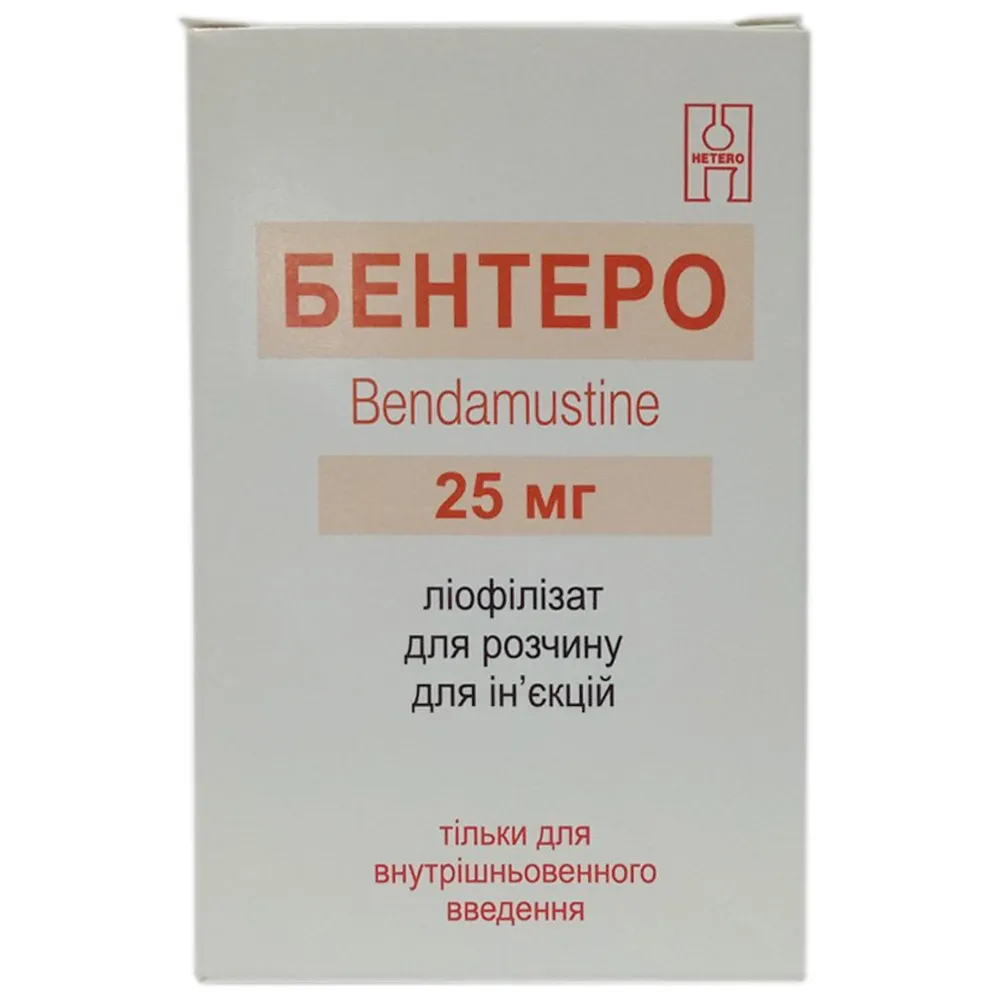
Table of Contents
INSTRUCTIONS FOR MEDICAL USE OF THE MEDICINAL PRODUCT BENTERO (BENTERO)
Composition:
Active substance: bendamustine;
1 vial contains 25 mg or 100 mg of bendamustine hydrochloride;
Excipient: mannite (E 421).
Pharmaceutical form. Lyophilisate for solution for injection.
Main physicochemical properties: white or almost white lyophilisate in a vial made of dark glass.
Pharmacotherapeutic group. Antineoplastic agent, alkylating compound.
ATC code L01A A09.
Pharmacological Properties
Pharmacodynamics
Bendamustine hydrochloride is an alkylating antineoplastic agent with bifunctional alkylating activity. The antineoplastic and cytotoxic effects of bendamustine hydrochloride are primarily associated with the formation of interstrand cross-links in single- and double-stranded DNA due to alkylation. As a result, DNA template function and DNA synthesis are disrupted. There is also evidence that bendamustine hydrochloride possesses additional antimetabolite properties (purine analogue effect).
The antineoplastic effect of bendamustine hydrochloride has been demonstrated in numerous in vitro studies on various tumor cell lines (breast cancer, non-small cell and small cell lung cancer, ovarian cancer, various types of leukemia, as well as colorectal cancer, melanoma, renal cell carcinoma, malignant tumors of the prostate gland and brain) and in vivo in various experimental tumor models (melanoma, breast cancer, sarcoma, lymphoma, leukemia, and small cell lung cancer). Bendamustine hydrochloride shows no or only minimal cross-resistance in human tumor cell lines with different resistance mechanisms.
This is partly explained by its prolonged interaction with DNA compared to other alkylating agents (e.g., only partial cross-resistance has been observed with other alkylating agents such as cyclophosphamide, carmustine, or cisplatin). Furthermore, clinical studies have shown that there is no complete cross-resistance between bendamustine and anthracyclines or alkylating agents.
Pharmacokinetics
Distribution
The half-life (t1/2) in the first phase after a 30-minute intravenous infusion of bendamustine at a dose of 120 mg/m2 body surface area was 28.2 minutes. After a 30-minute intravenous infusion, the central volume of distribution was 19.3 L. At steady state following intravenous bolus administration, the volume of distribution ranged from 15.8 to 20.5 L.
Over 95% of the active substance is bound to plasma proteins (mainly albumin). The ability of bendamustine hydrochloride to bind to plasma proteins is not impaired in patients with low plasma albumin concentrations, in patients aged 70 years and older, or in patients with advanced tumor stages.
Metabolism
Bendamustine hydrochloride is primarily metabolized in the liver. The main route of elimination of bendamustine hydrochloride from the body is via hydrolysis, forming monohydroxy- and dihydroxybendamustine. The formation of N-desmethylbendamustine and oxidized metabolite in the liver involves the cytochrome P450 isoenzyme CYP1A2. In vitro, bendamustine does not inhibit CYP1A4, CYP2C9/10, CYP2D6, CYP2E1, and CYP3A4.
Elimination
The mean value of total clearance after a 30-minute intravenous infusion of the drug at a dose of 120 mg/m2 was 639.4 mL/min. Approximately 20% of the administered dose was excreted unchanged in urine within 24 hours.
The unchanged bendamustine and its metabolites excreted in urine are distributed in decreasing order of quantity as follows: monohydroxybendamustine > bendamustine > dihydroxybendamustine > oxidized metabolite > 14-demethylbendamustine.
Polar metabolites are primarily excreted via bile.
Hepatic impairment
Compared to patients with normal liver and kidney function, no significant differences in maximum plasma concentration of bendamustine (Cmax), time to reach maximum plasma concentration (tmax), area under the plasma concentration-time curve (AUC), half-life in the beta phase (t1/2), volume of distribution, or clearance were observed in patients with 30–70% tumor/metastatic involvement of the organ and mild hepatic impairment (serum bilirubin <1.2 mg/dL).
Renal impairment
Compared to patients with normal liver and kidney function, no significant differences in Cmax, tmax, AUC, t1/2, volume of distribution, or clearance were observed in patients with creatinine clearance >10 mL/min (including patients undergoing dialysis).
Geriatric patients
Pharmacokinetic studies included patients up to 84 years of age. Apparently, age does not have a significant influence on the pharmacokinetics of bendamustine hydrochloride.
Clinical characteristics.
Indications.
- First-line therapy for advanced stages of indolent non-Hodgkin's lymphomas, as part of combination therapy.
- Chronic lymphocytic leukemia.
Contraindications.
- Hypersensitivity to bendamustine hydrochloride and/or mannitol;
- Pregnancy, planned pregnancy, breastfeeding period;
- Moderate and severe hepatic impairment (bilirubin level > 3.0 mg/dL);
- Jaundice;
- Severe bone marrow suppression and marked changes in blood cell counts (reduction in leukocyte count to < 3 × 10^9/L and/or platelets < 75 × 10^9/L);
- Surgical intervention within 30 days prior to initiation of treatment;
- Infections, especially those associated with leukopenia (risk of infection dissemination);
- Pediatric age (due to lack of data on efficacy and safety of the drug in children);
- Vaccination against yellow fever.
Special safety precautions.
When handling bendamustine-containing drugs, inhalation and contact with skin or mucous membranes should be avoided (gloves and protective clothing must be used). Contaminated areas of the body should be thoroughly washed with soap and water; eyes should be rinsed with physiological saline solution. Working at specially designed safe workstations (with laminar airflow) is recommended whenever possible. Pregnant women must not be involved in handling cytostatic agents.
Interaction with other medicinal products and other types of interactions.
When BENTERO is administered in combination with myelosuppressive agents, the effect of BENTERO and/or concomitantly administered drugs acting on the bone marrow may be potentiated. Any treatment that weakens the general condition of the patient or suppresses bone marrow function may enhance the toxic effects of BENTERO.
Combination of bendamustine hydrochloride with cyclosporine or tacrolimus may result in excessive immunosuppression with risk of lymphoproliferation.
Cytostatic agents may reduce antibody production following vaccination with live vaccines and increase the risk of infection, which may lead to fatal outcomes. The risk is increased in patients with impaired immune system due to underlying disease.
Bendamustine metabolism is associated with cytochrome P450 (CYP) 1A2 isoenzyme. Therefore, potential interactions with CYP1A2 inhibitors such as fluvoxamine, ciprofloxacin, acyclovir, and cimetidine are possible.
Special precautions for use
BENTERO medicinal product should be used only under the supervision of a physician experienced in antineoplastic therapy. During treatment with this medicinal product, the instructions for use must be strictly followed.
Myelosuppression
Myelosuppression may develop in patients receiving bendamustine hydrochloride; therefore, monitoring of leukocyte, platelet, hemoglobin, and neutrophil levels should be performed at least once weekly. Treatment with the medicinal product should not be initiated or should be temporarily discontinued if the peripheral blood leukocyte count is <3,000 cells/µL and/or platelet count is <75,000 cells/µL.
Treatment with BENTERO may be resumed after leukocyte count increases to >4,000 cells/µL and platelet count to >100,000 cells/µL.
Infections
Infections with serious, including fatal, outcomes have been reported during bendamustine use, including bacterial infections (pneumonia and sepsis) and opportunistic infections caused by opportunistic microorganisms such as Pneumocystis jirovecii pneumonia, varicella, and cytomegalovirus. Cases of progressive multifocal leukoencephalopathy (PML), including fatal cases, have been reported after bendamustine use, predominantly in combination with rituximab or obinutuzumab.
Bendamustine hydrochloride treatment may lead to prolonged lymphopenia (<600/µL) and reduced levels of CD4-positive T-cells (T-helper cells) (<200/µL) for at least 7–9 months after completion of therapy. Lymphopenia and decreased CD4-positive T-cell counts are more pronounced when bendamustine is used in combination with rituximab. Patients with leukopenia and low CD4-positive T-cell counts due to bendamustine use are more susceptible to developing opportunistic infections. Therefore, patients should be monitored for respiratory symptoms during treatment. Patients should be advised to immediately report any new signs of infection, including fever or respiratory symptoms. If signs of opportunistic infections are present, discontinuation of bendamustine hydrochloride therapy should be considered.
When performing differential diagnosis in patients with new or worsening neurological, cognitive, or behavioral signs or symptoms, progressive multifocal leukoencephalopathy should be considered. If PML is suspected, appropriate diagnostic investigations should be performed and bendamustine administration should be discontinued until PML is ruled out.
Hepatitis B reactivation
Hepatitis B reactivation may occur in patients with chronic hepatitis B infection following treatment with bendamustine hydrochloride. In some cases, acute liver failure, including fatal outcomes, has been observed. Before initiating treatment with bendamustine hydrochloride, patients should be tested for HBV infection. Patients with positive hepatitis B test results (including those with active disease) and patients with positive HBV infection test results during treatment should consult a physician (hepatologist). HBV carriers requiring treatment with bendamustine hydrochloride should be closely monitored for symptoms of active HBV infection throughout the treatment course and for several months after therapy completion.
Skin reactions
Skin reactions, including rash, toxic skin reactions, and bullous exanthema, have been observed. Cases of Stevens-Johnson syndrome, toxic epidermal necrolysis, and systemic symptoms (DRESS syndrome) have been reported in association with bendamustine hydrochloride use, sometimes with fatal outcomes.
Some reactions occurred when bendamustine hydrochloride was used in combination with other antineoplastic agents, so a definitive causal relationship cannot always be established. Skin reactions may progress with continued treatment, and their manifestations may intensify. If skin reactions worsen, administration of BENTERO should be temporarily discontinued. Treatment should be discontinued if severe skin reactions, likely related to bendamustine hydrochloride use, occur.
Cardiac disorders
Patients with cardiac disease receiving bendamustine hydrochloride should have serum potassium levels monitored and potassium supplements administered if potassium levels are <3.5 mmol/L. Electrocardiographic monitoring is also recommended.
Cases of myocardial infarction and heart failure with fatal outcomes have been reported during bendamustine treatment. Patients with pre-existing cardiac disease or a history of cardiac disease should be under close medical supervision.
Nausea, vomiting
Antiemetic medicinal products should be used for symptomatic management of nausea and vomiting.
Tumor lysis syndrome
Tumor lysis syndrome associated with bendamustine hydrochloride treatment has been reported in clinical studies. It usually occurs within 48 hours after the first dose of bendamustine hydrochloride and, if not treated promptly, may lead to acute renal failure and death. Preventive measures include careful monitoring of hydration status and biochemical blood parameters, particularly potassium and uric acid levels. Hypouricemic agents (allopurinol and rasburicase) may be considered during the first 1–2 weeks of bendamustine hydrochloride treatment, although this is not considered mandatory. Additionally, several cases of Stevens-Johnson syndrome and toxic epidermal necrolysis have been reported when bendamustine hydrochloride was used concomitantly with allopurinol.
Anaphylaxis
Infusion-related reactions to bendamustine frequently occurred in clinical trials. Symptoms were usually mild and included fever, chills, pruritus, and rash. Severe anaphylactic and anaphylactoid reactions occurred rarely. After the first treatment cycle, patients should be questioned about any history of symptoms characteristic of infusion reactions. For patients who have previously experienced infusion reactions, preventive measures should be considered, including the use of antihistamines, antipyretics, and corticosteroids.
Patients who have experienced grade III or higher allergic reactions should not be re-administered the medicinal product.
Non-melanoma skin cancer
In clinical studies, an increased risk of non-melanoma skin cancer (basal cell carcinoma and squamous cell carcinoma) was observed in patients receiving bendamustine hydrochloride. Periodic skin examinations are recommended for all patients, particularly those with risk factors for skin cancer.
Extravasation
In case of extravasation, the infusion should be immediately stopped. After brief aspiration, the needle should be removed. The extravasation site should be cooled and the affected limb elevated. No significant improvement has been observed with corticosteroid use or other supportive treatments.
Use with caution
In mild hepatic impairment and renal function disorders.
Use during pregnancy or breastfeeding
Pregnancy
Bendamustine hydrochloride is contraindicated during pregnancy. If treatment is administered to a pregnant woman for life-threatening indications, she must receive medical counseling regarding the potential risk to the fetus. Genetic counseling is required if pregnancy occurs during treatment.
Contraception
Bendamustine hydrochloride has teratogenic and mutagenic effects. Women should use effective contraceptive methods to prevent pregnancy during treatment with this medicinal product. Male patients are advised to use effective contraception during therapy and for 6 months after the last dose. Prior to initiating treatment with bendamustine hydrochloride, sperm cryopreservation should be considered due to the potential for irreversible infertility.
Breastfeeding period
Administration of bendamustine hydrochloride during breastfeeding is contraindicated. If therapeutic need arises for bendamustine hydrochloride during lactation, breastfeeding must be discontinued.
Ability to affect reaction speed when driving or operating machinery
During treatment with BENTERO, patients should avoid driving vehicles or operating machinery due to the possible occurrence of adverse effects such as weakness, fatigue, nausea, vomiting, and hypersensitivity reactions with arterial hypotension.
Method of Administration and Dosage
For intravenous administration only.
BENTERO is administered as monotherapy or in combination with other chemotherapeutic agents according to various dosage regimens. The dosing regimens and schedules most commonly used are described below. Other dosage regimens and administration schedules are available in the specialized literature.
Examples of drug regimens and dosage schedules (according to indications).
Non-Hodgkin's Lymphoma
BACOP regimen: BENTERO is administered intravenously at a dose of 60 mg/m² as a 30-minute infusion daily on days 1 to 5; vincristine is administered intravenously at a dose of 2 mg on day 1; prednisone is administered intravenously at a dose of 100 mg/m² daily on days 1 to 5. The treatment cycle is repeated every 3 weeks.
Chronic Lymphocytic Leukemia
BENTERO is administered intravenously at a dose of 70–100 mg/m² as a 30-minute infusion on days 1 and 2. The cycle is repeated every 4 weeks.
Use in Patients with Hepatic Impairment
Based on pharmacokinetic data, no dose adjustment is required for patients with 30–70% tumor or metastatic liver involvement and normal or mildly impaired liver function (serum bilirubin level <1.2 mg/dL).
A 50% dose reduction is recommended for patients with 30–70% tumor or metastatic liver involvement and moderate hepatic impairment (serum bilirubin level 1.2–3 mg/dL). There are no data available for patients with serum bilirubin levels >3 mg/dL.
Use in Patients with Renal Impairment
Based on pharmacokinetic data, no dose adjustment is required for patients with creatinine clearance >10 mL/min.
Recommendations for Preparation of Infusion Solution
BENTERO solution should be prepared according to instructions and administered as a short intravenous infusion lasting 30–60 minutes.
To prepare the solution, the contents of the BENTERO vial should be reconstituted with water for injection as follows:
- Add 10 mL of water for injection to the vial containing 25 mg of bendamustine hydrochloride, then shake the vial.
- Add 20 mL of water for injection to the vial containing 100 mg of bendamustine hydrochloride, then shake the vial.
Immediately after obtaining a clear solution (usually within 5–10 minutes), the total dose of BENTERO should be further diluted with 0.9% sodium chloride solution to a final volume of approximately 500 mL.
BENTERO should only be diluted with isotonic sodium chloride solution. It must not be mixed with other injection solutions.
Children
BENTERO is not administered to children (under 18 years of age) due to lack of data on efficacy and safety.
Overdose
Symptoms
Since the dose-limiting toxicity of bendamustine hydrochloride is typically myelosuppression, hematological adverse effects associated with leukopenia, thrombocytopenia, and anemia are expected to be predominant following overdose. An increased frequency and severity of non-hematological adverse effects observed after bolus administration of the drug at therapeutic doses may also be expected.
Possible non-hematological adverse effects following overdose include: nausea, vomiting, diarrhea, dry mouth, altered taste, cardiac arrhythmias, skin reactions, stomatitis, neuropathy, central nervous system reactions, elevated renal and hepatic function test parameters, pulmonary dysfunction, alopecia, local irritation, and thrombophlebitis.
After administration of a 30-minute infusion of bendamustine hydrochloride once every 3 weeks, the maximum tolerated dose (MTD) was 280 mg/m². Dose-limiting cardiovascular events of grade 2 according to the Common Terminology Criteria for Adverse Events were observed, accompanied by ischemic changes on ECG.
In one study, a 30-minute infusion of bendamustine hydrochloride on day 1 and day 2 every 3 weeks resulted in an MTD of 180 mg/m². The dose-limiting toxicity was grade IV thrombocytopenia. With this treatment regimen, cardiotoxicity was not dose-limiting.
Treatment Measures
There is no specific antidote. Bone marrow transplantation, transfusion therapy (platelets, packed red blood cells), or administration of hematopoietic growth factors may be required to manage hematological adverse effects. Standard symptomatic therapy should be fully implemented.
Bendamustine hydrochloride and its metabolites are minimally removed by dialysis.
Adverse Reactions
The most common adverse reactions to bendamustine hydrochloride are hematological reactions (leukopenia, thrombocytopenia), skin toxicity (allergic reactions), systemic symptoms (fever), and gastrointestinal symptoms (nausea, vomiting).
The frequency of occurrence is defined as follows: very common (≥1/10), common (≥1/100 to <1/10), uncommon (≥1/1000 to <1/100), rare (≥1/10000 to <1/1000), very rare (<1/10000), frequency not known (cannot be estimated from available data).
| System organ class (MedDRA) |
Frequency |
Adverse reaction |
| Infections and infestations |
Very common |
Infections, including opportunistic infections (e.g., herpes zoster, cytomegalovirus, hepatitis B) |
| Uncommon |
Pneumocystis pneumonia |
|
| Rare |
Sepsis |
|
| Very rare |
Primary atypical pneumonia |
|
| Benign, malignant and unspecified neoplasms (including cysts and polyps) |
Common |
Tumour lysis syndrome |
| Uncommon |
Myelodysplastic syndrome, acute myeloid leukaemia |
|
| Blood and lymphatic system disorders |
Very common |
Leukopenia, thrombocytopenia, lymphopenia |
| Common |
Bleeding, anaemia, neutropenia |
|
| Uncommon |
Pancytopenia |
|
| Rare |
Bone marrow damage |
|
| Very rare |
Haemolysis |
|
| Immune system disorders |
Common |
Hypersensitivity reactions |
| Rare |
Anaphylactic reaction, anaphylactoid reaction |
|
| Very rare |
Anaphylactic shock |
|
| Nervous system disorders |
Very common |
Headache |
| Common |
Insomnia, dizziness |
|
| Rare |
Somnolence, aphonia |
|
| Very rare |
Dysgeusia, paraesthesia, peripheral sensory neuropathy, anticholinergic syndrome, neurological disorders, ataxia, encephalitis |
|
| Cardiac disorders |
Common |
Cardiac functional disorders, including rapid heartbeat, angina pectoris, arrhythmia |
| Uncommon |
Pericardial effusion, myocardial infarction, heart failure |
|
| Very rare |
Tachycardia |
|
| Frequency unknown |
Atrial fibrillation |
|
| Vascular disorders |
Common |
Hypotension, hypertension |
| Rare |
Acute circulatory (vascular) failure |
|
| Very rare |
Phlebitis |
|
| Respiratory, thoracic and mediastinal disorders |
Common |
Pulmonary dysfunction |
| Very rare |
Lung fibrosis |
|
| Gastrointestinal disorders |
Very common |
Nausea, vomiting |
| Common |
Diarrhoea, constipation, stomatitis |
|
| Very rare |
Haemorrhagic oesophagitis, gastrointestinal haemorrhage |
|
| Hepatobiliary disorders |
Frequency unknown |
Hepatic failure |
| Skin and subcutaneous tissue disorders |
Common |
Alopecia, skin disorders |
| Rare |
Erythema, dermatitis, pruritus, maculopapular rash, hyperhidrosis |
|
| Frequency unknown |
Stevens-Johnson syndrome, toxic epidermal necrolysis, drug reaction with eosinophilia and systemic symptoms (DRESS syndrome) |
|
| Reproductive system and breast disorders |
Common |
Amenorrhoea |
| Very rare |
Infertility |
|
| General disorders and administration site conditions |
Very common |
Mucosal inflammation, asthenia, pyrexia |
| Common |
Pain, fever, dehydration, anorexia |
|
| Very rare |
Multiple organ failure |
|
| Investigations |
Very common |
Decreased haemoglobin levels, increased creatinine concentration, increased urea concentration |
| Common |
Increased aspartate aminotransferase/alanine aminotransferase activity, alkaline phosphatase, increased bilirubin levels, hypokalaemia |
|
| Renal and urinary disorders |
Frequency unknown |
Renal failure |
Description of individual adverse reactions
There have been several cases of Stevens-Johnson syndrome and toxic epidermal necrolysis reported in patients receiving bendamustine in combination with allopurinol or in combination with allopurinol and rituximab.
Isolated reports have been received regarding urticaria, local irritation, thrombophlebitis, soft tissue necrosis following accidental extravasation of the drug, pancytopenia, reactivation of hepatitis B virus, tumor lysis syndrome, and anaphylaxis.
A decreased CD4/CD8 ratio may occur. Lymphopenia has been observed. In patients with impaired immunity, the risk of infection (e.g., herpes zoster) may be increased.
There have been isolated reports of necrosis following accidental extravascular administration, as well as occurrence of toxic epidermal necrolysis, tumor lysis syndrome, and anaphylaxis.
The risk of myelodysplastic syndrome and acute myeloid leukemia is increased in patients treated with alkylating agents (including bendamustine). Secondary malignancies may develop several years after cessation of chemotherapy.
Shelf life. 3 years.
Storage conditions. Store in the original packaging at a temperature not exceeding 25 °C, in a place inaccessible to children.
Incompatibility. Do not mix in the same container with other medicinal products except those specified in the section "Method of administration and dosage".
Packaging. Powder in vials of 25 mg or 100 mg; 1 or 10 vials per cardboard box.
Prescription status. Prescription only.
Manufacturer. Hetero Labs Limited, India.
Manufacturer's address and location of operations.
Unit-VI, TSIIC, Formulation SEZ, Sy No. 410 & 411, Polepally Village, Jadcherla Mandal, Mahaboobnagar-District, Telangana, Pin-509301, India.
Unit-VI, TSIIC, Formulation SEZ, Sy No. 410 & 411, Polepally Village, Jadcherla Mandal, Mahaboobnagar-District, Telangana, Pin-509301, India.