Baclofen
Ukraine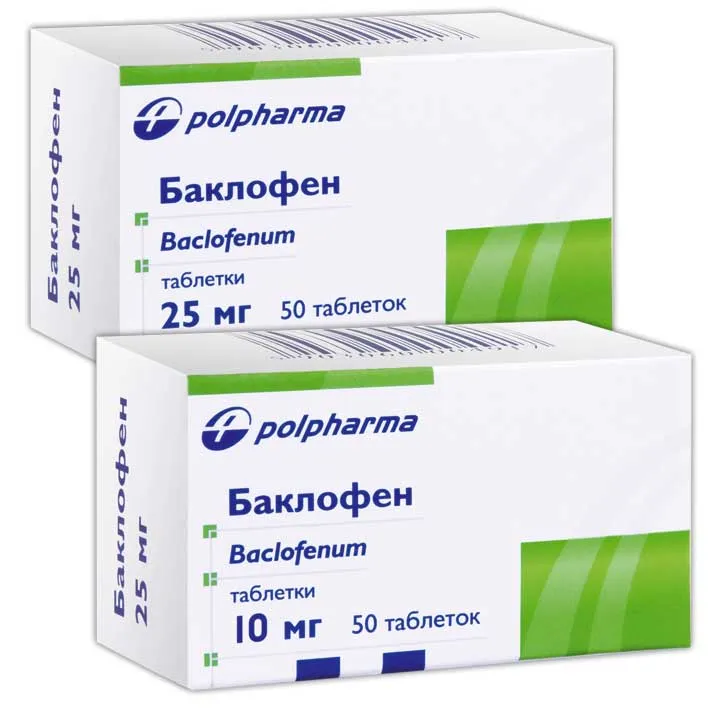
Table of Contents
INSTRUCTIONS FOR MEDICAL USE OF THE MEDICINAL PRODUCT BACLOFEN (BACLOFEN)
Composition:
Active substance: baclofen;
1 tablet contains 10 mg or 25 mg of baclofen;
Excipients: lactose monohydrate, potato starch, gelatin, talc, magnesium stearate, ethylcellulose.
Pharmaceutical form. Tablets.
Main physicochemical properties:
10 mg tablets: white, round, biconvex tablets with a score line;
25 mg tablets: white, round, biconvex tablets.
Pharmacotherapeutic group. Centrally-acting muscle relaxants. ATC code M03B X01.
Pharmacological Properties
Pharmacodynamics
Baclofen is a centrally acting muscle relaxant and a derivative of gamma-aminobutyric acid (GABA). Chemically, baclofen is unrelated to other muscle relaxants.
Baclofen reduces increased muscle tone caused by spinal cord lesions. The drug suppresses cutaneous reflexes and muscle tone equally and simultaneously, while only slightly reducing the amplitude of tendon reflexes.
The mechanism of action is believed to involve hyperpolarization of postsynaptic neurons and inhibition of both mono- and polysynaptic reflexes in the spinal cord via stimulation of GABAB receptors, thereby blocking the release of excitatory amino acids—glutamate and aspartate. Baclofen does not affect neuromuscular transmission.
In animal experiments, baclofen increased dopamine metabolism; however, in humans, the drug does not alter the concentrations of 5-hydroxyindoleacetic acid or dopamine metabolites in cerebrospinal fluid.
Since baclofen may depress CNS functions at high doses, it may also exert effects on centers located above the spinal cord.
The benefits of baclofen use are related to its ability to reduce painful flexor spasms and spontaneous muscle contractions, thereby improving patient mobility, reducing dependence on others, and enhancing rehabilitation. Baclofen also reduces pain sensitivity. Improvement in the patient’s general well-being and sedation occurs with less difficulty compared to other CNS-acting drugs.
Baclofen stimulates gastric secretion.
Pharmacokinetics
Absorption
Baclofen is rapidly and almost completely absorbed from the gastrointestinal tract.
There are no significant differences in Tmax, Cmax, and bioavailability when baclofen is administered as a solution compared to solid dosage forms. After a single oral dose (10–30 mg), peak plasma concentration is reached within 0.5–1.5 hours, and the area under the concentration-time curve is dose-proportional.
The extent of absorption decreases with higher doses.
The therapeutic concentration range is 80–395 ng/mL.
Animal studies have shown that baclofen distributes into many tissues, but only a small fraction crosses the blood-brain barrier.
In patients, maximum concentration (Cmax 500–600 ng/mL) is achieved within 2–3 hours after administration, and concentrations above 200 ng/mL are maintained for up to 8 hours.
Distribution
Baclofen crosses the placental barrier.
A minimal amount of the drug passes into breast milk.
The volume of distribution of baclofen is 0.7 L/kg, and plasma protein binding is approximately 30%, remaining constant over a concentration range of 10 ng/mL to 300 µg/mL. The concentration of the active substance in cerebrospinal fluid is 8.5 times lower than in plasma.
Biotransformation
Approximately 15% of the administered dose undergoes hepatic biotransformation via deamination. This process produces the main metabolite, β-(p-chlorophenyl)-4-hydroxybutyric acid, which has no pharmacological activity.
Elimination
The elimination half-life is 3–4 hours.
Baclofen is excreted in urine, with 70–80% eliminated unchanged or as metabolites. The remainder is excreted in feces.
After oral administration, baclofen is almost completely eliminated within 72 hours.
Elderly Patients
Pharmacokinetics in elderly patients is practically the same as in adults. Maximum plasma concentration of baclofen is slightly lower than in healthy young volunteers, but the AUC is similar in both patient groups.
Children
In children (aged 2–12 years), after administration of 2.5 mg tablets, Cmax is 62.8±28.7 ng/mL and Tmax is 0.95–2 hours. The average plasma clearance (Cl) has been reported to be 315.9 mL/h/kg, volume of distribution (Vd) 2.58 L/kg, and elimination half-life (T1⁄2) 5.1 hours.
Patients with Hepatic Impairment
There are no pharmacokinetic data available on the use of baclofen in patients with hepatic impairment. However, since the liver plays a minor role in the metabolism and elimination of baclofen, clinically significant changes in its pharmacokinetics in patients with hepatic impairment are not expected.
Patients with Renal Impairment
Controlled clinical studies on the pharmacokinetics of baclofen in patients with renal impairment have not been conducted. The majority of baclofen is excreted unchanged in urine. Limited data indicate that plasma concentrations of the drug in patients undergoing chronic hemodialysis and in those with compensated renal insufficiency suggest significantly reduced clearance and prolonged elimination half-life in these groups. Dose adjustment should be performed in patients with impaired renal function based on systemic baclofen levels. Immediate hemodialysis is an effective method for removing excess baclofen from systemic circulation.
Clinical characteristics.
Indications.
Spastic states occurring during:
- multiple sclerosis;
- other spinal cord disorders (e.g., spinal cord tumors, syringomyelia, motor neuron disease, transverse myelitis, spinal cord injuries);
- cerebral stroke;
- cerebral palsy;
- meningitis and encephalitis;
- head injuries.
Children
Baclofen is used in children for symptomatic treatment of spastic states of cerebral origin resulting from cerebral palsy, as well as those arising from cerebrovascular incidents due to brain tumors or degenerative brain diseases.
Baclofen is also indicated for symptomatic treatment of muscle spasticity resulting from infection and diseases of the spinal cord, degenerative changes, trauma, tumors, and lesions of unknown origin, such as multiple sclerosis, amyotrophic lateral sclerosis, syringomyelia, transverse myelitis, traumatic injury, lower paraparesis, or spinal cord compression.
Contraindications.
Hypersensitivity to baclofen or to any excipient of the medicinal product. Active peptic ulcer disease of the stomach or duodenum. Porphyria.
Interaction with other medicinal products and other forms of interaction.
Concomitant use of baclofen with other centrally acting CNS depressants, such as other muscle relaxants (e.g., tizanidine), synthetic opioids, or alcohol, enhances their sedative effects.
In patients receiving baclofen, the risk of respiratory depression is increased. Additionally, hypotension has been reported with concomitant use of morphine and intrathecal baclofen. Careful monitoring of cardiac and respiratory function is required, especially in patients with concomitant cardiovascular or respiratory disorders and in those with weakened respiratory musculature.
Baclofen may exacerbate hyperkinesia in patients concurrently receiving lithium salts.
Tricyclic antidepressants may potentiate the effect of baclofen and significantly reduce muscle tone.
Baclofen potentiates the effect of antihypertensive agents (dose adjustment may be necessary).
Medicinal products affecting renal function (e.g., ibuprofen) may slow the elimination of baclofen, leading to symptoms of intoxication (see section "Special precautions for use").
In patients with Parkinson's disease receiving levodopa and carbidopa, concomitant use with baclofen may lead to confusion, hallucinations, nausea, and psychic agitation. Exacerbation of parkinsonian symptoms has been reported. Therefore, baclofen should be used with caution when administered together with levodopa or carbidopa.
Baclofen enhances the analgesia induced by fentanyl.
Special precautions for use.
Mental disorders and nervous system disorders
During treatment with baclofen, psychotic syndromes, schizophrenia, depressive or manic disorders, convulsive states, dizziness, and symptoms of parkinsonism may be exacerbated; therefore, the drug should be used with caution, and patients must remain under continuous medical supervision.
Cases of suicide and suicidal behavior have been reported in patients receiving baclofen. In most cases, patients had additional risk factors associated with an increased risk of suicide, including alcohol abuse, depression, and/or history of suicide attempts. Patients with such additional risk factors must remain under continuous medical supervision during baclofen treatment. Patients (and caregivers) should be informed about the use of baclofen and the need to monitor for clinical worsening, suicidal thoughts or behavior, or unusual changes in behavior, and to contact a physician immediately if such symptoms occur.
Cases of misuse, abuse, and dependence have been reported during baclofen treatment. Baclofen should be prescribed with caution in patients with a history of substance abuse, and patients should be monitored for signs of misuse, abuse, or dependence during treatment, such as dose escalation, manipulative behavior aimed at obtaining the drug, or development of dependence.
Epilepsy
Patients with epilepsy requiring concomitant therapy with baclofen require continuous clinical monitoring and EEG examinations, as reduced efficacy of concurrently administered anticonvulsant drugs and changes in EEG patterns have been observed.
Encephalopathy
Cases of encephalopathy have been reported in patients receiving baclofen at therapeutic doses, which were reversible upon discontinuation of treatment. Symptoms included somnolence, depressed level of consciousness, confusion, myoclonus, and coma.
If signs of encephalopathy occur, baclofen administration should be discontinued.
Other
Caution should be exercised when administering baclofen to patients whose ability to maintain upright posture, balance, or increased range of motion depends on pronounced muscle tone.
Baclofen should be prescribed with particular caution in patients receiving antihypertensive drugs (potential interactions may occur) (see section "Interaction with other medicinal products and other types of interactions").
The drug should be used cautiously in patients who have experienced stroke, respiratory dysfunction, or hepatic impairment.
Renal disorders
Baclofen is excreted in urine, primarily in unchanged form; therefore, the drug should be administered with caution in patients with impaired renal function. The dose should be reduced in these patients. Baclofen may be used in patients with end-stage renal disease (ESRD – stage 5 CKD, GFR < 15 mL/min) only if the potential benefit outweighs the risk (see section "Dosage and administration").
Neurological symptoms of overdose, including clinical manifestations of toxic encephalopathy (e.g., confusion, disorientation, somnolence, and depressed consciousness), have been observed in patients with impaired renal function who received oral baclofen at doses exceeding 5 mg daily, and at a dose of 5 mg daily in patients with end-stage renal disease undergoing chronic hemodialysis. Patients with renal insufficiency should be carefully monitored for early signs of toxicity.
Extreme caution is required when using baclofen in combination with other drugs affecting renal function. Renal function should be closely monitored, and a daily dose of baclofen should be established to avoid intoxication.
Cases of baclofen poisoning have been reported in patients with acute renal failure (see section "Overdose").
In addition, after discontinuation of treatment, hemodialysis may be an alternative treatment method for patients poisoned with baclofen. Hemodialysis effectively removes baclofen from the body, reduces clinical symptoms of overdose, and accelerates patient recovery.
Urinary tract disorders
Caution should be exercised in patients with increased tone of the urinary sphincter (risk of urinary retention).
Improvement has been observed in patients with neurogenic bladder dysfunction after baclofen administration.
Laboratory tests
In some patients receiving baclofen therapy, increased serum activity of aspartate aminotransferase and alkaline phosphatase, as well as elevated serum glucose levels, have been observed. Laboratory monitoring is recommended, especially in patients with hepatic impairment and in patients with diabetes mellitus.
Sudden withdrawal
Sudden discontinuation of the drug (particularly after prolonged treatment) may result in anxiety, confusion, hallucinations, psychotic reactions, manic, paranoid, or convulsive states, dyskinesias, tachycardia, hyperthermia, rhabdomyolysis, and may also exacerbate spasticity. Therefore, the dose should be tapered gradually over 1–2 weeks.
Patients aged 65 years and older
Particular caution is required when treating elderly patients (increased risk of adverse effects).
Excipients
The medicinal product should not be administered to patients with rare hereditary conditions such as galactose intolerance, Lapp lactase deficiency, or glucose-galactose malabsorption.
Use during pregnancy or breastfeeding
There are no controlled studies on the use of baclofen in pregnant women. Baclofen crosses the placental barrier.
Baclofen may be used during pregnancy (especially during the first trimester) only if the benefit to the pregnant woman outweighs the potential risk to the fetus.
There has been only one reported case of withdrawal syndrome (seizures) in a 7-day-old newborn whose mother had taken baclofen at a dose of 80 mg daily during pregnancy. The seizures, which were initially treated with standard anticonvulsant drugs, resolved 30 minutes after administration of baclofen.
Baclofen passes into breast milk, but when administered at therapeutic doses, it is present in extremely low quantities; therefore, adverse reactions in the newborn are not expected.
Ability to affect reaction speed when driving or operating machinery
Baclofen may cause dizziness, sedation, somnolence, and visual disturbances (see section "Adverse reactions"), which may impair concentration and attention. Patients experiencing these adverse reactions should not drive vehicles or operate machinery.
Method of Administration and Dosage
The dose should be determined individually, establishing the lowest effective dose that does not cause adverse effects.
The medication should be taken during meals.
Prior to initiating treatment, the maximum effectiveness of baclofen therapy should be assessed. The dose should be increased cautiously (especially in patients aged 65 years and older) until the patient's general condition stabilizes. If a sufficiently high initial dose is administered or the dose is increased too rapidly, adverse effects may occur. This is particularly important for ambulatory patients, aiming to minimize muscle weakness in unaffected limbs or when reduction of muscle tone is required.
If the recommended maximum doses have not produced a therapeutic effect after 6 weeks of treatment, the continuation or discontinuation of therapy should be reevaluated.
Discontinuation of treatment should always be performed gradually, reducing the dose over a period of 1–2 weeks, except in emergency situations related to overdose or the development of serious adverse reactions.
The following dosing regimen is recommended.
Adults
Treatment should begin with a daily dose of 15 mg, divided into several equal doses. The following stepwise dose escalation is proposed, but individual patient characteristics should always be considered:
Days 1–3: 5 mg (½ of a 10 mg tablet) three times daily,
Days 4–6: 10 mg tablet three times daily,
Days 7–9: 1½ tablets of 10 mg (15 mg) three times daily,
Days 10–12: 2 tablets of 10 mg (20 mg) three times daily.
In most patients, the therapeutic effect is achieved with a daily dose ranging from 30 mg to 75 mg.
This dosing regimen ensures good tolerability of the drug.
If necessary, the dose may be cautiously increased.
For patients requiring higher doses (75–100 mg daily), baclofen in 25 mg tablets may be used.
The daily dose should not exceed 100 mg.
The duration of treatment depends on the patient's clinical condition.
Baclofen therapy should not be abruptly discontinued due to the risk of hallucinations and exacerbation of spastic conditions.
Elderly Patients
In elderly patients, the dose should be increased with particular caution due to an increased risk of adverse effects.
Children
Treatment should begin with a very low dose (approximately 0.3 mg/kg body weight per day), administered in 2–4 divided doses (preferably in 4 equal doses).
The dose should be cautiously increased in children at weekly intervals until the optimal therapeutic effect is achieved.
The usual daily maintenance dose is generally 0.75–2 mg/kg body weight.
The maximum daily dose should not exceed 40 mg for children under 8 years of age. For children aged 8 years and older, the maximum daily dose is 60 mg.
Baclofen tablets should not be prescribed to children weighing less than 33 kg.
Patients with Renal Impairment
For such patients, as well as for patients on dialysis, the recommended dose should be reduced to 5 mg daily.
Baclofen may be used in patients with end-stage renal disease when potential benefit outweighs the risk. These patients should be closely monitored for early signs of toxicity (such as drowsiness, coma) (see sections "Special Precautions" and "Overdose").
Patients with Cerebral Origin Spastic Conditions
Adverse effects are most commonly observed in this patient group; therefore, the dosing regimen should be carefully adjusted, and these patients should remain under close medical supervision.
Children.
Baclofen tablets should not be prescribed to children weighing less than 33 kg.
For information on pediatric use, see the section "Method of Administration and Dosage".
Overdose
In case of overdose, the following adverse effects related to the central nervous system may develop, including encephalopathy: drowsiness, loss of consciousness, coma, respiratory depression.
Other symptoms may include: confusion, hallucinations, mental agitation, accommodation disturbances, absence of pupillary reflexes, tinnitus, muscle hypotonia, clonic seizures, depressed or absent reflexes, seizures, EEG changes (suppression of bursts and triphasic waves, generalized slowing on EEG), peripheral vasodilation, arterial hypotension or hypertension, bradycardia, tachycardia or tachyarrhythmia, hypothermia, nausea, vomiting, diarrhea, excessive salivation, increased activity of lactate dehydrogenase, aspartate aminotransferase, and alkaline phosphatase.
Symptoms of overdose may occur at lower doses of baclofen in patients with renal insufficiency (see sections "Method of Administration and Dosage" and "Special Precautions").
The patient's condition may worsen if other drugs or substances affecting the central nervous system (e.g., alcohol, diazepam, tricyclic antidepressants) are used concomitantly.
Treatment.
There is no specific antidote.
Symptomatic treatment should be administered to manage complications associated with arterial hypotension, arterial hypertension, seizures, depression of the nervous system, or circulatory system.
Induce vomiting or perform gastric lavage as soon as possible, and administer activated charcoal.
Comatose patients should be intubated prior to gastric lavage.
If necessary, administer saline cathartics.
For patients with respiratory arrest, perform artificial ventilation and ensure cardiovascular support.
Published data suggest that physostigmine, administered intravenously (1–2 mg over 5–10 minutes), may reverse CNS-related side effects, particularly drowsiness and respiratory depression, in mild intoxications. If no improvement occurs after the first dose, a subsequent dose may be administered after 30–60 minutes.
Administration of substances along with diuretics may be indicated to enhance urinary excretion of baclofen.
In cases of severe intoxication, hemodialysis may be considered for patients with renal insufficiency (see section "Special Precautions").
If seizures occur, diazepam should be administered intravenously with extreme caution.
Adverse reactions
Undesirable effects are most commonly observed at the beginning of treatment (e.g., drowsiness and nausea), during rapid dose escalation or use of high doses of baclofen, as well as in elderly patients.
They are mainly transient in nature and disappear after dose reduction. In case of severe adverse reactions, the drug should be discontinued.
If nausea persists even after dose reduction, it is recommended to take baclofen with food or to consume it with milk.
In patients with a history of psychiatric disorders or cerebrovascular diseases (e.g., stroke), as well as in elderly patients, adverse effects may have more serious consequences.
A lowered seizure threshold and seizures are possible, especially in patients with epilepsy.
Increased spasticity has been observed in some patients as a paradoxical response to the drug.
Adverse muscle hypotonia may occur, which can impair a patient's ability to walk or perform self-care activities; this is usually alleviated by reassessing the dosing regimen (i.e., by reducing daytime doses and increasing the evening dose).
The following adverse effects have been observed during the use of baclofen:
| Psychiatric disorders |
Confusion, insomnia, disorientation, euphoria, excitement, depression, hallucinations, nightmares, delirium, decreased seizure threshold and increased frequency of seizures (especially in patients with epilepsy), sleep apnea syndrome*. |
| Nervous system disorders |
Somnolence, sedation, respiratory depression, sensation of emptiness in the head, encephalopathy, fatigue, headache, ataxia, paresthesia, speech disorder, taste disturbance, vertigo, tinnitus. |
| Eye disorders |
Visual disturbances, accommodation disorders, nystagmus. |
| Cardiac disorders |
Cardiovascular depression, decreased cardiac output, feeling of suffocation, very rapid heartbeat, chest pain. |
| Vascular disorders |
Decreased blood pressure, dizziness, ankle swelling. |
| Gastrointestinal disorders |
Nausea, dry mouth, taste disturbance, urge to vomit, vomiting, constipation, diarrhea, abdominal pain. |
| Hepatobiliary disorders |
Liver function abnormalities. |
| Skin and subcutaneous tissue disorders |
Rash, increased sweating, pruritus, urticaria. |
| Musculoskeletal and connective tissue disorders |
Weakness, muscle pain, tremor, muscle twitching. |
| Renal and urinary disorders |
Polyuria, urinary incontinence, dysuria, urinary retention, nocturnal enuresis, hematuria, anuria. |
| Reproductive system and breast disorders |
Ejaculation disorder, erectile dysfunction, impotence. |
| Metabolism and nutrition disorders |
Weight gain. |
| Respiratory, thoracic and mediastinal disorders |
Respiratory depression, nasal congestion. |
| General disorders and administration site conditions |
Weakness, fatigue, exhaustion, hypothermia. |
| Investigations |
Positive occult blood test in stool, changes in blood sugar. |
*Cases of sleep apnea syndrome have been observed in patients with alcohol dependence when using baclofen at high doses (≥ 100 mg).
Paradoxical reactions (increased spasticity) have been observed in some patients.
Undesirable muscle stiffness, causing difficulties in walking or self-care, may occur but usually resolves after dose adjustment (e.g., by reducing the total daily dose while increasing the evening dose).
Shelf life. 3 years.
Storage conditions.
Store in the original packaging at a temperature not exceeding 25 °C.
Keep out of reach of children.
Packaging.
50 tablets in a polyethylene bottle (HDPE) with a cap (LDPE) equipped with a cushion and tamper-evident ring; 1 bottle in a cardboard box.
Prescription status.
Prescription only.
Manufacturer.
Pharmaceutical Works “Polpharma” S.A., Poland
Manufacturer’s address.
19, Pelplinska Str., 83-200 Starogard Gdanski, Poland