Azapine
Ukraine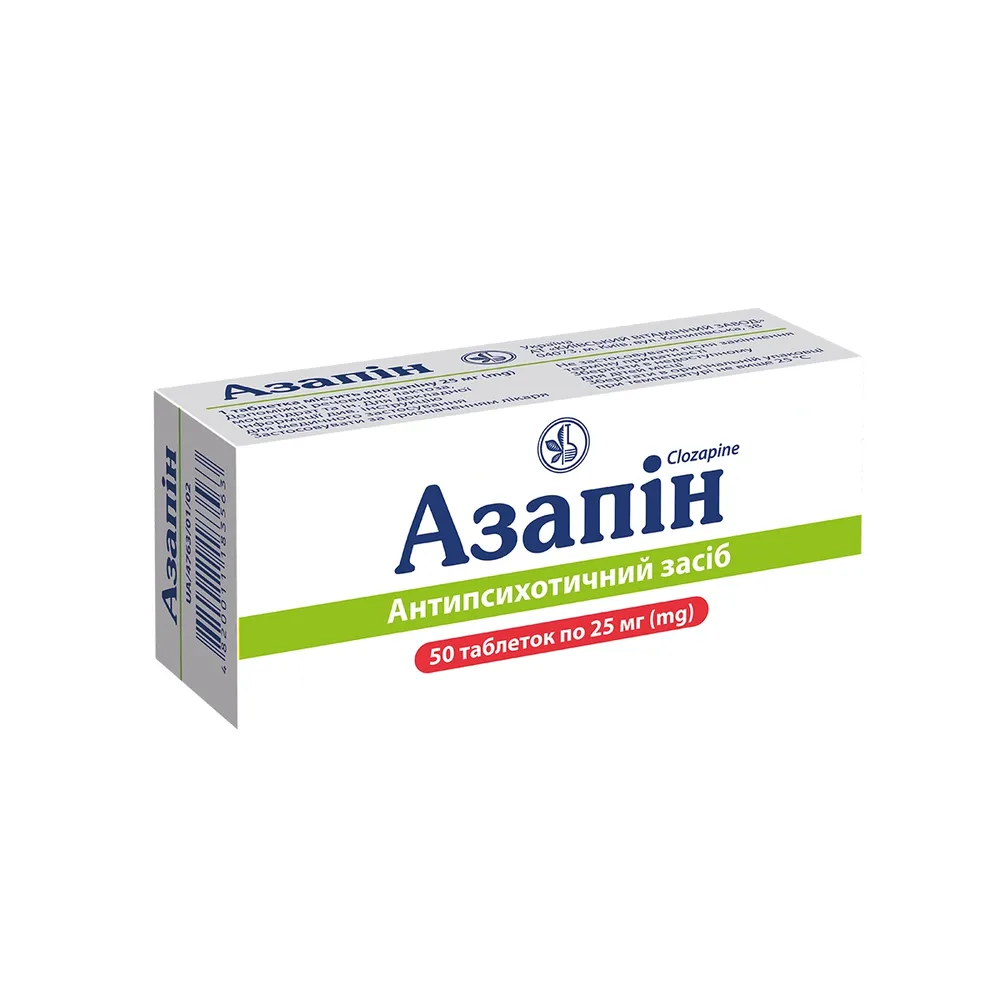
Table of Contents
INSTRUCTION FOR MEDICAL USE OF THE MEDICINAL PRODUCT AZAPIN (Azapin)
Composition:
Active substance: clozapine;
1 tablet contains clozapine 25 mg or 100 mg;
Excipients: lactose monohydrate; maize starch; povidone; colloidal anhydrous silicon dioxide; talc; magnesium stearate.
Pharmaceutical form. Tablets.
Main physicochemical properties: tablets of round shape, flat surface, bevelled edges and a score line, pale yellow in colour.
Pharmacotherapeutic group. Antipsychotics. ATC code N05AH02.
Pharmacological properties.
Pharmacodynamics.
Azapin is an atypical antipsychotic agent, differing from classical antipsychotics.
Clozapine does not induce catalepsy or suppress stereotyped behaviour induced by administration of apomorphine or amphetamine. The drug exhibits only weak blocking activity at dopamine D1-, D2-, D3-, and D5-receptors, but shows high affinity for D4-receptors. It also exerts anti-alpha-adrenergic, anticholinergic, antihistaminic effects, and inhibits the activation response. Additionally, it displays antisero-toninergic properties. Clinically, Azapin produces a rapid and pronounced sedative effect and exerts strong antipsychotic activity, particularly in patients with schizophrenia resistant to treatment with other medications. In such cases, Azapin is effective against both productive and negative symptoms of schizophrenia. Severe extrapyramidal reactions such as acute dystonia, parkinsonism-like side effects, and akathisia occur rarely. Unlike conventional neuroleptics, Azapin does not increase or increases only minimally serum prolactin levels, thus avoiding adverse effects such as gynecomastia, amenorrhea, galactorrhea, and impotence.
Pharmacokinetics.
Absorption. After oral administration, Azapin is absorbed by 90–95%. Neither the rate nor the extent of absorption is affected by food intake. During first-pass metabolism, clozapine undergoes moderate metabolism; absolute bioavailability is 50–60%.
Distribution. At steady state with twice-daily dosing, peak blood concentrations are reached on average within 2.1 hours (range: 0.4–4.2 hours). The volume of distribution is 1.6 L/kg. Clozapine is approximately 95% bound to plasma proteins.
Biological transformation/metabolism. Clozapine is almost completely metabolized prior to elimination. Only one of its major metabolites, desmethylclozapine, exhibits pharmacological activity. Its effect resembles that of clozapine but is considerably weaker and shorter in duration.
Elimination. Elimination of clozapine is biphasic, with a mean elimination half-life of 12 hours (range: 6–26 hours). After single 75 mg doses, the mean elimination half-life is 7.9 hours. This increases to 14.2 hours at steady state achieved by daily doses of 75 mg given for at least 7 days. Only a negligible amount of unchanged drug is excreted in urine and feces. Approximately 50% of the administered dose is excreted in urine as metabolites and 30% in feces.
Linearity/non-linearity. At steady state, dose-proportional increases in the area under the plasma concentration-time curve (AUC), as well as increases in maximum and minimum plasma concentrations, have been observed when the dose was increased from 37.5 mg to 75 mg and 150 mg twice daily.
Pharmacokinetics in specific patient groups.
The drug should be used with particular caution in patients with impaired hepatic function, biliary tract disorders, or renal disease. The use of the drug is contraindicated in severe forms of these conditions.
Clinical characteristics.
Indications.
Refractory schizophrenia
Azapin should be prescribed only to patients with schizophrenia who are resistant to or intolerant of standard antipsychotics, as defined below.
Resistance to standard antipsychotics – a condition in which prior treatment with standard antipsychotics at appropriate doses and for a sufficient duration has not resulted in adequate clinical improvement.
Intolerance to standard antipsychotics – a condition in which severe, uncontrolled neurological adverse effects (extrapyramidal symptoms or tardive dyskinesia) occur, making effective antipsychotic therapy with standard antipsychotics impossible.
Risk of recurrence of suicidal behavior
Azapin is indicated for long-term reduction of the risk of recurrence of suicidal behavior in patients with schizophrenia or schizoaffective disorder who are judged to be at risk based on their medical history and current clinical presentation.
Psychotic disorders during Parkinson’s disease therapy
Azapin is indicated for the treatment of psychotic disorders occurring during Parkinson’s disease when standard therapy has proven ineffective.
Ineffectiveness of standard therapy is defined as lack of control over psychotic symptoms and/or emergence of functionally unacceptable worsening of motor symptoms after the following interventions:
- discontinuation of anticholinergic drugs, including tricyclic antidepressants;
- attempt to reduce the dose of dopaminergic antiparkinsonian drugs.
Contraindications.
- Hypersensitivity to clozapine or to any other component of the medicinal product;
- inability to perform regular blood monitoring in the patient;
- history of toxic or idiopathic granulocytopenia/agranulocytosis (except for granulocytopenia or agranulocytosis induced by prior chemotherapy);
- history of agranulocytosis induced by Azapin;
- bone marrow dysfunction;
- uncontrolled epilepsy;
- alcoholic or other toxic psychoses, drug intoxications, comatose states;
- vascular collapse and/or central nervous system (CNS) depression of any etiology;
- severe renal or cardiac disorders (e.g., myocarditis);
- acute liver disease associated with nausea, loss of appetite, or jaundice; progressive liver disease, hepatic failure;
- paralytic ileus;
- Azapin must not be administered concomitantly with medicinal products known to induce agranulocytosis; concomitant use of depot antipsychotics is also contraindicated.
Interaction with other medicinal products and other forms of interactions.
Contraindicated concomitant use
Medicinal products with significant myelosuppressive effects on bone marrow function must not be used concomitantly with Azapin. Azapin must not be used concomitantly with long-acting depot antipsychotics (which have myelosuppressive potential), as these substances cannot be rapidly eliminated from the body if necessary, e.g., in case of neutropenia.
Due to the possible potentiation of sedative effects, alcohol must not be consumed during treatment with Azapin.
Precautions, including dose adjustment
Azapin may enhance the CNS depressant effects of narcotics, antihistamines, and benzodiazepines. Particular caution is required when Azapin is administered in combination with benzodiazepines or other psychotropic medicinal products, as this increases the risk of vascular collapse, which rarely may be severe and lead to cardiac or respiratory arrest. It is unclear whether cardiac or respiratory collapse can be prevented by dose adjustment.
Due to the possibility of additive effects, concomitant use of medicinal products with anticholinergic, antihypertensive, or respiratory depressant effects must be undertaken with particular caution.
Due to its anti-alpha-adrenergic properties, Azapin may reduce the pressor effect of noradrenaline or other medicinal products with predominantly alpha-adrenergic activity, and may reverse the pressor effect of adrenaline.
Concomitant use of substances known to inhibit the activity of certain cytochrome P450 enzymes may increase clozapine levels, and the clozapine dose may need to be reduced to prevent adverse effects. This is particularly important for CYP1A2 inhibitors such as caffeine (see below) and selective serotonin reuptake inhibitors such as fluvoxamine. Some other serotonin reuptake inhibitors, such as fluoxetine, paroxetine, and to a lesser extent sertraline, are CYP2D6 inhibitors, and therefore significant pharmacokinetic interactions with clozapine are unlikely. Additionally, pharmacokinetic interactions with CYP3A4 inhibitors such as azole antifungals, cimetidine, erythromycin, and protease inhibitors are unlikely, although some cases have been reported. Since plasma clozapine concentrations increase with caffeine intake and decrease by almost 50% after 5 days without caffeine, dose adjustments of clozapine may be necessary if daily coffee consumption changes. Sudden cessation of smoking may increase plasma clozapine concentrations, leading to an increased incidence of adverse effects.
Cases of interaction between citalopram and clozapine have been reported, which may increase the risk of adverse events associated with clozapine use. The nature of this interaction has not been fully elucidated.
Concomitant use of substances known to induce cytochrome P450 enzyme activity may reduce clozapine plasma levels, leading to decreased drug efficacy. Substances known to induce cytochrome P450 enzymes and reported to interact with clozapine include, for example, carbamazepine (must not be used concomitantly with clozapine due to its myelosuppressive potential), phenytoin, and rifampicin. Known inducers of CYP1A2, such as omeprazole, may lead to reduced clozapine levels. The potential for reduced clozapine efficacy when used in combination with these substances should be considered.
Other
Concomitant use of lithium or other substances affecting CNS activity may increase the risk of neuroleptic malignant syndrome (NMS).
Rare but serious seizures have been reported, including onset in patients without epilepsy, and isolated reports of delirium with concomitant use of clozapine and valproic acid. These effects may arise from pharmacodynamic interactions, the mechanism of which has not been elucidated.
Patients receiving concomitant treatment with other substances that are either inhibitors or inducers of cytochrome P450 enzymes should be closely monitored. To date, no clinically significant interactions have been observed with tricyclic antidepressants, phenothiazines, and class 1C antiarrhythmics, which are known to bind to cytochrome P450 2D6.
As with other antipsychotics, caution should be exercised when prescribing clozapine with medicinal products known to prolong the QTc interval or cause electrolyte imbalances.
A scheme of drug interactions considered most important with respect to clozapine is presented in Table 1. This list is not exhaustive.
Most common drug interactions with clozapine
Table 1
| Medicinal product |
Interactions |
Comments |
| Medicinal products that suppress bone marrow function (e.g. carbamazepine, chloramphenicol), sulfonamides (e.g. co-trimoxazole), pyrazolone analgesics (e.g. phenylbutazone), penicillamine, cytostatic agents and long-acting injectable antipsychotics |
Interaction leads to increased risk and/or severity of bone marrow suppression. |
Azapine should not be used concomitantly with other medicinal products known to have bone marrow suppressant potential. |
| Benzodiazepines |
Concomitant use may increase the risk of vascular collapse, which may lead to cardiac and/or respiratory arrest. |
Although such interaction occurs rarely, caution is recommended when using these medicinal products together. Reports suggest that respiratory depression and collapse are most likely to occur at the beginning of treatment with this combination or when azapine is added to an established benzodiazepine regimen. |
| Anticholinergic medicinal products |
Azapine potentiates the effects of these medicinal products due to additive anticholinergic activity. |
Patients should be monitored for development of anticholinergic side effects such as constipation, especially when used to control hypersalivation. |
| Antihypertensive medicinal products |
Azapine may potentiate the hypotensive effect of these medicinal products due to its sympatholytic antagonistic effects. |
Caution is recommended when using azapine concomitantly with antihypertensive agents. Patients should be warned about the risk of developing arterial hypotension, particularly during initial dose titration. |
| Alcohol, MAO inhibitors, medicinal products that depress CNS function, including opioids and benzodiazepines |
Enhanced effect on the central nervous system. Additive CNS depression, as well as impairment of cognitive and motor functions when used in combination with such substances. |
Caution is recommended if azapine is used concomitantly with other active substances affecting CNS function. Patients should be advised about the possible development of additive sedative effects and warned not to drive or operate machinery. |
| Substances highly bound to plasma proteins (e.g. warfarin or digoxin) |
Azapine may lead to increased plasma concentrations of these substances by displacing them from plasma protein binding sites. |
Patients should be monitored for adverse effects related to the use of these substances, and doses of protein-bound substances may need to be adjusted as necessary. |
| Phenytoin |
Adding phenytoin to azapine therapy may result in decreased plasma concentrations of clozapine. |
If phenytoin use is necessary, patients should be closely monitored for worsening or recurrence of psychotic symptoms. |
| Lithium preparations |
Concomitant use may increase the risk of neuroleptic malignant syndrome (NMS). |
Patients should be monitored for signs and symptoms of NMS. |
| Substances inducing CYP1A2 (e.g. omeprazole) |
Concomitant use may reduce clozapine levels. |
The potential for reduced clozapine efficacy should be considered. |
| Substances inhibiting CYP1A2 (e.g. fluvoxamine, caffeine, ciprofloxacin) |
Concomitant use may increase clozapine levels. |
The potential for increased adverse effects should be considered. Caution is also required when discontinuing concomitant use of CYP1A2 inhibitors, as this may lead to decreased clozapine levels. |
Special precautions for use.
Agranulocytosis
The use of Azapin may lead to the development of agranulocytosis. The incidence of agranulocytosis and its associated mortality rate have significantly decreased since the implementation of monitoring for white blood cell count and absolute neutrophil count (ANC). Therefore, the preventive measures outlined below are mandatory and must be carried out in accordance with official recommendations.
Due to the risks associated with the use of Azapin, its prescription is permissible only if:
- patients have normal baseline white blood cell counts (total white blood cell count ≥ 3,500/mm³ [3.5 × 10⁹/L] and absolute neutrophil count [ANC] ≥ 2,000/mm³ [2.0 × 10⁹/L])
and
- patients can undergo weekly monitoring of total white blood cell count and absolute neutrophil count (ANC) for the first 18 weeks of treatment, followed by monitoring at least once every 4 weeks thereafter. Monitoring must continue throughout the entire duration of treatment and for 4 weeks after complete discontinuation of Azapin.
Prior to initiating clozapine therapy, a blood test should be performed, and a medical history taken along with a physical examination. Patients with a history of cardiac disease or findings indicating cardiovascular abnormalities on physical examination should be referred to a specialist for further evaluation, including ECG; treatment may only be initiated if the anticipated benefit clearly outweighs the risks. Physicians should consider the necessity of performing an ECG prior to starting treatment.
Physicians prescribing this medicinal product must strictly adhere to all required safety measures.
Before initiating treatment, physicians must ensure that the patient has not previously experienced adverse hematological reactions to clozapine that necessitated discontinuation of the drug. Prescriptions for the medicinal product should not cover a period longer than the interval between two blood tests.
At any time during Azapin treatment, immediate discontinuation of the drug is mandatory if the white blood cell count falls below 3,000/mm³ (3.0 × 10⁹/L) or if the ANC drops below 1,500/mm³ (1.5 × 10⁹/L). Re-administration of Azapin is contraindicated in patients who have previously discontinued the drug due to decreased white blood cell count or ANC.
At every consultation, patients receiving Azapin should be reminded to contact their physician immediately if they develop any signs of infection. Particular attention should be paid to symptoms such as influenza-like illness, including fever or sore throat, as well as other signs of infection that may indicate neutropenia. Patients and caregivers should be informed that in the event of any of these symptoms, an immediate blood test with complete blood count must be performed. Prescribing physicians are advised to maintain records of all blood test results and take all necessary precautions to prevent accidental re-prescription of the drug to these patients in the future.
The drug should only be prescribed to patients with a history of primary bone marrow disorders if the expected therapeutic benefit outweighs the risk. Such patients should undergo evaluation by a hematologist prior to initiating treatment with Azapin.
Special attention should be given to patients with low white blood cell counts due to benign ethnic neutropenia. Treatment with Azapin may only be initiated after obtaining approval from a hematologist.
Monitoring of white blood cell count and absolute neutrophil count
White blood cell count and differential count should be determined within 10 days prior to initiating Azapin therapy to ensure that only patients with normal white blood cell counts (≥ 3.5 × 10⁹/L [3,500/mm³]) and absolute neutrophil count (≥ 2.0 × 10⁹/L [2,000/mm³]) receive the drug. White blood cell count and, if possible, absolute neutrophil count should be monitored weekly for the first 18 weeks of treatment, and thereafter at least once monthly throughout the treatment period. Monitoring must continue throughout the entire treatment period and for four weeks after complete discontinuation of Azapin or until hematological parameters have normalized. At each visit, patients should be reminded to seek immediate medical attention at the first sign of infection, including fever, sore throat, or other influenza-like symptoms. In such cases, a complete blood count with differential must be performed immediately.
Decreased white blood cell count and absolute neutrophil count
If during Azapin treatment the white blood cell count decreases to between 3.5 × 10⁹/L (3,500/mm³) and 3.0 × 10⁹/L (3,000/mm³), or if the absolute neutrophil count decreases to between 2.0 × 10⁹/L (2,000/mm³) and 1.5 × 10⁹/L (1,500/mm³), hematological monitoring should be performed at least twice weekly until the patient's white blood cell count and ANC stabilize within the range of 3,000–3,500/mm³ (3.0–3.5 × 10⁹/L) and 1,500–2,000/mm³ (1.5–2.0 × 10⁹/L), respectively, or higher.
During treatment with Azapin, immediate discontinuation of the drug is mandatory if the white blood cell count falls below 3,000/mm³ (3.0 × 10⁹/L) or if the ANC drops below 1,500/mm³ (1.5 × 10⁹/L).
Thereafter, white blood cell count and differential should be monitored daily, and patients should be closely observed for the development of influenza-like symptoms or other signs of infection. It is recommended to confirm hematological values by performing two blood tests on two consecutive days; however, Azapin should be discontinued after the first abnormal blood test result.
After discontinuation of Azapin, hematological parameters should continue to be monitored until they return to normal.
Table 2
| Number of blood cells |
Actions to be taken |
|
| leukocytes/mm3 (/l) |
ANC/mm3 (/l) |
|
| ≥ 3500 (≥ 3.5 x 10⁹) |
≥ 2000 (≥ 2.0 x 10⁹) |
Continue treatment with Azapin. |
| 3000–3500 (3.0 x 10⁹–3.5 x 10⁹) |
1500–2000 (1.5 x 10⁹–2.0 x 10⁹) |
Continue treatment with Azapin; perform blood tests twice weekly until hematological parameters stabilize or increase. |
| < 3000 (< 3.0 x 10⁹) |
< 1500 (< 1.5 x 10⁹) |
Immediately discontinue treatment with Azapin; perform blood tests daily until hematological parameters return to normal. The drug should not be re-prescribed to the patient. |
If, after discontinuation of the medicinal product Azapin, a further decrease in the white blood cell count to below 2000/mm³ (2.0 x 10⁹/L) or absolute neutrophil count (ANC) below 1000/mm³ (1.0 x 10⁹/L) is observed, treatment must be managed under the supervision of an experienced hematologist.
Discontinuation of therapy due to hematological parameters
Patients in whom treatment with Azapin has been discontinued due to reduced white blood cell count or ANC (see above) must not be re-prescribed this medicinal product.
Physicians prescribing Azapin are advised to maintain a record of all the patient’s blood test results and take all necessary precautions to prevent accidental re-prescription of the medicinal product to such patients in the future.
Discontinuation of therapy due to non-hematological reasons
In patients whose Azapin therapy lasting more than 18 weeks has been interrupted for more than 3 days but less than 4 weeks, weekly monitoring of white blood cell count is recommended for an additional 6 weeks. Provided no abnormalities are observed, subsequent monitoring may be performed no more frequently than once every 4 weeks. If Azapin therapy has been discontinued for 4 weeks or longer, weekly monitoring is required for the next 18 weeks of treatment, and the dose of the medicinal product must be re-titrated.
Other precautionary measures
Azapin contains lactose monohydrate. Patients with rare hereditary conditions of galactose intolerance, Lapp lactase deficiency, or glucose-galactose malabsorption should not take this medicinal product.
In the event of eosinophilia, discontinuation of Azapin is recommended if the eosinophil count rises above 3000/mm³ (3.0 x 10⁹/L); treatment may be restarted only after the eosinophil count has decreased to below 1000/mm³ (1.0 x 10⁹/L).
In the event of thrombocytopenia, discontinuation of Azapin is recommended if the platelet count falls below 50,000/mm³ (50 x 10⁹/L).
Cardiovascular disorders
Treatment with Azapin may lead to orthostatic hypotension with or without syncope. In rare cases, collapse may be severe and may be accompanied by cardiac arrest and/or respiratory arrest. These reactions are most likely to occur when Azapin is co-administered with a benzodiazepine or any other psychotropic agent, or during the initial dose titration phase due to rapid dose escalation; very rarely, such reactions have occurred even after the first dose of the medicinal product. Therefore, careful medical supervision of patients is required at the beginning of Azapin treatment. Monitoring of blood pressure in the supine and standing positions should be performed during the first weeks of treatment in patients with Parkinson’s disease.
It is known that the use of Azapin is associated with an increased risk of myocarditis, particularly during the first two months of treatment, although not limited to this period. Myocarditis has sometimes been fatal. Pericarditis/pericardial effusion and cardiomyopathy have also been reported with the use of Azapin; these reports include cases with fatal outcomes. The development of myocarditis or cardiomyopathy should be suspected in patients experiencing persistent tachycardia at rest, especially during the first two months of treatment, and/or palpitations, arrhythmias, chest pain, and other signs and symptoms of heart failure (e.g., unexplained fatigue, dyspnea, tachypnea) or symptoms mimicking myocardial infarction. Other symptoms that may occur in addition to those listed above include influenza-like symptoms. If myocarditis or cardiomyopathy is suspected, treatment with Azapin must be discontinued immediately, and the patient should be referred urgently to a cardiologist.
When Azapin is administered to patients diagnosed with cardiomyopathy, there is a risk of developing mitral valve insufficiency. Mitral valve insufficiency has been reported in cases of cardiomyopathy associated with clozapine treatment. Cases of mitral valve insufficiency (detected by two-dimensional echocardiography (2D-Echo)) reported during clozapine use were of mild or moderate severity.
Patients who develop clozapine-induced myocarditis or cardiomyopathy must not be re-prescribed Azapin.
Myocardial infarction
There have been reports of myocardial infarction, which may have been fatal. Assessment of causality in most cases was complicated by pre-existing severe heart disease.
QT interval prolongation
As with other antipsychotic medicinal products, caution is advised when administering the medicinal product to patients with known cardiovascular disorders or a family history of QT interval prolongation.
As with other antipsychotic medicinal products, caution is advised when prescribing clozapine together with medicinal products known to increase the QTc interval.
Cerebrovascular adverse events
An increased risk of cerebrovascular adverse events has been observed with the use of some antipsychotic agents. The mechanism of occurrence of these events is unknown. Azapin should be used with caution in patients with risk factors for stroke.
Metabolic disturbances
Atypical antipsychotics, including Azapin, are associated with metabolic disturbances that may increase the risk of cardiovascular/cerebrovascular disorders. These may include hyperglycemia, dyslipidemia, and weight gain.
Hyperglycemia
Cases of diabetes mellitus and severe hyperglycemia, sometimes leading to ketoacidosis or hyperosmolar coma, have been reported, even in patients with no prior history of hyperglycemia or diabetes. A causal relationship with clozapine has not been established, although in most patients, blood glucose levels returned to normal after discontinuation of Azapin. In some cases, re-administration of the medicinal product was associated with recurrence of hyperglycemia. The effect of Azapin on glucose metabolism in patients with pre-existing diabetes has not been studied. In patients receiving Azapin who develop hyperglycemia with symptoms such as polydipsia, polyuria, polyphagia, or weakness, impaired glucose tolerance should be considered. For patients with marked hyperglycemia related to treatment, discontinuation of Azapin should be considered. Patients with diabetes mellitus receiving atypical antipsychotics should have their glucose levels monitored closely. Patients with risk factors for diabetes (such as obesity, family history) who are starting antipsychotic treatment should undergo fasting blood glucose testing at the beginning of treatment and periodically during treatment. Patients with symptoms of hyperglycemia should undergo fasting blood glucose testing.
Dyslipidemia
Adverse events related to lipid parameters have been observed in patients receiving atypical antipsychotics, including Azapin. Clinical monitoring, including lipid assessment, is recommended at the beginning of treatment and periodically during treatment.
Weight gain
Weight gain may occur during treatment with Azapin. Clinical monitoring of body weight is recommended.
Patients with a history of epilepsy should be carefully monitored during treatment with Azapin, as dose-dependent seizures have been reported. In such cases, the dose of the medicinal product should be reduced, and if necessary, anticonvulsant treatment should be initiated.
Patients with stable pre-existing liver disease may receive Azapin but require regular monitoring of liver function tests during therapy. In patients who develop symptoms suggestive of impaired liver function such as nausea, vomiting, and/or anorexia during treatment with Azapin, liver function tests should be performed. If the elevated values are clinically significant (more than 3 times the upper limit of normal (ULN)) or if symptoms of jaundice develop, treatment with Azapin should be discontinued. Treatment may be resumed only when liver function test results return to normal. In such cases, liver function should be closely monitored after re-administration of Azapin.
Azapin exhibits anticholinergic activity, which may lead to adverse effects throughout the body. Careful monitoring is required in patients with prostatic enlargement and narrow-angle glaucoma. Due to its anticholinergic properties, Azapin may cause gastrointestinal motility disturbances of varying severity: from constipation to intestinal obstruction, fecal impaction, and paralytic ileus. Rarely, these cases may be fatal. Particular caution is required in patients with a history of colonic disorders or abdominal surgery who are receiving concomitant medicinal products known to cause constipation (especially medicinal products with anticholinergic properties, such as certain antipsychotics, antidepressants, and antiparkinsonian agents), as these may exacerbate the condition. Prompt identification and treatment of constipation is extremely important.
During therapy with Azapin, patients may experience transient elevation of body temperature above 38°C, with peak incidence during the first 3 weeks of treatment. This temperature elevation is usually benign. Sometimes it may be associated with an increase or decrease in the number of white blood cells in the blood. Patients with elevated body temperature should be carefully examined to exclude the possibility of an underlying infection or the development of agranulocytosis. In patients with high body temperature, the possibility of neuroleptic malignant syndrome (NMS) should be considered. If this diagnosis is confirmed, the medicinal product should be discontinued immediately and appropriate therapeutic measures should be taken.
During clozapine treatment, impaired glucose tolerance and/or development or exacerbation of diabetes mellitus have been rarely reported. The mechanism of this phenomenon remains unclear. Very rare cases of severe hyperglycemia accompanied by ketoacidosis or hyperosmolar coma have been reported in patients without prior history of hyperglycemia; some of these cases were fatal. It has been established that discontinuation of clozapine primarily leads to improvement in impaired glucose tolerance, and re-administration of the medicinal product leads to recurrence of this phenomenon. Consideration should be given to discontinuing clozapine in patients in whom pharmacological treatment of hyperglycemia has been ineffective.
Since the use of Azapin may be associated with thromboembolism, patient immobilization should be avoided. Venous thromboembolism (VTE) has been reported with the use of antipsychotics. As patients receiving antipsychotic medicinal products often have acquired risk factors for VTE, all possible risk factors for VTE should be identified before and during treatment with Azapin, and preventive measures should be implemented.
Acute withdrawal reactions have been reported after abrupt discontinuation of clozapine; therefore, gradual tapering of the medicinal product is recommended. If abrupt discontinuation is necessary (e.g., due to the development of leukopenia), the patient should be closely monitored for recurrence of psychotic symptoms and symptoms related to cholinergic rebound, such as profuse sweating, headache, nausea, vomiting, and diarrhea.
Use in patients aged 60 years and older
Initiation of treatment in elderly patients is recommended at the lowest dose (12.5 mg once daily on the first day of treatment), after which the dose may be increased to 25 mg daily.
Treatment with Azapin may be associated with orthostatic hypotension; cases of tachycardia, which may be persistent, have also been reported. Patients aged 60 years and older, especially those with compromised cardiovascular systems, may be more susceptible to these effects.
Elderly patients may also be more susceptible to the anticholinergic effects of Azapin, such as urinary retention and constipation.
Patients aged 60 years and older with dementia
It has been established that elderly patients with dementia treated with antipsychotic medicinal products have a slightly increased risk of mortality compared to those not receiving treatment. Risk factors cited in the literature include cardiac arrhythmia and pulmonary diseases (e.g., pneumonia, with or without aspiration). Available data are insufficient to provide a reliable estimate of the exact magnitude of risk; the reason for the increased risk remains unknown at present.
Azapin is not approved for the treatment of behavioral disorders associated with dementia in patients aged 60 years and older.
Use during pregnancy or breastfeeding
Pregnancy
Clinical data on the effects of clozapine on pregnancy are limited. The medicinal product should be used during pregnancy only if the expected benefit outweighs the potential risk to the fetus.
Neonatal exposure to antipsychotics (including Azapin) during the third trimester of pregnancy may lead to adverse reactions, including extrapyramidal symptoms and/or withdrawal symptoms, which may vary in severity and duration after birth. Cases of agitation, arterial hypertension, arterial hypotension, tremor, somnolence, respiratory disorders, or feeding disorders have been reported. Therefore, newborns should be closely monitored.
Breastfeeding
Women receiving treatment with Azapin should not breastfeed.
Women of reproductive potential
Switching from another neuroleptic to Azapin may result in the restoration of normal menstrual function. Therefore, women of reproductive age should use appropriate contraceptive methods.
Ability to affect reaction speed when driving or operating machinery
Due to the sedative effect of Azapin and its ability to lower the seizure threshold, patients should avoid driving or operating machinery, especially during the first weeks of treatment.
Dosage and Administration
Dosage of the medicinal product should be individually adjusted. The lowest effective dose should be used for each patient.
Initiation of treatment with the medicinal product Azapin should only occur when the patient's total white blood cell count is ≥ 3500/mm³ (3.5 x 10⁹/L), absolute neutrophil count (ANC) ≥ 2000/mm³ (2.0 x 10⁹/L), and values are within standardized normal ranges.
Dose adjustment is recommended for patients who are also receiving medicinal products that interact pharmacodynamically and pharmacokinetically with Azapin, such as benzodiazepines or selective serotonin reuptake inhibitors (SSRIs).
Recommended dosing regimens are as follows.
Treatment-Resistant Schizophrenia
Initial Dose
On the first day, administer 12.5 mg (½ of a 25 mg tablet) once or twice, and 1 or 2 tablets of 25 mg on the second day. If well tolerated, the dose may be gradually increased by 25–50 mg/day until reaching 300 mg/day over 2–3 weeks. Thereafter, if necessary, the daily dose may be increased by 50–100 mg at intervals of twice weekly or, preferably, weekly.
Therapeutic Range
In most patients, an antipsychotic effect is expected at a dose of 300–450 mg/day, administered in divided doses. Some patients may respond adequately to lower daily doses, while others may require doses up to 600 mg/day.
The total daily dose may be divided into unequal portions, with the largest dose taken at bedtime.
Maximum Dose
Some patients may require higher doses to achieve full therapeutic effect; in such cases, gradual dose escalation (i.e., increments not exceeding 100 mg) may be considered up to a maximum of 900 mg/day. The incidence of adverse reactions (particularly seizures) may increase at doses exceeding 450 mg/day.
Maintenance Dose
After achieving maximum therapeutic effect, many patients can be effectively maintained on lower doses of the medicinal product. Gradual dose reduction is recommended. Treatment should continue for at least 6 months. If the daily dose does not exceed 200 mg, once-daily evening administration may be appropriate.
Discontinuation of Therapy
When planned discontinuation of Azapin is required, gradual dose reduction over 1–2 weeks is recommended. In cases of abrupt discontinuation (e.g., due to leukopenia), close monitoring of the patient is essential due to the potential for exacerbation of psychotic symptoms or cholinergic rebound symptoms (e.g., increased sweating, headache, nausea, vomiting, and diarrhea).
Reinitiation of Therapy
If more than 2 days have passed since the last dose of Azapin, treatment should be restarted at 12.5 mg (½ of a 25 mg tablet) once or twice on the first day. If this dose is well tolerated, dose escalation to achieve therapeutic effect may proceed more rapidly than recommended for initial treatment. However, if the patient previously experienced respiratory or cardiac arrest during initial therapy, but the dose was later successfully titrated to a therapeutic level, re-escalation should be performed very cautiously.
Switching from Previous Antipsychotic Therapy to Azapin
Generally, Azapin should not be prescribed in combination with other antipsychotics. If initiation of Azapin therapy is required in a patient already receiving oral antipsychotics, it is recommended, whenever possible, to discontinue the other antipsychotic first, gradually reducing its dose over 1 week. Azapin therapy may be initiated as described above, no sooner than 24 hours after complete discontinuation of the other antipsychotic.
Risk of Suicide Attempt Recurrence
Dosage and administration recommendations are the same as for treatment of treatment-resistant schizophrenia.
Psychotic Disorders in Parkinson’s Disease
The initial dose should not exceed 12.5 mg/day (½ of a 25 mg tablet), administered as a single evening dose. Subsequent dose increases should be in increments of 12.5 mg, with a maximum increase of twice weekly up to 50 mg, not to be reached before the end of the second week. The total daily dose should be taken predominantly as a single evening dose.
The average effective dose is generally between 25 mg and 37.5 mg/day. If treatment for at least one week at 50 mg/day does not provide an adequate therapeutic response, the dose may be cautiously increased by 12.5 mg per week.
The 50 mg/day dose should only be exceeded in exceptional circumstances, and the maximum dose must never exceed 100 mg/day.
Dose escalation should be limited or discontinued if orthostatic hypotension, excessive sedation, or confusion occurs. Blood pressure should be monitored during the first weeks of treatment.
If complete remission of psychotic symptoms persists for at least 2 weeks, the antipsychotic dose may be increased if the decision is based on motor status. If this leads to a recurrence of psychotic symptoms, the Azapin dose may be increased in increments of 12.5 mg/week up to a maximum of 100 mg/day, administered as a single dose or in two divided doses.
Termination of Therapy
Gradual dose reduction by 12.5 mg over at least 1 week (preferably 2 weeks) is recommended. Treatment should be immediately discontinued in case of neutropenia or agranulocytosis. In such cases, close psychiatric monitoring is required, as symptoms may rapidly recur.
Use in Elderly Patients
Initiation of treatment should begin with a particularly low dose (12.5 mg once daily on the first day), followed by dose increases of no more than 25 mg/day.
Use in Patients with Cardiovascular Disorders
Treatment should begin with a low dose (12.5 mg once daily on the first day), followed by slow and small dose increases.
Use in Patients with Renal Impairment
For patients with mild to moderate renal impairment, the initial dose should be 12.5 mg once daily on the first day, followed by slow and cautious dose escalation.
Use in Patients with Hepatic Impairment
Azapin should be administered with caution in patients with hepatic impairment, and regular monitoring of liver function tests is recommended.
Children
The safety and efficacy of Azapin in children have not been established; therefore, the medicinal product should not be administered to children.
Overdose
It is known that acute intentional or accidental overdose of Azapin results in a mortality rate of approximately 12%. Most fatalities have been due to cardiac failure or aspiration pneumonia and occurred following doses exceeding 2000 mg. There have been reports of patients recovering after overdoses exceeding 10,000 mg. However, in several adult patients, predominantly those who had not previously used Azapin, administration of only 400 mg led to life-threatening comatose states and, in one case, to death. In young children, ingestion of 50–200 mg resulted in pronounced sedation or coma, but without fatal outcome.
Symptoms: drowsiness, lethargy, coma, areflexia, confusion, hallucinations, agitation, delirium, extrapyramidal symptoms, increased reflexes, seizures; increased salivation, mydriasis, blurred vision; temperature fluctuations; arterial hypotension, collapse, tachycardia, arrhythmia; aspiration pneumonia, dyspnea, respiratory depression or suppression.
Treatment. There is no specific antidote. Non-specific measures include immediate and repeated gastric lavage and/or administration of activated charcoal within 6 hours of drug intake; cardiorespiratory intensive care (ECG, continuous monitoring); continuous monitoring of electrolytes and acid-base balance. Peritoneal dialysis and hemodialysis are unlikely to be effective. Epinephrine should be avoided in the treatment of arterial hypotension due to the risk of "epinephrine reversal" effect.
For anticholinergic effects, use parasympathomimetic agents such as physostigmine (which crosses the blood-brain barrier), pyridostigmine, or neostigmine.
For arrhythmias, use potassium-containing medications, potassium bicarbonate, or digitalis, depending on symptoms; quinidine and procainamide are contraindicated.
For arterial hypotension, administer albumin or plasma substitutes via infusion. Dopamine or angiotensin are the most effective stimulants. Adrenaline and other beta-sympathomimetics are contraindicated (risk of increased vasodilation).
In case of seizures, administer intravenous diazepam or intravenous phenytoin slowly. Long-acting barbiturates are contraindicated.
Due to the risk of delayed reactions, patients should be observed for at least 5 days.
Adverse reactions.
The adverse event profile of clozapine is mostly predictable based on its pharmacological properties. An important exception is the drug's potential to cause agranulocytosis. Because of this risk, clozapine is restricted to the treatment of schizophrenia resistant to treatment with other drugs and psychosis associated with Parkinson’s disease when standard treatments have failed. Although blood monitoring is an essential part of patient surveillance during clozapine therapy, physicians should be aware of other rare but serious adverse reactions that may be diagnosed at early stages only through careful patient observation and patient questioning, in order to prevent morbidity and mortality.
Blood and lymphatic system disorders: decreased total white blood cell count, neutropenia, eosinophilia, leukocytosis; agranulocytosis; anemia, lymphopenia; thrombocytopenia, thrombocytosis.
Granulocytopenia and/or agranulocytosis are possible complications of Azapin therapy. Although agranulocytosis resolves in most cases after discontinuation of the drug, it may lead to sepsis and can be fatal. To prevent life-threatening agranulocytosis, Azapin must be discontinued promptly. Regular monitoring of white blood cell counts is required for this purpose.
Metabolism and nutrition disorders: weight gain, impaired glucose tolerance, diabetes mellitus, even in patients with no prior history of hyperglycemia or diabetes; severe hyperglycemia, ketoacidosis, hyperosmolar coma, even in patients with no prior history of hyperglycemia or diabetes; hypercholesterolemia, hypertriglyceridemia.
Impaired glucose tolerance and/or development or exacerbation of diabetes mellitus have been reported rarely during clozapine treatment. Very rarely, severe hyperglycemia, sometimes leading to ketoacidosis/hyperosmolar coma, has been observed in patients previously without a history of hyperglycemia and receiving Azapin. Glucose levels returned to normal in most patients after discontinuation of Azapin; however, hyperglycemia sometimes recurred upon re-administration of the drug. Although most patients had risk factors for non-insulin-dependent diabetes mellitus, cases of hyperglycemia have also been reported in patients with no known risk factors.
Psychiatric disorders: dysarthria, dysphemia, anxiety, excitement.
Nervous system disorders: somnolence and sedative effect, dizziness; blurred vision, headache, tremor, muscle rigidity, akathisia, extrapyramidal symptoms, epileptic seizures, convulsions, myoclonic jerks; confusion, delirium; tardive dyskinesia, obsessive-compulsive symptoms.
Azapin may cause changes in EEG parameters, including spike-wave complexes. The drug dose-dependently lowers the seizure threshold and may cause myoclonic seizures or generalized seizures. These symptoms are more likely to occur with rapid dose escalation and in patients with a prior history of epilepsy. In such cases, dose reduction is necessary and anticonvulsant therapy may be required. Carbamazepine should be avoided due to its potential to suppress bone marrow function. Cases of seizures with fatal outcomes have been reported. When prescribing other anticonvulsants, potential pharmacokinetic interactions should be considered. Delirium has been reported rarely in patients receiving Azapin.
Tardive dyskinesia has been very rarely reported in patients receiving Azapin in combination with other neuroleptics. Symptoms of tardive dyskinesia caused by other neuroleptics may improve during Azapin treatment.
Eye disorders: blurred vision.
Cardiac disorders: tachycardia; ECG changes; cardiomyopathy, cardiac arrest; atrial fibrillation, mitral valve insufficiency associated with cardiomyopathy.
Tachycardia and orthostatic hypotension with or without syncope may occur, especially during the first weeks of treatment. The frequency and severity of arterial hypotension depend on the rate and magnitude of dose titration. Cases of circulatory collapse due to severe arterial hypotension have been reported, particularly associated with rapid dose titration, potentially leading to serious outcomes such as cardiac or respiratory arrest.
ECG changes similar to those observed with other antipsychotics, including ST-segment depression and flattening or inversion of the T-wave, have been observed in a small number of patients receiving clozapine. These changes usually revert to normal after discontinuation of the drug. The clinical significance of these changes remains unclear. However, such abnormalities have been observed in patients with myocarditis and should be considered.
Isolated reports of arrhythmia, pericarditis/pericardial effusion, and myocarditis, sometimes fatal, have been received.
Myocarditis most commonly occurs within the first two months of clozapine treatment.
Cardiomyopathy generally develops later during treatment.
In some cases of myocarditis (approximately 14%) and pericarditis/pericardial effusion, eosinophilia has been observed; however, it remains unknown whether eosinophilia is a reliable predictor of cardiitis development.
Signs and symptoms of myocarditis or cardiomyopathy include persistent tachycardia at rest, palpitations, arrhythmia, chest pain, and other signs and symptoms of heart failure (e.g., unexplained fatigue, dyspnea, tachypnea) or symptoms mimicking myocardial infarction. Additional symptoms may include influenza-like symptoms.
Cases of sudden unexplained death are known to occur in psychiatric patients receiving conventional antipsychotics as well as in psychiatric patients not receiving treatment. Such cases have occurred rarely in patients receiving clozapine.
Ventricular tachycardia and QT interval prolongation have been reported very rarely and may be associated with torsades de pointes, although a definitive causal relationship with the use of this drug has not been established.
Vascular disorders: arterial hypertension or hypotension, syncope, thromboembolism, venous thromboembolism.
Respiratory, thoracic and mediastinal disorders: aspiration of food (entry into airways), pneumonia and lower respiratory tract infections, which may be fatal; respiratory depression or respiratory arrest with or without circulatory collapse.
Gastrointestinal disorders: constipation, hypersalivation; nausea, vomiting, anorexia, dry mouth; dysphagia; salivary gland enlargement, intestinal obstruction, paralytic ileus, fecal impaction.
Aspiration of food may occur in patients with dysphagia or as a result of acute drug overdose.
Hepatobiliary, pancreatic and liver disorders: elevated liver enzymes; hepatitis, cholestatic jaundice, pancreatitis; fulminant hepatic necrosis.
If jaundice develops, Azapin should be discontinued. Rare cases of acute pancreatitis have been reported.
Skin and subcutaneous tissue disorders: skin reactions.
Renal and urinary disorders: urinary incontinence, urinary retention; interstitial nephritis.
Reproductive system disorders: priapism.
General disorders: fatigue, increased body temperature, benign hyperthermia, disturbances in thermoregulation and sweating, neuroleptic malignant syndrome; sudden unexplained death, hypersensitivity reactions.
Cases of neuroleptic malignant syndrome (NMS) have been reported in patients receiving clozapine, either as monotherapy or in combination with lithium or other centrally acting drugs.
Cases of acute drug withdrawal reactions have been reported.
Laboratory findings: increased creatine phosphokinase levels.
Pregnancy, postpartum and perinatal disorders: drug withdrawal syndrome in newborns.
The following additional adverse reactions have also been reported:
Immune system disorders: Quincke's edema, leukocytoclastic vasculitis.
Nervous system disorders: cholinergic syndrome (after abrupt drug discontinuation); EEG changes, pleurothotonus.
Cardiac disorders: myocardial infarction, which may lead to fatal outcomes; angina pectoris.
Respiratory, thoracic and mediastinal disorders: nasal congestion.
Gastrointestinal disorders: diarrhea; abdominal discomfort/heartburn/dyspepsia.
Musculoskeletal disorders: muscle spasms; muscle weakness; myalgia; systemic lupus erythematosus.
Hepatobiliary and liver disorders: hepatic steatosis; hepatic necrosis; hepatotoxicity; hepatic fibrosis; liver cirrhosis; liver function disorders, including hepatocellular, cholestatic, or mixed liver injury, liver failure (which may be fatal and may require liver transplantation).
Skin and subcutaneous tissue disorders: pigmentary disturbances.
Renal and urinary disorders: nocturnal enuresis; renal failure.
Reproductive system and breast disorders: retrograde ejaculation.
Shelf life. 4 years.
Storage conditions.
Store in the original packaging at a temperature not exceeding 25 °C.
Keep out of reach of children.
Packaging. 10 tablets in a blister; 5 blisters in a carton.
Prescription category. Prescription only.
Manufacturer. JSC "KYIV VITAMIN PLANT".
Manufacturer's address and location of business activity.
38 Kopilivska St., Kyiv, 04073, Ukraine.
Web-site: www.vitamin.com.ua