Aurobin
Ukraine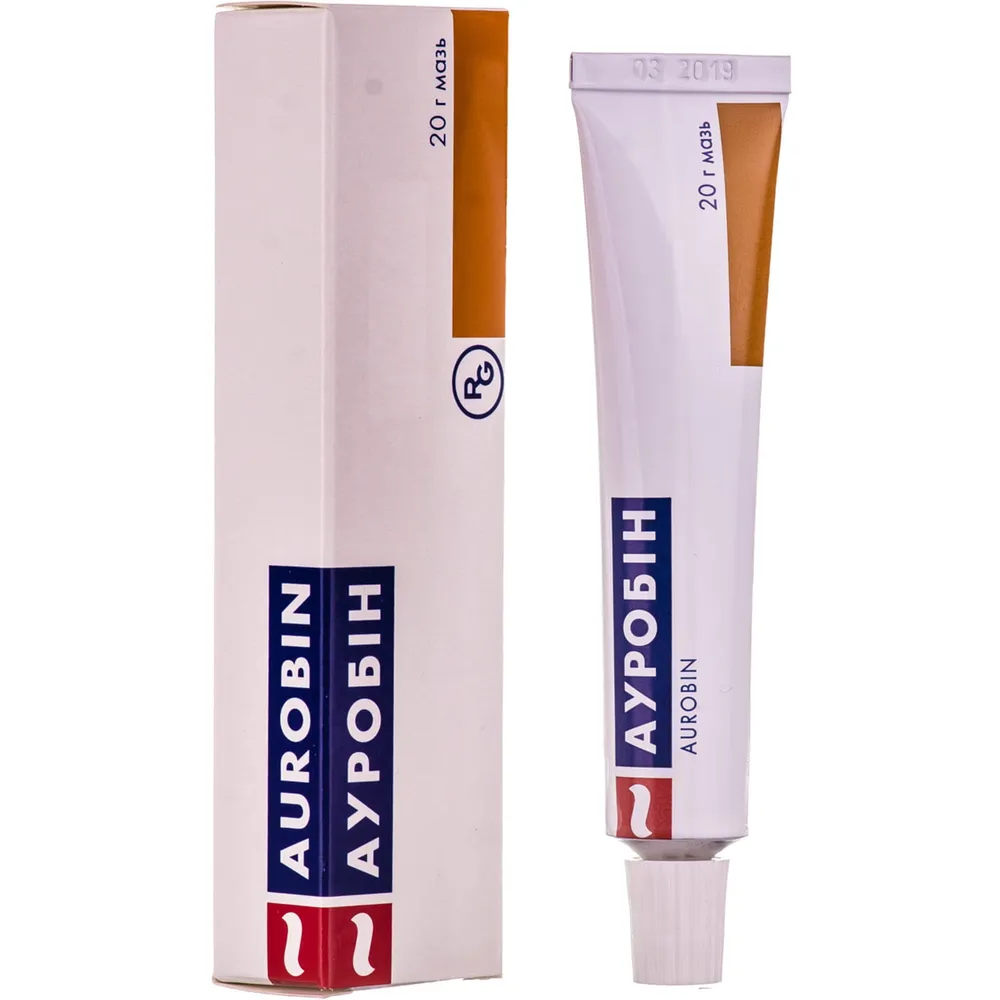
Table of Contents
INSTRUCTIONS FOR MEDICAL USE OF THE MEDICINAL PRODUCT AURUBIN (AUROBIN)
Composition:
Active substances: prednisolone caproate, lidocaine hydrochloride, dexpanthenol;
1 g of ointment contains 2 mg of prednisolone caproate, 20 mg of lidocaine hydrochloride, and 20 mg of dexpanthenol;
Excipients: polysorbate 60, triclosan, methylparaben (E 218), cetostearyl alcohol, glycerol, propylene glycol (E 1520), polyethylene glycol stearate, mineral oil, dimethicone, medium-chain triglycerides, stearic acid, purified water.
Pharmaceutical form. Ointment.
Main physicochemical characteristics: homogeneous ointment of white or almost white color, practically odorless.
Pharmacotherapeutic group. Agents for treatment of haemorrhoids and anal fissures for topical use. ATC code C05AX03.
Pharmacological Properties.
Pharmacodynamics.
Aurobin is a combination drug containing substances that are effective in the treatment of inflammatory processes and pain in the perianal area, optimally balanced.
Prednisolone caproate is a non-halogenated glucocorticoid with local anti-inflammatory effect. It reduces vascular permeability, increases vascular wall tone, and decreases inflammatory symptoms.
Lidocaine rapidly relieves pain and burning sensations.
Dexpanthenol promotes regeneration of damaged epithelium and mucous membranes.
Pharmacokinetics.
Pharmacokinetic studies with the ointment have not been conducted. The active substances of the medicinal product exert mainly local effects.
Prednisolone
Absorption. Topically applied prednisolone may be absorbed and may cause systemic effects (especially when applied under occlusive dressing, to damaged skin, or administered via rectal enema).
Distribution. Prednisolone is rapidly distributed into all tissues of the body. It binds strongly to plasma proteins. Prednisolone rapidly penetrates the placenta and is excreted in breast milk.
Elimination. It is excreted in urine as conjugated metabolites.
Lidocaine
Absorption. Lidocaine is well absorbed from mucous membranes and damaged skin.
Distribution. Lidocaine crosses the placenta and the blood-brain barrier and penetrates into breast milk.
Biological transformation. It is metabolized in the liver.
Elimination. It binds strongly to plasma proteins. Elimination half-life is 1–2 hours.
Renal impairment
Renal impairment does not affect the elimination of the parent compound, but may lead to accumulation of its active metabolite.
Clinical characteristics.
Indications.
Conditions associated with inflammation of the perianal area: pruritus, eczema and dermatitis of the perianal area, hemorrhoids, anal fissures.
Contraindications.
Hypersensitivity (allergy) to any of the active substances of the drug or to any of the excipients of the drug.
Hypersensitivity to other amide-type local anesthetics (e.g., bupivacaine, etidocaine, mepivacaine, and prilocaine).
Treatment of eyes or periorbital area.
Primary bacterial, viral, or fungal skin infections, including herpes simplex.
Facial acne rosacea, common acne, perioral dermatitis, or diaper rash, skin tuberculosis, cutaneous manifestations of syphilis, dryness, skin desquamation.
Concomitant treatment with lidocaine for other indications.
Children under 1 year of age.
First trimester of pregnancy.
Interaction with other medicinal products and other forms of interaction.
Interaction studies with the use of Aurobin ointment have not been conducted.
The drug should not be used if lidocaine is being used concomitantly for other indications.
Concomitant use with other antiarrhythmic agents requires caution.
Special precautions for use
If skin irritation or allergic reactions occur, application of the drug should be discontinued immediately and appropriate symptomatic therapy should be initiated.
To avoid local or systemic toxicity, the drug should not be used on large affected skin areas, in skin folds, under occlusive dressings, and/or for prolonged periods.
With prolonged use on the same skin area, the drug may cause skin atrophy, particularly in younger patients.
In fungal or bacterial infections, appropriate local or systemic treatment should be administered.
The drug should be used with special caution in patients with cataract, diabetes mellitus, glaucoma, tuberculosis, or anemia, as well as in patients with glucocorticoid-induced suppression of the hypothalamic-pituitary-adrenal system.
Visual disturbances
Visual disturbances may occur with both systemic and topical use of corticosteroids. If symptoms such as blurred vision or other visual disturbances occur, patients should be referred to an ophthalmologist for evaluation of the underlying cause. Cases of cataract, glaucoma, or the rare condition known as central serous chorioretinopathy have been reported following systemic and topical corticosteroid use. Central serous chorioretinopathy may lead to retinal detachment.
Aurobin ointment contains the excipients methylparaben (E 218), cetostearyl alcohol, and propylene glycol (E 1520). Methylparaben (E 218) may cause allergic reactions (possibly delayed). Cetostearyl alcohol may cause local skin reactions (e.g., contact dermatitis). Propylene glycol (E 1520) may cause skin irritation. Each 1 g of ointment contains 20 mg of propylene glycol.
Use during pregnancy or breastfeeding
Pregnancy. The drug is contraindicated during the first trimester of pregnancy. When prescribing the drug during the second and third trimesters, the benefit-risk ratio must be carefully evaluated.
Breastfeeding. Corticosteroids and lidocaine pass into breast milk. Thus, corticosteroids may affect adrenal function in the newborn and impair growth. Small amounts of lidocaine appear in breast milk. Although this is not considered to pose a risk to the infant in practice, increased caution is required when administering the drug to breastfeeding women.
Ability to affect reaction speed while driving or operating machinery
The potential effect of the drug on the ability to drive or operate machinery has not been studied.
Dosage and Administration.
For external use only.
Prolonged application of the ointment over large areas of skin should be avoided regardless of patient age.
Use under occlusive dressing is not recommended.
Adults and elderly patients.
A thin layer of the ointment should be applied to the affected area 2–4 times daily. As symptoms improve, the ointment should be used less frequently. Treatment duration should not exceed 5–7 days.
Children.
In children aged 1 year and older, the product may be used only in exceptional cases, in the minimal dose required to achieve therapeutic effect, and no more than twice daily. Treatment duration in children should not exceed 5 days.
Children. The ointment is contraindicated in children under 1 year of age.
Overdose.
May manifest with local or systemic symptoms depending on the amount of absorbed corticosteroid and lidocaine. There is no specific antidote; supportive therapy should be administered.
Adverse reactions.
Local treatment with corticosteroids may cause local adverse events.
With prolonged local use or application to large skin surfaces, suppression of adrenal cortex function may occur. This is particularly common when the ointment is used in children or under occlusive dressings. Protein catabolism may lead to a negative nitrogen balance.
Systemic absorption of large amounts of lidocaine following topical application may result in stimulation and/or depression of the central nervous system.
Depending on the amount of absorbed corticosteroid and lidocaine, the following adverse effects may occur:
Infections and infestations: activation of subclinical infections, masking of infection symptoms, opportunistic infections;
Immune system disorders: hypersensitivity reactions;
Endocrine system disorders: suppression of adrenal cortex function, hypercorticism (as a manifestation of the resorptive effect of prednisolone);
Nutritional and metabolic disorders: hypokalemic alkalosis, sodium and fluid retention, hypokalemia;
Psychiatric disorders: insomnia, psychiatric disorders;
Central nervous system disorders: seizures, dizziness, headache, increased intracranial pressure;
Eye disorders: cataract (the risk of cataract development is higher in children), subcapsular cataract, exophthalmos, glaucoma, optic disc edema, corneal ulcer, choriorretinopathy, blurred vision (see section "Special precautions");
Cardiac disorders: heart failure, cardiac conduction disturbances;
Vascular disorders: arterial hypertension, peripheral vasodilation;
Gastrointestinal disorders: gastric bleeding, gastrointestinal bleeding, perforation of gastrointestinal organs, esophagitis, pancreatitis, peptic ulcer;
Skin and subcutaneous tissue disorders: dermatitis, folliculitis (at the application site), acneiform eruptions (steroid acne), contact dermatitis; dryness, thinning and fragility of the skin; erythema, urticaria, hirsutism, hyperhidrosis, intertrigo, pruritus, skin atrophy, hypopigmentation, skin irritation, striae formation, telangiectasia, burning sensation on the skin, purpura;
Musculoskeletal and connective tissue disorders: growth retardation (in children), steroid myopathy, osteonecrosis, osteoporosis;
General disorders and administration site conditions: delayed wound healing;
Investigations: increased intraocular pressure, negative nitrogen balance, delayed response in skin provocation tests.
Reporting of suspected adverse reactions
Reporting of suspected adverse reactions after marketing authorization is important. It allows continued monitoring of the benefit-risk balance of the medicinal product. Healthcare professionals, pharmacists, as well as patients or their legal representatives are encouraged to report all suspected adverse reactions and lack of efficacy via the automated pharmacovigilance information system at the following link: https://aisf.dec.gov.ua/.
Shelf life. 2 years.
Storage conditions. Store at 8–15 °C.
Keep out of reach and sight of children.
Packaging. 20 g ointment in a sealed aluminum tube with a polyethylene cap featuring a perforated tip. 1 tube per cardboard box.
Prescription status. Prescription only.
Manufacturer. Gedeon Richter Plc.
Manufacturer's address and place of business.
H-1103 Budapest, Demréni út 19-21, Hungary.