Amlodipine-darnitsa
Ukraine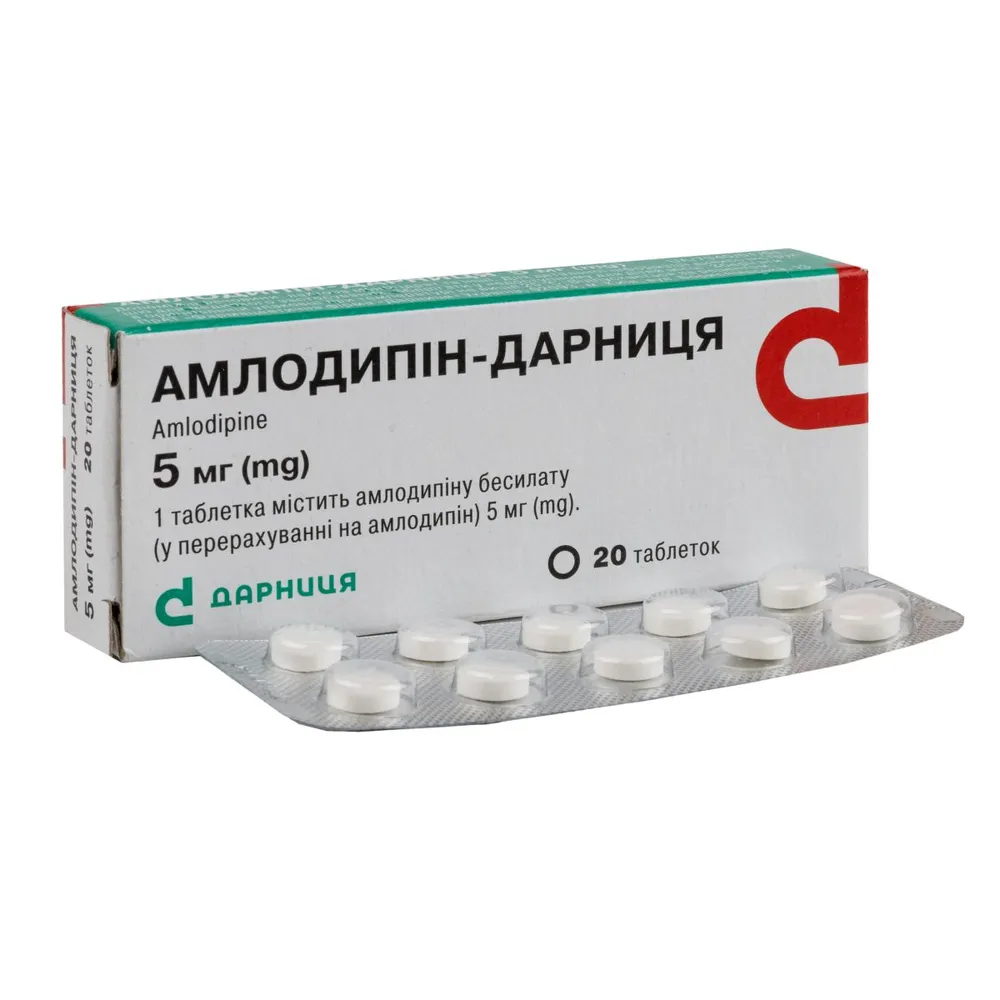
Table of Contents
INSTRUCTIONS FOR MEDICAL USE OF THE MEDICINAL PRODUCT Amlodipine - Darnytsia (Amlodipine - Darnytsia)
Composition:
Active substance: amlodipine;
One tablet contains amlodipine besylate (calculated as amlodipine) 5 mg or 10 mg;
Excipients: lactose monohydrate, microcrystalline cellulose, corn starch, colloidal anhydrous silicon dioxide, magnesium stearate, povidone.
Pharmaceutical form. Tablets.
Main physicochemical properties: white or white with a yellowish tint tablets, flat cylindrical shape, with a bevel.
Pharmacotherapeutic group. Selective calcium antagonists with predominant vascular effect. ATC code C08CA01.
Pharmacological properties.
Pharmacodynamics.
Amlodipine is a calcium ion antagonist (a slow calcium channel blocker) that inhibits the influx of calcium ions into myocardial and vascular smooth muscle cells through cell membranes. The antihypertensive mechanism of amlodipine is due to its direct relaxing effect on vascular smooth muscles. The antianginal effect of amlodipine has not yet been fully elucidated; however, it can be stated that the drug reduces myocardial ischemia through the following two mechanisms:
- dilation of peripheral arterioles, thereby reducing total peripheral resistance (afterload). Since heart rate remains almost unchanged, the reduction in cardiac workload leads to decreased myocardial energy consumption and oxygen demand;
- promotion of dilation of large coronary arteries and coronary arterioles in both normal and ischemic areas of the myocardium. This dilation increases oxygen supply to the myocardium in patients with vasospastic angina (Prinzmetal's angina or variant angina) and prevents the development of coronary vasoconstriction.
In patients with arterial hypertension, a single dose of amlodipine provides clinically significant reduction of arterial blood pressure over 24 hours, both in supine and standing positions. Due to its gradual onset of action, amlodipine does not cause acute hypotension.
In patients with angina, amlodipine increases exercise tolerance (prolongs exercise duration, delays the onset of angina attacks and ST-segment depression by 1 mm during exercise), reduces the frequency of angina episodes, and decreases the need for sublingual nitroglycerin.
Hemodynamic studies and controlled clinical trials in patients with NYHA class II–III heart failure have shown that amlodipine does not worsen clinical status based on such criteria as exercise tolerance, left ventricular ejection fraction, and clinical symptoms.
Pharmacokinetics.
After oral administration in therapeutic doses, amlodipine is well absorbed, reaching peak plasma concentration within 6–12 hours. Absolute bioavailability ranges from 64% to 80%. The volume of distribution is approximately 20 L/kg. About 97.5% of amlodipine is bound to plasma proteins. Food intake does not affect the absorption of amlodipine.
The elimination half-life from plasma is approximately 35–50 hours, allowing once-daily dosing. Steady-state plasma concentrations of amlodipine are achieved after 7–8 days of regular administration.
Amlodipine is extensively metabolized in the liver, forming inactive metabolites. It is excreted in urine: 10% of the administered dose is excreted unchanged, and 60% as metabolites.
In elderly patients and in patients with chronic heart failure, a tendency toward reduced amlodipine clearance has been observed, resulting in increased area under the concentration-time curve (AUC) and prolonged elimination half-life of the drug.
Clinical characteristics.
Indications.
- Arterial hypertension.
- Chronic stable angina.
- Vasospastic angina (Prinzmetal's angina).
Contraindications.
- Known hypersensitivity to dihydropyridines, amlodipine, or any other component of the medicinal product.
- Severe arterial hypotension.
- Shock (including cardiogenic shock).
- Left ventricular outflow tract obstruction (e.g., severe aortic stenosis).
- Hemodynamically unstable heart failure following acute
myocardial infarction.
Interaction with other medicinal products and other forms of interactions.
Effect of other medicinal products on amlodipine.
Available data support the safe use of amlodipine with thiazide diuretics, alpha-blockers, beta-blockers, ACE inhibitors, long-acting nitrates, sublingual nitroglycerin, nonsteroidal anti-inflammatory drugs, antibiotics, and oral hypoglycemic agents.
In vitro studies using human plasma indicate that amlodipine does not affect the protein binding of tested medicinal products (digoxin, phenytoin, warfarin, or indomethacin).
CYP3A4 inhibitors.
Concomitant use of amlodipine and strong or moderate CYP3A4 inhibitors (protease inhibitors, azole antifungal agents, macrolides such as erythromycin or clarithromycin, verapamil, or diltiazem) may lead to a significant increase in amlodipine exposure, which could also increase the risk of arterial hypotension. The clinical significance of these changes may be more pronounced in elderly patients. Clinical monitoring and dose adjustment may be necessary.
Consumption of grapefruit or grapefruit juice is not recommended during amlodipine therapy, as in some patients the bioavailability of amlodipine may be increased, thereby enhancing its hypotensive effect.
CYP3A4 inducers.
There is no available information on the effect of CYP3A4 inducers on amlodipine. Concomitant use of amlodipine and substances that are CYP3A4 inducers (e.g., rifampicin, St. John's wort) may lead to decreased plasma concentrations of amlodipine; therefore, such combinations should be used with caution.
Dantrolene (infusions).
In animal studies, ventricular fibrillation with fatal outcome and cardiovascular collapse associated with hyperkalemia were observed after intravenous administration of verapamil and dantrolene. Due to the risk of hyperkalemia, it is recommended to avoid using calcium channel blockers such as amlodipine in patients susceptible to malignant hyperthermia and in the treatment of malignant hyperthermia.
Effect of amlodipine on other medicinal products.
The antihypertensive effect of amlodipine may potentiate the antihypertensive effects of other antihypertensive agents.
Tacrolimus.
There is a risk of increased blood levels of tacrolimus when used concomitantly with amlodipine, although the pharmacokinetic mechanism of this interaction is not fully established. To avoid tacrolimus toxicity during concomitant use with amlodipine, patients should undergo regular monitoring of blood tacrolimus levels and, if necessary, the tacrolimus dose should be adjusted.
Cyclosporine.
Interaction studies between cyclosporine and amlodipine have not been conducted in healthy volunteers or other patient groups, except in kidney transplant recipients, in whom variable increases in cyclosporine trough concentrations (on average by 0–40%) were observed. For kidney transplant recipients receiving amlodipine, monitoring of cyclosporine concentrations should be considered, and cyclosporine dosage reduction may be necessary.
Simvastatin.
Concomitant administration of multiple doses of amlodipine 10 mg and simvastatin 80 mg resulted in a 77% increase in simvastatin exposure compared to simvastatin alone. For patients receiving amlodipine, the simvastatin dose should be limited to 20 mg daily.
Sildenafil.
Single 100 mg dose of sildenafil in patients with essential hypertension did not affect the pharmacokinetics of amlodipine. When amlodipine and sildenafil are used concomitantly as combination therapy, each medicinal product exerts its hypotensive effect independently of the other.
Other medicinal products.
Clinical interaction studies have shown that amlodipine does not affect the pharmacokinetics of atorvastatin, digoxin, or warfarin.
Ethanol (alcohol).
Single and multiple doses of 10 mg amlodipine did not have a significant effect on the pharmacokinetics of ethanol.
Concomitant administration of amlodipine with cimetidine did not affect the pharmacokinetics of amlodipine.
Concomitant use of aluminum/magnesium-containing products (antacids) with a single dose of amlodipine did not significantly affect the pharmacokinetics of amlodipine.
Laboratory tests.
The effect on laboratory test parameters is unknown.
Special precautions for use.
The safety and efficacy of amlodipine in hypertensive crisis have not been evaluated.
Use in patients with heart failure.
When amlodipine was used to treat patients with NYHA class III–IV heart failure, an increased incidence of pulmonary edema was observed. Calcium channel blockers, including amlodipine, should be used with caution in patients with congestive heart failure, as they may increase the risk of cardiovascular events and future mortality.
Use in patients with hepatic impairment.
In patients with impaired liver function, treatment with amlodipine should be initiated at the lowest dose. Caution is required both at the start of treatment and during dose escalation. In patients with severe hepatic insufficiency, slow dose titration and careful monitoring of the patient’s condition may be necessary.
Use in patients with renal impairment.
Amlodipine should be used at usual doses for treatment of such patients. Changes in plasma concentration of amlodipine do not correlate with the degree of renal impairment. Amlodipine is not removed by dialysis; therefore, it should be administered with caution in patients undergoing hemodialysis.
Use in elderly patients.
The drug is recommended to be administered at usual doses; caution should be exercised when increasing the dose.
Effect on fertility.
Reversible biochemical changes in the sperm head have been reported in some patients receiving calcium channel blockers. Clinical data on the potential effect of amlodipine on fertility are insufficient.
Amlodipine does not affect laboratory test results.
During treatment with amlodipine, concomitant consumption of grapefruit or grapefruit juice is not recommended, as in some patients bioavailability may be increased, leading to an enhanced hypotensive effect of the drug.
Use during pregnancy or breastfeeding.
Reproductive toxicity was observed in animal studies with amlodipine when high doses were administered.
The safety of amlodipine use in pregnant women has not been established.
Amlodipine should be used during pregnancy only if safer alternatives are unavailable and if the risk associated with the underlying disease outweighs the potential risk of treatment to the mother/fetus.
It is unknown whether amlodipine is excreted in human breast milk. When deciding whether to continue breastfeeding or to use amlodipine, the benefit of breastfeeding for the child and the benefit of drug therapy for the mother should be carefully weighed.
Ability to affect reaction speed when driving or operating machinery.
Amlodipine-Darnytsia may have a minor or moderate effect on the ability to drive or operate machinery.
Reaction speed may be reduced if symptoms such as dizziness, headache, confusion, or nausea occur. In such cases, patients should refrain from driving or operating machinery.
Dosage and Administration.
Adults. The usual recommended dose for the treatment of arterial hypertension and angina pectoris is 5 mg of amlodipine once daily. Depending on the patient's response to therapy, the dose may be increased to the maximum dose of 10 mg once daily.
Children aged 6 years and older with arterial hypertension. The recommended initial dose of amlodipine for this patient group is 2.5 mg once daily. Amlodipine-Darnytsia 5 mg tablets are not intended to be split to achieve a 2.5 mg dose; therefore, amlodipine tablets of the appropriate strength should be used.
If the target blood pressure level is not achieved within 4 weeks, the dose may be increased to 5 mg daily. The use of doses exceeding 5 mg in this patient group has not been studied.
Elderly patients. Dose adjustment is not required for this patient group. Dose escalation should be performed with caution.
Patients with renal impairment. Dose adjustment is not required for this patient group.
Patients with hepatic insufficiency. The dosage of the drug for this patient group has not been established (see section "Special Warnings and Precautions for Use").
Patients with hepatic impairment.
The dosage of the drug for patients with mild to moderate hepatic impairment has not been established; therefore, dose titration should be performed with caution, initiating treatment with the lowest dose within the recommended dose range (see section "Special Warnings and Precautions for Use"). The pharmacokinetics of amlodipine have not been studied in patients with severe hepatic impairment. For patients with severe hepatic impairment, amlodipine therapy should be initiated at the lowest possible dose, with gradual dose escalation.
Children.
Amlodipine-Darnytsia is indicated for use in children aged 6 years and older.
The effect of amlodipine on blood pressure in patients under 6 years of age is unknown.
Overdose.
Symptoms. Significant overdose (> 100 mg) may lead to excessive peripheral vasodilation and possibly reflex tachycardia. Cases of severe and potentially prolonged systemic arterial hypotension have been reported, including shock with fatal outcome.
Rare cases of non-cardiogenic pulmonary edema following amlodipine overdose have been reported, which may present with delayed onset (24–48 hours after ingestion) and may require mechanical ventilation. Contributing factors to the development of non-cardiogenic pulmonary edema may include early resuscitation measures (including fluid overload) aimed at maintaining perfusion and cardiac output.
Treatment. Administration of activated charcoal to healthy volunteers immediately or 2 hours after ingestion of 10 mg amlodipine significantly reduced drug absorption. In some cases, gastric lavage may be beneficial.
Clinically significant hypotension caused by amlodipine overdose requires active supportive measures to maintain cardiovascular function, including cardiac and pulmonary monitoring, leg elevation, circulating blood volume management, and diuresis. Vasopressor agents may be useful to restore vascular tone and blood pressure, provided there are no contraindications to their use. Intravenous calcium gluconate may be beneficial to counteract the effects of calcium channel blockade. Since amlodipine is highly protein-bound, dialysis is unlikely to be effective.
Adverse reactions.
Eye disorders: Vision disturbances (including diplopia).
Ear and labyrinth disorders: Tinnitus.
Respiratory, thoracic and mediastinal disorders: Dyspnea, rhinitis, cough.
Gastrointestinal disorders: Abdominal pain, nausea, loss of appetite, taste disturbances, vomiting, dyspepsia, intestinal motility disorders (including constipation and diarrhea), flatulence, dry mouth, throat irritation, pancreatitis, gastritis, gingival hyperplasia.
Hepatobiliary disorders: Hepatitis, jaundice, increased levels of liver enzymes (most commonly associated with cholestasis).
Renal and urinary disorders: Urination disorders, nocturia, frequent urination.
Metabolism and nutrition disorders: Weight gain or weight loss, hyperglycemia.
Nervous system disorders: Fatigue, asthenia, malaise, somnolence, dizziness, headache (at the beginning of treatment), tremor, dysgeusia, hypesthesia, paresthesia, insomnia, mood changes (including anxiety), depression, confusion, hypertonia, peripheral neuropathy, syncope, extrapyramidal disorders.
Cardiac disorders: Palpitations, arterial hypotension, tachycardia, chest pain, myocardial infarction, arrhythmia (including bradycardia, ventricular tachycardia, and atrial fibrillation), vasculitis.
Blood and lymphatic system disorders: Leukopenia, thrombocytopenia.
Immune system disorders: Allergic reactions.
Skin and subcutaneous tissue disorders: Alopecia, purpura, skin discoloration, increased sweating, pruritus, rash, exanthema, angioneurotic edema, erythema multiforme, urticaria, exfoliative dermatitis, Stevens-Johnson syndrome, Quincke's edema, photosensitivity.
Musculoskeletal and connective tissue disorders: Swelling of the lower limbs, arthralgia, myalgia, muscle cramps, back pain.
Reproductive system and breast disorders: Impotence, gynecomastia.
General disorders: Edema.
Other reactions: Increased sweating, nonspecific pain of various localizations.
After discontinuation of the medicinal product, adverse reactions usually resolved completely.
Shelf life.
3 years.
Storage conditions.
Store in the original packaging at a temperature not exceeding 25 °C.
Keep out of reach of children.
Packaging.
10 tablets in a blister pack; 2, 3, or 9 blisters per carton.
Prescription category.
Prescription only.
Manufacturer.
JSC "Pharmaceutical Company "Darnytsia".
Manufacturer's address.
13 Boryspylska Street, Kyiv, 02093, Ukraine.