Alunbrig
Ukraine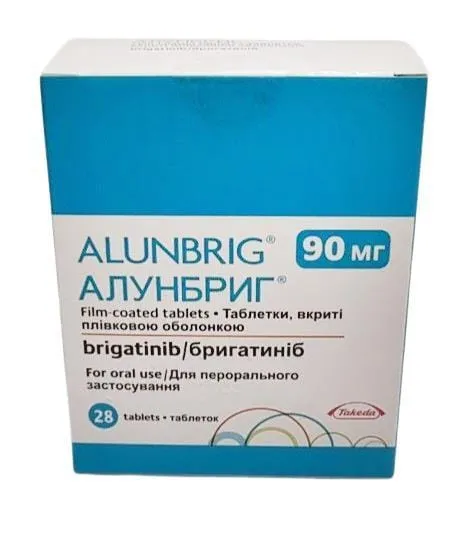
Table of Contents
- INSTRUCTIONS for medical use of the medicinal product ALUNBRIG® (ALUNBRIG®)
- Composition:
- Pharmacological Properties.
- Clinical characteristics.
- Special precautions for use.
- Method of Administration and Dosage
- Adverse Reactions
- Composition:
- Pharmacological Properties.
- Clinical characteristics.
- Special precautions for use.
- Method of Administration and Dosage
- Adverse Reactions
INSTRUCTIONS for medical use of the medicinal product ALUNBRIG® (ALUNBRIG®)
Composition:
Active substance:
brigatinib;
1 tablet contains 30 mg or 90 mg or 180 mg of brigatinib;
Excipients:
lactose monohydrate; microcrystalline cellulose (PH-102); sodium starch glycolate (type A); colloidal anhydrous silica; magnesium stearate (of plant origin);
Film coating:
Opadry II White*.
* Composition of Opadry II White: talc, polyethylene glycol, polyvinyl alcohol, titanium dioxide (E171).
Pharmaceutical form.
Film-coated tablets.
Main physicochemical properties:
30 mg film-coated tablet:
round, white to almost white, with "U3" embossed on one side and no marking on the other side;
90 mg film-coated tablet:
oval, white to almost white, with "U7" embossed on one side and no marking on the other side;
180 mg film-coated tablet:
oval, white to almost white, with "U13" embossed on one side and no marking on the other side.
Pharmacotherapeutic group.
Antineoplastic and immunomodulating agents. Antineoplastic agents. Other antineoplastic agents. Protein kinase inhibitors. Brigatinib.
ATC code L01ED04.
Pharmacological Properties.
Pharmacodynamics.
Mechanism of action. Alunbrig® is a tyrosine kinase inhibitor targeting anaplastic lymphoma kinase (ALK), c-ros oncogene 1 (ROS1), and insulin-like growth factor 1 receptor (IGF-1R). In *in vitro* and *in vivo* studies, brigatinib inhibited ALK autophosphorylation and ALK-mediated phosphorylation of the downstream signaling protein STAT3.In in vitro studies, brigatinib inhibited the proliferation of cell lines expressing recombinant EML4-ALK and NPM-ALK proteins and demonstrated dose-dependent inhibition of xenograft growth of EML4-ALK-positive non-small cell lung cancer (NSCLC) in mice. In in vitro and in vivo studies, brigatinib inhibited the viability of cells expressing mutant forms of EML4-ALK associated with resistance to ALK inhibitors, including G1202R and L1196M.
Cardioelectrophysiology.
In Study 101, the potential for QT interval prolongation with Alunbrig® was evaluated in 123 patients with advanced malignancies following administration of brigatinib at doses ranging from 30 mg to 240 mg once daily. The maximum mean change from baseline in QTcF (QT interval corrected using Fridericia’s formula) was less than 10 ms. QT-exposure analysis did not indicate concentration-dependent QTc prolongation.
Patients were randomized in a 1:1 ratio to receive either Alunbrig® 180 mg once daily with a 7-day lead-in phase at 90 mg once daily (N = 137) or crizotinib 250 mg orally twice daily (N = 138). Stratification was performed based on brain metastases (present/absent) and prior chemotherapy for locally advanced or metastatic disease (yes/no).
Patients in the crizotinib arm who experienced disease progression were offered crossover to Alunbrig®. Of the 121 patients randomized to crizotinib who discontinued study treatment prior to final analysis, 99 (82%) received subsequent therapy with ALK tyrosine kinase inhibitors. Eighty (66%) of the patients randomized to crizotinib received subsequent treatment with Alunbrig®, including 65 (54%) who were crossed over to alternative therapy within the study.
The primary endpoint was progression-free survival (PFS), assessed by a blinded independent review committee (BIRC) using Response Evaluation Criteria in Solid Tumors (RECIST v1.1). Additional endpoints assessed by BIRC included confirmed objective response rate (ORR), duration of response (DoR), time to response, disease control rate (DCR), intracranial ORR, intracranial PFS, and intracranial DoR. Investigator-assessed outcomes included PFS and overall survival.
Baseline demographic and disease characteristics in the ALTA 1L trial: median age was 59 years (range 27–89; 32% were aged 65 years or older), 59% were White, 39% were Asian, 55% were female, 39% had ECOG PS 0, 56% had ECOG PS 1, 58% had never smoked, 93% had Stage IV disease, 96% had adenocarcinoma, 30% had brain metastases at baseline, 14% had prior radiotherapy to the brain, and 27% had prior chemotherapy. Sites of extrathoracic metastases included brain (30% of patients), bone (31% of patients), and liver (20% of patients). The mean relative dose intensity was 97% for Alunbrig® and 99% for crizotinib.
At the primary analysis, conducted with a median follow-up duration of 11 months, the primary endpoint—statistically significant improvement in BIRC-assessed PFS—was achieved in the Alunbrig® arm in the ALTA 1L trial.
An interim efficacy analysis, as specified by the protocol, was conducted on June 28, 2019, with a median follow-up of 24.9 months in the Alunbrig® arm. Median PFS as assessed by BIRC in the ITT population was 24 months in the Alunbrig® arm versus 11 months in the crizotinib arm (hazard ratio 0.49 [95% CI (0.35, 0.68)], p < 0.0001).
Below are the results of the final protocol-defined analysis, with the data cutoff date for the last patient follow-up being January 29, 2021, and a median follow-up of 40.4 months in the Alunbrig® arm.
Table 1: Efficacy results from the ALTA 1L trial (ITT population (population for evaluation of all randomized patients))
|
Efficacy parameter |
Alunbrig® N = 137 |
Crizotinib N = 138 |
|
Median duration of follow-up (months) |
40.4 (range: 0.0–52.4) |
15.2 (range: 0.1–51.7) |
|
Primary efficacy parameters |
||
|
PFS (BIRC) |
||
|
Number of patients with events, n (%) |
73 (53.3 %) |
93 (67.4 %) |
|
Progressive disease, n (%) |
66 (48.2 %)b |
88 (63.8 %)c |
|
Death, n (%) |
7 (5.1 %) |
5 (3.6 %) |
|
Median (months) (95% CI) |
24.0 (18.5, 43.2) |
11.1 (9.1, 13.0) |
|
Hazard ratio (95% CI) |
0.48 (0.35, 0.66) |
|
|
Log-rank p-valuec |
< 0.0001 |
|
|
Secondary efficacy parameters |
||
|
Confirmed objective response rate (BIRC) |
||
|
Responders, n (%) (95 % CI) |
102 (74.5 %) (66.3, 81.5) |
86 (62.3 %) (53.7, 70.4) |
|
p-valuec,d |
0.0330 |
|
|
Complete response, % |
24.1 % |
13.0 % |
|
Partial response, % |
50.4 % |
49.3 % |
|
Duration of confirmed response (BIRC) |
||
|
Median, months (95% CI) |
33.2 (22.1, NE) |
13.8 (10.4, 22.1) |
|
Overall survival |
||
|
Number of events, n (%) |
41 (29.9 %) |
51 (37.0 %) |
|
Median (months) (95% CI) |
NE (NE, NE) |
NE (NE, NE) |
|
Hazard ratio (95% CI) |
0.81 (0.53, 1.22) |
|
|
Log-rank p-valued |
0.3311 |
|
|
Overall survival at 36 months |
70.7 % |
67.5 % |
BIRC — Independent Review Committee for blinded assessment; NE — Not Evaluated; CI — Confidence Interval.
The results in this table are based on the final efficacy analysis with the date of data cutoff for the last patient follow-up being January 29, 2021.
a Duration of follow-up throughout the entire study.
b Includes 3 patients who received palliative brain radiotherapy.
c Includes 9 patients who received palliative brain radiotherapy.
d Stratified by presence of CNS metastases at baseline and prior chemotherapy for locally advanced or metastatic disease for the log-rank test and the Cochran-Mantel-Haenszel test, respectively.
e Based on the Cochran-Mantel-Haenszel test.
f Patients in the crizotinib treatment arm who experienced disease progression were offered crossover to the brigatinib treatment arm.
Table 2: BIRC assessment of intracranial efficacy in patients from the ALTA 1L study
|
Efficacy Parameter |
Patients with measurable brain metastases at baseline |
|
|
Alunbrig® N = 18 |
Crizotinib N = 23 |
|
|
Confirmed intracranial objective response rate |
||
|
Responders, n (%) (95% CI) |
14 (77.8%) (52.4, 93.6) |
6 (26.1%) (10.2, 48.4) |
|
p-valuea,b |
0.0014 |
|
|
Complete response, % |
27.8% |
0 |
|
Partial response, % |
50% |
26.1% |
|
Duration of confirmed intracranial response c |
||
|
Median, months (95% CI) |
27.9 (5.7, NE) |
9.2 (3.9, NE) |
|
Patients with any brain metastases at baseline |
||
|
Alunbrig® N = 47 |
Crizotinib N = 49 |
|
|
Confirmed intracranial objective response rate |
||
|
Responders, n (%) (95% CI) |
31 (66%) (50.7, 79.1) |
7 (14.3%) (5.9, 27.2) |
|
p-valuea,b |
< 0.0001 |
|
|
Complete response, % |
44.7% |
2.0% |
|
Partial response, % |
21.3% |
12.2% |
|
Duration of confirmed intracranial response c |
||
|
Median, months (95% CI) |
27.1 (16.9, 42.8) |
9.2 (3.9, NE) |
|
Intracranial PFSd |
||
|
Number of patients with events, n (%) |
27 (57.4%) |
35 (71.4%) |
|
Progressive disease, n (%) |
27 (57.4%)e |
32 (65.3%)f |
|
Death, n (%) |
0 |
3 (6.1%) |
|
Median (months) (95% CI) |
24.0 (12.9, 30.8) |
5.5 (3.7, 7.5) |
|
Hazard ratio (95% CI) |
0.29 (0.17, 0.51) |
|
|
Log-rank p-value |
< 0.0001 |
|
CI — confidence interval, NE — not estimable
Results in this table are based on the final efficacy analysis with data cutoff date of January 29, 2021.
a Stratified by prior chemotherapy for locally advanced or metastatic disease for log-rank test and Cochran-Mantel-Haenszel test, respectively.
b Based on Cochran-Mantel-Haenszel test.
c Measured from the date of first confirmed intracranial response to the date of intracranial disease progression (new intracranial lesions, increase in diameter of intracranial lesion ≥20% from nadir, or unequivocal progression of intracranial non-target lesions) or death or censoring.
d Measured from the date of randomization to the date of intracranial disease progression (new intracranial lesions, increase in diameter of intracranial lesion ≥20% from nadir, or unequivocal progression of intracranial non-target lesions) or death or censoring.
e Includes 1 patient with palliative brain radiotherapy.
f Includes 3 patients with palliative brain radiotherapy.
ALTA . The safety and efficacy of ALUNBRIG **®** were evaluated in a randomized (1:1), open-label, multicenter trial, ALTA, in 222 adult patients with locally advanced or metastatic ALK-positive NSCLC who had progressed on crizotinib therapy. Patients enrolled in the study had confirmed ALK gene rearrangement by a validated test, ECOG performance status of 0–2, and prior chemotherapy. Patients with CNS metastases were included provided they were neurologically stable and not requiring an increase in corticosteroid dose. Patients with a history of interstitial lung disease (ILD) or drug-induced pneumonitis were excluded.Patients were randomized in a 1:1 ratio to receive ALUNBRIG ® 90 mg once daily (90 mg dose regimen, N = 112) or 180 mg once daily with a 7-day lead-in phase at 90 mg once daily (180 mg dose regimen, N = 110). The median duration of follow-up was 22.9 months. Stratification was performed based on brain metastases (present/absent) and best prior response to crizotinib (complete or partial response, any other response/unknown).
The primary efficacy endpoint was confirmed objective response rate (ORR) as assessed by the investigator using Response Evaluation Criteria in Solid Tumors (RECIST, version 1.1). Additional efficacy endpoints included confirmed ORR as assessed by an independent review committee (IRC), time to response, progression-free survival (PFS), duration of response (DOR), overall survival, and intracranial ORR and intracranial DOR as assessed by IRC.
Baseline demographic and disease characteristics in the ALTA trial: median age 54 years (range 18 to 82; 23% were aged 65 years or older), 67% were White, 31% were Asian, 57% were female, 36% had ECOG PS 0, 57% had ECOG PS 1, 7% had ECOG PS 2, 60% had never smoked, 35% were former smokers, 5% were current smokers, 98% had Stage IV disease, 97% had adenocarcinoma, and 74% had received prior chemotherapy. The most common extrathoracic metastatic sites included brain in 69% (of whom 62% had prior brain radiotherapy), bone marrow in 39%, and liver in 26%.
Efficacy results from the ALTA trial are summarized in Table 1.
Table 3. Efficacy results from the ALTA trial (all-treated population, including patients who discontinued and did not receive full course of treatment (ITT population)):
|
Efficacy parameter |
Investigator assessment |
IRC assessment |
||
|
90 mg regimen1 N=112 |
180 mg regimen2 N=110 |
90 mg regimen1 N=112 |
180 mg regimen2 N=110 |
|
|
Objective response rate |
||||
|
(%) |
46% |
56% |
51% |
56% |
|
95% CI3 |
(35; 57) |
(45; 67) |
(41; 61) |
(47; 66) |
|
Time to response |
||||
|
Median (months) |
1.8 |
1.9 |
1.8 |
1.9 |
|
Duration of response |
||||
|
Median (months) |
12.0 |
13.8 |
16.4 |
15.7 |
|
95% CI |
(9.2; 17.7) |
(10.2; 19.3) |
(7.4; 24.9) |
(12.8; 21.8) |
|
Progression-free survival |
||||
|
Median (months) |
9.2 |
15.6 |
9.2 |
16.7 |
|
95% CI |
(7.4; 11.1) |
(11.1; 21) |
(7.4; 12.8) |
(11.6; 21.4) |
|
Overall survival |
||||
|
Median (months) |
29.5 |
34.1 |
NR |
NR |
|
95% CI |
(18.2; NR) |
(27.7; NR) |
NR |
NR |
|
Probability of 12-month survival (%) |
70.3% |
80.1% |
NR |
NR |
CI – confidence interval, NE – not evaluable, NA – not applicable.
1 90 mg once daily regimen;
2 180 mg once daily with a 7-day lead-in phase at 90 mg once daily;
3 The confidence interval for IRC-assessed ORR is 97.5%, and for investigator-assessed ORR is 95%.
IRC-assessed intracranial ORR and duration of intracranial response in patients in the ALTA trial with measurable brain metastases (maximum diameter ≥ 10 mm) at baseline are presented in Table 4.
Table 4. Efficacy in patients with measurable brain metastases at baseline in the ALTA trial
|
Efficacy parameter according to IRC assessment |
Patients with measurable brain metastases at baseline |
|
|
90 mg regimen1 (N=26) |
180 mg regimen2 (N=18) |
|
|
Intracranial objective response rate |
||
|
(%) |
50% |
67% |
|
95% CI |
(30; 70) |
(41; 87) |
|
Intracranial disease control rate |
||
|
(%) |
85% |
83% |
|
95% CI |
(65; 96) |
(59; 96) |
|
Duration of intracranial response3, |
||
|
Median (months) |
9.4 |
16.6 |
|
95% CI |
(3.7; 24.9) |
(3.7; NE) |
CI – confidence interval, NE – not estimable.
1 90 mg once daily
2 180 mg once daily with a 7-day initial phase of 90 mg once daily
3 Events include progression of intracranial disease (new lesions, increase in diameter of intracranial target lesions ≥ 20% from nadir, or clear progression of intracranial non-target lesions) or death.
In patients with any brain metastases at baseline, the intracranial disease control rate was 77.8% (95% CI 67.2 – 86.3) in the 90 mg dose group (N=81) and 85.1% (95% CI 75 – 92.3) in the 180 mg dose group (N=74).
Study 101 . In a separate dose-finding study, 25 patients with ALK-positive NSCLC who had disease progression on prior crizotinib therapy received Alunbrig® at a dose of 180 mg once daily with a 7-day initial phase of 90 mg once daily. Of these, 19 patients achieved a confirmed objective response by investigator assessment (76%; 95% confidence interval (CI): 55, 91), and the median duration of response by Kaplan-Meier estimation among the 19 responding patients was 26.1 months (95% CI: 7.9, 26.1). The median PFS by Kaplan-Meier estimation was 16.3 months (95% CI: 9.2, NE), and the 12-month survival probability was 84.0% (95% CI: 62.8, 93.7). Pediatrics.The European Medicines Agency has waived the applicant’s obligation to submit results of Alunbrig® studies in all pediatric subgroups of patients with lung carcinoma (small-cell and non-small-cell carcinoma) (see section “Posology and method of administration”).
Pharmacokinetics.
Absorption. In Study 101, after oral administration of a single dose of brigatinib (30–240 mg), the median time to reach peak concentration (Tmax) in patients ranged from 1 to 4 hours post-dose. Following single-dose administration and at steady state, systemic exposure was dose-proportional over the dose range of 60–240 mg once daily. With repeated administration, moderate accumulation was observed (geometric mean accumulation ratio: 1.9 to 2.4).The geometric mean Cmax of brigatinib at steady state following 90 mg and 180 mg once daily dosing was 552 and 1452 ng/mL, respectively, and the corresponding AUC0–τ values were 8165 and 20276 h·ng/mL, respectively. Brigatinib is a substrate of P-gp and BCRP transporter proteins.
In healthy subjects, administration with a high-fat meal reduced brigatinib Cmax by 13% without affecting AUC compared to fasting conditions. Brigatinib may be administered independently of food intake.
Distribution. Brigatinib was moderately bound (91%) to human plasma proteins, with the extent of binding independent of concentration. The blood-to-plasma concentration ratio is 0.69. In patients receiving brigatinib at 180 mg once daily, the geometric mean steady-state apparent volume of distribution (Vz/F) was 307 L, indicating moderate tissue distribution. Biotransformation. *In vitro* studies showed that brigatinib is metabolized primarily by CYP2C8 and CYP3A4, and to a lesser extent by CYP3A5.After oral administration of a single 180 mg dose of [14C]brigatinib to healthy subjects, N-demethylation and cysteine conjugation were the two major metabolic clearance pathways. 48%, 27%, and 9.1% of the radioactive dose was excreted in urine and feces combined as unchanged brigatinib, N-desmethyl-brigatinib (AP26123), and cysteine conjugate of brigatinib, respectively.
Unchanged brigatinib was the major circulating radioactive component (92%), along with AP26123 (3.5%). Additionally, a primary metabolite was observed in in vitro studies. At steady state in patients, plasma AUC of AP26123 was < 10% of brigatinib exposure. In kinase and cellular assays in vitro , the metabolite AP26123 inhibited ALK with approximately one-third the activity of brigatinib.
Elimination. In patients receiving brigatinib at 180 mg once daily, the geometric mean steady-state oral clearance (CL/F) of brigatinib was 8.9 L/h, and the median plasma elimination half-life was 24 hours.The primary route of brigatinib elimination is fecal excretion. In six healthy male subjects who received a single oral dose of 180 mg [14C]brigatinib, 65% of the administered dose was recovered in feces and 25% in urine. Unchanged brigatinib accounted for 41% and 86% of total radioactivity in feces and urine, respectively, with the remainder being metabolites.
Special patient populations. Hepatic impairment. The pharmacokinetics of brigatinib were evaluated in healthy subjects with normal hepatic function (N = 9) and in patients with mild (Child-Pugh class A, N = 6), moderate (Child-Pugh class B, N = 6), or severe (Child-Pugh class C, N = 6) hepatic impairment.No differences in brigatinib pharmacokinetics were observed between healthy subjects with normal hepatic function and patients with mild (Child-Pugh class A) or moderate (Child-Pugh class B) hepatic impairment.
The AUC0–INF of unbound drug was 37% higher in patients with severe hepatic impairment (Child-Pugh class C) compared to healthy subjects with normal hepatic function (see section “Posology and method of administration”).
Renal impairment. Population pharmacokinetic analysis data indicate no differences in brigatinib pharmacokinetics between patients with normal renal function and those with mild or moderate renal impairment [estimated glomerular filtration rate (eGFR) ≥ 30 mL/min]. In a pharmacokinetic study, the AUC0–INF of unbound drug was 94% higher in patients with severe renal impairment (eGFR < 30 mL/min, N = 6) compared to patients with normal renal function (eGFR ≥ 90 mL/min, N = 8) (see section “Posology and method of administration”). Race and sex. Population pharmacokinetic analysis data indicate that race and sex have no effect on the pharmacokinetics of brigatinib. Age, body weight, and albumin concentrations. Population pharmacokinetic analysis data indicate that age, body weight, and albumin concentrations have no clinically significant effect on the pharmacokinetics of brigatinib.Clinical characteristics.
Indications.
Alunbrig® as monotherapy is indicated for the treatment of adult patients with advanced anaplastic lymphoma kinase (ALK)-positive non-small cell lung cancer (NSCLC) who have not previously received treatment with an ALK inhibitor.
Alunbrig® as monotherapy is indicated for the treatment of adult patients with progressing ALK-positive NSCLC who have previously received crizotinib.
Contraindications.
Hypersensitivity to the active substance or to any of the excipients of Alunbrig®.
Interaction with other medicinal products and other forms of interaction.
Agents that may increase plasma concentrations of brigatinibInhibitors of CYP3A.
In vitro studies have shown that brigatinib is a substrate of CYP3A4/5. In healthy subjects, concomitant administration of multiple doses of itraconazole, a strong CYP3A inhibitor, 200 mg twice daily, with a single 90 mg dose of brigatinib increased the Cmax of brigatinib by 21%, the area under the pharmacokinetic curve AUC0–INF by 101% (2-fold), and AUC0–120 by 82% (less than 2-fold) compared to monotherapy with 90 mg brigatinib once daily. Concomitant use of Alunbrig® with strong CYP3A inhibitors, including certain antiviral agents (e.g., indinavir, nelfinavir, ritonavir, saquinavir), macrolide antibiotics (e.g., clarithromycin, telithromycin, troleandomycin), antifungal agents (e.g., ketoconazole, voriconazole), and nefazodone, should be avoided. If concomitant use of strong CYP3A inhibitors cannot be avoided, the dose of Alunbrig® should be reduced by approximately 50% (i.e., from 180 mg to 90 mg or from 90 mg to 60 mg). After discontinuation of the strong CYP3A inhibitor, Alunbrig® treatment should be resumed at the dose that was well tolerated prior to initiation of the strong CYP3A inhibitor.
Physiologically based pharmacokinetic modeling demonstrated that moderate CYP3A inhibitors (e.g., diltiazem, verapamil) may increase the area under the pharmacokinetic curve (AUC) of brigatinib by approximately 40%. Dose adjustment is not required when Alunbrig® is used in combination with moderate CYP3A inhibitors. However, patients should be closely monitored when Alunbrig® is used concomitantly with moderate CYP3A inhibitors.
Grapefruit or grapefruit juice should be avoided, as they may increase plasma concentrations of brigatinib (see section "Dosage and administration").
Inhibitors of CYP2C8.
In vitro studies have shown that brigatinib is a substrate of CYP2C8. In healthy subjects, concomitant administration of multiple doses of gemfibrozil, a strong CYP2C8 inhibitor, 600 mg twice daily, with a single 90 mg dose of brigatinib decreased the Cmax of brigatinib by 41%, AUC0–INF by 12%, and AUC0–120 by 15% compared to monotherapy with 90 mg brigatinib once daily. The effect of gemfibrozil on the pharmacokinetics of brigatinib is not clinically significant, and the mechanism of reduced brigatinib exposure is unknown. Dose adjustment is not required when used concomitantly with strong CYP2C8 inhibitors.
Inhibitors of P-gp and BCRP.
In vitro studies have shown that brigatinib is a substrate of P-glycoprotein (P-gp) and breast cancer resistance protein (BCRP). Given that brigatinib exhibits high solubility and high permeability, inhibition of P-gp and BCRP does not result in clinically significant changes in systemic exposure to brigatinib. Dose adjustment is not required when Alunbrig® is used concomitantly with P-gp and BCRP inhibitors.
Inducers of CYP3A.
In healthy subjects, concomitant administration of multiple doses of rifampicin, a strong CYP3A inducer, 600 mg twice daily, with a single 180 mg dose of brigatinib decreased the Cmax of brigatinib by 60%, AUC0–INF by 80% (5-fold), and AUC0–120 by 80% (5-fold) compared to monotherapy with 180 mg brigatinib once daily. Concomitant use of Alunbrig® with strong CYP3A inducers, including rifampicin, carbamazepine, phenytoin, rifabutin, phenobarbital, and St. John's wort, should be avoided.
Physiologically based pharmacokinetic modeling demonstrated that moderate CYP3A inducers may reduce the area under the pharmacokinetic curve (AUC) of brigatinib by approximately 50%. Concomitant use of Alunbrig® with moderate CYP3A inducers, including, among others, efavirenz, modafinil, bosentan, etravirine, and nafcillin, should be avoided. If concomitant use of moderate CYP3A inducers cannot be avoided, the dose of Alunbrig® may be increased in 30 mg increments after 7 days of treatment at the current Alunbrig® dose, based on tolerability, up to a maximum of twice the Alunbrig® dose that was previously tolerated before initiation of the moderate CYP3A inducer. After discontinuation of the moderate CYP3A inducer, Alunbrig® should be resumed at the dose that was previously tolerated.
Agents whose plasma concentrations may be altered by brigatinibSubstrates of CYP3A.
In vitro studies in hepatocytes have shown that brigatinib is an inducer of CYP3A4. In cancer patients, concomitant administration of multiple daily doses of 180 mg Alunbrig® with a single oral dose of 3 mg midazolam, a sensitive CYP3A substrate, decreased the Cmax of midazolam by 16%, AUC0-INF by 26%, and AUC0-last by 30% compared to administration of 3 mg midazolam alone. Brigatinib may reduce plasma levels of concomitantly administered medicinal products that are primarily metabolized by CYP3A. Therefore, concomitant use of Alunbrig® with CYP3A substrates that have a narrow therapeutic index (e.g., alfentanil, fentanyl, quinidine, cyclosporine, sirolimus, tacrolimus) should be avoided, as their efficacy may be reduced.
Alunbrig® may also induce other enzymes and transporters (e.g., CYP2C, P-gp) via the same mechanisms responsible for CYP3A induction (e.g., activation of the pregnane X receptor).
Substrates of transporters.
Concomitant administration of brigatinib with substrates of P-gp (e.g., digoxin, dabigatran, colchicine, pravastatin), breast cancer resistance protein (BCRP) (e.g., methotrexate, rosuvastatin, sulfasalazine), organic cation transporter 1 (OCT1), multidrug and toxin extrusion protein 1 (MATE1), and MATE2K may increase plasma concentrations of these agents. Patients receiving Alunbrig® concomitantly with substrates of these transporters that have a narrow therapeutic index (e.g., digoxin, dabigatran, methotrexate) should be closely monitored.
Special precautions for use.
Pulmonary reactions. Severe, life-threatening, and fatal pulmonary reactions, including those indicative of interstitial lung disease (ILD)/pneumonitis, can occur in patients receiving the medicinal product Alunbrig® (see section "Adverse reactions").Most pulmonary adverse reactions occurred within the first 7 days of treatment. Grade 1–2 pulmonary adverse reactions resolved after interruption or dose modification. Advanced age and a shorter interval (less than 7 days) between the last dose of crizotinib and the first dose of Alunbrig® were associated with an increased incidence of such pulmonary adverse reactions. These factors should be considered when prescribing Alunbrig® therapy. Patients with a history of ILD or drug-induced pneumonitis were excluded from the pivotal studies.
In some patients, pneumonitis occurred later during treatment with Alunbrig®.
Patients require monitoring for new or worsening respiratory symptoms (e.g., dyspnea, cough), particularly during the first week of treatment. Any patient presenting with worsening respiratory symptoms and signs of pneumonitis requires immediate evaluation. If pneumonitis is suspected, Alunbrig® should be withheld and the patient evaluated to identify other potential causes of symptoms (e.g., pulmonary embolism, tumor progression, infectious pneumonia). The dose should be modified accordingly (see section "Dosage and administration").
Arterial hypertension. Cases of arterial hypertension have been reported in patients receiving Alunbrig® (see section "Adverse reactions").Blood pressure should be monitored regularly during treatment with Alunbrig®. Arterial hypertension should be managed according to standard guidelines for blood pressure control. Heart rate should be monitored more frequently if concomitant use of a medicinal product that may cause bradycardia cannot be avoided. In the event of severe hypertension (grade 3 or higher), Alunbrig® should be withheld until hypertension resolves to grade 1 or baseline levels. The dose should be modified accordingly (see section "Dosage and administration").
Bradycardia. Cases of bradycardia have been reported in patients receiving Alunbrig® (see section "Adverse reactions"). Alunbrig® should be used with caution in combination with other medicinal products that may cause bradycardia. Heart rate and blood pressure should be monitored regularly.If symptomatic bradycardia occurs, treatment with Alunbrig® should be withheld and concomitant medications that may contribute to bradycardia should be evaluated. After recovery, the dose should be modified accordingly (see section "Dosage and administration"). In the case of life-threatening bradycardia, if no concomitant bradycardia-inducing medicinal product is identified, or in the case of recurrence, treatment with Alunbrig® should be discontinued (see section "Dosage and administration").
Visual disturbances. Cases of visual disturbances have been reported in patients receiving Alunbrig® (see section "Adverse reactions"). Patients should be advised to report any visual disturbances. In the event of new or worsening severe visual symptoms, an ophthalmologic examination should be considered, and dose reduction should be evaluated (see section "Dosage and administration"). Elevated creatine phosphokinase (CPK) levels. Cases of elevated CPK levels have been reported in patients receiving Alunbrig® (see section "Adverse reactions"). Patients should be advised to report any unexplained muscle pain, tenderness, or weakness. CPK levels should be monitored regularly during treatment with Alunbrig®. If CPK elevation is significant and associated with muscle pain or weakness, treatment with Alunbrig® should be withheld and the dose modified accordingly (see section "Dosage and administration"). Elevated pancreatic enzyme levels. Cases of elevated levels of amylase and lipase have been reported in patients receiving Alunbrig® (see section "Adverse reactions"). Amylase and lipase levels should be monitored regularly during treatment with Alunbrig®. If significant laboratory abnormalities occur, Alunbrig® should be withheld and the dose modified accordingly (see section "Dosage and administration"). Hepatotoxicity. Cases of elevated liver enzymes [aspartate aminotransferase (AST), alanine aminotransferase (ALT)] and bilirubin have been reported in patients receiving Alunbrig® (see section "Adverse reactions"). Liver function, including AST, ALT, and total bilirubin levels, should be assessed prior to initiating Alunbrig® therapy and then monitored every two weeks during the first 3 months of treatment. Thereafter, periodic monitoring should continue. If significant laboratory abnormalities occur, treatment should be withheld and the dose modified accordingly (see section "Dosage and administration"). Hyperglycemia. Elevated serum glucose levels have been reported in patients treated with Alunbrig®. Fasting serum glucose concentration should be assessed prior to initiating Alunbrig® therapy and periodically monitored during treatment.Antihyperglycemic therapy should be initiated or optimized as needed. If adequate glycemic control cannot be achieved with optimal medical management, Alunbrig® should be withheld until glycemic control is achieved. After recovery, dose reduction as described in Table 5 may be considered, or permanent discontinuation of Alunbrig® may be necessary.
Drug interactions. Concomitant use of Alunbrig® with strong CYP3A inhibitors should be avoided. If concomitant use of strong CYP3A inhibitors cannot be avoided, the dose of Alunbrig® should be reduced from 180 mg to 90 mg or from 90 mg to 60 mg. After discontinuation of the strong CYP3A inhibitor, Alunbrig® should be resumed at the dose that was well tolerated prior to initiation of the strong CYP3A inhibitor.Concomitant use of Alunbrig® with strong and moderate CYP3A inducers should be avoided (see section "Interaction with other medicinal products and other forms of interaction"). If concomitant use of moderate CYP3A inducers cannot be avoided, the dose of Alunbrig® may be increased in 30 mg increments after 7 days of treatment at the current Alunbrig® dose, based on tolerability, up to a maximum of twice the Alunbrig® dose that was tolerated prior to initiation of the moderate CYP3A inducer. After discontinuation of the moderate CYP3A inducer, Alunbrig® should be resumed at the dose that was tolerated prior to initiation of the moderate CYP3A inducer.
Photosensitivity and photodermatosis. Photosensitivity to sunlight has been observed in patients taking Alunbrig® (see section "Adverse reactions"). Patients should be advised to avoid prolonged sun exposure during treatment with Alunbrig® and for at least 5 days after discontinuation of treatment. While outdoors, patients should be advised to wear a hat and protective clothing and to use broad-spectrum ultraviolet A (UVA)/ultraviolet B (UVB) sunscreen and lip balm (SPF ≥ 30) to protect against potential sunburn. In the case of severe photosensitivity reactions (≥ grade 3), Alunbrig® should be discontinued. The dose should be modified accordingly (see section "Dosage and administration"). Fertility. Women of reproductive potential should be advised to use effective non-hormonal contraception during treatment with Alunbrig® and for at least 4 months after the last dose. Men with female partners of reproductive potential should be advised to use effective contraception during treatment and for at least 3 months after the last dose of Alunbrig® (see section "Pregnancy and breastfeeding"). Lactose. Alunbrig® contains lactose monohydrate. Patients with rare hereditary problems of galactose intolerance, lactase deficiency, or glucose-galactose malabsorption should not take this medicinal product. Sodium. This medicinal product contains less than 1 mmol sodium (23 mg) per tablet, i.e., essentially "sodium-free".Pregnancy and breastfeeding.
Women of reproductive potential / contraception in men and women.Women of reproductive potential receiving Alunbrig® should be advised to avoid pregnancy, and men receiving Alunbrig® should be advised not to father a child during treatment. Women of reproductive potential should be advised to use effective non-hormonal contraception during treatment with Alunbrig® and for at least 4 months after the last dose. Men with female partners of reproductive potential should be advised to use effective contraception during treatment and for at least 3 months after the last dose of Alunbrig®.
Pregnancy.Alunbrig® may cause harm to the fetus if used during pregnancy. Animal studies have demonstrated reproductive toxicity.
Clinical data on the use of Alunbrig® in pregnant women are lacking. Alunbrig® should not be used during pregnancy except in cases where the mother's clinical condition requires treatment with this medicinal product. If Alunbrig® is used during pregnancy or if a patient becomes pregnant while taking this medicinal product, she should be informed of the potential risk to the fetus.
Breastfeeding.It is unknown whether Alunbrig® is excreted in human breast milk. Available data do not exclude the possibility of transfer into breast milk. Breastfeeding should be discontinued during treatment with Alunbrig®.
Fertility.Clinical data on the effect of Alunbrig® on human fertility are lacking. Data from repeat-dose toxicity studies in male animals indicate that Alunbrig® may reduce fertility in men. The clinical relevance of these findings for human fertility is unknown.
Effect on ability to drive and use machines.
Alunbrig® has a negligible influence on the ability to drive or operate machinery. However, caution should be exercised when driving or operating machinery, as visual disturbances, dizziness, or fatigue may occur in patients during treatment with Alunbrig®.
Method of Administration and Dosage
Treatment with the medicinal product Alunbrig® must be initiated and supervised by a physician experienced in the use of anticancer medicinal products.
ALK-positive status in NSCLC should be established prior to initiating therapy with Alunbrig®. An appropriate validated test for detecting ALK should be used to select patients with ALK-positive NSCLC. Laboratories performing the test to confirm ALK-positive NSCLC status must have demonstrated proficiency in conducting such assays using a specific methodology.
Dosage
The recommended initial dose of Alunbrig® is 90 mg once daily for the first 7 days, followed by 180 mg once daily.
If treatment with Alunbrig® is interrupted for 14 days or longer for reasons other than adverse reactions, treatment should be resumed at a dose of 90 mg once daily for 7 days before increasing to the previously well-tolerated dose.
If a dose is missed or vomiting occurs after dose administration, an additional dose should not be taken; the next dose should be taken at the scheduled time.
Treatment should be continued as long as clinical benefit is observed.
Dose Adjustment
Treatment interruption or dose reduction may be required based on individual safety and tolerability. The recommended dose reduction levels for Alunbrig® are provided in Table 5.
Table 5. Recommended Dose Reduction Levels for Alunbrig®
|
Dose |
Dose reduction levels |
||
|
First |
Second |
Third |
|
|
90 mg once daily (first 7 days) |
reduce to 60 mg once daily |
discontinue completely |
not applicable |
|
180 mg once daily |
reduce to 120 mg once daily |
reduce to 90 mg once daily |
reduce to 60 mg once daily |
Discontinue use of the medicinal product Alunbrig® completely if the patient is unable to tolerate the dose of 60 mg once daily.
Recommended dose modifications for Alunbrig® to manage adverse reactions are provided in Table 6.
Table 6. Recommended dose modifications of Alunbrig® in the event of adverse reactions
Adverse Reactions |
Severity* |
Dose Modification |
|
Interstitial lung disease (ILD)/pneumonitis |
Grade 1 |
|
|
Grade 2 |
|
|
|
Grade 3 or 4 |
|
|
|
Hypertension |
Grade 3 arterial hypertension (SBP ≥ 160 mm Hg or DBP ≥ 100 mm Hg, requiring medical intervention, use of more than one antihypertensive medication, or intensification of therapy compared to prior treatment) |
DBP < 90 mm Hg), then resume at the same dose.
|
|
Grade 4 arterial hypertension (life-threatening consequences, requiring urgent intervention) |
|
|
|
Bradycardia (heart rate less than 60 bpm) |
Symptomatic bradycardia |
|
|
Bradycardia with life-threatening consequences, requiring urgent intervention |
|
|
|
Elevated CPK levels |
Grade 3 or 4 elevation of CPK levels (> 5.0 × ULN) with muscle pain or weakness of Grade ≥ 2 |
|
|
Elevated lipase and amylase levels |
Grade 3 elevation of lipase and amylase levels (> 2.0 × ULN) |
|
|
Grade 4 elevation of lipase or amylase levels (> 5.0 × ULN) |
|
|
|
Hepatotoxicity |
Grade 3 or higher elevation of ALT or AST (> 5.0 × ULN) and total bilirubin ≤ 2.0 × ULN |
|
|
Grade 2 or lower elevation of ALT or AST (> 3 × ULN) with concurrent elevation of total bilirubin exceeding ULN by more than 2 times in the absence of cholestasis or hemolysis |
|
|
|
Hyperglycemia |
Grade 3 (greater than 250 mg/dL or 13.9 mmol/L) or higher |
|
|
Visual disturbance |
Grade 2 or 3 |
|
|
Grade 4 |
|
|
|
Other adverse reactions |
Grade 3 |
|
|
Grade 4 |
|
|
|
bpm — beats per minute CPK — creatine phosphokinase DBP — diastolic blood pressure SBP — systolic blood pressure ULN — upper limit of normal |
||
*According to the National Cancer Institute Common Terminology Criteria for Adverse Events, version 4.0 (NCI CTCAE, v. 4).
Special patient populationsElderly patients
Limited safety (see section "Adverse reactions") and efficacy data for the use of ALUNBRIG® in patients aged 65 years and older indicate that elderly patients do not require dose adjustment. Data on the use of the medicinal product in patients aged 85 years and older are lacking.
Hepatic impairment
Patients with mild (Child-Pugh class A) or moderate (Child-Pugh class B) hepatic impairment do not require dose adjustment of ALUNBRIG®. For patients with severe hepatic impairment (Child-Pugh class C), a reduced initial dose of 60 mg once daily for the first 7 days is recommended, followed by a dose of 120 mg once daily (see section "Pharmacological properties").
Renal impairment
Patients with mild or moderate renal impairment (estimated glomerular filtration rate (eGFR) ≥ 30 mL/min) do not require dose adjustment of ALUNBRIG®. For patients with severe renal impairment (eGFR < 30 mL/min), a reduced initial dose of 60 mg once daily for the first 7 days, followed by a dose of 90 mg once daily, is recommended (see section "Pharmacological properties"). Patients with severe renal impairment require careful monitoring for the emergence of new or worsening respiratory symptoms that may indicate ILD/pneumonitis (e.g., dyspnea, cough), particularly during the first week of treatment (see section "Special warnings and precautions for use").
Method of administrationALUNBRIG® is intended for oral administration. Tablets should be swallowed whole with water. ALUNBRIG® can be taken independently of food.
Grapefruit or grapefruit juice should be avoided, as they may increase plasma concentrations of brigatinib (see section "Interaction with other medicinal products and other forms of interaction").
Children.
The safety and efficacy of ALUNBRIG® in children under 18 years of age have not been established. Data are lacking.
Overdose.
There is no specific antidote for overdose with ALUNBRIG®. In case of overdose, patients should be monitored for adverse reactions (see section "Adverse reactions") and appropriate supportive treatment should be administered.
Adverse Reactions
The most common adverse reactions (≥ 25%) observed in patients receiving ALUNBRIG® at the recommended doses were increased AST levels, increased creatine kinase (CK) levels, hyperglycemia, increased lipase levels, hyperinsulinemia, diarrhea, increased ALT levels, increased amylase levels, anemia, nausea, fatigue, hypophosphatemia, decreased lymphocyte count, cough, increased alkaline phosphatase levels, prolonged activated partial thromboplastin time (aPTT), rash, myalgia, headache, arterial hypertension, decreased white blood cell count, dyspnea, and vomiting.
The most common serious adverse reactions (> 2%) observed in patients receiving ALUNBRIG® at the recommended doses, excluding events related to tumor progression, were pneumonia, pneumonitis, dyspnea, and pyrexia.
The safety data described below were observed during administration of the recommended dosing regimens in three clinical trials: a phase 3 trial (ALTA 1L) involving patients with advanced ALK-positive NSCLC who had not previously received an ALK inhibitor (N = 136), a phase 2 trial (ALTA) involving patients with ALK-positive NSCLC whose disease had progressed on crizotinib (N = 110), and a phase 1/2 dose escalation and expansion trial in patients with progressive malignancies (N = 28). Across these trials, the median duration of exposure to ALUNBRIG® at the recommended dosing regimen was 21.8 months.
Reported adverse reactions are listed in Table 3 and are categorized by system organ class and frequency. Frequencies are defined as follows: very common (≥ 1/10), common (≥ 1/100 to < 1/10), and uncommon (≥ 1/1000 to < 1/100). Within each group, adverse reactions are listed in descending order of frequency.
Table 3. Adverse reactions observed in patients receiving ALUNBRIG® at a dose of 180 mg (N = 274) (according to the Common Terminology Criteria for Adverse Events (CTCAE), version 4.03)
|
Organ systems |
Frequency of occurrence |
Adverse reactions1
|
Adverse reactions
|
|
Infections and infestations |
Very common |
Pneumonia2,3 Upper respiratory tract infections |
|
|
Common |
Pneumonia2 |
||
|
Blood and lymphatic system disorders |
Very common |
Anaemia Lymphopenia Prolonged aPTT Leukopenia Neutropenia |
Lymphopenia |
|
Common |
Thrombocytopenia |
Prolonged aPTT Anaemia |
|
|
Uncommon |
Neutropenia |
||
|
Metabolism and nutrition disorders |
Very common |
Hyperglycaemia Hyperinsulinaemia4 Hypophosphataemia Hypomagnesaemia Hyperkalaemia Hyponatraemia Hypokalaemia Decreased appetite |
|
|
Common |
Hypophosphataemia Hyperglycaemia Hyponatraemia Hypokalaemia Decreased appetite |
||
|
Psychiatric disorders |
Common |
Insomnia |
|
|
Nervous system disorders |
Very common |
Headache5 Peripheral neuropathy6 Dizziness |
|
|
Common |
Memory impairment Dysgeusia |
Headache6 Peripheral neuropathy7 |
|
|
Uncommon |
Dizziness |
||
|
Eye disorders |
Very common |
Visual disturbance8 |
|
|
Common |
Visual disturbance8 |
||
|
Cardiac disorders |
Common |
Bradycardia9 QT interval prolongation on electrocardiogram Tachycardia10 Palpitations |
QT interval prolongation on electrocardiogram |
|
Uncommon |
Bradycardia9 |
||
|
Vascular disorders |
Very common |
Hypertension11 |
Hypertension11 |
|
Respiratory, thoracic and mediastinal disorders |
Very common |
Cough Dyspnoea12 |
|
|
Common |
Pneumonitis13 |
Pneumonitis13 Dyspnoea12 |
|
|
Gastrointestinal disorders |
Very common |
Increased lipase levels Diarrhoea Increased amylase levels Nausea Vomiting Abdominal pain14 Constipation Stomatitis15 |
Increased lipase levels |
|
Common |
Dry mouth Dyspepsia Flatulence |
Increased amylase levels Nausea Abdominal pain14 Diarrhoea |
|
|
Uncommon |
Pancreatitis |
Vomiting Stomatitis15 Dyspepsia Pancreatitis |
|
|
Hepatobiliary and biliary tract disorders |
Very common |
Increased AST levels Increased ALT levels Increased alkaline phosphatase levels |
|
|
Common |
Increased blood lactate dehydrogenase levels Hyperbilirubinaemia |
Increased ALT levels Increased AST levels Increased alkaline phosphatase levels |
|
|
Uncommon |
Hyperbilirubinaemia |
||
|
Skin and subcutaneous tissue disorders |
Very common |
Rash16 Pruritus17 |
|
|
Common |
Dry skin Photosensitivity reaction17 |
Rash16 Photosensitivity reaction17 |
|
|
Uncommon |
Dry skin Pruritus17 |
||
|
Musculoskeletal and connective tissue disorders |
Very common |
Increased blood CK levels Myalgia18 Arthralgia |
Increased blood CK levels |
|
Common |
Chest musculoskeletal pain Limb pain Musculoskeletal stiffness |
||
|
Uncommon |
Limb pain Chest musculoskeletal pain Myalgia18 |
||
|
Renal and urinary disorders |
Very common |
Increased blood creatinine levels |
|
|
General disorders and administration site conditions |
Very common |
Fatigue20 Oedema21 Fever |
|
|
Common |
Non-cardiac chest pain Chest discomfort Pain |
Fatigue20 |
|
|
Uncommon |
Fever Oedema21 Non-cardiac chest pain |
||
|
Laboratory findings |
Common |
Increased blood cholesterol levels21 Weight decreased |
|
|
Uncommon |
Weight decreased |
||
|
1 Frequency of adverse reactions associated with changes in chemical and haematological laboratory parameters was determined based on the frequency of pathological deviations of laboratory values from baseline. 2 Includes atypical pneumonia, pneumonia, aspiration pneumonia, cryptococcal pneumonia, lower respiratory tract infection, viral lower respiratory tract infection, pulmonary infection. 3 Includes cases of grade 5. 4 Grade not applicable. 5 Includes headache, sinus headache, head discomfort, migraine, tension headache. 6 Includes paraesthesia, peripheral sensory neuropathy, dysaesthesia, hyperaesthesia, hypoesthesia, neuralgia, peripheral neuropathy, neurotoxicity, peripheral motor neuropathy, polyneuropathy, burning sensation, postherpetic neuralgia. 7 Includes visual disturbance, cataract, acquired colour blindness, diplopia, glaucoma, increased intraocular pressure, macular oedema, photophobia, photopsia, retinal oedema, blurred vision, decreased visual acuity, visual field defect, worsening of vision, vitreous detachment, vitreous floaters, transient blindness. 8 Includes bradycardia, sinus bradycardia. 9 Includes sinus tachycardia, tachycardia, atrial tachycardia, increased heart rate. 10 Includes increased blood pressure, diastolic hypertension, hypertension, systolic hypertension. 11 Includes dyspnoea, exertional dyspnoea. 12 Includes interstitial lung disease, pneumonitis. 13 Includes abdominal discomfort, abdominal distension, abdominal pain, lower abdominal pain, upper abdominal pain, epigastric discomfort. 14 Includes aphthous stomatitis, stomatitis, aphthous ulcer, oral ulceration, oral mucosal blistering. 15 Includes acneiform dermatitis, erythema, exfoliative rash, rash, erythematous rash, macular rash, maculopapular rash, papular rash, pruritic rash, pustular rash, dermatitis, allergic dermatitis, contact dermatitis, generalized erythema, follicular rash, urticaria, drug rash, toxicoderma. 16 Includes pruritus, allergic pruritus, generalized pruritus, genital pruritus, vulvovaginal pruritus. 17 Includes photosensitivity reactions, polymorphic light eruption, solar dermatitis. 18 Includes musculoskeletal pain, myalgia, muscle spasms, muscle tension, muscle twitching, musculoskeletal discomfort. 19 Includes asthenia, fatigue. 20 Includes eyelid oedema, facial oedema, peripheral oedema, periorbital oedema, facial swelling, generalized oedema, peripheral swelling, angioneurotic oedema, lip oedema, periorbital swelling, skin swelling, eyelid swelling. 21 Includes increased blood cholesterol, hypercholesterolaemia. |
|||
In the ALTA 1L study, early onset of ILD/pneumonitis of any grade was observed in 2.9% of patients (within 8 days), and ILD/pneumonitis of grade 3–4 occurred in 2.2% of patients. There were no fatal cases of ILD/pneumonitis reported. Additionally, pneumonitis occurred at a later stage of treatment in 3.7% of patients.
In the ALTA trial, 6.4% of patients experienced pulmonary adverse reactions of any grade, including ILD/pneumonitis, pneumonia, and dyspnea, at the beginning of treatment (within 9 days, median onset: 2 days); 2.7% of patients had pulmonary adverse reactions of grade 3–4 severity, and one patient (0.5%) experienced fatal pneumonia. For early-onset pulmonary adverse reactions of grade 1–2, management measures included temporary interruption of Alunbrig® followed by resumption of treatment or dose reduction. Early pulmonary adverse reactions were also observed in patients (N = 137) who participated in the dose-escalation study (Study 101), including three fatal cases (hypoxia, acute respiratory distress syndrome, and pneumonia). Furthermore, 2.3% of patients in the ALTA trial developed pneumonitis later during treatment, with two patients experiencing grade 3 pneumonitis (see sections "Dosage and administration" and "Special precautions").
Elderly patientsEarly pulmonary adverse reactions were reported in 10.1% of patients aged ≥65 years compared to 3.1% of patients under 65 years.
HypertensionArterial hypertension was reported in 30% of patients receiving Alunbrig® at the 180 mg regimen, with 11% experiencing grade 3 hypertension. Dose reduction was required in 1.5% of patients receiving the 180 mg dose. In all patients, mean systolic and diastolic blood pressure increased over time (see sections "Dosage and administration" and "Special precautions").
BradycardiaBradycardia was reported in 8.4% of patients receiving Alunbrig® at the 180 mg regimen.
Heart rate below 50 beats per minute was observed in 8.4% of patients receiving the 180 mg dose (see sections "Dosage and administration" and "Special precautions").
Visual disturbancesOcular adverse reactions were reported in 14% of patients receiving Alunbrig® at the 180 mg regimen. Among these, three grade 3 adverse reactions (1.1%) were reported, including macular edema and cataract.
Dose reduction due to visual disturbances occurred in two patients (0.7%) receiving the 180 mg dose (see sections "Dosage and administration" and "Special precautions").
Peripheral neuropathyPeripheral neuropathy was reported in 20% of patients receiving treatment at the 180 mg regimen. 33% of patients recovered from peripheral neuropathy. The median duration of peripheral neuropathy was 6.6 months, with a maximum duration of 28.9 months.
Elevated creatine phosphokinase (CPK) levelsIn the ALTA 1L and ALTA trials, elevated CPK levels were reported in 64% of patients receiving Alunbrig® at the 180 mg regimen. The incidence of grade 3–4 CPK elevation was 18%. The median time to onset of elevated CPK levels was 28 days.
Dose reduction due to elevated CPK levels occurred in 10% of patients receiving the 180 mg dose (see sections "Dosage and administration" and "Special precautions").
Elevated pancreatic enzyme levelsElevated amylase and lipase levels were reported in 47% and 54% of patients, respectively, receiving Alunbrig® at the 180 mg regimen. The incidence of grade 3–4 elevations in amylase and lipase levels was 7.7% and 15%, respectively. The median time to onset of elevated amylase and lipase levels was 16 days and 29 days, respectively.
Dose reduction due to elevated lipase and amylase levels occurred in 4.7% and 2.9% of patients, respectively, receiving the 180 mg dose (see sections "Dosage and administration" and "Special precautions").
Elevated liver enzyme levelsElevated ALT and AST levels were reported in 49% and 68% of patients, respectively, receiving Alunbrig® at the 180 mg regimen. The incidence of grade 3–4 elevations in ALT and AST levels was 4.7% and 3.6%, respectively.
Dose reduction due to elevated ALT and AST levels occurred in 0.7% and 1.1% of patients, respectively, receiving the 180 mg dose (see sections "Dosage and administration" and "Special precautions").
HyperglycemiaHyperglycemia was observed in 61% of patients. Grade 3 hyperglycemia occurred in 6.6% of patients.
No patient required dose reduction due to hyperglycemia.
Photosensitivity and photodermatosis
A combined analysis of seven clinical trials involving 804 patients receiving Alunbrig® under various regimens showed that photosensitivity and photodermatosis occurred in 5.8% of patients, with 0.7% experiencing grade 3–4 reactions. Dose reduction was required in 0.4% of patients (see sections "Dosage and administration" and "Special precautions").
Reporting suspected adverse reactions
Reporting suspected adverse reactions after medicine authorization is important. It allows continuous monitoring of the benefit-risk balance of the medicine. Healthcare and pharmaceutical professionals, as well as patients or their legal representatives, should report all suspected adverse reactions and lack of efficacy through the automated pharmacovigilance information system at: https://aisf.dec.gov.ua.
Shelf life.
3 years.
Storage conditions.
No special storage conditions required. Keep out of reach of children!
Packaging.
Alunbrig® 30 mg film-coated tablets: 14 tablets in a blister; 2 blisters in a cardboard box;
Alunbrig® 90 mg film-coated tablets: 7 tablets in a blister; 4 blisters in a cardboard box;
Alunbrig® 180 mg film-coated tablets: 7 tablets in a blister; 4 blisters in a cardboard box.
Prescription status.
Prescription only.
Manufacturer.
Takeda Ireland Limited, Ireland / Takeda Ireland Limited, Ireland.
Manufacturer’s address and place of business.
Bray Business Park, Kilruddery, Co. Wicklow, A98 CD 36, Ireland / Bray Business Park, Kilruddery, Co. Wicklow, A98 CD 36, Ireland.
INSTRUCTIONS
for medical use of the medicinal product
ALUNBRIG®
(ALUNBRIG®)
Composition:
Active substance:
brigatinib;
1 tablet contains 30 mg, 90 mg, or 180 mg of brigatinib;
Excipients:
lactose monohydrate; microcrystalline cellulose (PH-102); sodium starch glycolate (type A); colloidal silicon dioxide (hydrophobic); magnesium stearate (of plant origin);
Film coating:
Opadry II White*.
* Composition of Opadry II White: talc, polyethylene glycol, polyvinyl alcohol, titanium dioxide (E171).
Pharmaceutical form.
Film-coated tablets.
Main physicochemical properties:
30 mg film-coated tablet:
round, white to almost white, debossed with "U3" on one side and plain on the other;
90 mg film-coated tablet:
oval, white to almost white, debossed with "U7" on one side and plain on the other;
180 mg film-coated tablet:
oval, white to almost white, debossed with "U13" on one side and plain on the other.
Pharmacotherapeutic group.
Antineoplastic and immunomodulating agents. Antineoplastic agents. Other antineoplastic agents. Protein kinase inhibitors. Brigatinib.
ATC code: L01ED04.
Pharmacological Properties.
Pharmacodynamics.
Mechanism of action. Alunbrig® is a tyrosine kinase inhibitor targeting anaplastic lymphoma kinase (ALK), c-ros oncogene 1 (ROS1), and insulin-like growth factor 1 receptor (IGF-1R). In *in vitro* and *in vivo* studies, brigatinib inhibited ALK autophosphorylation and ALK-mediated phosphorylation of the downstream signaling protein STAT3.In in vitro studies, brigatinib inhibited the proliferation of cell lines expressing recombinant EML4-ALK and NPM-ALK proteins and demonstrated dose-dependent inhibition of EML4-ALK-positive non-small cell lung cancer (NSCLC) xenograft growth in mice. In in vitro and in vivo studies, brigatinib inhibited the viability of cells expressing mutant forms of EML4-ALK associated with resistance to ALK inhibitors, including G1202R and L1196M.
Cardioelectrophysiology.
In study 101, the potential for QT interval prolongation was evaluated in 123 patients with progressive malignancies receiving Alunbrig® at doses ranging from 30 mg to 240 mg once daily. The maximum mean change from baseline in QTcF (QT interval corrected by Fridericia’s formula) was less than 10 ms. QT-exposure analysis did not indicate concentration-dependent QTc prolongation.
Patients were randomized in a 1:1 ratio to receive either Alunbrig® 180 mg once daily with a 7-day lead-in phase at 90 mg once daily (N = 137) or crizotinib 250 mg orally twice daily (N = 138). Stratification was performed based on presence or absence of brain metastases and prior chemotherapy for locally advanced or metastatic disease (yes/no).
Patients in the crizotinib arm who experienced disease progression were offered crossover to Alunbrig® treatment. Of the 121 patients randomized to crizotinib who discontinued study treatment before the final analysis, 99 (82%) received subsequent ALK tyrosine kinase inhibitors. Eighty (66%) of patients randomized to crizotinib received subsequent treatment with Alunbrig®, including 65 (54%) who crossed over to alternative therapy within the study.
The primary endpoint was progression-free survival (PFS) assessed by a blinded independent review committee (BIRC) using Response Evaluation Criteria in Solid Tumors (RECIST, version 1.1). Additional BIRC-assessed outcomes included confirmed objective response rate (ORR), duration of response (DOR), time to response, disease control rate (DCR), intracranial ORR, intracranial PFS, and intracranial DOR. Investigator-assessed outcomes included PFS and overall survival.
Baseline demographic and disease characteristics in the ALTA 1L trial: median age was 59 years (range: 27–89; 32% were aged 65 years or older), 59% were White, 39% were Asian, 55% were female, 39% had ECOG PS 0, 56% had ECOG PS 1, 58% had never smoked, 93% had stage IV disease, 96% had adenocarcinoma, 30% had baseline brain metastases, 14% had prior radiotherapy to the brain, and 27% had prior chemotherapy. Sites of extrathoracic metastases included brain (30% of patients), bone (31% of patients), and liver (20% of patients). The mean relative dose intensity was 97% for Alunbrig® and 99% for crizotinib.
At the primary analysis, conducted with a median follow-up duration of 11 months, the primary endpoint of statistically significant improvement in PFS as assessed by BIRC was achieved in the Alunbrig® arm in the ALTA 1L study.
An interim efficacy analysis, prespecified in the protocol, was conducted as of June 28, 2019, with a median follow-up of 24.9 months in the Alunbrig® arm. Median PFS by BIRC assessment in the intent-to-treat (ITT) population was 24 months in the Alunbrig® arm versus 11 months in the crizotinib arm (hazard ratio 0.49 [95% CI (0.35, 0.68)], p < 0.0001).
The results of the final protocol-defined analysis, with data cutoff date of January 29, 2021 and median follow-up of 40.4 months in the Alunbrig® arm, are presented below.
Table 1: Efficacy results from the ALTA 1L trial (ITT population (population including all randomized patients))
|
Efficacy Endpoint |
Alunbrig® N = 137 |
Crizotinib N = 138 |
|
Median duration of follow-up (months) |
40.4 (range: 0.0–52.4) |
15.2 (range: 0.1–51.7) |
|
Primary Efficacy Endpoints |
||
|
PFS (BIRC) |
||
|
Number of patients with events, n (%) |
73 (53.3 %) |
93 (67.4 %) |
|
Progressive disease, n (%) |
66 (48.2 %)b |
88 (63.8 %)c |
|
Death, n (%) |
7 (5.1 %) |
5 (3.6 %) |
|
Median (months) (95% CI) |
24.0 (18.5, 43.2) |
11.1 (9.1, 13.0) |
|
Hazard ratio (95% CI) |
0.48 (0.35, 0.66) |
|
|
Log-rank p-valuec |
< 0.0001 |
|
|
Secondary Efficacy Endpoints |
||
|
Confirmed Objective Response Rate (BIRC) |
||
|
Responders, n (%) (95 % CI) |
102 (74.5 %) (66.3, 81.5) |
86 (62.3 %) (53.7, 70.4) |
|
p-valuec,d |
0.0330 |
|
|
Complete response, % |
24.1 % |
13.0 % |
|
Partial response, % |
50.4 % |
49.3 % |
|
Duration of Confirmed Response (BIRC) |
||
|
Median, months (95% CI) |
33.2 (22.1, NE) |
13.8 (10.4, 22.1) |
|
Overall Survival |
||
|
Number of events, n (%) |
41 (29.9 %) |
51 (37.0 %) |
|
Median (months) (95% CI) |
NE (NE, NE) |
NE (NE, NE) |
|
Hazard ratio (95% CI) |
0.81 (0.53, 1.22) |
|
|
Log-rank p-valued |
0.3311 |
|
|
Overall survival at 36 months |
70.7 % |
67.5 % |
BIRC — Independent Review Committee; NE — Not Evaluable; CI — Confidence Interval.
Results in this table are based on the final efficacy analysis with the date of data cutoff for the last patient follow-up being January 29, 2021.
a Duration of follow-up throughout the entire study.
b Includes 3 patients with palliative brain radiotherapy.
c Includes 9 patients with palliative brain radiotherapy.
d Stratified by presence of CNS metastases at baseline and prior chemotherapy for locally advanced or metastatic disease for log-rank test and Cochran-Mantel-Haenszel test, respectively.
e By Cochran-Mantel-Haenszel test.
f Patients in the crizotinib treatment arm who experienced disease progression were offered crossover to the ALUNBRIG® treatment arm.
Table 2: BIRC Assessment of Intracranial Efficacy in Patients from the ALTA 1L Study
|
Efficacy Endpoint |
Patients with measurable brain metastases at baseline |
|
|
Alunbrig® N = 18 |
Crizotinib N = 23 |
|
|
Confirmed intracranial objective response rate |
||
|
Responders, n (%) (95% CI) |
14 (77.8%) (52.4, 93.6) |
6 (26.1%) (10.2, 48.4) |
|
p-valuea,b |
0.0014 |
|
|
Complete response, % |
27.8% |
0 |
|
Partial response, % |
50% |
26.1% |
|
Duration of confirmed intracranial response c |
||
|
Median, months (95% CI) |
27.9 (5.7, NE) |
9.2 (3.9, NE) |
|
Patients with any brain metastases at baseline |
||
|
Alunbrig® N = 47 |
Crizotinib N = 49 |
|
|
Confirmed intracranial objective response rate |
||
|
Responders, n (%) (95% CI) |
31 (66%) (50.7, 79.1) |
7 (14.3%) (5.9, 27.2) |
|
p-valuea,b |
< 0.0001 |
|
|
Complete response, % |
44.7% |
2.0% |
|
Partial response, % |
21.3% |
12.2% |
|
Duration of confirmed intracranial response c |
||
|
Median, months (95% CI) |
27.1 (16.9, 42.8) |
9.2 (3.9, NE) |
|
Intracranial PFSd |
||
|
Number of patients with events, n (%) |
27 (57.4%) |
35 (71.4%) |
|
Progressive disease, n (%) |
27 (57.4%)e |
32 (65.3%)f |
|
Death, n (%) |
0 |
3 (6.1%) |
|
Median (months) (95% CI) |
24.0 (12.9, 30.8) |
5.5 (3.7, 7.5) |
|
Hazard ratio (95% CI) |
0.29 (0.17, 0.51) |
|
|
Log-rank p-value |
< 0.0001 |
|
CI — confidence interval, NE — not estimable
The results in this table are based on the final efficacy analysis with data cutoff date of January 29, 2021, from the last patient.
a Stratified for log-rank test and Cochran-Mantel-Haenszel test, respectively, by prior chemotherapy for locally advanced or metastatic disease.
b Based on Cochran-Mantel-Haenszel test.
c Measured from the date of first confirmed intracranial response to the date of intracranial disease progression (new intracranial lesions, increase in diameter of intracranial lesion ≥20% from nadir, or unequivocal progression of intracranial non-target lesions) or death or censoring.
d Measured from the date of randomization to the date of intracranial disease progression (new intracranial lesions, increase in diameter of intracranial lesion ≥20% from nadir, or unequivocal progression of intracranial non-target lesions) or death or censoring.
e Includes 1 patient with palliative brain radiotherapy.
f Includes 3 patients with palliative brain radiotherapy.
ALTA . The safety and efficacy of ALUNBRIG **®** were evaluated in a randomized (1:1), open-label, multicenter trial, ALTA, in 222 adult patients with locally advanced or metastatic ALK-positive NSCLC who had disease progression on crizotinib therapy. Patients enrolled in the study had confirmed ALK gene rearrangement by a validated test, ECOG performance status of 0–2, and prior chemotherapy. Patients with CNS metastases were included provided they were neurologically stable and not requiring an increase in corticosteroid dose. Patients with a history of interstitial lung disease (ILD) or drug-induced pneumonitis were excluded.Patients were randomized in a 1:1 ratio to receive ALUNBRIG ® 90 mg once daily (90 mg dose group, N = 112) or 180 mg once daily with a 7-day lead-in period at 90 mg once daily (180 mg dose group, N = 110). The median duration of follow-up was 22.9 months. Stratification was performed by presence or absence of brain metastases and best prior response to crizotinib (complete or partial response vs. any other response or unknown).
The primary efficacy outcome measure was confirmed objective response rate (ORR) as assessed by the investigator using Response Evaluation Criteria in Solid Tumors (RECIST, version 1.1). Additional efficacy outcome measures included confirmed ORR as assessed by an independent review committee (IRC), time to response, progression-free survival (PFS), duration of response (DOR), overall survival, and intracranial ORR and intracranial DOR as assessed by IRC.
Baseline demographic and disease characteristics in the ALTA trial: median age 54 years (range 18 to 82; 23% were 65 years or older), 67% were White, 31% were Asian, 57% were female, 36% had ECOG performance status 0, 57% had ECOG performance status 1, 7% had ECOG performance status 2, 60% had never smoked, 35% were former smokers, 5% were current smokers, 98% had Stage IV disease, 97% had adenocarcinoma, and 74% had received prior chemotherapy. The most common extrathoracic metastatic sites included brain in 69% (of whom 62% had prior brain radiotherapy), bone marrow in 39%, and liver in 26%.
Efficacy results from the ALTA trial are summarized in Table 1.
Table 3. Efficacy results from the ALTA trial (all treated patients, including those who discontinued and did not receive full course of treatment (ITT population)):
|
Efficacy parameter |
Investigator assessment |
IRC assessment |
||
|
90 mg regimen1 N=112 |
180 mg regimen2 N=110 |
90 mg regimen1 N=112 |
180 mg regimen2 N=110 |
|
|
Objective response rate |
||||
|
(%) |
46% |
56% |
51% |
56% |
|
95% CI3 |
(35; 57) |
(45; 67) |
(41; 61) |
(47; 66) |
|
Time to response |
||||
|
Median (months) |
1.8 |
1.9 |
1.8 |
1.9 |
|
Duration of response |
||||
|
Median (months) |
12.0 |
13.8 |
16.4 |
15.7 |
|
95% CI |
(9.2; 17.7) |
(10.2; 19.3) |
(7.4; 24.9) |
(12.8; 21.8) |
|
Progression-free survival |
||||
|
Median (months) |
9.2 |
15.6 |
9.2 |
16.7 |
|
95% CI |
(7.4; 11.1) |
(11.1; 21) |
(7.4; 12.8) |
(11.6; 21.4) |
|
Overall survival |
||||
|
Median (months) |
29.5 |
34.1 |
NR |
NR |
|
95% CI |
(18.2; NR) |
(27.7; NR) |
NR |
NR |
|
Probability 12-month survival (%) |
70.3% |
80.1% |
NR |
NR |
CI – confidence interval, NE – not evaluable, NA – not applicable.
1 Regimen of 90 mg once daily;
2 180 mg once daily with a 7-day lead-in period at a dose of 90 mg once daily;
3 The confidence interval for ORR by investigator assessment is 97.5%, and for ORR by IRC assessment is 95%.
IRC-assessed intracranial ORR and duration of intracranial response in patients in the ALTA trial with measurable brain metastases (maximum diameter ≥ 10 mm) at baseline are presented in Table 4.
Table 4. Efficacy in patients with measurable brain metastases at baseline in the ALTA trial
|
Efficacy parameter according to IRC assessment |
Patients with measurable brain metastases at baseline |
|
|
90 mg regimen1 (N=26) |
180 mg regimen2 (N=18) |
|
|
Intracranial objective response rate |
||
|
(%) |
50% |
67% |
|
95% CI |
(30; 70) |
(41; 87) |
|
Intracranial disease control rate |
||
|
(%) |
85% |
83% |
|
95% CI |
(65; 96) |
(59; 96) |
|
Duration of intracranial response3, |
||
|
Median (months) |
9.4 |
16.6 |
|
95% CI |
(3.7; 24.9) |
(3.7; NE) |
CI – confidence interval, NE – not estimable.
1 90 mg once daily
2 180 mg once daily with a 7-day initial phase of 90 mg once daily
3 Events include progression of intracranial disease (new lesions, ≥ 20% increase in the diameter of intracranial target lesions from the lowest value, or clear progression of intracranial non-target lesions) or death.
In patients with any brain metastases at baseline, the intracranial disease control rate was 77.8% (95% CI 67.2 – 86.3) in the 90 mg dose group (N=81) and 85.1% (95% CI 75 – 92.3) in the 180 mg dose group (N=74).
Study 101 . In a separate dose-finding study, 25 patients with ALK-positive NSCLC who had experienced disease progression during prior crizotinib therapy received Alunbrig® at a dose of 180 mg once daily with a 7-day initial phase of 90 mg once daily. Of these, 19 patients achieved a confirmed objective response by investigator assessment (76%; 95% confidence interval (CI): 55, 91), and the median duration of response by Kaplan-Meier estimation among the 19 responding patients was 26.1 months (95% CI: 7.9, 26.1). The median PFS by Kaplan-Meier estimation was 16.3 months (95% CI: 9.2, NE), and the 12-month overall survival probability was 84.0% (95% CI: 62.8, 93.7). Pediatric population.The European Medicines Agency has waived the obligation for the applicant to submit results of Alunbrig® studies in all pediatric subpopulations with lung carcinoma (small cell and non-small cell carcinoma) (see section "Posology and method of administration").
Pharmacokinetics.
Absorption. In Study 101, after oral administration of a single dose of brigatinib (30–240 mg), the median time to peak plasma concentration (Tmax) in patients was 1–4 hours post-dose. Following single-dose administration and at steady state, systemic exposure was dose-proportional over the dose range of 60–240 mg once daily. With repeated administration, moderate accumulation was observed (geometric mean accumulation ratio: 1.9–2.4).The geometric mean Cmax of brigatinib at steady state following 90 mg and 180 mg once daily dosing was 552 and 1452 ng/mL, respectively, and the corresponding AUC0–τ values were 8165 and 20276 h·ng/mL, respectively. Brigatinib is a substrate of the P-gp and BCRP transporter proteins.
In healthy subjects, administration with a high-fat meal reduced the Cmax of brigatinib by 13% compared to fasting conditions, without affecting AUC. Brigatinib can be administered independently of food intake.
Distribution. Brigatinib was moderately bound (91%) to human plasma proteins, with the extent of binding independent of concentration. The blood-to-plasma concentration ratio is 0.69. In patients receiving brigatinib 180 mg once daily, the geometric mean steady-state apparent volume of distribution (Vz/F) was 307 L, indicating moderate tissue distribution. Biotransformation. *In vitro* studies showed that brigatinib is primarily metabolized by CYP2C8 and CYP3A4, and to a lesser extent by CYP3A5.After administration of a single oral dose of 180 mg [14C]brigatinib to healthy subjects, N-demethylation and cysteine conjugation were the two primary metabolic clearance pathways. 48%, 27%, and 9.1% of the radioactive dose were excreted in urine and feces combined as unchanged brigatinib, N-desmethyl-brigatinib (AP26123), and the cysteine conjugate of brigatinib, respectively.
Unchanged brigatinib was the major circulating radioactive component (92%), with AP26123 accounting for 3.5%. Additionally, a primary metabolite was observed in in vitro studies. At steady state in patients, the plasma AUC of AP26123 was < 10% of brigatinib exposure. In in vitro kinase and cellular assays, the metabolite AP26123 inhibited ALK with approximately one-third the potency of brigatinib.
Elimination. In patients receiving brigatinib 180 mg once daily, the geometric mean value of oral clearance (CL/F) at steady state was 8.9 L/h, and the median plasma elimination half-life was 24 hours.The primary route of brigatinib excretion is fecal. In six healthy male subjects who received a single 180 mg oral dose of [14C]brigatinib, 65% of the administered dose was recovered in feces and 25% in urine. Unchanged brigatinib accounted for 41% and 86% of total radioactivity in feces and urine, respectively, with the remainder being metabolites.
Special patient populations. Hepatic impairment. The pharmacokinetics of brigatinib were evaluated in healthy subjects with normal hepatic function (N = 9) and in patients with mild (Child-Pugh class A, N = 6), moderate (Child-Pugh class B, N = 6), or severe (Child-Pugh class C, N = 6) hepatic impairment.No differences in brigatinib pharmacokinetics were observed between healthy subjects with normal hepatic function and patients with mild (Child-Pugh class A) or moderate (Child-Pugh class B) hepatic impairment.
The AUC0–INF of unbound drug was 37% higher in patients with severe hepatic impairment (Child-Pugh class C) compared to healthy subjects with normal hepatic function (see section "Posology and method of administration").
Renal impairment. Population pharmacokinetic analysis data indicate no differences in brigatinib pharmacokinetics between patients with normal renal function and those with mild or moderate renal impairment [estimated glomerular filtration rate (eGFR) ≥ 30 mL/min]. In a pharmacokinetic study, the AUC0–INF of unbound drug was 94% higher in patients with severe renal impairment (eGFR < 30 mL/min, N = 6) compared to patients with normal renal function (eGFR ≥ 90 mL/min, N = 8) (see section "Posology and method of administration"). Race and sex. Population pharmacokinetic analysis data indicate that race and sex have no effect on brigatinib pharmacokinetics. Age, body weight, and albumin concentrations. Population pharmacokinetic analysis data indicate that age, body weight, and albumin concentrations have no clinically significant effect on brigatinib pharmacokinetics.Clinical characteristics.
Indications.
Alunbrig® as monotherapy is indicated for the treatment of adult patients with advanced anaplastic lymphoma kinase (ALK)-positive non-small cell lung cancer (NSCLC) who have not previously received treatment with an ALK inhibitor.
Alunbrig® as monotherapy is indicated for the treatment of adult patients with progressive ALK-positive NSCLC who have previously received crizotinib.
Contraindications.
Hypersensitivity to the active substance or to any of the excipients of Alunbrig®.
Interaction with other medicinal products and other forms of interaction.
Agents that may increase plasma concentrations of brigatinibInhibitors of CYP3A. In vitro studies have shown that brigatinib is a substrate of CYP3A4/5. In healthy subjects, concomitant administration of multiple doses of itraconazole, a strong CYP3A inhibitor, 200 mg twice daily, with a single 90 mg dose of brigatinib increased the Cmax of brigatinib by 21%, the area under the pharmacokinetic curve AUC0–INF by 101% (2-fold), and AUC0–120 by 82% (less than 2-fold) compared to monotherapy with 90 mg brigatinib once daily. Concomitant use of Alunbrig® with strong CYP3A inhibitors should be avoided, including certain antiviral agents (e.g., indinavir, nelfinavir, ritonavir, saquinavir), macrolide antibiotics (e.g., clarithromycin, telithromycin, troleandomycin), antifungal agents (e.g., ketoconazole, voriconazole), and nefazodone. If concomitant use of strong CYP3A inhibitors cannot be avoided, the dose of Alunbrig® should be reduced by approximately 50% (i.e., from 180 mg to 90 mg or from 90 mg to 60 mg). After discontinuation of the strong CYP3A inhibitor, Alunbrig® treatment should be resumed at the dose that was well tolerated prior to initiation of the strong CYP3A inhibitor.
Physiologically based pharmacokinetic modeling demonstrated that moderate CYP3A inhibitors (e.g., diltiazem, verapamil) may increase the area under the pharmacokinetic curve (AUC) of brigatinib by approximately 40%. Dose adjustment is not required when Alunbrig® is used in combination with moderate CYP3A inhibitors. However, patients should be closely monitored when Alunbrig® is used concomitantly with moderate CYP3A inhibitors.
Grapefruit or grapefruit juice should be avoided, as they may increase plasma concentrations of brigatinib (see section "Dosage and administration").
Inhibitors of CYP2C8. In vitro studies have shown that brigatinib is a substrate of CYP2C8. In healthy subjects, concomitant administration of multiple doses of gemfibrozil, a strong CYP2C8 inhibitor, 600 mg twice daily, with a single 90 mg dose of brigatinib decreased the Cmax of brigatinib by 41%, AUC0–INF by 12%, and AUC0–120 by 15% compared to monotherapy with 90 mg brigatinib once daily. The effect of gemfibrozil on the pharmacokinetics of brigatinib is not clinically significant, and the mechanism of reduced brigatinib exposure is unknown. Dose adjustment is not required when used concomitantly with strong CYP2C8 inhibitors.
Inhibitors of P-gp and BCRP. In vitro studies have shown that brigatinib is a substrate of P-glycoprotein (P-gp) and breast cancer resistance protein (BCRP). Given that brigatinib exhibits high solubility and high permeability, inhibition of P-gp and BCRP does not result in clinically significant changes in systemic exposure to brigatinib. Dose adjustment is not required when Alunbrig® is used concomitantly with inhibitors of P-gp and BCRP.
Agents that may decrease plasma concentrations of brigatinibInducers of CYP3A. In healthy subjects, concomitant administration of multiple doses of rifampicin, a strong CYP3A inducer, 600 mg twice daily, with a single 180 mg dose of brigatinib decreased the Cmax of brigatinib by 60%, AUC0–INF by 80% (5-fold), and AUC0–120 by 80% (5-fold) compared to monotherapy with 180 mg brigatinib once daily. Concomitant use of Alunbrig® with strong CYP3A inducers should be avoided, including rifampicin, carbamazepine, phenytoin, rifabutin, phenobarbital, and St. John’s wort.
Physiologically based pharmacokinetic modeling demonstrated that moderate CYP3A inducers may reduce the area under the pharmacokinetic curve (AUC) of brigatinib by approximately 50%. Concomitant use of Alunbrig® with moderate CYP3A inducers should be avoided, including, among others, efavirenz, modafinil, bosentan, etravirine, and nafcillin. If concomitant use of moderate CYP3A inducers cannot be avoided, the dose of Alunbrig® may be increased in 30 mg increments after 7 days of treatment at the current Alunbrig® dose, based on tolerability, up to a maximum of twice the Alunbrig® dose that was tolerated prior to initiation of the moderate CYP3A inducer. After discontinuation of the moderate CYP3A inducer, Alunbrig® should be resumed at the dose that was tolerated prior to initiation of the moderate CYP3A inducer.
Agents whose plasma concentrations may be altered by brigatinibSubstrates of CYP3A. In vitro studies in hepatocytes have shown that brigatinib is an inducer of CYP3A4. In cancer patients, concomitant administration of multiple daily doses of 180 mg Alunbrig® with a single oral 3 mg dose of midazolam, a sensitive CYP3A substrate, decreased the Cmax of midazolam by 16%, AUC0-INF by 26%, and AUC0-last by 30% compared to administration of midazolam 3 mg alone. Brigatinib may reduce plasma levels of concomitantly administered medicinal products that are primarily metabolized by CYP3A. Therefore, concomitant use of Alunbrig® with CYP3A substrates that have a narrow therapeutic index (such as alfentanil, fentanyl, quinidine, cyclosporine, sirolimus, tacrolimus) should be avoided, as their efficacy may be reduced.
Alunbrig® may also induce other enzymes and transporters (e.g., CYP2C, P-gp) via the same mechanisms responsible for induction of CYP3A (e.g., activation of the pregnane X receptor).
Substrates of transporters. Concomitant administration of brigatinib with substrates of P-gp (e.g., digoxin, dabigatran, colchicine, pravastatin), breast cancer resistance protein (BCRP) (e.g., methotrexate, rosuvastatin, sulfasalazine), organic cation transporter 1 (OCT1), multidrug and toxin extrusion protein 1 (MATE1), and 2K (MATE2K) may increase plasma concentrations of these agents. When Alunbrig® is used concomitantly with substrates of these transporters that have a narrow therapeutic index (e.g., digoxin, dabigatran, methotrexate), patients should be closely monitored.
Special precautions for use.
Pulmonary reactions. Severe, life-threatening, and fatal pulmonary reactions, including those indicative of interstitial lung disease (ILD)/pneumonitis, can occur in patients receiving the medicinal product Alunbrig® (see section "Adverse reactions").Most pulmonary adverse reactions occurred within the first 7 days of treatment. Grade 1–2 pulmonary adverse reactions resolved after interruption of treatment or dose modification. Advanced age and a shorter interval (less than 7 days) between the last dose of crizotinib and the first dose of Alunbrig® were associated with an increased incidence of such pulmonary adverse reactions. These factors should be considered when prescribing Alunbrig® therapy. Patients with a history of ILD or drug-induced pneumonitis were excluded from the pivotal studies.
In some patients, pneumonitis occurred later during treatment with Alunbrig®.
Patients require monitoring for new or worsening respiratory symptoms (e.g., dyspnea, cough), especially during the first week of treatment. Any patient who develops signs of pneumonitis along with worsening respiratory symptoms requires immediate evaluation. If pneumonitis is suspected, Alunbrig® should be withheld and the patient evaluated to identify other potential causes of symptoms (e.g., pulmonary embolism, tumor progression, infectious pneumonia). The dose should be modified accordingly (see section "Dosage and administration").
Arterial hypertension. Cases of arterial hypertension have been reported in patients receiving Alunbrig® (see section "Adverse reactions").Blood pressure should be monitored regularly during treatment with Alunbrig®. Arterial hypertension should be managed according to standard guidelines for blood pressure control. Heart rate should be monitored more frequently if concomitant use of a bradycardia-inducing medicinal product cannot be avoided. In the event of severe hypertension (grade 3 or higher), Alunbrig® should be withheld until hypertension resolves to grade 1 or baseline levels. The dose should be modified accordingly (see section "Dosage and administration").
Bradycardia. Cases of bradycardia have been reported in patients receiving Alunbrig® (see section "Adverse reactions"). Alunbrig® should be used with caution when combined with other medicinal products known to cause bradycardia. Heart rate and blood pressure should be monitored regularly.If symptomatic bradycardia occurs, treatment with Alunbrig® should be withheld and concomitant medications that may contribute to bradycardia should be evaluated. After recovery, the dose should be modified accordingly (see section "Dosage and administration"). In the event of life-threatening bradycardia, if no concomitant bradycardia-inducing medicinal product is identified or in case of recurrence, treatment with Alunbrig® should be permanently discontinued (see section "Dosage and administration").
Visual disturbances. Cases of visual disturbances have been reported in patients receiving Alunbrig® (see section "Adverse reactions"). Patients should be advised to report any visual disturbances. In the event of new or worsening severe visual symptoms, ophthalmologic evaluation and dose reduction should be considered (see section "Dosage and administration"). Elevated creatine phosphokinase (CPK) levels. Elevated CPK levels have been reported in patients receiving Alunbrig® (see section "Adverse reactions"). Patients should be advised to report any unexplained muscle pain, tenderness, or weakness. CPK levels should be monitored regularly during treatment with Alunbrig®. If CPK elevation is significant and associated with muscle pain or weakness, Alunbrig® should be withheld and the dose modified accordingly (see section "Dosage and administration"). Elevated pancreatic enzyme levels. Elevated levels of amylase and lipase have been reported in patients receiving Alunbrig® (see section "Adverse reactions"). Amylase and lipase levels should be monitored regularly during treatment with Alunbrig®. If significant laboratory abnormalities occur, Alunbrig® should be withheld and the dose modified accordingly (see section "Dosage and administration"). Hepatotoxicity. Elevations in liver enzymes [aspartate aminotransferase (AST), alanine aminotransferase (ALT)] and bilirubin have been reported in patients receiving Alunbrig® (see section "Adverse reactions"). Liver function, including AST, ALT, and total bilirubin levels, should be assessed prior to initiating Alunbrig® therapy and then monitored every two weeks during the first 3 months of treatment. Thereafter, periodic monitoring should continue. If significant laboratory abnormalities occur, treatment should be withheld and the dose modified accordingly (see section "Dosage and administration"). Hyperglycemia. Elevated serum glucose levels have been reported in patients treated with Alunbrig®. Fasting serum glucose concentration should be assessed prior to initiating Alunbrig® therapy and periodically monitored during treatment.Antihyperglycemic therapy should be initiated or optimized as needed. If adequate glycemic control cannot be achieved with optimal medical management, Alunbrig® should be withheld until glycemic control is achieved. After recovery, dose reduction as described in Table 5 may be considered, or permanent discontinuation of Alunbrig® may be necessary.
Drug interactions. Concomitant use of Alunbrig® with strong CYP3A inhibitors should be avoided. If concomitant use of strong CYP3A inhibitors cannot be avoided, the dose of Alunbrig® should be reduced from 180 mg to 90 mg or from 90 mg to 60 mg. After discontinuation of the strong CYP3A inhibitor, Alunbrig® therapy should be resumed at the dose that was well tolerated prior to initiation of the strong CYP3A inhibitor.Concomitant use of Alunbrig® with strong and moderate CYP3A inducers should be avoided (see section "Interaction with other medicinal products and other forms of interaction"). If concomitant use of moderate CYP3A inducers cannot be avoided, the dose of Alunbrig® may be increased in 30 mg increments after 7 days of treatment at the current Alunbrig® dose, based on tolerability, up to a maximum of twice the Alunbrig® dose that was tolerated prior to initiation of the moderate CYP3A inducer. After discontinuation of the moderate CYP3A inducer, Alunbrig® should be resumed at the dose that was tolerated prior to initiation of the moderate CYP3A inducer.
Photosensitivity and photodermatosis. Photosensitivity to sunlight has been observed in patients taking Alunbrig® (see section "Adverse reactions"). Patients should be advised to avoid prolonged sun exposure during treatment with Alunbrig® and for at least 5 days after discontinuation of treatment. When outdoors, patients should be advised to wear a hat and protective clothing and to use broad-spectrum ultraviolet A (UVA)/ultraviolet B (UVB) sunscreen and lip balm (SPF ≥ 30) to prevent potential sunburn. In cases of severe photosensitivity reactions (≥ grade 3), Alunbrig® should be discontinued. The dose should be modified accordingly (see section "Dosage and administration"). Fertility. Women of reproductive potential should be advised to use effective non-hormonal contraception during treatment with Alunbrig® and for at least 4 months after the last dose. Men with female partners of reproductive potential should be advised to use effective contraception during treatment and for at least 3 months after the last dose of Alunbrig® (see section "Pregnancy and breastfeeding"). Lactose. Alunbrig® contains lactose monohydrate. Patients with rare hereditary problems of galactose intolerance, lactase deficiency, or glucose-galactose malabsorption should not take this medicinal product. Sodium. This medicinal product contains less than 1 mmol sodium (23 mg) per tablet, i.e., essentially "sodium-free".Pregnancy and breastfeeding.
Women of reproductive potential / contraception in men and women. Women of reproductive potential receiving Alunbrig® should be advised to avoid pregnancy, and men receiving Alunbrig® should be advised not to father a child during treatment. Women of reproductive potential should be advised to use effective non-hormonal contraception during treatment with Alunbrig® and for at least 4 months after the last dose. Men with female partners of reproductive potential should be advised to use effective contraception during treatment and for at least 3 months after the last dose of Alunbrig®. Pregnancy. Alunbrig® may cause harm to the fetus if used during pregnancy. Animal studies have demonstrated reproductive toxicity.Clinical data on the use of Alunbrig® in pregnant women are lacking. Alunbrig® should not be used during pregnancy unless the woman's clinical condition requires treatment with this medicinal product. If Alunbrig® is used during pregnancy or if a patient becomes pregnant while taking this medicinal product, she should be informed of the potential risk to the fetus.
Breastfeeding. It is unknown whether Alunbrig® is excreted in human breast milk. Available data do not exclude the possibility of excretion into breast milk. Breastfeeding should be discontinued during treatment with Alunbrig®. Fertility. Clinical data on the effect of Alunbrig® on human fertility are lacking. Data from repeat-dose toxicity studies in male animals indicate that Alunbrig® may impair fertility in men. The clinical relevance of these findings for human fertility is unknown.Effect on ability to drive and use machines.
Alunbrig® has a minor influence on the ability to drive and use machines. However, caution should be exercised when driving or operating machinery, as visual disturbances, dizziness, or fatigue may occur in patients during treatment with Alunbrig®.
Method of Administration and Dosage
Treatment with the medicinal product Alunbrig® must be initiated and supervised by a physician experienced in the use of anticancer agents.
ALK-positive status of NSCLC should be confirmed prior to initiating therapy with Alunbrig®. An appropriate validated test for detecting ALK should be used to select patients with ALK-positive NSCLC. Testing to confirm ALK-positive status of NSCLC should be performed by laboratories with demonstrated proficiency in conducting assays using specific methodologies.
DosageThe recommended initial dose of Alunbrig® is 90 mg once daily for the first 7 days, followed by escalation to a dose of 180 mg once daily.
If treatment with Alunbrig® is interrupted for 14 days or longer for reasons other than adverse reactions, treatment should be resumed at a dose of 90 mg once daily for 7 days before increasing to the previously well-tolerated dose.
If a dose is missed or vomiting occurs after taking a dose, an additional dose should not be administered; the next dose should be taken at the scheduled time.
Treatment should be continued as long as clinical benefit is observed.
Dose AdjustmentDose interruption or reduction may be required based on individual safety and tolerability. Recommended dose reduction levels for Alunbrig® are provided in Table 5.
Table 5. Recommended Dose Reduction Levels for Alunbrig®
|
Dose |
Dose reduction levels |
||
|
First |
Second |
Third |
|
|
90 mg once daily
|
reduce to 60 mg once daily |
discontinue completely |
not applicable |
|
180 mg once daily |
reduce to 120 mg once daily |
reduce to 90 mg once daily |
reduce to 60 mg once daily |
Discontinue use of the medicinal product ALUNBRIG® completely if the patient is unable to tolerate a dose of 60 mg once daily.
Recommended dose modifications of ALUNBRIG® for management of adverse reactions are provided in Table 6.
Table 6. Recommended dose modifications of ALUNBRIG® in the event of adverse reactions
Adverse Reactions |
Severity* |
Dose Modification |
|
Interstitial lung disease (ILD)/pneumonitis |
Grade 1 |
|
|
Grade 2 |
|
|
|
Grade 3 or 4 |
|
|
|
Hypertension |
Grade 3 arterial hypertension (SBP ≥ 160 mm Hg or DBP ≥ 100 mm Hg, requiring medical intervention, use of more than one antihypertensive medication, or intensification of therapy compared to prior treatment) |
DBP < 90 mm Hg), then resume at the same dose.
|
|
Grade 4 arterial hypertension (life-threatening consequences, requiring urgent intervention) |
|
|
|
Bradycardia (heart rate less than 60 bpm) |
Symptomatic bradycardia |
|
|
Bradycardia with life-threatening consequences, requiring urgent intervention |
|
|
|
Elevated CPK levels |
Grade 3 or 4 elevation of CPK levels (> 5.0 × ULN) with muscle pain or weakness of Grade ≥ 2 |
|
|
Elevated lipase and amylase levels |
Grade 3 elevation of lipase and amylase levels (> 2.0 × ULN) |
|
|
Grade 4 elevation of lipase or amylase levels (> 5.0 × ULN) |
|
|
|
Hepatotoxicity |
Grade 3 or higher elevation of ALT or AST (> 5.0 × ULN) and total bilirubin ≤ 2.0 × ULN |
|
|
Grade 2 or lower elevation of ALT or AST (> 3 × ULN) with concurrent elevation of total bilirubin exceeding ULN by more than 2 times in the absence of cholestasis or hemolysis |
|
|
|
Hyperglycemia |
Grade 3 (greater than 250 mg/dL or 13.9 mmol/L) or higher |
|
|
Visual disturbance |
Grade 2 or 3 |
|
|
Grade 4 |
|
|
|
Other adverse reactions |
Grade 3 |
|
|
Grade 4 |
|
|
|
bpm — beats per minute CPK — creatine phosphokinase DBP — diastolic blood pressure SBP — systolic blood pressure ULN — upper limit of normal |
||
*According to the National Cancer Institute Common Terminology Criteria for Adverse Events, version 4.0 (NCI CTCAE, v4).
Special patient populationsElderly patients
Limited safety (see section "Adverse reactions") and efficacy data for the use of ALUNBRIG® in patients aged 65 years and older indicate that elderly patients do not require dose adjustment. Data on the use of the medicinal product in patients aged 85 years and older are lacking.
Hepatic impairment
Patients with mild (Child-Pugh class A) or moderate (Child-Pugh class B) hepatic impairment do not require dose adjustment of ALUNBRIG®. For patients with severe hepatic impairment (Child-Pugh class C), a reduced initial dose of 60 mg once daily for the first 7 days is recommended, followed by a dose of 120 mg once daily (see section "Pharmacological properties").
Renal impairment
Patients with mild or moderate renal impairment (estimated glomerular filtration rate (eGFR) ≥ 30 mL/min) do not require dose adjustment of ALUNBRIG®. For patients with severe renal impairment (eGFR < 30 mL/min), a reduced initial dose of 60 mg once daily for the first 7 days is recommended, followed by a dose of 90 mg once daily (see section "Pharmacological properties"). Patients with severe renal impairment require careful monitoring for the emergence of new or worsening respiratory symptoms that may indicate ILD/pneumonitis (e.g., dyspnea, cough), particularly during the first week of treatment (see section "Special warnings and precautions").
Method of administrationALUNBRIG® is intended for oral use. Tablets should be swallowed whole with water. ALUNBRIG® may be taken independently of food.
Grapefruit or grapefruit juice should be avoided, as they may increase plasma concentrations of brigatinib (see section "Interaction with other medicinal products and other forms of interaction").
Children.
The safety and efficacy of ALUNBRIG® in children under 18 years of age have not been established. Data are lacking.
Overdose.
There is no specific antidote for overdose with ALUNBRIG®. In case of overdose, patients should be monitored for adverse reactions (see section "Adverse reactions") and appropriate supportive treatment should be administered.
Adverse Reactions
The most common adverse reactions (≥ 25%) observed in patients receiving ALUNBRIG® at the recommended doses were increased AST levels, increased creatine phosphokinase (CPK) levels, hyperglycemia, increased lipase levels, hyperinsulinemia, diarrhea, increased ALT levels, increased amylase levels, anemia, nausea, fatigue, hypophosphatemia, decreased lymphocyte count, cough, increased alkaline phosphatase levels, prolonged activated partial thromboplastin time (aPTT), rash, myalgia, headache, arterial hypertension, decreased white blood cell count, dyspnea, and vomiting.
The most common serious adverse reactions (> 2%), observed in patients receiving ALUNBRIG® at the recommended doses, excluding events related to tumor progression, were pneumonia, pneumonitis, dyspnea, and pyrexia.
The data below reflect exposure to ALUNBRIG® observed during administration of the recommended dosing regimens in three clinical trials: a phase 3 trial (ALTA 1L) involving patients with advanced ALK-positive NSCLC who had not previously received an ALK inhibitor (N = 136), a phase 2 trial (ALTA) involving patients with ALK-positive NSCLC whose disease had progressed on crizotinib (N = 110), and a phase 1/2 dose-escalation and expansion trial in patients with progressive malignancies (N = 28). Across these trials, the median duration of exposure to ALUNBRIG® at the recommended dose regimen was 21.8 months.
Reported adverse reactions are listed in Table 3 and classified by system organ class and frequency of occurrence. Frequencies are defined as follows: very common (≥ 1/10), common (≥ 1/100 to < 1/10), and uncommon (≥ 1/1000 to < 1/100). Within each group, adverse reactions are listed in order of decreasing frequency.
Table 3. Adverse reactions reported in patients receiving ALUNBRIG® at a dose of 180 mg (N = 274) (according to the Common Terminology Criteria for Adverse Events (CTCAE), version 4.03)
|
Organ Systems |
Frequency of Occurrence |
Adverse Reactions1
|
Adverse Reactions
|
|
Infections and Infestations |
Very Common |
Pneumonia2,3 Upper respiratory tract infections |
|
|
Common |
Pneumonia2 |
||
|
Blood and Lymphatic System Disorders |
Very Common |
Anemia Decreased lymphocyte count Increased APTT Decreased leukocyte count Decreased neutrophil count |
Decreased lymphocyte count |
|
Common |
Decreased platelet count |
Increased APTT Anemia |
|
|
Uncommon |
Decreased neutrophil count |
||
|
Metabolism and Nutrition Disorders |
Very Common |
Hyperglycemia Hyperinsulinemia4 Hypophosphatemia Hypomagnesemia Hyperkalemia Hyponatremia Hypokalemia Decreased appetite |
|
|
Common |
Hypophosphatemia Hyperglycemia Hyponatremia Hypokalemia Decreased appetite |
||
|
Psychiatric Disorders |
Common |
Insomnia |
|
|
Nervous System Disorders |
Very Common |
Headache5 Peripheral neuropathy6 Dizziness |
|
|
Common |
Memory impairment Dysgeusia |
Headache6 Peripheral neuropathy7 |
|
|
Uncommon |
Dizziness |
||
|
Eye Disorders |
Very Common |
Visual disturbance8 |
|
|
Common |
Visual disturbance8 |
||
|
Cardiac Disorders |
Common |
Bradycardia9 QT interval prolongation on electrocardiogram Tachycardia10 Palpitations |
QT interval prolongation on electrocardiogram |
|
Uncommon |
Bradycardia9 |
||
|
Vascular Disorders |
Very Common |
Hypertension11 |
Hypertension11 |
|
Respiratory, Thoracic and Mediastinal Disorders |
Very Common |
Cough Dyspnea12 |
|
|
Common |
Pneumonitis13 |
Pneumonitis13 Dyspnea12 |
|
|
Gastrointestinal Disorders |
Very Common |
Increased lipase levels Diarrhea Increased amylase levels Nausea Vomiting Abdominal pain14 Constipation Stomatitis15 |
Increased lipase levels |
|
Common |
Dry mouth Dyspepsia Flatulence |
Increased amylase levels Nausea Abdominal pain14 Diarrhea |
|
|
Uncommon |
Pancreatitis |
Vomiting Stomatitis15 Dyspepsia Pancreatitis |
|
|
Hepatobiliary and Biliary Tract Disorders |
Very Common |
Increased AST levels Increased ALT levels Increased alkaline phosphatase levels |
|
|
Common |
Increased blood lactate dehydrogenase levels Hyperbilirubinemia |
Increased ALT levels Increased AST levels Increased alkaline phosphatase levels |
|
|
Uncommon |
Hyperbilirubinemia |
||
|
Skin and Subcutaneous Tissue Disorders |
Very Common |
Rash16 Pruritus17 |
|
|
Common |
Skin dryness Photosensitivity reaction17 |
Rash16 Photosensitivity reaction17 |
|
|
Uncommon |
Skin dryness Pruritus17 |
||
|
Musculoskeletal and Connective Tissue Disorders |
Very Common |
Increased blood creatine kinase levels Myalgia18 Arthralgia |
Increased blood creatine kinase levels |
|
Common |
Chest musculoskeletal pain Limb pain Musculoskeletal stiffness |
||
|
Uncommon |
Limb pain Chest musculoskeletal pain Myalgia18 |
||
|
Renal and Urinary Disorders |
Very Common |
Increased blood creatinine levels |
|
|
General Disorders and Administration Site Conditions |
Very Common |
Fatigue20 Edema21 Fever |
|
|
Common |
Non-cardiac chest pain Chest discomfort Pain |
Fatigue20 |
|
|
Uncommon |
Fever Edema21 Non-cardiac chest pain |
||
|
Laboratory Findings |
Common |
Elevated blood cholesterol levels21 Weight decreased |
|
|
Uncommon |
Weight decreased |
||
|
1 Frequency of adverse reactions associated with changes in chemical and hematological laboratory parameters was determined based on the frequency of pathological deviations of laboratory values from baseline levels. 2 Includes atypical pneumonia, pneumonia, aspiration pneumonia, cryptococcal pneumonia, lower respiratory tract infection, viral lower respiratory tract infection, pulmonary infection. 3 Includes Grade 5 cases. 4 Grade not applicable. 5 Includes headache, sinus headache, head discomfort, migraine, tension headache. 6 Includes paresthesia, peripheral sensory neuropathy, dysesthesia, hyperesthesia, hypoesthesia, neuralgia, peripheral neuropathy, neurotoxicity, peripheral motor neuropathy, polyneuropathy, burning sensation, postherpetic neuralgia. 7 Includes visual depth perception disturbance, cataract, acquired color blindness, diplopia, glaucoma, increased intraocular pressure, macular edema, photophobia, photopsia, retinal edema, blurred vision, decreased visual acuity, visual field defect, worsening of vision, vitreous detachment, floaters, transient blindness. 8 Includes bradycardia, sinus bradycardia. 9 Includes sinus tachycardia, tachycardia, atrial tachycardia, increased heart rate. 10 Includes increased blood pressure, diastolic hypertension, hypertension, systolic hypertension. 11 Includes dyspnea, dyspnea on exertion. 12 Includes interstitial lung disease, pneumonitis. 13 Includes abdominal discomfort, abdominal distension, abdominal pain, lower abdominal pain, upper abdominal pain, epigastric discomfort. 14 Includes aphthous stomatitis, stomatitis, aphthous ulcer, oral ulceration, oral mucosal blistering. 15 Includes acneiform dermatitis, erythema, exfoliative rash, rash, erythematous rash, macular rash, maculopapular rash, papular rash, pruritic rash, pustular rash, dermatitis, allergic dermatitis, contact dermatitis, generalized erythema, follicular rash, urticaria, drug eruption, toxicoderma. 16 Includes pruritus, allergic pruritus, generalized pruritus, genital pruritus, vulvovaginal pruritus. 17 Includes photosensitivity reactions, polymorphic light eruption, solar dermatitis. 18 Includes musculoskeletal pain, myalgia, muscle spasms, muscle tension, muscle twitching, musculoskeletal discomfort. 19 Includes asthenia, fatigue. 20 Includes eyelid edema, facial edema, peripheral edema, periorbital edema, facial swelling, generalized edema, peripheral swelling, angioneurotic edema, lip edema, periorbital swelling, skin swelling, eyelid swelling. 21 Includes elevated blood cholesterol levels, hypercholesterolemia. |
|||
In the ALTA 1L study, early onset of ILD/pneumonitis of any grade was observed in 2.9% of patients (within 8 days), and ILD/pneumonitis of grade 3–4 occurred in 2.2% of patients. There were no fatal cases of ILD/pneumonitis reported. Additionally, 3.7% of patients experienced pneumonitis at a later stage of treatment.
In the ALTA trial, 6.4% of patients experienced pulmonary adverse reactions of any grade, including ILD/pneumonitis, pneumonia, and dyspnea, occurring early in treatment (within 9 days, median onset: 2 days); 2.7% of patients had pulmonary adverse reactions of grade 3–4 severity, and one patient (0.5%) experienced fatal pneumonia. For early-onset pulmonary adverse reactions of grade 1–2, management measures included interruption of Alunbrig® followed by resumption of treatment or dose reduction. Early pulmonary adverse reactions were also observed in patients (N = 137) enrolled in the dose-escalation study (Study 101), including three fatal cases (hypoxia, acute respiratory distress syndrome, and pneumonia). Furthermore, 2.3% of patients in the ALTA trial developed pneumonitis later during treatment, with two patients experiencing grade 3 pneumonitis (see sections "Dosage and administration" and "Special precautions").
Elderly patientsEarly pulmonary adverse reactions were reported in 10.1% of patients aged ≥ 65 years compared to 3.1% of patients under 65 years.
HypertensionArterial hypertension was reported in 30% of patients receiving Alunbrig® at the 180 mg regimen, with 11% experiencing grade 3 hypertension. Dose reduction was required in 1.5% of patients receiving the 180 mg dose. In all patients, mean systolic and diastolic blood pressure increased over time (see sections "Dosage and administration" and "Special precautions").
BradycardiaBradycardia was reported in 8.4% of patients receiving Alunbrig® at the 180 mg regimen.
Heart rate below 50 beats per minute occurred in 8.4% of patients receiving the 180 mg dose (see sections "Dosage and administration" and "Special precautions").
Visual disturbancesOcular adverse reactions were reported in 14% of patients receiving Alunbrig® at the 180 mg regimen. Among these, three grade 3 adverse reactions (1.1%) were reported, including macular edema and cataract.
Dose reduction due to visual disturbances occurred in two patients (0.7%) receiving the 180 mg dose (see sections "Dosage and administration" and "Special precautions").
Peripheral neuropathyPeripheral neuropathy was reported in 20% of patients receiving treatment at the 180 mg regimen. 33% of patients recovered from peripheral neuropathy. The median duration of peripheral neuropathy was 6.6 months, with a maximum duration of 28.9 months.
Elevated creatine phosphokinase (CPK) levelsIn the ALTA 1L and ALTA trials, elevated CPK levels were reported in 64% of patients receiving Alunbrig® at the 180 mg regimen. The incidence of grade 3–4 elevations in CPK levels was 18%. The median time to onset of elevated CPK levels was 28 days.
Dose reduction due to elevated CPK levels occurred in 10% of patients receiving the 180 mg dose (see sections "Dosage and administration" and "Special precautions").
Elevated pancreatic enzyme levelsElevated amylase and lipase levels were reported in 47% and 54% of patients, respectively, receiving Alunbrig® at the 180 mg regimen. The incidence of grade 3–4 elevations in amylase and lipase levels was 7.7% and 15%, respectively. The median time to onset of elevated amylase and lipase levels was 16 days and 29 days, respectively.
Dose reduction due to elevated lipase and amylase levels occurred in 4.7% and 2.9% of patients, respectively, receiving the 180 mg dose (see sections "Dosage and administration" and "Special precautions").
Elevated liver enzyme levelsElevated ALT and AST levels were reported in 49% and 68% of patients, respectively, receiving Alunbrig® at the 180 mg regimen. The incidence of grade 3–4 elevations in ALT and AST levels was 4.7% and 3.6%, respectively.
Dose reduction due to elevated ALT and AST levels occurred in 0.7% and 1.1% of patients, respectively, receiving the 180 mg dose (see sections "Dosage and administration" and "Special precautions").
HyperglycemiaHyperglycemia was observed in 61% of patients. Grade 3 hyperglycemia occurred in 6.6% of patients.
No patient required dose reduction due to hyperglycemia.
Photosensitivity and photodermatosis
A pooled analysis of seven clinical trials involving 804 patients receiving Alunbrig® at various regimens showed that photosensitivity and photodermatosis occurred in 5.8% of patients, with 0.7% of these adverse reactions being grade 3–4. Dose reduction was required in 0.4% of patients (see sections "Dosage and administration" and "Special precautions").
Reporting suspected adverse reactions
Reporting suspected adverse reactions after marketing authorization is important. It allows continued monitoring of the benefit-risk balance of the medicinal product. Healthcare and pharmacy professionals, as well as patients or their legal representatives, should report all suspected adverse reactions and lack of efficacy via the automated pharmacovigilance information system at: https://aisf.dec.gov.ua.
Shelf life.
3 years.
Storage conditions.
No special storage conditions required. Keep out of reach of children!
Packaging.
Alunbrig® 30 mg film-coated tablets: 14 tablets in a blister; 2 blisters in a cardboard box;
Alunbrig® 90 mg film-coated tablets: 7 tablets in a blister; 4 blisters in a cardboard box;
Alunbrig® 180 mg film-coated tablets: 7 tablets in a blister; 4 blisters in a cardboard box.
Prescription status.
Prescription only.
Manufacturer.
Takeda Austria GmbH, Austria.
Manufacturer's address.
St. Peter-Strasse 25, 4020 Linz, Austria.