Allopurinol-kv
Ukraine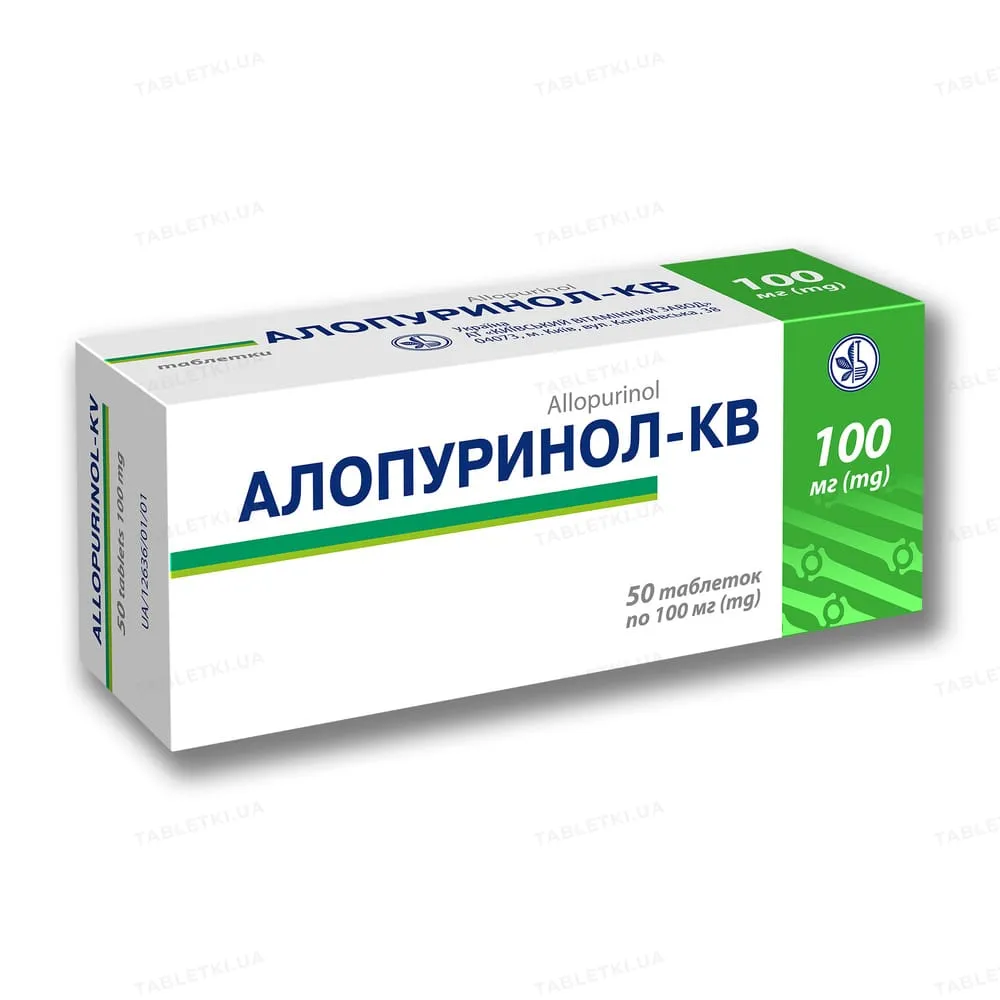
Table of Contents
INSTRUCTIONS FOR MEDICAL USE OF THE MEDICINAL PRODUCT ALOPURINOL-KV (ALLOPURINOL-KV)
Composition:
Active substance: allopurinol;
1 tablet contains allopurinol 100 mg or 300 mg;
Excipients: cellulose powder, microcrystalline cellulose, povidone, polyethylene glycol, crospovidone, talc, colloidal anhydrous silicon dioxide, magnesium stearate.
Pharmaceutical form. Tablets.
Main physicochemical properties:
for 100 mg tablets: white or almost white, round-shaped tablets with a biconvex surface and a groove on one side;
for 300 mg tablets: white or almost white, flat cylindrical tablets with beveled edges and a groove on one side.
Pharmacotherapeutic group. Drugs that inhibit the formation of uric acid.
ATC code M04A A01.
Pharmacological properties.
Pharmacodynamics.
Allopurinol and its main metabolite, oxypurinol, interfere with uric acid synthesis and possess uricostatic properties primarily based on their ability to inhibit the enzyme xanthine oxidase, which catalyzes the oxidation of hypoxanthine to xanthine and xanthine to uric acid, thereby reducing the concentration of uric acid and promoting the dissolution of urates.
Pharmacokinetics.
Allopurinol is rapidly absorbed in the upper gastrointestinal tract. After oral administration, allopurinol is detectable in blood plasma within 30–60 minutes. The bioavailability of the drug ranges from 67% to 90%.
Peak plasma concentrations of allopurinol and its metabolite oxypurinol are reached approximately 1.5 hours and 3–5 hours after administration, respectively. Allopurinol is minimally bound to plasma proteins. Its volume of distribution is approximately 1.3 L/kg.
Allopurinol is rapidly oxidized (plasma half-life is 1–2 hours) by xanthine oxidase and aldehyde oxidase to oxypurinol, which is also a potent inhibitor of xanthine oxidase. However, the half-life of this metabolite ranges from 13 to 30 hours. Due to the prolonged half-life of oxypurinol, gradual accumulation may occur at the beginning of therapy until a steady-state plasma concentration is achieved. In patients with normal renal function, the average plasma concentration of oxypurinol is typically 5–10 mg/L after a single 300 mg dose of allopurinol.
Allopurinol is primarily excreted by the kidneys, with less than 10% of the drug excreted unchanged. Approximately 20% of allopurinol is excreted in feces. Oxypurinol is excreted unchanged in urine following tubular reabsorption.
Impaired renal function leads to prolonged half-life of oxypurinol; therefore, dosage recommendations must be followed in patients with renal insufficiency.
Clinical characteristics.
Indications.
Treatment of diseases caused by elevated levels of uric acid in the blood and formation of urate/oxalate stones (e.g., gout, acute urate nephropathy, and urate urolithiasis), as well as treatment of malignant neoplasms that potentially lead to exacerbation of all forms of hyperuricemia, namely various hemoblastoses (acute leukemia, chronic myeloid leukemia, lymphosarcoma), and urate nephropathy arising as a result of leukemia treatment.
Congenital enzymatic deficiency, particularly Lesch-Nyhan syndrome (partial or complete deficiency of hypoxanthine-guanine phosphoribosyltransferase) or adenine phosphoribosyltransferase deficiency.
Treatment of diseases caused by reduced activity of adenine phosphoribosyltransferase and formation of 2,8-dihydroxyadenine stones in the kidneys.
Treatment of diseases caused by formation of mixed calcium-oxalate kidney stones in the presence of hyperuricosuria uncontrolled by diet.
Contraindications.
Hypersensitivity to allopurinol or to any of the components of the medicinal product.
Interaction with other medicinal products and other forms of interaction.
6-Mercaptopurine and azathioprine. Azathioprine is metabolized to 6-mercaptopurine, which is inactivated by xanthine oxidase. When 6-mercaptopurine or azathioprine are administered concurrently with allopurinol, an inhibitor of xanthine oxidase, inhibition of xanthine oxidase prolongs their activity. Serum concentrations of 6-mercaptopurine or azathioprine may reach toxic levels, leading to life-threatening pancytopenia and myelosuppression when these drugs are used concomitantly with allopurinol. Therefore, concomitant use of allopurinol with 6-mercaptopurine or azathioprine should be avoided. If concomitant use with 6-mercaptopurine or azathioprine is considered clinically necessary, the dosage should be reduced to one-quarter (25%) of the usual dose of 6-mercaptopurine or azathioprine, and frequent hematological monitoring should be ensured (see section "Special precautions for use").
Patients should be advised to report any signs or symptoms of bone marrow suppression (unexplained bruising or bleeding, sore throat, fever).
Vidarabine (adenine arabinoside). When allopurinol is used concomitantly with vidarabine, the plasma half-life of the latter is prolonged; therefore, this combination should be used with caution to avoid potential enhancement of toxic effects.
Salicylates and uricosuric agents. The efficacy of allopurinol may be reduced when used concomitantly with drugs capable of promoting uric acid excretion (sulfinpyrazone, probenecid, benzbromarone, or salicylates).
Oxipurinol, the main metabolite of allopurinol with independent therapeutic activity, is excreted by the kidneys similarly to uric acid salts. Therefore, drugs promoting uric acid excretion, such as probenecid or salicylates in high doses, may accelerate oxipurinol excretion. This may lead to reduced therapeutic efficacy of allopurinol; however, the clinical significance of this factor requires evaluation in each individual case.
Allopurinol slows the excretion of probenecid.
Chlorpropamide. In renal impairment, particularly when used concomitantly with allopurinol, the hypoglycemic effect of chlorpropamide may be prolonged, necessitating dose reduction.
Anticoagulants (coumarin derivatives). The effect of warfarin and other coumarin-derived anticoagulants may be enhanced; therefore, more frequent monitoring of blood coagulation and possible anticoagulant dose reduction are required.
Phenytoin. Allopurinol may inhibit hepatic metabolism of phenytoin; however, the clinical significance of this interaction has not been established.
Theophylline, caffeine. At high doses, allopurinol inhibits the metabolism and increases plasma concentrations of theophylline and caffeine. Plasma theophylline levels should be monitored at the beginning of allopurinol treatment or when its dose is increased.
Amoxicillin/ampicillin. When allopurinol is used concomitantly with ampicillin or amoxicillin, there is an increased likelihood of skin allergic reactions (exanthema); therefore, patients taking allopurinol should be prescribed alternative antibiotics.
Antineoplastics. When allopurinol is used with antineoplastic agents (cyclophosphamide, doxorubicin, bleomycin, procarbazine, mechlorethamine), enhanced bone marrow suppression has been observed; therefore, blood counts should be monitored at short intervals in such patients.
Cyclosporine. When used with allopurinol, cyclosporine plasma concentration may increase, leading to increased toxicity.
Didanosine. Concomitant use with allopurinol is not recommended, as nearly a twofold increase in Cmax and AUC for didanosine has been observed.
Captopril. Concomitant use of allopurinol and captopril may increase the risk of skin reactions, especially in patients with chronic kidney disease.
Diuretics.
Concomitant use of allopurinol and furosemide may increase plasma concentrations of urates and oxipurinol. An increased risk of hypersensitivity reactions has been reported with concomitant use of allopurinol and diuretics, particularly thiazides, especially in patients with impaired renal function.
Angiotensin-converting enzyme (ACE) inhibitors.
An increased risk of hypersensitivity reactions has been reported with concomitant use of allopurinol and ACE inhibitors, particularly in patients with impaired renal function.
Aluminum hydroxide.
The effect of allopurinol may be reduced when used concomitantly with aluminum hydroxide. An interval of at least 3 hours should be maintained between administration of the two medicinal products.
Special precautions for use.
If hypersensitivity reactions (DRESS syndrome), including Stevens-Johnson syndrome, toxic epidermal necrolysis, or maculopapular exanthema occur, allopurinol should be discontinued immediately and must not be re-administered. Corticosteroids may help manage cutaneous hypersensitivity reactions.
The presence of the HLA-B*5801 allele (a genetic marker) in patients receiving allopurinol is associated with an increased risk of developing hypersensitivity reactions. The frequency of this genetic marker varies significantly among different ethnic groups (it is present in 20% of Han Chinese, 8–15% of Thai, 12% of Korean, and 1–2% of Japanese and Caucasian populations). Allopurinol should be considered for use in patients known to carry the HLA-B*5801 allele only if the anticipated benefits outweigh the potential risks.
Such patients must be informed of the necessity to discontinue treatment immediately upon the first signs of hypersensitivity syndrome.
Allopurinol is not recommended for use when plasma uric acid levels are below 535 µmol/L (9 mg/100 mL), especially if dietary recommendations are followed and there is no evidence of kidney involvement. Avoid consuming foods high in purines (e.g., organ meats: kidneys, brain, liver, heart, and tongue; meat extracts, and alcohol—especially beer).
If hypersensitivity reactions (e.g., eczema) occur, allopurinol should be discontinued immediately.
Particular medical supervision is required in patients with impaired renal or hepatic function or pre-existing hematopoietic disorders. Appropriate dosage recommendations must be followed for patients with renal or hepatic impairment. Allopurinol should be used with special caution in patients suffering from arterial hypertension or heart failure who are receiving ACE inhibitors or diuretics.
During treatment of gout and urolithiasis, daily urine output should be at least 2 liters.
To prevent increased serum or urinary uric acid concentrations—which may occur during radiotherapy or chemotherapy of neoplastic diseases, as well as in Lesch-Nyhan syndrome—besides allopurinol administration, high fluid intake should be maintained to ensure adequate diuresis. Additionally, urine alkalinization may be performed to enhance uric acid excretion and promote dissolution of urates/uric acid crystals.
If urate nephropathy or other pathological changes have already caused impaired renal function, the dose should be adjusted according to renal function parameters.
Allopurinol treatment should not be initiated during acute gout attacks until symptoms have completely resolved. At the beginning of allopurinol therapy, acute gout attacks may be exacerbated due to mobilization of large amounts of uric acid. Therefore, concomitant use of analgesics or colchicine is recommended during the first 4 weeks of treatment.
In patients with large uric acid kidney stones, it cannot be excluded that during allopurinol treatment some stones may dissolve and pass into the bladder, potentially causing ureteral obstruction.
During long-term allopurinol therapy, thyroid dysfunction has been observed in 5.8% of patients, particularly elevated thyroid-stimulating hormone (TSH) levels (>5.5 µIU/mL). Caution is advised when administering allopurinol to patients with pre-existing thyroid dysfunction.
Concomitant use of allopurinol with 6-mercaptopurine or azathioprine should be avoided, as there have been reports of fatal outcomes (see section "Interaction with other medicinal products and other forms of interaction").
Use during pregnancy or breastfeeding.
There are insufficient data on the use of allopurinol during pregnancy. Since allopurinol affects purine metabolism and the potential risk to humans is unknown, allopurinol is not recommended during pregnancy.
Allopurinol passes into breast milk; therefore, the drug should not be administered during breastfeeding.
Ability to influence reaction rate when driving or operating machinery.
Until individual response to allopurinol is established, caution is necessary when driving or operating machinery due to the potential occurrence of dizziness, somnolence, and ataxia.
Dosage and Administration
Adults. The daily dose should be individually determined based on serum uric acid levels. To reduce the risk of adverse reactions, treatment should be initiated with 100 mg of allopurinol once daily. The dose may be increased only if serum uric acid levels are not sufficiently reduced.
Recommended dosage regimens are as follows:
- In mild conditions: 100–200 mg daily;
- In moderate conditions: 300–600 mg daily;
- In severe conditions: 700–900 mg daily.
When calculating the dose based on body weight, a dosage of 2–10 mg/kg daily is recommended.
Children. For children aged 15 years and older, the daily dose of allopurinol is 10–20 mg/kg body weight. The maximum daily dose is 400 mg. Allopurinol is rarely prescribed to children, except in malignant conditions (particularly leukemias) and certain enzyme disorders such as Lesch-Nyhan syndrome.
Elderly Patients. Due to lack of specific data on allopurinol use in this patient group, the lowest therapeutically justified doses are recommended. Renal function impairment, which is common in elderly patients, should be taken into account.
Patients with Renal Impairment. Since allopurinol and its metabolites are excreted by the kidneys, overdose may occur if the dose is not appropriately adjusted.
In severe renal impairment, the maximum daily dose is 100 mg. A single dose of 100 mg administered at intervals longer than 24 hours (every 2–3 days) may be used.
If dose escalation is necessary, serum oxypurinol levels should be monitored and must not exceed 15.2 µg/mL.
During hemodialysis (2–3 sessions per week), administer 300–400 mg of allopurinol after each session.
Monitoring of serum urate concentrations and urinary uric acid levels at specified intervals is required to adjust the allopurinol dose.
Patients with Hepatic Impairment.
Patients with impaired liver function should receive lower doses. Periodic monitoring of liver function tests is recommended at the beginning of treatment.
The 300 mg tablets should not be prescribed to these patients due to the high active ingredient content.
Tablets should be taken after meals, without chewing, with a large amount of liquid.
The duration of treatment depends on the course of the underlying disease. To prevent the formation of oxalate and urate stones and in cases of primary hyperuricemia and gout, long-term therapy is usually required. In secondary hyperuricemia, short-term treatment is recommended, depending on the duration of elevated uric acid levels.
Children.
Allopurinol is indicated for children aged 15 years and older.
Allopurinol is rarely prescribed to children, except in malignant conditions (particularly leukemias) and certain enzyme disorders such as Lesch-Nyhan syndrome.
Overdose
Symptoms. After a single dose of 20 g, one patient experienced nausea, vomiting, diarrhea, and dizziness. Another patient showed no adverse effects after ingesting 22.5 g of allopurinol. With prolonged use of 200–400 mg allopurinol daily in patients with renal impairment, severe intoxication symptoms have been reported, including skin reactions, fever, hepatitis, eosinophilia, and worsening of renal failure. Overdose with allopurinol significantly suppresses xanthine oxidase activity; however, clinically significant adverse effects occur mainly when allopurinol is co-administered with 6-mercaptopurine or azathioprine.
In suspected overdose, especially when 6-mercaptopurine or azathioprine have been taken concurrently, gastric lavage, induction of emesis, or administration of activated charcoal and sodium phosphate may be considered if less than 1 hour has passed since drug ingestion.
Treatment. Symptomatic therapy. Hemodialysis may be necessary if indicated. No specific antidote is known.
Adverse Reactions
The assessment of adverse effects is based on information regarding their frequency: very common (≥ 1/10), common (≥ 1/100, < 1/10), uncommon (≥ 1/1,000, < 1/100), rare (≥ 1/10,000, < 1/1,000), very rare (< 1/10,000), frequency not known (cannot be estimated from available data).
Reactive gout attacks may occur at the beginning of allopurinol treatment.
Adverse reactions are more frequent in patients with renal and/or hepatic insufficiency or when used concomitantly with ampicillin or amoxicillin.
Blood and lymphatic system disorders:
Rare – severe bone marrow damage (thrombocytopenia1, agranulocytosis1, aplastic anemia1), especially in patients with renal impairment;
Very rare – changes in blood parameters (leukopenia, leukocytosis, granulocytosis, and eosinophilia), pure red cell aplasia.
Immune system disorders:
Rare – delayed-type hypersensitivity reactions2 accompanied by fever, skin rashes, vasculitis, lymphadenopathy, pseudolymphoma, arthralgia, leukopenia, eosinophilia, hepatosplenomegaly, and abnormal liver function tests (reversible elevation of transaminases and alkaline phosphatase); acute cholangitis and xanthine stones;
Very rare – anaphylactic reactions, including anaphylactic shock, angioimmunoblastic T-cell lymphoma3.
Gastrointestinal disorders:
Rare – nausea4, vomiting4;
Frequency not known – diarrhea;
Very rare – hematemesis, steatorrhea, stomatitis, defecation disorders.
Hepatobiliary disorders:
Rare – liver function abnormalities5, ranging from asymptomatic elevation of liver function tests to hepatitis (including liver necrosis and granulomatous hepatitis)5.
Skin and subcutaneous tissue disorders:
Very rare – skin rashes, including Stevens-Johnson syndrome (SJS)/toxic epidermal necrolysis (TEN)6; alopecia, furunculosis, Quincke's edema7, hair discoloration, dermatitis;
Frequency not known – drug-induced lichenoid reaction.
Respiratory, thoracic and mediastinal disorders:
Very rare – angina pectoris.
Nervous system disorders:
Very rare – ataxia, peripheral neuritis, taste disturbances, coma, headache, neuropathy, paralysis, dizziness, somnolence, paresthesia;
Frequency not known – aseptic meningitis.
Cardiac disorders:
Very rare – bradycardia, arterial hypertension.
Metabolism and nutrition disorders:
Very rare – diabetes mellitus, hyperlipidemia.
Psychiatric disorders:
Very rare – depression.
Reproductive system and breast disorders:
Very rare – gynecomastia, impotence, infertility.
Renal and urinary disorders:
Very rare – hematuria, uremia, azotemia.
Eye disorders:
Very rare – cataract, retinal degeneration, visual disturbances.
Musculoskeletal and connective tissue disorders:
Very rare – myalgia.
General disorders and administration site conditions:
Very rare – malaise, asthenia, edema, pyrexia8.
Ear and labyrinth disorders:
Dizziness.
Investigations:
Increased blood TSH levels.
_______________________
1 Thrombocytopenia, agranulocytosis, and aplastic anemia have been very rarely reported, particularly in patients with impaired renal and/or hepatic function, requiring careful monitoring in such patients.
2 Delayed-type hypersensitivity reactions (DRESS syndrome) with fever, rash, vasculitis, lymphadenopathy, pseudolymphoma, arthralgia, leukopenia, eosinophilic hepatomegaly, and liver function abnormalities, including destruction and disappearance of intrahepatic bile ducts, may occur in various combinations. Other organs may also be affected (e.g., liver, lungs, kidneys, pancreas, myocardium, and colon). If such reactions occur, allopurinol should be discontinued immediately and must not be re-administered. Allopurinol should not be re-prescribed in cases of hypersensitivity reactions, including SJS/TEN. Corticosteroids may be used to manage skin hypersensitivity reactions. Generalized hypersensitivity reactions are usually associated with renal and/or hepatic disorders, particularly in fatal cases.
3 Angioimmunoblastic T-cell lymphoma has been very rarely reported following biopsy of generalized lymphadenopathy. This condition has been shown to be reversible upon discontinuation of allopurinol.
4 Nausea and vomiting were reported in early clinical trials during allopurinol treatment. This issue can be avoided by taking allopurinol after meals.
5 Liver dysfunction has been reported without the occurrence of generalized hypersensitivity reactions.
6 Skin reactions are the most common and may occur at any time during treatment. These reactions may present as purpuric, maculopapular, squamous, or exfoliative rash (SJS/TEN). The highest risk of SJS/TEN or other serious hypersensitivity reactions occurs during the first weeks of treatment. Early diagnosis and immediate discontinuation of any suspected drug can prevent more serious consequences. If such reactions occur, allopurinol should be discontinued immediately. After recovery, re-initiation of allopurinol therapy should begin with a low dose (e.g., 50 mg/day) and gradually increased. The HLA-B*5801 allele has been associated with an increased risk of hypersensitivity reactions and SJS/TEN during allopurinol treatment. However, the use of genotyping as a screening tool to guide allopurinol therapy decisions has not been established. If rashes recur during allopurinol treatment, the drug should be discontinued immediately, as more severe hypersensitivity may develop. Allopurinol should not be re-administered if SJS/TEN or other serious hypersensitivity reactions cannot be ruled out, as this may lead to severe or even fatal reactions. Clinical diagnosis of SJS/TEN remains the cornerstone for decision-making. If such reactions occur during treatment, allopurinol should be discontinued immediately.
7 Angioedema has been reported, with or without signs and symptoms of generalized hypersensitivity reaction.
8 Fever has been reported, with or without signs and symptoms of generalized hypersensitivity reaction.
9 Elevated TSH levels detected in relevant tests do not indicate any effect on free T4 levels, or such TSH levels may indicate subclinical hypothyroidism.
Shelf life. 5 years.
Storage conditions.
Store at temperatures not exceeding 25 °C in the original packaging.
Keep out of reach of children.
Packaging.
100 mg tablets: 10 tablets per blister; 5 blisters per carton.
300 mg tablets: 10 tablets per blister; 3 blisters per carton.
Prescription category. Prescription only.
Manufacturer. JSC "KYIV VITAMIN PLANT".
Manufacturer's address and location of business activity.
38 Kopilivska Street, Kyiv, 04073, Ukraine.
Website: www.vitamin.com.ua