Zavedos
Poland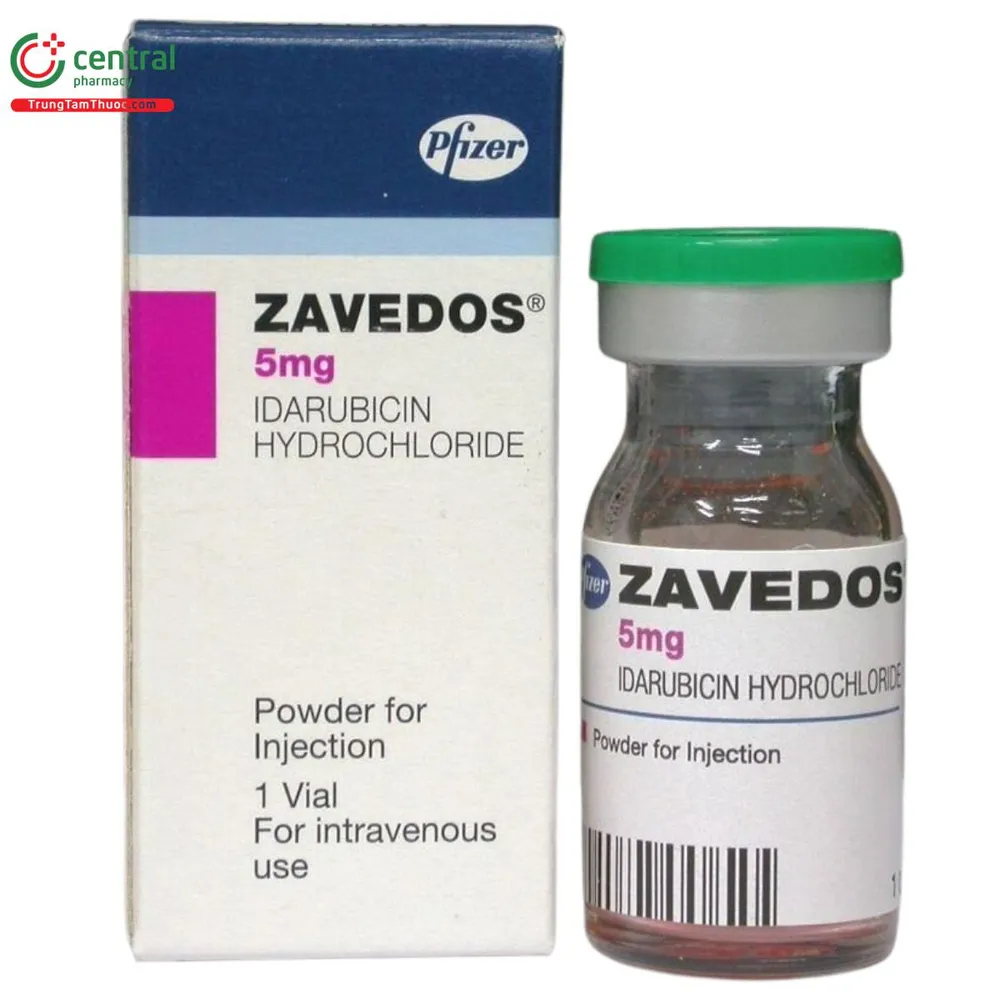
Table of Contents
- Package leaflet: Information for the patient
- 1. What Zavedos is and what it is used for
- 2. Important information before using Zavedos
- 3. How to use Zavedos
- 4. Possible adverse reactions
- 5. How to store Zavedos
- 6. Contents of the pack and other information
- Information intended exclusively for healthcare professionals:
Package leaflet: Information for the patient
Zavedos, 5 mg, powder for solution for injection
Zavedos, 10 mg, powder for solution for injection
Idarubicini hydrochloridum
Please read all of this leaflet carefully before using this medicine because it contains
important information for you.
- Keep this leaflet, as you may need to read it again.
- If you have any further questions, please ask your doctor or pharmacist.
- This medicine has been prescribed for a specific individual. Do not pass it on to others. It may harm other people, even if their symptoms are the same.
- If any of the side effects worsen or if you notice any side effects not listed in this leaflet, inform your doctor or pharmacist immediately. See section 4.
Table of contents
- What Zavedos is and what it is used for
- What you need to know before using Zavedos
- How to use Zavedos
- Possible side effects
- How to store Zavedos
- Contents of the pack and other information
1. What Zavedos is and what it is used for
Zavedos is a cytostatic medicine belonging to the anthracycline antibiotics group, used in the treatment of the following blood cancers:
Adults:
- Acute non-lymphocytic leukemia (also known as acute myeloid leukemia). Zavedos induces remissions both in first-line therapy and in patients with relapsed disease or those who do not respond to treatment.
- Acute lymphoblastic leukemia – as a second-line treatment.
Children:
- Acute myeloid leukemia – in combination with cytarabine, as first-line treatment to achieve remission induction.
- Acute lymphoblastic leukemia – as a second-line treatment.
2. Important information before using Zavedos
When not to use Zavedos
- if the patient is allergic to idarubicin or any of the other ingredients of this medicine (listed in section 6), other anthracyclines or anthracenediones,
- in patients with severe hepatic impairment,
- in patients with severe renal impairment,
- in patients with severe cardiomyopathy,
- in patients with severe heart muscle failure,
- in patients who have recently had a myocardial infarction,
- in patients with severe cardiac arrhythmias,
- in patients with persistent bone marrow suppression,
- in patients previously treated with the maximum cumulative dose of idarubicin hydrochloride and (or) other anthracyclines or anthracenediones,
- during breastfeeding.
Warnings and precautions
Zavedos should be administered under the supervision of a physician experienced in the use of cytostatic agents (chemotherapy).
Treatment with Zavedos may be initiated only after resolution of acute toxicities from prior cytotoxic therapy, such as mucositis, neutropenia (reduced number of neutrophils), thrombocytopenia, and systemic infections.
Before starting treatment with Zavedos, discuss this with your doctor.
- To minimize the risk of severe heart damage, the physician should assess cardiac function before starting Zavedos treatment and monitor it throughout therapy. At the first signs of heart damage, the physician should consider discontinuing the drug. Baseline cardiac evaluation should be performed using ECG (electrocardiography), ventriculography, or echocardiography, especially in patients at increased risk of cardiotoxicity. Left ventricular ejection fraction should be reassessed, particularly when the patient has received increased cumulative doses of anthracyclines. The same method should be used for monitoring throughout the treatment period. Risk factors for cardiotoxicity include active or occult cardiovascular disease, prior or concurrent mediastinal or pericardial irradiation, previous treatment with other anthracyclines or anthracenediones, and concomitant use of drugs that may impair myocardial contractility or have cardiotoxic effects (e.g., trastuzumab). Inform your doctor if you are taking or have recently taken trastuzumab (a medicine used in the treatment of certain cancers). Trastuzumab may remain in the body for up to 7 months. Since trastuzumab may affect the heart, Zavedos should not be administered within 7 months after the last dose of trastuzumab. If Zavedos is administered before this period has elapsed, cardiac function should be closely monitored. The physician should pay particular attention to cardiac monitoring in patients who have received high cumulative doses and in those with risk factors. Infants and children appear to be more susceptible to anthracycline-induced cardiotoxicity; therefore, long-term periodic cardiac function monitoring should be performed in these patients.
- Zavedos has marked myelosuppressive effects (suppression of bone marrow activity). All patients receiving a therapeutic dose of the drug will experience severe myelosuppression. Before each treatment cycle and during therapy, the physician should evaluate hematological parameters, including white blood cell count with differential. The main hematological toxicity and the most common acute complication requiring dose reduction is dose-dependent, reversible leukopenia (reduced white blood cell count) and (or) neutropenia (reduced neutrophil count). Leukopenia and neutropenia are usually severe. Thrombocytopenia and anemia may also occur.
- Cases of secondary leukemias have been reported in patients treated with anthracyclines.
- Zavedos may cause vomiting. After administration, mucositis (mainly affecting the oral mucosa, less frequently the esophagus) usually develops rapidly and, in severe cases, may lead to mucosal ulceration within a few days. In most patients, this resolves by the third week of treatment. Very rarely, severe gastrointestinal events (such as perforation or bleeding) have been observed.
- The physician should assess liver and (or) kidney function before and during therapy using standard laboratory tests (measuring serum bilirubin and creatinine levels).
- Injection into a small vessel or repeated administration into the same vein may lead to venous sclerosis. Proper administration according to recommendations may minimize the risk of phlebitis or thrombophlebitis at the injection site.
- Extravasation of the drug during intravenous injection may cause local pain, severe tissue damage (vesiculation, severe inflammation of connective tissue), and necrosis. If signs of extravasation occur during intravenous administration, infusion must be stopped immediately.
- Zavedos may cause hyperuricemia (elevated uric acid levels in blood), resulting from increased purine catabolism associated with rapid tumor cell lysis induced by the drug ("tumor lysis syndrome"). After starting treatment, the physician should monitor levels of uric acid, potassium, calcium phosphate, and creatinine.
- Patients receiving Zavedos should avoid vaccination with live vaccines. Inactivated (so-called "killed") vaccines may be administered, but the immune response may be diminished.
- The drug may cause red discoloration of urine for 1–2 days after administration.
- In men, Zavedos may affect fertility and cause irreversible infertility. Before starting treatment, discuss fertility preservation with your doctor. Both women and men should use effective contraception (see "Pregnancy, breastfeeding and fertility").
- Patients who plan to have children after completing treatment should be advised to consult an appropriate specialist.
Zavedos and other medicines
Inform your doctor about all medicines you are currently taking, have recently taken, or plan to take.
The following medicines may interact with Zavedos:
- calcium channel blockers (e.g., verapamil) – used in the treatment of cardiovascular diseases,
- anticoagulants,
- live attenuated vaccines (e.g., yellow fever vaccine),
- cyclosporine A – used to prevent transplant rejection.
Pregnancy, breastfeeding and fertility
If you are pregnant, breastfeeding, suspect you may be pregnant, or plan to have a child, consult your doctor or pharmacist before using this medicine.
Pregnancy
Pregnancy should be avoided if the woman or her partner is using Zavedos.
Harmful effects of Zavedos on the fetus have been demonstrated. It is important to inform your doctor if pregnancy is suspected. Zavedos should not be used during pregnancy unless the potential benefits outweigh the risks to the fetus.
Contraception in women of childbearing potential
Effective contraception must always be used during treatment with Zavedos and for at least 6.5 months after the last dose. Discuss with your doctor which contraceptive methods are appropriate for you and your partner.
Contraception in men
Effective contraception must always be used during treatment with Zavedos and for at least 3.5 months after the last dose.
Breastfeeding
Breastfeeding must be avoided during treatment with Zavedos and for at least 14 days after the last dose, as the drug may pass into human milk and harm the infant.
Fertility
Both women and men should seek advice regarding fertility preservation before starting treatment.
Driving and operating machinery
No studies on the effects of Zavedos on the ability to drive vehicles or operate machinery have been conducted.
Zavedos contains lactose
If you have been previously diagnosed with intolerance to certain sugars, you should consult your doctor before taking this medicine.
3. How to use Zavedos
This medicine should always be used as directed by the physician. In case of doubt, consult a
physician or pharmacist.
The dose is usually calculated based on the patient's total body surface area.
Acute non-lymphoblastic leukemia / acute myeloid leukemia
Adults: The recommended dose is 12 mg/m² daily, administered intravenously for 3 days, as part of a combination regimen with cytarabine.
An alternative dosing schedule used in monotherapy and combination therapy is 8 mg/m² daily, administered intravenously for 5 days.
Children: The recommended dose is 10–12 mg/m² daily, administered intravenously for 3 days, as part of a combination regimen with cytarabine.
Acute lymphoblastic leukemia
Adults: The recommended dose is 12 mg/m² daily, administered intravenously for 3 days in monotherapy.
Children: The recommended dose is 10 mg/m² daily, administered intravenously for 3 days in monotherapy.
However, the recommended dosage must be adjusted according to hematological disorders in the individual patient, and in the case of combination therapy, according to the doses of other cytotoxic drugs used.
Hepatic and renal impairment
The physician should consider reducing the dose in patients with bilirubin and (or) creatinine levels exceeding 2 mg%.
Use of a higher than recommended dose of Zavedos
Very high doses of idarubicin hydrochloride may exert toxic effects on the myocardium within 24 hours and cause severe bone marrow suppression within one to two weeks. Cases of delayed onset heart failure have been reported even several months after anthracycline overdose.
Missed dose of Zavedos
Do not administer a double dose to make up for a missed dose.
Discontinuation of Zavedos treatment
The decision to discontinue treatment should be made by the physician.
If you have any further questions about the use of this medicine, consult your physician or pharmacist.
4. Possible adverse reactions
Like all medicines, this medicine can cause adverse reactions, although not everybody experiences them.
Very common (may occur in more than 1 in 10 people)
- infections
- thrombocytopenia (reduced number of blood platelets)
- severe leukopenia (reduced number of white blood cells)
- severe neutropenia (reduced number of granulocytes)
- anemia
- loss of appetite
- nausea
- vomiting
- mucositis (inflammation of the mucous membranes of the mouth and/or stomach)
- diarrhea
- abdominal pain or burning sensation
- alopecia (hair loss)
- red-colored urine for 1–2 days after administration of the product
- fever
- headache
- chills
Common (may occur in up to 1 in 10 people)
- congestive heart failure
- bradycardia (slow heart rate)
- sinus tachycardia (fast heart rate)
- tachyarrhythmia (heart rhythm disorder)
- asymptomatic decrease in left ventricular ejection fraction
- cardiomyopathy (heart muscle disease)
- hemorrhage
- local phlebitis (vein inflammation)
- thrombophlebitis (inflammation of a vein with blood clot)
- gastrointestinal bleeding
- abdominal pain
- increased liver enzyme and bilirubin levels
- rash
- itching
- skin photosensitivity
Uncommon (may occur in up to 1 in 100 people)
- sepsis
- secondary leukemia (acute myeloid leukemia and myelodysplastic syndrome)
- dehydration
- hyperuricemia (increased blood uric acid levels)
- myocardial infarction (heart attack)
- ECG abnormalities such as non-specific ST-T segment changes
- shock
- esophagitis (inflammation of the esophagus)
- colitis (inflammation of the colon)
- urticaria (hives)
- excessive skin and nail pigmentation
- connective tissue inflammation
- tissue necrosis
Rare (may occur in up to 1 in 1,000 people)
- intracerebral hemorrhage
Very rare (may occur in up to 1 in 10,000 people)
- anaphylactic reaction
- pericarditis (inflammation of the pericardium)
- myocarditis (inflammation of the heart muscle)
- atrioventricular block
- bundle branch block
- thromboembolic complications
- hot flushes
- erosions or ulceration
- erythema of distal parts of limbs
Frequency not known (cannot be estimated from available data)
- pancytopenia (reduced number of red blood cells, white blood cells, and platelets)
- tumor lysis syndrome
- local reactions
Reporting of adverse reactions
If any adverse reactions occur, including any not listed in this leaflet, inform your doctor, pharmacist, or nurse.
Adverse reactions can be reported directly to the Department of Monitoring Adverse Drug Reactions, Office for Registration of Medicinal Products, Medical Devices and Biocidal Products, Al. Jerozolimskie 181C, 02-222 Warsaw
Tel: +48 22 49 21 301
Fax: +48 22 49 21 309
Website: https://smz.ezdrowie.gov.pl
Adverse reactions can also be reported to the Marketing Authorization Holder or its representative.
Reporting adverse reactions helps provide more information on the safety of the medicine.
5. How to store Zavedos
Keep this medicine out of sight and reach of children.
Do not use this medicine after the expiry date stated on the carton after EXP. The expiry date refers to the last day of the stated month.
Store below 25°C.
The prepared solution can be stored at a temperature between 2°C and 8°C for 24 hours.
Medicines must not be disposed of via wastewater or household waste. Ask your pharmacist how to dispose of medicines no longer required. This will help protect the environment.
6. Contents of the pack and other information
What Zavedos contains
- The active substance is idarubicin hydrochloride. One vial contains 5 mg or 10 mg of idarubicin hydrochloride.
- The other ingredient is lactose.
What Zavedos looks like and contents of the pack
Red-orange powder.
Vial made of colourless glass with a capacity of 5 ml or 10 ml, closed with a chlorobutyl rubber stopper and sealed with an aluminium cap, packed in a cardboard box.
Marketing Authorisation Holder
Pfizer Europe MA EEIG
Boulevard de la Plaine 17
1050 Bruxelles
Belgium
Manufacturer
Actavis Italy S.p.A.
Viale Pasteur 10
20014 Nerviano (Milan)
Italy
For further information regarding this medicinal product, please contact the local representative of the Marketing Authorisation Holder:
Pfizer Polska Sp. z o.o.
tel. 22 335 61 00
Information intended exclusively for healthcare professionals:
Zavedos, as a reconstituted powder solution, must be administered intravenously only. The infusion should be given over 5 to 10 minutes through previously inserted intravenous catheters, through which 0.9% sodium chloride or 5% dextrose solution is being infused. Direct rapid injection is not recommended due to the risk of extravasation, which may occur even when the needle is correctly positioned within the vein, as confirmed by blood aspiration. This technique minimizes the risk of thrombosis and perivenous leakage of the drug, which could lead to serious complications such as subcutaneous tissue inflammation or necrosis.
Repeated injections into small blood vessels or repeated injections into the same vein may result in phlebosclerosis.
Pharmaceutical incompatibilities
Zavedos must not be mixed with heparin due to the possibility of precipitate formation. Mixing Zavedos with other medicinal products is also not recommended. Prolonged contact with solutions of alkaline pH should be avoided, as this may lead to drug degradation.
The Zavedos vial containing the powder is under negative pressure to prevent aerosol formation during solution preparation. Extreme caution must be exercised when inserting the needle into the vial. Inhalation of any aerosol formed during drug reconstitution must be avoided.
Preparation of the solution
The contents of the 5 mg idarubicin hydrochloride or 10 mg idarubicin hydrochloride vial, powder for solution, should be dissolved in 5 ml or 10 ml, respectively, of water for injections. The resulting solution is hypotonic; therefore, the following precautions must be observed during administration.
The following safety precautions, applicable to all antineoplastic drugs, must be observed:
- Personnel must be trained in the proper techniques for preparing and administering the drug;
- Pregnant women should not be involved in handling or administering these drugs;
- Personnel handling the drug must wear protective clothing: goggles, gowns, masks, and disposable gloves;
- A designated area should be established for drug solution preparation (preferably equipped with a vertical laminar airflow cabinet); the work surface should be protected with absorbent pads backed with a plastic layer;
- Equipment used for drug reconstitution, administration, and waste disposal—including gloves—must be placed in single-use bags designated for high-risk waste and incinerated at high temperature;
- Any accidental spillage of the product should be neutralized immediately with a diluted sodium hypochlorite solution (1% available chlorine), preferably by soaking, followed by rinsing with water;
- If the drug comes into accidental contact with skin or eyes, immediately wash thoroughly with plenty of water and soap or sodium bicarbonate solution, and seek medical advice;
- In case of eye contact, gently pull the eyelid(s) apart and irrigate the eye continuously with large amounts of water for at least 15 minutes, then seek immediate medical attention;
- All materials used in cleaning up drug contamination must be disposed of as described above;
- Hands must always be washed after removing gloves;
- Any unused medicinal product or waste material must be disposed of in accordance with local regulations.