Tolperisone neuropharma
Poland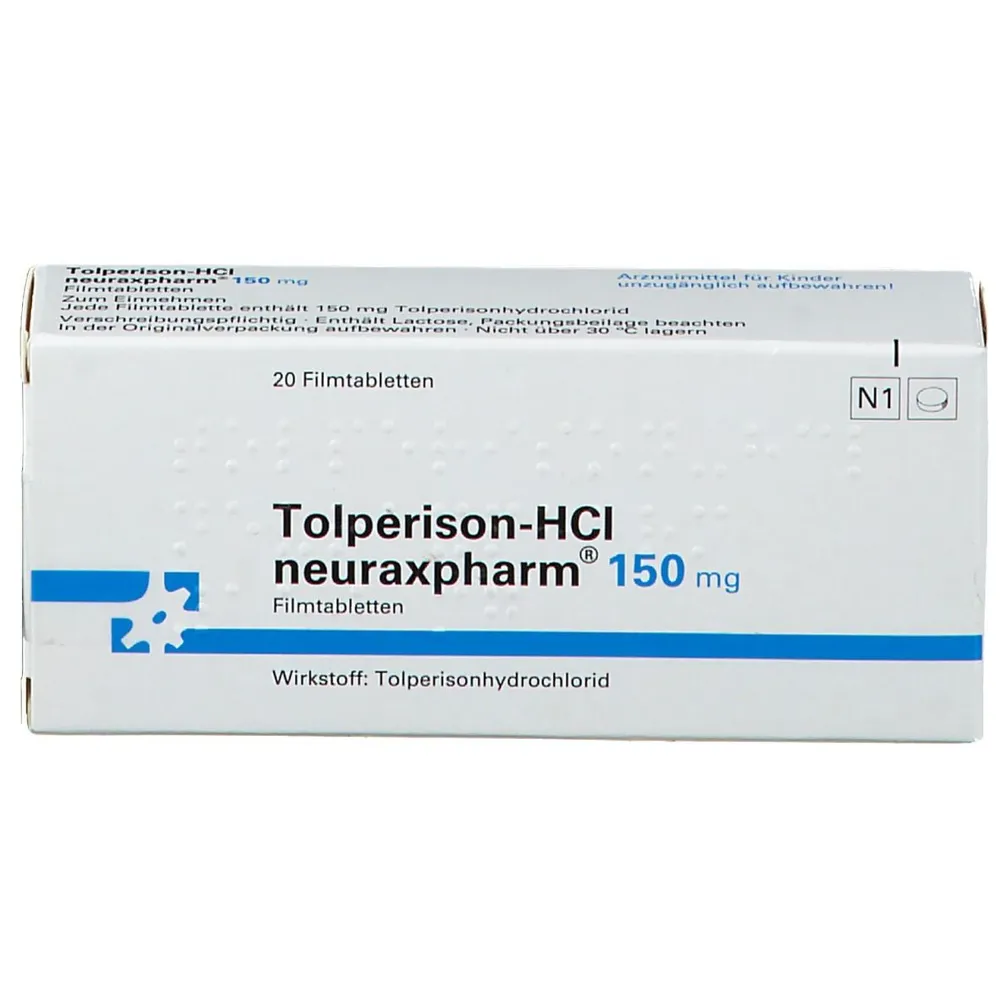
Table of Contents
- PACKAGE LEAFLET: INFORMATION FOR THE USER
- 1. What Tolperison NeuroPharma is and what it is used for
- 2. Important information before using Tolperison NeuroPharma
- 3. How to take Tolperison NeuroPharma
- 4. Possible adverse effects
- 5. How to store Tolperison NeuroPharma
- 6. Contents of the pack and other information
PACKAGE LEAFLET: INFORMATION FOR THE USER
Tolperison NeuroPharma, 50 mg, film-coated tablets
Tolperison NeuroPharma, 150 mg, film-coated tablets
hydrochloride tolperisone
Please read all of this leaflet carefully before taking this medicine because it contains
important information for the patient.
- Keep this leaflet, as you may need to read it again.
- If you have any further questions, please ask your doctor or pharmacist.
- This medicine has been prescribed for a specific individual. Do not pass it on to others. It may harm them even if their symptoms are the same.
- If you experience any adverse reactions, including any not listed in this leaflet, inform your doctor or pharmacist.
Leaflet contents:
- What Tolperison NeuroPharma is and what it is used for
- Important information before taking Tolperison NeuroPharma
- How to take Tolperison NeuroPharma
- Possible side effects
- How to store Tolperison NeuroPharma
- Contents of the pack and other information
1. What Tolperison NeuroPharma is and what it is used for
Tolperison NeuroPharma is a central nervous system-acting medicine intended for the treatment of post-stroke increased skeletal muscle tone in adults.
2. Important information before using Tolperison NeuroPharma
When not to take Tolperison NeuroPharma
- if the patient is allergic to the active substance (tolperisone) or to drugs containing eperisone, or to any of the other ingredients of this medicine (listed in section 6).
- if the patient has myasthenia gravis (an autoimmune disorder causing muscle weakness).
- if the patient is breastfeeding.
Warnings and precautions
Hypersensitivity reactions:
In the post-marketing period of medicinal products containing tolperisone (the active substance in Tolperison NeuroPharma), the most frequently reported adverse reactions have been hypersensitivity reactions. These hypersensitivity reactions ranged from mild skin reactions to severe systemic reactions (e.g. anaphylactic shock).
It appears that the risk of hypersensitivity reactions is increased in women, elderly patients, or patients concurrently using other medications (mainly nonsteroidal anti-inflammatory drugs). Furthermore, an increased risk of hypersensitivity to this medicine may occur in patients with a history of drug allergy or in patients with past allergic diseases or conditions (such as: atopy, hay fever, asthma, atopic dermatitis with high serum IgE levels, urticaria), or in patients who currently have a viral infection.
Early symptoms of hypersensitivity to the medicine include: hot flushes, rash, intense itching of the skin (with raised bumps), wheezing, difficulty breathing with or without swelling of the face, lips, tongue and (or) throat, difficulty swallowing, rapid heartbeat, low blood pressure, rapid drop in blood pressure.
If the patient experiences any of these symptoms, they should immediately stop taking this medicine and contact their doctor or the nearest hospital emergency department.
If the patient has ever had an allergic reaction to tolperisone, this medicine must not be used.
If the patient has a known allergy to lidocaine, they may have an increased risk of allergy to tolperisone. In such a case, please consult your doctor before starting treatment.
If a hypersensitivity reaction occurs, discontinue use of this medicine immediately.
Children and adolescents
The safety and efficacy of tolperisone in children have not been established.
Tolperison NeuroPharma with other medicines
Inform your doctor or pharmacist about all medicines the patient is currently taking or has recently taken, as well as any medicines the patient plans to take.
There are no data indicating restrictions on the use of Tolperison NeuroPharma due to interactions with other medicines.
Although Tolperison NeuroPharma is a centrally acting medicine, it does not cause sedation (it does not impair concentration ability). Therefore, it may be used concomitantly with hypnotics and sedatives. When used together with other centrally acting muscle relaxants, the doctor may consider adjusting the dose of Tolperison NeuroPharma.
The medicine enhances the effect of niflumic acid; therefore, when used concomitantly, consider reducing the dose of niflumic acid or another nonsteroidal anti-inflammatory drug (NSAID).
Taking Tolperison NeuroPharma with food and drink
Food and fluid intake do not affect the absorption of the medicine.
It is important to take the medicine after consuming an adequate amount of food.
Pregnancy, breastfeeding and fertility
If the patient is pregnant or breastfeeding, suspects she may be pregnant, or is planning to have a child, she should consult her doctor or pharmacist before using this medicine.
If the patient is pregnant or planning to become pregnant, she should inform her doctor.
Although there is no evidence that Tolperison NeuroPharma tablets may harm the unborn child, the decision to use the medicine during pregnancy, especially during the first trimester, will be made by the doctor after carefully weighing the benefits against the risks.
Tolperison NeuroPharma is contraindicated during breastfeeding.
Driving and operating machinery
This medicine does not affect the ability to drive or operate machinery. However, patients who experience dizziness, drowsiness, concentration disturbances, epilepsy, visual disturbances, or muscle weakness while taking Tolperison NeuroPharma should consult their doctor.
Tolperison NeuroPharma contains lactose monohydrate
Tolperison NeuroPharma 50 mg coated tablet, as excipients, contains lactose monohydrate (1.44 mg per tablet) and titanium dioxide (E 171).
Tolperison NeuroPharma 150 mg coated tablet, as excipients, contains lactose monohydrate (5.4 mg per tablet) and titanium dioxide (E 171).
If the patient has previously been diagnosed with intolerance to certain sugars, they should consult their doctor before taking this medicine.
3. How to take Tolperison NeuroPharma
This medicine should always be taken exactly as directed by your doctor or pharmacist. If in doubt, consult your doctor or pharmacist.
The recommended dose is:
- Tolperison NeuroPharma 50 mg: 1 to 3 coated tablets three times daily
- Tolperison NeuroPharma 150 mg: 1 coated tablet three times daily
This medicine should be taken after meals, with a glass of water.
Use in children and adolescents
The safety and efficacy of tolperisone in children have not been established.
Patients with renal impairment
Regular monitoring tests, including frequent assessment of kidney function and general condition, should be performed during treatment with Tolperison NeuroPharma coated tablets, as adverse reactions occur more frequently in this patient group. This medicine should not be used in patients with severe kidney disease.
Patients with hepatic impairment
Regular monitoring tests, including frequent assessment of liver function and general condition, should be performed during treatment with Tolperison NeuroPharma coated tablets, as adverse reactions occur more frequently in this patient group. This medicine should not be used in patients with severe liver disease.
Overdose of Tolperison NeuroPharma coated tablets
Symptoms of overdose may include drowsiness, gastrointestinal symptoms (such as nausea, vomiting, upper abdominal pain), rapid heartbeat, high blood pressure, slowed movements, and dizziness. In severe cases, seizures, respiratory depression or respiratory arrest, and coma have been reported.
In case of overdose, seek immediate medical advice from a doctor, pharmacist, or emergency department.
Missed dose of Tolperison NeuroPharma coated tablets
Do not take a double dose to make up for a missed tablet.
Stopping Tolperison NeuroPharma coated tablets
Do not stop taking Tolperison NeuroPharma coated tablets even if you feel the effect of the medicine is too strong or too weak. In such cases, consult your doctor or pharmacist.
If you have any further questions about the use of this medicine, consult your doctor or pharmacist.
4. Possible adverse effects
Like all medicines, this medicine can cause adverse effects, although not everyone will experience them.
Adverse effects are usually mild and resolve after discontinuation of the medicine.
Uncommon: in less than 1 in 100 patients, but in more than 1 in 1000 patients.
Rare: in less than 1 in 1000 patients, but in more than 1 in 10,000 patients.
Very rare: in less than 1 in 10,000 patients, including single cases.
Uncommon adverse effects: loss of appetite, insomnia, sleep disturbances, headache, dizziness, drowsiness, low blood pressure, discomfort in the abdominal cavity, diarrhoea, dry mouth, indigestion, nausea, muscle weakness, muscle pain, limb pain, weakness, malaise, fatigue.
Rare adverse effects: hypersensitivity reactions (allergic), severe allergic reaction (anaphylactic reaction), reduced activity, depression, concentration disturbances, hand tremor, seizures, sensory impairment, paraesthesia, somnolence, visual disturbances, dizziness, tinnitus, chest tightness, rapid heartbeat, palpitations, low blood pressure, hot flushes, breathing difficulties, nosebleeds, dyspnoea, epigastric pain, constipation, bloating, vomiting, mild liver damage, allergic skin reactions, increased sweating, itching, urticaria, rash, urinary incontinence, proteinuria, discomfort in limbs, sensation of drunkenness, feeling of warmth, increased thirst, irritability, elevated bilirubin levels, abnormal liver enzyme activity, decreased platelet count, increased white blood cell count.
Very rare adverse effects: anaemia, lymph node enlargement, severe allergic reactions (anaphylactic shock), increased thirst, confusion, slow heartbeat, osteoporosis, chest discomfort, increased creatinine concentration.
After the product was placed on the market, a new adverse effect (frequency not known) has been reported – angioedema (including facial swelling and lip swelling).
Reporting of adverse effects
If any adverse effects occur, including any adverse effects not listed in this leaflet, please inform your doctor or pharmacist. Adverse effects can be reported directly to the Department of Monitoring Adverse Drug Reactions of the Office for Registration of Medicinal Products, Medical Devices and Biocidal Products
Al. Jerozolimskie 181C
02-222 Warsaw
Tel.: + 48 22 49 21 301
Fax: + 48 22 49 21 309
Website: https://smz.ezdrowie.gov.pl
Adverse effects can also be reported to the marketing authorisation holder.
Reporting adverse effects helps to provide more information on the safety of the medicine.
5. How to store Tolperison NeuroPharma
Store below 30°C.
Keep the medicine out of the sight and reach of children.
Do not use Tolperison NeuroPharma after the expiry date stated on the packaging. The expiry date refers to the last day of the stated month.
Medicines must not be disposed of via wastewater or household waste. Ask your pharmacist how to dispose of medicines no longer required. Such measures help protect the environment.
6. Contents of the pack and other information
What Tolperison NeuroPharma 50 mg film-coated tablets contains
- The active substance is tolperisone hydrochloride. Each film-coated tablet contains 50 mg of tolperisone hydrochloride.
- The other ingredients are:
Tablet core: betaine hydrochloride, microcrystalline cellulose, mannitol, crospovidone, stearic acid, talc
Coating: Opadry II white (lactose monohydrate, hypromellose, titanium dioxide (E 171), macrogol 4000)
What Tolperison NeuroPharma 150 mg film-coated tablets contains
- The active substance is tolperisone hydrochloride. Each film-coated tablet contains 150 mg of tolperisone hydrochloride.
- The other ingredients are:
Tablet core: betaine hydrochloride, microcrystalline cellulose, mannitol, crospovidone, stearic acid, talc
Coating: Opadry II white (lactose, hypromellose, titanium dioxide (E 171), macrogol 4000)
What Tolperison NeuroPharma looks like and contents of the pack
Tolperison NeuroPharma 50 mg, film-coated tablets: white, round film-coated tablets, marked with
"50" on one side and a special code symbol on the other side. The break surface is white.
20, 30, 50 and 100 film-coated tablets packed in PVC/Aluminium blisters in cardboard boxes.
Tolperison NeuroPharma 150 mg, film-coated tablets: white, round film-coated tablets, marked with
"150" on one side and a special code symbol on the other side. The break surface is white.
20, 30, 50 and 100 film-coated tablets packed in PVC/Aluminium blisters in cardboard boxes.
Marketing Authorisation Holder:
neuraxpharm Arzneimittel GmbH
Elisabeth-Selbert-Straße 23
40764 Langenfeld
Germany
Manufacturer:
neuraxpharm Arzneimittel GmbH
Elisabeth-Selbert-Straße 23
40764 Langenfeld, Germany
Meditop Gyógyszeripari KFt.,
Ady Endre street 1, 2097
Pilisborosjenő, Hungary
For more detailed information, please contact the representative of the Marketing Authorisation Holder in Poland:
Neuraxpharm Polska sp. z o.o.
ul. Domaniewska 37
02-672 Warsaw
[email protected]