Theospirex
Poland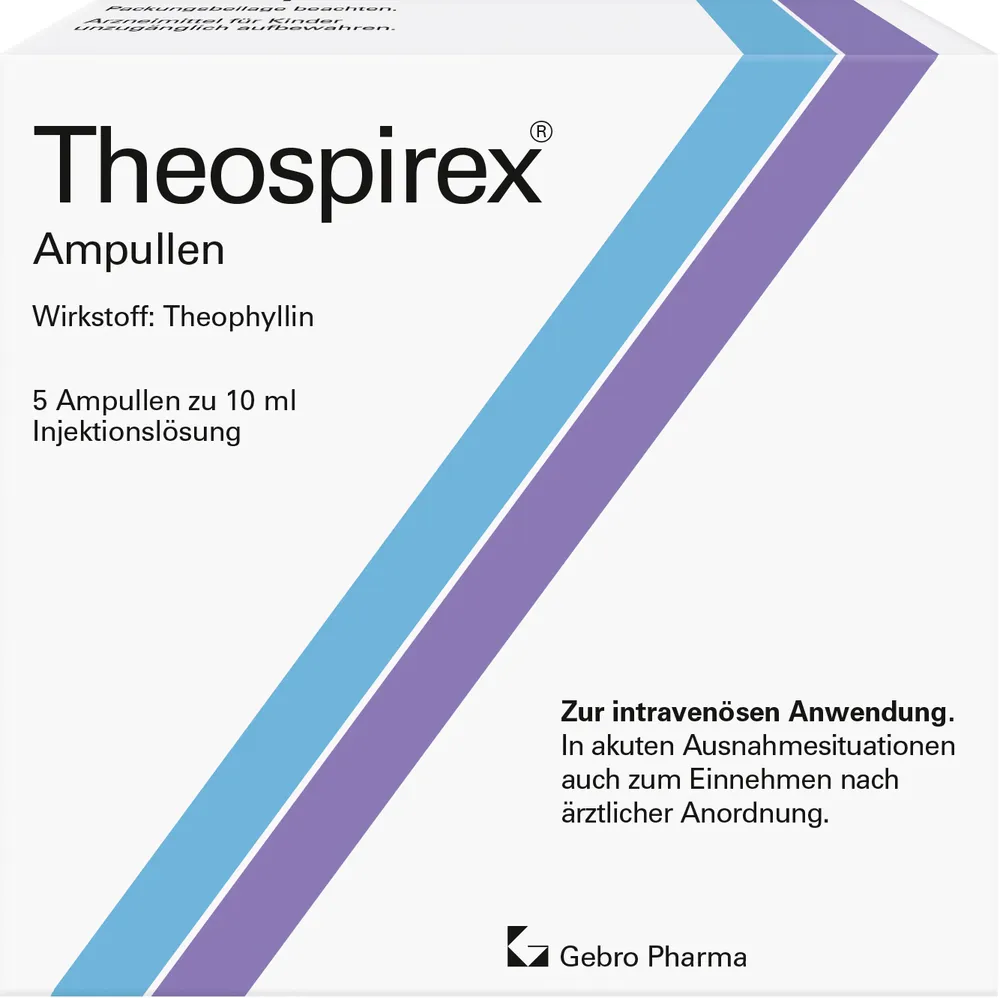
Table of Contents
Package leaflet: information for the patient
Warning! Keep this leaflet! Information on the immediate packaging in a foreign language.
Theospirex
20 mg/ml, solution for injection/infusion
Theophyllinum
Please read this leaflet carefully before using the medicine, as it contains
important information for the patient.
- Keep this leaflet so that you can read it again if necessary.
- If you have any doubts, please consult your doctor, pharmacist, or nurse.
- This medicine has been prescribed for a specific individual. Do not pass it on to others. The medicine may harm another person, even if their symptoms are the same.
- If the patient experiences any adverse reactions, including any adverse reactions not listed in this leaflet, inform the doctor, pharmacist, or nurse. See section 4.
Table of contents of the leaflet
- What Theospirex is and what it is used for
- Important information before using Theospirex
- How to use Theospirex
- Possible side effects
- How to store Theospirex
- Contents of the pack and other information
1. What Theospirex is and what it is used for
Theospirex is a medicine containing theophylline, which acts as a relaxant of smooth muscles
of the bronchi, bronchioles, and blood vessels, and inhibits the release of mediators from cells
involved in inflammatory reactions.
The medicine also positively affects the force and duration of cardiac muscle contraction, and increases urine excretion.
Indications:
treatment of acute and severe bronchospasm in chronic respiratory diseases:
- bronchial asthma, status asthmaticus,
- chronic obstructive pulmonary disease.
Theophyllines should not be used as first-line treatment for asthma in children.
2. Important information before using Theospirex
When not to use Theospirex
- if the patient is allergic to theophylline, theophylline derivatives, or other xanthine derivatives, or to any of the other ingredients of this medicine (listed in section 6),
- if the patient has recently suffered a myocardial infarction,
- if the patient is in shock or collapse,
- if the patient has acute cardiac arrhythmias,
- if the patient has severe liver disease,
- if the patient has pulmonary edema,
- if the patient has a tendency to seizures,
- if the patient has epilepsy,
- if the child is under 6 months of age.
Warnings and precautions
Before starting treatment with Theospirex, discuss this with your doctor, pharmacist, or
nurse:
- if the patient has hypertension,
- if the patient has unstable angina pectoris,
- if the patient has a tendency to cardiac arrhythmias (including tachyarrhythmias),
- if the patient has hypertrophic obstructive cardiomyopathy (a heart muscle disorder),
- if the patient has hyperthyroidism,
- if the patient has peptic ulcer disease of the stomach or duodenum,
- if the patient has impaired kidney or liver function,
- if the patient has porphyria,
- if the patient has heart failure,
- if the patient has cor pulmonale,
- if the patient has glaucoma,
- if the patient has diabetes,
- if the patient has prolonged fever,
- if the patient has viral infections,
- if the patient is concurrently receiving drugs that inhibit theophylline metabolism (including immediately after discontinuation of such drugs).
The medicine should be used with caution during vaccination and in elderly patients.
Fever reduces the rate of theophylline elimination from the body. In acute illness associated with fever, dose reduction may be necessary to avoid toxicity.
Children and adolescents
Theospirex should not be used in children under 6 months of age.
Detailed information on the use of the medicine in children and adolescents is provided in section
- "How to use Theospirex".
Theospirex and other medicines
You should tell your doctor or pharmacist about all medicines the patient is currently taking or has recently taken, as well as any medicines the patient plans to take.
In particular, inform about the use of any of the following medicines, as Theospirex may alter their effects and increase the risk of adverse reactions:
- Theospirex should not be used concurrently with other preparations containing xanthines and their derivatives.
- Ephedrine. Theophylline potentiates the effect of ephedrine.
- Theophylline potentiates the effect of sympathomimetics (such as salbutamol, formoterol) used in the treatment of bronchospastic conditions, caffeine, and similar substances.
- Theophylline increases renal excretion of lithium salts (used in the treatment of mania or depression), reduces their absorption and blood concentration.
- Cardiac glycosides (drugs stimulating heart function). By positively affecting myocardial contractility and duration of contraction, theophylline may enhance the effect of cardiac glycosides and lead to disturbances in myocardial conduction.
- Theophylline may reduce the effect of β-adrenergic blocking agents (drugs used, among others, in the treatment of hypertension), adenosine (a drug used in cardiac arrhythmias), benzodiazepines (drugs with anxiolytic, sedative, hypnotic, anticonvulsant effects), and pancuronium (a drug used during general anesthesia to facilitate intubation and skeletal muscle relaxation during surgical procedures).
- Theophylline enhances the effect of diuretics.
- There is evidence that in patients receiving ketamine (a fast-acting anesthetic) concurrently, the seizure threshold may be lowered.
- The use of halothane (an agent used for general anesthesia) in patients treated with theophylline may cause severe cardiac arrhythmias.
Lower serum theophylline concentrations occur in tobacco smokers.
When using drugs that affect serum theophylline concentrations, appropriate dose adjustments should be made.
Inform about the use of drugs that may increase the effect of Theospirex and increase the risk of its adverse effects:
- cimetidine (a drug used in the treatment of peptic ulcer disease of the stomach and duodenum),
- allopurinol (a drug reducing blood and urinary uric acid levels, inhibiting formation of calcium oxalate stones in the urinary tract, preventing deposition of urate deposits in muscles and kidneys),
- fluoroquinolone antibiotics (enoxacin, lomefloxacin, ciprofloxacin, norfloxacin, ofloxacin). Frequent monitoring of theophylline concentration is recommended in patients treated with these antibiotics.
- macrolide antibiotics (erythromycin, clarithromycin),
- disulfiram (a drug used in the treatment of alcohol dependence),
- estrogens (hormonal drugs used, among others, in hormone replacement therapy),
- fluvoxamine (a selective serotonin reuptake inhibitor antidepressant),
- interferon-α (a drug used in cancer treatment),
- isoniazid (a drug used in prevention and treatment of tuberculosis),
- methotrexate (a drug used in cancer treatment),
- mexiletine and propafenone (drugs used in cardiac arrhythmias),
- rofecoxib (a drug used in pain treatment in rheumatic diseases),
- propranolol (a drug used, among others, in hypertension),
- ticlopidine (a drug inhibiting platelet aggregation and release of platelet clotting factors, preventing arterial thrombus formation),
- calcium channel blockers (verapamil, diltiazem),
- viloxazine (an antidepressant drug). In such cases, the doctor may recommend reducing the theophylline dose.
Alcohol increases blood theophylline concentration; therefore, alcoholic beverages should not be consumed during treatment with Theospirex.
Inform about the use of drugs that may reduce the effect of Theospirex and decrease its efficacy:
- aminoglutethimide (a drug used in the treatment of certain prostate cancers),
- carbamazepine (a drug used in epilepsy treatment),
- isoprenaline (a drug used in bronchial asthma),
- phenobarbital (an antiepileptic drug),
- phenytoin (an anticonvulsant drug),
- primidone (an antiepileptic drug),
- rifampicin (a drug used in tuberculosis),
- sucralfate (a drug used in peptic ulcer disease of the stomach and duodenum),
- sulfinpyrazone (a drug increasing urinary excretion of uric acid, used in gout),
- herbal products containing St. John's wort ( Hypericum perforatum ). If theophylline is administered concurrently with any of these drugs, the doctor may recommend increasing the theophylline dose.
Theospirex with food and drink
A diet low in carbohydrates (sugars) and high in protein, parenteral nutrition, and excessive consumption of grilled beef reduce theophylline levels in the body and weaken its effect.
A diet high in carbohydrates and low in protein may lead to increased theophylline levels in the body, intensification of its effect, and increased risk of adverse effects.
Pregnancy and breastfeeding
If the patient is pregnant or breastfeeding, suspects she may be pregnant, or plans to have a child, she should consult a doctor or pharmacist before using this medicine.
Pregnancy
The safety of theophylline use during pregnancy has not been established, as adequate studies have not been conducted.
Theophylline crosses the placental barrier and may cause adverse effects in the fetus.
Theophylline should not be used during pregnancy, especially during the first three months, unless absolutely necessary. In the second and third trimesters, theophylline may be used only when the benefits to the mother outweigh the risks to the fetus.
The degree of theophylline binding to plasma proteins and clearance may decrease during pregnancy progression. Dose reduction may be indicated to avoid adverse effects.
Theophylline use in late pregnancy may inhibit uterine contractility. Close monitoring of newborns exposed to theophylline in late pregnancy is recommended to detect any possible withdrawal symptoms caused by its effect.
Breastfeeding
The medicine should not be used during breastfeeding.
Theophylline passes into breast milk and may cause adverse effects in breastfed infants. Its concentration in breast milk may reach 60–90% of the drug concentration in maternal blood.
Driving and operating machinery
Theophylline may affect the ability to drive and operate machinery. Caution is advised due to the possible occurrence of drowsiness and dizziness.
Theospirex injection solution/infusion contains sodium.
Each 10 ml ampoule contains 1.19 mmol (or 27.31 mg) of sodium. This should be taken into account in patients with impaired renal function and in patients controlling sodium intake in their diet.
3. How to use Theospirex
This medicine should always be used as directed by the physician. If in doubt, consult a
physician, pharmacist, or nurse.
General instructions
Theospirex may be administered intravenously:
- by slow intravenous injection (approximately 6 minutes per vial, into a sufficiently large vein),
- by short-term intravenous infusion (approximately 10 minutes per vial as a single solution),
- by continuous intravenous infusion.
The therapeutic serum concentration of theophylline is 10 to 20 μg/ml (56 to 112 μmol/l).
Theophylline concentrations exceeding 20 μg/ml (112 μmol/l) may be toxic.
Due to considerable individual differences in theophylline pharmacokinetics and its narrow therapeutic range,
the dosage must be individualized.
Serum theophylline concentrations should be monitored.
This is particularly recommended in cases where there is an increased risk of exceeding
the therapeutic concentration, such as dose adjustments or changes in the type of theophylline preparation used. Theospirex for intravenous administration contains theophylline as the active substance, while intravenous theophylline commonly used in other medicines is most often available in combination with ethylenediamine (as so-called aminophylline). Although the pharmacokinetic profiles of both drugs appear similar when administered at equivalent doses (expressed in terms of theophylline), it cannot be excluded that switching from one drug to another may result in theophylline concentrations slightly different from those observed during prior therapy; therefore, after switching the drug, measurement of theophylline concentration is recommended.
Dosage
The dosage should be calculated based on lean body mass (adipose tissue constitutes 12% in children and 22% in adults), since theophylline does not distribute into adipose tissue. Theophylline may be administered via intermittent or continuous intravenous infusion at a rate of 5 to 10 mg/minute, over no less than one hour. Theophylline should not be administered at a rate exceeding 25 mg/minute.
The required theophylline concentration achieved after the initial dose should be maintained by means of a maintenance dose based on the current serum theophylline concentration.
The total dose (the dose refers to anhydrous theophylline – 1 vial = 200 mg anhydrous theophylline)
should be determined according to the following scheme:
Patients not previously treated with theophylline:
| Initial dose | Theophylline dose iv./kg b.w. |
| No prior theophylline treatment | 4-5 mg/kg b.w. over 20-30 min. |
| In case of suspected or documented prior theophylline treatment | 2-2.5 mg/kg b.w. over 20-30 min. |
Patients not currently receiving other theophylline-containing medications:
| Group of patients | Initial dose [mg/kg b.w./h] | Dose for the first 12 h [mg/kg b.w./h] | Maintenance dose for treatment beyond 12 h [mg/kg b.w./h] |
| Children aged 6 months to 9 years Children aged 10 to 16 years and adults who recently started smoking Non-smoking adults without concomitant diseases Patients with congestive heart failure, liver insufficiency Other patients, including those with right ventricular hypertrophy | 5 1.0 0.85 5 0.85 0.7 5 0.6 0.43 5 0.4 0.1 5 0.5 0.26 | ||
If it is not possible to monitor blood drug concentration, the daily dose should not be exceeded and should be calculated according to the following scheme:
Patient groups Maximum daily dose
Children aged 2 to 9 years 24 mg/kg body weight, not exceeding 900 mg
Children aged 10 to 12 years 20 mg/kg body weight, not exceeding 900 mg
Children aged 13 to 16 years 18 mg/kg body weight, not exceeding 900 mg
Adults and adolescents over 16 years of age 13 mg/kg body weight, not exceeding 900 mg
Children under 6 months of age
Theospirex should not be used in children under 6 months of age.
Administration method
Intravenous injection
Inject slowly over at least 6 minutes into a sufficiently large vein.
Short intravenous infusion
Administer intravenously over 20–30 minutes in 50–100 mL of a suitable infusion solution.
Intravenous drip infusion
Administer in 250 mL of a suitable infusion solution. The duration of the infusion may be determined according to the dosing scheme above. However, it may be modified according to individual needs.
In the treatment of young children, consider the need to reduce the volume of fluids administered in the infusion.
After administration of injection or infusion, the patient should remain at rest under supervision for a short period. If there is information or suspicion of prior administration of drugs containing methylxanthines, the injection or infusion should be performed under special supervision, and if intolerance occurs, it should be discontinued.
Duration of treatment
The duration of treatment depends on the type, severity, and course of the disease and is determined by the attending physician.
Use of a higher dose of Theospirex than recommended
Symptoms of overdose
Symptoms of theophylline overdose may occur when its serum concentration exceeds 20 μg/mL and become more severe at higher concentrations.
Typically, tachycardia (accelerated heart rate) appears first, followed by gastrointestinal symptoms (nausea, vomiting, vomiting with blood, stomach pain, diarrhea), central nervous system stimulation (anxiety, headache, insomnia, dizziness), excessive thirst, tinnitus, palpitations, and cardiac arrhythmias. Excessive sweating and muscle tremors may also occur.
In cases of significant overdose (serum theophylline concentration greater than 25 μg/mL), seizures, circulatory failure, hyperthermia (elevated body temperature), severe cardiac arrhythmias, including ventricular arrhythmias, and even cardiac arrest and death may occur.
In patients with increased sensitivity to theophylline, severe symptoms of overdose may occur even when serum theophylline concentration is below 20 μg/mL.
Management in case of overdose
If any symptoms of overdose occur, contact a physician or the emergency department of the nearest hospital immediately. In case of life-threatening symptoms, emergency medical services should be called immediately.
In case of mild overdose symptoms:
Discontinue administration of the drug and measure serum theophylline concentration. If treatment is resumed, the dose should be appropriately reduced.
If central nervous system symptoms occur (e.g., anxiety and seizures):
- administer diazepam intravenously at 0.1–0.3 mg/kg body weight, maximum 15 mg.
If potentially life-threatening overdose symptoms occur:
- monitor vital functions and maintain airway patency,
- administer oxygen,
- if necessary, administer intravenous fluids to increase plasma volume,
- monitor and, if necessary, correct fluid and electrolyte deficits,
- perform hemoperfusion (see below).
In case of life-threatening cardiac arrhythmias:
- in patients not suffering from asthma, administer propranolol intravenously: 1 mg in adults; 0.02 mg/kg body weight in children. The dose may be repeated every 5–10 minutes until normal heart rhythm is restored, up to a maximum dose of 0.1 mg/kg body weight.
Warning
In patients with bronchial asthma, propranolol may cause severe bronchospasm; therefore, verapamil should be administered instead of propranolol in these patients.
In very severe cases of poisoning when the above measures are ineffective, and in patients with very high serum theophylline concentrations, rapid and complete detoxification can be achieved by hemoperfusion or hemodialysis. In most cases, this is not necessary because theophylline is metabolized sufficiently quickly.
Missed dose of Theospirex
Do not administer a double dose to make up for a missed dose.
Discontinuation of Theospirex
If you have any further doubts regarding the use of this medicine, consult your doctor or pharmacist.
4. Possible adverse effects
Like all medicines, this medicine can cause adverse effects, although not
everyone will experience them.
The following adverse effects may occur during treatment with Theospirex:
Gastrointestinal disorders:
Very common (in more than 1 in 10 patients): gastrointestinal mucosal irritation, nausea, vomiting,
epigastric pain, diarrhoea, loss of appetite, anorexia. Haematemesis (vomiting of blood) has been
reported with theophylline. Gastroesophageal reflux may worsen at night due to relaxation of the
oesophageal sphincter.
Central nervous system and psychiatric disorders:
Very common (in more than 1 in 10 patients): central nervous system stimulation; headache,
irritability, anxiety, insomnia, dizziness, increased reflexes, limb tremors, and seizures.
Cardiac disorders:
Very common (in more than 1 in 10 patients): arrhythmias, tachycardia, extrasystoles, ventricular
arrhythmias, palpitations.
Respiratory, thoracic and mediastinal disorders:
Very common (in more than 1 in 10 patients): increased respiratory rate.
Vascular disorders:
Very common (in more than 1 in 10 patients): decreased arterial blood pressure.
Renal and urinary disorders:
Very common (in more than 1 in 10 patients): increased urine output due to theophylline's
diuretic effect; proteinuria of varying degrees and increased number of erythrocytes in urine may
occur. The syndrome of inappropriate antidiuretic hormone secretion (SIADH) has also been
observed.
Immune system disorders:
Uncommon (in less than 1 in 100 but more than 1 in 1,000 patients): hypersensitivity reactions
such as urticaria, generalized pruritus, angioedema – allergic reactions including skin rashes and
sudden swelling of the skin and mucous membranes (e.g. throat or tongue), breathing difficulties
and/or itching and rash.
Investigations:
Very common (in more than 1 in 10 patients): increased serum glucose concentration, (decreased
serum potassium concentration), increased serum creatinine concentration, changes in blood
electrolyte concentrations, increased serum uric acid concentration.
Adverse effects may be more pronounced in individuals hypersensitive to theophylline or in cases
of overdose (plasma theophylline concentration greater than 20 mg/L).
In particular, when plasma theophylline concentration exceeds 25 mg/L, signs of toxic effects may
occur, such as seizures, sudden drop in blood pressure, ventricular arrhythmias, and severe
gastrointestinal symptoms (including gastrointestinal bleeding).
Reporting of adverse effects
If any adverse effects occur, including any not listed in this leaflet, inform your doctor, pharmacist,
or nurse. Adverse effects can be reported directly to the Department of Monitoring Adverse Effects
of Medicinal Products at the Office for Registration of Medicinal Products, Medical Devices and
Biocidal Products, Al. Jerozolimskie 181C, 02-222 Warsaw, phone: +48 22 49 21 301, fax: +48 22 49
21 309, website: https://smz.ezdrowie.gov.pl.
Reporting adverse effects helps to provide more information on the safety of the medicine.
5. How to store Theospirex
Keep the medicine out of the sight and reach of children.
Store below 25°C. Keep in the original packaging to protect from light.
Do not use this medicine after the expiry date stated on the packaging. The expiry date refers to the last day of the stated month.
Medicines must not be disposed of via wastewater or household waste. Ask your pharmacist how to dispose of medicines no longer in use. This will help protect the environment.
6. Contents of the package and other information
What Theospirex contains
- The active substance is theophylline. One ml of solution contains 20 mg of theophylline. One ampoule (10 ml) contains 200 mg of theophylline.
- The other components are: water for injections, glycine, and sodium hydroxide.
What Theospirex looks like and contents of the pack
Theospirex is a colourless and clear solution.
Theospirex is supplied in ampoules made of colourless glass, each containing 10 ml of solution, placed in a cardboard box.
The pack contains 5 ampoules with 10 ml of solution each.
For further information, contact the marketing authorisation holder or the parallel importer.
Marketing Authorisation Holder in Hungary, country of export:
Gebro Pharma GmbH
Bahnhofbichl 13
A-6391 Fieberbrunn
Austria
Manufacturer:
Gebro Pharma GmbH
Bahnhofbichl 13
A-6391 Fieberbrunn
Austria
Parallel Importer:
InPharm Sp. z o.o.
ul. Strumykowa 28/11
03-138 Warszawa
Poland
Repackaged by:
InPharm Sp. z o.o. Services sp. k.
ul. Chełmżyńska 249
04-458 Warszawa
Poland
Marketing Authorisation Number in Hungary, country of export: OGYI-T-4246/03
Parallel Import Licence Number: 2/21
Information intended exclusively for medical professionals:
Instructions for preparing the infusion solution:
When mixing Theospirex with another solution, special attention should be paid to possible discolouration, cloudiness, or precipitation in the resulting solution.
Theospirex may be mixed with the following solutions:
- 0.9% NaCl solution (physiological saline);
- Ringer's solution containing lactate;
- when mixing theophylline with glucose solution, occasional yellow discolouration of the solution may occur.
Theospirex must not be mixed with other solutions unless their chemical compatibility with theophylline has been established.
Solvents for theophylline should not be mixed directly in the same syringe, as this may cause precipitation or chemical changes in the resulting solution.
Also, take into account possible interactions between theophylline and other medicinal products.