Sugammadex aguettant
Poland
Table of Contents
- Package leaflet: Information for the patient
- 1. What Sugammadex Aguettant is and what it is used for
- 2. Important Information Before Administration of Sugammadex Aguettant
- 3. How is Sugammadex Aguettant administered
- 4. Possible adverse reactions
- 5. How to store Sugammadex Aguettant
- 6. Contents of the pack and other information
- Information intended exclusively for healthcare professionals:
Package leaflet: Information for the patient
Sugammadex Aguettant, 10 mg/mL, solution for injection in prefilled syringe
Sugammadex Aguettant, 50 mg/mL, solution for injection in prefilled syringe
Sugammadexum
Please read this leaflet carefully before the medicine is administered, as it contains
important information for the patient.
- Keep this leaflet so that you can read it again if necessary.
- If you have any questions, please consult your anaesthesiologist or another doctor.
- If you experience any adverse reactions, including any not listed in this leaflet, inform your anaesthesiologist or another doctor immediately. See section 4.
Table of contents
- What Sugammadex Aguettant is and what it is used for
- Important information before Sugammadex Aguettant is administered
- How Sugammadex Aguettant is administered
- Possible side effects
- How to store Sugammadex Aguettant
- Contents of the pack and other information
1. What Sugammadex Aguettant is and what it is used for
What Sugammadex Aguettant is
Sugammadex Aguettant contains the active substance sugammadex. Sugammadex Aguettant is considered a selective relaxant binding agent because it acts only on specific muscle relaxants – rocuronium bromide or vecuronium bromide.
Why Sugammadex Aguettant is used
During certain types of surgery, the patient's muscles must be completely relaxed to allow the surgeon easier access and better operating conditions. For this purpose, muscle-relaxing drugs are administered during general anaesthesia. These are known as neuromuscular blocking agents, including rocuronium bromide and vecuronium bromide.
Since these drugs also relax the respiratory muscles, assisted ventilation (mechanical ventilation) is required during and after surgery until the patient regains spontaneous breathing.
Sugammadex Aguettant is used to accelerate the recovery of muscle function after surgery, enabling earlier restoration of spontaneous breathing. It works by binding rocuronium bromide or vecuronium bromide in the body.
The medicine can be used in adults when either rocuronium bromide or vecuronium bromide has been administered, and also in children and adolescents (aged 2 to 17 years) when rocuronium bromide has been used to achieve moderate neuromuscular blockade.
2. Important Information Before Administration of Sugammadex Aguettant
When not to administer Sugammadex Aguettant
- if the patient is allergic to sugammadex or to any of the other ingredients of this medicine (listed in section 6). → In such a case, the anaesthesiologist must be informed.
Warnings and precautions
Before administering Sugammadex Aguettant, discuss the following with the anaesthesiologist:
- if the patient has or has had kidney disease in the past. This is important because sugammadex is eliminated from the body through the kidneys.
- if the patient currently has or has had liver disease in the past.
- if the patient has fluid retention in the body (edema).
- if the patient has conditions known to increase the risk of bleeding (coagulation disorders) or is taking anticoagulant medicines.
Children and adolescents
Use of this medicine is not recommended in infants under 2 years of age.
Sugammadex Aguettant and other medicines
Inform the anaesthesiologist about all medicines the patient is currently taking or has recently taken, as well as any medicines the patient plans to take.
Sugammadex Aguettant may affect the action of other medicines, or other medicines may affect the action of Sugammadex Aguettant.
Some medicines reduce the effectiveness of Sugammadex Aguettant
→ It is particularly important to inform the anaesthesiologist if the patient has recently taken any of the following medicines:
- toremifene (used in the treatment of breast cancer).
- fusidic acid (an antibiotic).
Sugammadex Aguettant may affect the effectiveness of hormonal
contraceptives
- Sugammadex Aguettant may reduce the effectiveness of hormonal contraceptives, including oral contraceptive pills, vaginal contraceptive systems, implants, or hormonal intrauterine devices, because it reduces the amount of the progestogen hormone delivered. The amount of progestogen lost due to administration of Sugammadex Aguettant is approximately equivalent to missing one oral contraceptive pill.
- If taking an oral contraceptive pill on the same day that Sugammadex Aguettant is administered, follow the instructions for missed pills provided in the patient leaflet of the hormonal contraceptive.
- If using other hormonal contraceptives (such as a vaginal ring, implant, or hormonal intrauterine device), an additional non-hormonal method of contraception (e.g. condoms) should be used for the next 7 days, and the recommendations in the contraceptive's leaflet should be followed.
Effect on blood test results
Sugammadex Aguettant usually does not affect laboratory test results. However, it may affect blood test results for a hormone called progesterone. Patients should consult their doctor if progesterone blood levels need to be measured on the same day that Sugammadex Aguettant is administered.
Pregnancy and breastfeeding
Inform the anaesthesiologist if the patient is pregnant or may be pregnant, or if she is breastfeeding. Sugammadex Aguettant may still be used in pregnant patients, but this should be discussed with the doctor.
It is not known whether sugammadex passes into human breast milk. The anaesthesiologist will help the patient decide whether to discontinue breastfeeding or to withhold treatment with sugammadex, taking into account the benefits of breastfeeding for the child and the benefits of treatment with Sugammadex Aguettant for the mother.
Driving and operating machinery
Sugammadex Aguettant has no known effect on the ability to drive or operate machinery.
Sugammadex Aguettant contains sodium
Sugammadex Aguettant, 50 mg/mL
Each 5 mL pre-filled syringe contains up to 30.8 mg of sodium (the main component of table salt).
This corresponds to 1.5% of the maximum recommended daily dietary intake of sodium for adults.
Sugammadex Aguettant, 10 mg/mL
Each 10 mL pre-filled syringe contains up to 42.6 mg of sodium (the main component of table salt).
This corresponds to 2.1% of the maximum recommended daily dietary intake of sodium for adults.
3. How is Sugammadex Aguettant administered
Sugammadex Aguettant will be administered to the patient by an anaesthetist or under the supervision of an anaesthetist.
Dosage
The anaesthetist will adjust the dose of Sugammadex Aguettant based on:
- the patient's body weight
- the dose of neuromuscular blocking agent used
The 100 mg/10 mL vial-syringe is more suitable for children and adults with body weight below 50 kg.
For higher doses or body weight above 50 kg, other formulations or preparations are available.
The usual recommended dose ranges from 2 mg/kg to 4 mg/kg body weight in adults as well as in children and adolescents aged 2–17 years. If rapid reversal of neuromuscular blockade is required urgently, a dose of 16 mg/kg body weight may be administered in adults.
How Sugammadex Aguettant is administered
Sugammadex Aguettant is administered by the anaesthetist as a single intravenous injection through an intravenous line (into a vein).
If more Sugammadex Aguettant has been administered than recommended
Since the anaesthetist closely monitors the patient's condition, overdose of Sugammadex Aguettant is unlikely. Nevertheless, if such an event occurs, no complications are expected to arise.
Should you have any further doubts regarding the use of this medicinal product, please consult the anaesthetist or another physician.
4. Possible adverse reactions
Like all medicines, this medicine can cause adverse reactions, although not everyone experiences them.
If these adverse reactions occur during anaesthesia, they will be noticed and treated by the
anaesthetist.
Common adverse reactions (may occur in up to 1 in 10 people)
- Coughing
- Breathing difficulties, including coughing or movement, such as during awakening or at the start of breathing
- Light anaesthesia – the patient may begin to wake up from deep sleep and may require additional anaesthetic. This may cause movement or coughing towards the end of surgery
- Complications during the procedure, such as changes in heart rate, coughing or movement
- Decreased blood pressure related to the surgical procedure
Uncommon adverse reactions (may occur in up to 1 in 100 people)
- Shortness of breath due to bronchial muscle spasm (bronchospasm) in patients with a history of lung disease
- Allergic reactions (hypersensitivity to the medicine) – such as rash, redness of the skin, swelling of the tongue and/or throat, shortness of breath, changes in blood pressure or heart rhythm, sometimes leading to severe drop in blood pressure. Severe allergic or allergic-like reactions may be life-threatening. Allergic reactions have been reported more frequently in healthy, awake volunteers.
- Return of muscle weakness after surgery
Frequency not known
- Following administration of Sugammadex Aguettant, severe cases of bradycardia (slow heart rate) are possible, including slowing of the heart rate up to cardiac arrest
Reporting of adverse reactions
If any adverse reactions occur in the patient, including any possible adverse reactions
not listed in this leaflet, inform a doctor, pharmacist or nurse. Adverse reactions can be reported directly to:
Department of Monitoring of Adverse Drug Reactions
Office for Registration of Medicinal Products, Medical Devices and Biocidal Products
Al. Jerozolimskie 181C
PL-02 222 Warsaw
Tel.: + 48 22 49 21 301
Fax: + 48 22 49 21 309
Website: https://smz.ezdrowie.gov.pl
Adverse reactions can also be reported to the marketing authorization holder.
Reporting adverse reactions helps provide more information on the safety of the medicine.
5. How to store Sugammadex Aguettant
Sugammadex Aguettant will be stored by healthcare personnel.
Keep the medicine out of the sight and reach of children.
Do not use this medicine after the expiry date stated on the carton, blister, and prefilled syringe label after "EXP". The expiry date refers to the last day of the stated month.
Do not freeze.
Store the prefilled syringes in the original packaging to protect from light.
Keep the prefilled syringe in the unopened blister until the time of use.
After opening, the medicinal product must be used immediately.
Each syringe, even if partially used, must be properly disposed of after use.
Medicines should not be disposed of via wastewater or household waste. Ask your pharmacist how to dispose of medicines no longer required. Such measures will help protect the environment.
6. Contents of the pack and other information
What Sugammadex Aguettant contains
- The active substance is sugammadex. Sugammadex Aguettant, 10 mg/mL Each mL of injection solution contains sodium sugammadex equivalent to 10 mg of sugammadex. Each 10 mL pre-filled syringe contains sodium sugammadex equivalent to 100 mg of sugammadex.
Sugammadex Aguettant, 50 mg/mL
Each mL of injection solution contains sodium sugammadex equivalent to
50 mg of sugammadex.
Each 5 mL pre-filled syringe contains sodium sugammadex equivalent to 250 mg
of sugammadex.
- Other components are: sodium chloride, hydrochloric acid, concentrated (for pH adjustment), sodium hydroxide (for pH adjustment), and water for injections.
What Sugammadex Aguettant looks like and contents of the pack
Sugammadex Aguettant, 10 mg/mL
Sugammadex Aguettant is a clear solution for injection, colourless to slightly yellow, in a 10 mL pre-filled syringe (made of polypropylene), with a self-adhesive transparent label with graduations (graduations every 0.5 mL from 0 to 10 mL). Each pre-filled syringe is individually packed in a transparent blister within a cardboard box.
Sugammadex Aguettant, 50 mg/mL
Sugammadex Aguettant is a clear solution for injection, colourless to slightly yellow, in a 5 mL pre-filled syringe (made of polypropylene), with a self-adhesive transparent label with graduations (graduations every 0.2 mL from 0 to 5 mL). Each pre-filled syringe is individually packed in a transparent blister within a cardboard box.
Carton boxes containing 10 pre-filled syringes are available.
Marketing Authorisation Holder and Manufacturer
LABORATOIRE AGUETTANT
1, rue Alexander Fleming
69007 Lyon
France
Information intended exclusively for healthcare professionals:
The syringe must be carefully prepared as follows:
The prefilled syringe is intended for single-patient use only. After use, it must be
discarded. DO NOT REUSE.
The contents of an unopened and undamaged blister are sterile; therefore, do not open the blister
until the syringe is ready for use.
Before administration, inspect the solution for particles and discoloration. Only use a clear, colorless to slightly yellow solution free from particles or precipitates.
Do not use the product if the tamper-evident seal on the syringe is broken.
Do not use this medicinal product if visible signs of degradation are observed.
The outer surface of the syringe is sterile until the blister is opened. Do not open the blister until the time of use.
When handling this medicine aseptically, it may be placed on a sterile field after removal from the blister.
The volume to be administered should be calculated according to the appropriate dosing.
- Remove the sterile prefilled syringe from the blister.
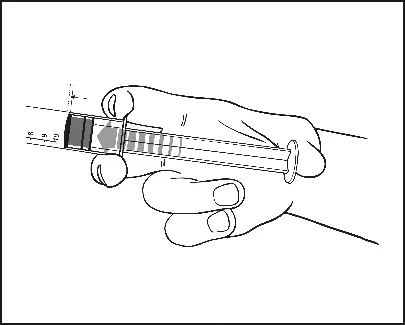
- Press the plunger to release the rubber plunger. The sterilization process may have caused the rubber plunger to adhere to the syringe barrel.
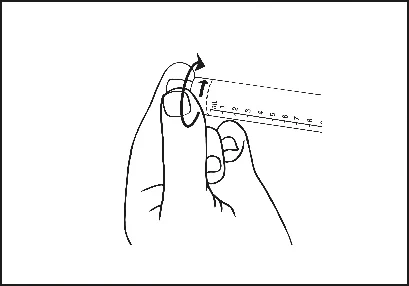
- Unscrew the end cap to break the security seal. Do not touch the exposed luer connector to avoid contamination.
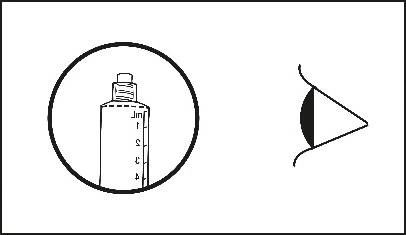
- Check whether the syringe tip protector has been completely removed. If not, reattach the protector and twist again.
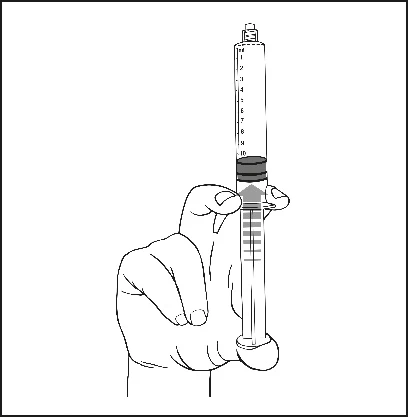
- Expel air by gently pressing the plunger.
- Connect the syringe to the intravenous access using a luer/luer lock system. Slowly press the plunger to inject the required volume. Administer the product via the appropriate route of administration.
The prefilled syringe is not suitable for use with infusion pumps. The prefilled syringe contains a ready-to-administer product.
Do not use the prefilled syringe if it has been damaged or handled without maintaining sterility.
Any unused medicinal product or waste material must be disposed of in accordance with local regulations.