Staloral
Poland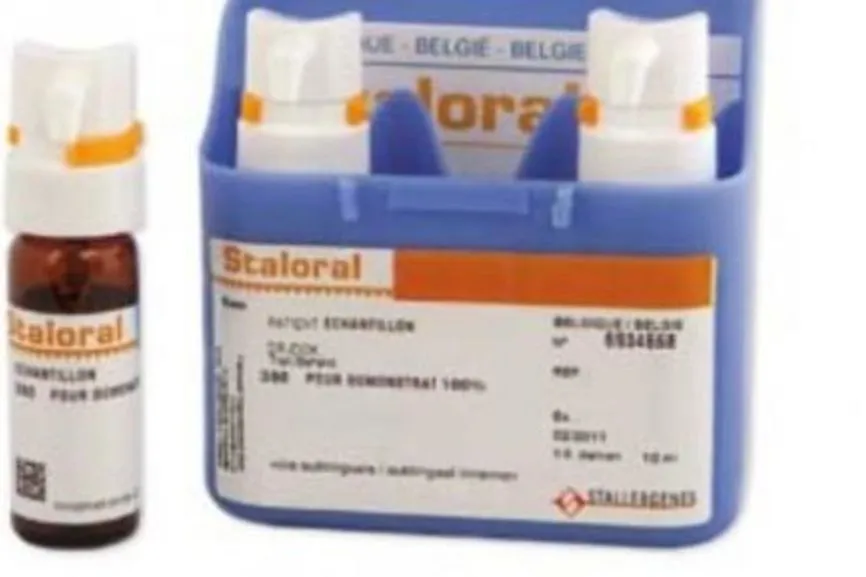
Table of Contents
Package leaflet: Information for the patient
STALORAL Plant-derived allergen extracts
STALORAL Animal-derived allergen extracts
STALORAL House dust mite allergen extracts
STALORAL Fungal allergen extracts (moulds, dermatophytes, yeasts)
STALORAL Mixtures of allergen extracts (plant, animal, mite, fungal)
Oral and sublingual solution
10; 100 IR/ml or 10; 100 IC/ml
Please read this leaflet carefully before using this medicine, as it contains important information for the patient.
- Keep this leaflet, so that you can read it again if necessary.
- If you have any questions, please consult your doctor, pharmacist, or nurse.
- This medicine has been prescribed for a specific individual. Do not pass it on to others. This medicine may harm other people, even if their symptoms are the same.
- If you experience any adverse reactions, including any not listed in this leaflet, inform your doctor, pharmacist, or nurse. See section 4.
Table of contents of the leaflet
- What STALORAL is and what it is used for
- Important information before using STALORAL
- How to use STALORAL
- Possible side effects
- How to store STALORAL
- Contents of the pack and other information
1. What STALORAL is and what it is used for
STALORAL is a medicinal product used for specific immunotherapy in patients allergic to plant allergens (pollens), animal allergens, house dust mites, or fungi. A complete list of allergens is provided in Annex 1, attached to this leaflet.
Indications
Allergic diseases with seasonal or perennial symptoms such as rhinitis (sneezing, runny or itchy nose, nasal congestion), conjunctivitis (itchy, watery eyes), or asthma (mild or moderate) in adults and children (over 5 years of age).
The aim of treatment with STALORAL is to increase immunological tolerance to allergens, thereby reducing allergic reactions.
2. Important information before using STALORAL
When not to use STALORAL
- if the patient has hypersensitivity (allergy) to any of the other components of this medicine (listed in section 6);
- if the patient has immune system disorders or diseases;
- if the patient has a malignant (cancerous) disease;
- if the patient has severe or uncontrolled asthma;
- if the patient has oral cavity inflammation.
Only a physician can determine whether contraindications to the use of the medicine exist.
Warnings and precautions
Before starting treatment, allergic symptoms should be stabilized with appropriate symptomatic treatment, if necessary.
Before starting treatment with STALORAL, inform your doctor or pharmacist:
- if the patient has severe clinical symptoms of allergy at the time treatment is to begin – in such a case, treatment should be postponed;
- if the patient has recently suffered from other illnesses or if allergy symptoms have recently worsened;
- if the patient is scheduled for oral surgery or tooth extraction. Treatment with STALORAL should be discontinued until the oral cavity has completely healed;
- if the patient currently has or has previously had eosinophilic esophagitis;
- if during treatment the patient experiences severe or persistent abdominal pain, difficulty swallowing, or chest pain;
- if the patient is on a strict low-sodium diet, because the medicine contains sodium (see section "STALORAL contains sodium chloride");
- if the patient is taking beta-blockers (including eye drops or topical creams).
STALORAL and other medicines
Inform your doctor about all medicines you are currently taking, including those available without a prescription.
Before starting treatment, inform your doctor:
- if the patient is taking certain antidepressants (tricyclic antidepressants or monoamine oxidase inhibitors - MAOIs), as there is an increased risk of adverse effects if epinephrine (used in severe allergic reactions) needs to be administered, which could even be fatal;
- if the patient is scheduled to receive prophylactic vaccination against infectious diseases. Vaccination may be administered without interrupting treatment, but only after assessing the patient's general health status.
Symptomatic treatment (e.g. with antihistamines and/or intranasal corticosteroids) may be used simultaneously with STALORAL.
Pregnancy and breastfeeding
Patients who are pregnant, suspect they may be pregnant, or plan to become pregnant should consult their doctor or pharmacist before using this medicine.
Patients who are breastfeeding should consult their doctor or pharmacist before using this medicine.
There is no experience with the use of STALORAL in pregnant or breastfeeding women; therefore, immunotherapy should not be initiated in pregnant or breastfeeding women unless considered necessary by the physician.
Patients who become pregnant or start breastfeeding during treatment with this medicine should consult their doctor regarding continuation of treatment.
Driving and operating machinery
There are no contraindications to driving or operating machinery during treatment with STALORAL.
STALORAL contains sodium chloride
In patients on a low-sodium diet, the presence of sodium chloride in the medicine should be taken into account (one vial, i.e. 10 ml of solution, contains 590 mg of sodium chloride). See section "Warnings and precautions".
3. How to use STALORAL
This medicine should always be used exactly as directed by the physician. In case of doubt, consult
your doctor or pharmacist.
Specific immunotherapy is most effective when started in the early phase of the disease.
The dose size does not depend on age, but on the individual reactivity of the patient.
In seasonal allergy, treatment should be initiated before the pollen season and continued until the
end of the pollen season.
In perennial allergy, treatment should be continued throughout the year.
Treatment consists of two phases:
- initial treatment – with gradually increasing dose
- maintenance treatment – with a constant dose.
Before each administration, carefully check the information on the packaging and ensure that the
details (composition, concentration of the medicine) match the physician's prescription. Also check
the medicine's expiry date.
Initial treatment with dose escalation
The medicine should be taken daily, increasing the dose each day until the maintenance dose is
reached, according to the following scheme:
The above dosing schedule should be considered as a guideline and example of treatment. The
treatment may be modified depending on the patient's condition and response to therapy.
Maintenance treatment – constant dose
The maximum well-tolerated dose should be taken daily or three times per week.
Duration of treatment
Desensitizing treatment is generally administered for 3 to 5 years.
The physician will re-evaluate the treatment if there is no significant improvement in symptoms after
one year (perennial allergy) or after the first pollen season (seasonal allergy).
Method of administration
To ensure safe use of the medicine, strictly follow the physician's instructions.
STALORAL is administered sublingually.
The medicine should be taken during the day into an empty mouth, without food or drink.
Before each use, check the expiry date and ensure that the vial used corresponds to the physician's
prescription.
Use the dosing pump mechanism to administer the appropriate amount of solution directly into the
oral cavity under the tongue.
Wait 2 minutes before swallowing the solution.
The physician may recommend a different dosing schedule depending on the patient's condition and
response to treatment.
STALORAL should be administered to children by an adult.
Information regarding the first use of the medicine:
For safety reasons and to ensure the vial remains intact, the vials are hermetically sealed with a
plastic and aluminium cap.
Always verify that the medicine corresponds to the one prescribed by the physician. In case of doubt,
consult your doctor.
It is extremely important to read carefully the instructions for using the dosing pump. If necessary,
ask your doctor for a detailed explanation.
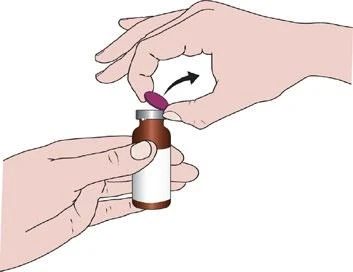
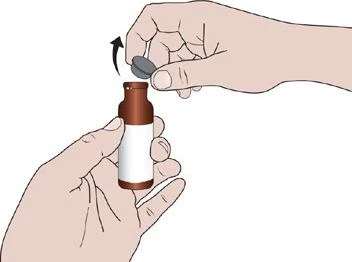
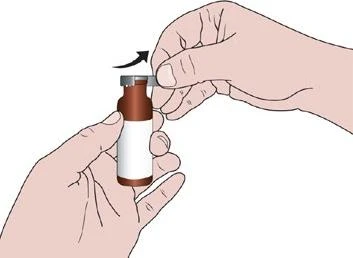
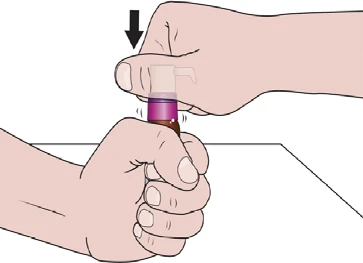
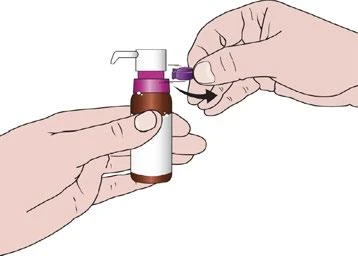
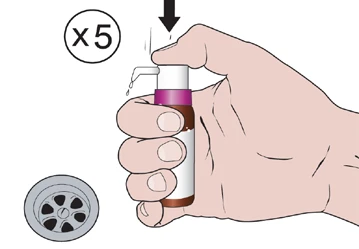
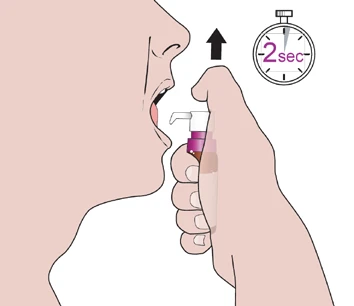
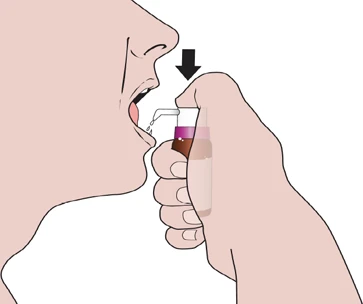
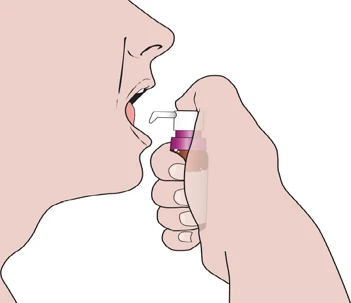
For the first use, proceed as follows:
- Remove the colored plastic part of the cap.
- Pull the metal pull-tab and completely remove the aluminium cap.
- Remove the grey stopper.
- Remove the dosing pump from its plastic protective sleeve. Place the vial on a flat surface and, holding it firmly with one hand, press the pump firmly into place.
- Remove the purple safety ring.
- Prime the pump by pressing the pump plunger 5 times. Discard the dispensed solution. The dosing pump delivers one full dose of medicine only after 5 actuations.
- Place the tip of the dosing pump into the oral cavity, directly under the tongue.
- Press the pump plunger with a steady motion until it stops. Use the finger with which you can press most strongly.
- Release the pressure on the pump plunger completely. Ensure that at least a 2-second interval is maintained between consecutive actuations.
- Repeat the above procedure until the number of actuations prescribed by the physician is reached. Hold the solution under the tongue for 2 minutes, then swallow.
- After use, clean the tip of the dosing pump and replace the protective ring.
For subsequent uses, remove the protective ring and repeat the steps starting from point 7.
Use in children
Allergen immunotherapy is not recommended for children under 5 years of age.
Use of a higher than recommended dose of STALORAL
Inform your doctor or pharmacist immediately.
If a higher than recommended dose is administered, the risk of adverse reactions increases, including
systemic reactions or severe local reactions.
Missed dose of STALORAL
Take the medicine at the usual dose the next day.
Do not take a double dose to make up for a missed dose.
If several consecutive doses are missed, contact the prescribing physician to establish a new treatment
schedule.
Discontinuation of STALORAL treatment
If STALORAL is discontinued for less than one week, treatment may be continued using the last dose.
If treatment is interrupted for longer than one week, contact your physician.
If you have any further doubts concerning the use of this medicine, consult your doctor, pharmacist,
or nurse.
4. Possible adverse reactions
Like any medicine, this medicine can cause adverse reactions, although not everyone will experience them.
During treatment with STALORAL, the patient will be exposed to substances which may
cause allergic reactions at the site of administration and/or symptoms which may affect the
whole body.
Such reactions may occur at the beginning of treatment or later, during treatment.
STALORAL must be discontinued immediately and medical advice sought if any of the following symptoms occur or are observed:
Severe allergic reaction with rapid onset of symptoms affecting the entire body, such as
intense itching or rash, difficulty breathing, abdominal pain, or symptoms related to
low blood pressure, such as dizziness, feeling unwell.
Tolerance to a given dose may change over time depending on the patient's health status and environment.
If an adverse reaction occurs, consult a physician, who may modify the treatment regimen.
The physician may prescribe pre-treatment with antiallergic medications to reduce the frequency and severity of adverse reactions.
The following additional adverse reactions have also been observed:
Common (affects less than 1 in 10 patients)
Oral disorders (e.g. swelling, discomfort, tingling, itching, numbness, blisters, ulcers), swelling of the tongue, throat discomfort or pain, or swelling or irritation, rhinitis (stuffy nose, runny nose, sneezing, itchy nose, nasal discomfort), cough, salivary gland disorders, itchy eyes, itchy ears, nausea, vomiting, abdominal pain, diarrhoea, skin redness or itching.
Uncommon (affects less than 1 in 100 patients)
Eye disorders (redness, eye irritation, watery eyes), herpes, hoarseness, breathing difficulties, asthma, urticaria, atypical skin hypersensitivity symptoms (burning, tingling, pricking), gastritis, oesophageal spasms.
Rare (affects less than 1 in 1000 patients)
Headache, eczema, joint pain, muscle pain, weakness, enlarged lymph nodes, fever.
In addition, the following adverse reactions have been reported:
Taste disturbances, dry mouth sensation, dizziness, facial swelling, severe allergic reactions, oesophagitis.
Reporting of adverse reactions
If any adverse effects occur, including any adverse effects not listed in this leaflet, inform your doctor, pharmacist, or nurse. Adverse reactions can be reported directly to the Department of Monitoring Adverse Reactions of Medicinal Products, Office for Registration of Medicinal Products, Medical Devices and Biocidal Products, Al. Jerozolimskie 181C, 02-222 Warsaw,
tel. 22 49 21 301
fax. 22 49 21 309
Website: https://smz.ezdrowie.gov.pl
Adverse reactions can also be reported to the marketing authorization holder.
Reporting adverse reactions helps to provide more information on the safety of the medicine.
5. How to store STALORAL medicine
Before opening: Store in a refrigerator (2°C - 8°C).
After first opening: Store in a refrigerator (2°C - 8°C) for up to 30 days.
During transport, vials must always be carried in an upright position.
Keep this medicine out of the sight and reach of children.
Do not use this medicine after the expiry date stated on the carton after EXP and no longer than 30 days after first opening. The expiry date refers to the last day of the stated month.
Medicines must not be disposed of via wastewater or household waste. Ask your pharmacist how to dispose of medicines no longer required. This will help protect the environment.
6. Contents of the packaging and other information
What STALORAL contains
The active substances are allergen extracts or their mixtures combined with mannitol. The amount of mannitol does not exceed 40 mg/ml.
Each vial (10 ml) of solution contains allergen extracts (according to Annex No. 1) at a concentration of:
10; 100 IR*/ml (standardized allergen extract)
or
10; 100 IC**/ml (non-standardized allergen extract).
The qualitative composition of the active substance may be individually selected for the patient from among the allergens listed in Annex No. 1.
*/**) The activity of the respective allergen expressed in IR/ml or IC/ml units is indicated on the label.
- Other ingredients: sodium chloride, glycerol, purified water.
What STALORAL looks like and contents of the pack
STALORAL is a clear solution, colourless or yellowish-brown in colour, depending on the type and concentration of the allergen.
The starter treatment pack contains:
2 vials of 10 ml each (concentration: 10 IR/ml or 10 IC/ml; concentration: 100 IR/ml or 100 IC/ml) and 2 dosing pumps.
Blue cap – concentration: 10 IR/ml or 10 IC/ml
Red cap – concentration: 100 IR/ml or 100 IC/ml
The maintenance treatment pack contains:
2 vials of 10 ml each (concentration: 100 IR/ml or 100 IC/ml) – red caps
2 dosing pumps.
Marketing Authorisation Holder and Manufacturer
STALLERGENES
6, rue Alexis de Tocqueville
92160 Antony, France
For further information, please contact the representative of the Marketing Authorisation Holder in Poland:
STALLERGENES Sp. z o.o.
tel. 22 620 29 98
STALORAL ANNEX NO. 1
I. Plant-derived allergen extracts
Weeds
641 Alfalfa (Medicago sativa) IC/ml
664 Dandelion (Taraxacum vulgare) IC/ml
623 Lamb's quarters (Chenopodium album) IC/ml
673 Canadian goldenrod (Solidago canadensis) IC/ml
636 Hops (Humulus lupulus) IC/ml
605 Mugwort (Artemisia vulgaris) IR/ml
646 Black mustard (Brassica nigra) IC/ml
654 Nettle (Urtica dioica) IC/ml
643 Ox-eye daisy (Chrysanthemum leucanthemum) IC/ml
665 Plantain (Plantago) IC/ml
604 Ragweed (Ambrosia elatior) IR/ml
625 Cabbage (Brassica oleifera) IC/ml
710 Russian thistle (Salsola kali) IC/ml
655 Sorrel (Rumex acetosa) IC/ml
678 Sunflower (Helianthus annuus) IC/ml
657 Parietaria (Parietaria officinalis) IR/ml
Grasses
601 Meadow bent (Agrostis vulgaris) IC/ml
705 Bermuda grass (Cynodon dactylon) IR/ml
627 Cocksfoot (Dactylis glomerata) IR/ml
624 Couch grass (Agropyron repens) IC/ml
630 Meadow fescue (Festuca elatior) IC/ml
658 Timothy grass (Poa pratensis) IR/ml
638 Perennial ryegrass (Lolium perenne) IR/ml
631 Sweet vernal grass (Anthoxanthum odoratum) IR/ml
661 Meadow cat's-tail (Phleum pratense) IR/ml
637 Velvet grass (Holcus lanatus) IC/ml
Cereals
652 Barley (Hordeum vulgare) IC/ml
642 Maize (Zea mays) IC/ml
610 Oats (Avena sativa) IC/ml
671 Rye (Secale cereale) IR/ml
614 Wheat (Triticum vulgare) IC/ml
106 Wheat flour IC/ml
Trees
609 Alder (Alnus glutinosa) IR/ml
632 Ash (Fraxinus excelsior) IC/ml
635 Beech (Fagus sylvatica) IC/ml
615 Birch (Betula alba) IR/ml
620 Chestnut (Castanea vulgaris) IC/ml
626 Cypress (Cupressus sempervirens) IC/ml
675 Elder (Sambucus nigra) IC/ml
653 Field elm (Ulmus campestris) IC/ml
667 Black locust (Robinia pseudoacacia) IC/ml
649 Hazel (Corylus avellana) IR/ml
619 Hornbeam (Carpinus betulus) IR/ml
644 Horse chestnut (Aesculus hippocastanum) IC/ml
634 Juniper (Juniperus communis) IC/ml
677 Lime (Tilia platyphyllos) IC/ml
629 Sycamore (Acer pseudoplatanus) IC/ml
645 Silver wattle (Acacia dealbata) IC/ml
647 White mulberry (Morus alba) IC/ml
621 Pedunculate oak (Quercus robur) IC/ml
651 Olive (Olea europaea) IR/ml
662 Scots pine (Pinus sylvestris) IC/ml
666 Plane tree (Platanus vulgaris) IC/ml
659 White poplar (Populus alba) IC/ml
680 Privet (Ligustrum vulgare) IC/ml
650 Walnut (Juglans regia) IC/ml
669 Goat willow (Salix caprea) IC/ml
Tobacco
904 Tobacco (leaves) IC/ml
II. Animal-derived allergen extracts (hair, epithelia, insects)
Animals
507 Cat IR/ml
509 Dog IC/ml
510 Goat IC/ml
511 Guinea pig IC/ml
512 Hamster IC/ml
516 Horse IC/ml
512 Rabbit IC/ml
505 Sheep wool IC/ml
Insects
301 Cockroach IC/ml
303 Grain weevil IC/ml
310 Horsefly IC/ml
307 Mosquito IC/ml
III. House dust mite allergen extracts
325 Acarus siro IC/ml
314 Dermatophagoides farinae IR/ml
315 Dermatophagoides pteronyssinus IR/ml
326 Euroglyphus manni IC/ml
324 Glyciphagus domesticus IC/ml
317 Lepidoglyphus destructor IC/ml
318 Tyrophagus putrescentiae IC/ml
IV. Fungal allergen extracts (moulds, yeasts, dermatophytes)
402 Botrytis cinerea IC/ml
403 Candida albicans IC/ml
407 Chaetomium globosum IC/ml
409 Epicoccum IC/ml
410 Epidermophyton IC/ml
411 Fusarium IC/ml
413 Helminthosporium IC/ml
447 Merulius lacrymans IC/ml
417 Mucor racemosus IC/ml
425 Pullularia pullulans IC/ml
426 Rhizopus nigricans IC/ml
432 Stemphylium botryosum IC/ml
435 Trichophyton IC/ml
405 Trichothecium roseum (Cephalothecium) IC/ml
V. Mixtures of allergen extracts
* Animal-derived
506 Feather mixture (duck, goose, chicken) IC/ml
* Plant-derived
a) Weeds
719 Mixture I - Compositae (Golden rod, Dandelion, Lampourde, Ox-eye-daisy) IC/ml
714 Mixture II - Chenopodiaceae (Fat hen, Rough pigweed) IC/ml
706 Mixture III - Weed mixtures (Alfalfa, Red clover, Mustard, Nettle, Sorrel) IC/ml
b) Grasses
701 3 grasses - (Cocksfoot, Perennial ryegrass, Timothy grass) IR/ml
688 5 grasses - (Cocksfoot, Timothy grass, Perennial ryegrass, Sweet vernal grass, Meadow cat's-tail) IR/ml
689 12 grasses - (Meadow bent, Bermuda grass, Bromus, Cocksfoot, Meadow fescue, Timothy grass, Oat grass, Perennial ryegrass, Sweet vernal grass, Meadow cat's-tail, Wild oat, Velvet grass) IR/ml
690 5 grasses/4 cereals - (Cocksfoot, Timothy grass, Perennial ryegrass, Sweet vernal grass, Meadow cat's-tail / Barley, Maize, Oats, Wheat) IR/ml
687 4 cereals - (Barley, Maize, Oats, Wheat) IR/ml
c) Trees
702 Betulaceae (Alder, Birch, Hazel, Hornbeam) IR/ml
696 Fagaceae (Beech, Chestnut, Oak) IC/ml
716 Cupressaceae (Cypress, Juniper) IC/ml
715 Oleaceae (Ash, Olive, Privet) IC/ml
717 Salicaceae (Poplar, Willow) IC/ml
718 Tree mixture (Sycamore, Horse chestnut, Plane tree, Black locust, Lime) IC/ml
917 Sawdust (Oak, Beech, Cherry, Pine) IC/ml
* Mites
350 D. pteronyssinus + D. farinae IR/ml
330 Storage mites (Acarus siro, Glyciphagus domesticus, Lepidoglyphus destructor, Tyrophagus putrescentiae) IC/ml
* Fungi
400 Alternaria (alternata, longipes) IC/ml
414 Cladosporium (cladosporoides, herbarum) IC/ml
401 Aspergillus (fumigatus, nidulans, niger) IC/ml
422 Penicillium (digitatum, expansum, notatum) IC/ml
445 Yeast mixture (Saccharomyces cerevisiae, minor) IC/ml
446 Smut mixture (Ustilago avenae, tritici, holci, zeae) IC/ml