Staloral 300
Poland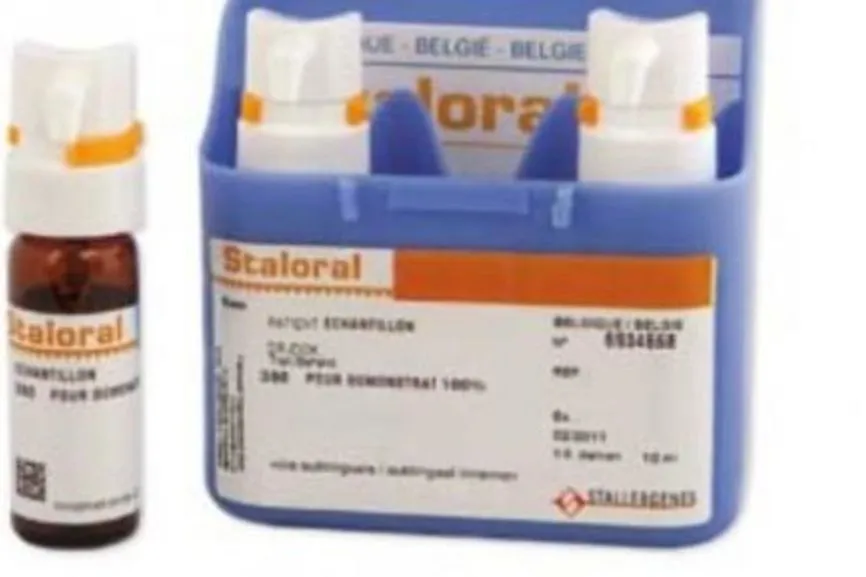
Table of Contents
Package leaflet: Information for the patient
STALORAL 300
Plant-derived allergen extracts (pollens)
House dust mite allergen extracts
Allergen extract mixtures
Sublingual solution
10 IR/ml; 300 IR/ml
Please read this leaflet carefully before using the medicine, as it contains
important information for the patient.
- Keep this leaflet for future reference.
- If you have any questions, consult your doctor, pharmacist, or nurse.
- This medicine has been prescribed for a specific individual. Do not pass it on to others. It may harm someone else, even if their symptoms are similar.
- If you experience any adverse reactions, including those not listed in this leaflet, inform your doctor, pharmacist, or nurse. See section 4.
Table of contents
- What STALORAL 300 is and what it is used for
- Important information before using STALORAL 300
- How to take STALORAL 300
- Possible side effects
- How to store STALORAL 300
- Contents of the pack and other information
1. What STALORAL 300 is and what it is used for
A medicine for specific immunotherapy. It is used in patients allergic to plant-derived allergens (pollens) or house dust mites, the list of which is included in the annex to this leaflet.
Indications
Allergic diseases with seasonal or perennial symptoms such as rhinitis (sneezing, runny or itchy nose, nasal congestion), conjunctivitis (itchy, watery eyes), or asthma (mild or moderate) in adults and children (over 5 years of age).
The aim of treatment with STALORAL 300 is to increase immunological tolerance to allergens and thereby reduce allergic reactions.
2. Important information before using the medicinal product STALORAL 300
When not to use STALORAL 300
- if the patient has hypersensitivity (allergy) to any of the other components of the medicinal product STALORAL 300 (see section 6);
- if the patient has immune system disorders or diseases;
- if the patient has a malignant (cancerous) disease;
- if the patient has severe or uncontrolled asthma;
- if the patient has oral cavity inflammation.
Only a physician can determine whether contraindications to the use of the medicinal product exist.
Warnings and precautions
Before starting treatment, allergic symptoms should be stabilized with appropriate symptomatic treatment, if necessary.
Before initiating treatment with STALORAL 300, inform your doctor or pharmacist:
- if the patient has severe clinical symptoms of allergy at the time treatment is to begin – treatment should be postponed;
- if the patient has recently suffered from other illnesses or if allergy symptoms have recently worsened;
- if the patient is scheduled for oral surgery or tooth extraction. Treatment with STALORAL 300 should be interrupted until the oral cavity has completely healed;
- if the patient currently has or has previously had eosinophilic esophagitis;
- if the patient develops severe or persistent abdominal pain, difficulty swallowing, or chest pain during treatment;
- if the patient is on a strict low-sodium diet, because the medicinal product contains sodium (see section "STALORAL 300 contains sodium chloride");
- if the patient is taking beta-blocking agents (including eye drops or topical creams).
STALORAL 300 and other medicinal products
Inform your doctor about all medicinal products recently taken, including those available without a prescription.
Before starting treatment, inform your doctor:
- if the patient is taking certain antidepressants (tricyclic antidepressants or monoamine oxidase inhibitors - MAOIs), as there is an increased risk of adverse reactions if epinephrine (used in severe allergic reactions) needs to be administered, which may even be fatal;
- if the patient is scheduled for preventive vaccination against infectious diseases. Vaccination may be performed without interrupting treatment, but only after evaluation of the patient's general health status.
Symptomatic treatment (e.g. with antihistamines and/or intranasal corticosteroids) may be used concurrently with STALORAL 300.
Pregnancy and breastfeeding
Female patients who are pregnant, suspect they may be pregnant, or are planning to become pregnant should consult a doctor or pharmacist before using this medicinal product.
Female patients who are breastfeeding should consult a doctor or pharmacist before using this medicinal product.
There is no experience regarding the use of STALORAL 300 in pregnant or breastfeeding women; therefore, immunotherapy should not be initiated in pregnant or breastfeeding women unless considered necessary by the physician.
Female patients who become pregnant or start breastfeeding during treatment with STALORAL 300 should consult their doctor regarding continuation of treatment.
Driving and operating machinery
There are no contraindications to driving or operating machinery during treatment with STALORAL 300.
STALORAL 300 contains sodium chloride.
For patients on a low-sodium diet, the presence of sodium chloride in the product should be taken into account (one vial - 10 ml of solution contains 590 mg of sodium chloride). See section "Warnings and precautions".
3. How to use STALORAL 300
Recommended dose
STALORAL 300 should always be used as directed by the physician. If in doubt, contact your doctor or pharmacist again. If more STALORAL 300 is used than recommended, or if a dose of STALORAL 300 is missed, please read the information in the relevant sections of the package leaflet.
Specific immunotherapy is most effective when initiated early in the course of the disease.
The dose does not depend on age, but on the individual patient's level of reactivity.
In seasonal allergies, treatment is recommended to start before the pollen season and continue until the end of the pollen season.
In perennial (year-round) allergies, treatment should be continued throughout the year.
Treatment consists of two phases:
- initial treatment phase – with gradually increasing doses
- maintenance treatment phase – using a constant dose.
Allergen solutions of different concentrations are used in treatment, with vials distinguished by cap color:
Cap color: blue – concentration 10 IR/ml
Cap color: violet – concentration 300 IR/ml
Initial treatment with dose escalation
The medicinal product should be administered under the tongue by pressing the pump dispenser, and after 2 minutes, swallowed.
The medicinal product should be used daily, increasing the dose each time until the maintenance dose is reached, according to the following schedule:
| First week | Second week | ||||
| Concentration: 10 IR/ml | Concentration: 300 IR/ml | ||||
| Day | number of presses | Dose (IR) | Day | number of presses | Dose (IR) |
| 1 2 3 4 5 | 1 2 3 4 5 | 2 4 6 8 10 | 6 7 8 9 | 1 2 3 4 | 60 120 180 240 |
The above dosing regimen should be considered as a guideline and example of treatment. Treatment may be modified depending on the patient's condition and their response to therapy.
Maintenance treatment – fixed dose
The maximum, well-tolerated dose should be taken daily or three times a week.
The recommended dosing of the medicinal product is at least 4 sprays three times a week or 2 to 4 sprays administered daily, using a solution with a concentration of 300 IR/ml.
Clinical studies using STALORAL 300 with various allergens have shown that a daily dose of 300 IR is well tolerated.
Duration of treatment
Allergen immunotherapy is generally administered for a period of 3 to 5 years.
The physician will re-evaluate the treatment in case of lack of significant improvement in symptoms after one year (for perennial allergy) or after the first pollen season (for seasonal allergy).
Method of administration
To ensure safe use of the medicinal product, it is essential to strictly follow the physician's instructions.
STALORAL 300 is administered sublingually.
Before taking the medicinal product, carefully check the information on the packaging and ensure that the details match the physician's prescription: composition and concentration of the medicinal product, and also verify the expiry date.
The medicinal product should be taken during the day, on an empty stomach, without food or drink.
The dose should be measured under the tongue by pressing the pump dispenser; after 2 minutes, it should be swallowed.
The physician may recommend a different dosing regimen depending on the patient's condition and their response to treatment.
STALORAL 300 should be administered to children by an adult.
Instructions for first use:
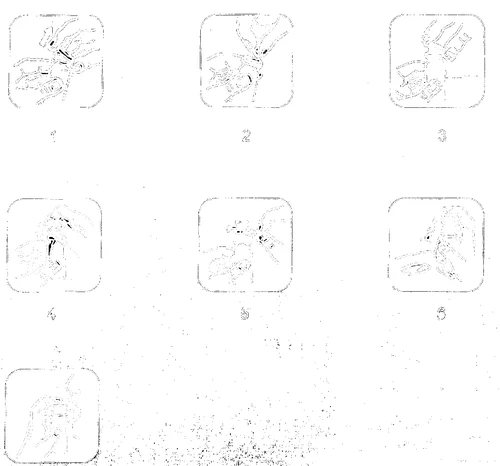
When using the product for the first time, follow the steps below:
- Remove the colored plastic part of the cap.
- Pull out the metal ring and completely remove the aluminum seal.
- Remove the grey stopper.
- Remove the dosing pump from its plastic housing. Place the vial on a flat surface and, holding it firmly with one hand, press the pump firmly into place.
- Remove the purple protective ring.
- Prime the pump by pressing the pump plunger several times. After 5 sprays, the pump will deliver a full dose of the medicinal product.
- Place the tip of the dosing pump into the mouth, directly under the tongue. Press firmly to deliver a full dose. Repeat the procedure to administer the number of doses prescribed by the physician. Hold the solution under the tongue for 2 minutes, then swallow.
- After use, clean the tip of the dosing pump and replace the protective ring.
- For subsequent uses, remove the protective ring and repeat steps 7 and 8.
7
Allergen immunotherapy is generally administered for 3 to 5 years. In the case of seasonal allergy, specific immunotherapy may be continued over several consecutive pollen seasons.
Use in children
Allergen immunotherapy is not recommended for children under 5 years of age.
Use of a higher than recommended dose of STALORAL 300
Inform your physician or pharmacist immediately.
If a higher than recommended dose is administered, the risk of experiencing a greater number or more severe adverse reactions increases.
Missed dose of STALORAL 300
Do not administer a double dose to make up for a missed dose.
Continue treatment the next day by taking the prescribed dose.
Discontinuation of STALORAL 300
If STALORAL 300 is discontinued for less than one week, treatment may be continued using the last dose. If treatment is interrupted for longer than one week, contact your physician.
If you have any further doubts regarding the use of this medicinal product, consult your physician, pharmacist, or nurse.
4. Possible adverse reactions
Like all medicines, this medicine can cause adverse reactions, although not everyone experiences them.
During treatment with STALORAL 300, the patient will be exposed to substances that
may trigger allergic reactions at the site of administration and (or) symptoms that may affect the whole body.
Such reactions may occur at the beginning of treatment or later, during treatment.
STALORAL 300 must be discontinued immediately and medical help should be sought if
any of the following symptoms occur or are noticed:
Severe allergic reaction with rapid onset of symptoms affecting the entire body, e.g.
intense itching or rash, difficulty breathing, abdominal pain, or symptoms related to
low blood pressure, such as dizziness, feeling unwell.
Tolerance to a given dose may change over time depending on the patient's health status and environment.
If an adverse reaction occurs, consult a physician who may adjust the treatment regimen.
The physician may prescribe pre-treatment with antiallergic medications to reduce the frequency and severity of adverse reactions.
Additional adverse reactions
Common (affects less than 1 in 10 patients)
Oral cavity disorders (e.g. swelling, discomfort, tingling, itching, numbness, blisters, ulcers), tongue swelling, discomfort in the throat or pain, swelling or irritation, rhinitis (stuffy nose, runny nose, sneezing, itchy nose, nasal discomfort), cough, salivary gland disorders, itchy eyes, itchy ears, nausea, vomiting, abdominal pain, diarrhoea, skin redness or itching.
Uncommon (affects less than 1 in 100 patients)
Eye disorders (redness, eye irritation, watery eyes), herpes, hoarseness, difficulty breathing, asthma, urticaria, atypical skin allergic symptoms (burning, tingling, pricking), gastritis, oesophageal spasms.
Rare (affects less than 1 in 1000 patients)
Headache, eczema, joint pain, muscle pain, weakness, enlarged lymph nodes (glands), fever.
The following adverse reactions have also been reported:
Taste disturbances, dry mouth sensation, dizziness, facial swelling, severe allergic reactions, oesophagitis.
Reporting of adverse reactions
If any adverse reactions occur, including any adverse reactions not listed in this leaflet, inform your doctor, pharmacist, or nurse. Adverse reactions can be reported directly to the Department of Monitoring Adverse Drug Reactions of the Office for Registration of Medicinal Products, Medical Devices and Biocidal Products, Al. Jerozolimskie 181C
02-222 Warsaw
tel. 22 49 21 301, fax. 22 49 21 309,
Website: https://smz.ezdrowie.gov.pl
Adverse reactions can also be reported to the marketing authorization holder.
Reporting adverse reactions helps to provide more information on the safety of the medicine.
5. How to store STALORAL 300
The medicine should be stored out of sight and reach of children.
Before opening: Store in the refrigerator (2°C - 8°C).
After opening:
10 IR/ml: Store in the refrigerator (2°C - 8°C) for up to 30 days.
300 IR/ml: Store at a temperature below 25°C for up to 30 days or in the refrigerator (2°C - 8°C) for up to 30 days.
During transport, vials must always be kept in an upright position.
Do not use this medicine for longer than 30 days after opening or after the expiry date stated on the carton after EXP. The expiry date refers to the last day of the specified month.
Medicines should not be disposed of via wastewater or household waste. Ask your pharmacist how to dispose of medicines no longer required. These measures will help protect the environment.
6. Contents of the pack and other information
What STALORAL 300 contains
The active substances are allergen extracts or their mixtures at a concentration of 10 or 300 IR/ml (according to Annex 1) in combination with mannitol. The amount of mannitol does not exceed 40 mg/ml.
The qualitative composition of the active substance may be individually selected for the patient from the allergens listed in Annex 1.
The activity of the relevant allergen expressed in IR*/ml units is indicated on the label.
* IR (Index of Reactivity): An allergen extract has an activity of 100 IR/ml if, in a skin prick test using the Stallerpoint lancet, it produces a wheal with a diameter of 7 mm in 30 individuals allergic to that allergen.
Additionally, the sensitivity of these individuals is confirmed by a positive reaction to 9% codeine phosphate or histamine dihydrochloride at a concentration of 10 mg/ml in a skin prick test.
Other ingredients: sodium chloride, glycerol, purified water.
What STALORAL 300 looks like and contents of the pack
Maintenance treatment pack:
2 vials of 10 ml each (concentration 300 IR/ml, concentration 300 IR/ml)
- 2 dosing pumps
Initial treatment pack:
3 vials of 10 ml each (concentration 10 IR/ml, concentration 300 IR/ml, concentration 300 IR/ml)
- 3 dosing pumps
Marketing Authorisation Holder and Manufacturer
STALLERGENES
6, rue Alexis de Tocqueville
92160 Antony, France
For further information, contact the representative of the Marketing Authorisation Holder in Poland:
STALLERGENES Sp. z o.o.
tel. 22 620 29 98
STALORAL 300 ANNEX 1
I. PLANT-DERIVED ALLERGEN EXTRACTS (POLLEN)
Grasses and cereals:
661 Timothy grass (Phleum pratense)
Trees:
609 Black alder (Alnus glutinosa)
615 Silver birch (Betula alba)
651 Olive tree (Olea europaea)
649 Hazel (Corylus avellana)
II. HOUSE DUST MITE ALLERGEN EXTRACTS
315 Dermatophagoides pteronyssinus
314 Dermatophagoides farinae
III. MIXTURES OF ALLERGEN EXTRACTS
Plant-derived:
688 5 grasses (meadow fescue, sweet vernal grass, perennial ryegrass, meadow foxtail, timothy grass)
House dust mites:
350 Dermatophagoides pteronyssinus, Dermatophagoides farinae