Solu-medrol
Poland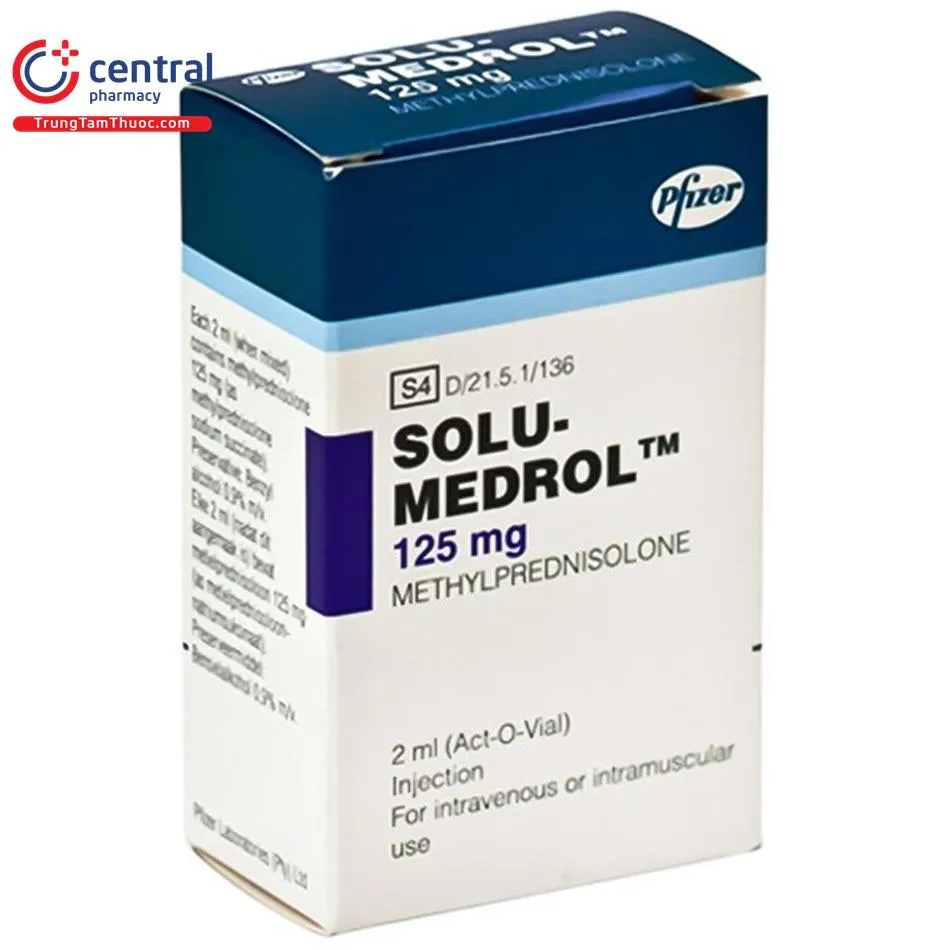
Table of Contents
- Package leaflet: Information for the user
- 1. What SOLU-MEDROL is and what it is used for
- 2. Information before using SOLU-MEDROL
- 3. How to use SOLU-MEDROL
- 4. Possible adverse reactions
- 5. How to store SOLU-MEDROL
- 6. Contents of the pack and other information
- Information intended exclusively for medical professionals
Package leaflet: Information for the user
SOLU-MEDROL, 40 mg, powder and solvent for solution for injection
SOLU-MEDROL, 125 mg, powder and solvent for solution for injection
SOLU-MEDROL, 500 mg, powder and solvent for solution for injection
SOLU-MEDROL, 1000 mg, powder and solvent for solution for injection
Methylprednisolone
Please read carefully the entire leaflet before use, as it contains
important information for the patient.
- Keep this leaflet, as you may need to read it again.
- If you have any doubts, please consult your doctor or pharmacist.
- This medicine has been prescribed for a specific individual. Do not pass it on to others. The medicine may harm another person, even if their symptoms are the same.
- If you experience any adverse reactions, including any not listed in this leaflet, inform your doctor or pharmacist. See section 4.
Table of contents
- What SOLU-MEDROL is and what it is used for
- Important information before using SOLU-MEDROL
- How to use SOLU-MEDROL
- Possible side effects
- How to store SOLU-MEDROL
- Contents of the pack and other information
1. What SOLU-MEDROL is and what it is used for
The active substance in SOLU-MEDROL, methylprednisolone, belongs to a group of medicines called glucocorticosteroids. Glucocorticosteroids penetrate cell membranes and bind to specific receptors located in the cytoplasm. These complexes then enter the cell nucleus, stimulating the synthesis of various enzymes, which are likely responsible for the numerous effects of glucocorticosteroids observed after systemic administration. In addition to their significant influence on inflammatory and immunological processes, glucocorticosteroids also affect carbohydrate, protein, and fat metabolism. They also act on the cardiovascular system, skeletal muscles, and the central nervous system.
SOLU-MEDROL is used for symptomatic treatment, apart from endocrine disorders where it is used as replacement therapy, in the following conditions:
Endocrine disorders
- Primary or secondary adrenal insufficiency (in certain circumstances, in combination with mineralocorticoids);
- Acute adrenal insufficiency (administration in combination with mineralocorticoids may be necessary);
- Treatment of shock caused by adrenal insufficiency, or shock unresponsive to conventional therapy, when adrenal insufficiency is confirmed or suspected (in cases where mineralocorticoids are not indicated);
- Prior to surgical procedures and in cases of severe illness or trauma, in patients diagnosed with adrenal insufficiency or reduced adrenal hormone levels;
- Congenital adrenal hyperplasia;
- Idiopathic thyroiditis;
- Hypercalcemia associated with neoplastic disease.
Rheumatic diseases
Short-term adjunctive therapy during episodes of exacerbation or worsening of:
- traumatic osteoarthritis;
- synovitis associated with osteoarthritis;
- rheumatoid arthritis, including juvenile rheumatoid arthritis;
- acute and subacute tenosynovitis;
- epicondylitis;
- acute nonspecific bursitis;
- acute gouty arthritis;
- psoriatic arthritis;
- ankylosing spondylitis.
Systemic connective tissue diseases
During exacerbations or as maintenance therapy in:
- systemic lupus erythematosus (and lupus nephritis);
- acute rheumatic carditis;
- polyarteritis nodosa and dermatomyositis;
- Goodpasture's syndrome.
Dermatological diseases
- pemphigus;
- severe forms of erythema multiforme (Stevens-Johnson syndrome);
- exfoliative dermatitis;
- severe psoriasis;
- bullous pemphigoid;
- severe seborrheic dermatitis;
- fungoid mycosis.
Allergic conditions
Treatment of severe allergic diseases when other treatment methods are ineffective:
- bronchial asthma;
- contact dermatitis;
- atopic dermatitis;
- serum sickness;
- drug hypersensitivity reactions;
- transfusion-related urticarial reactions;
- acute non-inflammatory laryngeal edema (epinephrine is the first-line treatment).
Ophthalmic diseases
Severe acute and chronic allergic and inflammatory processes involving the eye and its adnexa, such as:
- herpes zoster ophthalmicus;
- iridocyclitis;
- choroiditis and retinitis;
- diffuse posterior uveitis and choroiditis;
- optic neuritis;
- sympathetic ophthalmia;
- anterior segment inflammation;
- allergic conjunctivitis;
- allergic marginal corneal ulcers;
- keratitis.
Gastrointestinal diseases
As systemic therapy during exacerbations of:
- ulcerative colitis;
- Crohn's disease.
Respiratory diseases
- symptomatic sarcoidosis;
- berylliosis;
- fulminating or disseminated pulmonary tuberculosis, concomitantly with appropriate antituberculous chemotherapy;
- Loeffler's syndrome unresponsive to other medications;
- aspiration pneumonitis;
- moderate to severe Pneumocystis jiroveci pneumonia in patients with AIDS (as adjunctive therapy, when administered within the first 72 hours of initial anti-Pneumocystis treatment).
Hematological diseases
- acquired (autoimmune) hemolytic anemia;
- idiopathic thrombocytopenic purpura in adults (intravenous administration only; intramuscular administration is contraindicated);
- secondary thrombocytopenia in adults;
- erythroblastopenia;
- congenital hypoplastic anemia.
Neoplastic diseases
Palliative treatment:
- leukemias and lymphomas in adults;
- acute leukemia in children;
- improvement of quality of life in patients with advanced-stage cancer.
Edema
To induce diuresis or remission of proteinuria in nephrotic syndrome without uremia.
Nervous system
- cerebral edema associated with primary or metastatic tumors and (or) related to surgical or radiotherapeutic treatment;
- exacerbations of multiple sclerosis;
- acute spinal cord injury. Treatment should be initiated within eight hours of injury.
Other indications
- tuberculous meningitis with subarachnoid block or risk of subarachnoid block, in conjunction with appropriate antituberculous therapy;
- trichinellosis involving the nervous system or myocardium;
- organ transplantation;
- prevention of nausea and vomiting associated with tumor chemotherapy.
2. Information before using SOLU-MEDROL
When not to use SOLU-MEDROL
- if the patient is allergic to methylprednisolone or any of the other ingredients of this medicine (listed in section 6);
- if the patient has systemic fungal infections;
- for intrathecal administration;
- for epidural administration;
- in premature infants and newborns.
Administration of live or live attenuated vaccines is contraindicated during treatment with
SOLU-MEDROL at doses causing immunosuppressive effects.
Warnings and precautions
Patients with the following conditions should receive SOLU-MEDROL treatment for the shortest
possible duration and require special medical supervision during therapy with SOLU-MEDROL.
Before starting this medicine, consult your doctor or pharmacist if the patient has any of the
following conditions:
Infectious diseases, such as tuberculosis and certain viral diseases (e.g. herpes zoster and herpes
simplex with ocular manifestations).
The use of SOLU-MEDROL in active tuberculosis should be limited to fulminant or disseminated
pulmonary tuberculosis, in which SOLU-MEDROL is used as part of the treatment regimen
together with antituberculosis therapy. During long-term treatment with SOLU-MEDROL,
patients with latent tuberculosis or a positive tuberculin test require careful monitoring, as the
disease may reactivate.
There is a risk of corneal perforation in patients with ocular Herpes simplex infection receiving
SOLU-MEDROL.
Diabetes
Treatment with SOLU-MEDROL may unmask latent diabetes mellitus, increase insulin requirements
or necessitate adjustment of oral glucose-lowering agents.
Hypertension
Treatment with SOLU-MEDROL may exacerbate existing hypertension.
Psychiatric disorders, current or past
SOLU-MEDROL may worsen existing emotional instability or psychotic tendencies. Psychiatric
adverse reactions may occur during treatment, ranging from euphoria, insomnia, mood swings,
personality changes and severe depression to severe psychotic disorders.
Severe stress
In patients exposed to severe stress, an increased dose of rapidly acting glucocorticoids may be
necessary before, during and after the stressful event.
Allergy to any medicines
If an allergic reaction occurred after taking any medicine, inform the doctor before starting
treatment with SOLU-MEDROL.
Hypothyroidism
The effect of SOLU-MEDROL is enhanced in patients with hypothyroidism.
Hyperthyroidism
Hepatic cirrhosis
The effect of SOLU-MEDROL is enhanced in patients with hepatic cirrhosis.
Head injury
Ulcerative colitis, when there is a risk of perforation, abscess or other suppurative infection
Diverticulitis
Recent intestinal anastomosis
Active or latent peptic ulcer
Renal insufficiency
Osteoporosis
Myasthenia gravis (an acquired, chronic disease characterized by rapid fatigue and weakness of
skeletal muscles).
If the patient experiences blurred vision or other visual disturbances, contact a doctor.
Immunosuppressive effect/Increased susceptibility to infections
SOLU-MEDROL may increase susceptibility to infections, may mask some signs of infection,
exacerbate existing infections or cause reactivation or worsening of previous, latent infections. New
infections may also occur during treatment with SOLU-MEDROL. These infections may range from
mild to severe and, in some cases, may be fatal. During treatment with SOLU-MEDROL, decreased
immunity and inability to localize infection may occur. The doctor will closely monitor the patient
for signs of infection and may consider discontinuing or reducing the dose if necessary.
Infections with pathogenic microorganisms, including viral, bacterial, fungal, protozoal or
parasitic infections, may occur in any part of the body when corticosteroids are used as monotherapy
or in combination with other immunosuppressive agents. Infections occurring during treatment with
these drugs may be mild or severe and sometimes fatal. The frequency of infectious complications
increases with increasing corticosteroid doses.
Patients receiving SOLU-MEDROL are more susceptible to infections than healthy individuals. For
example, in children with immunodeficiency or in adults receiving SOLU-MEDROL, varicella and
measles may have a more severe course and may even be fatal.
During treatment with SOLU-MEDROL at doses causing immunosuppressive effects,
administration of certain vaccines is contraindicated. Inactivated vaccines may be administered,
but the immune response may be reduced or the vaccines may be ineffective. Patients receiving
SOLU-MEDROL at doses that do not cause immunosuppressive effects may receive all required
vaccinations.
Oral anticoagulants (medicines taken orally to prevent blood clotting) used concomitantly with
SOLU-MEDROL may increase the risk of bleeding. In some cases, the effect of oral anticoagulants
may also be reduced. During treatment with SOLU-MEDROL, frequent monitoring of bleeding risk
by the doctor, including additional blood tests, may be necessary. The doctor may also adjust the
dose of SOLU-MEDROL if needed.
Kaposi's sarcoma has been observed in patients treated with SOLU-MEDROL. Discontinuation of
treatment may lead to remission of the disease.
Effects on the immune system
Allergic reactions may occur in patients. Skin reactions and anaphylactic/pseudoanaphylactic
reactions have been reported rarely in patients receiving SOLU-MEDROL.
Endocrine disorders
During long-term treatment with SOLU-MEDROL, adrenal insufficiency may occur, which may
persist for several months after discontinuation of treatment.
The doctor may decide to gradually reduce the dose of SOLU-MEDROL. Inform the doctor about any
stressful situations occurring during this period. The doctor may consider initiating hormonal
therapy.
Sudden discontinuation of SOLU-MEDROL may cause acute adrenal insufficiency, leading to
death.
After abrupt discontinuation of SOLU-MEDROL, a "steroid withdrawal syndrome" may also occur.
This syndrome includes symptoms such as anorexia, nausea, vomiting, lethargy, headache, fever,
joint pain, desquamation, muscle pain, weight loss and/or hypotension.
SOLU-MEDROL may cause or exacerbate Cushing's syndrome; therefore, patients with Cushing's
disease should not use this medicine.
In patients with hypothyroidism, the effect of SOLU-MEDROL is enhanced.
Seek immediate medical advice if weakness or muscle pain, cramps and stiffness occur during
treatment with methylprednisolone. These may be symptoms of a condition called thyrotoxic
periodic paralysis, which may occur in patients with hyperthyroidism treated with methylprednisolone.
Additional treatment may be necessary to alleviate this condition.
Psychiatric disorders
Psychiatric disorders may occur during treatment with SOLU-MEDROL and after its
discontinuation. They usually appear within a few days or weeks after starting treatment with
SOLU-MEDROL. Most of these symptoms resolve after dose reduction or discontinuation of
SOLU-MEDROL. Patients and their caregivers should consult a doctor if psychological symptoms
develop, especially if depressive mood or suicidal thoughts are suspected. Patients and caregivers
should pay particular attention to psychiatric disorders that may occur during treatment,
immediately after dose reduction or after discontinuation of SOLU-MEDROL.
Effects on the nervous system
SOLU-MEDROL should be used with caution in patients with seizure disorders.
In patients receiving SOLU-MEDROL, usually after long-term use of high doses, cases of
subepidermal lipomembranous panniculitis have been reported.
Effects on the eye
Long-term use of SOLU-MEDROL may lead to the development of posterior subcapsular cataracts
and nuclear cataracts (especially in children), exophthalmos or increased intraocular pressure, which
may lead to glaucoma with potential damage to the optic nerves. Secondary fungal and viral
infections of the eye may also occur more frequently in patients receiving SOLU-MEDROL.
Visual disturbances may occur due to systemic or local use of the medicine. If such disturbances
occur, the patient should contact a doctor to determine possible causes, including cataract, glaucoma
or rare conditions such as central serous chorioretinopathy. Central serous chorioretinopathy may
lead to retinal detachment.
The use of SOLU-MEDROL has been associated with central serous retinopathy, which may lead to
retinal detachment.
Effects on the heart
When high doses and long-term treatment with SOLU-MEDROL are used in patients with
cardiovascular risk factors, the medicine should be administered with caution and the
cardiovascular system should be monitored additionally if necessary. The frequency of
complications associated with the use of SOLU-MEDROL can be reduced by using low doses and
administering the medicine every other day.
After rapid intravenous administration of high doses of SOLU-MEDROL, cardiac arrhythmias
and/or circulatory collapse and/or cardiac arrest may occur.
In patients with congestive heart failure, SOLU-MEDROL should be administered with caution and
only if necessary.
Effects on the vascular system
Thrombosis, including venous thromboembolic disease, has been reported during treatment with
SOLU-MEDROL. Therefore, caution should be exercised in patients with thromboembolic disorders
or those who may be susceptible to their occurrence.
Effects on the stomach and intestines
After administration of high doses of SOLU-MEDROL, acute pancreatitis may occur.
Treatment with SOLU-MEDROL may mask symptoms of gastrointestinal ulcers, so perforation or
bleeding may occur without significant preceding pain. Treatment with glucocorticoids may mask
peritonitis or other signs associated with gastrointestinal disorders such as perforation, constipation
or pancreatitis.
The risk of developing peptic ulcer disease of the stomach and intestines increases when used in
combination with nonsteroidal anti-inflammatory drugs (NSAIDs).
Effects on the liver and biliary tract
Cyclic, pulsatile intravenous administration of methylprednisolone may cause drug-induced liver
injury, such as acute hepatitis. Acute hepatitis may occur within a few weeks or longer. Resolution of
this adverse event has been observed after discontinuation of treatment.
Effects on the musculoskeletal system
During administration of high doses of SOLU-MEDROL, acute myopathy may occur, particularly in
patients with neuromuscular transmission disorders (e.g. in myasthenia gravis) or in patients
concomitantly treated with anticholinergic drugs, including neuromuscular blockers (e.g.
pancuronium). Myopathy may affect the eye muscles and respiratory muscles and may lead to
quadriparesis. Increased creatine kinase activity may occur. Clinical improvement or complete
recovery after discontinuation of SOLU-MEDROL may take several weeks or even years.
Effects on the kidneys and urinary tract
Caution is advised in patients with systemic sclerosis, as an increased frequency of scleroderma renal
crisis has been observed with corticosteroids, including methylprednisolone.
SOLU-MEDROL should be used with caution in patients with renal insufficiency.
Diagnostic tests
In patients, the use of medium and high doses of SOLU-MEDROL may increase blood pressure,
sodium and water retention, and potassium excretion. Therefore, dietary sodium restriction and
potassium supplementation may be necessary. All glucocorticoids, including SOLU-MEDROL,
increase calcium excretion.
Injuries, poisonings and post-procedural complications
SOLU-MEDROL should not be used in the treatment of traumatic brain injury.
Other
Complications of glucocorticoid therapy depend on the dose and duration of treatment.
The doctor will decide on the dosage and duration of treatment individually for each patient.
Patients should exercise caution when using acetylsalicylic acid and nonsteroidal anti-inflammatory
drugs concomitantly with SOLU-MEDROL.
After administration of SOLU-MEDROL, pheochromocytoma crisis has been reported, sometimes
ending in death. In patients in whom pheochromocytoma is suspected or diagnosed, the doctor will
decide on the use of SOLU-MEDROL only after appropriate benefit-risk assessment.
Tumor lysis syndrome may occur during corticosteroid treatment for malignancies. Inform the
doctor if the patient has cancer and experiences symptoms of tumor lysis syndrome, such as muscle
cramps, muscle weakness, confusion, irregular heartbeat, vision loss or disturbances, and shortness
of breath.
Use in children
In children receiving long-term treatment with SOLU-MEDROL in divided daily doses, growth
suppression may occur. This treatment regimen should be limited to the most severe indications,
and treatment with SOLU-MEDROL should be as short as possible. Patients should remain under
close medical supervision.
Infants and children receiving long-term SOLU-MEDROL are particularly susceptible to increased
intracranial pressure.
After administration of high doses of SOLU-MEDROL in children, pancreatitis may develop.
After administration of SOLU-MEDROL in premature infants, hypertrophic cardiomyopathy
(hypertrophy of the heart muscle) may develop.
Other warnings
Corticosteroid therapy affects the results of many tests and biological parameters (e.g. skin tests,
thyroid hormone level tests).
SOLU-MEDROL should not be administered by intramuscular injection into the deltoid muscle due
to frequent occurrence of subcutaneous atrophy.
Use of SOLU-MEDROL in patients with liver function disorders
The effect of SOLU-MEDROL is particularly enhanced in patients with hepatic cirrhosis.
Caution should be exercised when using SOLU-MEDROL in patients with liver function disorders.
Use of SOLU-MEDROL in patients with hypothyroidism
The effect of SOLU-MEDROL is particularly enhanced in patients with hypothyroidism.
SOLU-MEDROL with other medicines
The patient should inform the doctor or pharmacist about all medicines currently used or recently
used, as well as about medicines planned for use. SOLU-MEDROL may affect the action of other
medicines, and other medicines may affect the action of SOLU-MEDROL. Dose adjustment of
SOLU-MEDROL may be necessary when used concomitantly with the following medicines or
products:
antibacterial agents: isoniazid
antituberculosis antibiotic: rifampicin
- oral anticoagulants. Concomitant use with SOLU-MEDROL may decrease or increase the effect of anticoagulants. Coagulation parameters should be monitored to ensure adequate anticoagulant effect. anticonvulsants: carbamazepine, phenobarbital, phenytoin anticholinergic agents: neuromuscular blocking agents. During concomitant use of high doses of SOLU-MEDROL and anticholinergic agents, e.g. neuromuscular blocking agents, acute myopathy has been reported
- muscle relaxants, e.g. pancuronium, vecuronium: SOLU-MEDROL may partially inhibit neuromuscular blockade induced by muscle relaxants
- cholinesterase inhibitors: SOLU-MEDROL may reduce the effect of anticholinesterases in patients with myasthenia
- antidiabetic agents: in patients with diabetes, dose adjustment of antidiabetic agents may be necessary, as SOLU-MEDROL may increase blood glucose levels antiemetics: aprepitant, fosaprepitant antifungal agents: itraconazole, ketoconazole antiviral agents - HIV protease inhibitors: indinavir and ritonavir aromatase inhibitor: aminoglutethimide calcium channel antagonist: diltiazem oral contraceptives: ethinylestradiol/norethisterone grapefruit juice immunosuppressive agents: cyclosporine. When cyclosporine and SOLU-MEDROL are used concomitantly, mutual inhibition of metabolism may occur, increasing the plasma concentration of one or both drugs. Therefore, there is a possibility that the risk of adverse effects related to the use of either drug may increase during concomitant administration. Seizures have been reported during concomitant use immunosuppressive agents: cyclophosphamide, tacrolimus macrolide antibacterial agents: clarithromycin, erythromycin, troleandomycin
- nonsteroidal anti-inflammatory drugs (NSAIDs): high doses of acetylsalicylic acid. Concomitant use of anti-inflammatory drugs with SOLU-MEDROL may increase the frequency of gastrointestinal bleeding and ulceration. Caution should be exercised when using acetylsalicylic acid in combination with SOLU-MEDROL
- drugs that decrease potassium levels. During concomitant use of SOLU-MEDROL with potassium-depleting drugs (e.g. diuretics), patients should be monitored for the development of hypokalemia (a condition in which the concentration of potassium ions in the blood is below laboratory reference values). The risk of hypokalemia increases during concomitant use of SOLU-MEDROL with amphotericin B, xanthines or beta2-agonists.
Pregnancy, breastfeeding and effects on fertility
Fertility
Animal studies have shown that SOLU-MEDROL has an effect reducing fertility.
Pregnancy
If the patient is pregnant or breastfeeding, suspects she may be pregnant or plans to become
pregnant, she should consult a doctor or pharmacist before using this medicine.
In some animal studies, corticosteroids administered in high doses to pregnant animals have been
shown to cause fetal developmental abnormalities. However, SOLU-MEDROL administered to
pregnant women does not appear to cause congenital malformations in the fetus. Until adequate
studies on the effects of SOLU-MEDROL on human reproductive processes are conducted, this
medicine should not be given to pregnant women unless a careful benefit-risk assessment for the
mother and fetus has been performed.
SOLU-MEDROL crosses the placenta. In one retrospective study, an increased frequency of low
birth weight in infants born to mothers who received corticosteroids was observed. In humans, the
risk of low birth weight is dose-dependent. This risk may be reduced by administering lower doses
of corticosteroids.
Although neonatal adrenal insufficiency is rare in infants exposed to SOLU-MEDROL in utero
(during fetal life), infants born to mothers who received high doses of SOLU-MEDROL during
pregnancy must be carefully monitored and evaluated for adrenal insufficiency.
The effect of SOLU-MEDROL on the course of labor is unknown.
Cataracts have been observed in infants born to mothers who were treated with SOLU-MEDROL for
a prolonged period during pregnancy.
SOLU-MEDROL 500 mg, 1000 mg, powder and solvent for solution for injection contains benzyl
alcohol (see section 2 "SOLU-MEDROL 500 mg and 1000 mg contain benzyl alcohol").
Breastfeeding
SOLU-MEDROL passes into human milk.
In breastfed infants, SOLU-MEDROL that has passed into breast milk may inhibit growth and affect
the production of endogenous glucocorticoids. This medicine may be used by breastfeeding women
only after careful benefit-risk assessment for the mother and infant.
SOLU-MEDROL 500 mg, 1000 mg, powder and solvent for solution for injection contains benzyl
alcohol (see section 2 "SOLU-MEDROL 500 mg and 1000 mg contain benzyl alcohol").
Driving and operating machinery
The effect of SOLU-MEDROL on the ability to drive and operate machinery has not been studied.
Patients who experience dizziness, visual disturbances or fatigue during treatment with SOLU-MEDROL should not drive or operate machinery.
SOLU-MEDROL 500 mg and 1000 mg contain benzyl alcohol (E 1519)
SOLU-MEDROL 500 mg and 1000 mg, as powder and solvent for solution for injection, contains
9 mg of benzyl alcohol in each 1 ml of solution, equivalent to 9 mg/1 ml of benzyl alcohol. Benzyl
alcohol may cause allergic reactions. Administration to neonates and young children is associated
with the risk of severe adverse effects, including respiratory disorders. Do not use SOLU-MEDROL
containing benzyl alcohol in newborns (up to 4 weeks of age) and do not use the medicine in young
children (under 3 years of age) for longer than one week without medical advice. Consult a doctor
or pharmacist if the patient has liver or kidney disease, or if the woman is pregnant or breastfeeding,
as a large amount of benzyl alcohol may accumulate in the body and cause adverse effects such as
increased acid levels in the blood (so-called metabolic acidosis).
SOLU-MEDROL contains sodium
SOLU-MEDROL 40 mg and 125 mg, powder and solvent for solution for injection, contains less
than 1 mmol (23 mg) of sodium per vial, meaning the medicine is considered "sodium-free".
SOLU-MEDROL 500 mg, powder and solvent for solution for injection, contains 58.3 mg of sodium
(main component of table salt) in each vial. This corresponds to 2.92% of the maximum recommended
daily sodium intake in the adult diet.
SOLU-MEDROL 1000 mg, powder and solvent for solution for injection, contains 116.8 mg of sodium
(main component of table salt) in each vial. This corresponds to 5.84% of the maximum recommended
daily sodium intake in the adult diet.
3. How to use SOLU-MEDROL
This medicine should be used as directed by the physician, who will adjust the dose individually for each patient. If in doubt, consult a doctor.
During treatment with SOLU-MEDROL, as well as when discontinuing long-term therapy, the patient should remain under close medical supervision.
SOLU-MEDROL may be administered as an intravenous or intramuscular injection, or as an intravenous infusion. The dose may be reduced in infants and children, but should be based on the patient's condition and response to treatment, rather than age or body weight (should not be less than 0.5 mg/kg body weight per day).
Dosage requirements vary and must be individually adjusted depending on the disease being treated, its severity, and the patient's response to treatment throughout the therapy period. The decision, based on the benefit-risk ratio in each individual case, should be continuously reassessed.
It is recommended to use the lowest effective corticosteroid dose that controls the disease, for the shortest possible duration. The appropriate maintenance dose should be established by gradually reducing the initial dose at appropriate intervals until the lowest dose providing an adequate clinical response is reached.
If treatment needs to be discontinued after prolonged use, this medicine should be withdrawn gradually; abrupt cessation is not permitted.
After an initial period of use in acute situations, consideration should be given to switching to a long-acting injectable formulation or an oral corticosteroid.
When used as supportive treatment in life-threatening conditions, the medicine should be administered intravenously at a dose of 30 mg/kg body weight over at least 30 minutes. This dose may be repeated every 4 to 6 hours for a period not exceeding 48 hours.
Intravenous pulse therapy with methylprednisolone at a dose of 250 mg per day or higher for several days (usually ≤ 5 days) may be effective in treating acute exacerbations or diseases unresponsive to standard therapy. These include rheumatic diseases, systemic lupus erythematosus, and conditions associated with edema, such as glomerulonephritis or lupus nephropathy. In patients with multiple sclerosis who have not responded adequately to standard therapy (or during episodes of disease exacerbation), 30-minute intravenous pulses of 500 mg per day or 1000 mg per day should be administered for 3 or 5 days.
When used as supportive treatment for other conditions, the initial intravenous dose will range from 10 to 500 mg, depending on the patient's clinical status. Higher doses may be required for short-term treatment of severe, acute medical conditions. Initial doses not exceeding 250 mg should be administered intravenously over at least 5 minutes, while higher doses should be administered over at least 30 minutes. Subsequent doses may be given intravenously or intramuscularly at intervals determined by the patient's response and clinical condition.
During prolonged therapy, routine laboratory tests should be performed regularly, including urinalysis, postprandial glucose levels, blood pressure and body weight measurements, and chest X-ray. Radiographic imaging of the upper gastrointestinal tract is required in patients with a history of peptic ulcers or significant dyspepsia.
If the effect of SOLU-MEDROL appears too strong or too weak, consult a doctor.
Use of a higher than recommended dose of SOLU-MEDROL
In case of accidental overdose with SOLU-MEDROL, seek immediate medical advice from a doctor or pharmacist. There are no clinical symptoms of acute overdose with SOLU-MEDROL.
Chronic overdose causes typical symptoms of Cushing's syndrome. Dialysis is an effective method for removing SOLU-MEDROL from the body.
Missed dose of SOLU-MEDROL
Do not administer a double dose to make up for a missed dose.
Discontinuation of SOLU-MEDROL
If you have any further questions about the use of this medicine, consult your doctor or pharmacist.
4. Possible adverse reactions
Like all medicines, this medicine can cause adverse reactions, although not everyone will experience them.
The following adverse reactions have been reported with the following routes of administration:
intrathecally/intracerebrally: meningitis, gastrointestinal or bladder dysfunction, headache, meningitis, transverse myelitis/paraplegia, seizures, sensory disturbances.
If any of the symptoms listed below occur, contact your doctor immediately or go to the nearest hospital:
Frequency unknown (frequency cannot be estimated from the available data)
- opportunistic infections, infections, peritonitis
- leukocytosis (increased number of white blood cells in blood)
- hypersensitivity reactions, anaphylactic reactions, anaphylactoid reactions
- Cushing's syndrome, hypothalamic-pituitary-adrenal (HPA) axis suppression, steroid withdrawal syndrome
- metabolic acidosis, subcutaneous lipomatosis, sodium retention, fluid retention, hypokalemic alkalosis, dyslipidemia, impaired glucose tolerance, increased insulin requirement (or oral antidiabetic drugs in diabetic patients), redistribution and accumulation of body fat, increased appetite (which may lead to weight gain)
- affective disorders (including depressive mood, euphoric mood, emotional lability, drug dependence, suicidal thoughts), psychotic disorders (including manic state, delusions, hallucinations and schizophrenia), mental disturbances, personality changes, confusion, anxiety, mood alterations, abnormal behaviour, insomnia, irritability
- increased intracranial pressure (with papilledema [benign intracran游戏副本
5. How to store SOLU-MEDROL
SOLU-MEDROL, 40 mg, 125 mg, 500 mg, 1000 mg:
No special storage instructions are required for the medicinal product.
SOLU-MEDROL, 40 mg:
After reconstitution, the medicinal product should be stored below 25°C and used immediately or
stored at 2°C - 8°C and used within 48 hours.
After reconstitution and further dilution with infusion solutions, the medicinal product should be stored
at 20°C - 25°C and used within 3 hours or stored at 2°C - 8°C and used within 24 hours.
SOLU-MEDROL, 125 mg, 500 mg, 1000 mg:
After reconstitution, the medicinal product should be stored below 25°C and used within 12 hours
or stored at 2°C - 8°C and used within 48 hours.
After reconstitution and further dilution with infusion solutions, the medicinal product should be stored
at 20°C - 25°C and used within 3 hours or stored at 2°C - 8°C and used within 24 hours.
From a microbiological point of view, the solution should be used immediately unless the product has
been opened and diluted under controlled and validated aseptic conditions.
If the prepared solution is not used immediately, the user is responsible for the storage conditions and duration.
Further information on the storage of reconstituted and diluted solutions
can be found in the section: "Information intended exclusively for healthcare professionals".
The medicinal product should be stored out of sight and reach of children.
Do not use this medicinal product after the expiry date stated on the carton after: (EXP). The expiry date refers to the last day of the stated month.
Medicinal products must not be disposed of via the sewage system or household waste. Ask your
pharmacist how to dispose of medicines no longer required. Such measures will help protect
the environment.
6. Contents of the pack and other information
What SOLU-MEDROL contains
SOLU-MEDROL, 40 mg, powder and solvent for solution for injection
- The active substance is methylprednisolone in the form of its sodium succinate salt.
- The other excipients are: sucrose, monosodium dihydrogen phosphate monohydrate, disodium phosphate anhydrous (see section 2 “SOLU-MEDROL contains sodium”). Solvent: water for injections.
SOLU-MEDROL, 125 mg, powder and solvent for solution for injection
- The active substance is methylprednisolone in the form of its sodium succinate salt.
- The other excipients are: monosodium dihydrogen phosphate monohydrate, disodium phosphate anhydrous (see section 2 “SOLU-MEDROL contains sodium”). Solvent: water for injections.
SOLU-MEDROL, 500 mg, 1000 mg, powder and solvent for solution for injection
- The active substance is methylprednisolone in the form of its sodium succinate salt.
- The other excipients are: monosodium dihydrogen phosphate monohydrate, disodium phosphate anhydrous (see section 2 “SOLU-MEDROL contains sodium”). Solvent: benzyl alcohol (E 1519) (see section 2 “SOLU-MEDROL 500 mg and 1000 mg contain benzyl alcohol (E 1519)”), water for injections.
What SOLU-MEDROL looks like and contents of the pack
SOLU-MEDROL is a white, compacted powder and a clear, colourless solvent.
Pack contents:
SOLU-MEDROL, 40 mg
A dual-chamber vial made of colourless glass containing powder and solvent (1 ml) in a cardboard box.
SOLU-MEDROL, 125 mg
A dual-chamber vial made of colourless glass containing powder and solvent (2 ml) in a cardboard box.
SOLU-MEDROL, 500 mg
A vial made of colourless glass containing powder and a vial containing solvent (8 ml) in a cardboard box.
SOLU-MEDROL, 1000 mg
A vial made of colourless glass containing powder and a vial containing solvent (16 ml) in a cardboard box.
Marketing Authorisation Holder
Pfizer Europe MA EEIG
Boulevard de la Plaine 17
1050 Bruxelles
Belgium
Manufacturer
Pfizer Manufacturing Belgium NV
Rijksweg 12
2870 Puurs-Sint-Amands
Belgium
For more detailed information, please contact the local representative of the Marketing Authorisation Holder:
Pfizer Polska Sp. z o.o.
tel. 22 335 61 00
Information intended exclusively for medical professionals
Pharmaceutical incompatibilities
Sodium succinate methylprednisolone should be administered separately from other intravenous compounds to avoid compatibility or stability issues. Medicinal products that are physically incompatible in solution with sodium succinate methylprednisolone include, but are not limited to: sodium allopurinol, doxapram hydrochloride, tigecycline, diltiazem hydrochloride, calcium gluconate, vecuronium bromide, rocuronium bromide, cisatracurium besylate, glycopyrrolate, and propofol.
Compatibility and stability of the intravenous solution of sodium succinate methylprednisolone, both alone and in combination with other products, depend on the pH of the solution, concentration, time, temperature, and solubility of methylprednisolone in the given solution. Therefore, whenever possible, the solution of sodium succinate methylprednisolone should be administered separately, either as an intravenous bolus, continuous infusion, or via "piggy-back" infusion.
To administer SOLU-MEDROL as a bolus, intravenous infusion, or "piggy-back" infusion, the solution must be prepared according to the following recommendations.
SOLUTION PREPARATION
Under aseptic conditions, add the solvent to the vial containing sterile powder. Use only the solvent specifically provided for this purpose. The treatment may be initiated by intravenous administration of the sodium succinate methylprednisolone solution over at least 5 minutes (doses up to 250 mg) or over at least 30 minutes (doses of 250 mg and greater than 250 mg). Subsequent doses may be administered in a similar manner.
SOLU-MEDROL, 40 mg:
After reconstitution, store the solution at 2°C – 8°C and use within 48 hours. If stored below 25°C, use immediately.
SOLU-MEDROL, 125 mg, 500 mg, 1000 mg:
After reconstitution, if stored below 25°C, use within 12 hours; if stored at 2°C – 8°C, use within 48 hours.
If necessary, the reconstituted solution may be further diluted in the following solutions:
- 5% dextrose in water for injection
- 0.9% sodium chloride solution (normal saline)
- 5% dextrose in 0.45% sodium chloride solution
- 5% dextrose in 0.9% sodium chloride solution
SOLU-MEDROL, 40 mg:
After reconstitution and further dilution, the solution is chemically and physically stable for 24 hours when stored at 2°C – 8°C. If stored at 20°C – 25°C, it must be used within 3 hours.
SOLU-MEDROL, 125 mg, 500 mg, 1000 mg:
After reconstitution and further dilution, the solution is chemically and physically stable for 3 hours when stored at 20°C – 25°C, or for 24 hours when stored at 2°C – 8°C.
From a microbiological standpoint, the solution should be used immediately unless the product has been opened and diluted under controlled and validated full aseptic conditions.
If the prepared solution is not used immediately, responsibility for storage conditions and duration lies with the user.
INSTRUCTIONS FOR PREPARING SOLUTION IN DUAL-CHAMBER VIALS
(SOLU-MEDROL, 40 mg and SOLU-MEDROL, 125 mg)
- Press the plastic activator to release the solvent into the lower chamber.
- Gently shake to obtain a solution.
- Remove the plastic cover protecting the center of the stopper.
- Disinfect the top of the stopper with an appropriate bactericidal agent. Note: Steps 1 to 4 must be performed before withdrawing the drug.
- Insert the needle straight through the center of the stopper until the tip is visible.
- Invert the vial and withdraw the required dose.
Parenteral medicinal products should be inspected visually for particulate matter and discoloration prior to administration, whenever the solution and container permit.